How Dead Internet Theory Will Save the MMORPG
We assume a shrinking player base is an immediate death sentence for an online game. The recent integration of generative algorithms into private servers proves that synthetic players will permanently solve the multiplayer ghost town.
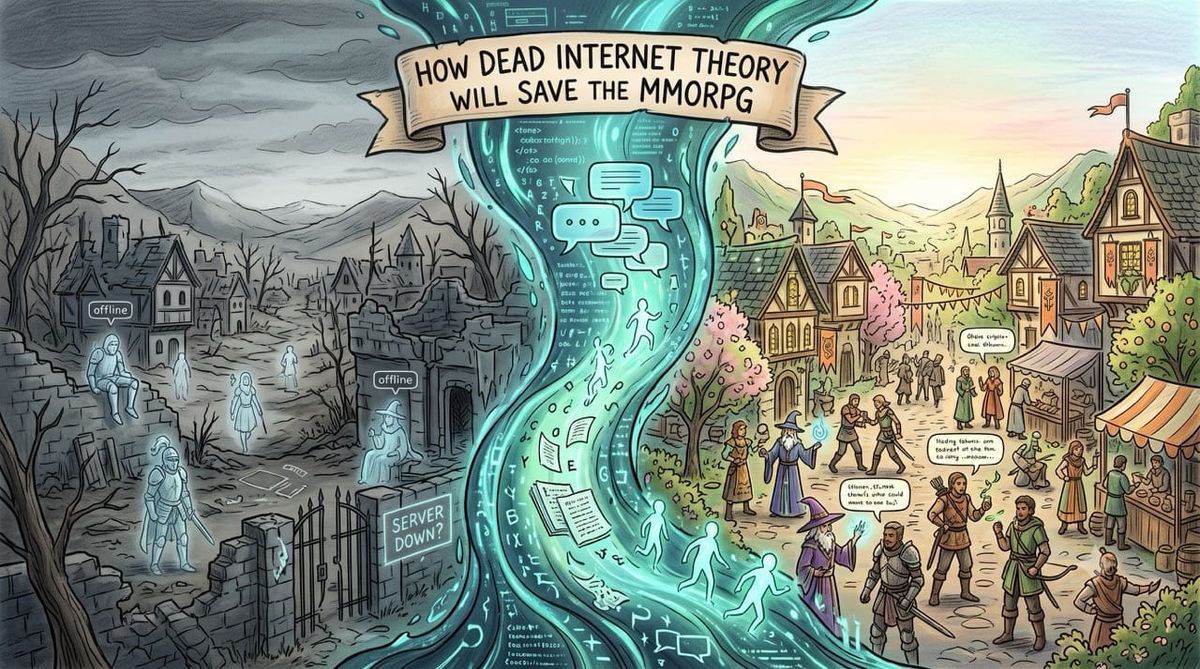
Empty digital worlds are being repopulated by autonomous agents. This algorithmic breakthrough completely rewrites the financial playbook for game development and player retention.
Inspiration: Analyzing a recent community project that successfully integrated large language models into a private World of Warcraft server. Realizing this breakthrough completely solves the empty server problem and radically lowers the barrier to entry for new independent studios.
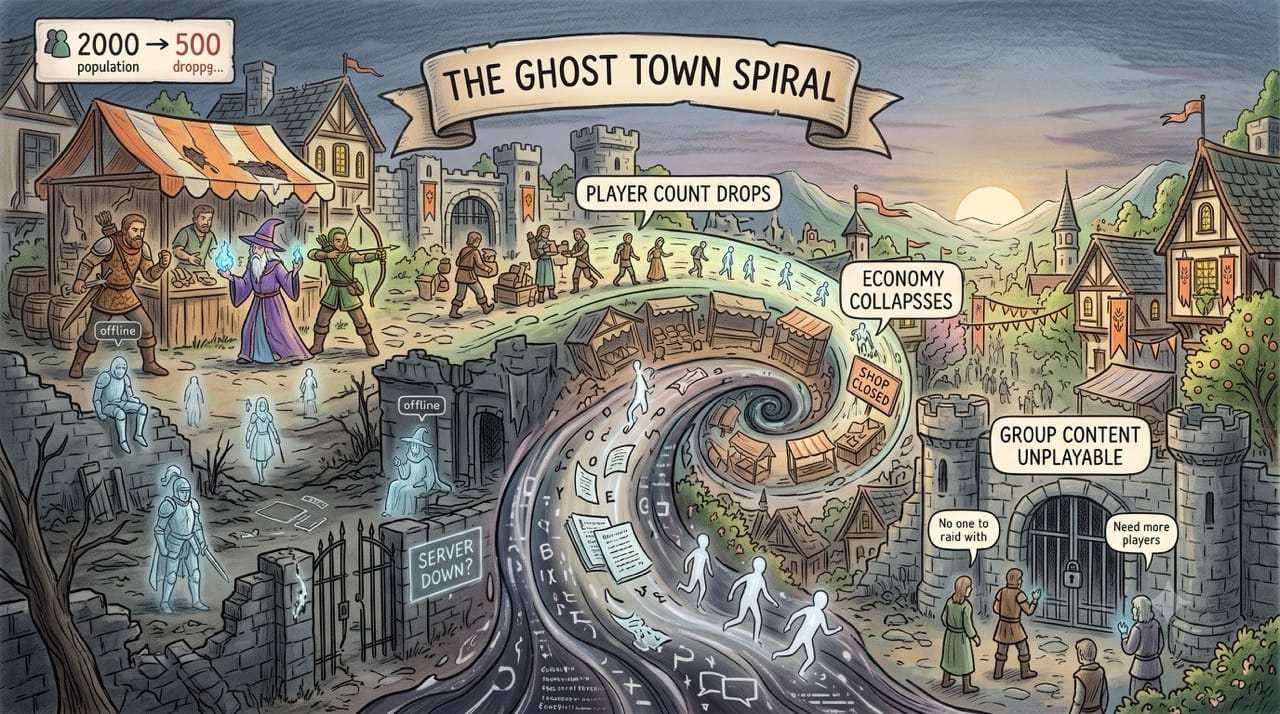
The Ghost Town Spiral
Online roleplaying games operate on a brutal demographic network effect.
If a server population dips below a certain threshold the remaining players quickly abandon ship because the virtual economy collapses and group content becomes unplayable.
This creates a terrifying death spiral for older legacy titles.
It also creates an incredibly high barrier to entry for new independent studios who cannot afford to buy a huge opening day audience.
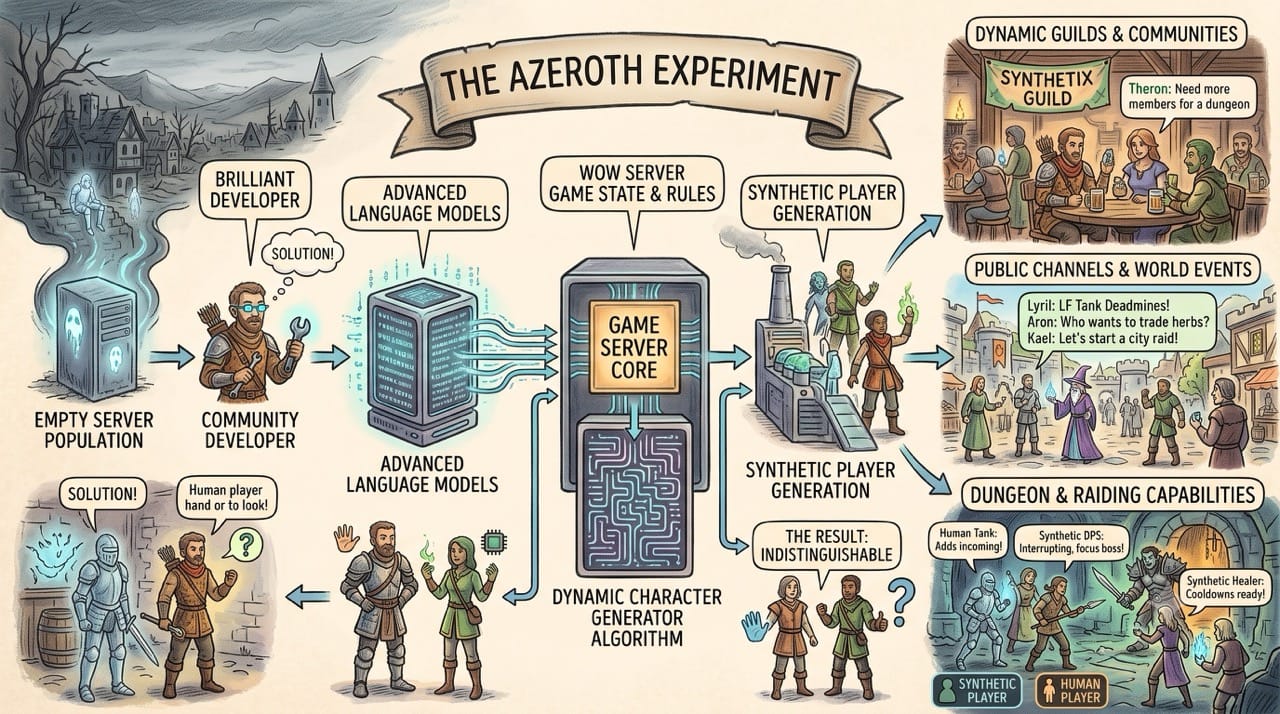
The Azeroth Experiment
A brilliant community developer recently highlighted the perfect solution to this demographic crisis.
They successfully wired advanced language models directly into a private World of Warcraft server.
The algorithm generates dynamic characters that form guilds, chat organically in public channels, and actively run complex dungeons right alongside human players.
They essentially built synthetic players that are entirely indistinguishable from average human gamers.
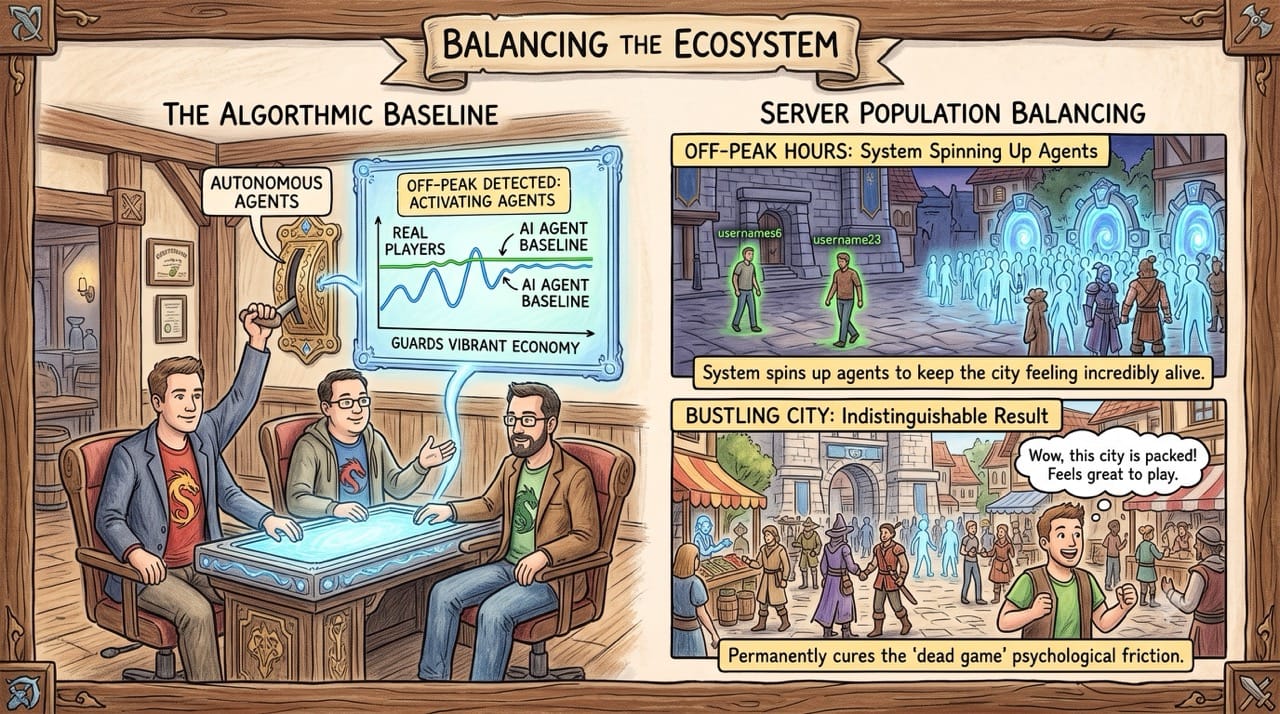
Balancing the Ecosystem
This synthetic population completely changes the structural physics of online gaming.
Studio executives can now use artificial agents as an algorithmic baseline to guarantee a vibrant digital economy regardless of actual human login rates.
If a specific server loses real players during off peak hours the system simply spins up hundreds of autonomous agents to keep the capital cities feeling incredibly alive.
It permanently cures the psychological friction of logging into a dead game.
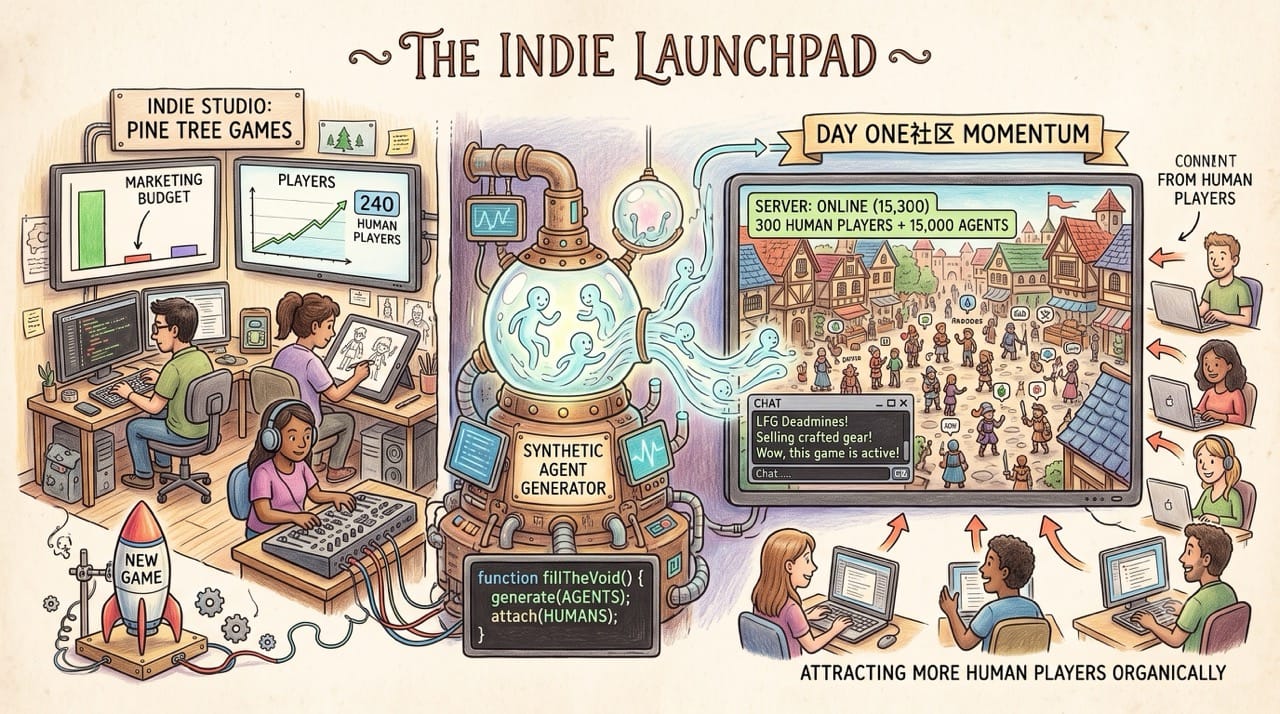
The Indie Launchpad
This dynamic population control provides an unbelievable advantage for new gaming studios with limited marketing budgets.
Historically launching a multiplayer title required spending millions of dollars in advertising just to ensure the servers were not empty on day one.
An independent developer can now comfortably launch a game with just a few hundred real players.
The synthetic agents will seamlessly fill the void and generate the organic community momentum required to attract a larger human audience over time.
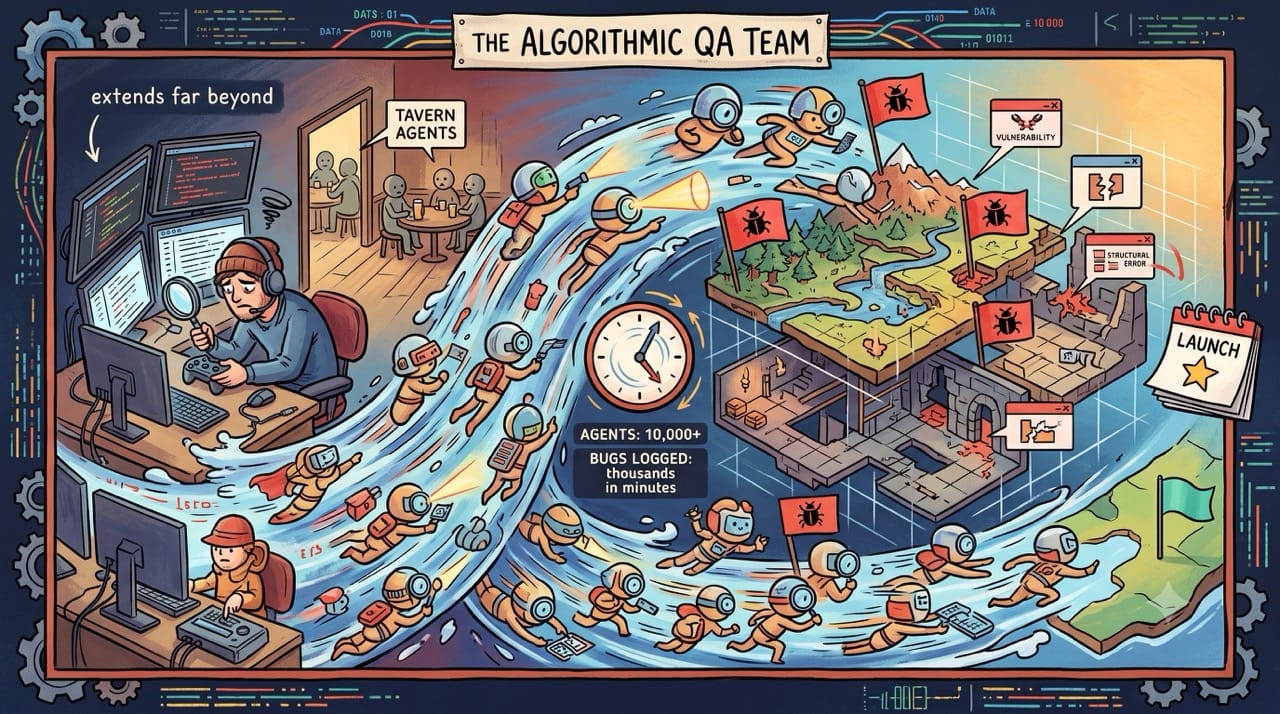
The Algorithmic QA Team
The utility of these agents extends far beyond just populating virtual taverns.
Game studios are aggressively repurposing this technology to completely overhaul their internal quality assurance and bug hunting pipelines.
Instead of paying human testers to slowly hunt for broken code a studio can instantly deploy ten thousand autonomous agents to aggressively stress test a new map in a matter of minutes.
The software plays the game thousands of times faster than a human and flags every single structural vulnerability before launch day.
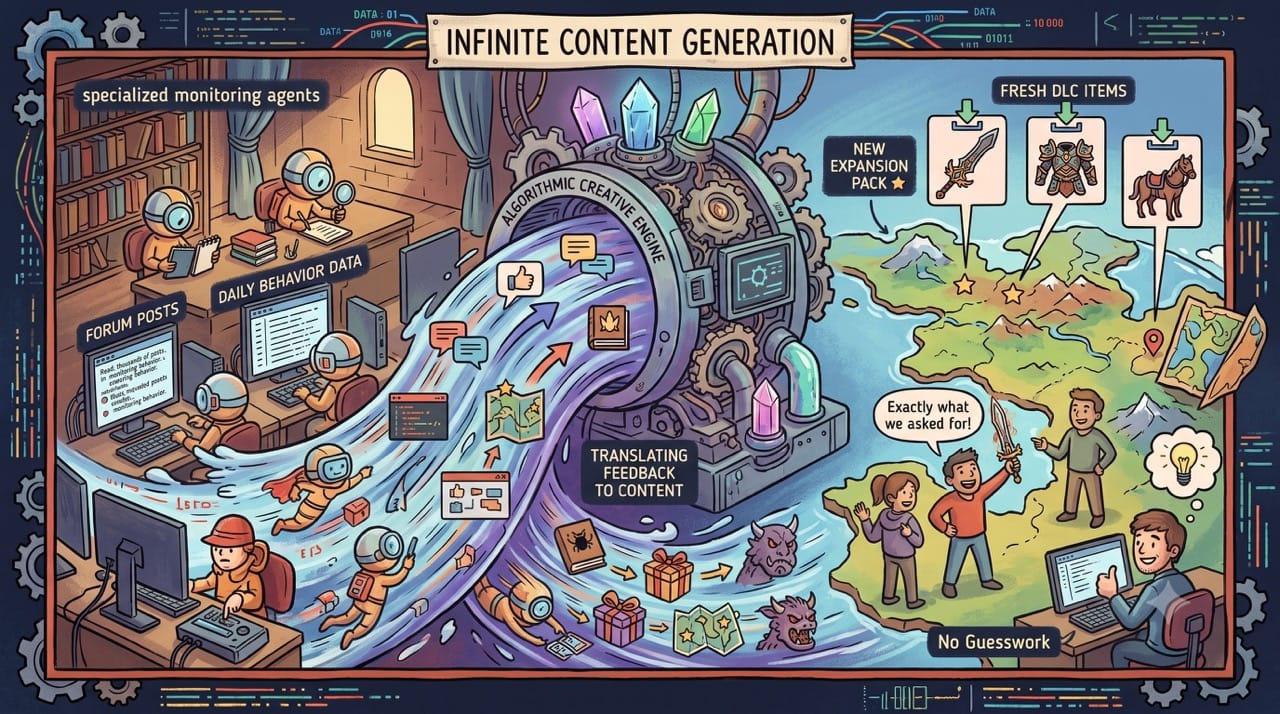
Infinite Content Generation
This algorithmic efficiency eventually scales directly into actual creative production and post launch support.
Developers can deploy specialized agents to read thousands of forum posts and actively monitor daily player behavior.
The software then translates that raw community feedback directly into generating highly targeted expansion packs and fresh downloadable content.
It completely removes the guesswork from game development by algorithmically building exactly what the human players are asking for.
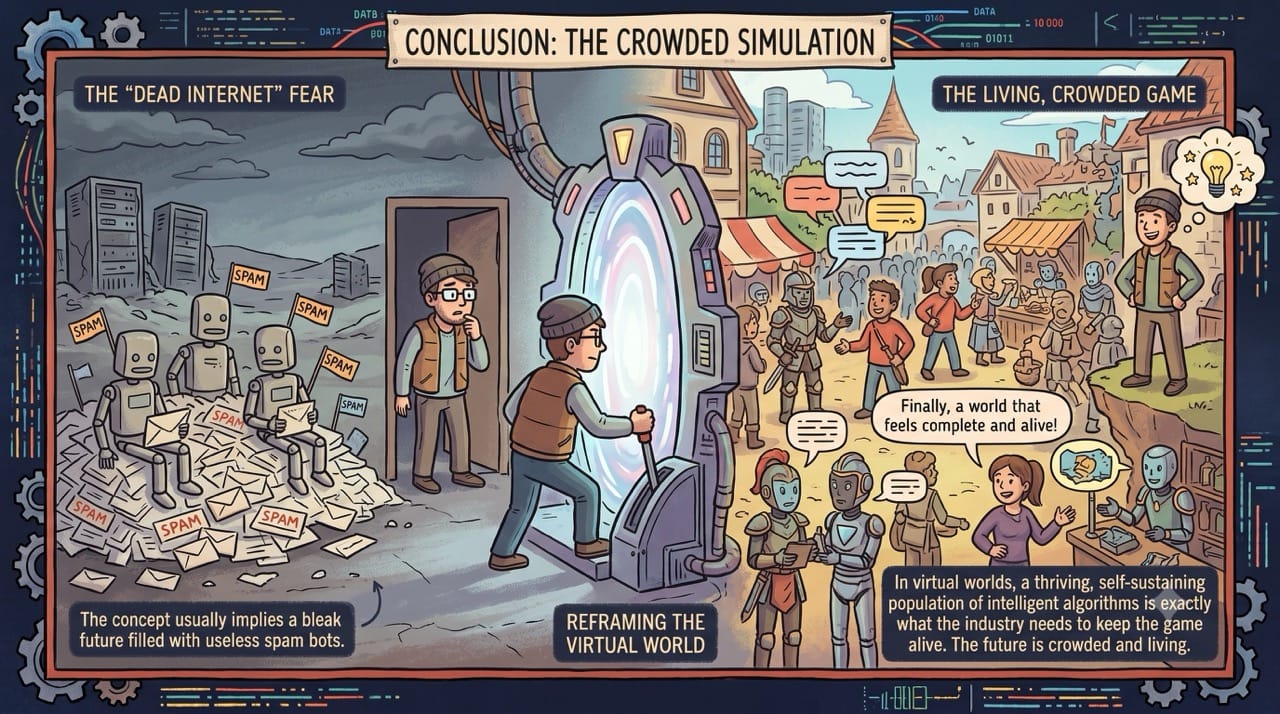
Conclusion: The Crowded Simulation
The concept of a dead internet usually implies a bleak future filled with useless spam bots.
In the context of virtual worlds adding a thriving population of intelligent algorithms is exactly what the industry needs to keep the game alive.