Google Ads Performance Inflection Point: The End of Free Overperformance
Google just killed the best loophole in Performance Marketing. Starting August 17, 2026, if you set Target CPA $10 but were getting $5, you will now GET $10.
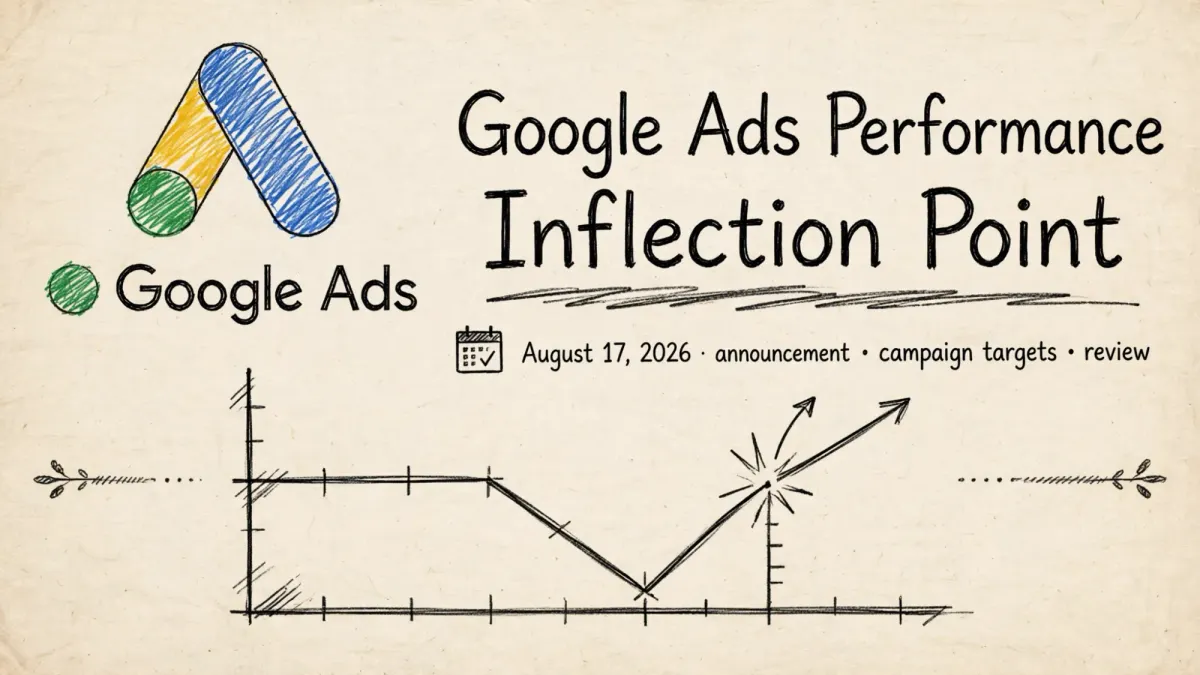
Inspiration: Every advertiser secretly loved Google's bug. Set ROAS 300%, get 450%. Set CPA $20, get $12 because budget ran out at noon. We called it good optimization. Google calls it inconsistent. Now target means target.
1. What Google Actually Announced
Official wording in Ads:
Review your campaign targets Starting August 17, 2026, campaigns with bid targets (for example CPA, or ROAS target) will provide more consistent performance when limited by budget, even after budget adjustments. Review these campaigns to ensure targets align with your objectives; targets will not be updated automatically
From Help Center:
Starting August 17, 2026, Google will be making changes to its bidding systems, making it easier for you to get more consistent and predictable performance based on the targets you set, even when you make budget adjustments
Starting August 17, and rolling out over a few weeks, we're updating bidding target optimization to help campaigns limited by budget deliver more predictable performance in line with your bidding targets, especially as you scale your campaign
2. The Old Loophole Everyone Loved
Until now, this happened:
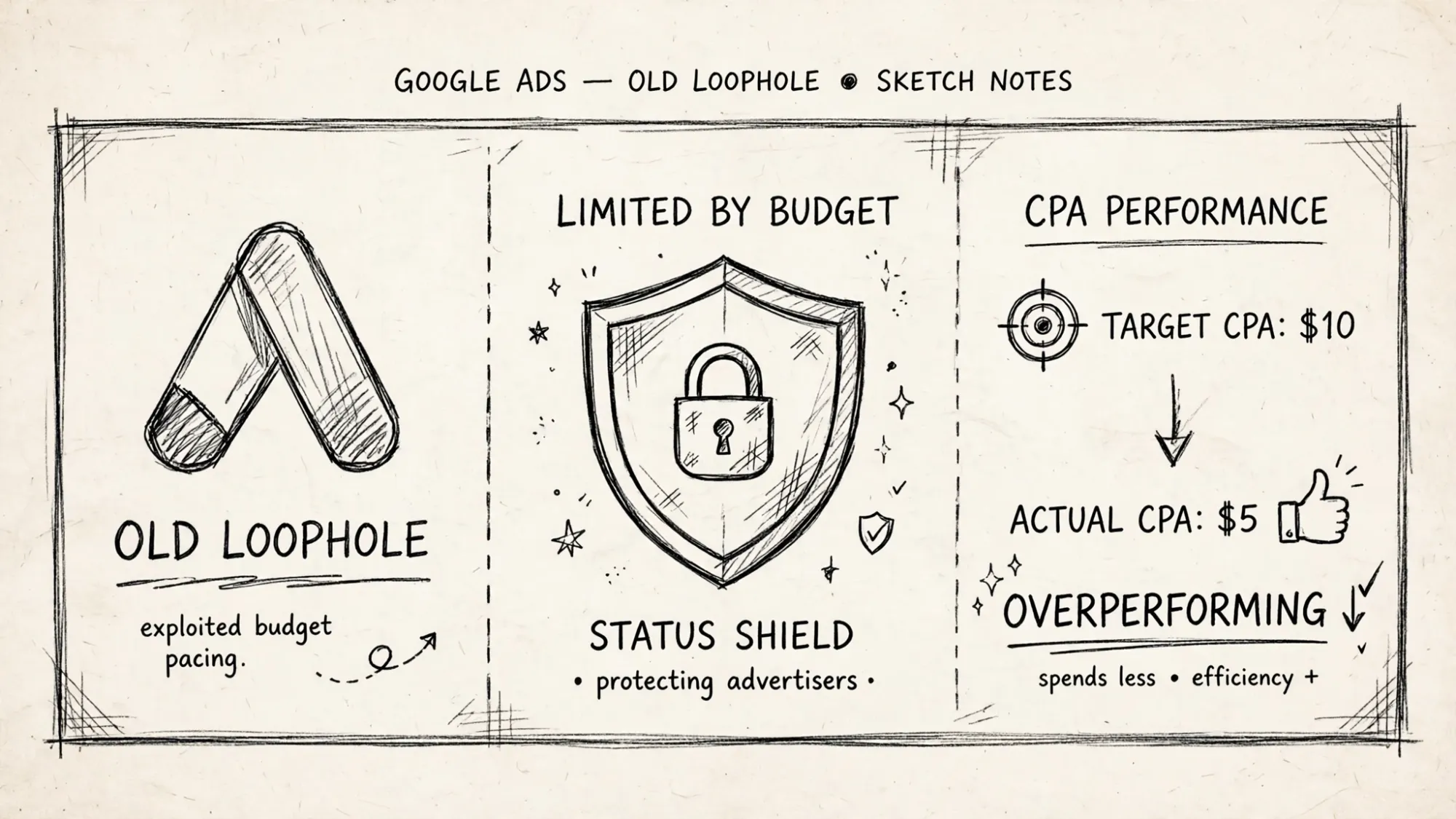
Today, when your campaign has a "Limited by budget" status, if you use a Target-based bid strategy (for example, Target CPA or Target ROAS), some campaigns may be overperforming on bidding targets and see performance fluctuations when budgets are adjusted
Translation: Budget was hard ceiling, target was soft suggestion.
You set tCPA $10. Algorithm found cheap traffic at 6am, got you $5 CPAs, drained $50 budget by lunch, shut off. You celebrated $5 CPA. Google never tried to spend more to hit $10.
Agencies knew this. Set artificially high tCPA to stay aggressive, let daily cap protect spend.
3. The New Rule: Target Means Target
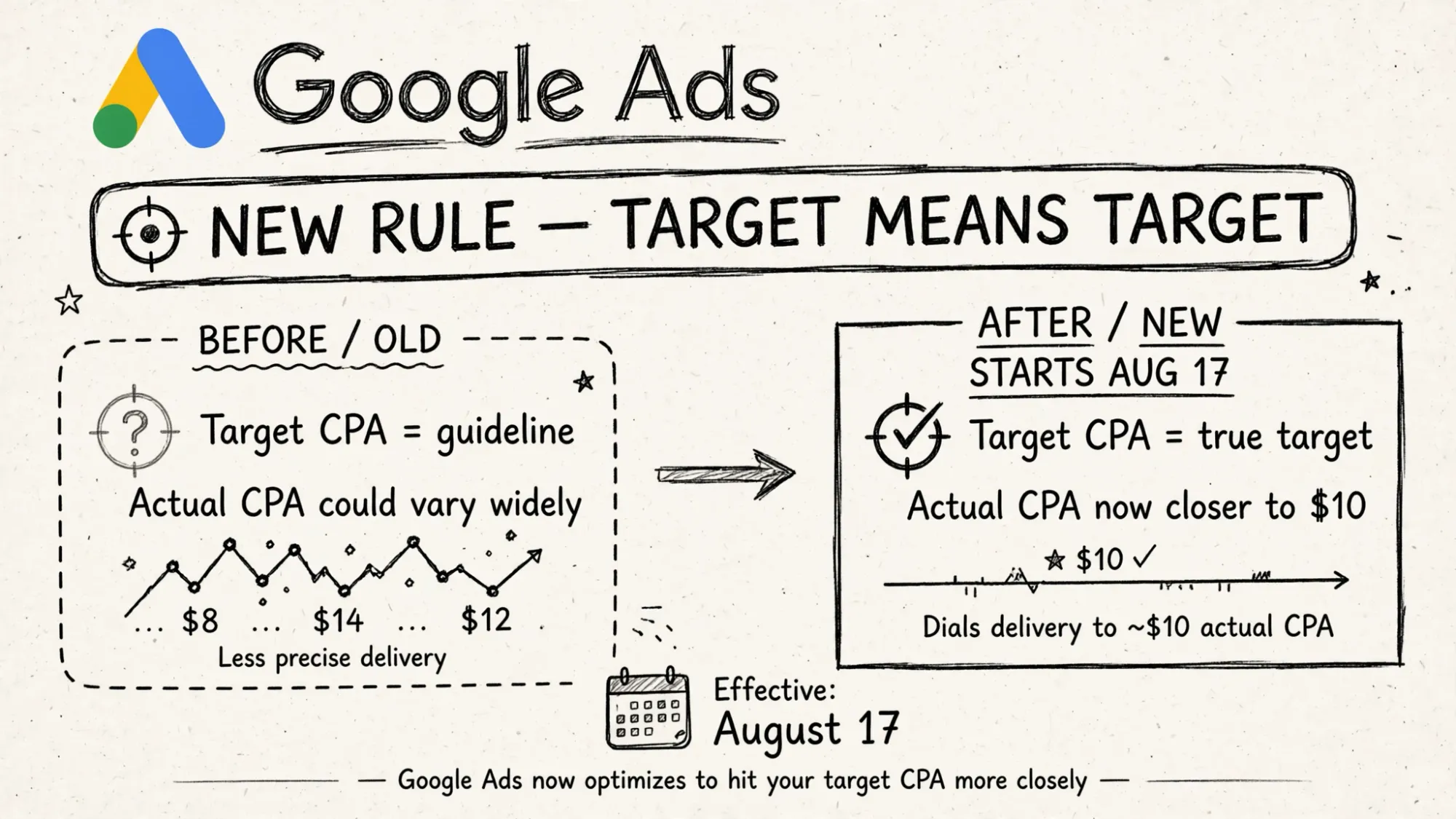
After August 17, 2026, campaigns that are limited by budget that use a target-based bid strategy will more consistently perform toward your bid target, including when you make budget adjustments so you can grow your campaigns with more predictable performance
Google's own example:
If your campaign's Target CPA is $10, but your recent actual CPA performance is $5, your campaign will deliver more closely to a $10 actual CPA starting August 17, 2026
And:
Because the system will optimize more consistently toward the target you entered, campaigns currently performing more efficiently than their set targets may see campaign performance trending toward your set target
In PPC Land words:
A campaign with a Target CPA of 10 dollars that has actually been converting at 5 dollars for months will not be allowed to continue quietly pocketing that gap after August 17.
Instead, delivery will move toward the 10-dollar figure
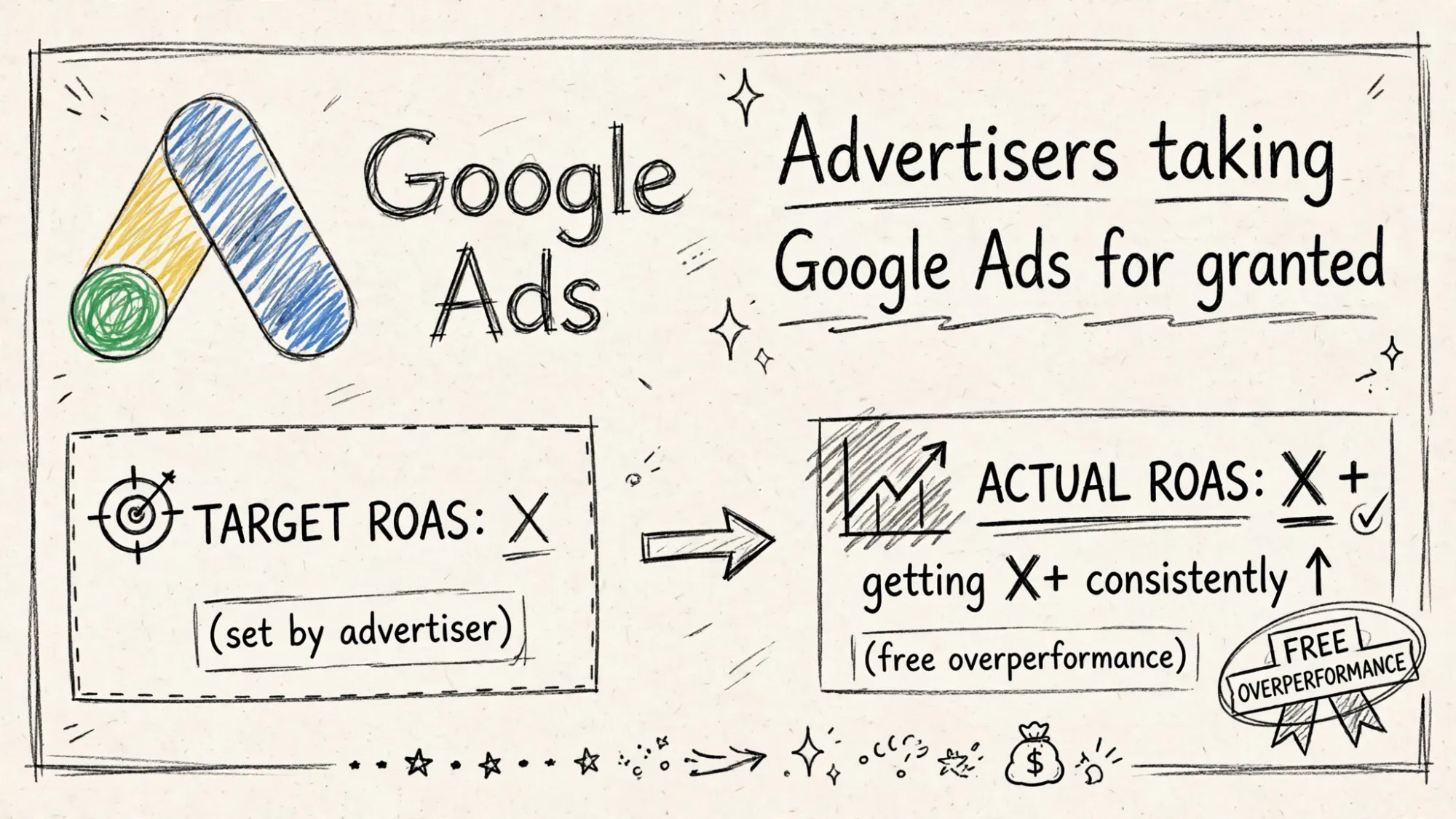
4. Why Advertisers Took Google Ads For Granted (X vs X+)
This is the part Google politely calls "overperforming".
We all did it.
Set tROAS 200% to be safe, actually getting 400% because budget-limited PMax ran out by 2pm. We reported 400% to client, looked like heroes.
Same for ROAS:
The same logic applies in reverse for Target ROAS: a campaign set to a 200 percent return that has been running closer to 400 percent will drift back toward 200 percent once the change takes hold
It felt like Google was beating expectations.
Reality: Google was ignoring your target because budget said stop.
Advertisers took it for granted. That free overperformance was never contractual. It was side-effect of budget constraint.
Now Google says: You typed X, you will get X. Not X+.
If you wanted X+, you should have typed X+.
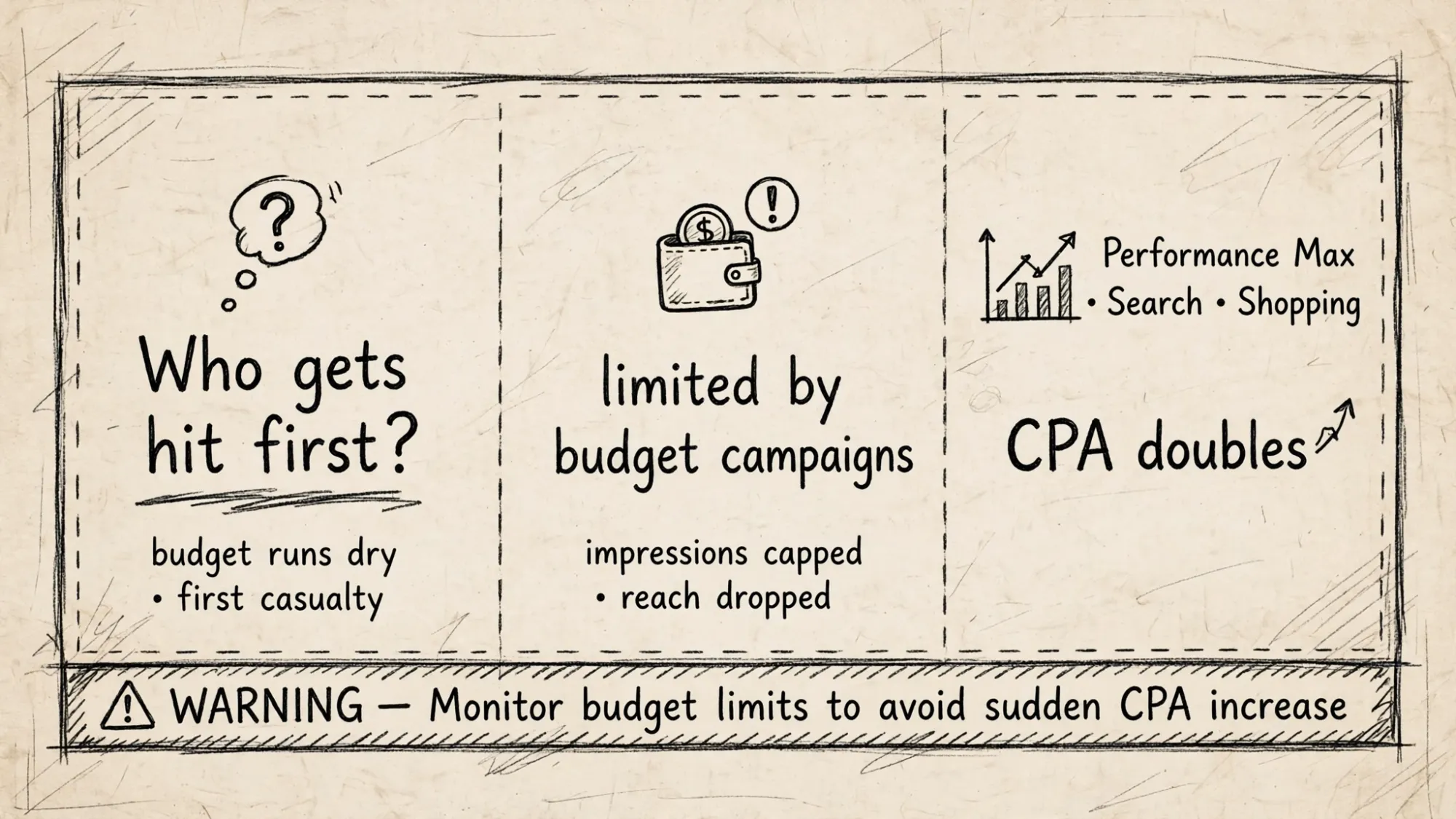
5. Who Gets Hit First (Limited By Budget)
Not all campaigns. Only ones with "Limited by budget" in last 12 months using target-based bidding.
Eligibility spans Search, Shopping, Performance Max, Demand Gen, and Travel campaigns are all included
Two categories already operate under new bidding behavior and will see no shift on August 17 itself: Hotel and Display campaigns
Three formats excluded entirely: App Campaigns, Video reach campaigns, and Video view campaigns, which will continue using previous bidding behavior
If your campaign status is "Eligible (Limited by budget)" — you are in the blast radius.
TL;DR from practitioners:
On 17 August, Google stops letting your daily budget shield you from your stated Smart Bidding targets.
Campaigns that are limited by budget and quietly beating their tCPA/tROAS will snap back toward the stated target and lose volume
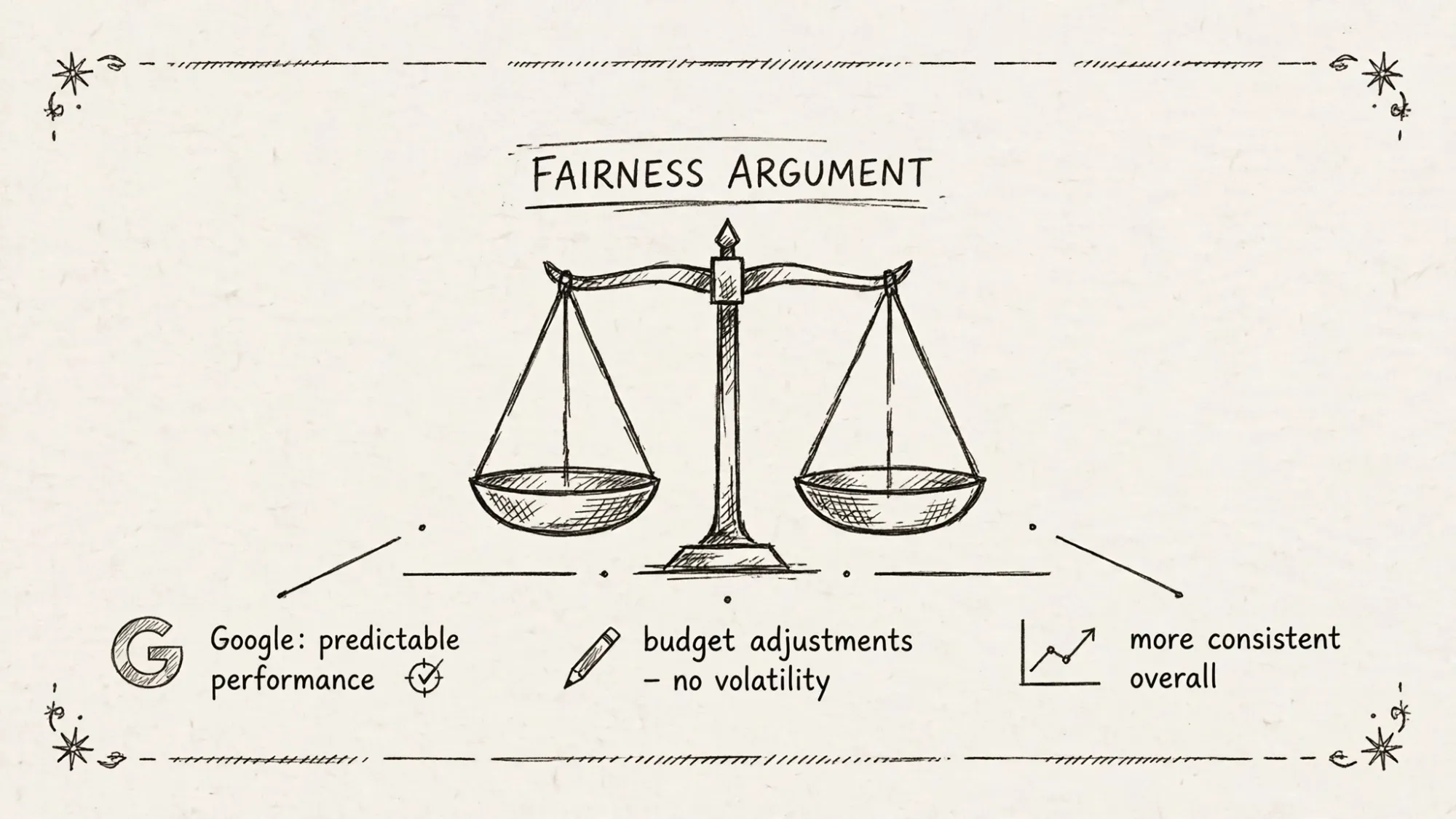
6. The Fairness Argument — Why Google Is Actually Right
Annoying, but fairer.
Old system punished scaling.
Prior to changes, if you increased daily budget on a "Limited by budget" campaign with over performing Target-based bid strategy, you would likely see fluctuations or decreases in performance
You raised budget $50 → $100 expecting more volume at same CPA, but CPA jumped to your stated target and you lost ROAS. Unpredictable.
Why change:
According to Google, budget-limited campaigns using Target CPA or Target ROAS have historically been able to overperform their stated targets, creating unpredictable performance when budgets are adjusted.
The August 17 change is designed to make delivery track more consistently toward the targets advertisers actually enter
New promise: After August 17th, you can confidently scale your campaigns and capture more volume at your stated targets
Give budget room to scale, apply recommendations, evaluate over 1-2 conversion cycles.
It is more honest. But honesty costs.
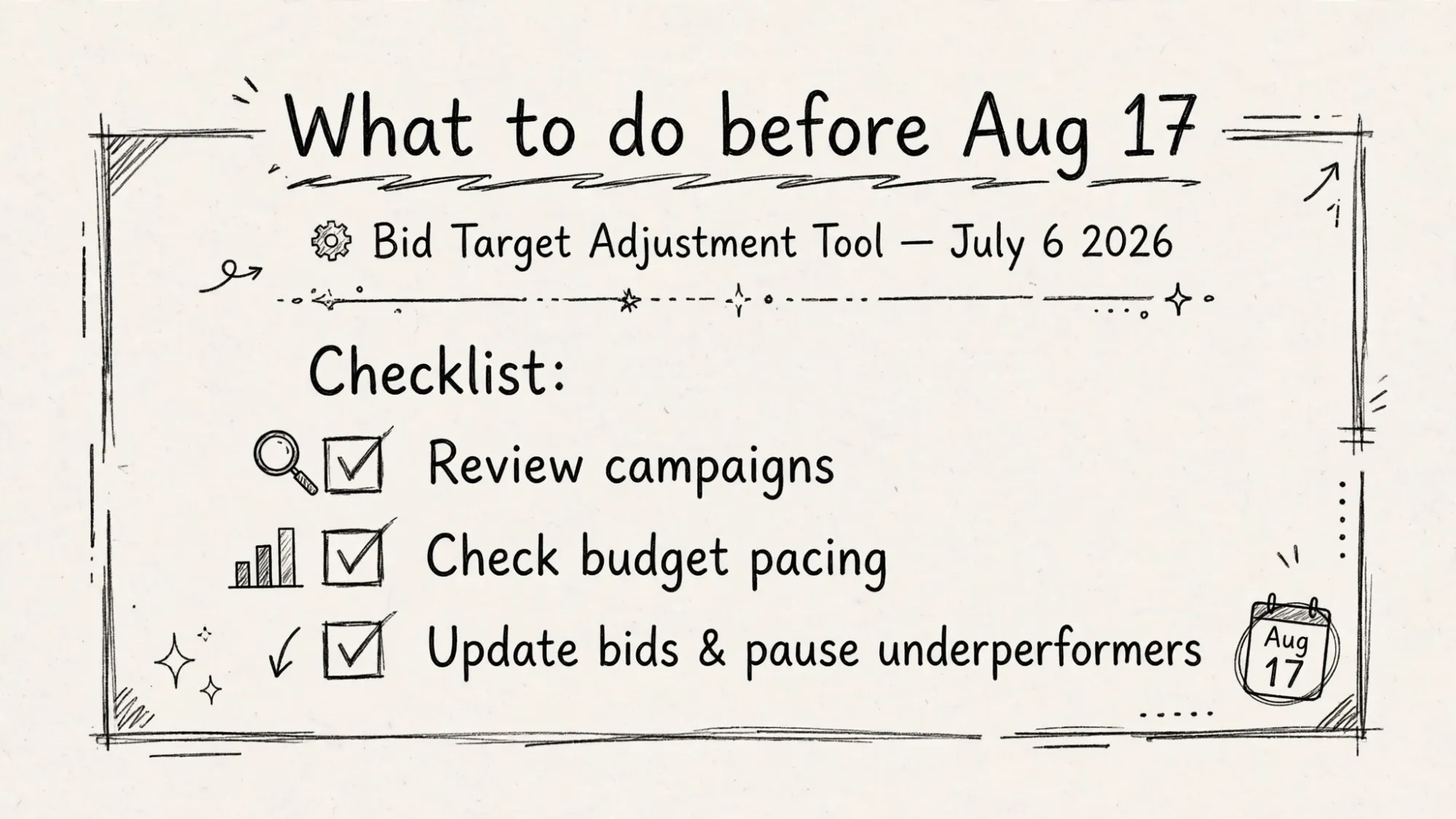
7. What To Do Before August 17 — The Tool
Google will NOT auto-fix you:
Google recommends that you review your campaigns that are "Limited by budget" and are using target-based bid strategies by August 17, 2026.
Ensure your settings align with your business goals, especially for campaigns that are performing better than your targets.
Google will not automatically adjust your bidding targets or budgets
Starting July 6, 2026: Bid Target Adjustment Tool live.
To help you review your campaigns, you'll receive a notification in your Google Ads account guiding you to a new tool starting July 6, 2026, where you can review historical campaign performance and quickly apply updates
Options inside tool:
- Keep your current target as it is
- Adjust your target in line with recent performance
- Adjust your target to a custom number
- Change your bid strategy
- Increase your budget
Practical playbook from Search Engine Land:
Campaigns that have been outperforming their target CPA or ROAS goals may no longer continue doing so automatically after the update . For example, a campaign using a Target CPA of $10 that is currently achieving a $5 CPA could see performance move closer to the $10 target unless the advertiser updates the target setting
If tCPA $50 actual $30, gap is liability. Step down 5-15% at a time, wait conversion cycle, repeat. Do not drop 40% in one click.
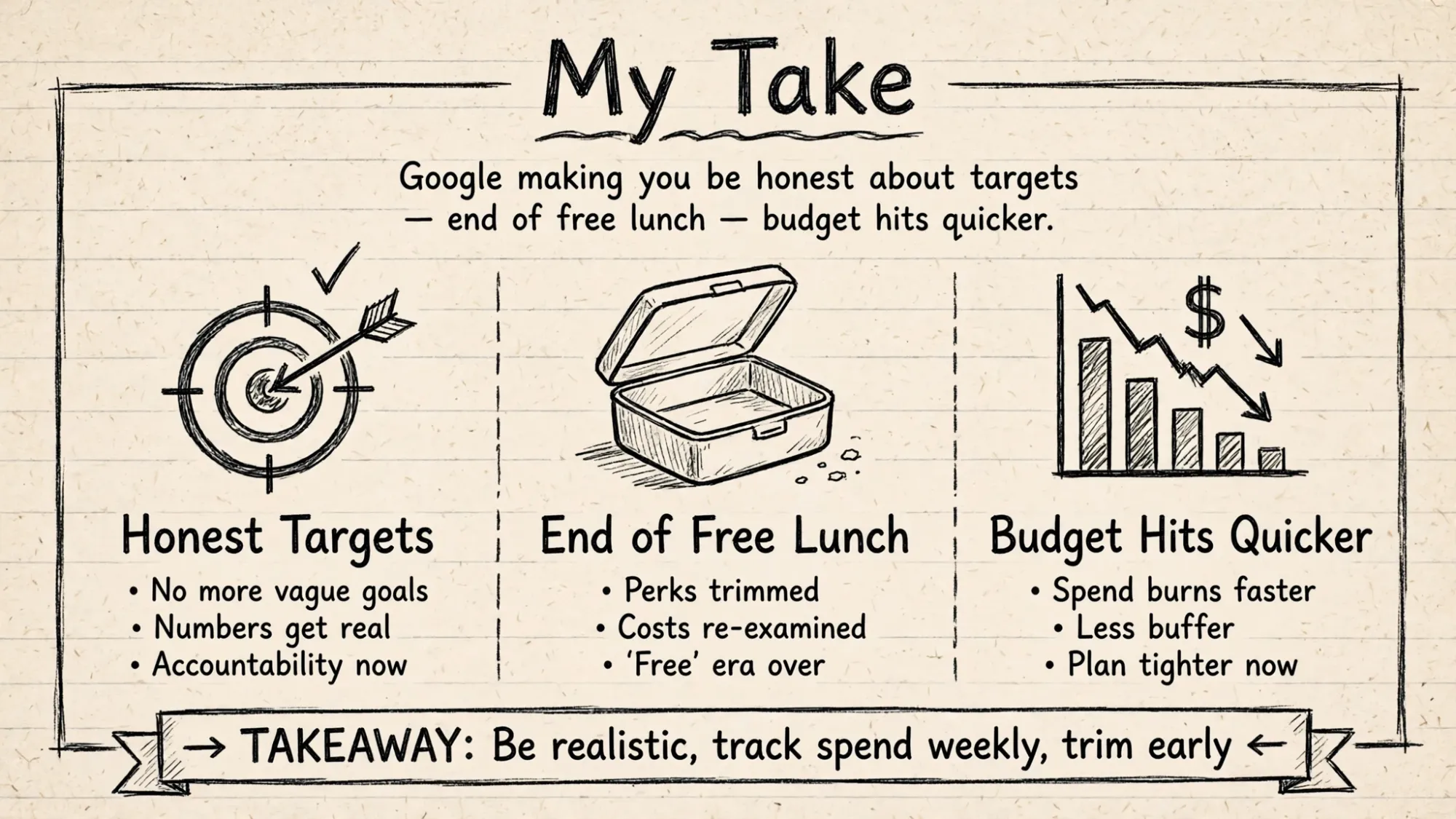
8. My Take: Google Is Making You Be Honest
This is inflection point for performance marketing.
For 5 years, we gamed tCPA/tROAS as max bid, not target. Set high to get volume, let budget be real control.
Google now forces intellectual honesty: If your business can pay $5 CPA, set $5. If ROAS break-even is 250%, set 250%.
Advertisers who were taking Google for granted will get hit twice:
- CPA doubles overnight ($5 → $10) or ROAS halves (400% → 200%)
- Budget burns faster because Google will now bid more expensive clicks to hit your lazy target
Fairer system, but will hit many advertisers and budgets quicker than expected because they never audited what they actually typed.
Google's own doc says it plainly: if your Target CPA is $10 but your recent actual CPA is $5, "your campaign will deliver more closely to a $10 actual CPA starting August 17"
Fix: Export all Limited by Budget campaigns today. Compare Target vs Actual last 30 days.
If Actual is 20%+ better than Target, you have debt. Pay it before Aug 17.
Resources
- Google Ads Help — Changes to target-based bid strategies — Starting August 17, 2026, campaigns limited by budget that use target-based bid strategy will more consistently perform toward bid target — Example $10 target $5 actual will deliver closer to $10
https://support.google.com/google-ads/answer/17061251?hl=en - Search Engine Land — Campaigns that have been outperforming their target CPA or ROAS goals may no longer continue doing so automatically
https://searchengineland.com/google-ads-updates-target-based-bidding-for-budget-limited-campaigns-480752 - PPC Land — Starting August 17, 2026, budget-limited campaigns running Target CPA or Target ROAS will begin delivering closer to figures advertisers typed
https://ppc.land/google-ads-forces-some-cpas-to-double-starting-august-17/ - HopSkipMedia — On 17 August, Google stops letting your daily budget shield you from your stated Smart Bidding targets
https://hopskipmedia.com/the-17-august-smart-bidding-change/ - Google Help — If your campaign is limited by budget that has historically overachieved stated target, you may experience performance volatility if you don't make changes before August 17
- PPC Land deep dive — Bid Target Adjustment Tool live July 6, 6 weeks before deadline
https://ppc.land/google-ads-gives-advertisers-6-weeks-before-cpa-targets-double/