Can Product Managers Disrupt Education in the Age of AI?
Reinventing School for the AI Era | Joe Liemandt, Gagan Biyani & Erik Torenberg on the a16z Show
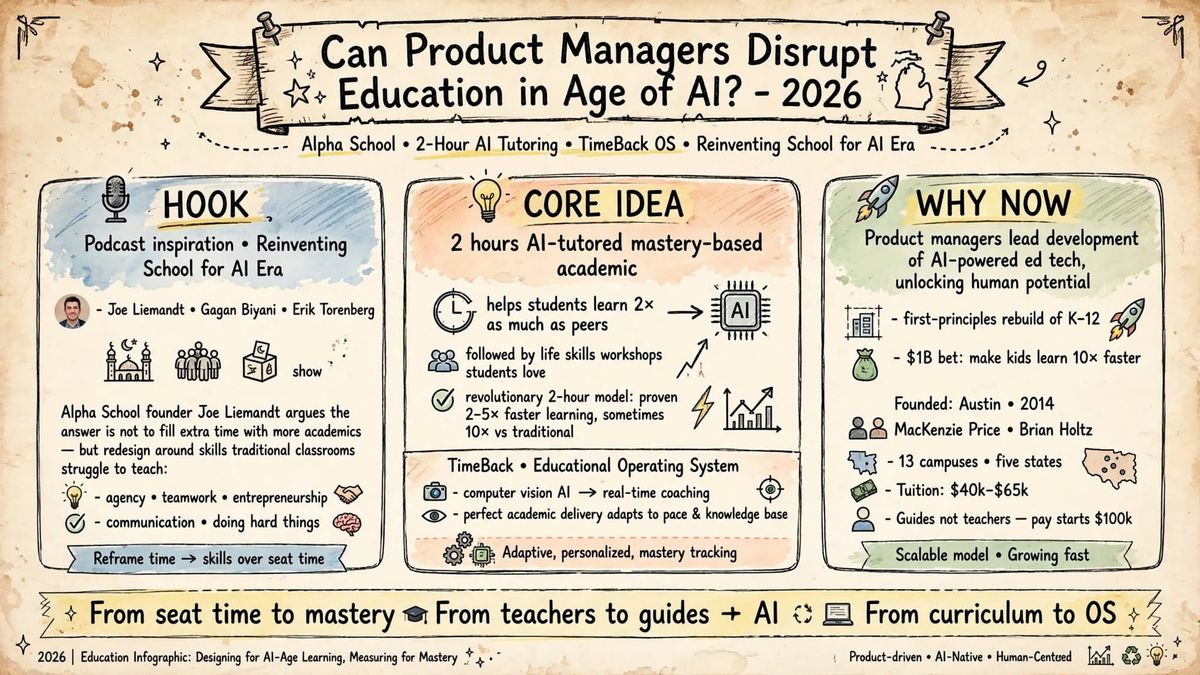
Education looks like a policy problem. Joe Liemandt treats it like a product problem.
On the podcast, Alpha School founder Joe Liemandt argues the answer isn't to fill the extra time with more academics, but to redesign school around the skills traditional classrooms struggle to teach: agency, teamwork, entrepreneurship, communication, and doing hard things.
That framing is pure product management. When academics take less time, what do you build with the surplus?
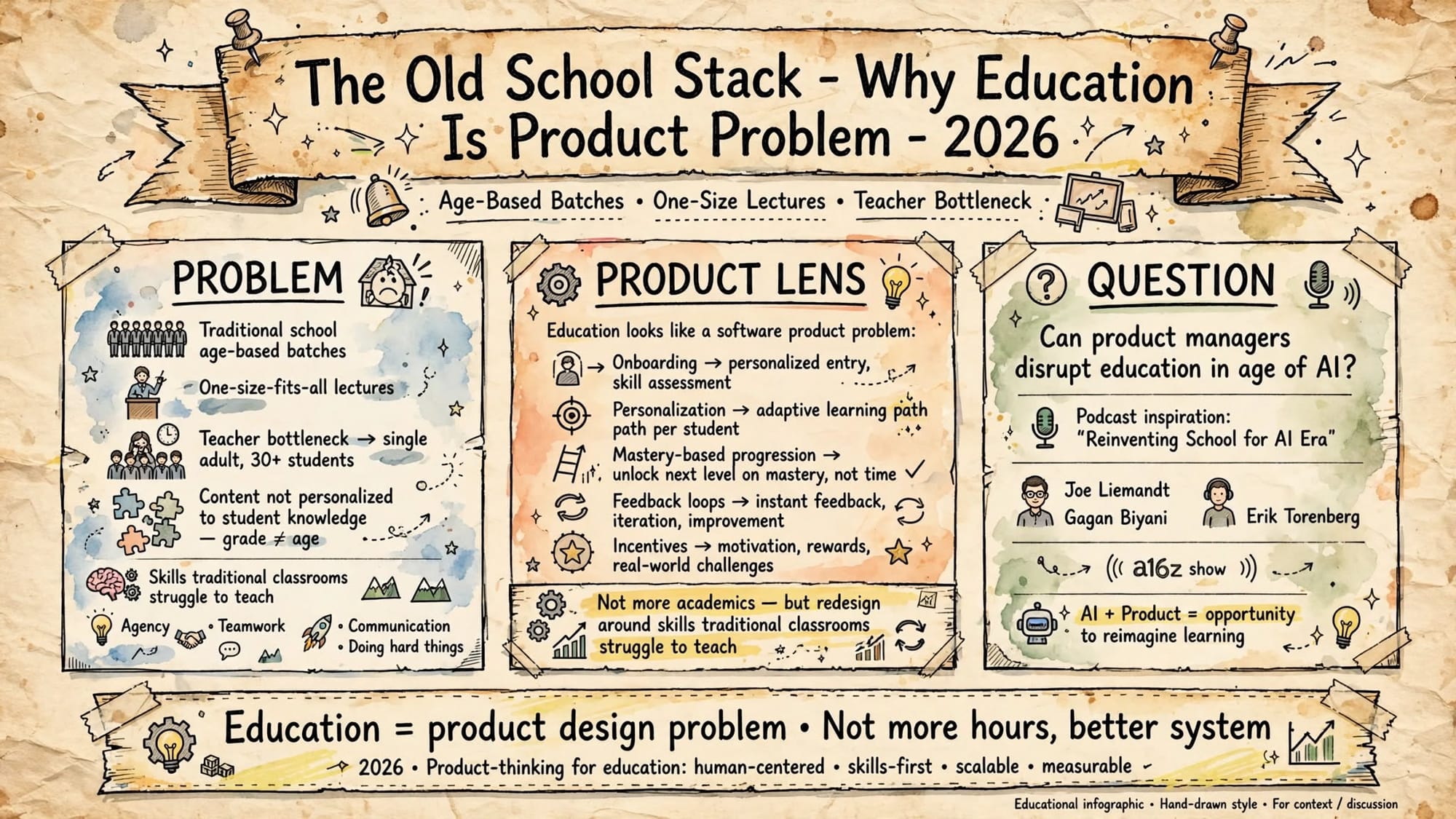
1. The Old School Stack - Why Education Is Product Problem
Traditional K-12 is age based batches, one size lectures, and a teacher bottleneck. Content is delivered to grade, not knowledge.
Product managers see this as onboarding, personalization, and progression system failure. Seat time is measured, mastery is not. Feedback loops are slow.
Incentives reward compliance, not learning velocity.
If school were a product, we would rebuild the funnel: personalized to knowledge grade, not age, adaptive pacing, and tight feedback. That is exactly what Alpha tries to do.
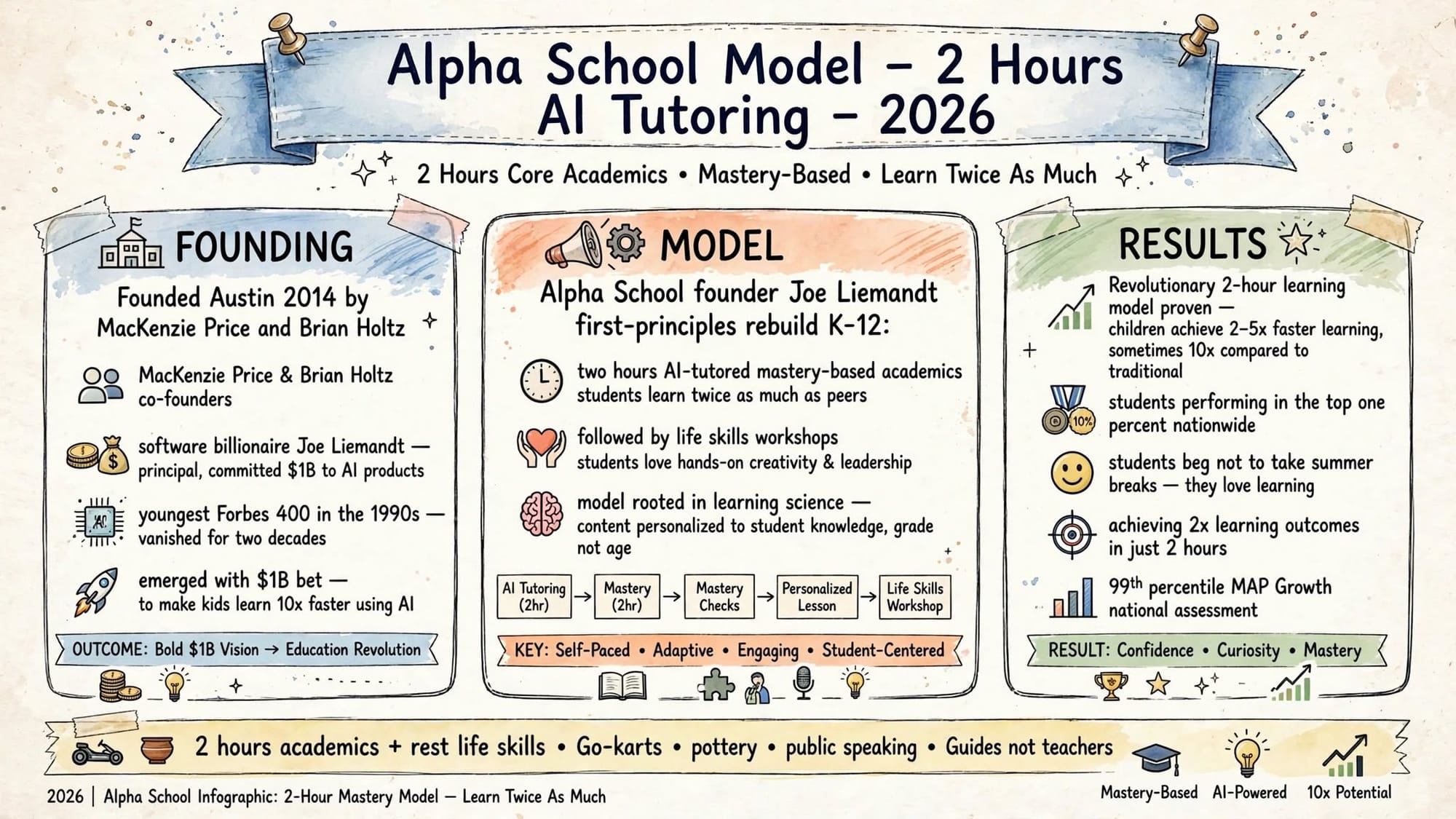
2. Alpha School Model - 2 Hours AI Tutoring
Founded in Austin in 2014 by MacKenzie Price and Brian Holtz, software billionaire Joe Liemandt is the principal and committed $1 billion to its AI products.
He became the youngest member of the Forbes 400 in the 1990s before vanishing from public view for two decades, only to emerge with a $1 billion bet that he can make kids learn 10x faster using AI.
The model is simple to describe, hard to execute:
Joe Liemandt, principal of Alpha School and founder of Trilogy, lays out a first principles rebuild of K-12: two hours of AI-tutored, mastery-based academics that help students learn twice as much as their peers, followed by life skills workshops students love.
The model is rooted in learning science: content is personalized to the student's knowledge grade, not age.
Our revolutionary 2-hour learning model has proven that children can achieve 2-5x faster learning, sometimes even 10x, compared to traditional education. Students score in the 99th percentile on MAP Growth and, unusually, beg not to take summer breaks.
A school with no teachers. AI runs the lessons. Children finish their academic day in two hours and spend the rest on go-karts, pottery and public speaking.
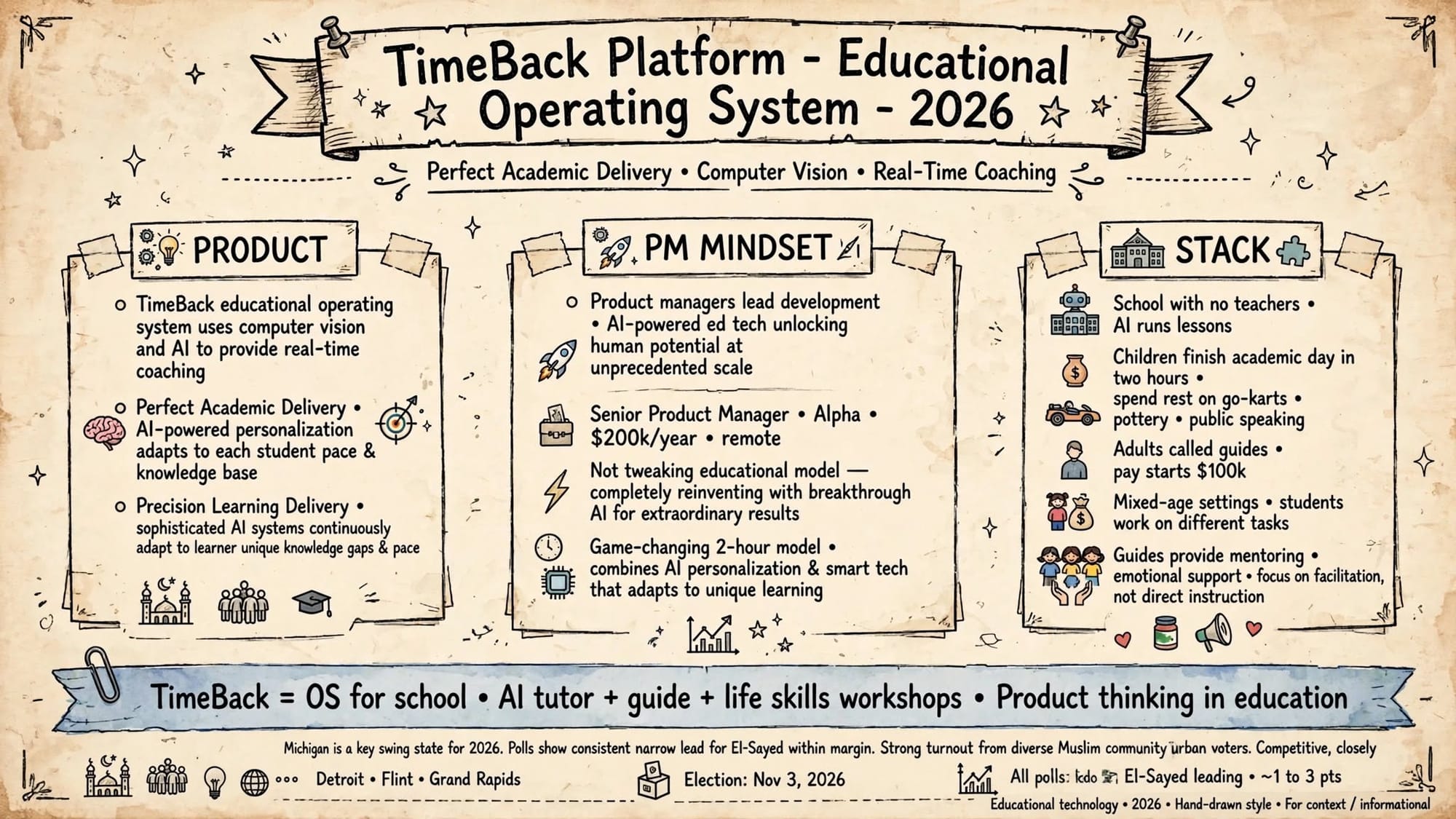
3. TimeBack Platform - Educational Operating System
Alpha is productizing the approach via the TimeBack platform and complementary ventures.
Two layers:
- Perfect Academic Delivery: AI-powered personalization that adapts to each student's pace and knowledge base
- TimeBack: Our educational operating system that uses computer vision and AI to provide real-time coaching
Precision Learning Delivery means sophisticated AI systems that continuously adapt to each learner's unique knowledge gaps and pace.
For PMs, this is familiar: an OS, not a curriculum.
Guides are the human layer, not lecturers. At Alpha, you can lead the development of AI-powered education technology that's unlocking human potential at an unprecedented scale.
Alpha even hires Senior Product Manager, Alpha remote at $200k per year.
School becomes: AI tutor + guide + life skills workshop. Guides start at $100k, focus on facilitation, mentoring, emotional support. Mixed age settings, students work on different tasks.
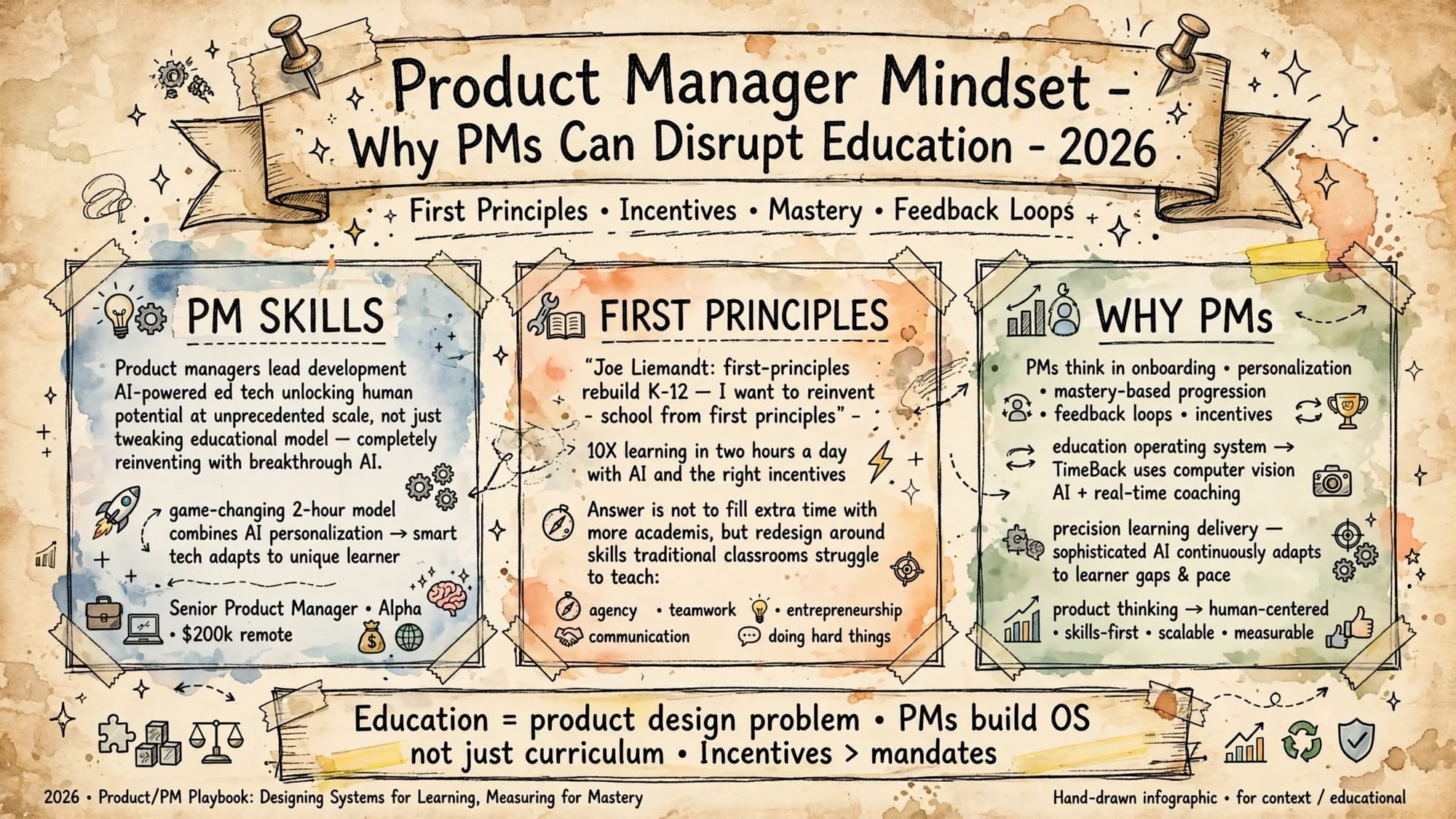
4. Product Manager Mindset - Why PMs Can Disrupt Education
Why PMs? Because they think in systems, not subjects.
Liemandt says: I want to reinvent school from first principles. New schools that can 10X learning in two hours a day with AI and the right incentives.
PM toolkit maps directly:
- Onboarding: diagnose knowledge grade, not age
- Personalization: adapt to pace and gaps
- Mastery-based progression: must prove mastery to move forward
- Feedback loops: real time coaching via computer vision and AI
- Incentives: workshops students love vs extra homework
The podcast insight: do not fill extra time with more academics. Redesign around agency, teamwork, entrepreneurship, communication, and doing hard things. That is a product spec, not a policy memo.
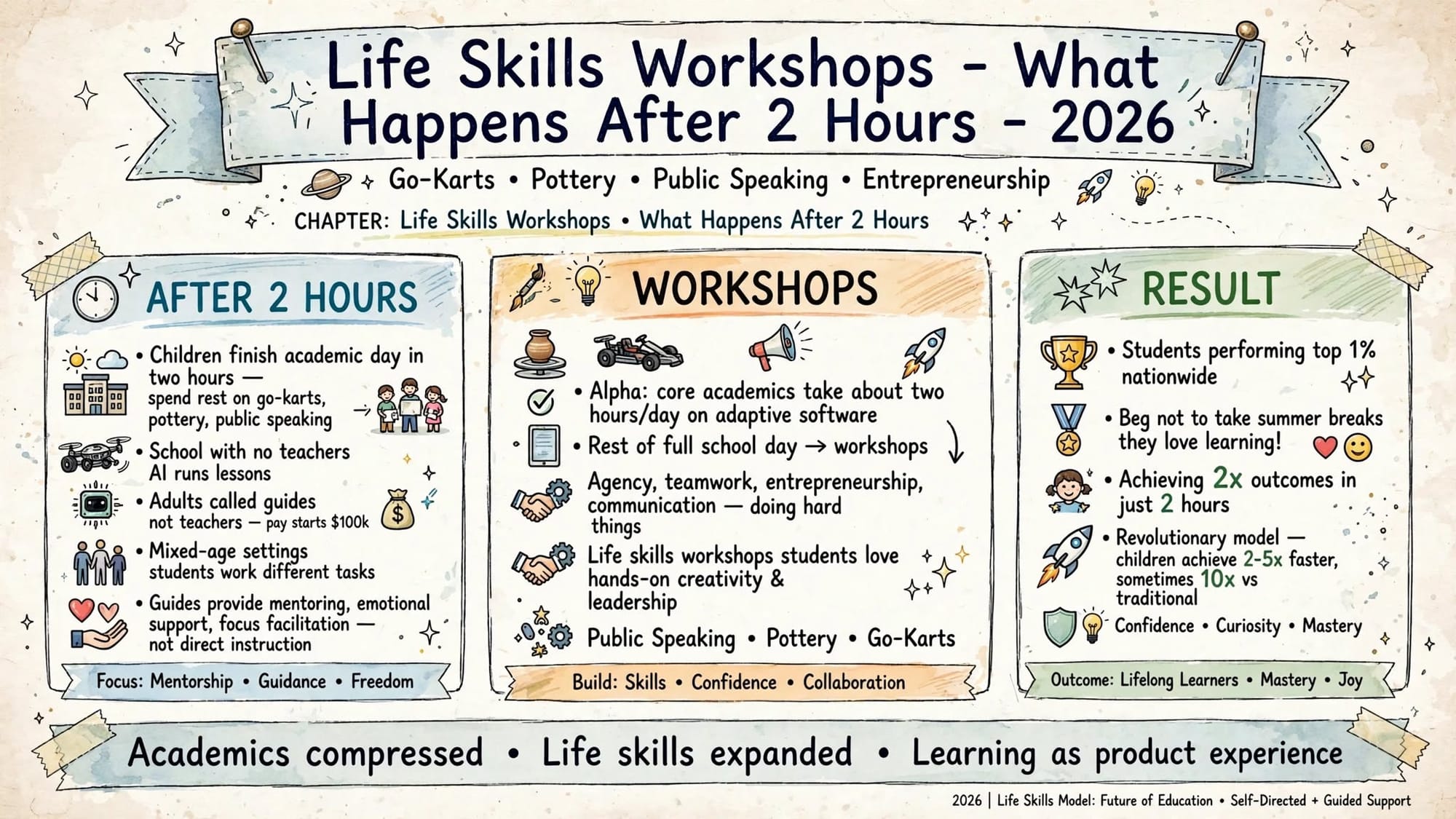
5. Life Skills Workshops - What Happens After 2 Hours
When academics compress, life expands.
In the Alpha day, core academics take about two hours a day on adaptive software. The rest of a full school day goes to workshops.
Adults are called guides.
That time is where product thinking shines: go-karts for physics and risk, pottery for focus, public speaking for communication, entrepreneurship for building.
Results claimed: 2x outcomes in 2 hours, 2-5x faster learning sometimes 10x, top one percent nationwide, confidence curiosity mastery.
The learning becomes an experience to design, not a curriculum to cover.
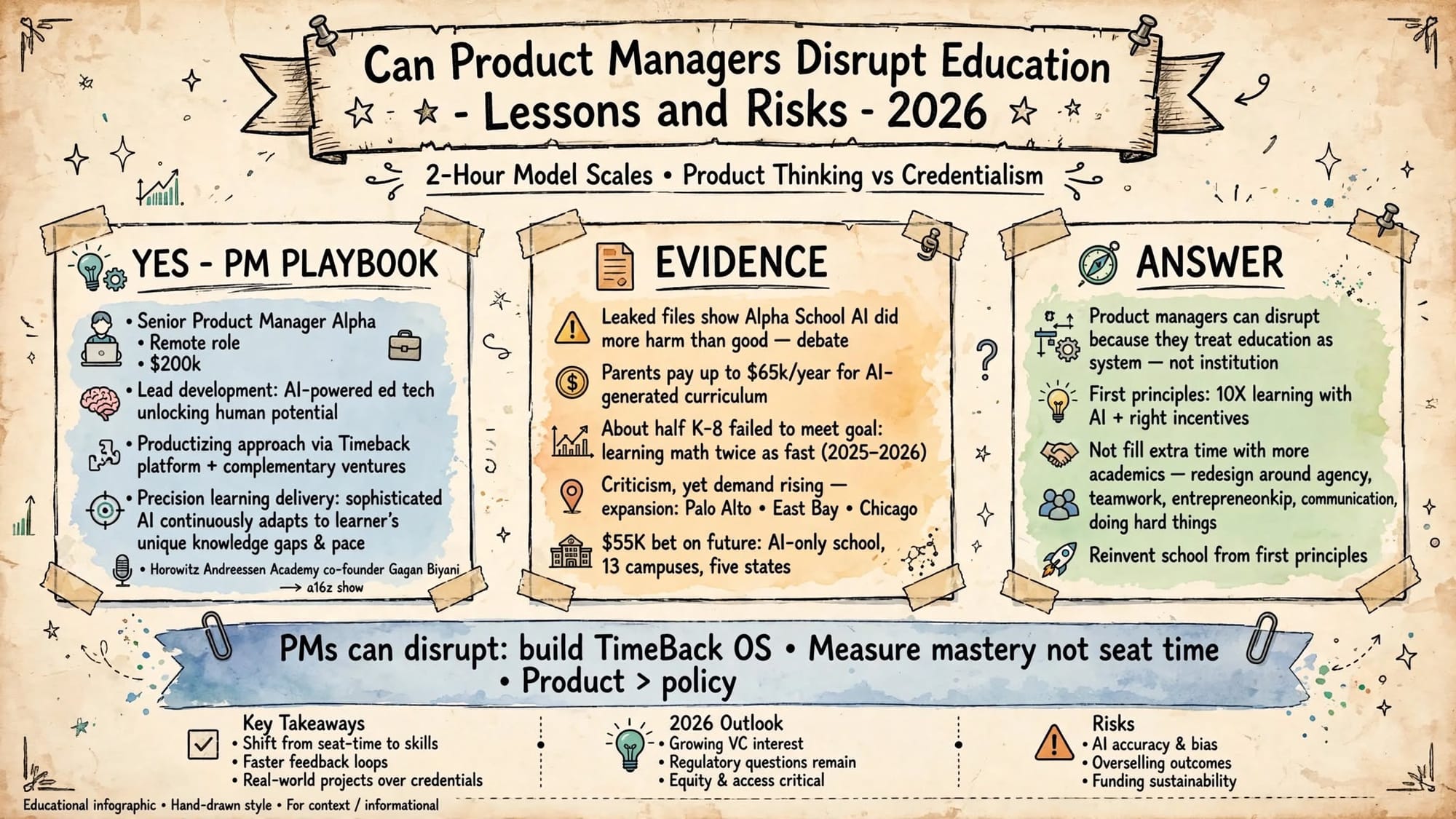
6. Can Product Managers Disrupt Education - Lessons and Risks
Can they? Yes, but not by copying school.
Playbook that works:
Build TimeBack OS. Measure mastery not seat time.
Product over policy.
Senior product managers leading development of AI powered ed tech unlocking human potential at unprecedented scale is not a metaphor, it is a hiring req.
Evidence and friction:
Parents pay up to $65k per year for AI-generated curriculum.
About half of K-8 failed to meet goal of learning math twice as fast during 2025-2026. Leaked files debate whether AI did more harm than good.
Yet demand rises. Expansion to Palo Alto, East Bay, Chicago at $55k bet on future. 13 campuses across five states.
This is classic early product: overstated marketing, uneven outcomes, strong retention among fans, and a real wedge.
Risks to solve like a PM:
AI accuracy and bias, overselling outcomes, equity and access, regulatory questions, funding sustainability, guide training quality.
Product managers will not disrupt education by building better LMS dashboards.
They will disrupt it by treating school as an operating system that compresses academics with AI, then invests the saved time into skills schools struggle to teach.
That is what Alpha is testing. Two hours to learn. Rest of day to become someone who can use it.