Alphabet: From Cash Cow to Moonshot Growth
We assume Google is just a search engine desperately trying to defend its aging advertising monopoly. The reality is they are aggressively pivoting their capital to monetize a decade of dormant physical moonshots.
As the legacy search business faces structural threats from generative chat interfaces, Google is finally flipping the monetization switch on its most ambitious infrastructure projects.
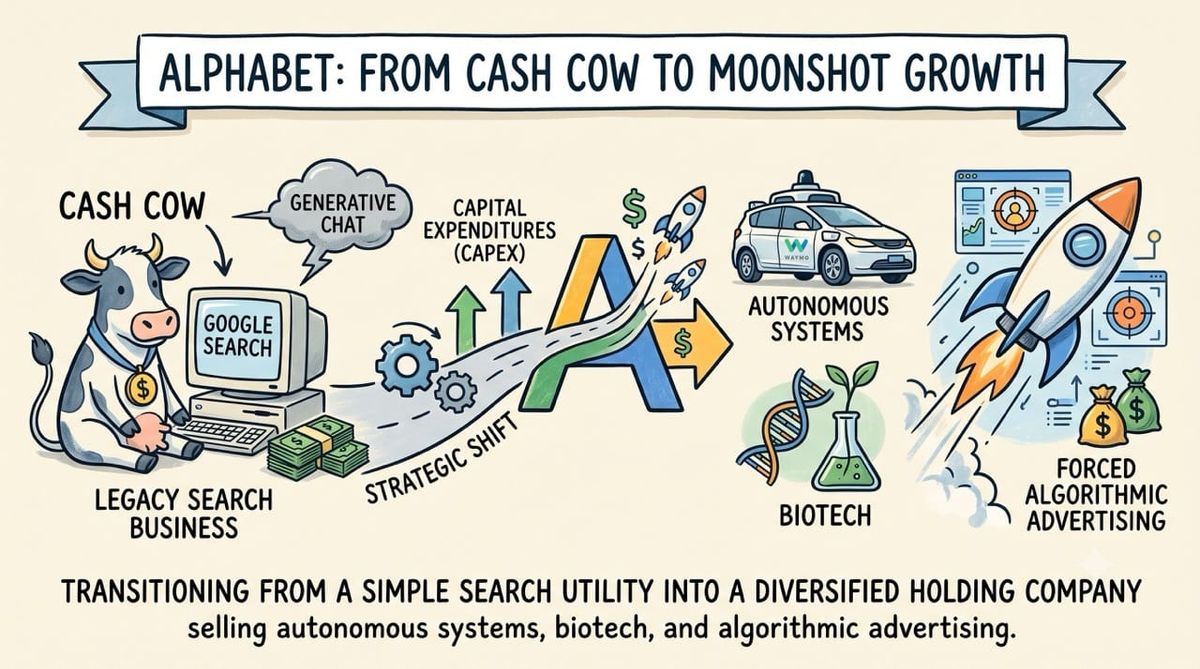
Inspiration: Analyzing Alphabet's surging capital expenditures and the strategic shift in how they monetize their ecosystem. Realizing the company is transitioning from a simple search utility into a diversified holding company selling autonomous systems, biotech, and forced algorithmic advertising.
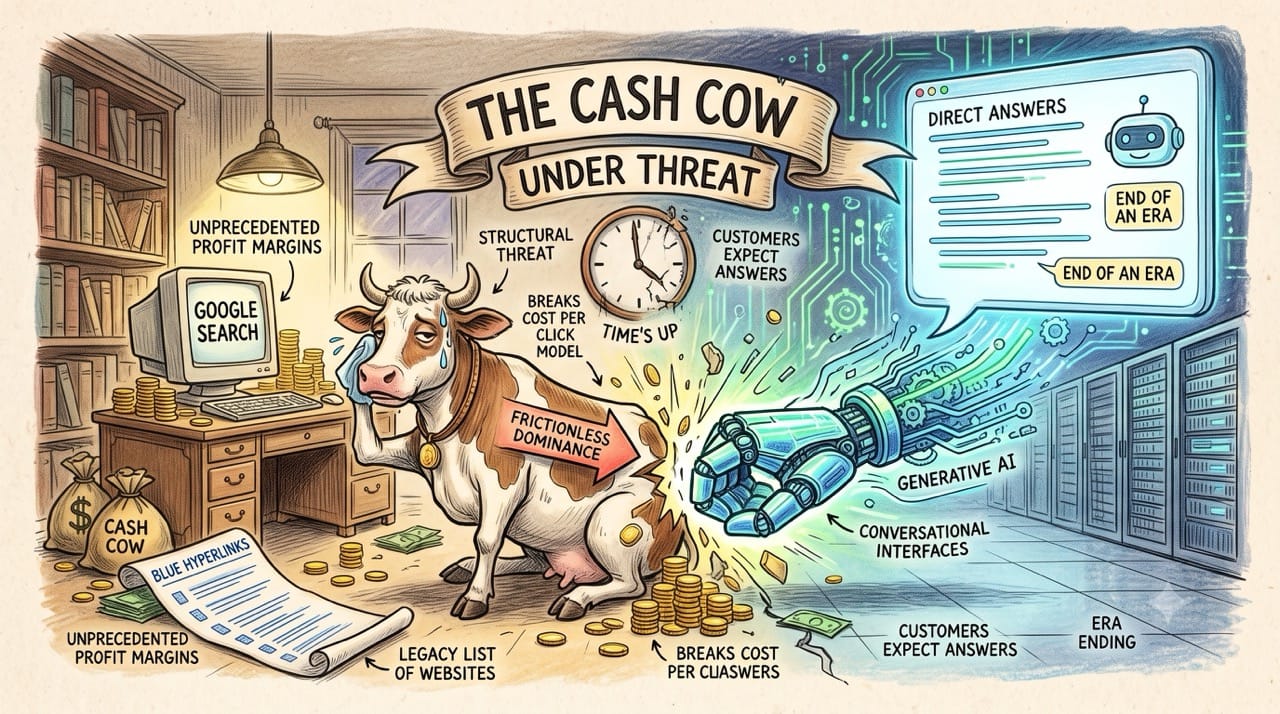
The Cash Cow Under Threat
For the past two decades Alphabet operated the greatest cash cow in the history of modern capitalism.
The traditional search engine printed unprecedented amounts of money with incredibly high profit margins.
That specific era of frictionless dominance is officially ending.
The rapid adoption of generative artificial intelligence and conversational chat interfaces is posing a severe structural threat to the traditional blue hyperlink.
Consumers are starting to expect direct answers instead of a list of websites, which fundamentally breaks the legacy cost per click business model.
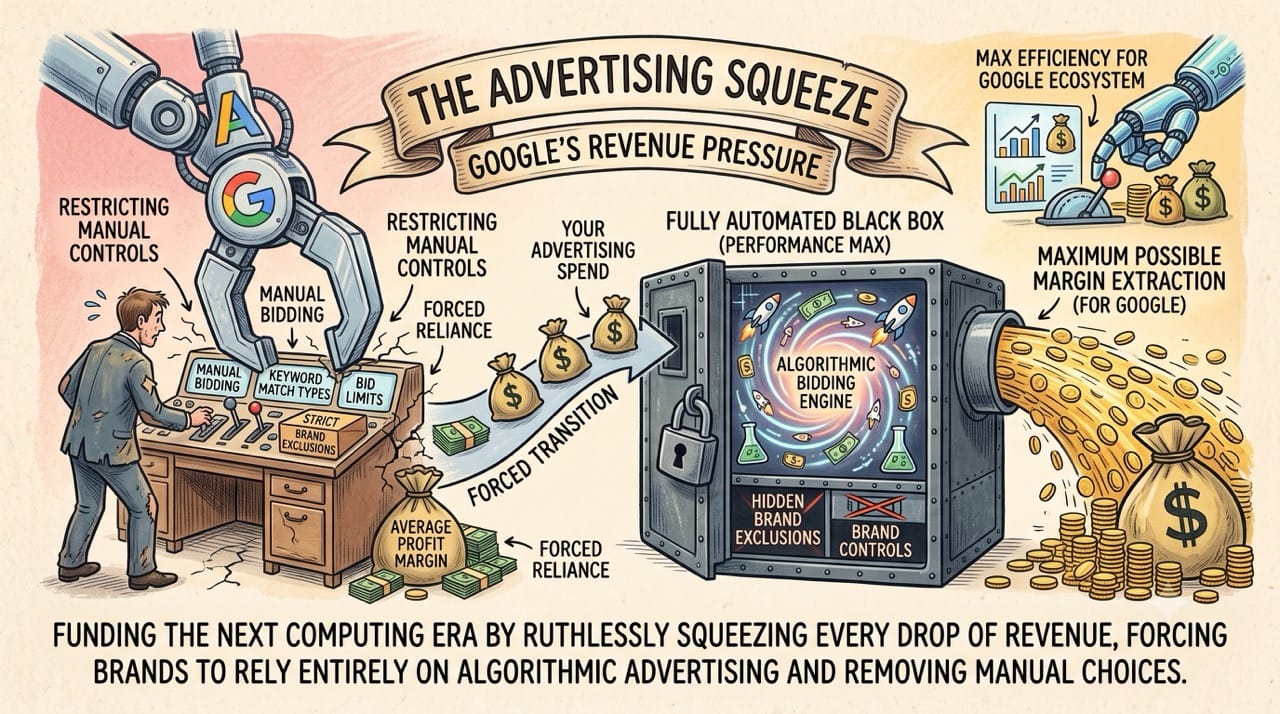
The Advertising Squeeze
To fund their transition into the next computing era Google has to squeeze every last drop of revenue from their existing search monopoly.
They are accomplishing this by ruthlessly forcing their advertisers into a fully automated black box.
The platform is actively restricting manual controls for marketers.
Features that used to be standard, like strict brand exclusions, are now hidden behind automated products like Performance Max.
By forcing brands to rely entirely on algorithmic bidding Google guarantees they can extract the highest possible margin from every single advertising dollar spent on their network.
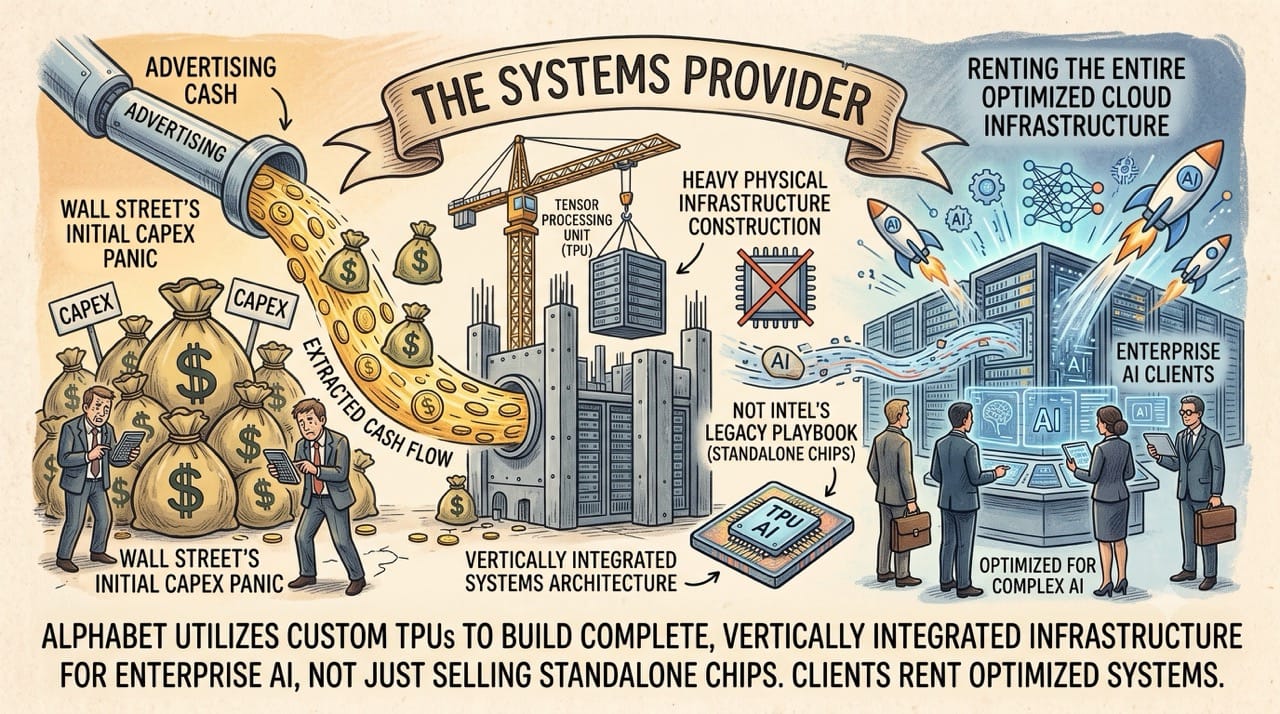
The Systems Provider
Alphabet is taking all of that extracted advertising cash and pouring it directly into heavy physical infrastructure.
Wall Street initially panicked at the size of their capital expenditure bills, but investors are misunderstanding what Google is actually building.
They are not following the legacy Intel playbook of simply selling standalone processing chips to hardware vendors.
Google is utilizing their custom Tensor Processing Units to build complete, vertically integrated systems.
When an enterprise client wants to run complex artificial intelligence, they do not just buy a piece of silicon. They rent the entire optimized cloud infrastructure directly from Alphabet.
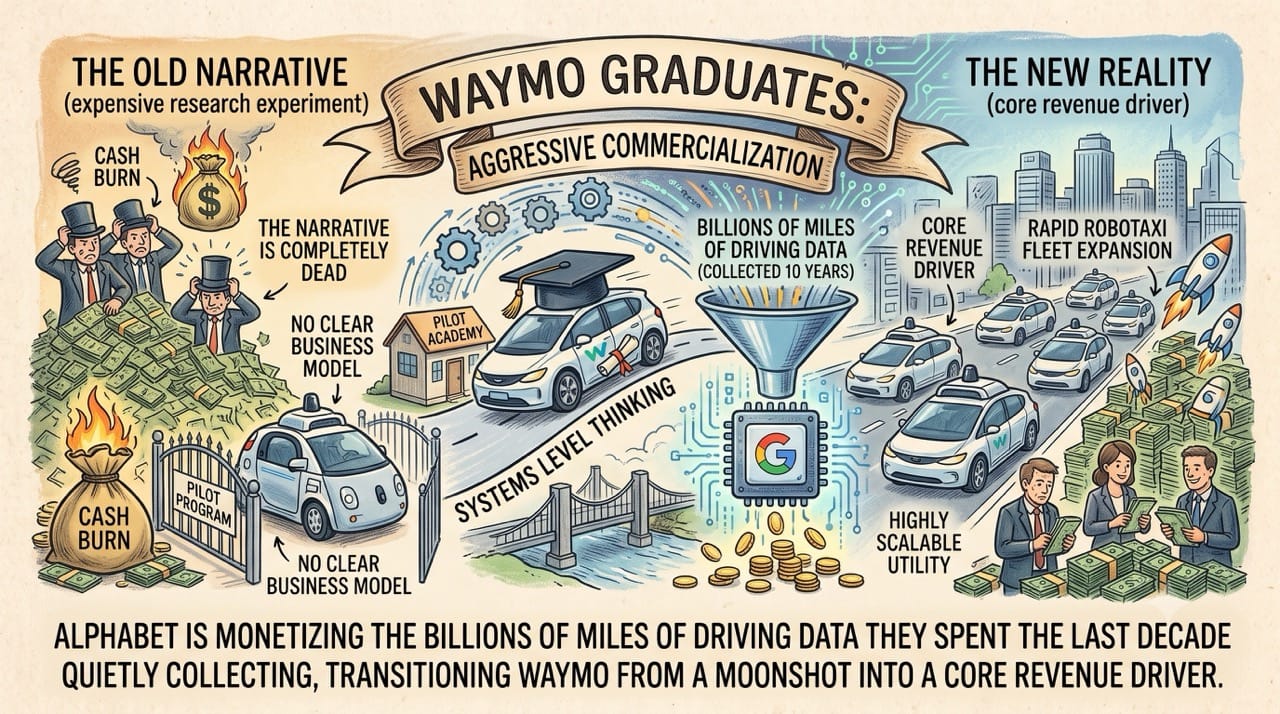
Waymo Graduates
This systems level thinking perfectly explains the aggressive commercialization of their most famous moonshot.
For years Wall Street treated Waymo as an expensive research experiment that burned through cash without a clear business model.
That narrative is completely dead. Waymo is rapidly graduating from a pilot program into a core revenue driver.
As they expand their robotaxi fleet across major metropolitan areas, they are proving that autonomous mobility is a highly scalable utility.
Google is finally monetizing the billions of miles of driving data they spent the last decade quietly collecting.
The Industrial Operating System
We assume Google only cares about software that lives behind a flat glass screen. In reality,
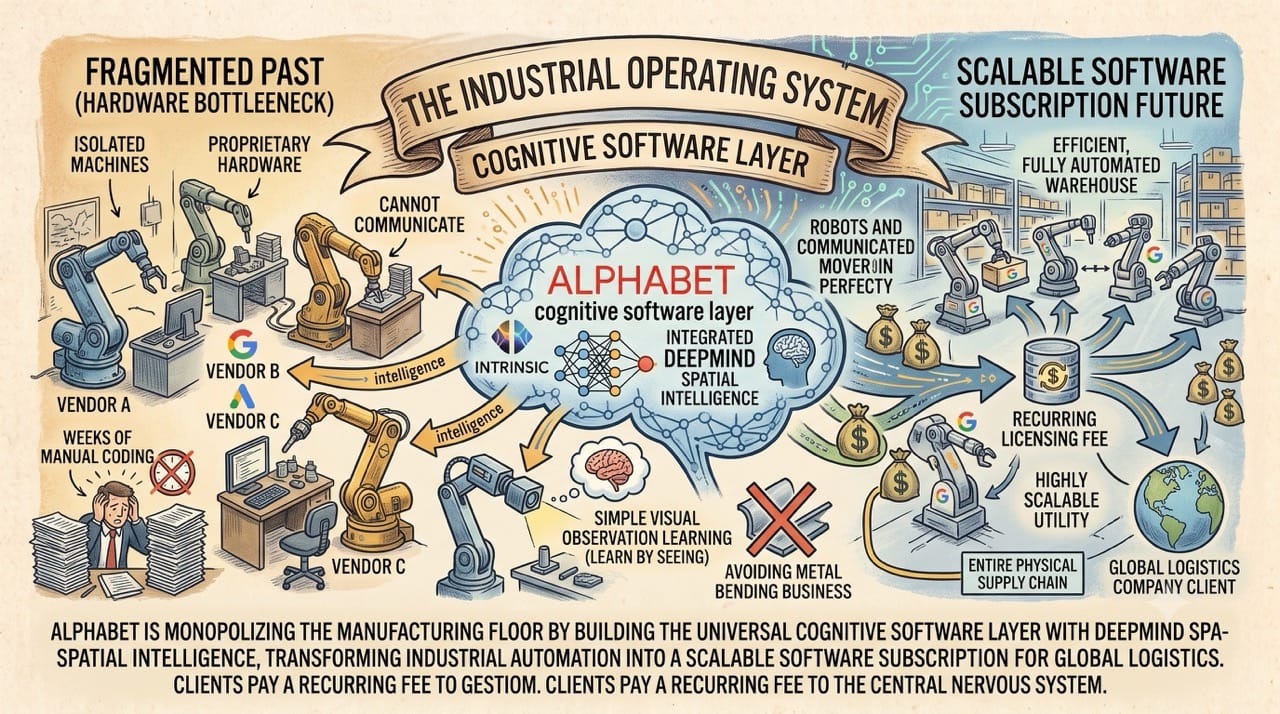
Alphabet is aggressively moving to monopolize the physical manufacturing floor through their robotics subsidiary Intrinsic.
The global industrial robotics market is currently a highly fragmented mess.
Factory floors are filled with proprietary hardware from legacy manufacturers that cannot easily communicate with one another.
Alphabet is purposefully avoiding the low margin business of bending metal to build physical robotic arms.
They are entirely focused on building the universal cognitive software layer that connects these isolated machines.
By integrating advanced spatial intelligence directly from DeepMind, they allow a standard factory robot to learn a complex assembly task through simple visual observation rather than requiring weeks of manual coding.
This strategic pivot is brilliant because it transforms industrial manufacturing from a rigid hardware bottleneck into a highly scalable software subscription.
When a global logistics company wants to automate a new warehouse, they will not rely on the legacy hardware vendor for the underlying intelligence.
They will simply pay Alphabet a recurring licensing fee to act as the central nervous system for their entire physical supply chain.
The Biotech Windfall
The most lucrative moonshot monetization is happening completely outside the realm of consumer software.
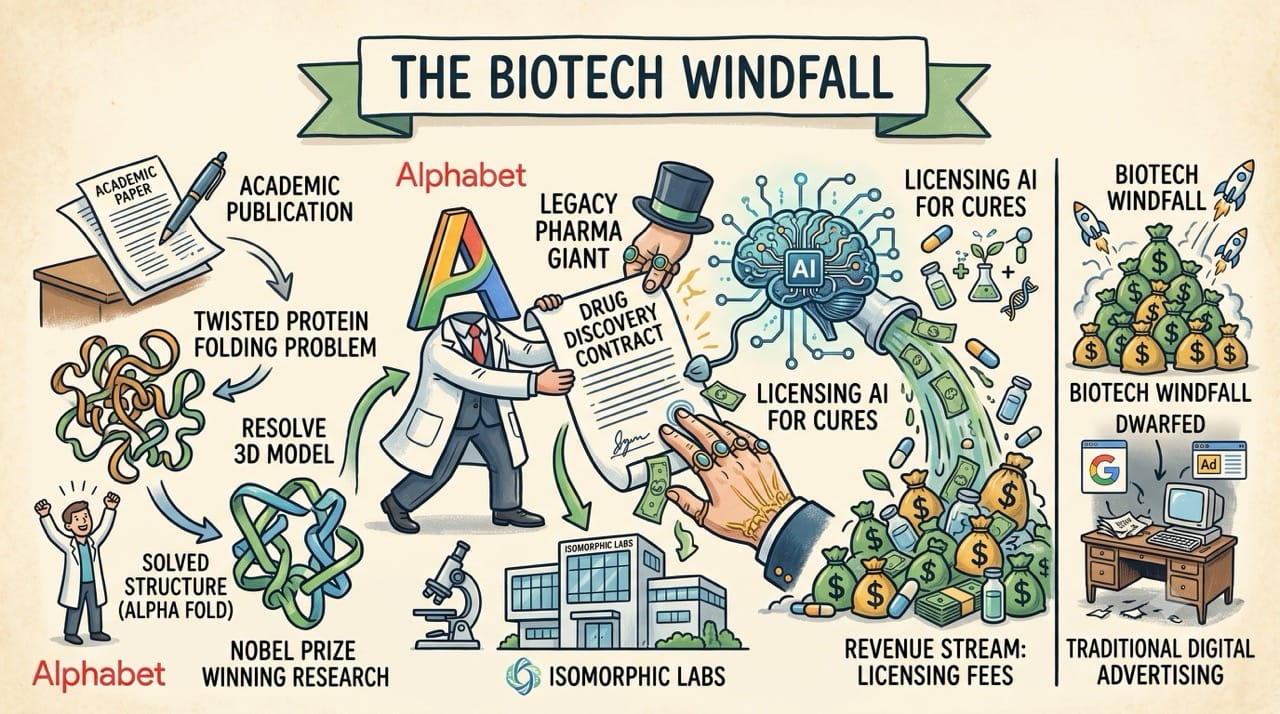
Google DeepMind fundamentally solved the protein folding problem with AlphaFold, and now they are actively turning that Nobel Prize winning research into a commercial juggernaut.
Alphabet is no longer just publishing academic papers on biology.
Through spin off companies like Isomorphic Labs they are aggressively signing highly lucrative drug discovery contracts with legacy pharmaceutical giants.
They are essentially licensing the artificial intelligence required to cure disease, which opens up an entirely new revenue stream that dwarfs traditional digital advertising.
Conclusion: The Holding Company
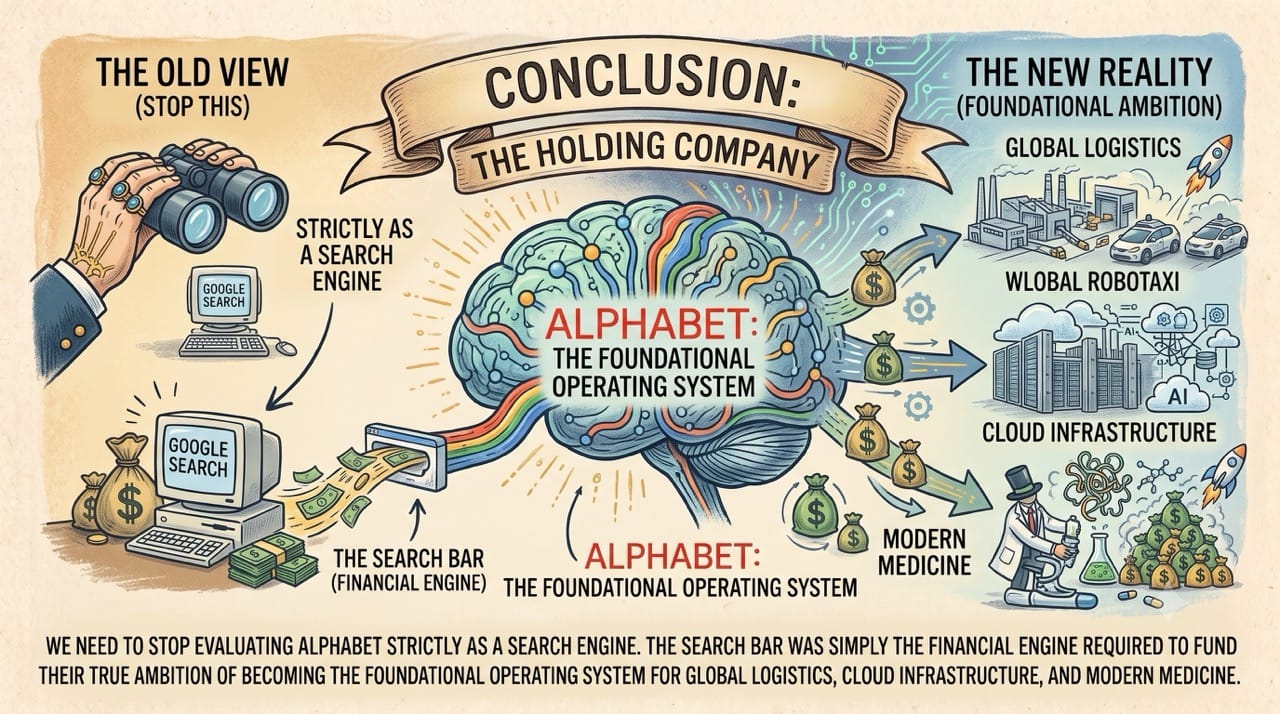
We need to stop evaluating Alphabet strictly as a search engine.
The search bar was simply the financial engine required to fund their true ambition of becoming the foundational operating system for global logistics, cloud infrastructure, and modern medicine.