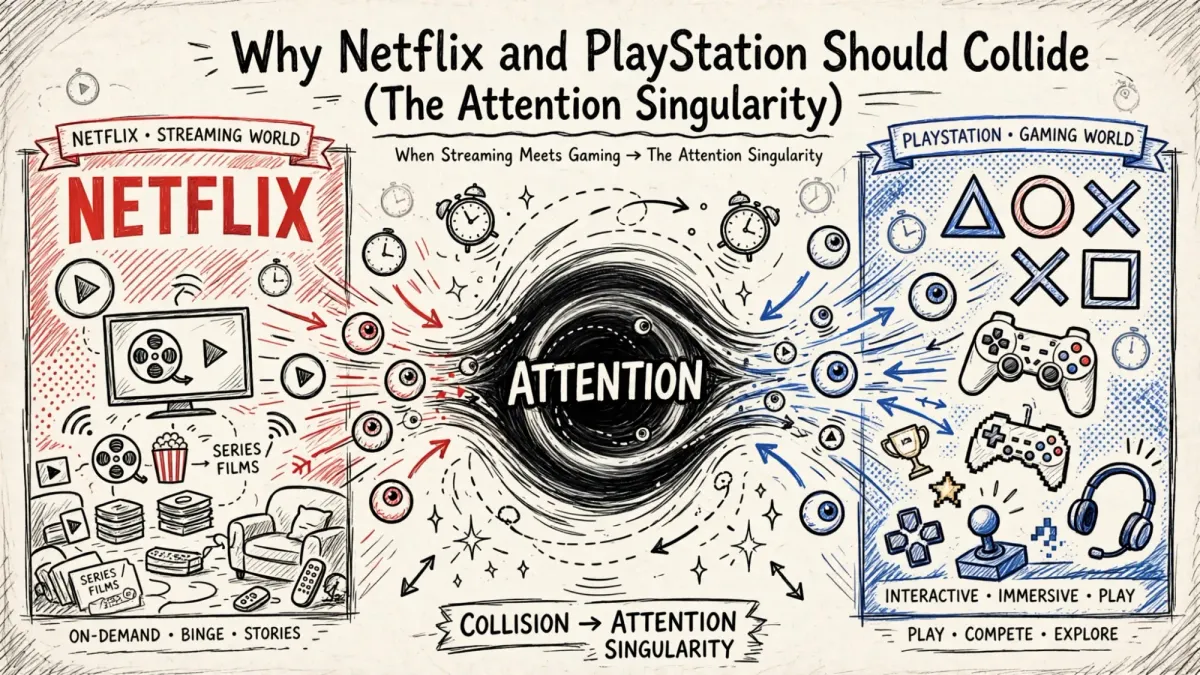
Why Netflix and PlayStation Should Collide (The Attention Singularity)
We assume video games and streaming movies are two completely separate industries fighting for our wallets. The reality is that the death of physical media is forcing a brutal consolidation where passive watching and active playing merge into a single subscription.
The death of the physical disk and the battle for exclusive gaming culture prove that the future of media is a single monopolized digital tollbooth.
Inspiration: Observing the aggressive push by Netflix to secure premiere gaming content like the Grand Theft Auto trailers, alongside PlayStation officially ditching the physical disk drive. Realizing that the walls separating passive streaming and interactive gaming are rapidly collapsing.
The Death of the Disk
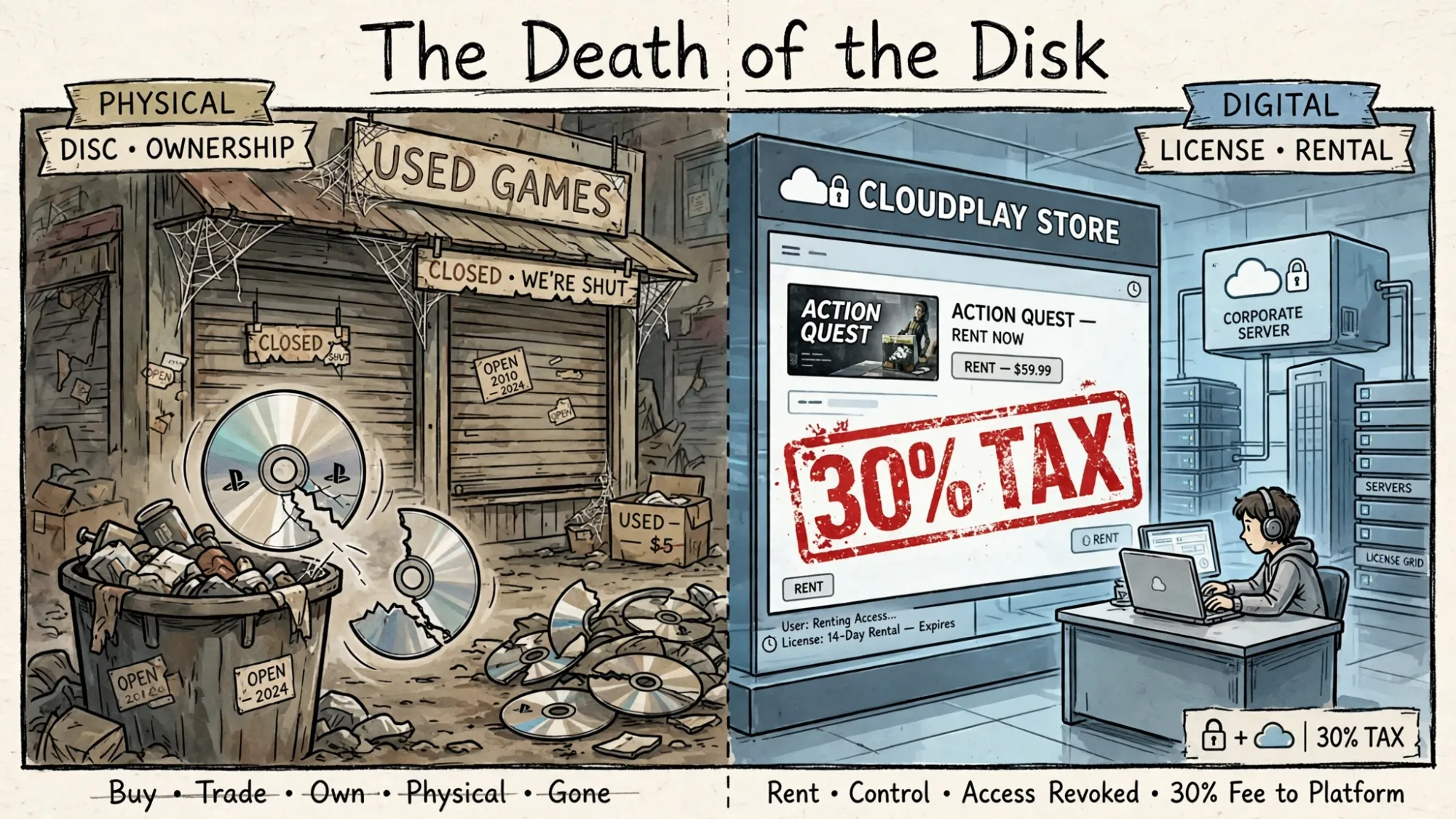
Sony is officially killing the physical disk drive for the next generation of PlayStation hardware.
This is not a design choice about saving plastic or making the console thinner for your living room.
It is a highly calculated financial maneuver designed to completely destroy the secondary used game market.
When physical media disappears the hardware manufacturer secures a flawless monopoly over distribution.
Every single digital purchase is forced through their proprietary storefront where they collect a strict thirty percent tax.
You no longer own your games but you simply rent access to them from a corporate server.
The Netflix Trojan Horse
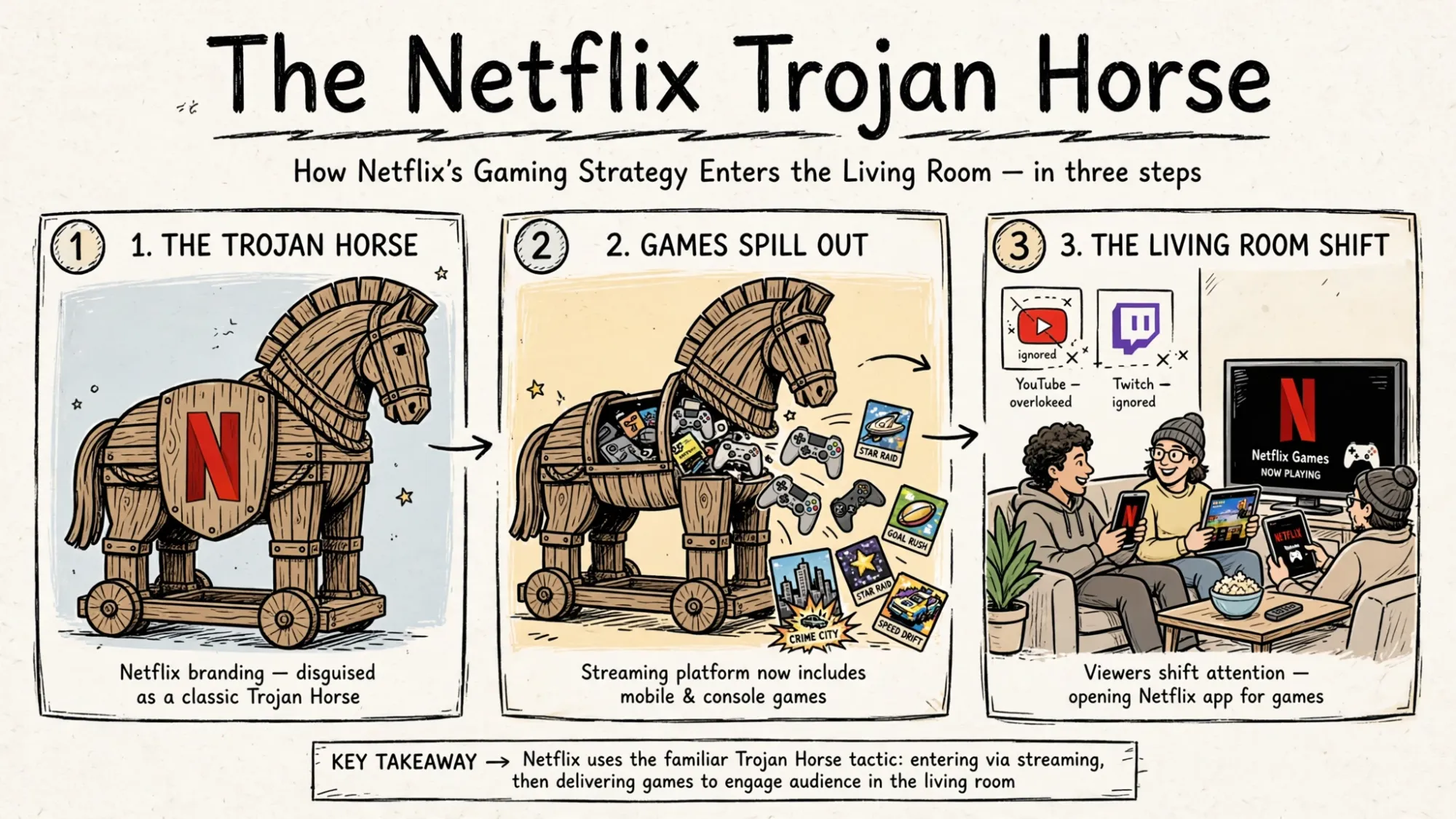
While console makers lock down their hardware Netflix is quietly executing a brilliant invasion into the gaming sector.
Their aggressive maneuvers to secure exclusive rights to blockbuster gaming content and trailers reveal their true corporate ambition.
They do not just want to be a digital movie theater. They want to be the undisputed cultural epicenter of the internet.
Securing exclusive gaming content forces millions of highly engaged users to open the Netflix application instead of scrolling through YouTube or Twitch.
It transitions them from a passive viewing application into an active daily habit.
The Attention Economy Convergence
Historically corporate executives viewed movies and video games as two entirely separate markets with distinct consumer bases.
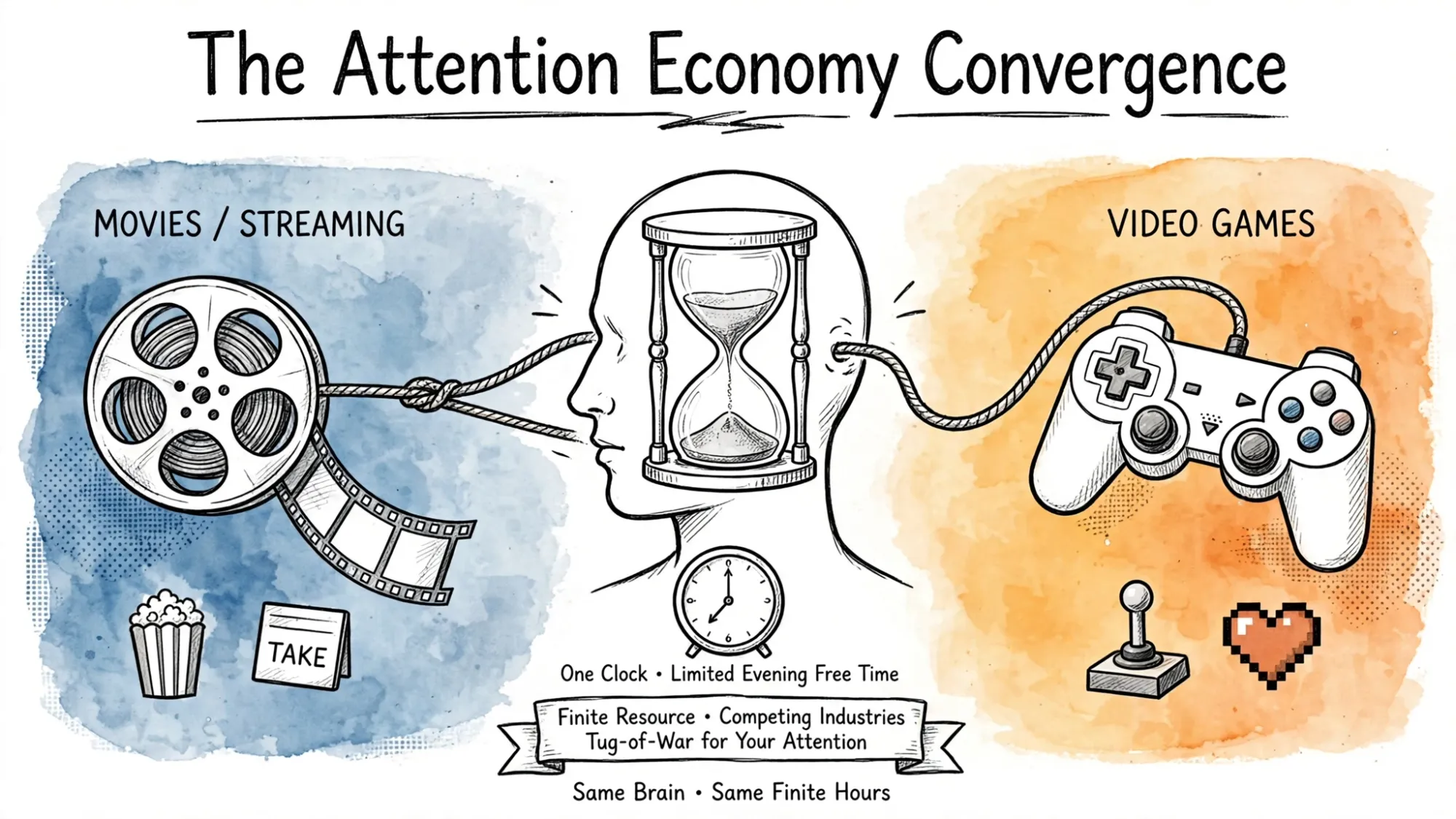
The brutal economic truth is that they are both competing for the exact same finite resource of human attention.
A typical consumer only has a few hours of free time every evening.
If they are playing a heavy roleplaying game for a month they are actively canceling their television streaming subscriptions.
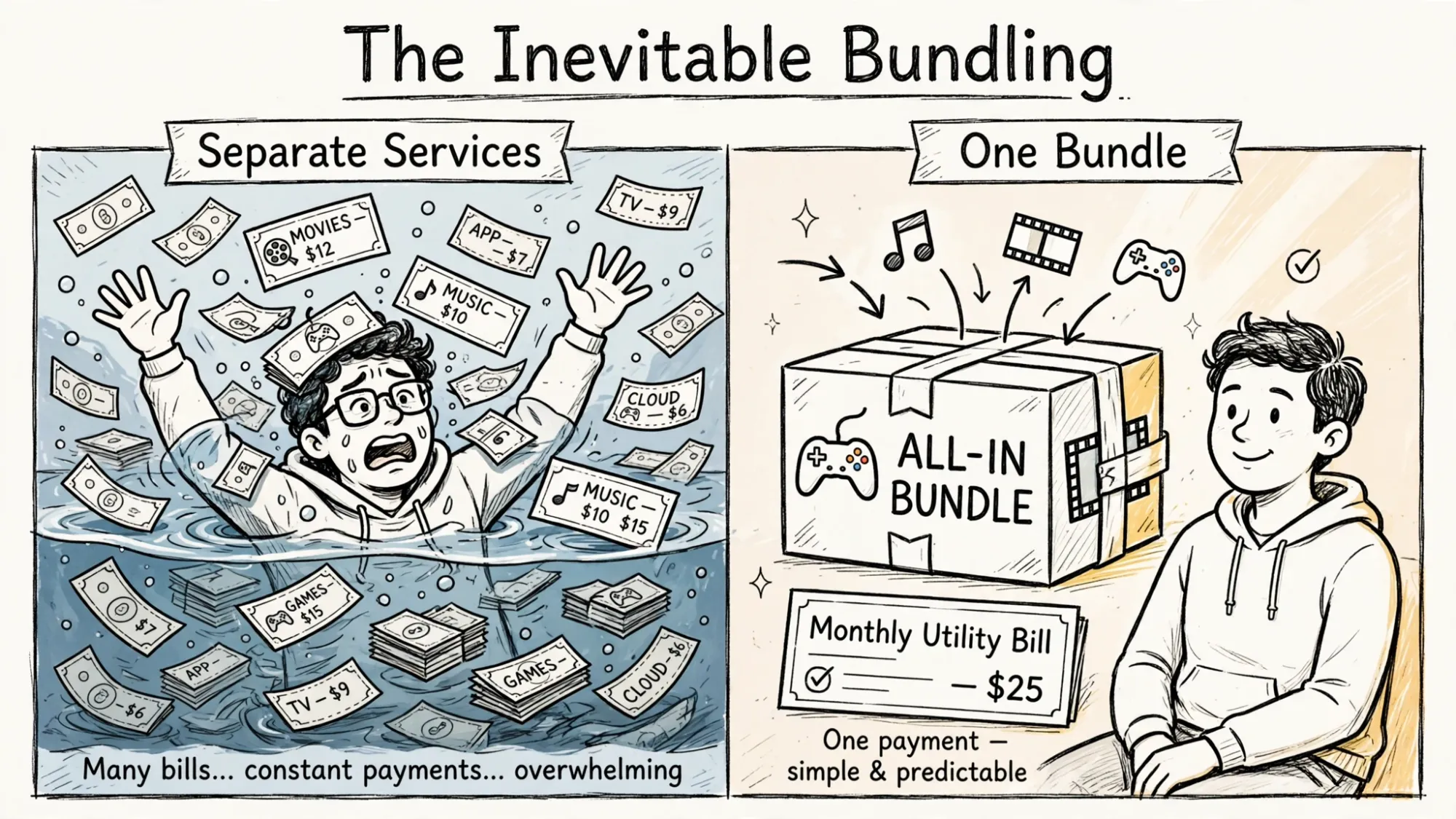
The only way media giants can survive this zero sum game is by merging both formats into a single inescapable bundle.
The Inevitable Bundling
We are rapidly approaching an era of aggressive corporate consolidation across the entire entertainment sector.
A standalone video streaming service will soon be viewed as a highly vulnerable and incomplete consumer product.
Companies like Microsoft are already laying the groundwork with Game Pass by turning interactive software into a monthly utility bill.
The logical endgame is a scenario where legacy gaming companies are forced to acquire major Hollywood studios or merge directly with streaming titans to offer a unified entertainment subscription.
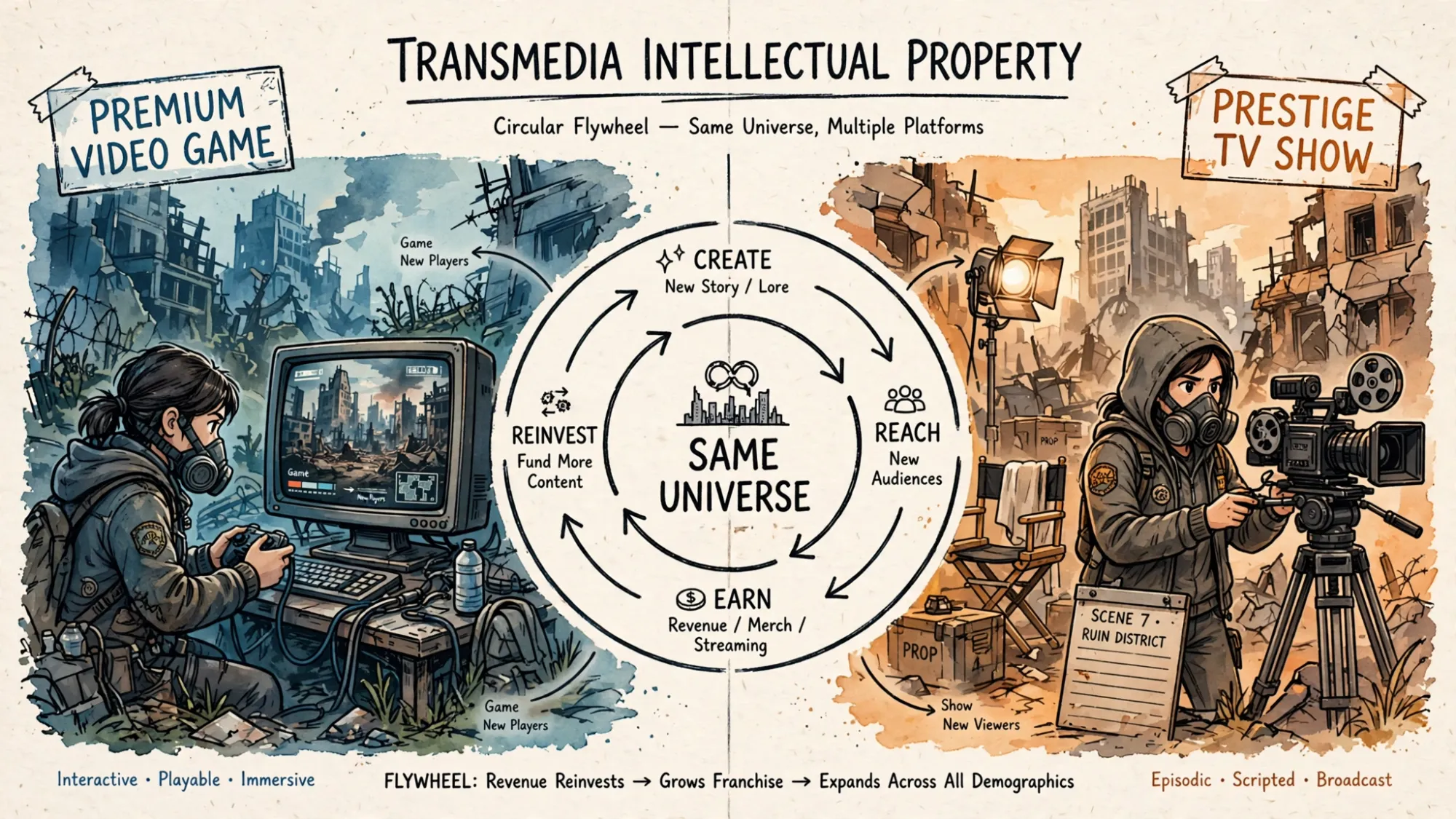
Transmedia Intellectual Property
This consolidation is heavily driven by the new rules of intellectual property monetization. The most lucrative franchises in the world no longer exist in a single isolated format.
We saw the Last of Us successfully transition from a premium PlayStation exclusive into a prestige television event that dominated cultural conversations.
When a single corporate entity owns both the gaming studio and the distribution network they can monetize the exact same fictional universe across multiple different consumer demographics simultaneously.
It creates an incredible flywheel of consumer spending.
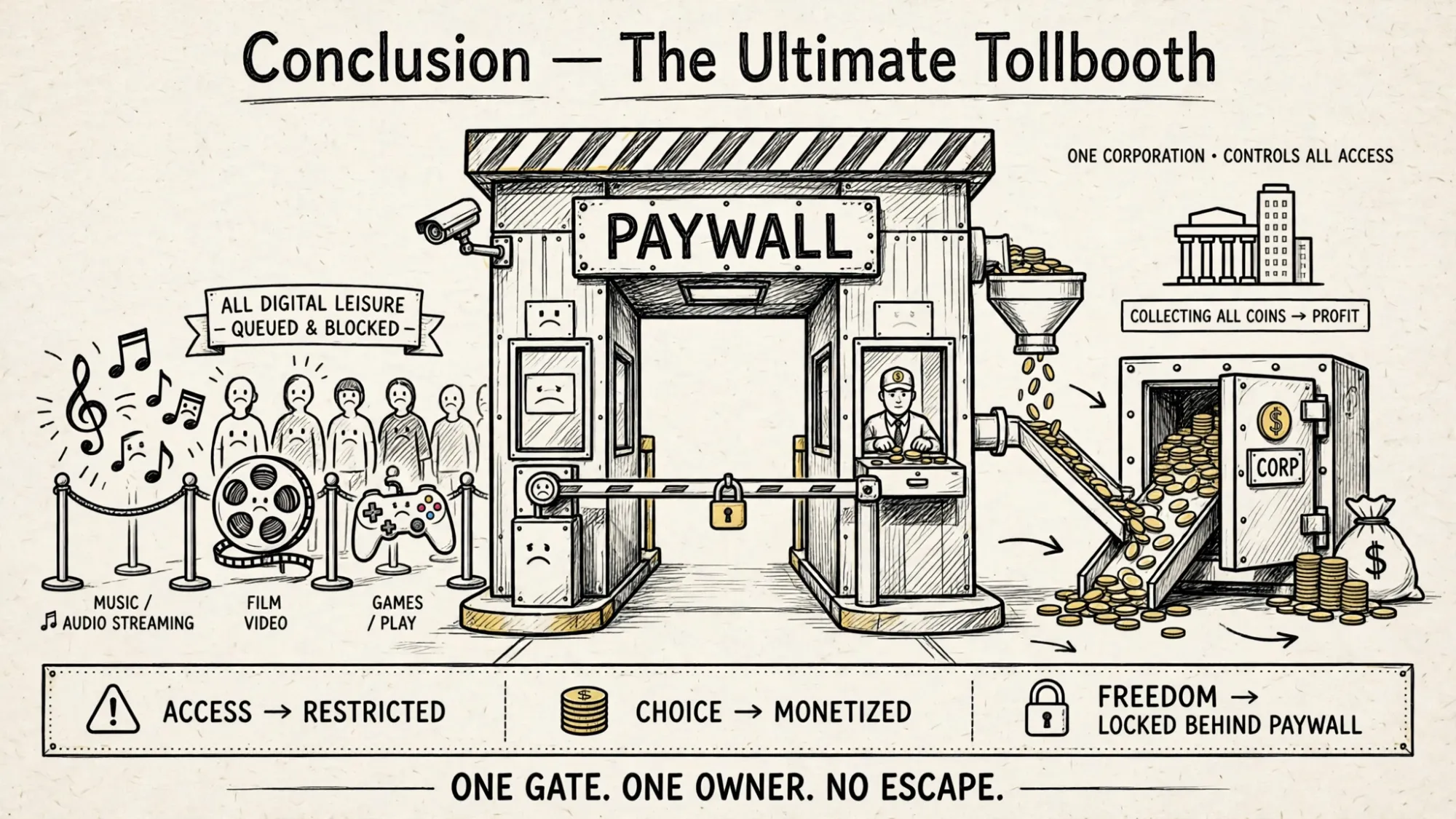
Conclusion: The Ultimate Tollbooth
The era of maintaining a dozen different subscriptions for music, movies, and video games is rapidly coming to a close.
The most valuable entertainment company of the next decade will simply be the one that successfully traps all of your digital leisure time behind a single monthly paywall.