Incentives, Incentives, Incentives
We spend hours trying to decode the complex psychological reasons behind bad corporate decisions. The reality is that if you want to understand why any system operates a certain way you just have to follow the underlying reward structure.
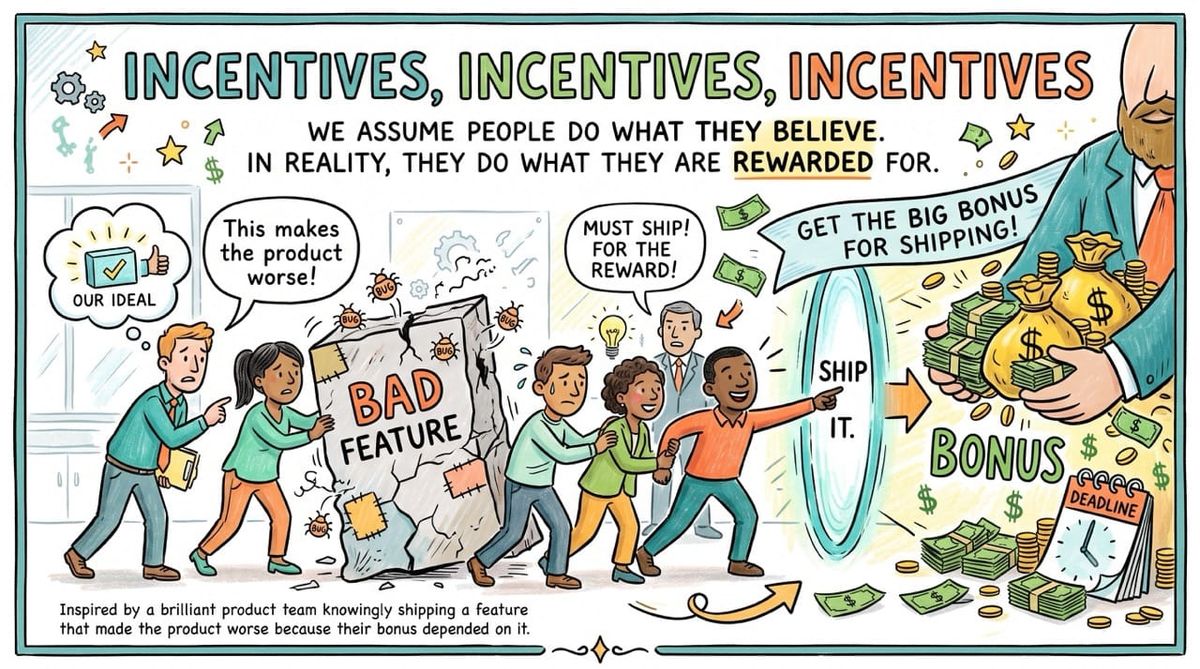
We assume people do what they believe. In reality, they do what they are rewarded for.
Inspiration: Watching a brilliant product team knowingly ship a feature that made the product worse because their bonus depended on shipping it.
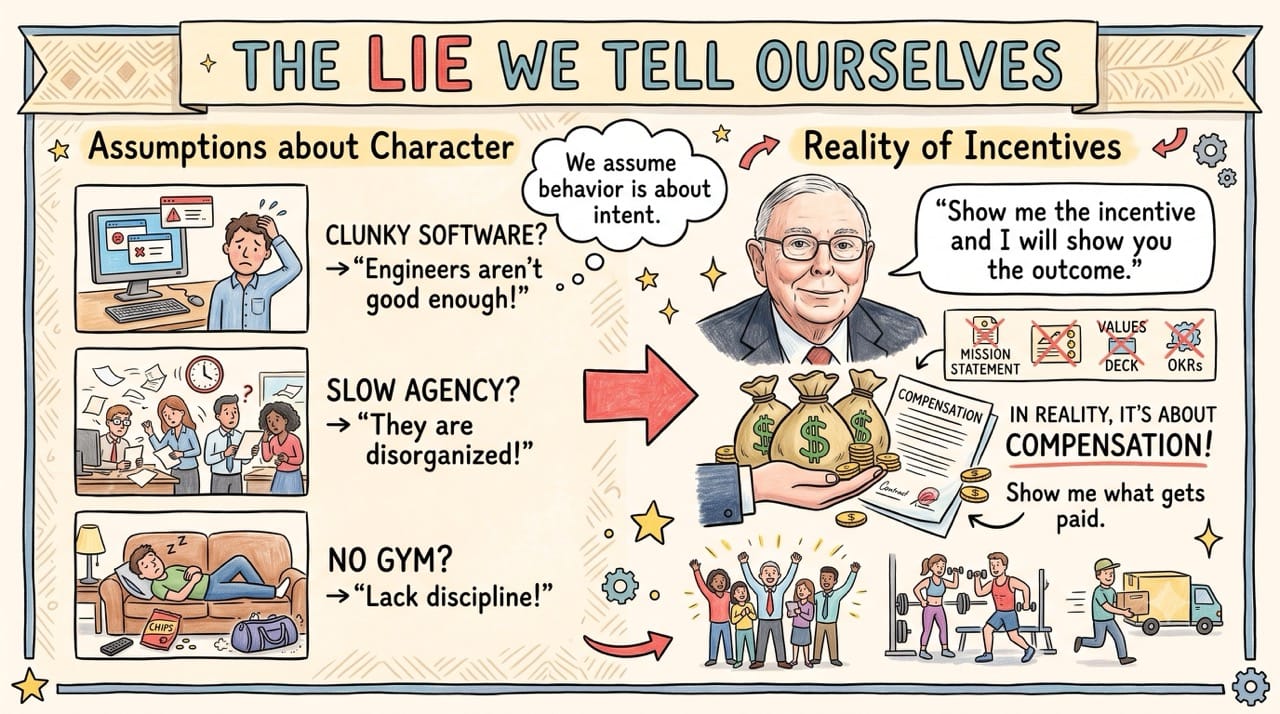
The Lie We Tell Ourselves
We love stories about character.
We think the enterprise software is clunky because the engineers aren't good enough.
We think the agency is slow because they are disorganized. We think people don't go to the gym because they lack discipline.
We assume behavior is about intent.
In reality, it is about Compensation.
Charlie Munger said it clean: "Show me the incentive and I will show you the outcome."
He didn't say show me the mission statement. The values deck. The OKRs.
Show me what gets paid.
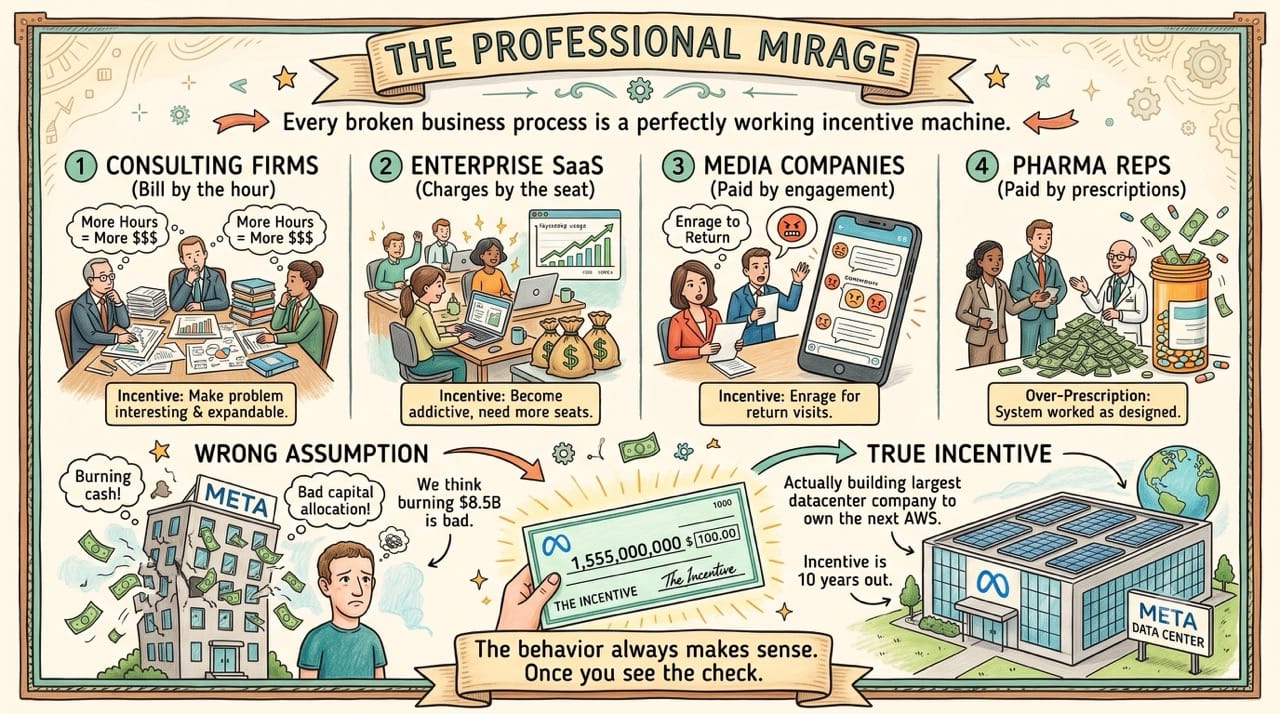
The Professional Mirage
Every broken business process is a perfectly working incentive machine.
Consulting firms bill by the hour. Their incentive is not to solve your problem fast. It is to make the problem intellectually interesting and infinitely expandable.
Enterprise SaaS charges by the seat. Their incentive is not to make you more efficient with fewer people. It is to become so addictive that you need more seats.
Media companies are paid by engagement. Their incentive is not to inform you. It is to enrage you just enough to come back tomorrow.
Pharma reps were paid by prescriptions. We acted shocked when over-prescription happened. The system worked exactly as designed.
We think Meta burned $8.5 billion in free cash flow because they are bad at capital allocation.
They are actually building the largest data center company on earth because their incentive is to own the next AWS.
The P&L looks terrible because the incentive is 10 years out.
The behavior always makes sense. Once you see the check.
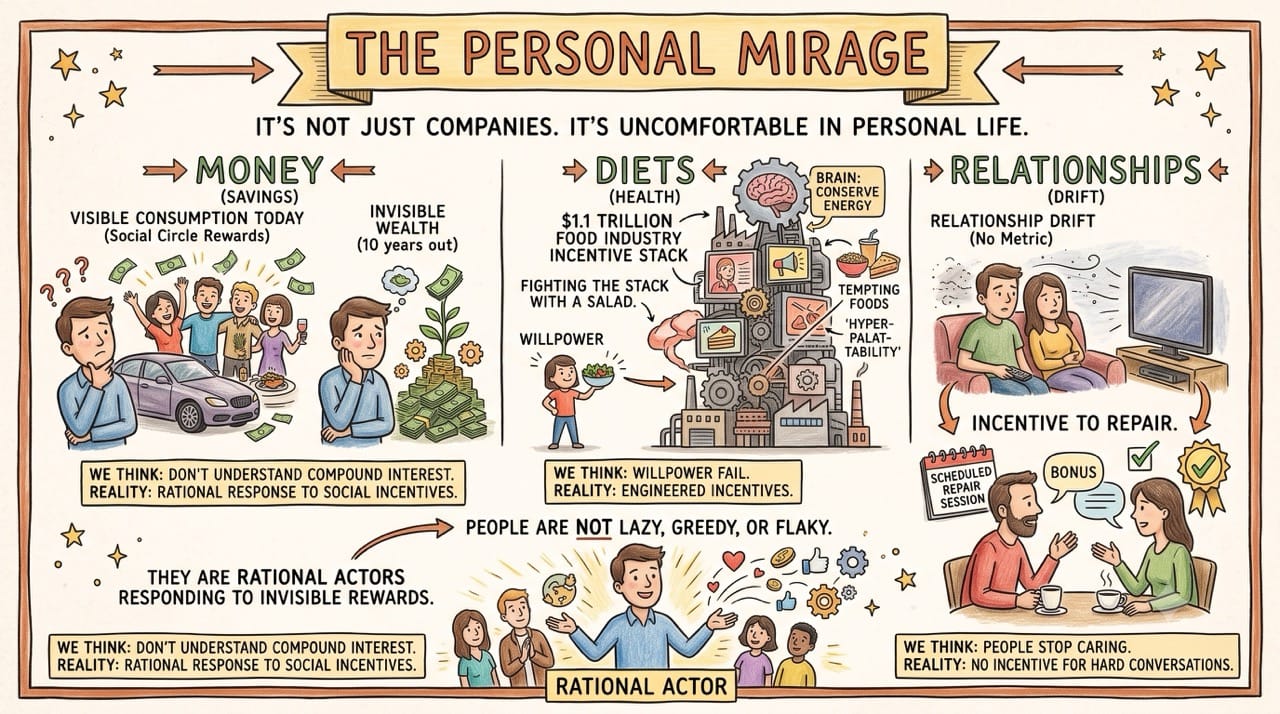
The Personal Mirage
It is not just companies. It's more uncomfortable in personal life.
We think people don't save money because they don't understand compound interest.
They don't save because their social circle rewards visible consumption today, not invisible wealth in 10 years.
We think diets fail because of willpower.
They fail because the food industry is incentivized to engineer hyper-palatability, and your brain is incentivized to conserve energy.
You are fighting a $1.1 trillion incentive stack with a salad.
We think relationships drift because people stop caring. They drift because there is no scheduled incentive to repair. No metric. No bonus for the hard conversation. So it doesn't happen.
We moralize. We say people are lazy, greedy, flaky.
They are not. They are rational actors responding to invisible rewards.
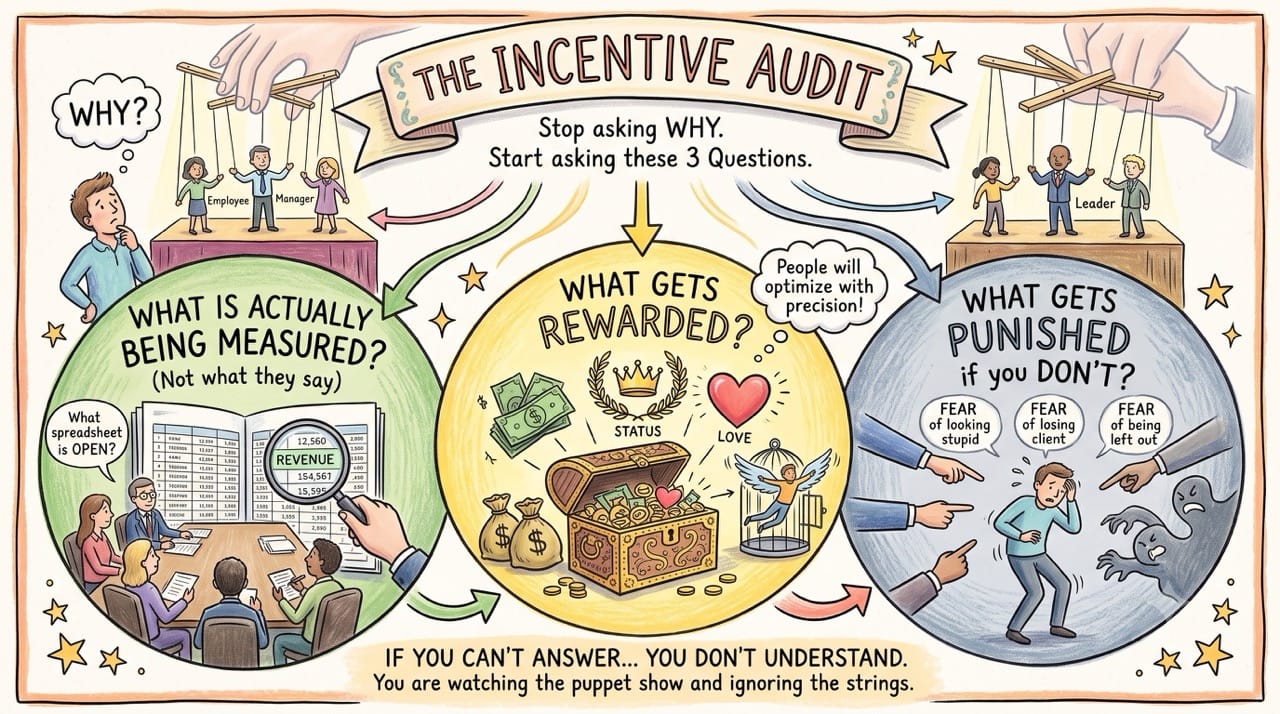
The Incentive Audit
So I stopped asking "why are they doing this?"
I started asking three questions. This is my Incentive Audit:
1. What is actually being measured?
Not what they say is being measured. What spreadsheet actually gets opened in the board meeting?
2. What gets rewarded?
Money, status, love, freedom. People will optimize for any of them with terrifying precision.
3. What gets punished if you DON'T do it?
The most powerful incentive is often fear. Fear of looking stupid. Fear of losing the client. Fear of being left out.
If you can't answer those three, you don't understand the situation. You are watching the puppet show and ignoring the strings.
Winners and Losers
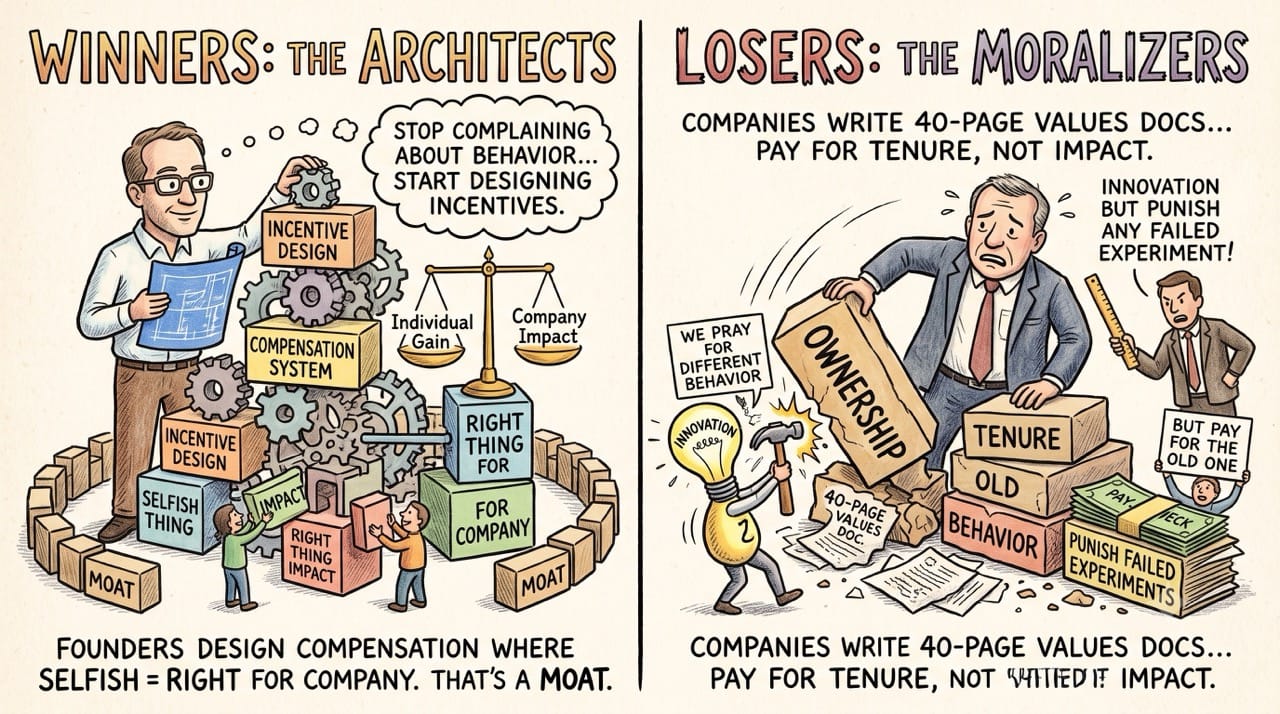
Winners: The Architects.
The people who stop complaining about behavior and start designing incentives. Good founders don't hire for culture fit. They design a compensation system where the selfish thing to do is also the right thing to do for the company. That's a moat.
Losers: The Moralizers.
The companies that write a 40-page values doc about "ownership" while paying people for tenure, not impact. The managers who want innovation but punish any failed experiment. They pray for different behavior while paying for the old one.
My Take: You Get What You Pay For
This is liberating.
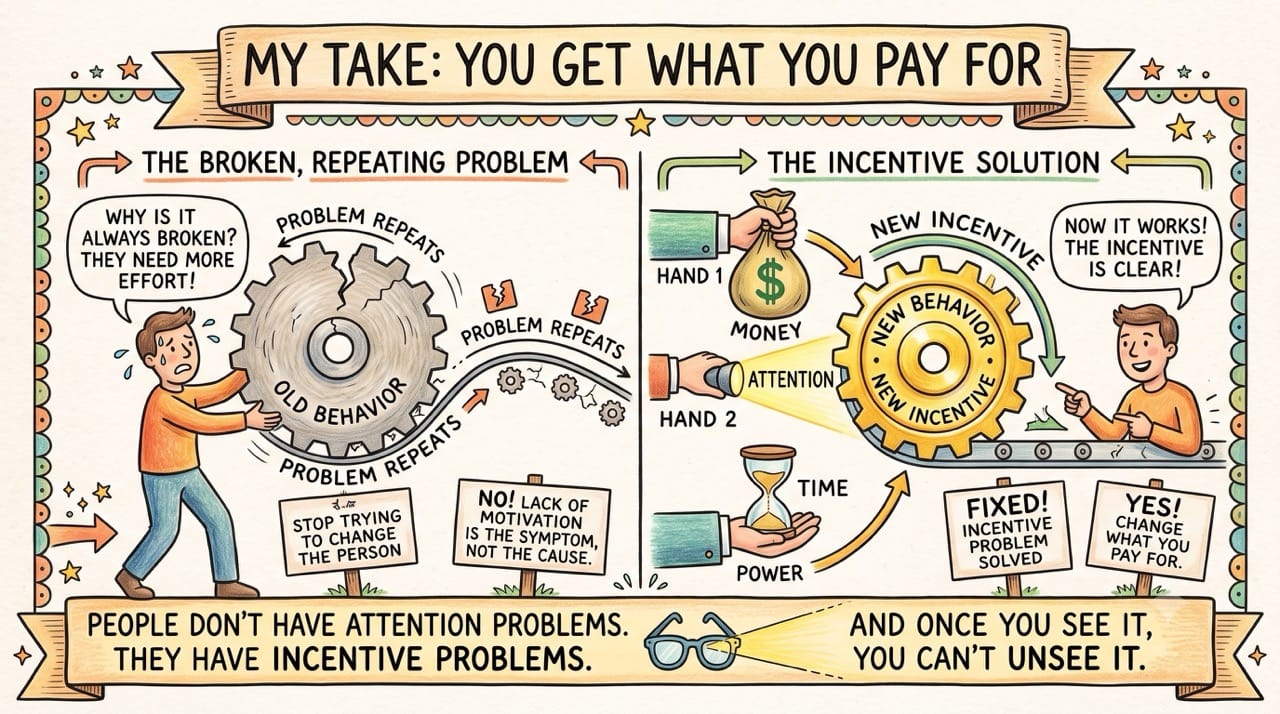
When something in your company or your life is broken and keeps repeating, you don't have a people problem. You don't have a motivation problem.
You have an incentive problem.
Stop trying to change the person. Change what you pay them for, with money, attention, or time.
People don't have attention problems. They have incentive problems. And once you see it, you can't unsee it.