Why Meta is About to Become One of The Biggest Data Centre Companies
We think Meta is just a social media company hoarding chips for internal algorithms. They are actually building the hidden infrastructure to become the next dominant cloud computing giant.
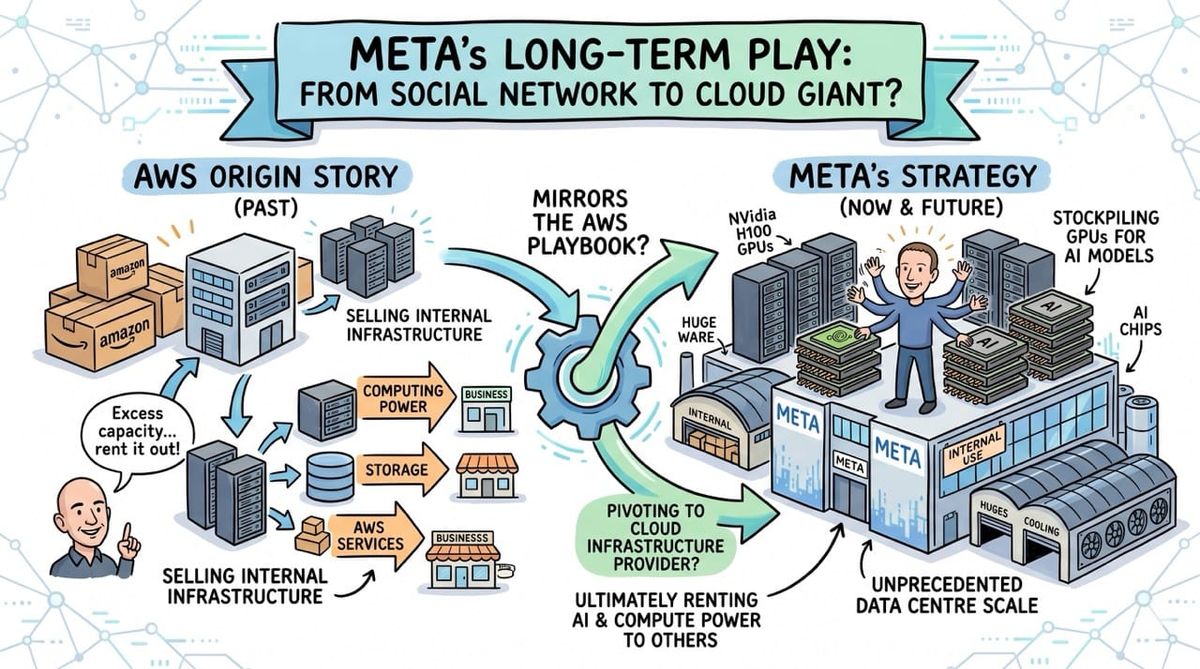
Mark Zuckerberg is stockpiling processors for artificial intelligence, but the long term play perfectly mirrors the origin story of Amazon Web Services.
Inspiration: Exploring the parallels between the creation of AWS and Meta's current accumulation of GPUs, realizing the social network is perfectly positioned to pivot into cloud infrastructure.
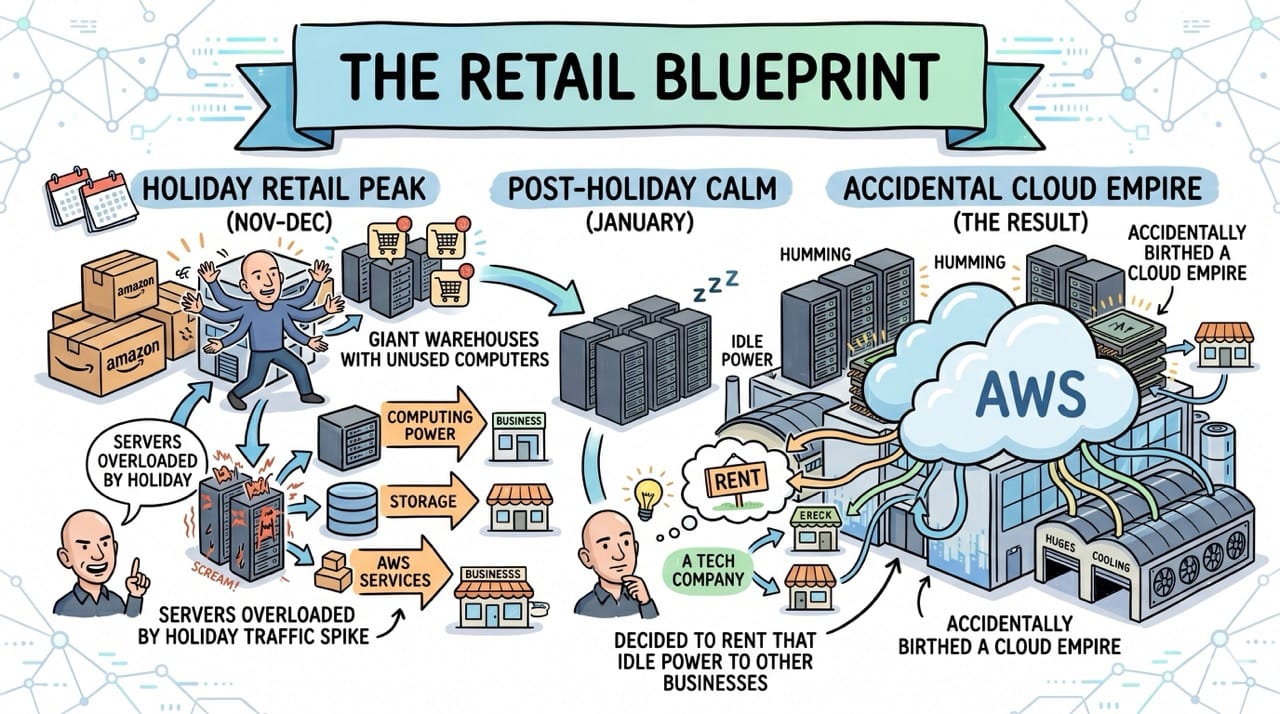
The Retail Blueprint
Amazon did not start out trying to dominate global cloud computing. They simply needed enough servers to survive the incredible traffic spike of the holiday shopping season.
Once the holidays ended, they had giant warehouses filled with unused computers.
They decided to rent that idle power to other businesses and accidentally birthed a cloud empire.
The Modern Stockpile
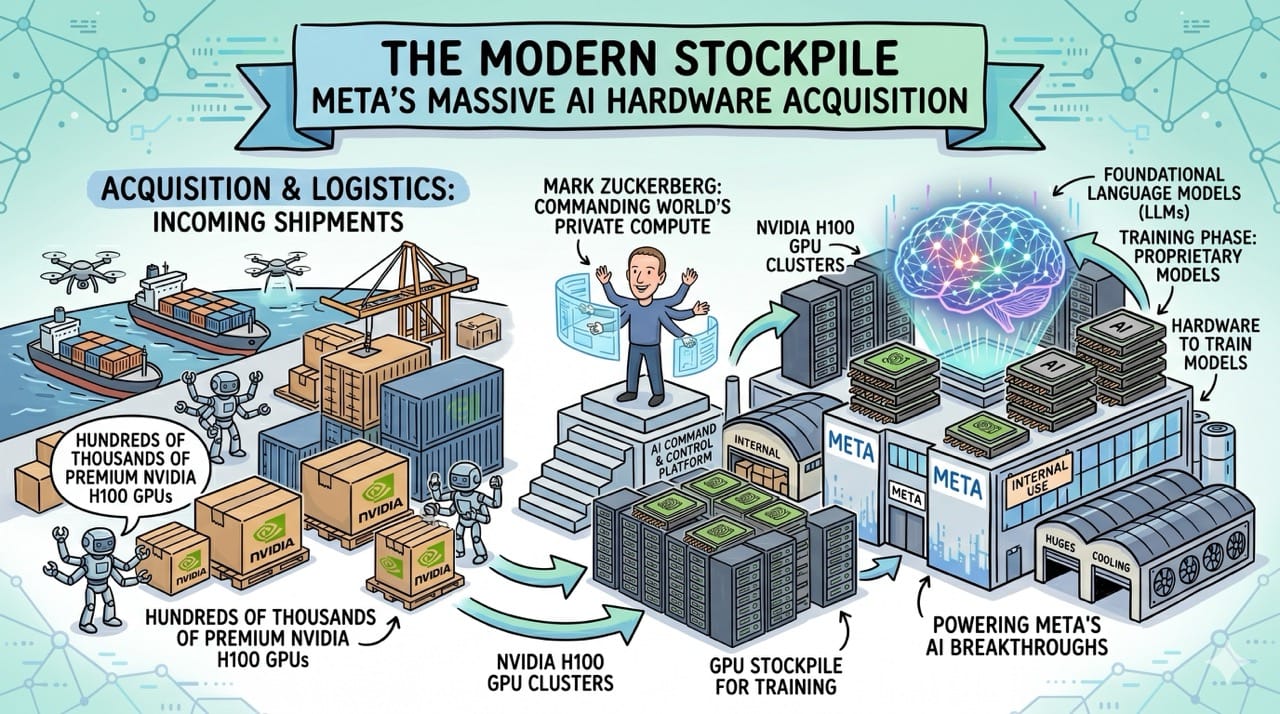
Meta is currently executing the exact same infrastructural buildup but with artificial intelligence.
They are purchasing hundreds of thousands of premium Nvidia graphics processing units.
Mark Zuckerberg now commands one of the largest private collections of compute on the planet. He needs this hardware to train his foundational language models.
The Idle Capacity
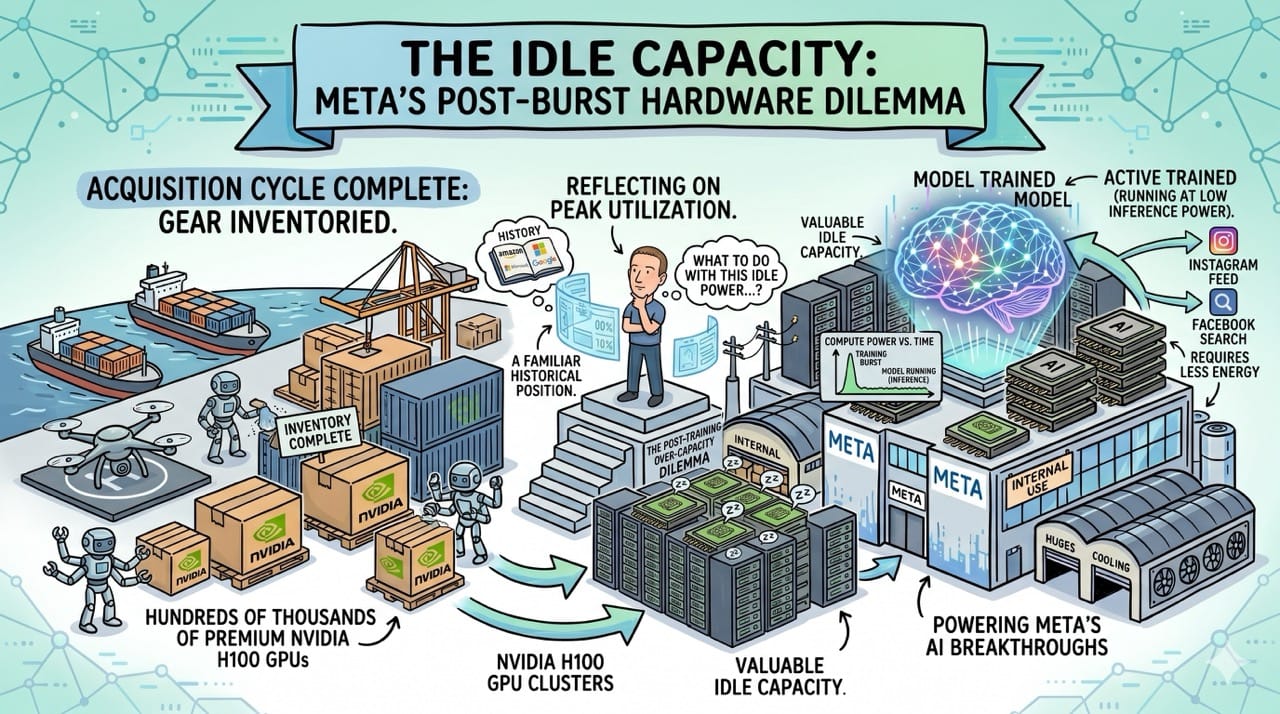
Training an advanced model takes a concentrated burst of incredible power.
Once the model is actually trained, running the software requires significantly less energy.
Meta will soon find itself in a very familiar historical position.
They will have warehouses full of incredibly valuable hardware sitting completely idle between major training cycles.
The Captive Audience
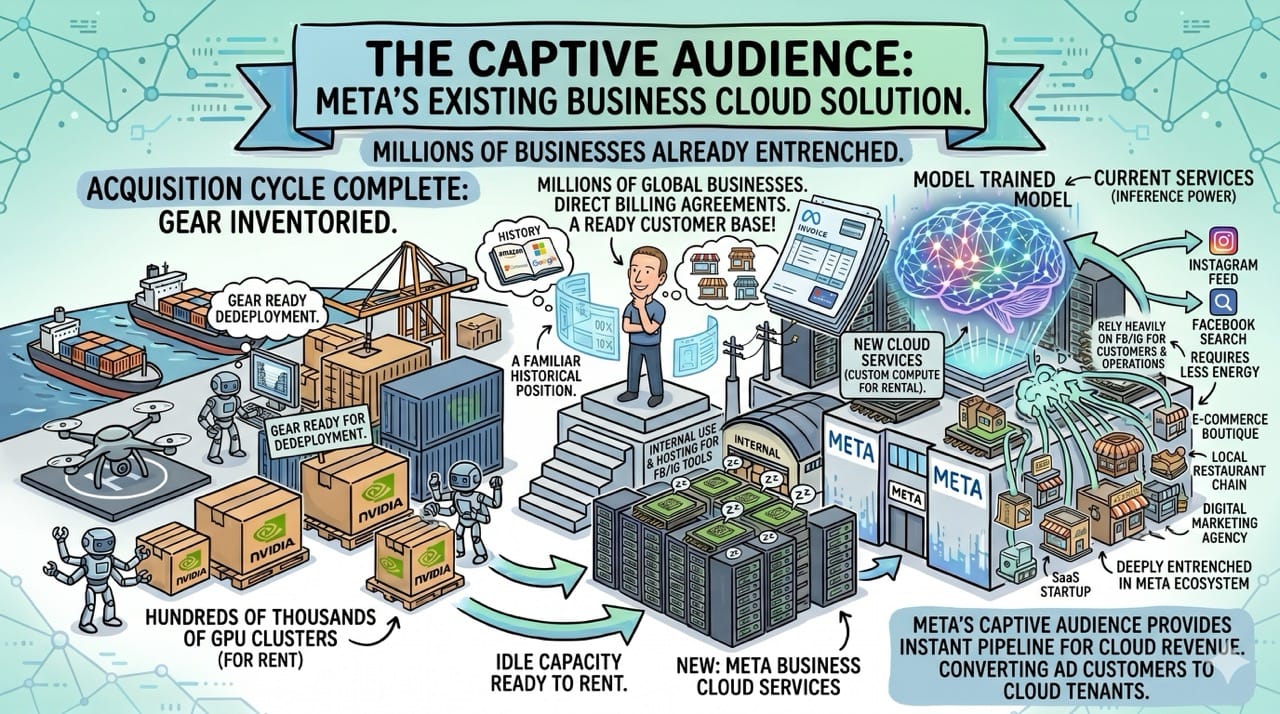
A cloud computing business requires a steady pipeline of corporate customers ready to rent your servers.
Meta already possesses direct billing relationships with millions of global businesses.
These companies rely heavily on Facebook and Instagram to find customers and run their daily operations.
They are already deeply entrenched in the Meta ecosystem.
The Frictionless Upsell
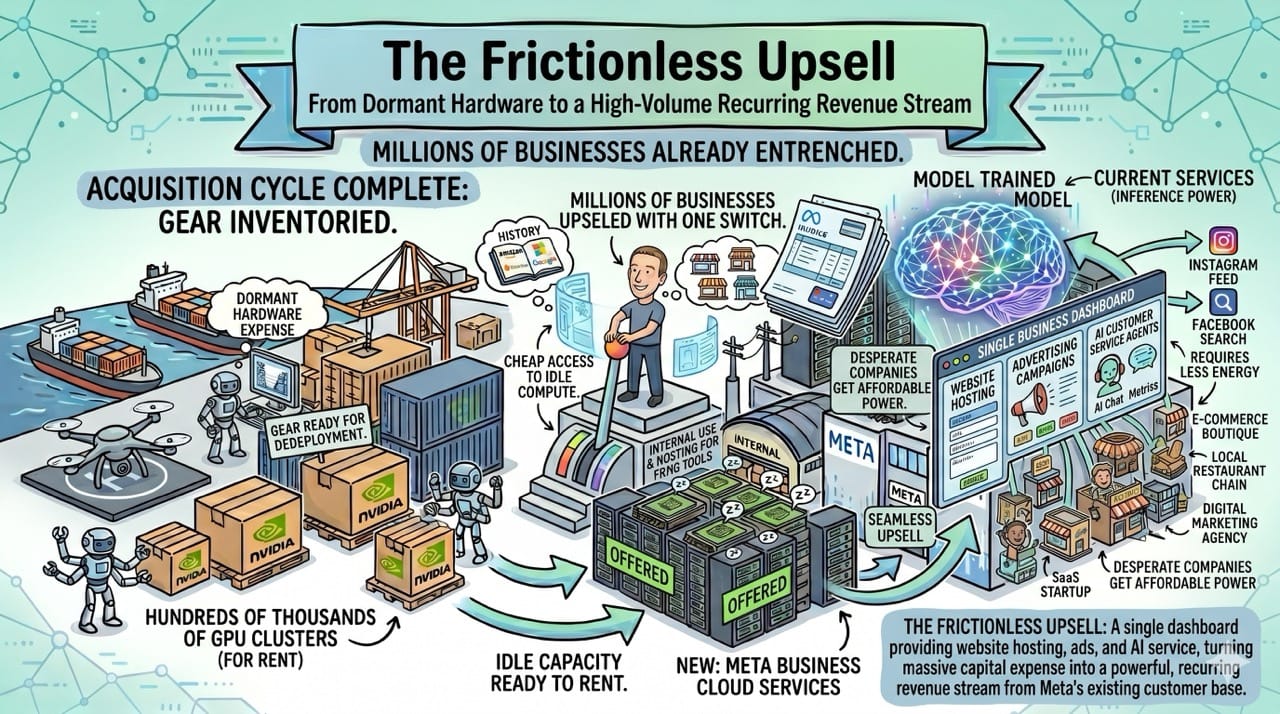
Meta can easily flip a switch and offer these businesses cheap access to their idle processors.
An online retailer could host their website, run their advertising, and power their customer service agents all from a single dashboard.
This provides a seamless upsell for companies desperate for affordable computing power.
It turns a dormant hardware expense into a highly lucrative recurring revenue stream.
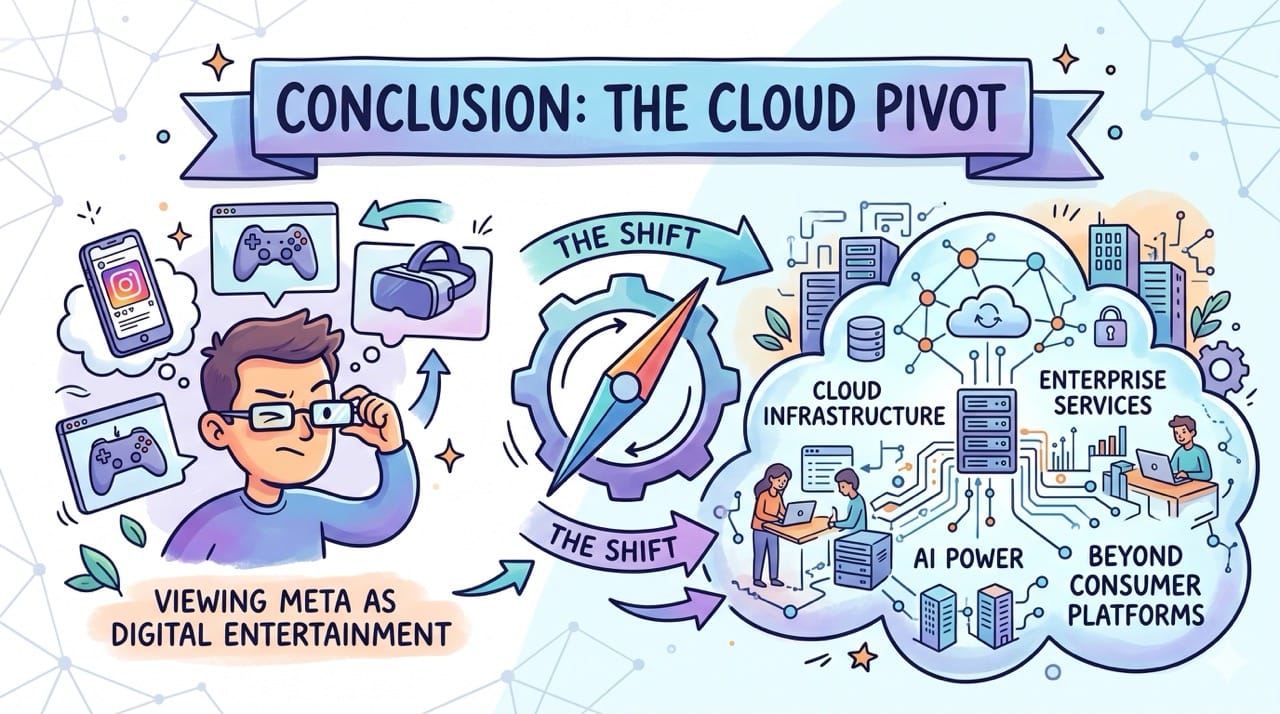
Conclusion: The Cloud Pivot
We limit our thinking by viewing Meta strictly as a platform for digital entertainment.
They are quietly assembling the physical machinery to challenge Amazon and Microsoft for the underlying fabric of the internet.