Why Hard Work Looks Different Now: The Generational Productivity Gap
We assume previous generations worked much harder than we do today. The reality is that technological leverage simply changed what actual labor looks like.
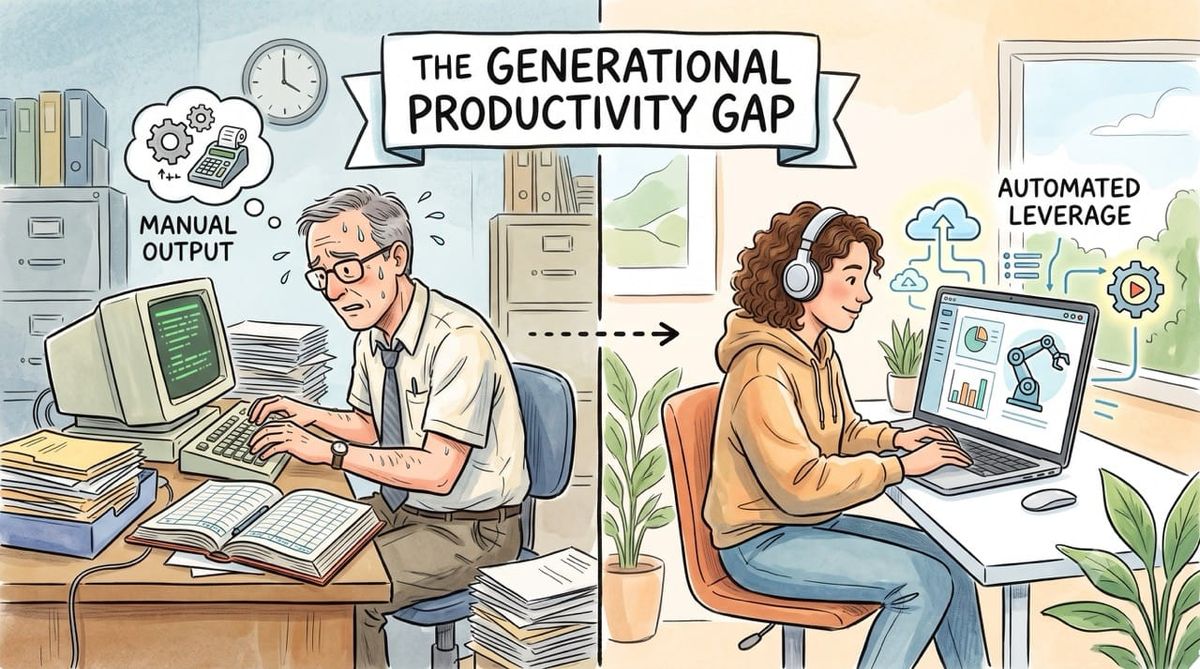
Every technological leap creates a psychological divide between the generation that sweated for their output and the generation that automated it.
Inspiration: Listening to an a16z podcast featuring Tyler Cowen and Alex Tabarrok discussing historical labor hours. Realizing that the definition of real work completely changes every time we introduce a new layer of technological leverage.
The Physical Baseline
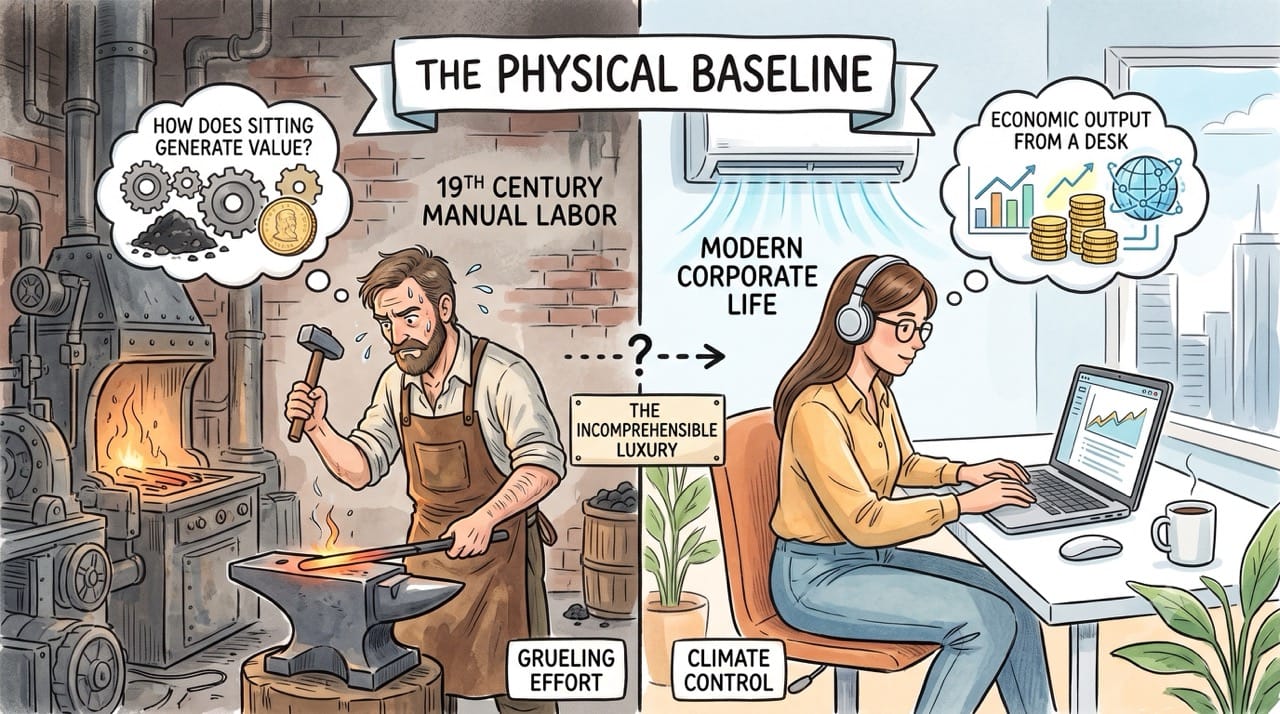
For most of human history survival required dedicating every waking hour to grueling physical labor.
Our ancestors traded their physical health directly for basic agricultural and industrial output.
A factory worker from the nineteenth century would view modern corporate life as an incomprehensible luxury.
They would struggle to understand how sitting in a climate controlled room generates economic value.
The Knowledge Worker Disconnect
This historical baseline explains exactly why older generations often struggle to respect modern knowledge work.
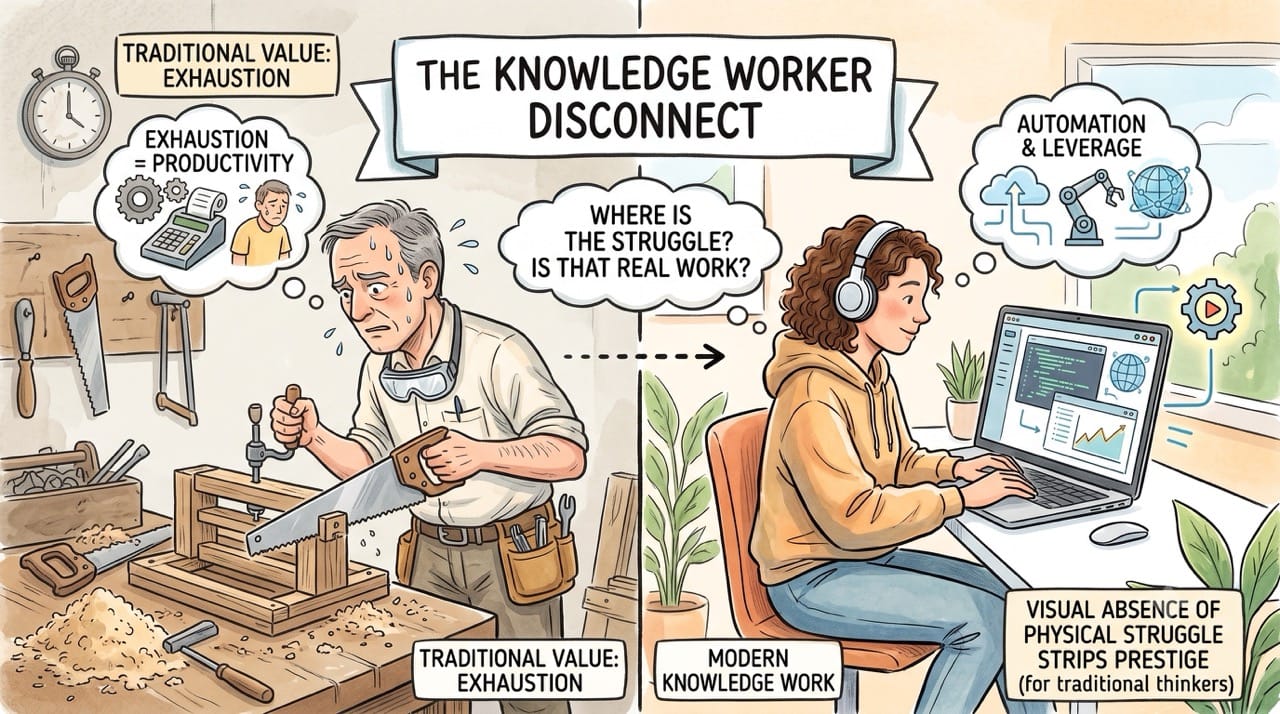
They grew up in an era where tangible physical exhaustion was the only valid metric for a productive day.
When they see a software engineer typing on a laptop from a comfortable home office they naturally assume it is not real work. The visual absence of a physical struggle completely strips the prestige away from remote employment for traditional thinkers.
The Power of Leverage
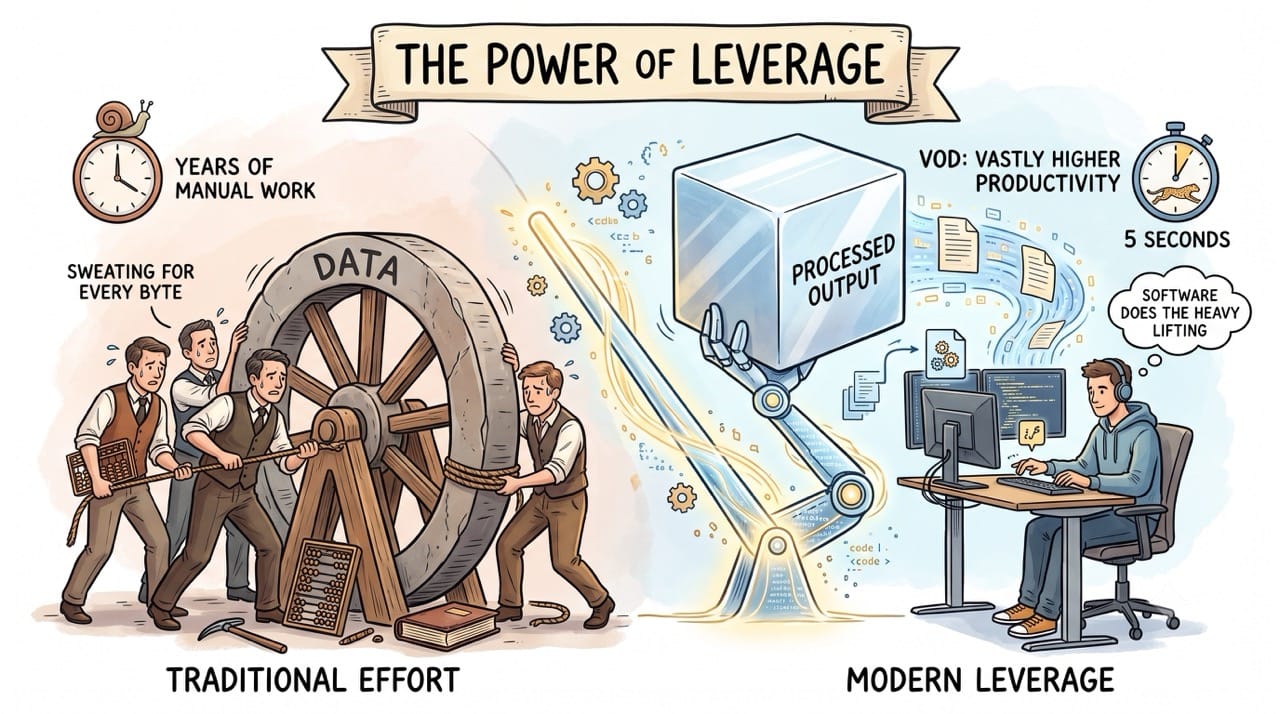
This generational friction is just a fundamental misunderstanding of technological leverage.
A modern programmer can write a single script that processes more data in five seconds than a thousand accountants could manage in a lifetime.
We are not working fewer hours because we are lazy.
We are simply yielding vastly higher productivity per minute because software does the heavy lifting for us.
The AI Multiplier
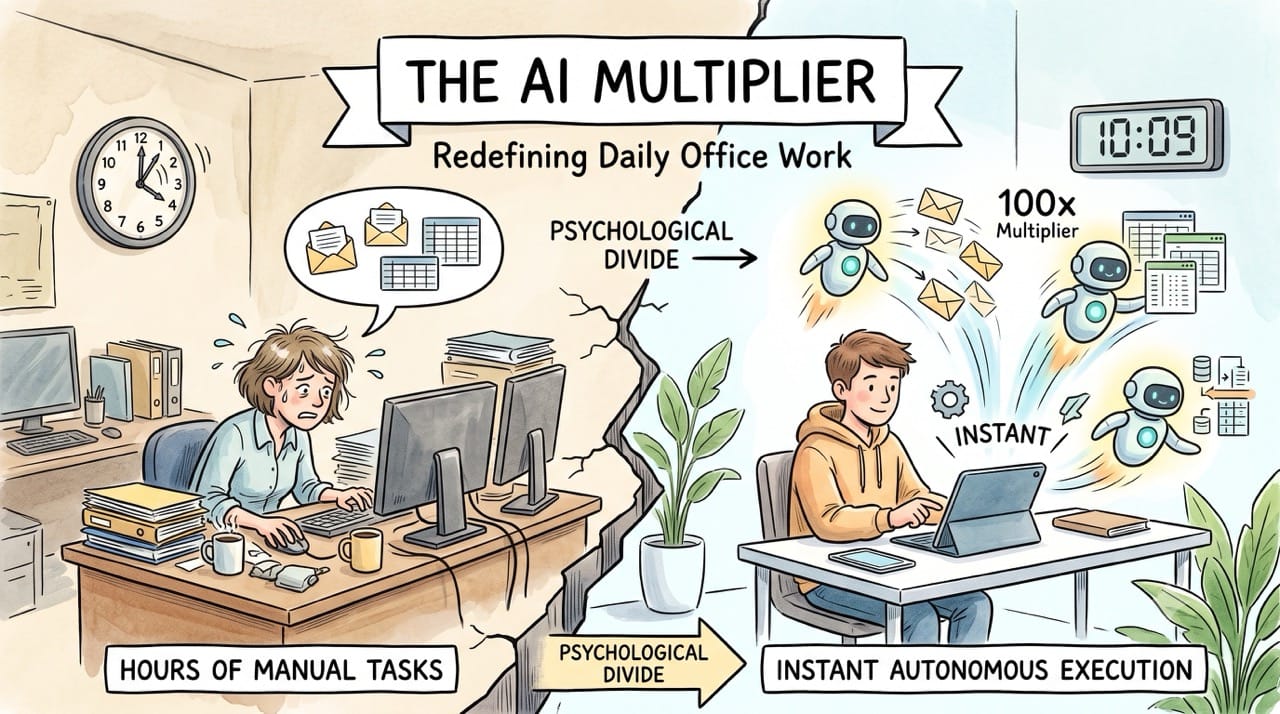
We are about to experience this exact same psychological divide with the artificial intelligence revolution.
The current workforce still measures productivity by how many emails they can write or spreadsheets they can format in a single afternoon.
When autonomous agents start executing these mundane tasks instantly the traditional concept of daily office work will completely fracture.
The Next Generational Gap
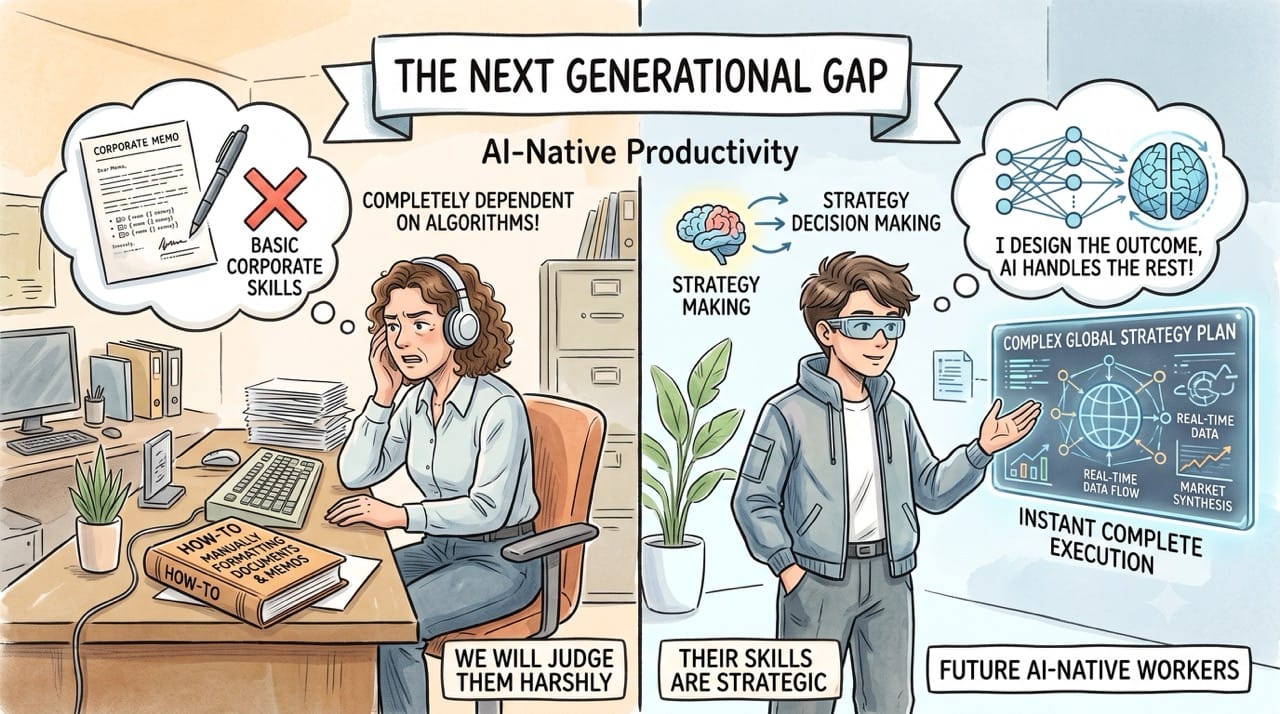
This brings us to a fascinating prediction regarding the children growing up entirely native to artificial intelligence.
They will never learn how to manually format a document or draft a basic corporate memo.
Our current generation will inevitably look at these future workers and complain that they have no real skills.
We will judge them harshly for outsourcing their executive function to an algorithm.
The New Human Value
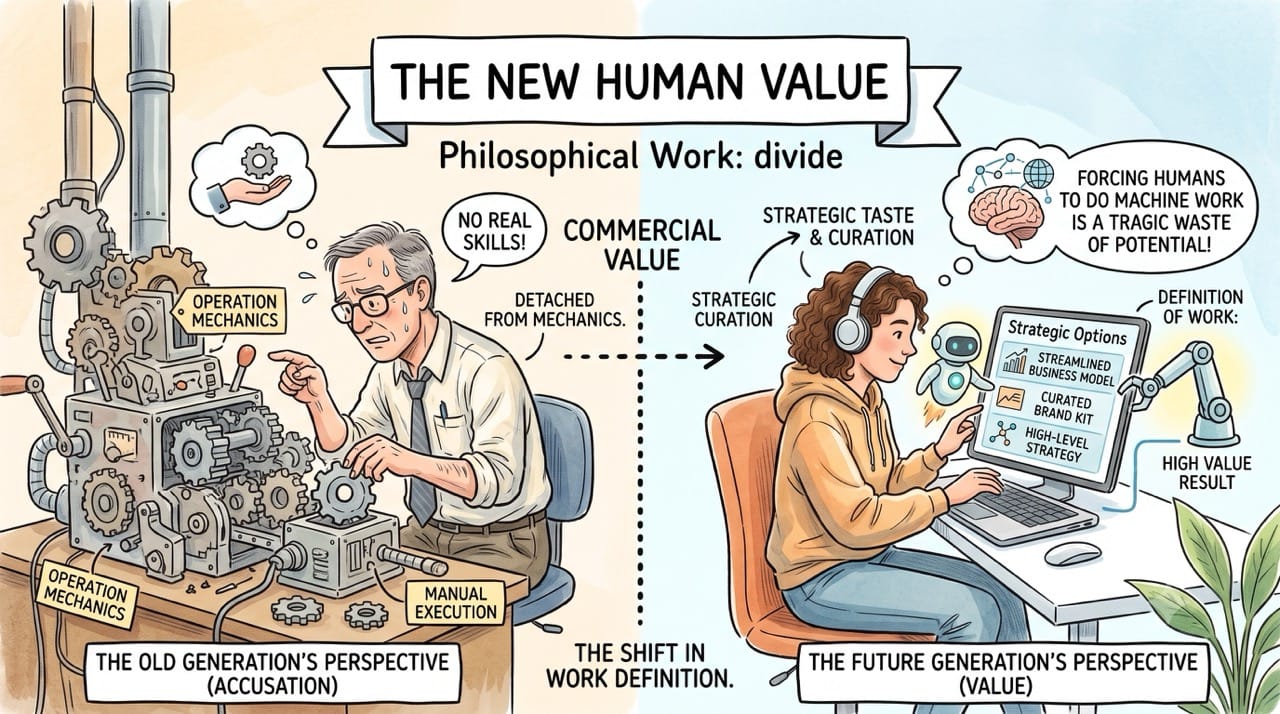
The future generation will face a unique misunderstanding about what actually creates commercial value.
We will accuse them of being completely detached from the operational mechanics of building a business.
They will argue that forcing a human to do something a machine can do instantly is a tragic waste of potential.
Their entire definition of work will revolve strictly around high level curation and strategic taste rather than manual execution.
Conclusion: The Evolution of Effort
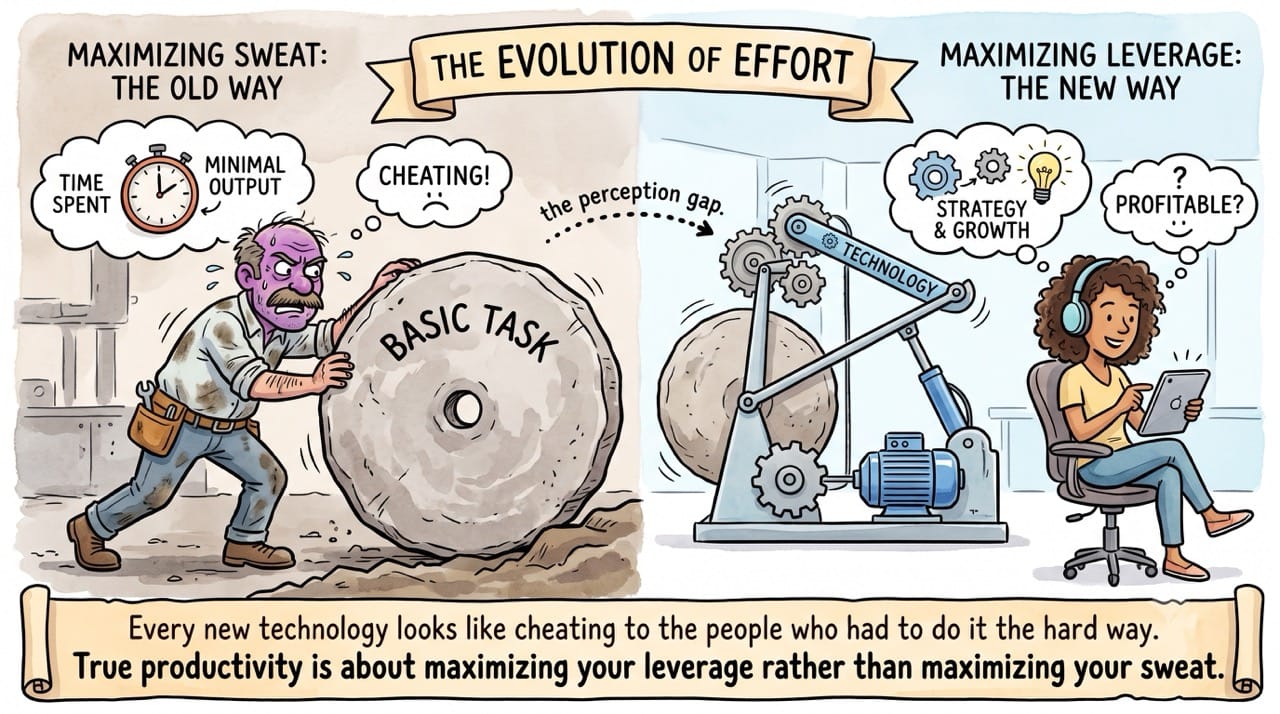
Every new technology looks like cheating to the people who had to do it the hard way.
True productivity is about maximizing your leverage rather than maximizing your sweat.