The AI Budget Shift: Why Marketing Will Inherit the Engineering Treasury
We assume artificial intelligence will just increase profit margins by eliminating expensive engineering roles. The reality is that corporations will immediately redirect those savings into aggressive marketing campaigns.
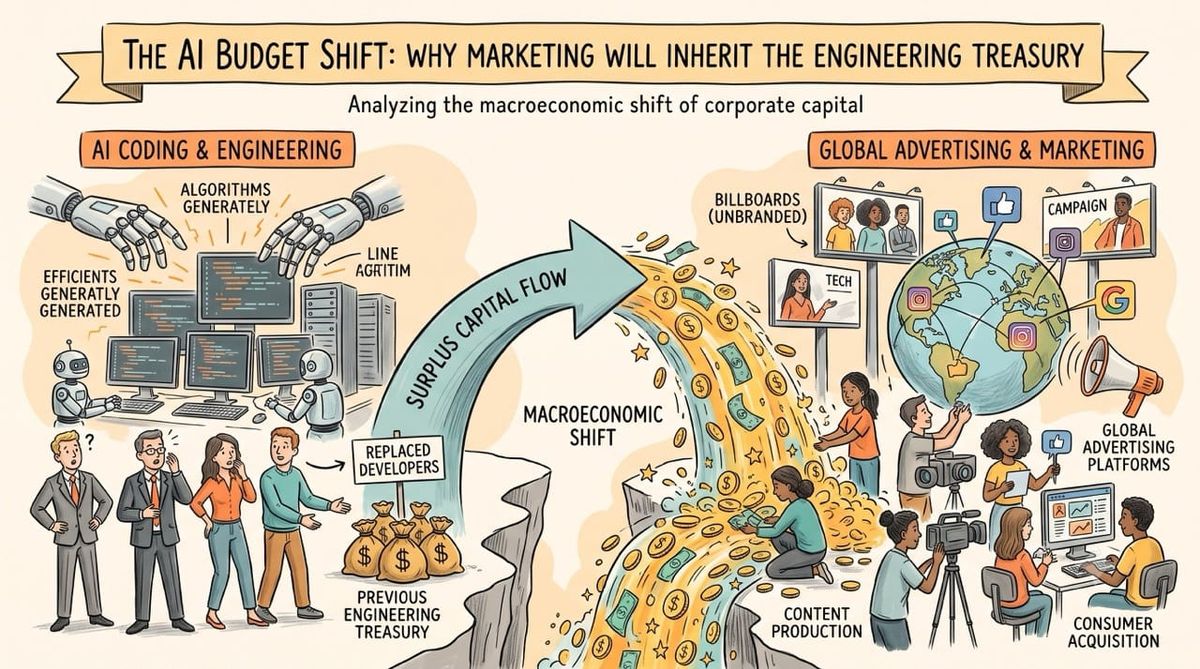
As algorithmic coding replaces expensive software developers the resulting corporate surplus will flow directly into global advertising platforms.
Inspiration: Analyzing the macroeconomic shift of corporate capital from technical development directly into consumer acquisition and content production.
The Engineering Premium
For the last two decades the technology industry operated on a very specific financial hierarchy.
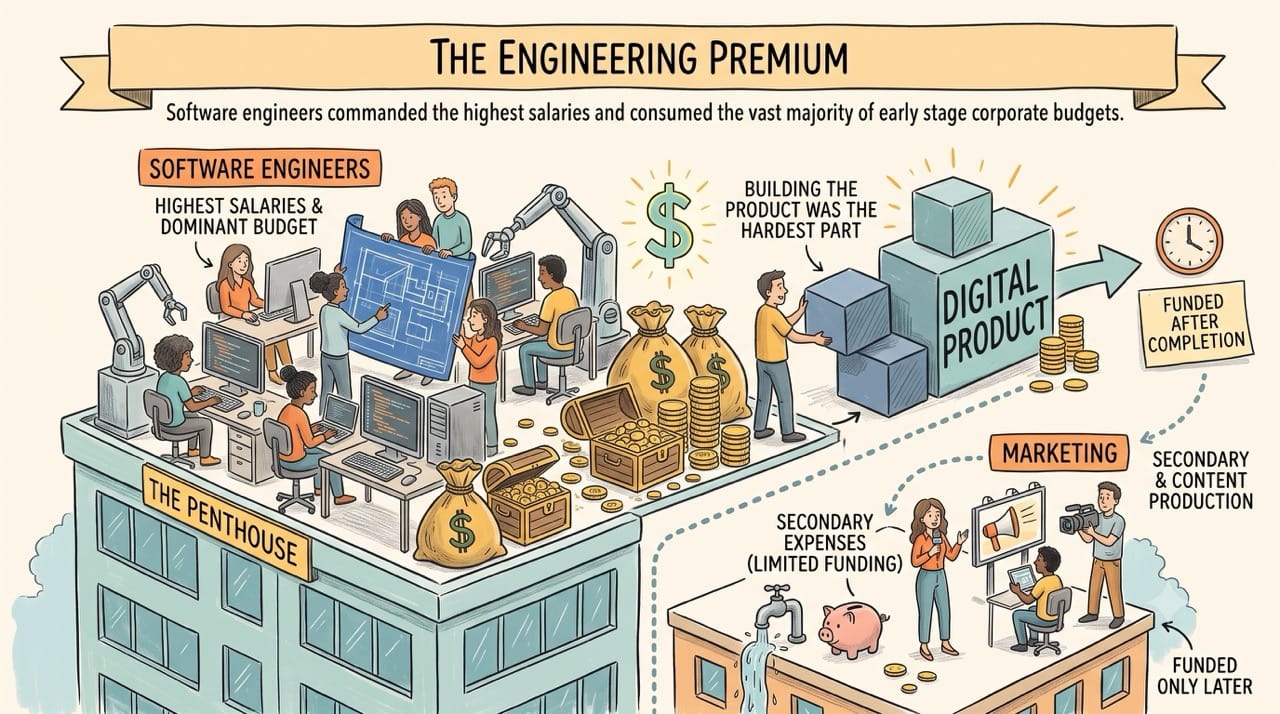
Software engineers commanded the highest salaries and consumed the vast majority of early stage corporate budgets.
Companies gladly paid a premium for this talent because building the actual digital product was the hardest part of any business.
Marketing and content production were often treated as secondary expenses only funded after the software was complete.
The Code Deflation
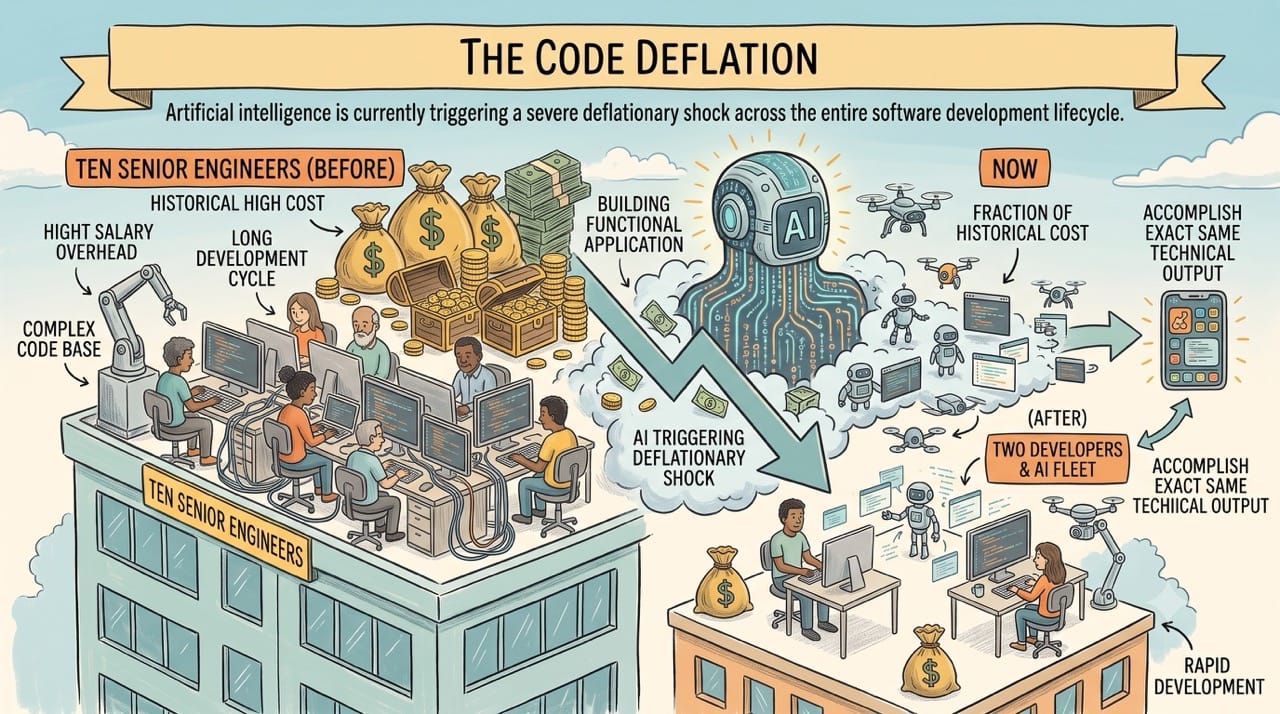
Artificial intelligence is currently triggering a severe deflationary shock across the entire software development lifecycle.
Autonomous agents can now write and test complex code at a fraction of the historical cost.
This means a startup no longer needs to hire a team of ten senior engineers to build a functional application.
They can accomplish the exact same technical output with two developers and a fleet of algorithmic coding assistants.
The Capital Reallocation
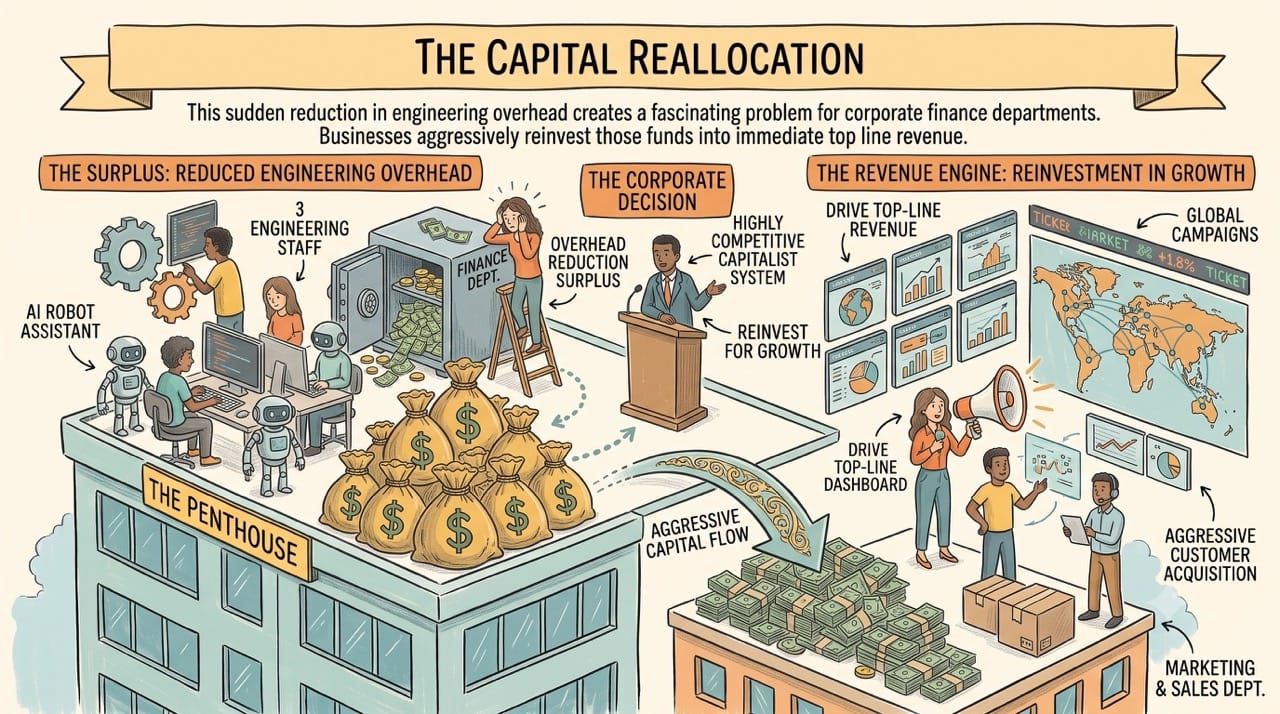
This sudden reduction in engineering overhead creates a fascinating problem for corporate finance departments.
They suddenly have a significant surplus of capital previously earmarked for high technical salaries.
In a highly competitive capitalist system businesses rarely just return that extra cash to their savings accounts.
They aggressively reinvest those funds into the exact department that drives immediate top line revenue.
The Content Arms Race
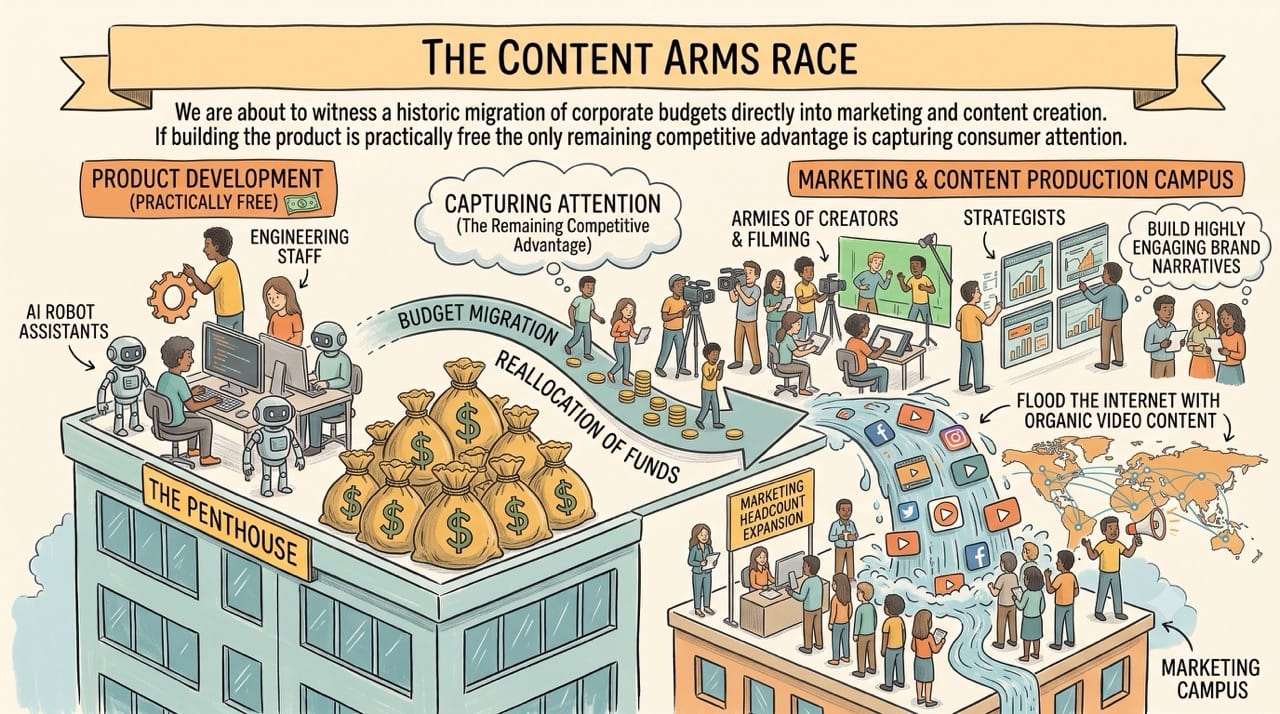
We are about to witness a historic migration of corporate budgets directly into marketing and content creation.
If building the product is practically free the only remaining competitive advantage is capturing consumer attention.
Companies will rapidly expand their marketing headcount to build highly engaging brand narratives.
They will hire armies of creators and strategists to flood the internet with organic video content.
The Platform Windfall
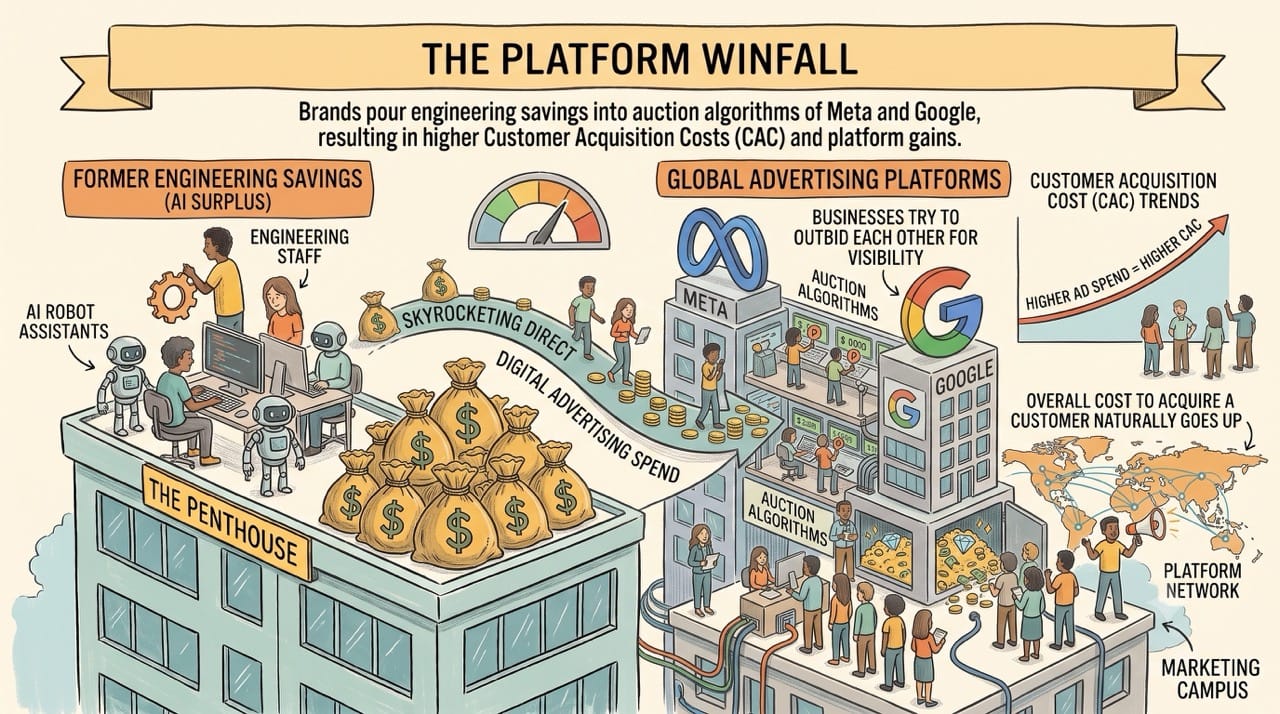
This internal budget shift will eventually result in a skyrocketing increase in direct digital advertising spend.
Brands will pour their newfound engineering savings directly into the auction algorithms of Meta and Google.
When every single company has a larger marketing budget the overall cost to acquire a customer naturally goes up.
The advertising platforms will gladly absorb this excess capital as businesses try to outbid each other for visibility.
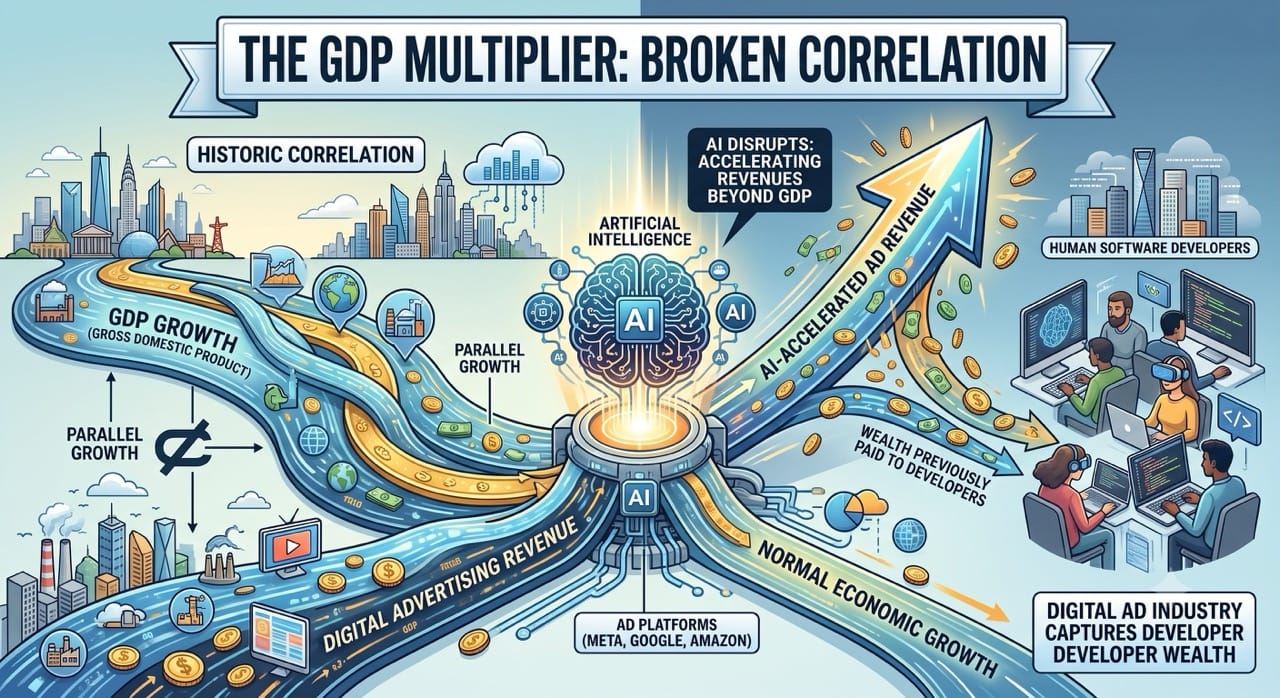
The GDP Multiplier
Historically the growth of digital advertising revenue perfectly tracks the baseline expansion of a national economy.
When the gross domestic product goes up corporate advertising budgets naturally rise right alongside it.
Artificial intelligence is about to break this traditional correlation and accelerate ad platform revenues far beyond normal economic growth.
The digital advertising industry is about to capture a huge percentage of the wealth previously paid to human software developers.
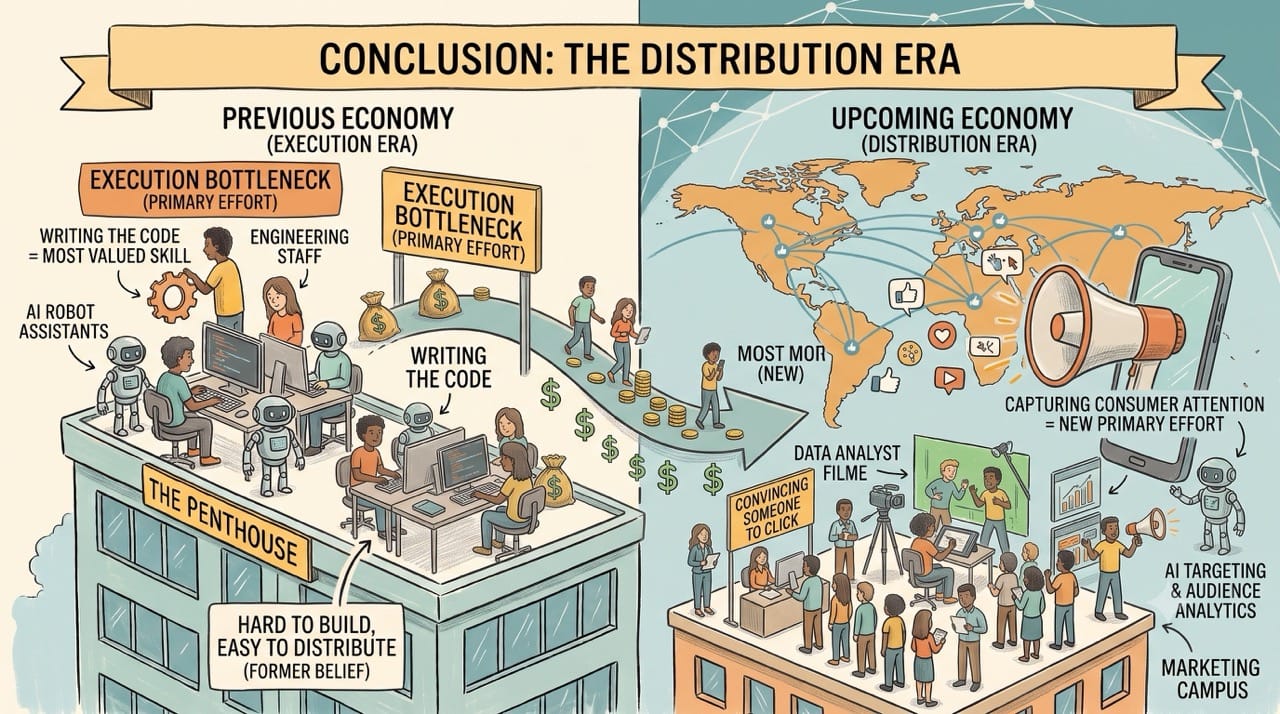
Conclusion: The Distribution Era
We are transitioning from a world where execution was the primary bottleneck to a reality where distribution is the only thing that matters.
The most valuable skill in the upcoming economy is no longer writing the code but convincing someone to actually click on it.