Meta AI: Harmony of Efficiency (Google TPUs, Yann LeCun, Alex Wang)
We assume the artificial intelligence race is just about building the biggest model possible. Meta just proved that centralizing brilliant talent and ruthlessly optimizing hardware efficiency is the true path to massive shareholder value.
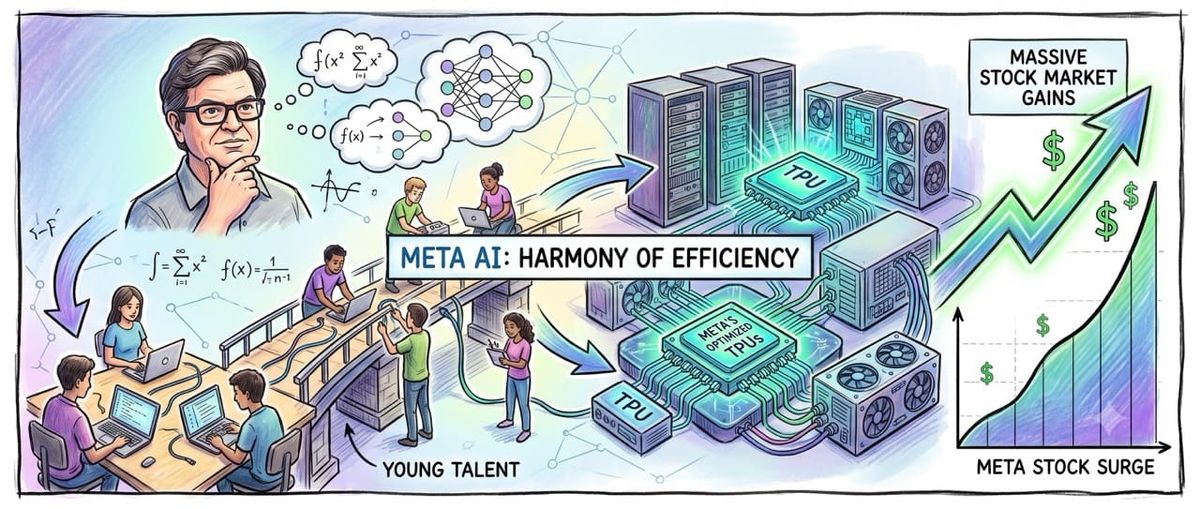
How Yann LeCun, Google hardware, and young talent centralized operations to drive massive stock market gains.
Inspiration: Analyzing the recent surge in Meta stock following their breakthrough efficiency reports. Realizing that the true competitive moat in technology is harmonizing theoretical research with brutal hardware optimization.
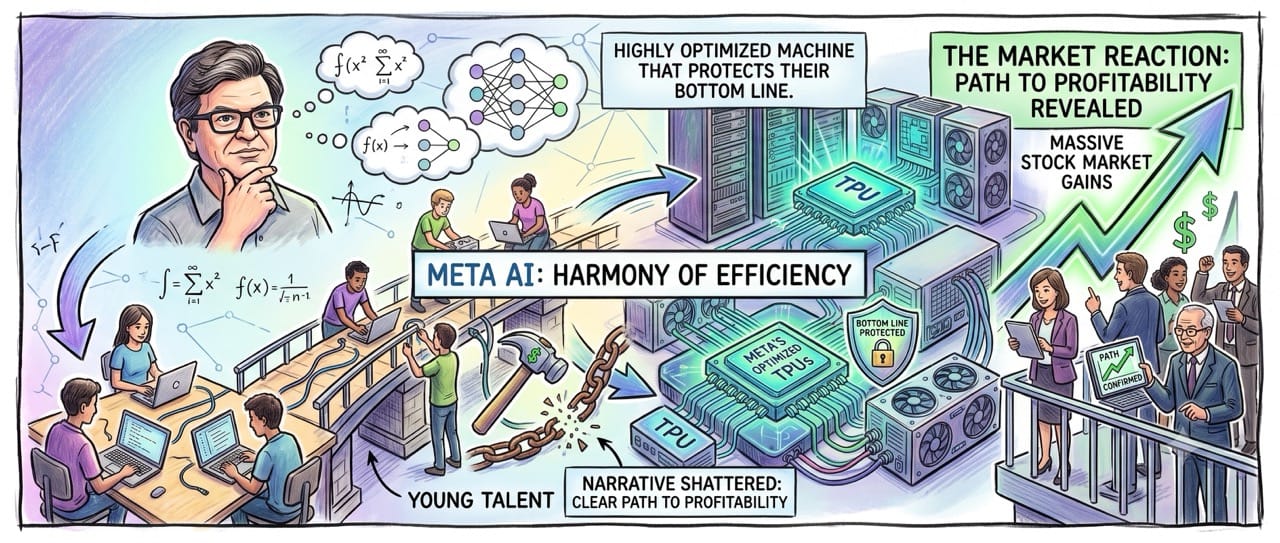
The Market Reaction
Wall Street historically punishes companies that burn billions on artificial intelligence research without a clear path to profitability.
Meta recently shattered this narrative by revealing massive efficiency gains that sent their stock price soaring.
Investors realized that the social media giant is no longer just experimenting with language models.
They have built a highly optimized machine that protects their bottom line while advancing the frontier of technology.
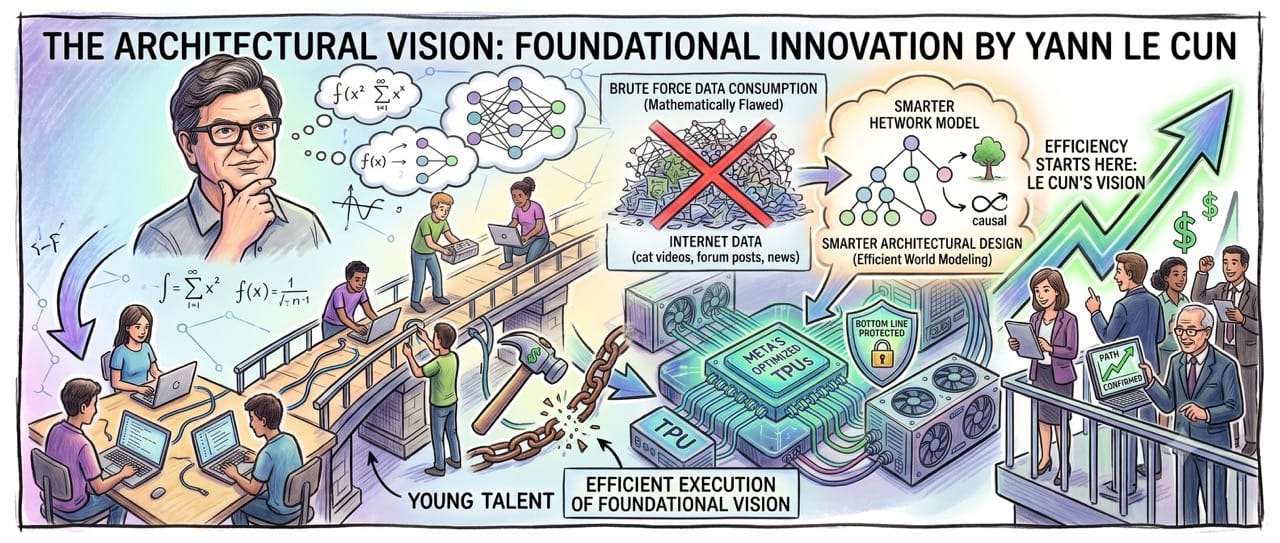
The Architectural Vision
This sudden leap in efficiency begins with the foundational work of Yann LeCun.
His distinct vision for artificial intelligence moves away from brute force data consumption toward much smarter architectural designs.
LeCun understands that throwing infinite compute power at a problem is a mathematically flawed strategy.
His models are designed to understand the world efficiently instead of just memorizing the entire internet.
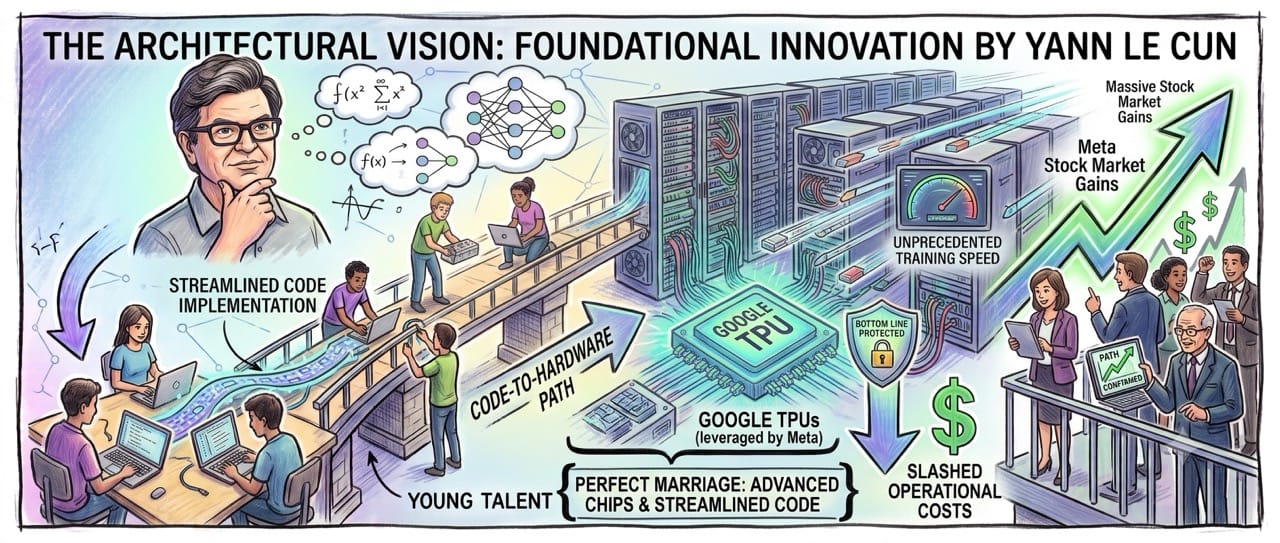
The Hardware Reality
Brilliant software architecture still requires massive physical infrastructure to actually run the calculations.
Meta cleverly leveraged Google tensor processing units to achieve unprecedented training speeds and slash their operational overhead.
This hardware choice proved critical for keeping costs down while processing unimaginable amounts of global data.
Efficiency at this scale is impossible without the perfect marriage of advanced chips and streamlined code.
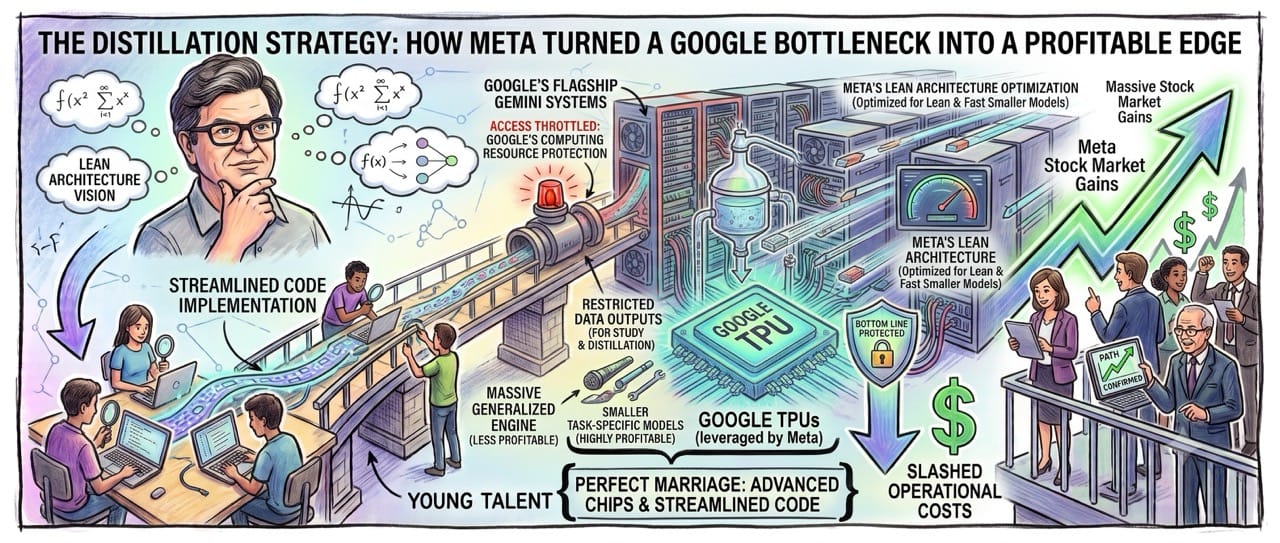
The Distillation Strategy
Google recently throttled access to their flagship Gemini systems to protect their own computing resources.
This restriction actually created a massive opportunity for competitors to study and distill those outputs into smaller and faster systems.
Meta capitalized on this bottleneck by optimizing their own internal architecture to run lean and fast.
They realized that smaller models tuned for specific tasks are far more profitable than massive generalized engines.
The Centralizing Force
Bringing all of these complex pieces together required a fresh operational perspective.
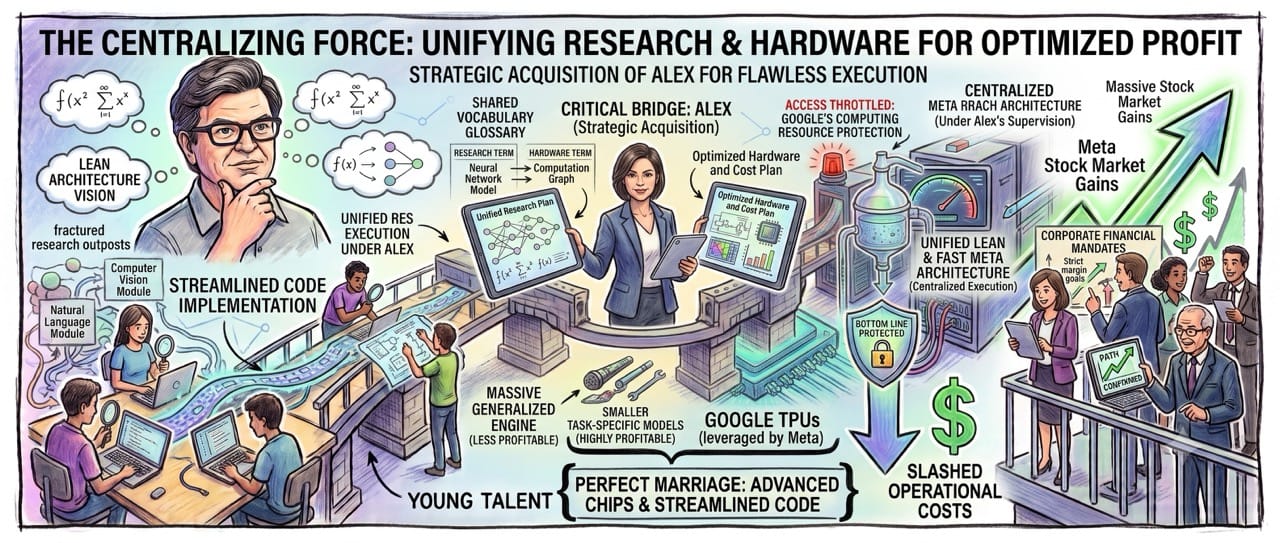
Meta brought in Alex through a strategic acquisition to centralize their fractured research initiatives under one unified roof.
This young talent acted as the critical bridge between academic researchers and strict corporate financial mandates.
Alex forced the brilliant minds in the laboratory to finally speak the same language as the hardware engineers.
Conclusion: The Perfect Harmony
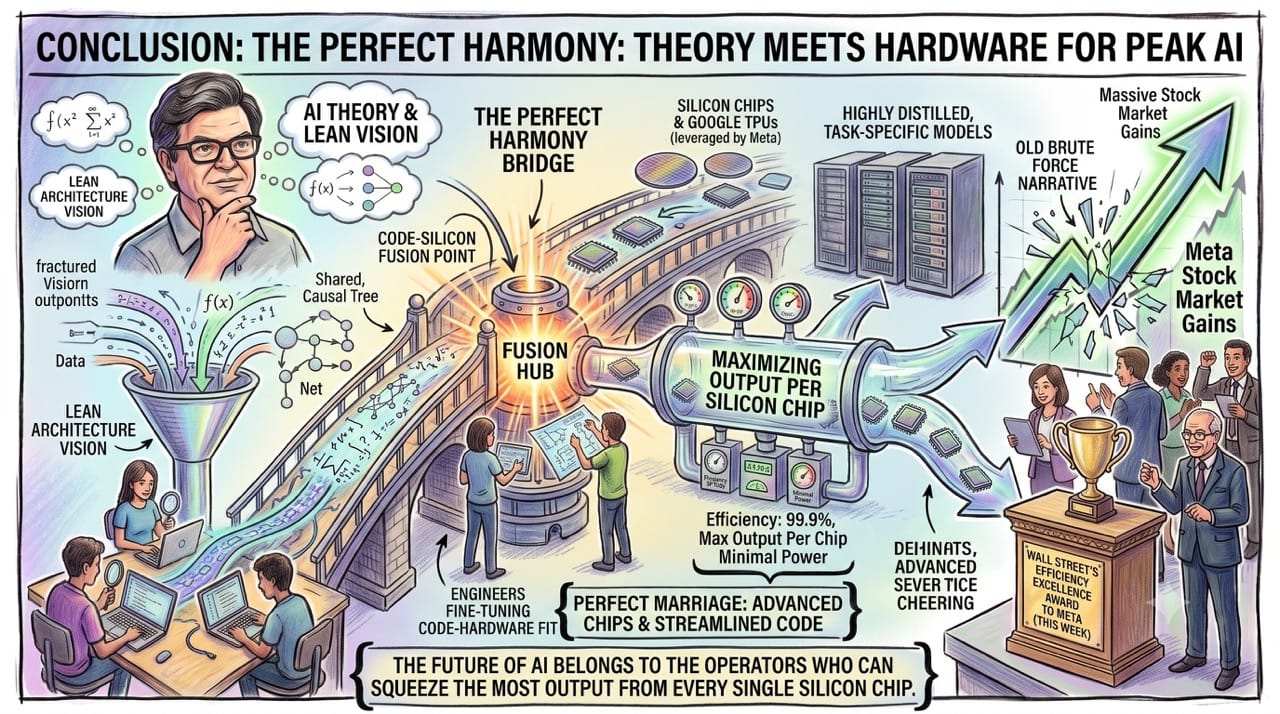
This rare harmony between LeCun and the physical compute infrastructure is exactly what Wall Street rewarded this week.
Meta proved that the future of artificial intelligence belongs to the operators who can squeeze the most output from every single silicon chip.