
Why Foreign Brands Should Be More Intentional with Their Marketing in China
We assume global marketing campaigns just need minor translation tweaks to succeed internationally. The recent Lululemon disaster proves that ignoring deep cultural and historical context in China will permanently destroy your brand equity.
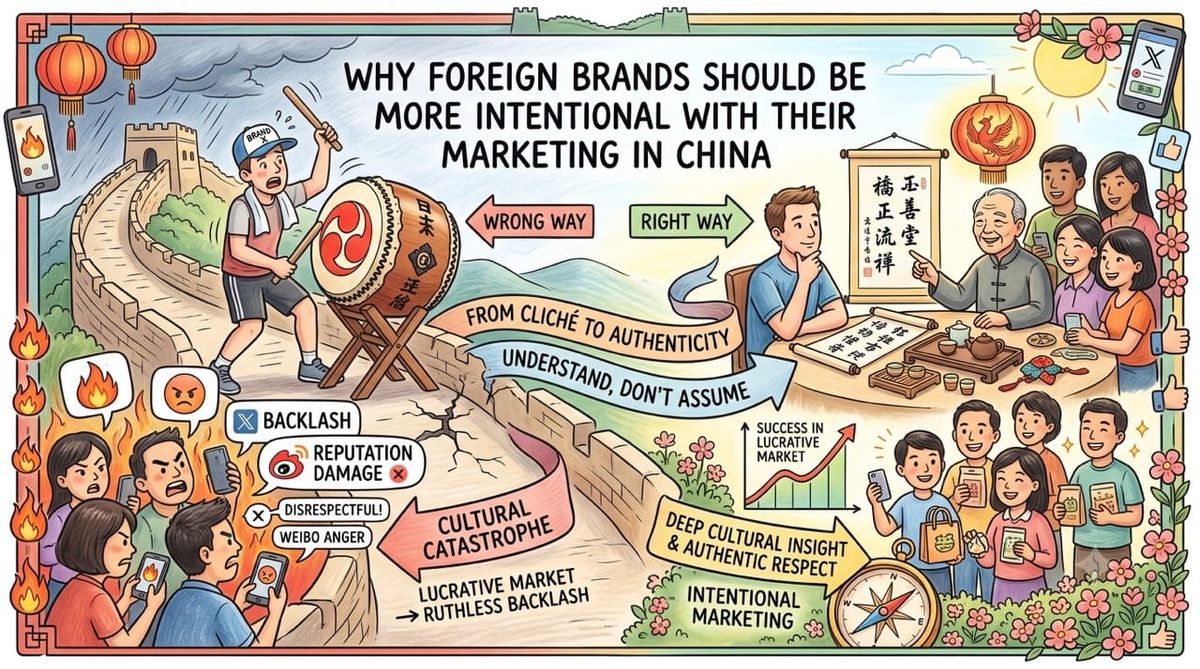
The Chinese market is highly lucrative but ruthlessly unforgiving. When foreign brands treat local traditions like generic props they instantly trigger a nationalist backlash that no apology can easily fix.
Inspiration: Analyzing the severe social media backlash against Lululemon for using a Japanese drum on the Great Wall. Realizing that foreign corporations continue to make the exact same catastrophic cultural errors in a highly sensitive consumer market.

The Great Wall Misstep
Lululemon recently hosted a highly promoted yoga event on the Great Wall to celebrate their regional anniversary.
They featured a percussion performance that utilized an instrument closely resembling a Japanese taiko drum.

The Historical Trigger
The Great Wall is the ultimate symbol of Chinese national pride and historical defense.
Placing a Japanese cultural instrument in this specific location instantly triggered deep generational trauma regarding historical wartime aggression.
The Precedents of Failure
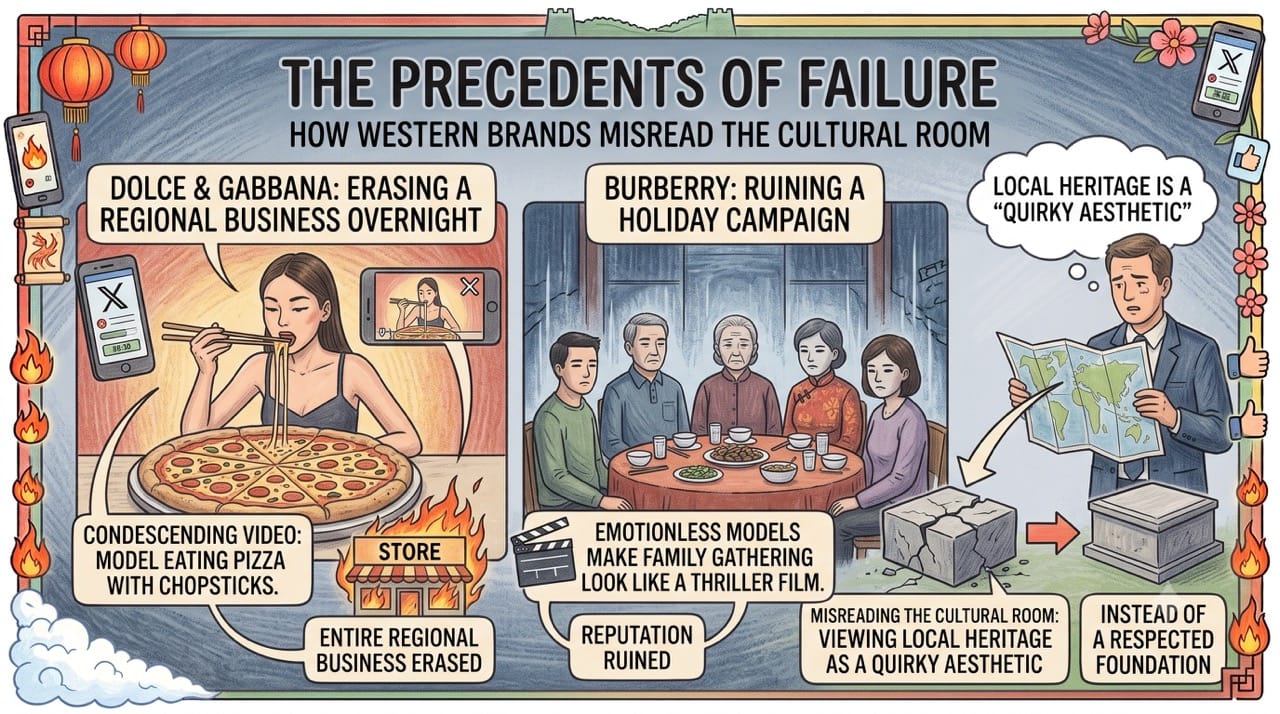
This is not the first time a major Western brand completely misread the cultural room.
Dolce and Gabbana practically erased their entire regional business overnight after airing a condescending video of a model eating pizza with chopsticks.
Similarly Burberry completely ruined a holiday campaign by using emotionless models that made a traditional family gathering look like a thriller film.
These unforced errors happen because foreign executives view local heritage as a quirky aesthetic rather than a respected foundation.
The Pride Premium
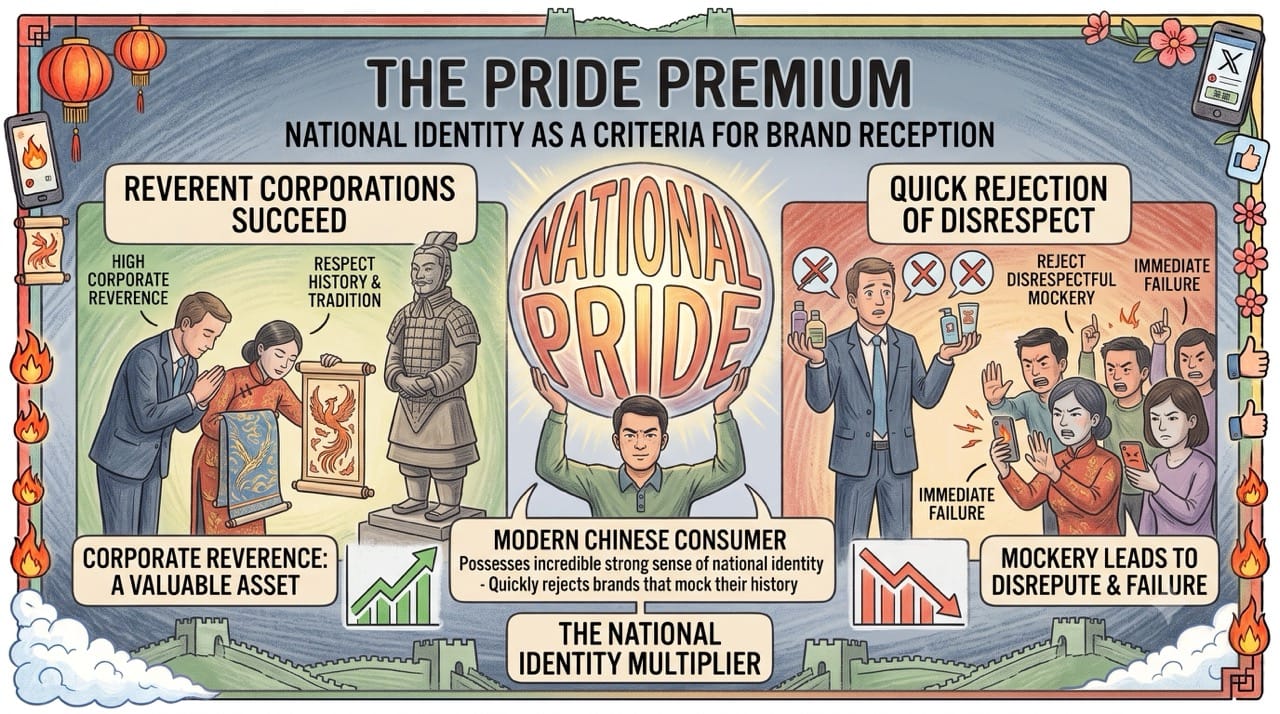
The modern Chinese consumer possesses an incredibly strong sense of national identity.
They demand high levels of corporate reverence and quickly reject any brand that seems to mock their history.
The Unforgiving Market
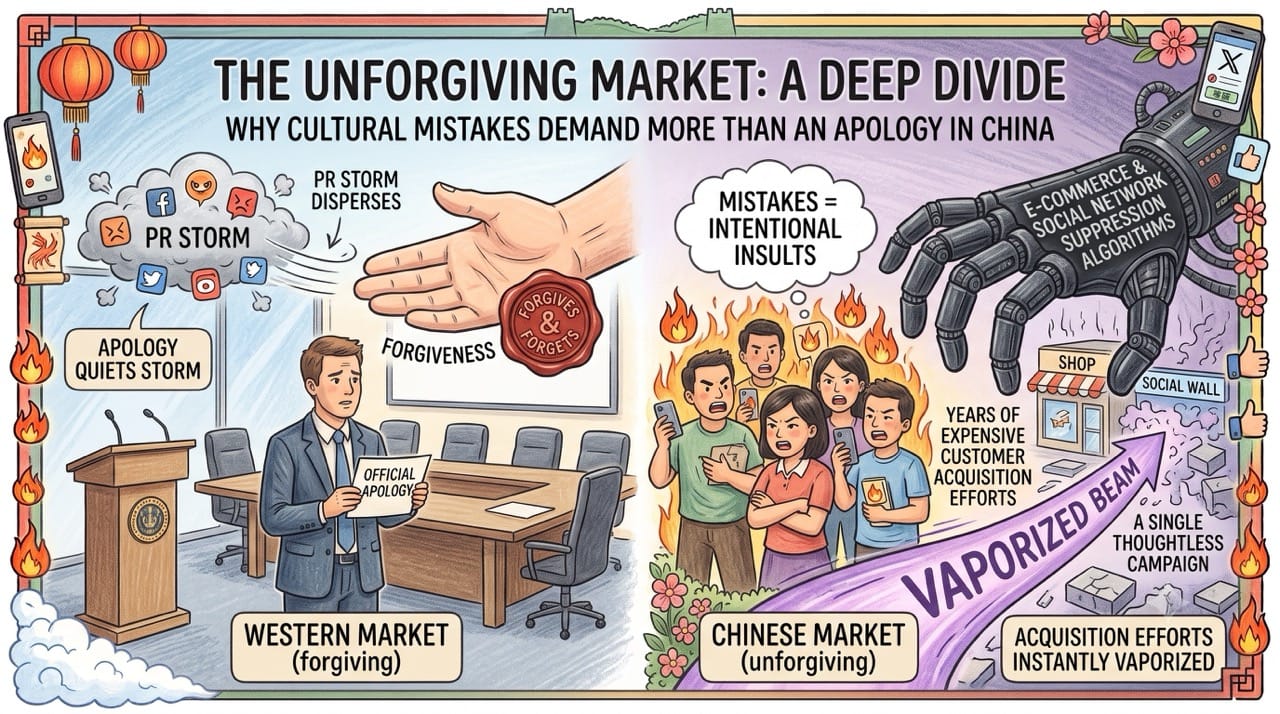
In Western markets a standard corporate apology can usually quiet a temporary public relations storm.
The Chinese market rarely forgives and forgets because consumers view these mistakes as intentional insults rather than accidental oversights.
Once a brand is labeled as culturally insensitive the local e commerce algorithms and social networks naturally suppress their digital presence.
A single thoughtless campaign can instantly vaporize years of expensive customer acquisition efforts.

The Intentional Playbook
Foreign brands must stop relying on external marketing agencies that lack deep local roots.
Every single creative decision requires extreme vetting by native cultural historians before a campaign ever goes live.
Brands need to empower their domestic teams to veto any global marketing asset that feels even slightly disconnected from local reality.
You cannot manage Chinese consumer sentiment from a boardroom in North America.
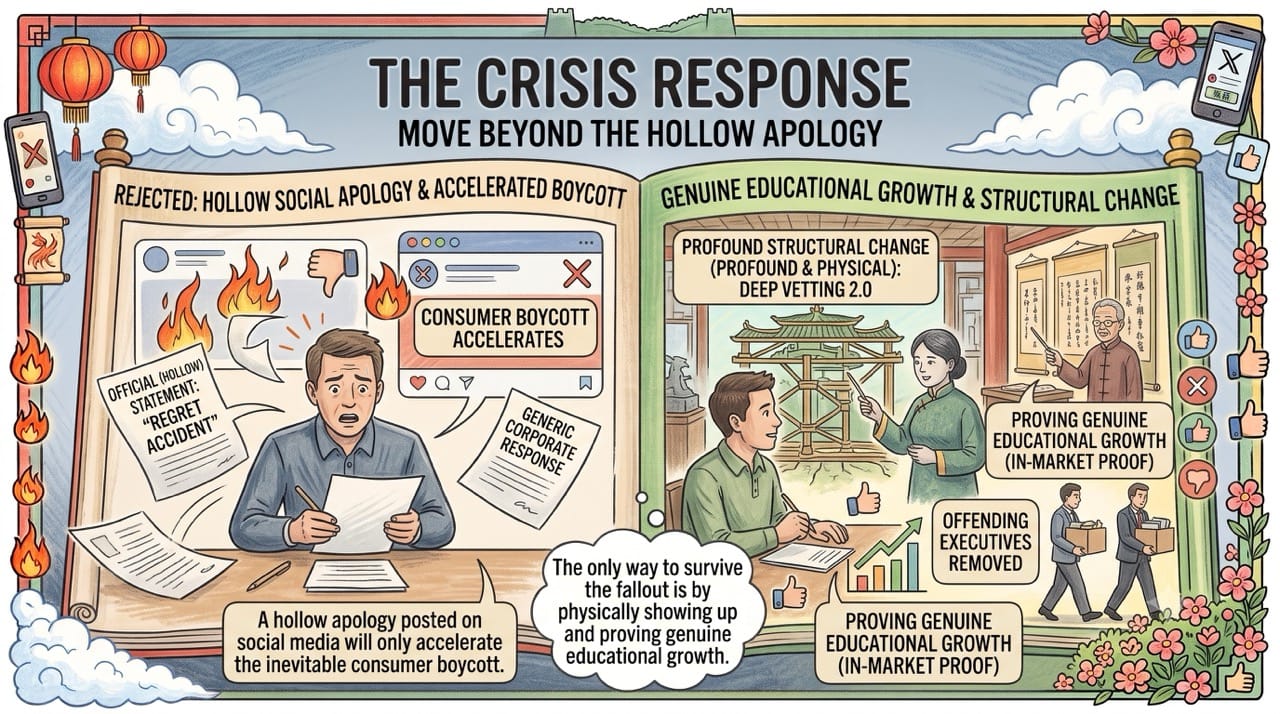
The Crisis Response
If a catastrophic mistake actually happens the brand cannot rely on a generic corporate statement.
They must immediately remove the offending executives and publicly demonstrate a profound structural change to their entire regional review process.
The only way to survive the fallout is by physically showing up in the market and proving genuine educational growth.
A hollow apology posted on social media will only accelerate the inevitable consumer boycott.

Conclusion: The Cultural Moat
Selling products in the fastest growing consumer market requires much more than just a localized translated website.
You must build a defensive cultural moat by treating their national heritage with the exact same respect you give your own balance sheet.