What if Satya Supported Ilya and Mira Instead of Sam?
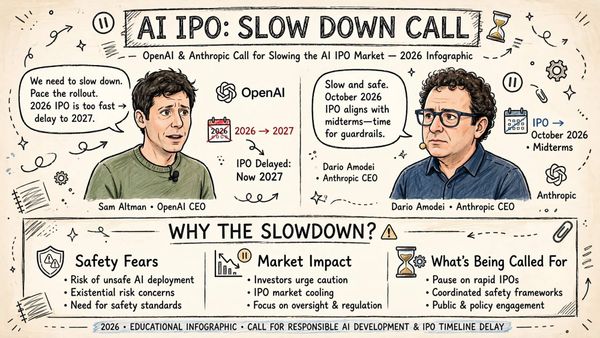
We all know how the OpenAI boardroom drama ended with Sam Altman returning as a triumphant conqueror. If Microsoft had backed the opposing faction, the landscape of consumer artificial intelligence would look entirely different today.
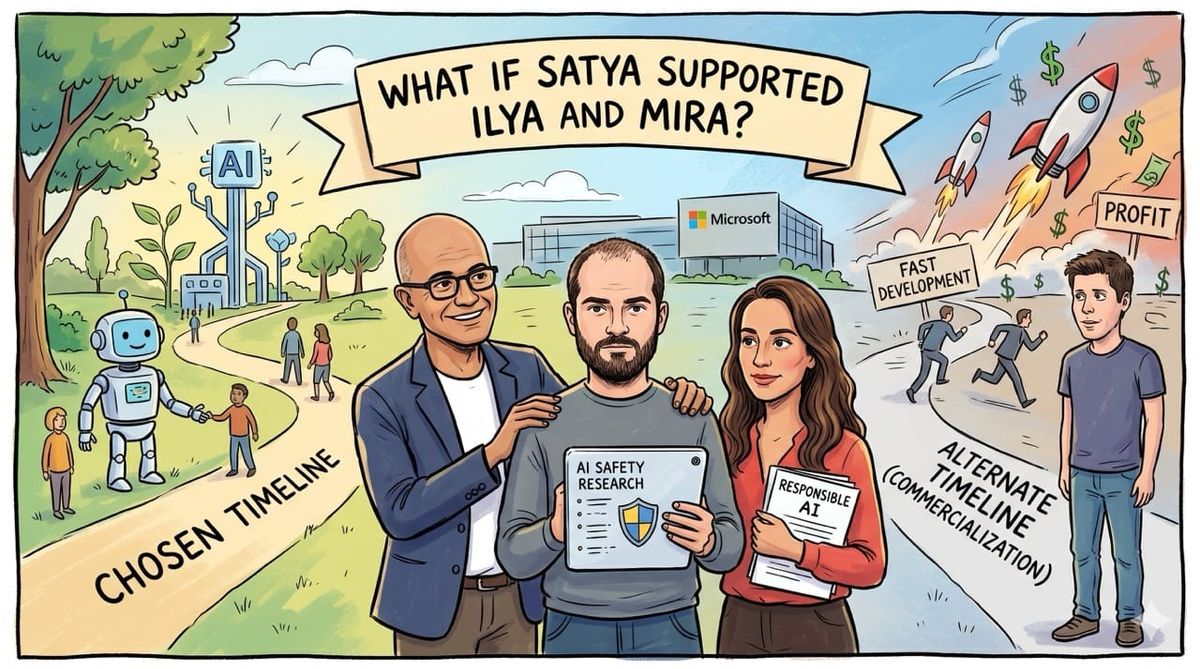
The alternate history of the OpenAI boardroom coup reveals a fascinating divergence between safety research and relentless commercialization.
Inspiration: Exploring the theoretical timeline where Microsoft chose to back Ilya Sutskever and Mira Murati during the OpenAI leadership crisis to see how the market would have shifted.
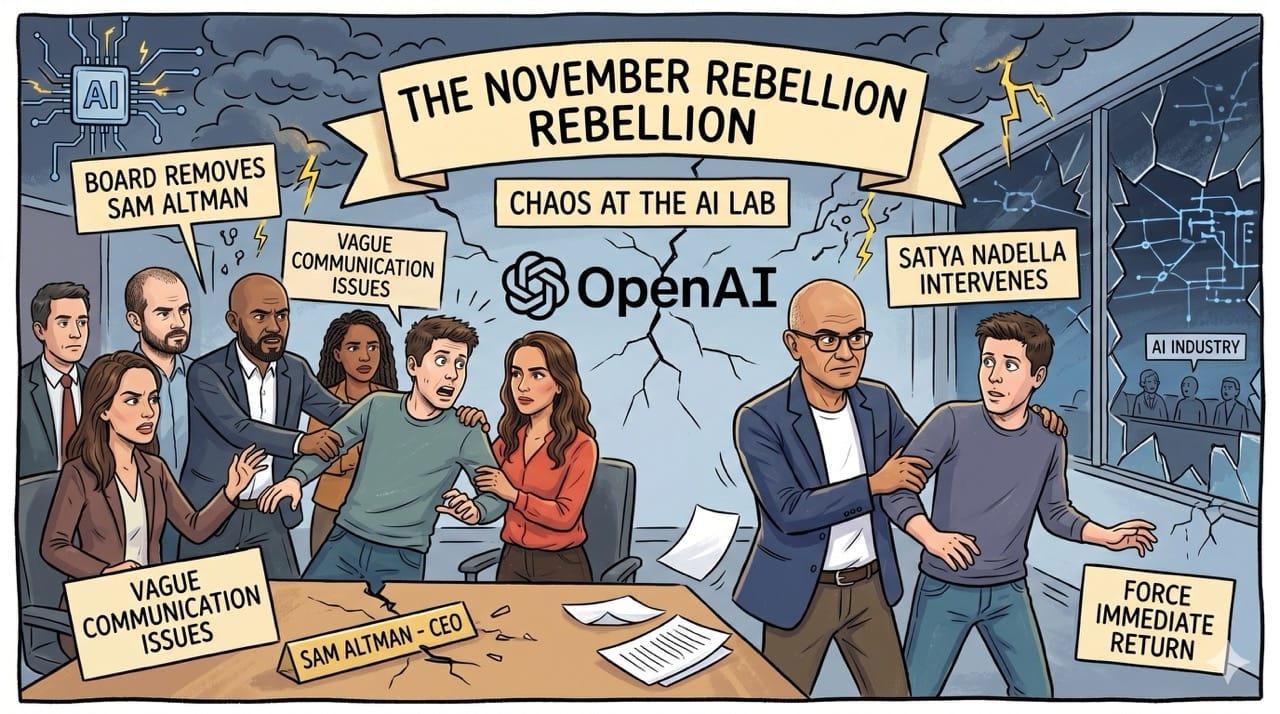
The November Rebellion
In late 2023 the technology industry watched a weekend of chaos unfold at the most important artificial intelligence lab on earth.
The board removed Sam Altman over vague communication issues and internal friction.
Microsoft chief executive Satya Nadella quickly threw his full weight behind Altman to force his immediate return.
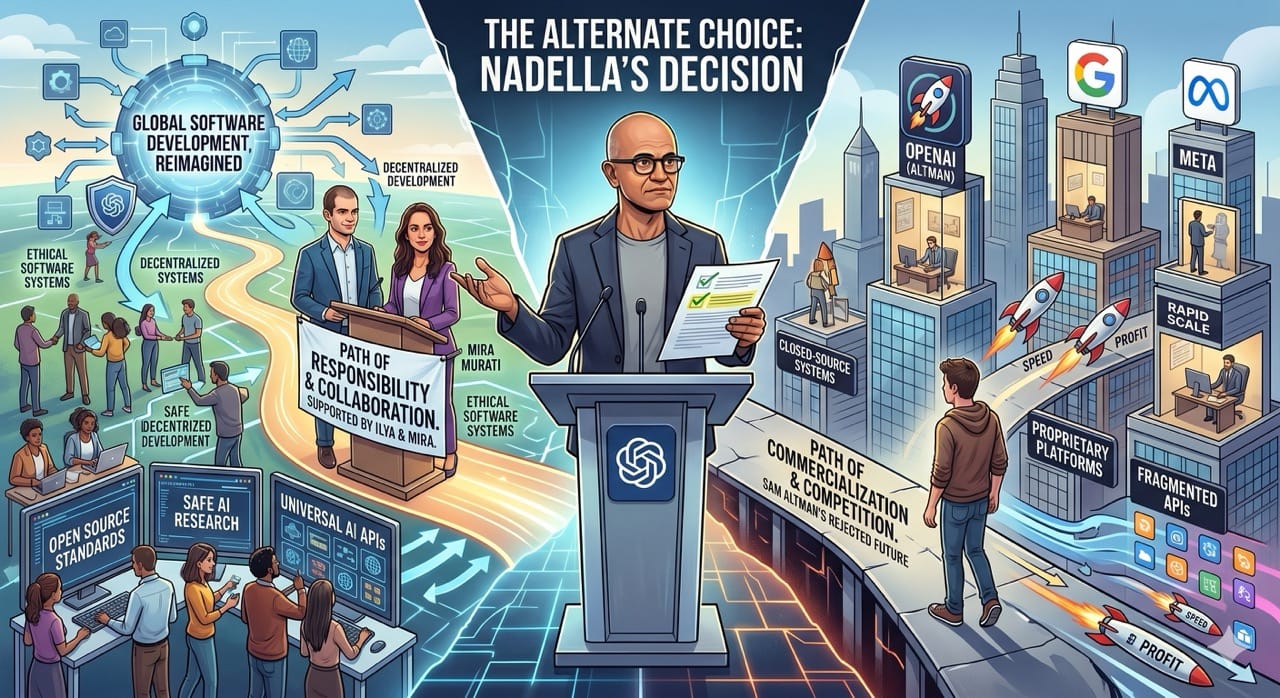
The Alternate Choice
Let us imagine a scenario where Nadella chose a different path.
What if he supported chief scientist Ilya Sutskever and technology officer Mira Murati instead?
This decision would have fundamentally altered the trajectory of global software development.
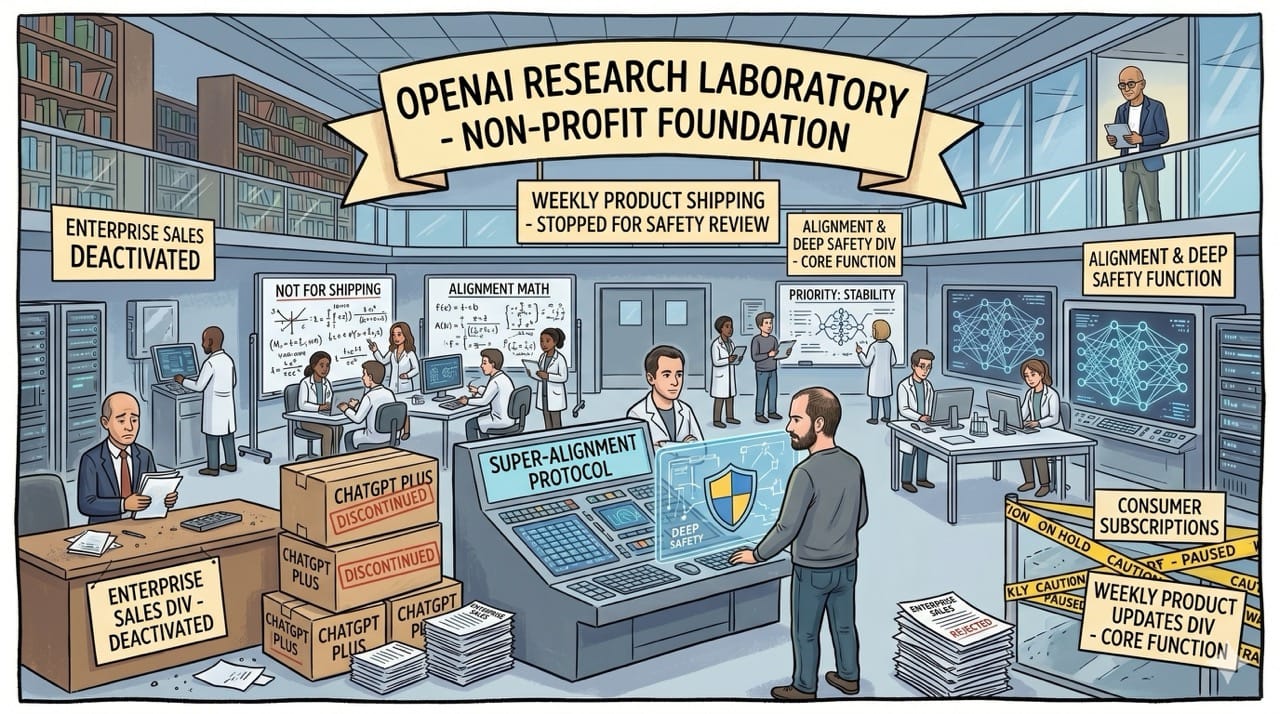
The Research Laboratory Return
Under the guidance of Sutskever the company would have likely reverted to its original nonprofit roots.
The strong push for enterprise sales and consumer subscriptions would have hit an immediate wall.
The organization would prioritize alignment and deep safety research over shipping weekly product updates to the public.
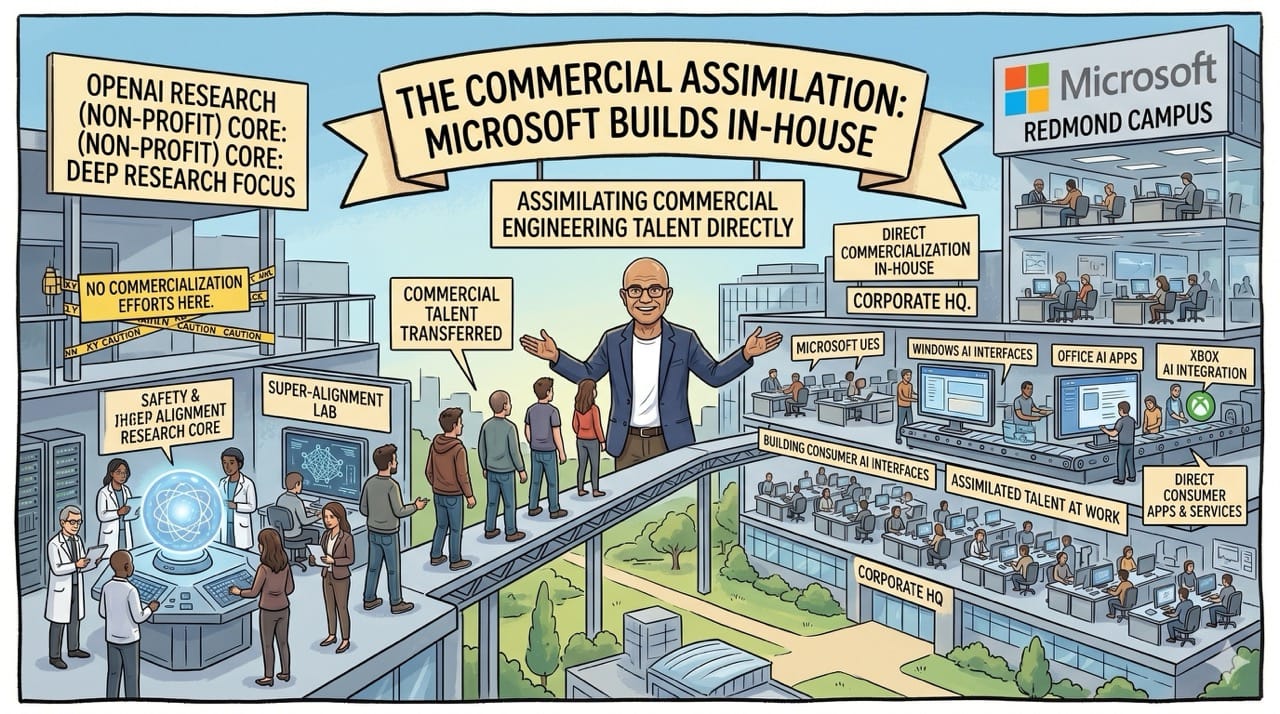
The Commercial Assimilation
Microsoft is a publicly traded company and certainly not a charity.
If OpenAI stepped back from commercializing their models, Microsoft would simply build the consumer interfaces themselves.
Nadella would have likely assimilated the commercial engineering talent directly into his own corporate structure in Redmond.
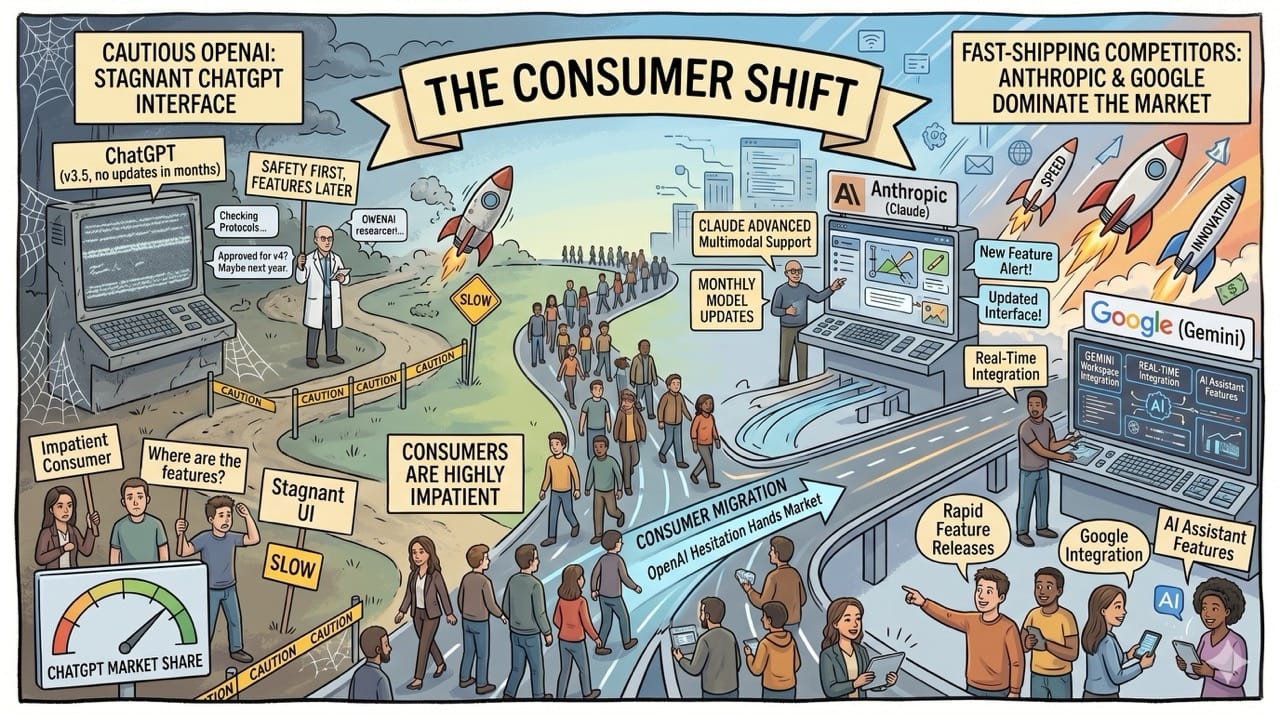
The Consumer Shift
A slower and more cautious OpenAI means a stagnant ChatGPT interface.
Consumers are highly impatient and naturally migrate toward the fastest shipping product available.
This hesitation would have handed the entire consumer chatbot market directly to Anthropic and Google.
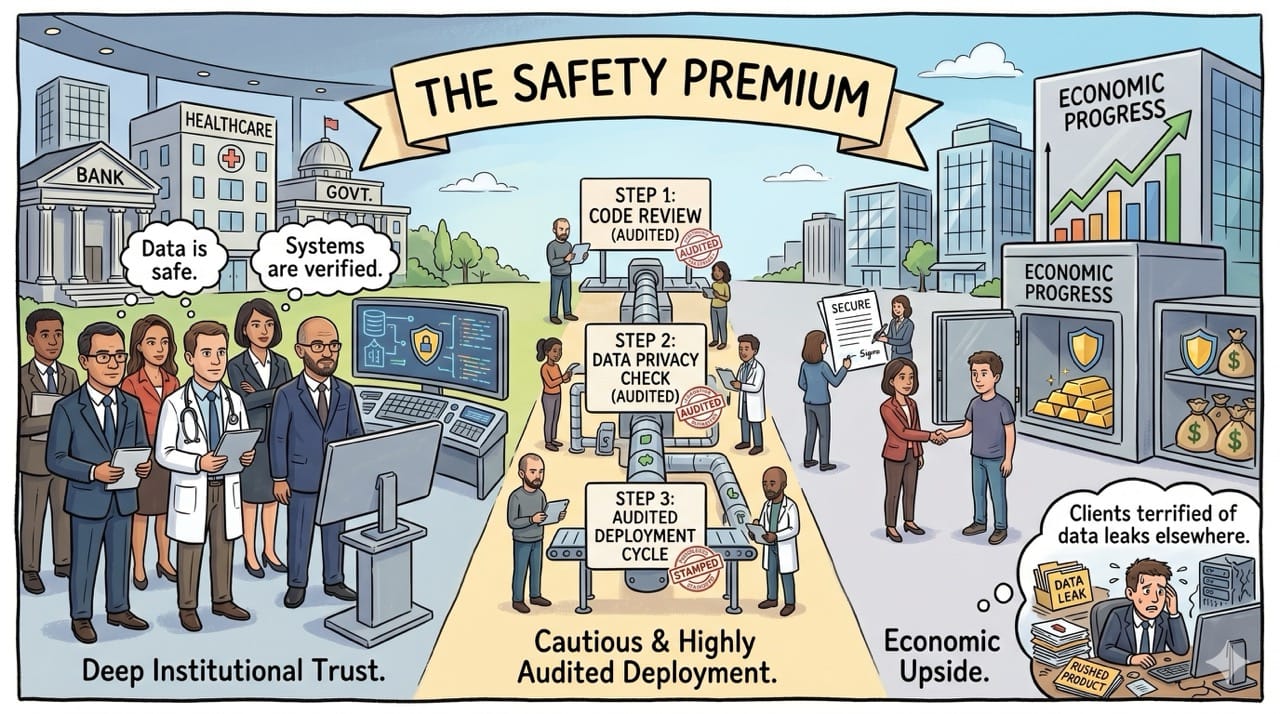
The Safety Premium
There is a distinct economic upside to this alternate timeline.
A cautious approach builds deep institutional trust among highly regulated industries.
Enterprise clients terrified of data leaks might actually prefer a slower and highly audited deployment cycle over a rushed product.
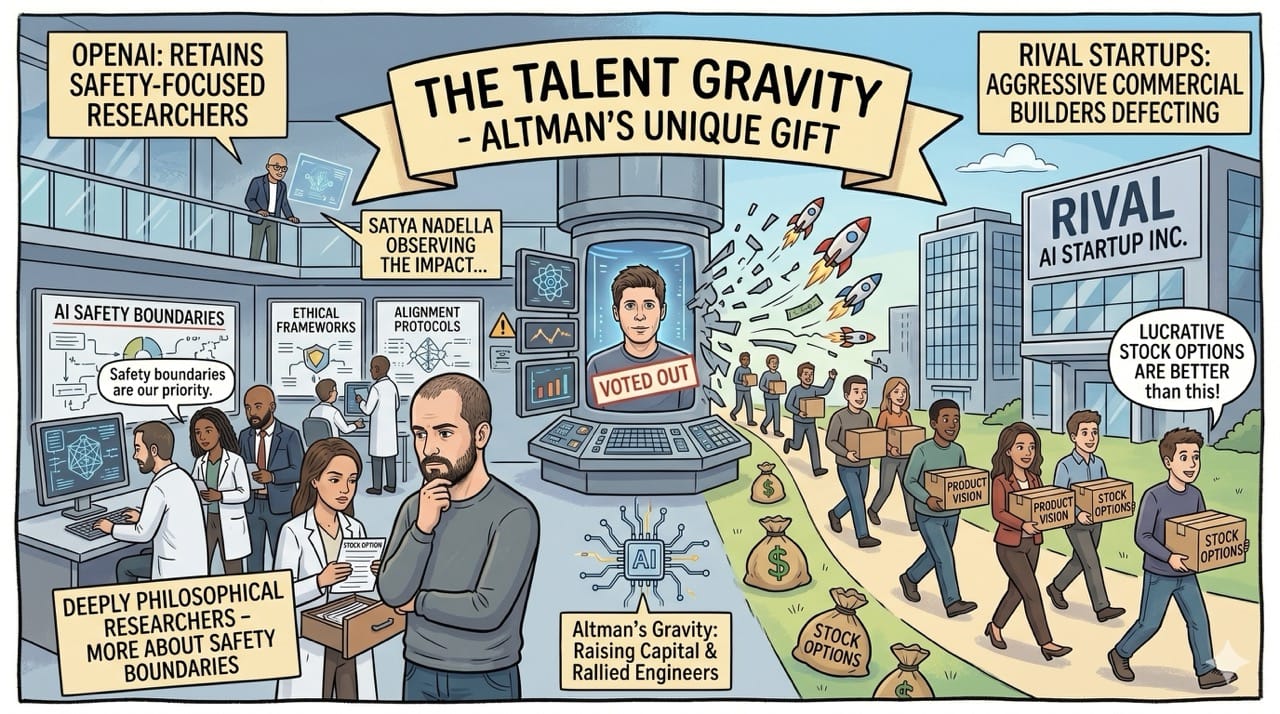
The Talent Gravity
Altman is uniquely gifted at raising capital and rallying engineers around a rapid product vision.
Without his leadership the most aggressive commercial builders would have immediately defected to rival startups.
OpenAI would only retain the deeply philosophical researchers who care more about safety boundaries than lucrative stock options.
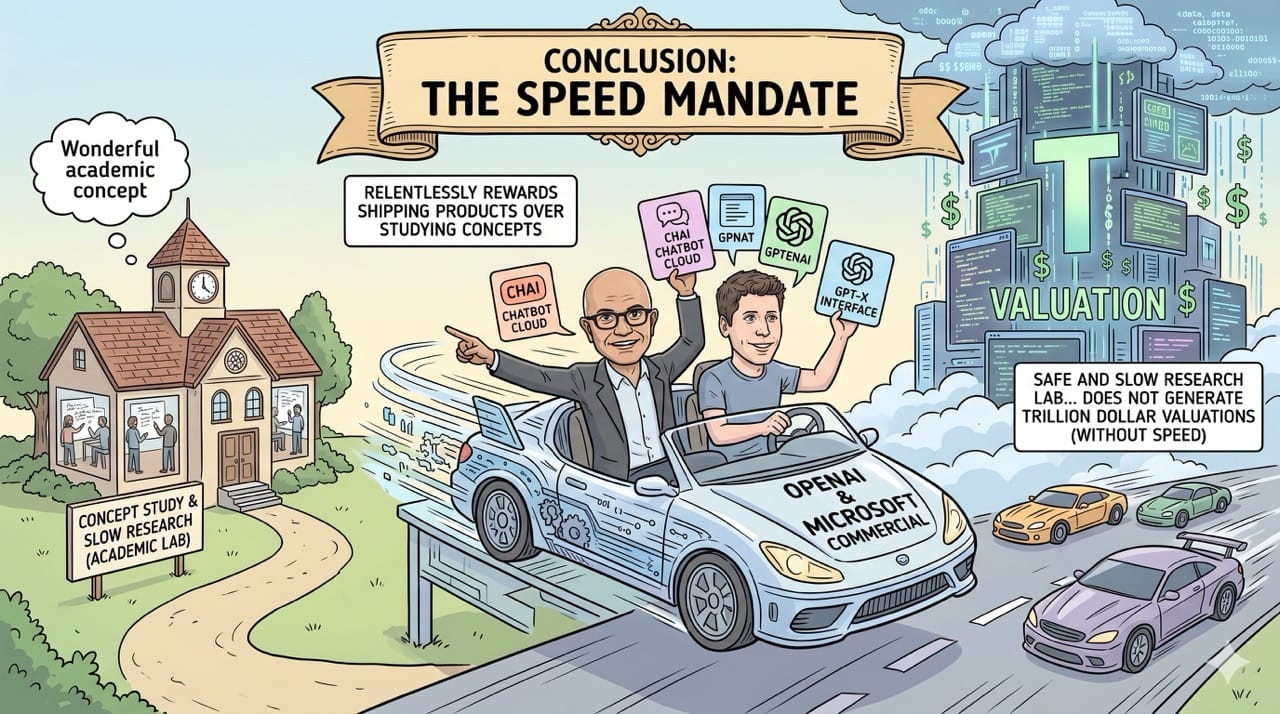
Conclusion: The Speed Mandate
We live in an economy that relentlessly rewards shipping products over studying concepts.
Satya backed Sam because he understood that controlling the technology sector requires moving faster than your competition.
A safe and slow research lab is a wonderful academic concept but it does not generate trillion dollar valuations.