The Weakest Link: Why AI Forces Companies to Raise the Talent Floor
We assume a few elite engineers can carry an entire corporation to success. In the age of artificial intelligence a single mediocre employee creates a fatal bottleneck that can completely destroy an organizational supply chain.
The era of hiding low performers inside a bloated corporate bureaucracy is officially over. To survive the next decade executives must enforce extreme talent density.
Inspiration: Analyzing the concept of the weakest link in corporate structures and realizing that autonomous software agents expose human inefficiency faster than ever before. Realizing that companies must raise their baseline talent standard to compete globally.
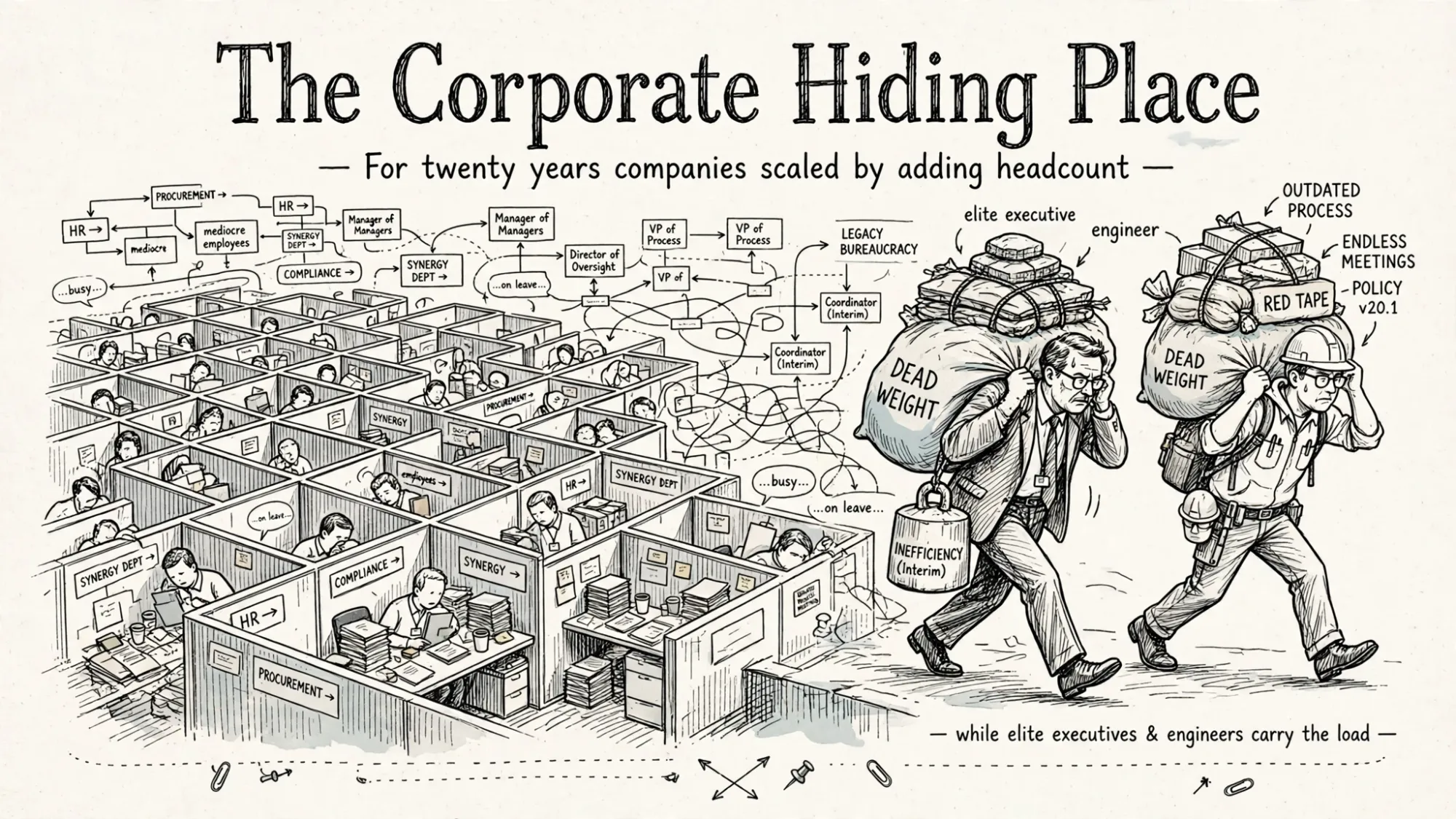
The Corporate Hiding Place
For the last twenty years companies scaled their operations by simply adding endless human headcount.
During periods of cheap venture capital it was incredibly easy for mediocre employees to hide deep inside a bloated corporate bureaucracy.
Elite executives and brilliant engineers quietly carried the dead weight of these low performers because profit margins were wide enough to absorb the inefficiency.
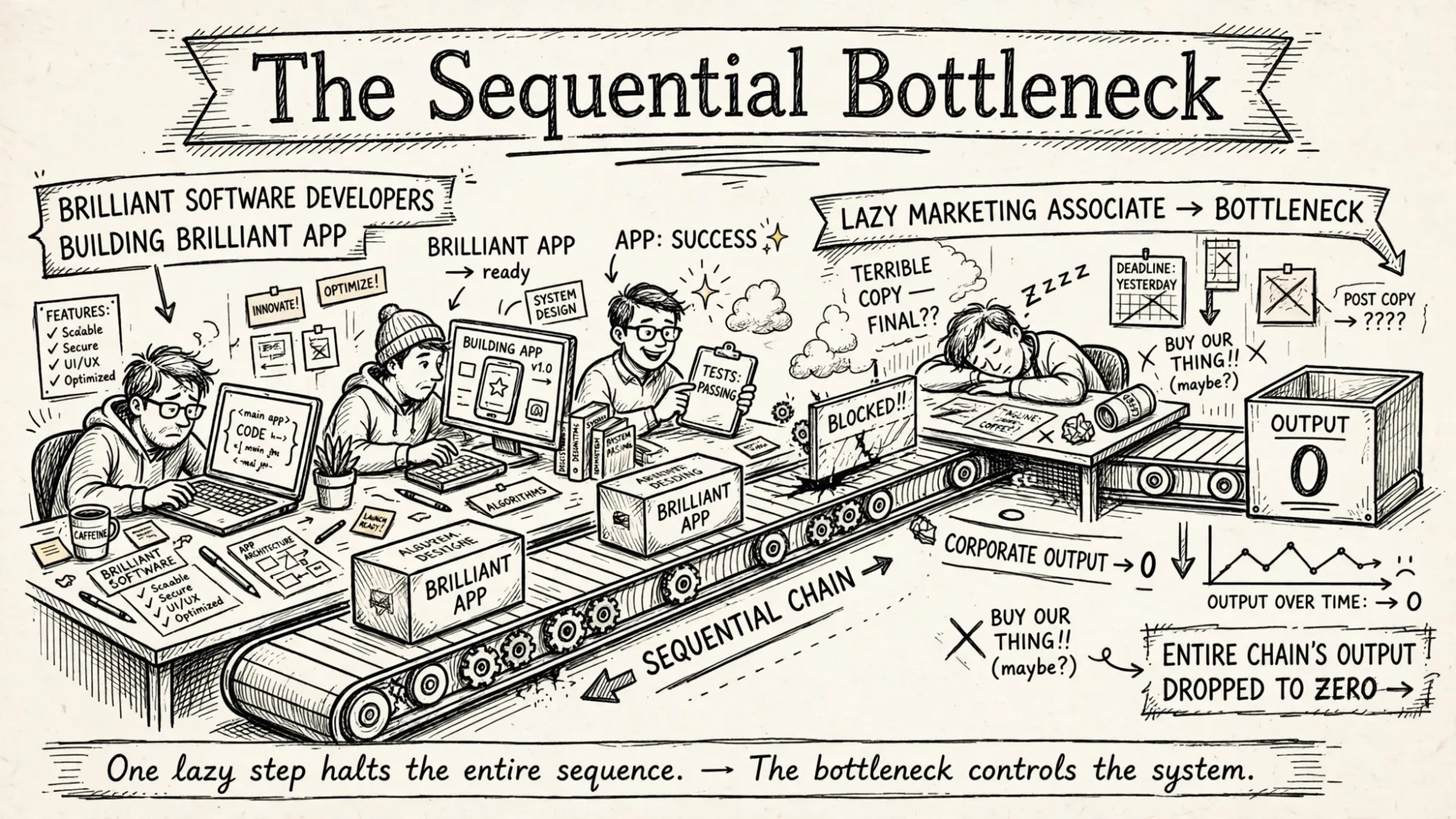
The Sequential Bottleneck
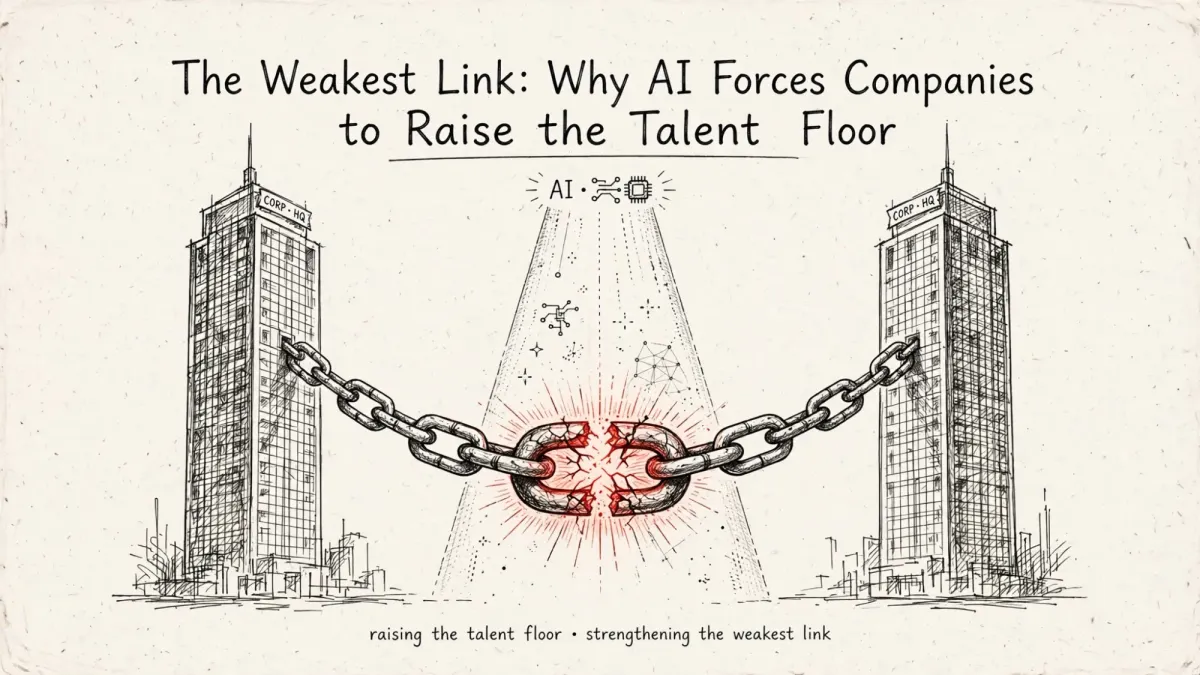
Corporate output is never determined by a blended average of your total talent pool.
A business operates as a strict sequential chain where every single department relies on the successful execution of the previous step.
You can hire the greatest software developers on earth to build a brilliant consumer application.
If the marketing associate assigned to the launch campaign is lazy and writes terrible copy the net financial return for the entire engineering project is literally zero.
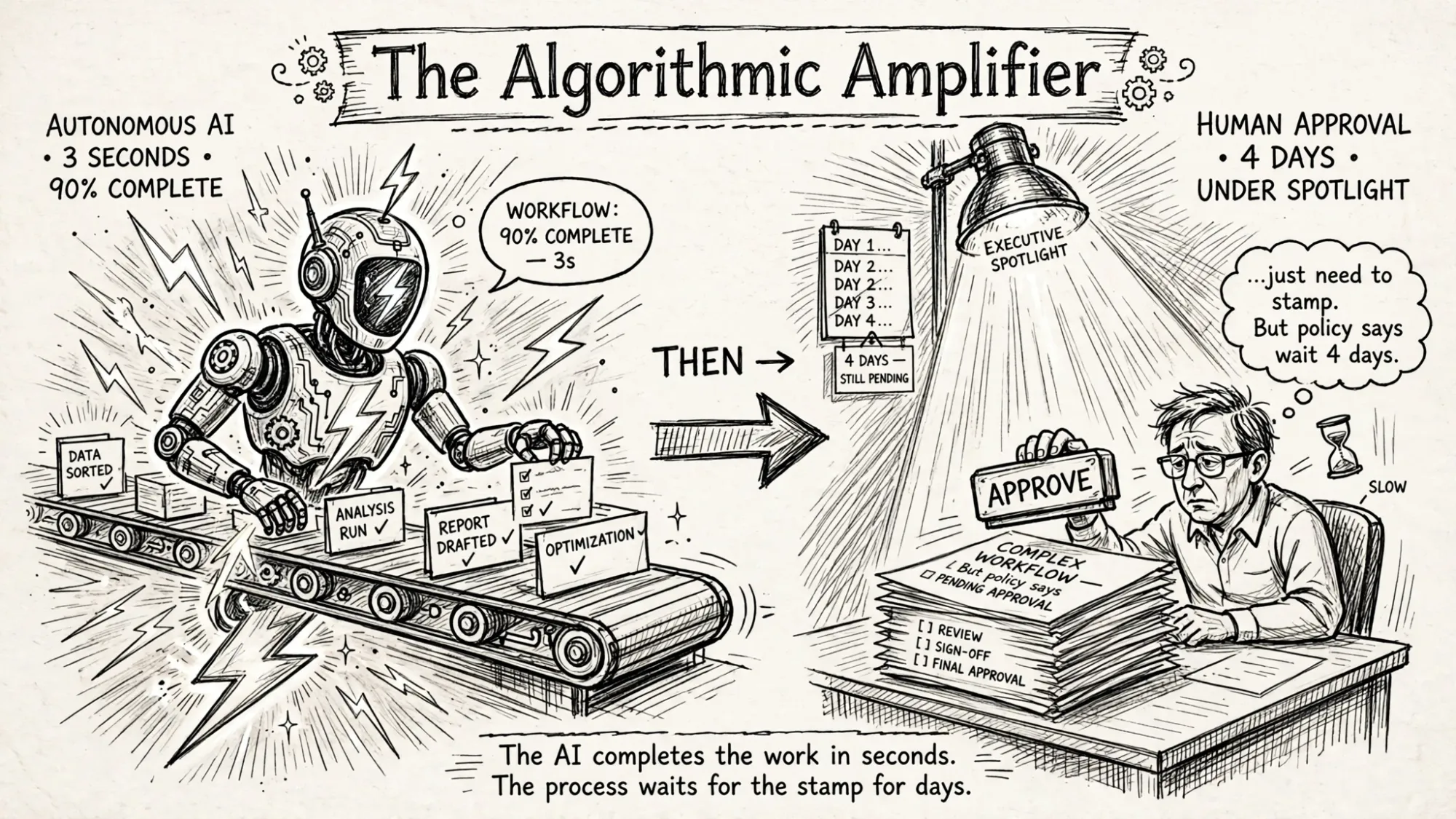
The Algorithmic Amplifier
The rapid adoption of artificial intelligence completely breaks this historical tolerance for average talent.
Autonomous agents execute routine tasks instantly which perfectly highlights exactly where the organizational friction actually lives.
When a software program completes ninety percent of a complex workflow in three seconds the human who takes four days to approve the final step becomes glaringly obvious to executive leadership.
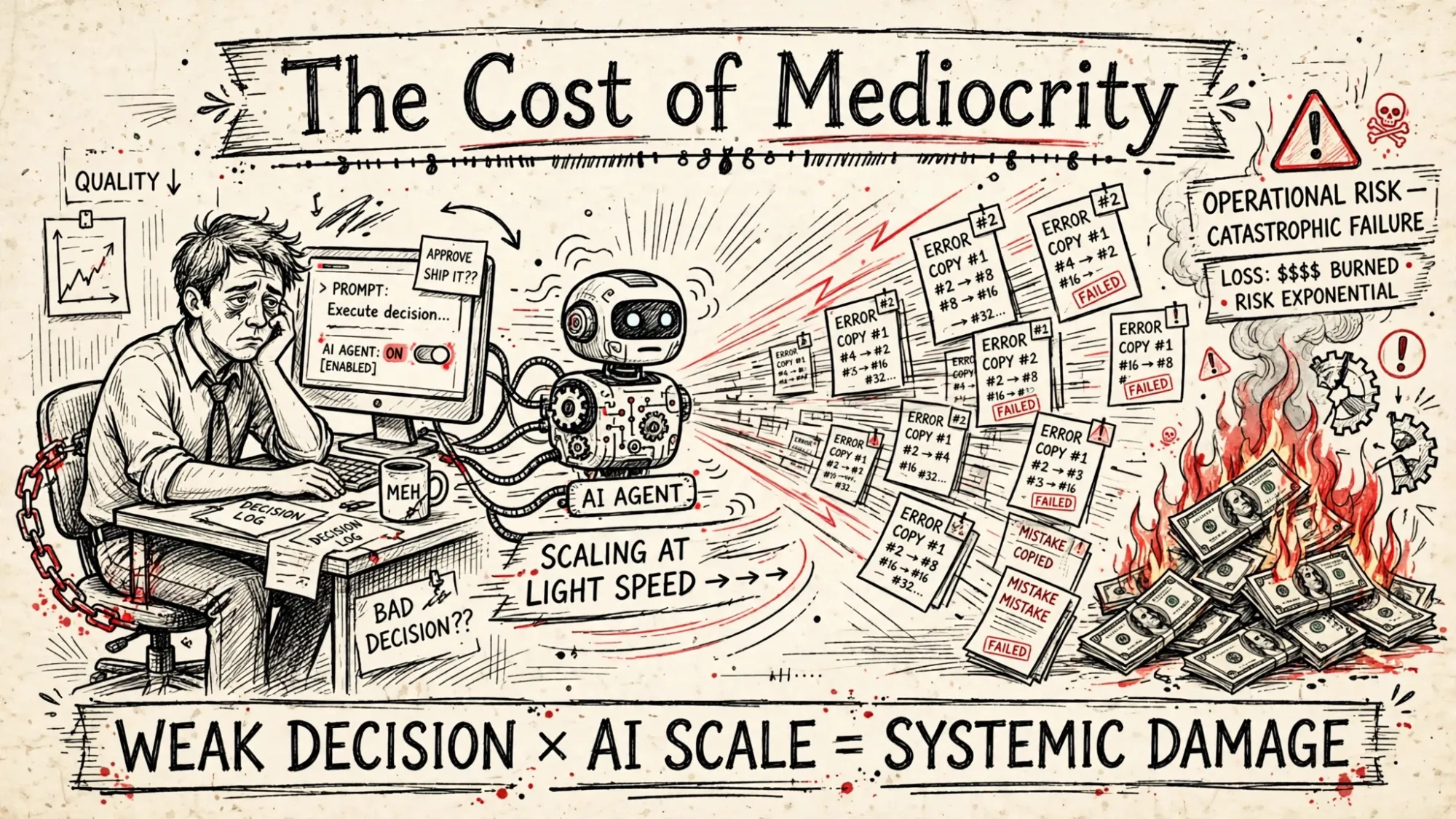
The Cost of Mediocrity
In this new technological era average cognitive work is practically free.
This means any human employee retained on the payroll must possess elite judgment and unparalleled execution skills.
If you allow a weak link to manage an autonomous agent they will simply use the algorithm to scale their own bad decisions at the speed of light.
Retaining a low performer is no longer just a drag on the payroll budget because it actively introduces catastrophic operational risk to the entire system.
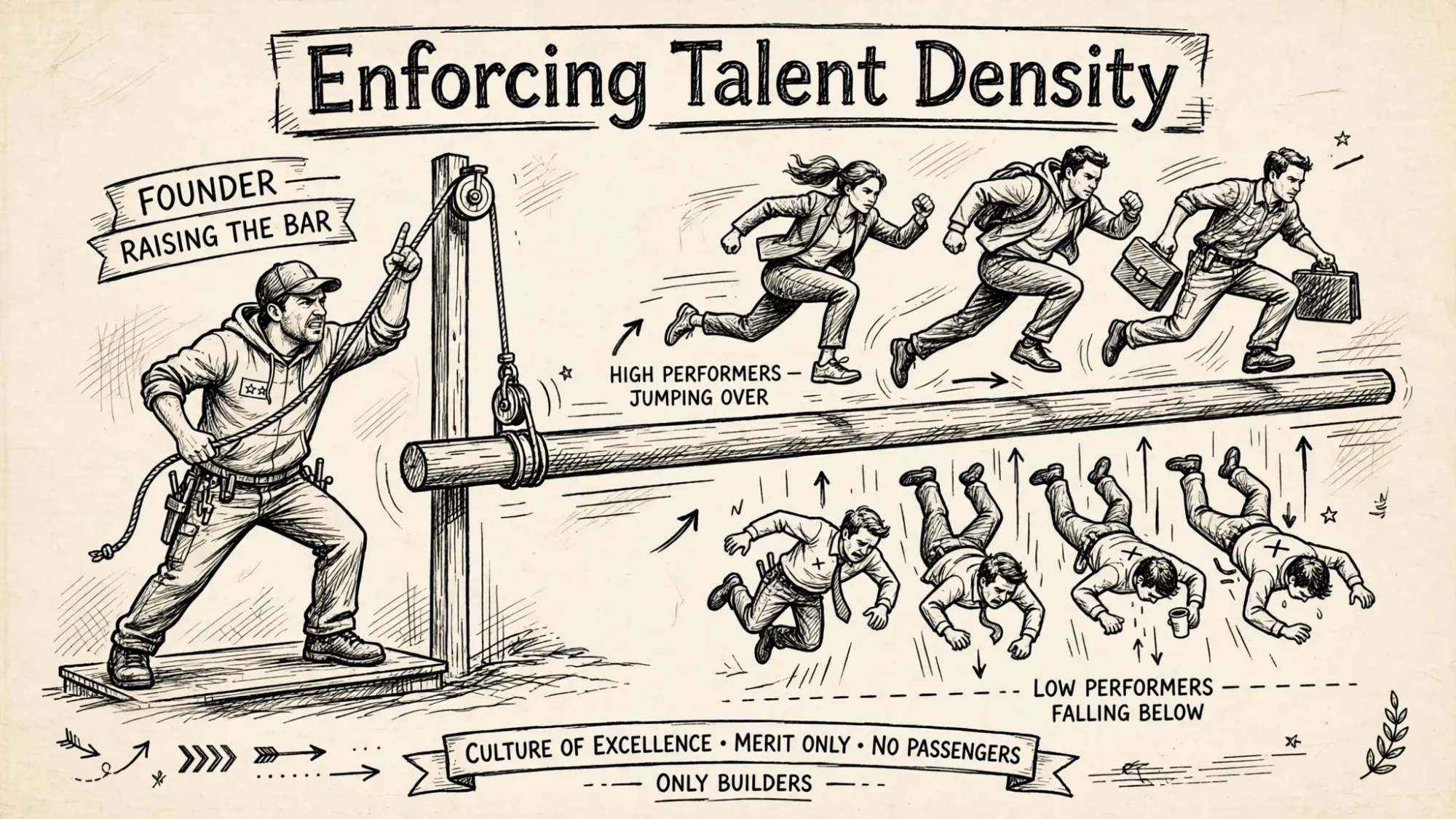
Enforcing Talent Density
To survive the upcoming economic cycle founders must adopt a policy of ruthless talent density.
You have to aggressively raise the baseline standard for what is acceptable inside your building.
High performing operators naturally crave a culture of excellence and they will quickly resign if leadership forces them to constantly fix the mistakes of an incompetent colleague.
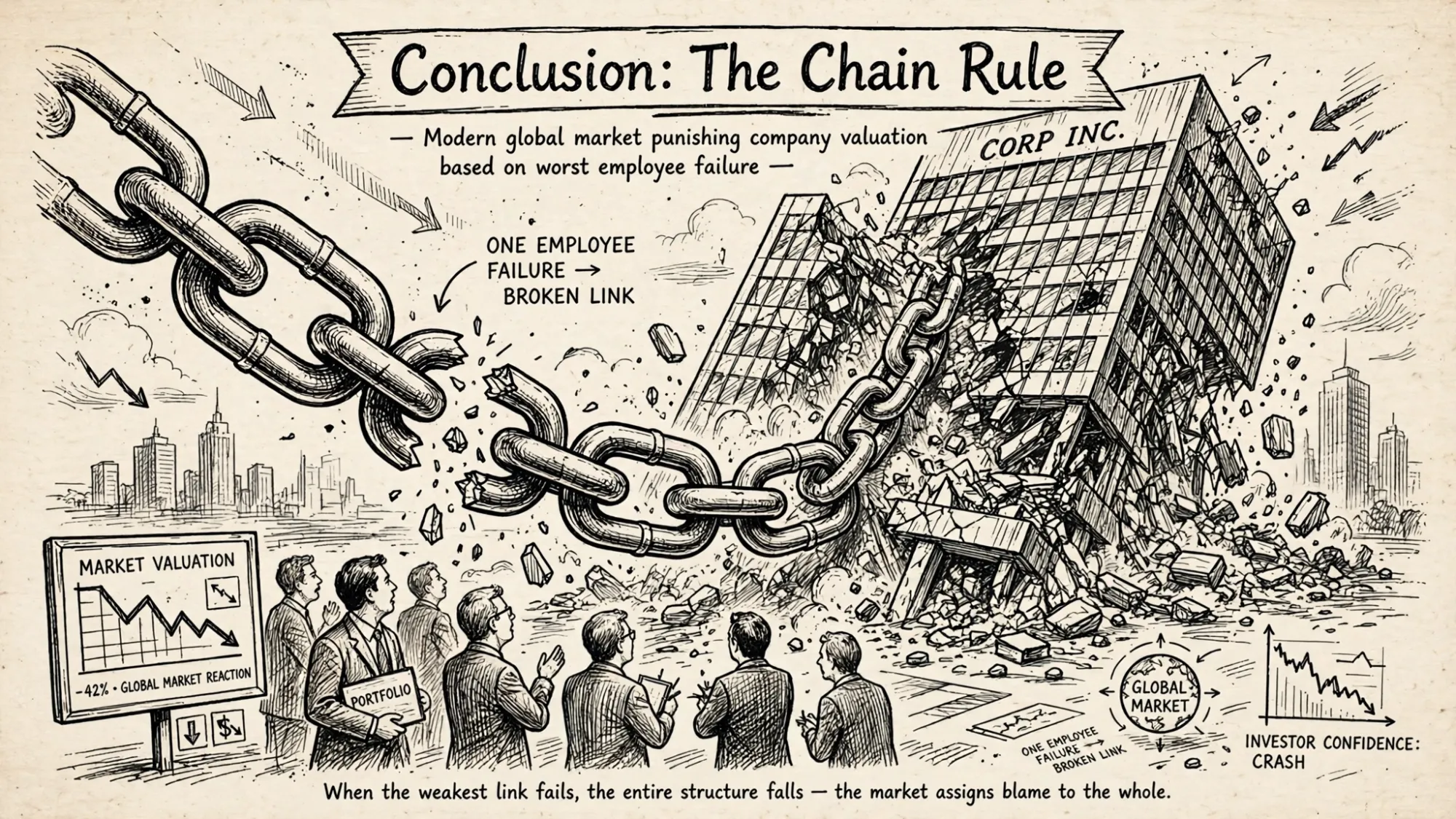
Conclusion: The Chain Rule
The modern global market does not reward a company just because they employ a few brilliant visionaries at the top.
Consumers and investors will ruthlessly punish your valuation based entirely on the specific moment your worst employee fails to deliver.