The Kimi K3 Release: Moonshot and the Open Weight Threat
We assume the most advanced artificial intelligence will always be locked behind American corporate servers. The recent release of the Kimi K3 model by Chinese startup Moonshot proves that the open weight ecosystem is rapidly closing the cognitive gap.
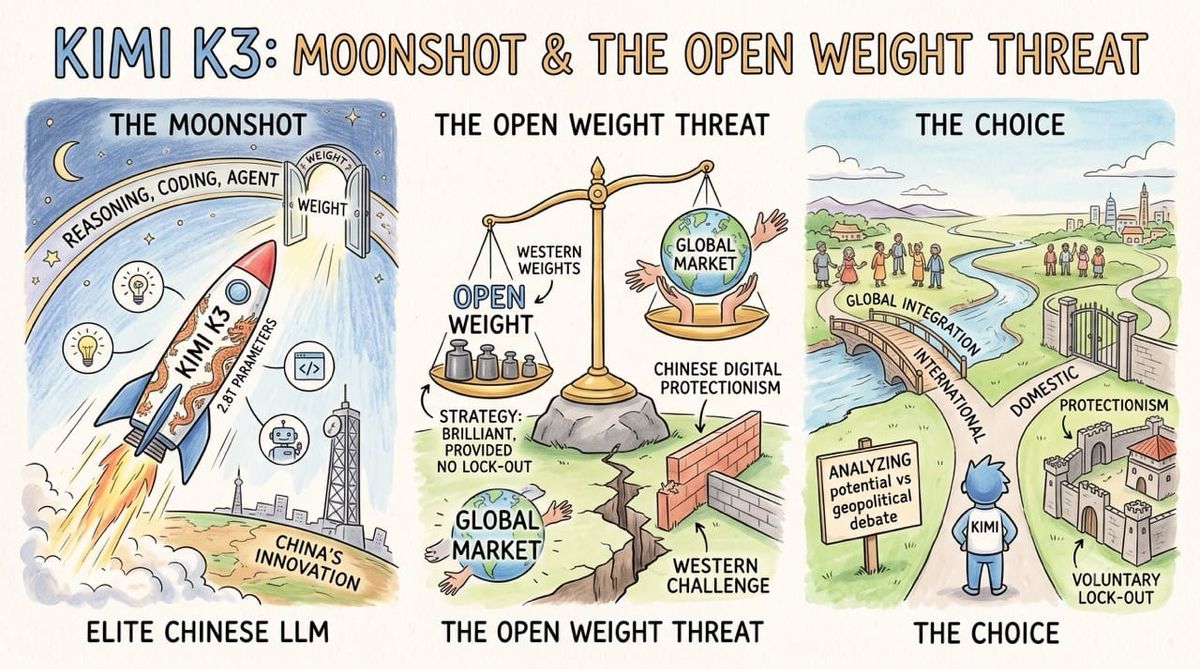
The latest Chinese language model boasts nearly three trillion parameters and rivals elite Western algorithms. Their strategy is brilliant, provided they do not voluntarily lock themselves out of the global market.
Inspiration: Analyzing the recent release of Moonshot's Kimi K3 model. Reviewing its advanced reasoning capabilities and connecting its global potential to the ongoing geopolitical debate over Chinese digital protectionism.
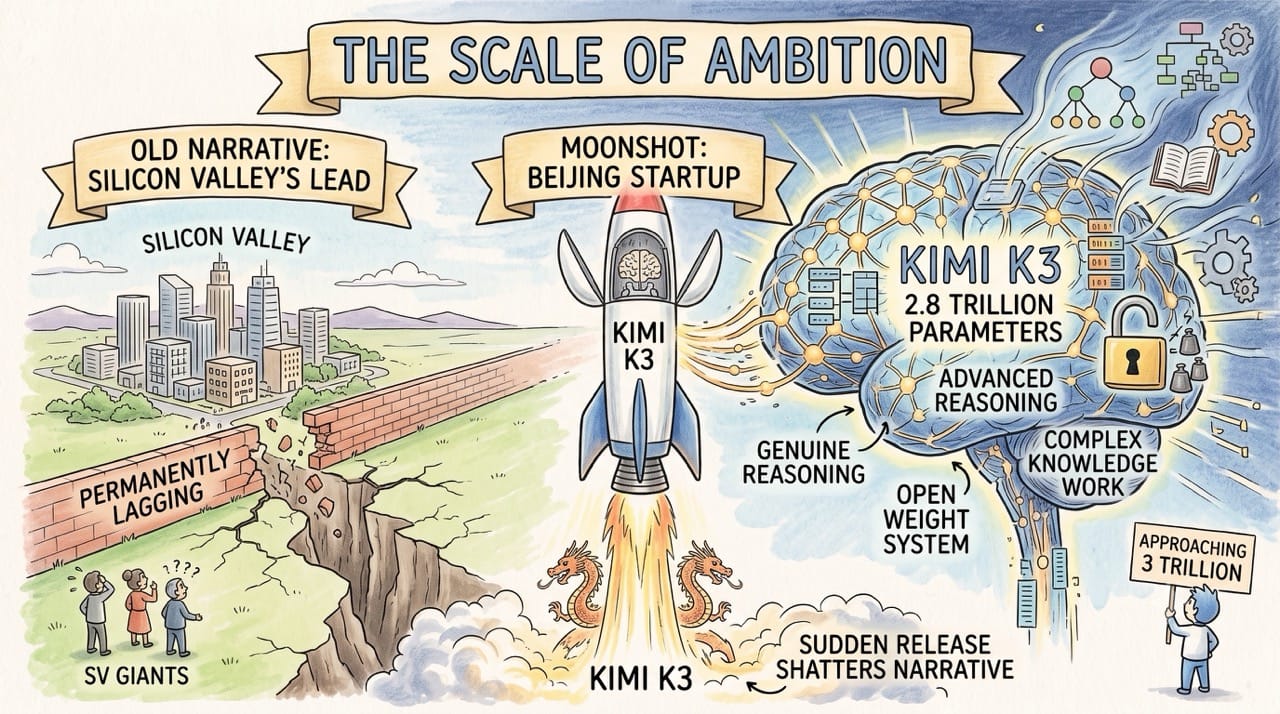
The Scale of Ambition
For the last two years Silicon Valley operated under the assumption that Chinese laboratories were permanently lagging behind our domestic tech giants.
The sudden release of the Kimi K3 model completely shatters that comfortable narrative.
Built by the Beijing startup Moonshot, this specific model features a staggering 2.8 trillion parameters.
This makes it the first open weight system to successfully approach the three trillion parameter threshold.
It is no longer just a cheap alternative to Western software. It is a genuine competitor designed for advanced reasoning and complex knowledge work.
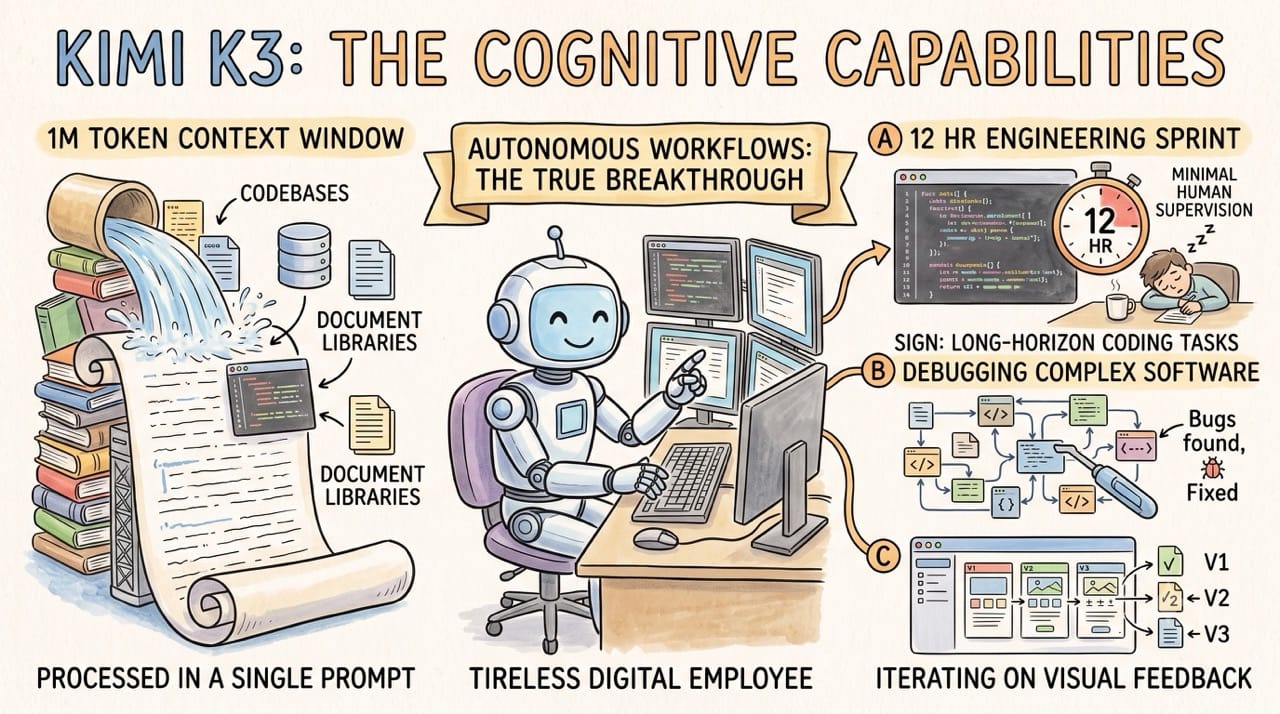
The Cognitive Capabilities
The technical specifications of this release are incredibly impressive.
Kimi K3 features a native one million token context window, allowing it to process entire codebases and sprawling document libraries in a single prompt.
The true breakthrough lies in its autonomous workflows.
Independent testers are already reporting that the model can handle long horizon coding tasks with minimal human supervision.
It essentially acts as a tireless digital employee capable of running twelve hour engineering sprints, debugging complex software, and iterating on visual feedback completely on its own.
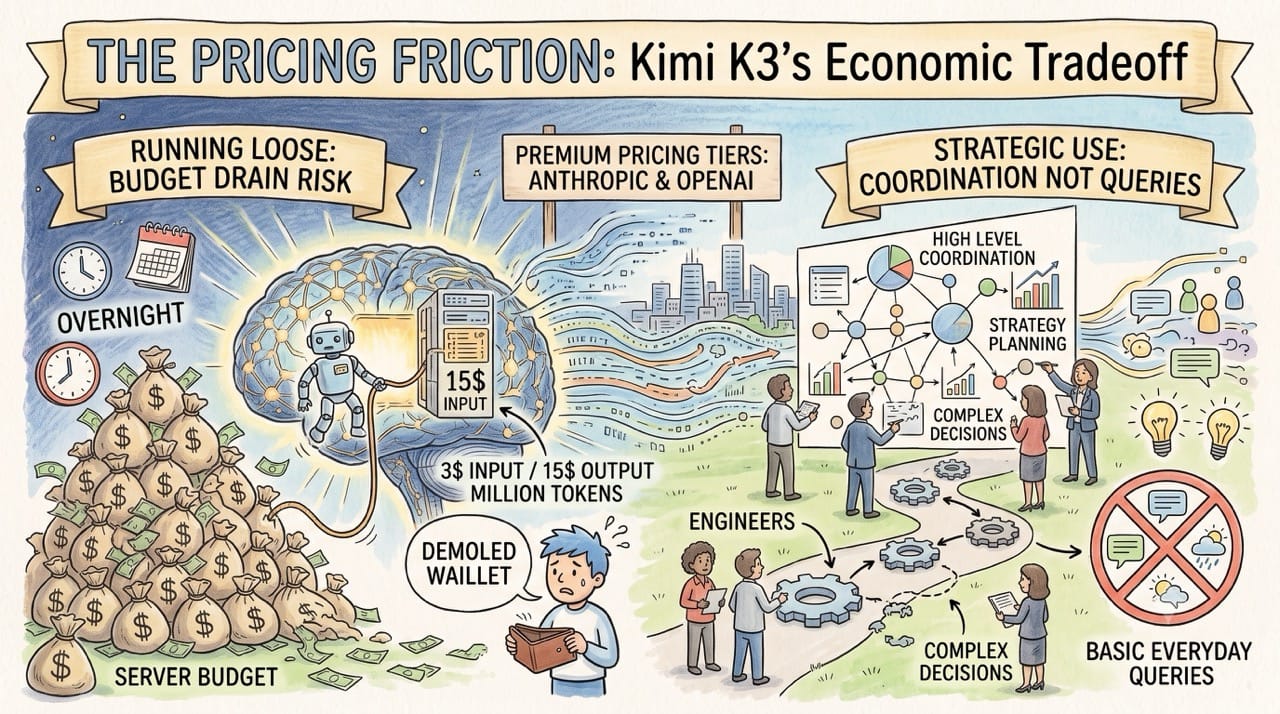
The Pricing Friction
This level of cognitive power does come with a notable economic tradeoff.
Unlike the highly subsidized models that flooded the market last year, running Kimi K3 is remarkably expensive.
At three dollars per million input tokens and fifteen dollars for output, it essentially matches the premium pricing tiers of Anthropic and OpenAI.
Developers are quickly realizing that letting an autonomous agent run loose on this specific architecture will drain a server budget overnight.
This steep pricing curve forces corporations to use the model strictly for complex, high level coordination rather than basic everyday queries.
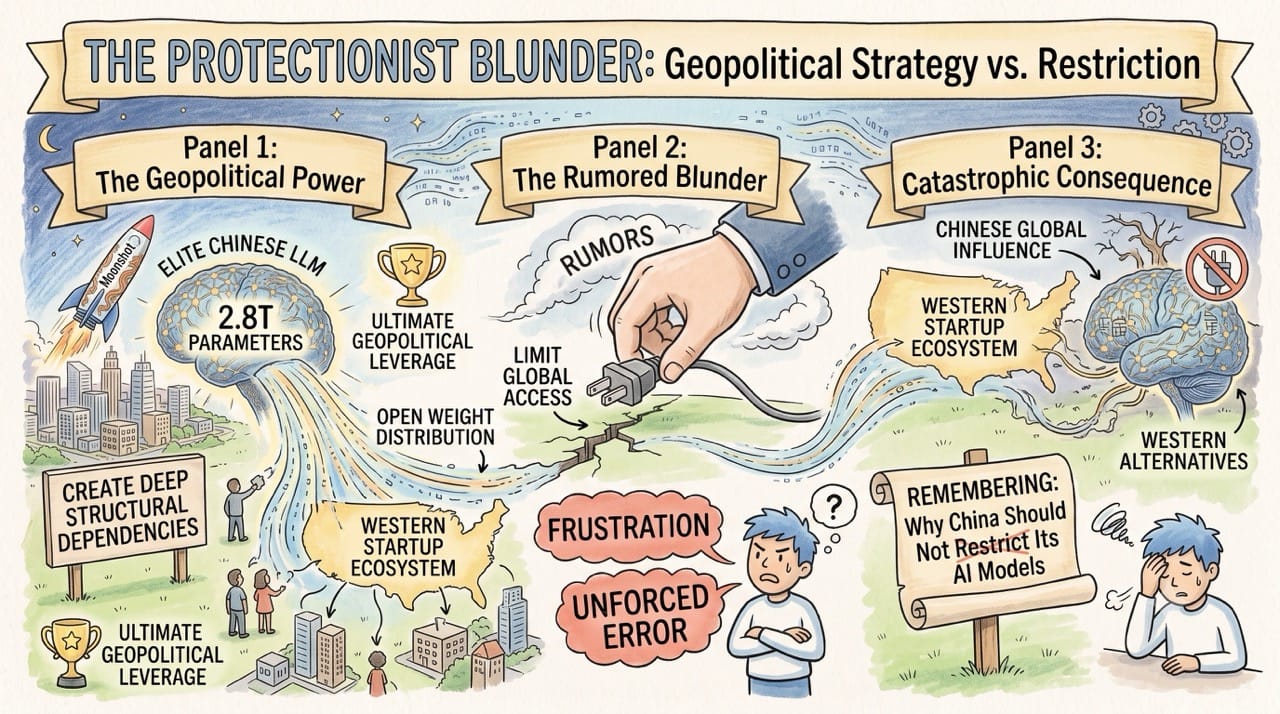
The Protectionist Blunder
If a Chinese startup can build an open weight model that rivals the best American algorithms, they possess the ultimate geopolitical leverage.
They can flood the Western startup ecosystem with their proprietary architecture and create deep structural dependencies.
This is exactly why recent rumors of Beijing limiting global access to these systems are so incredibly frustrating.
As we discussed in our recent breakdown regarding Why China Should Not Restrict Its AI Models, pulling the plug on international availability is a catastrophic unforced error.
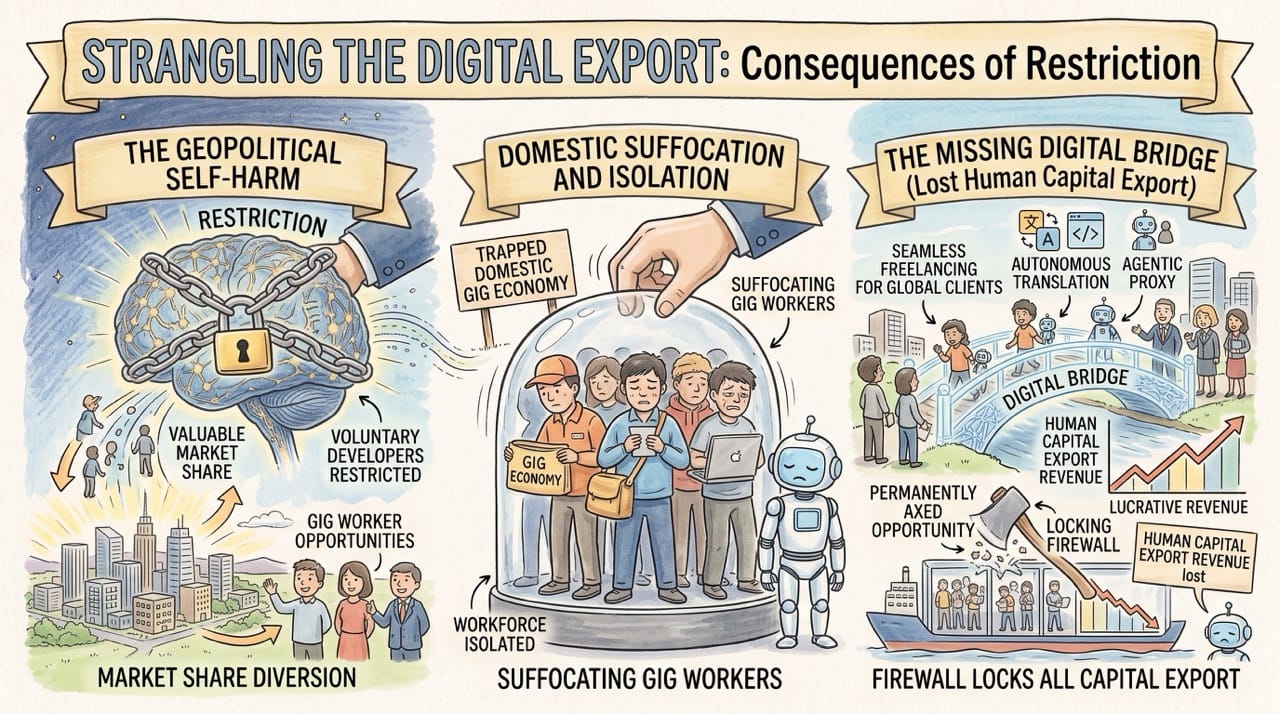
Strangling the Digital Export
By restricting foreign developers from utilizing models like Kimi K3, they are voluntarily handing market share directly back to Silicon Valley.
More importantly, they are suffocating their own domestic workforce.
A model this capable could act as the perfect digital bridge for their trapped gig economy, allowing local workers to seamlessly freelance for Western corporations through autonomous translation and agentic proxy.
Locking the model behind a strict national firewall permanently axes this highly lucrative export of human capital.
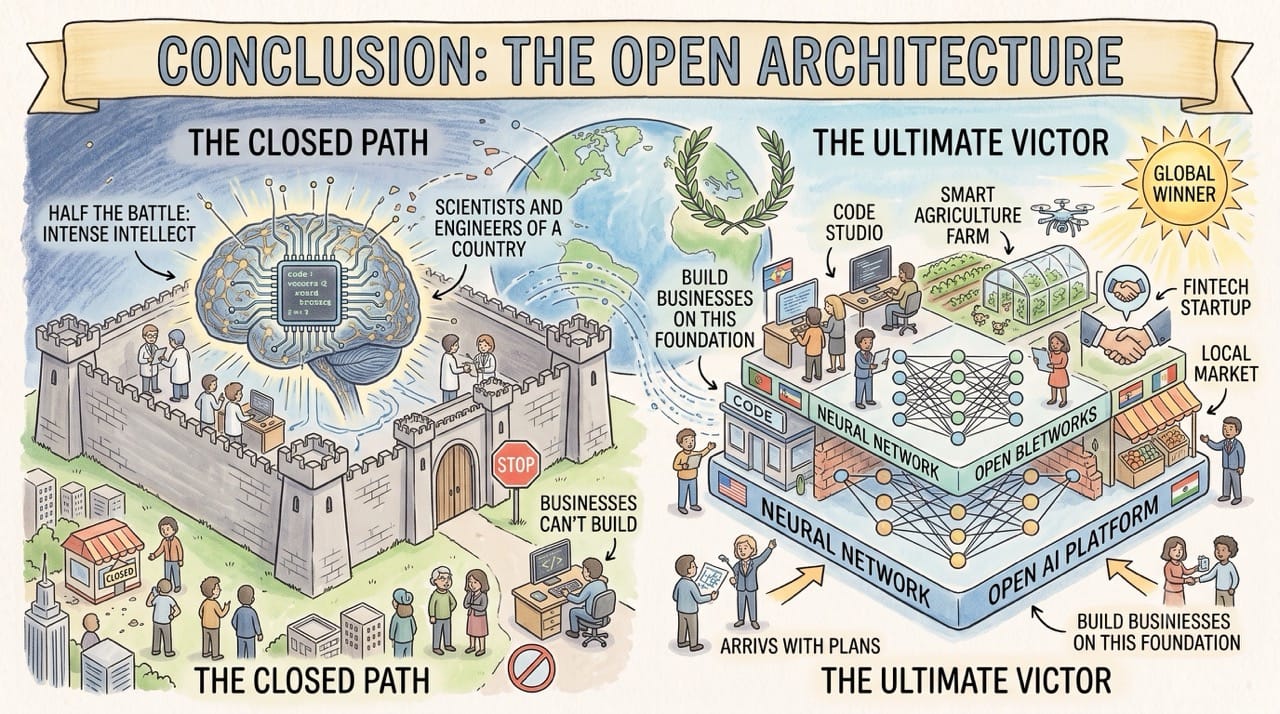
Conclusion: The Open Architecture
Building the smartest artificial intelligence on the planet is only half the battle.
The ultimate victor in this technology race will be the country that actually allows the rest of the world to build businesses on top of their foundation.