
The Battlefield Recycler: Mining the Debris of War
Modern wars consume billions of dollars in critical minerals that are left to rust on the battlefield. The smartest defense contractors will soon build autonomous recycling fleets to harvest this debris and feed their own supply chains.
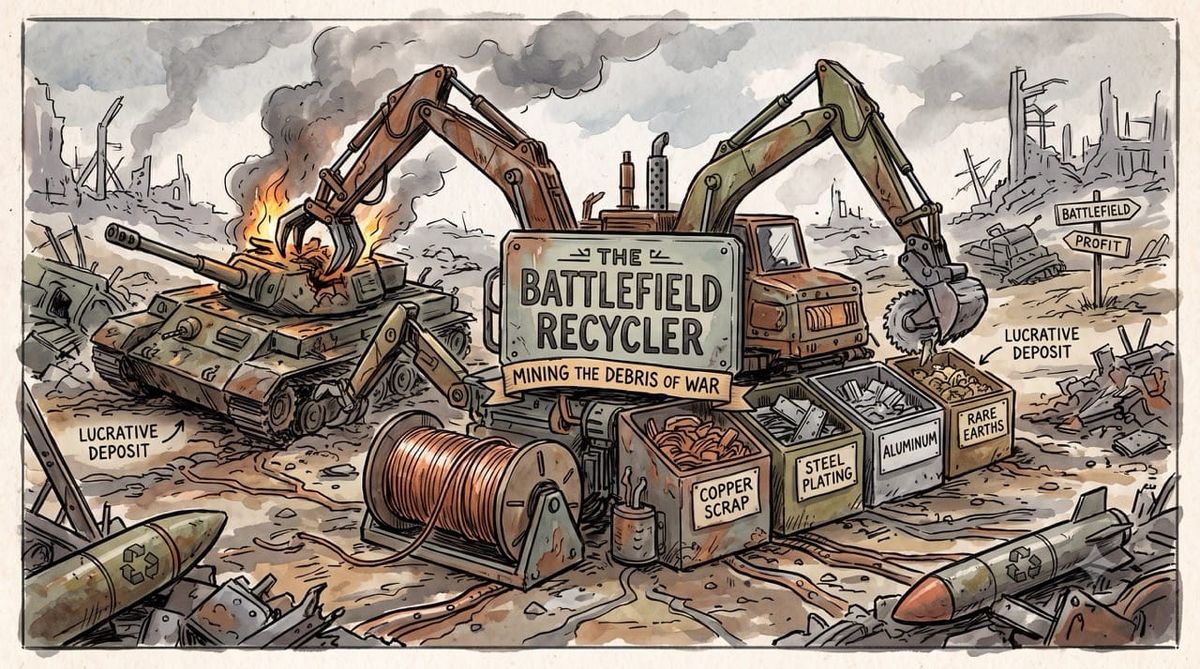
We treat destroyed military hardware as a permanent economic loss. The future of defense economics relies entirely on treating the active battlefield as a highly lucrative mineral deposit.
Inspiration: Watching Dan Dreyfus at the All In Liquidity Event discuss the staggering amount of unrecovered copper lost in modern conflict. Realizing that the mechanics of the browser game OGame perfectly predict the future of autonomous battlefield salvage.
The Mineral Incinerator
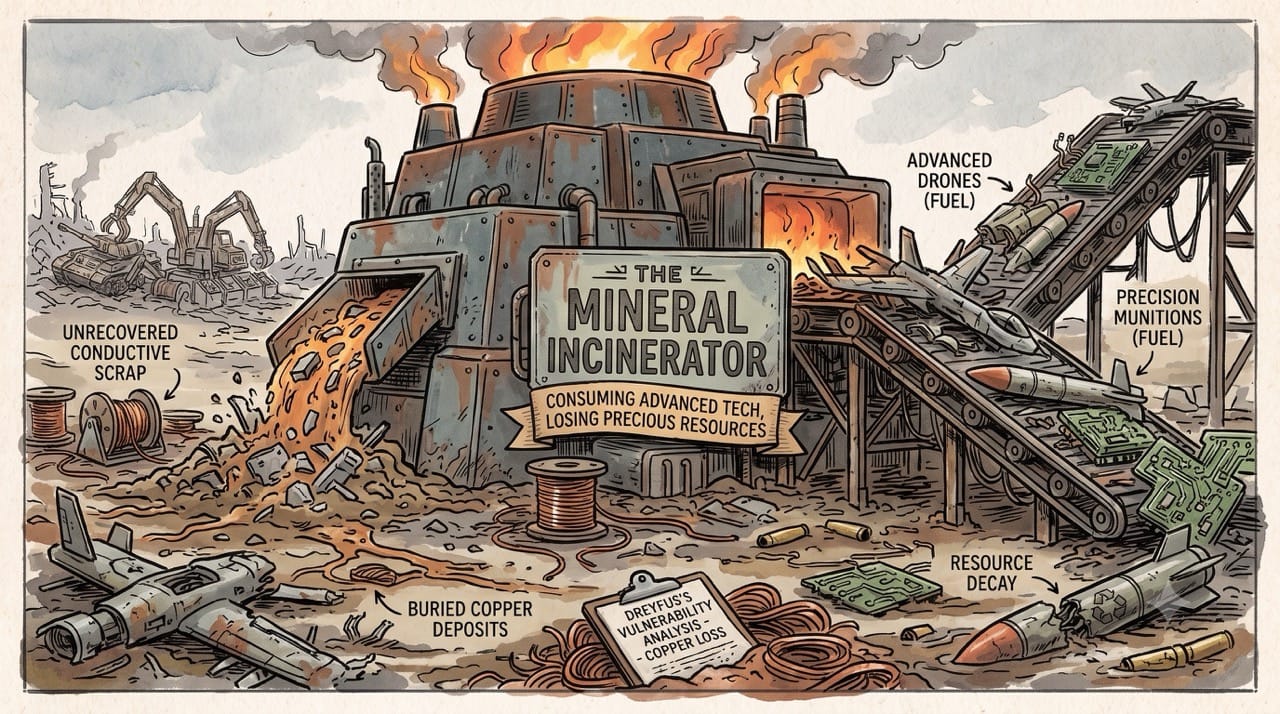
Global conflicts currently operate as giant incinerators for our most valuable natural resources.
We launch highly advanced drones and precision munitions that are packed full of incredibly expensive conductive materials.
Dan Dreyfus recently highlighted this exact vulnerability by pointing out the volume of copper completely abandoned after every major kinetic engagement.
When these machines inevitably explode or crash we simply leave those precious metals to rot in the mud.
The Video Game Blueprint
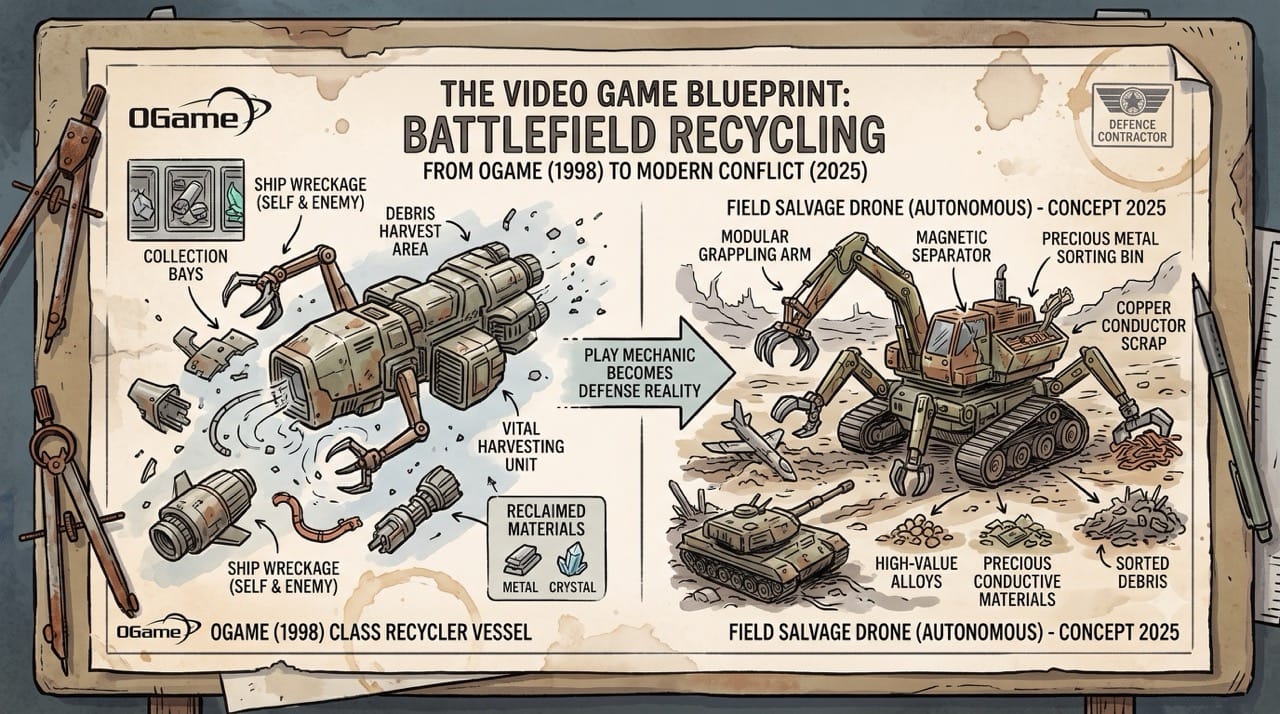
Anyone who played the classic browser strategy game OGame remembers the vital importance of the Recycler unit.
After a giant fleet battle you immediately deployed these specialized ships to harvest the floating debris field.
You collected the wreckage of both your own ships and the enemy fleet to reclaim the raw materials.
This brilliant gameplay mechanic perfectly illustrates how modern defense contractors should view physical equipment loss.
The Autonomous Scavenger
The modern defense industry desperately needs to bring this specific video game concept into the real world.
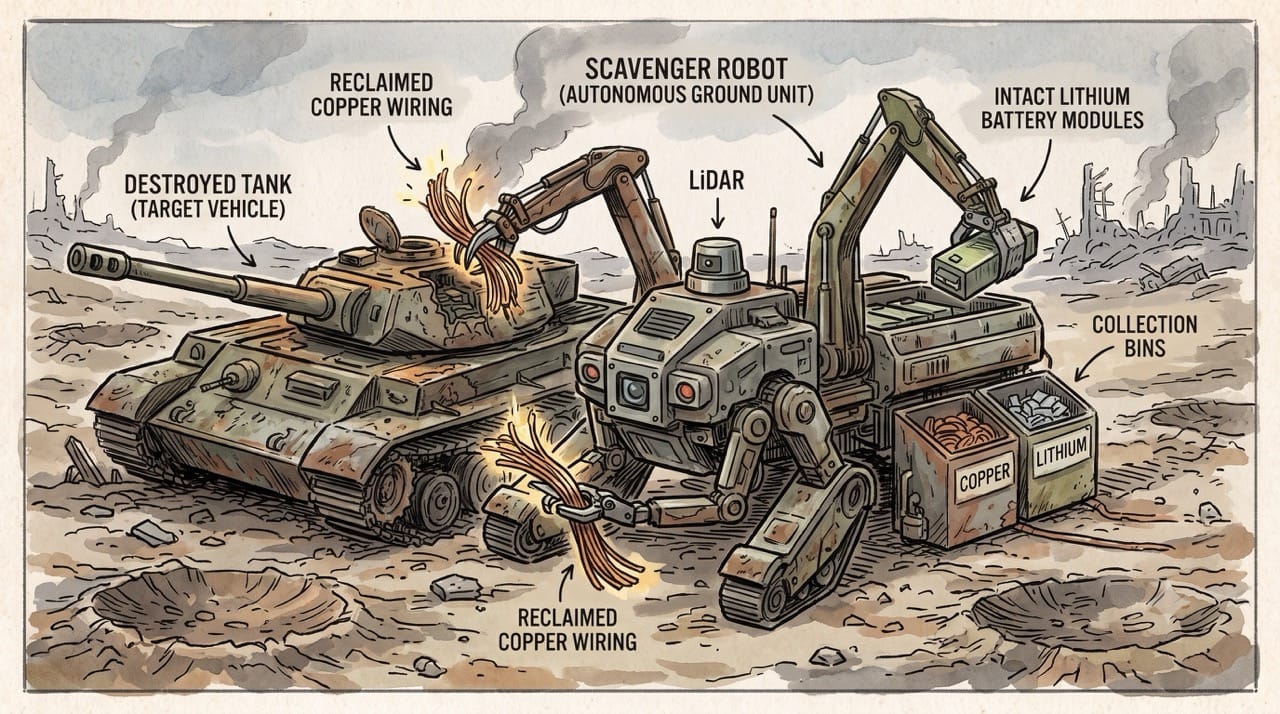
Future military supremacy will require deploying specialized autonomous ground units designed exclusively to scavenge destroyed hardware.
These robotic scavengers would quietly navigate the battlefield after an engagement to extract copper wiring and intact lithium batteries.
They would strip the value from a downed vehicle before it ever has a chance to rust.
Closing the Supply Loop
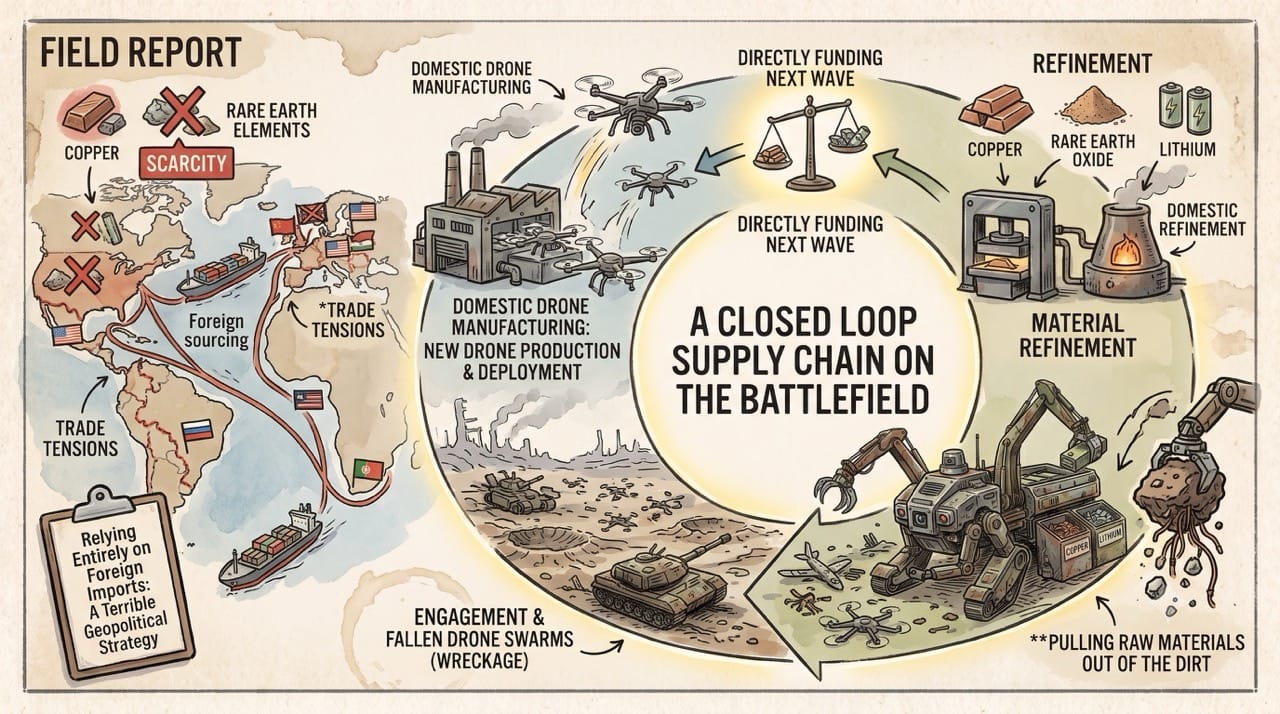
Securing new deposits of raw copper and rare earth metals is becoming incredibly difficult due to global trade tensions.
Relying entirely on foreign imports to build your domestic defense infrastructure is a terrible geopolitical strategy.
Harvesting the wreckage of your own fallen drone swarms creates a closed loop supply chain. You are literally pulling raw materials out of the dirt to directly fund your next wave of production.
The Resource Denial
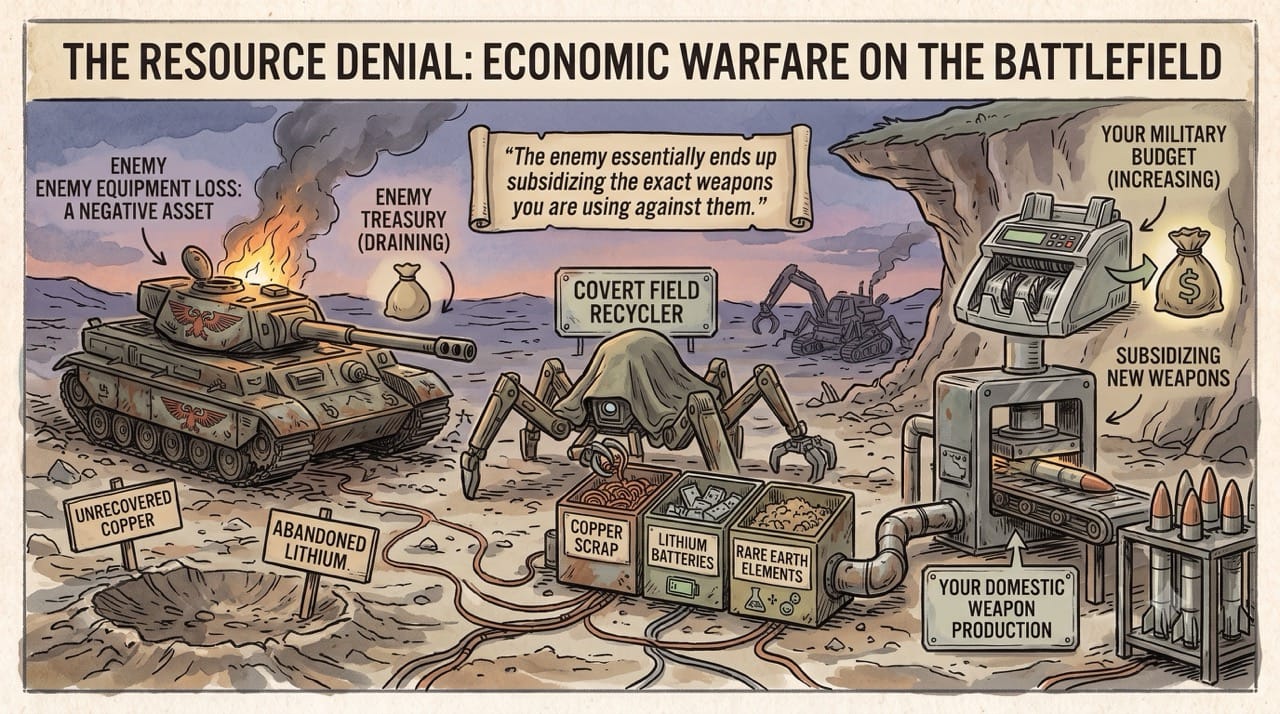
This salvage strategy also creates a highly effective form of economic warfare against your adversary.
If your recycling units can quietly harvest the wreckage of enemy equipment you are actively draining their national treasury.
You are stealing their natural resources to feed your own military budget. The enemy essentially ends up subsidizing the exact weapons you are using against them.
Conclusion: The Secondary Economy
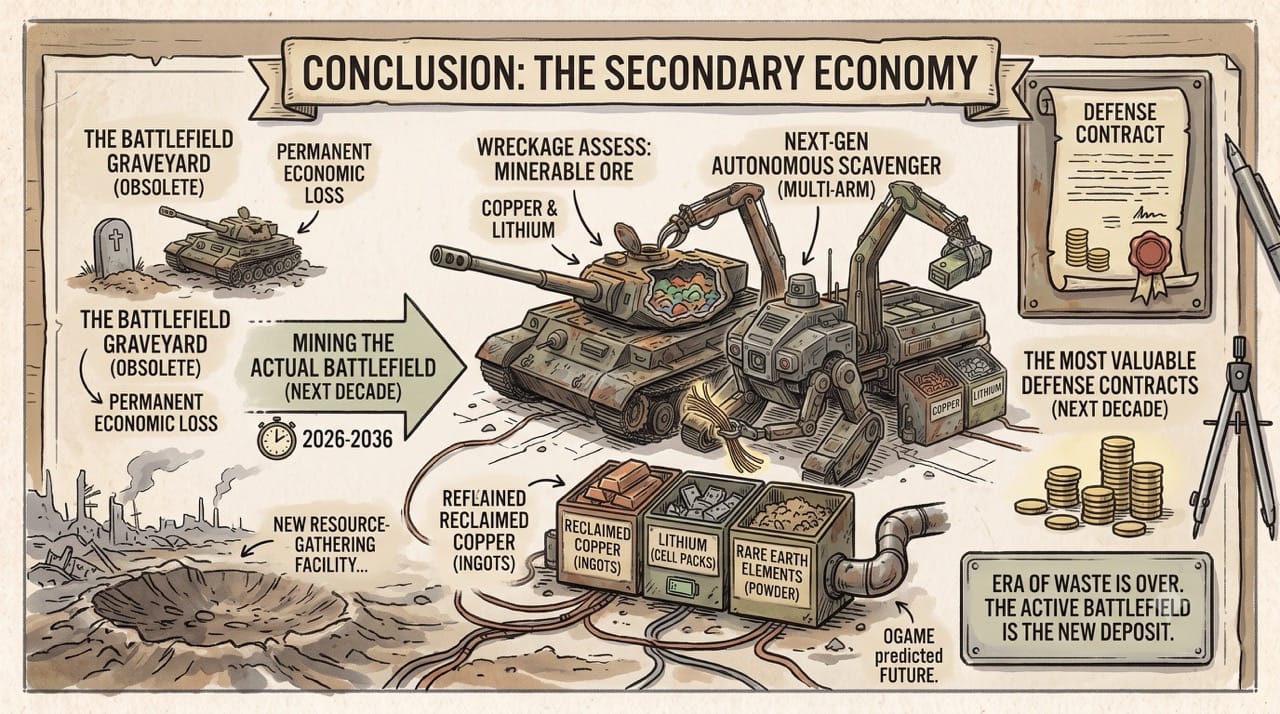
The era of treating an active war zone strictly as a graveyard for expensive hardware is officially over.
The most valuable defense contracts of the next decade will go to the companies that successfully figure out how to mine the actual battlefield.