The Real Use of Humanoid Robots Is Senior Care
We assume humanoid robots are being built to assemble electric cars or fold our laundry. The true total addressable market is actually providing physical care for the wealthiest aging generation in human history.
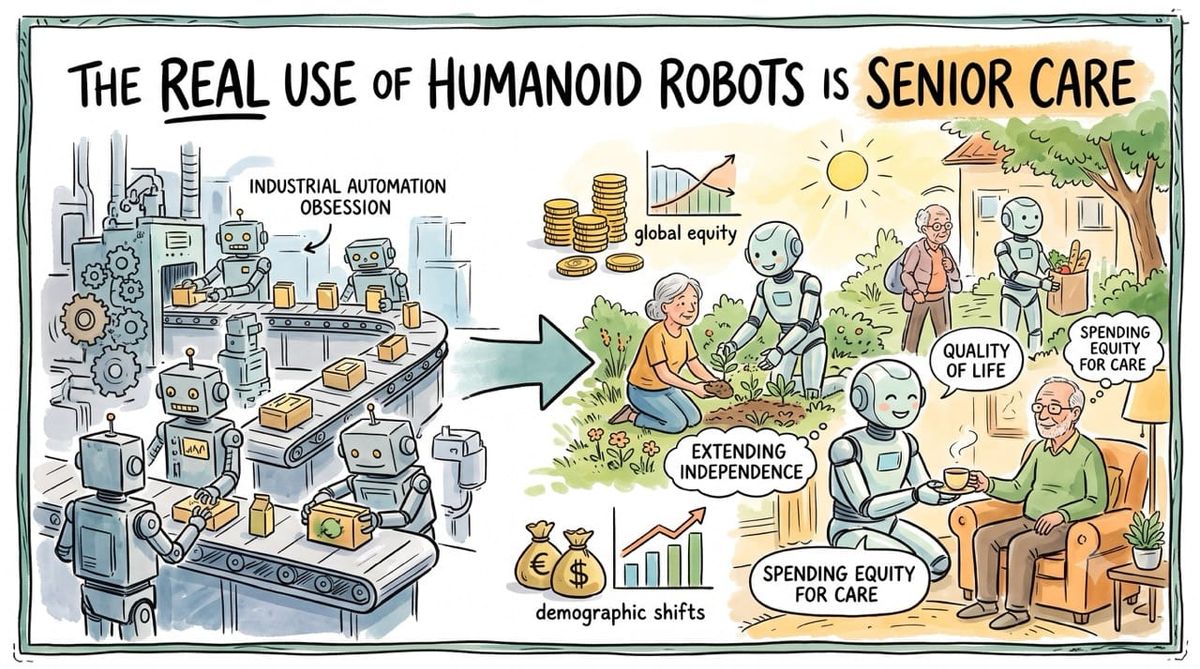
The technology industry is obsessed with industrial automation while completely ignoring the demographic time bomb of an aging population.
Inspiration: Realizing that the baby boomer generation holds an unprecedented amount of global equity and will aggressively spend it to extend their independence.
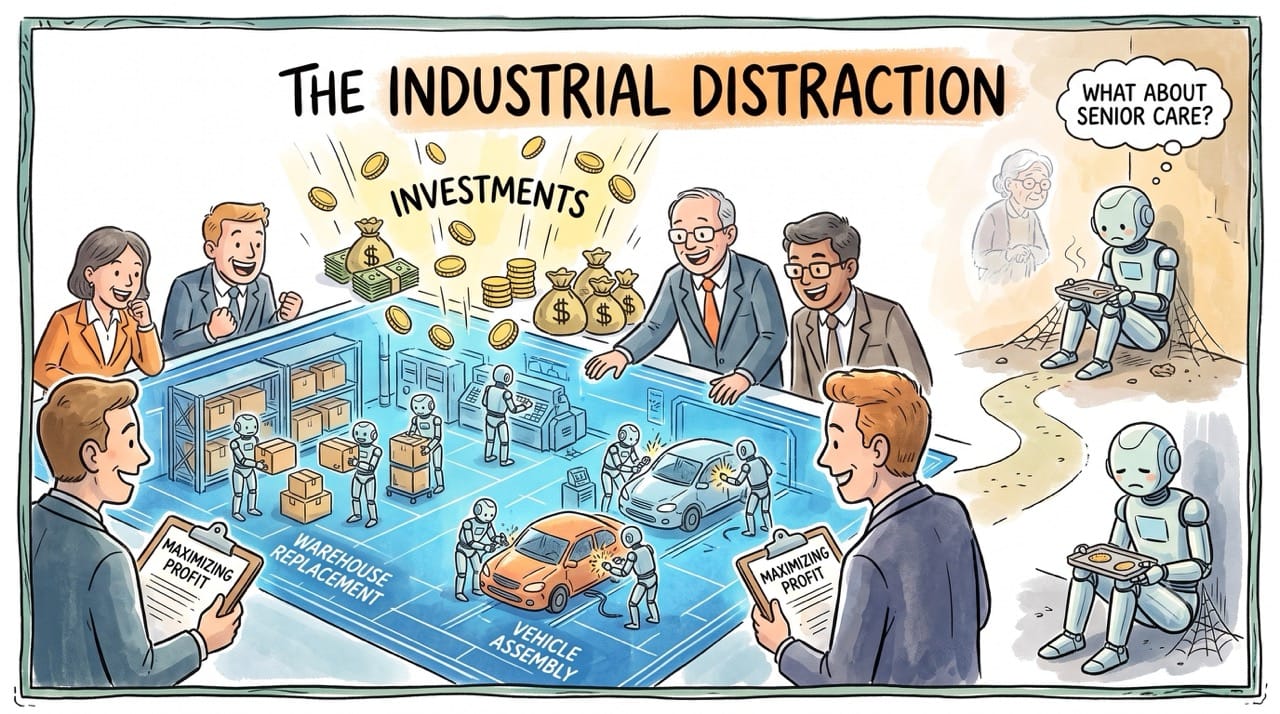
The Industrial Distraction
Investors are currently pouring billions of dollars into humanoid robotics companies with a very specific vision in mind.
They picture these metal machines replacing warehouse workers or assembling vehicles on a factory floor.
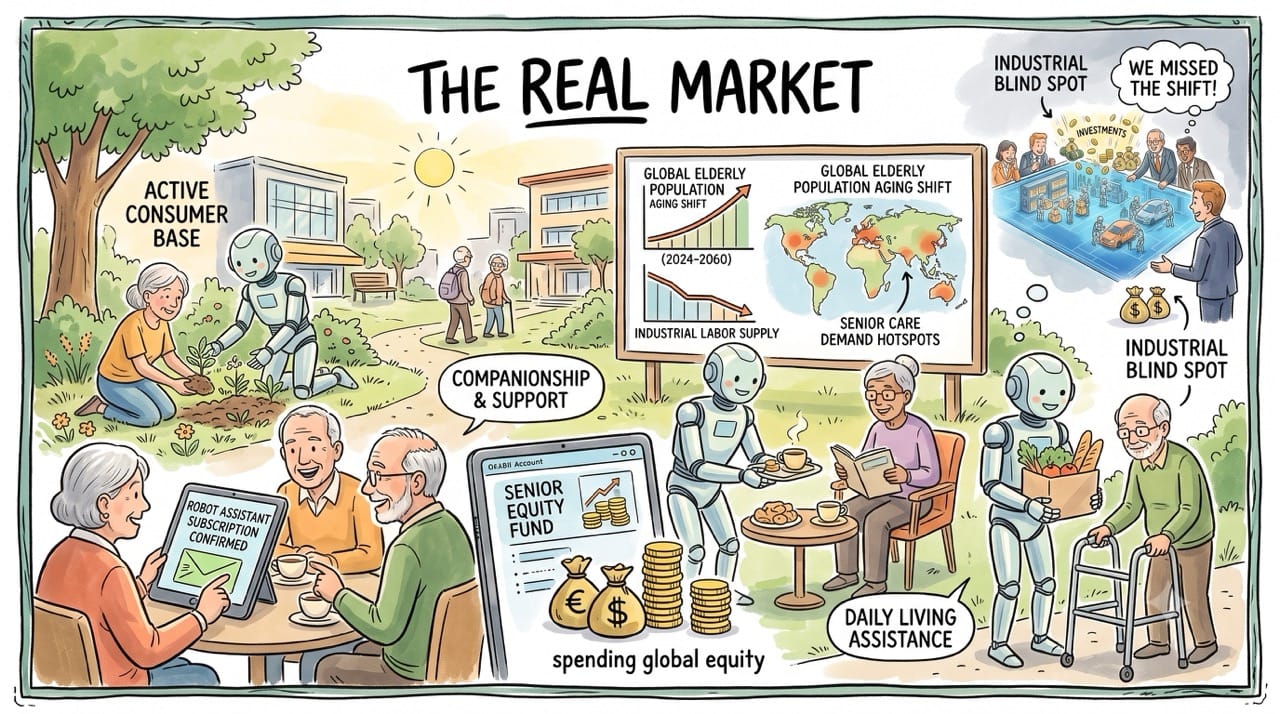
The Real Market
This industrial focus completely misses the greatest demographic shift of our lifetime.
The actual consumer base for a physical robotic assistant is the rapidly expanding population of elderly citizens.
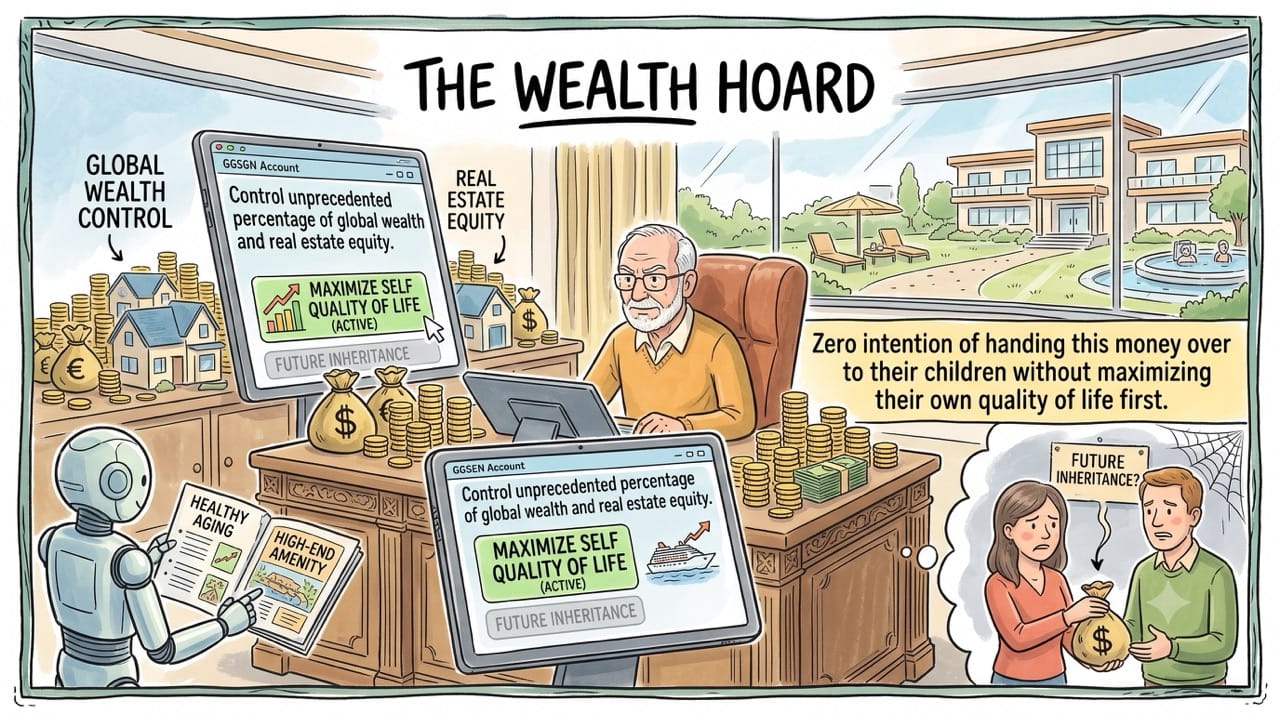
The Wealth Hoard
The baby boomer generation currently controls an unprecedented percentage of global wealth and real estate equity.
They have zero intention of handing this money over to their children without maximizing their own quality of life first.
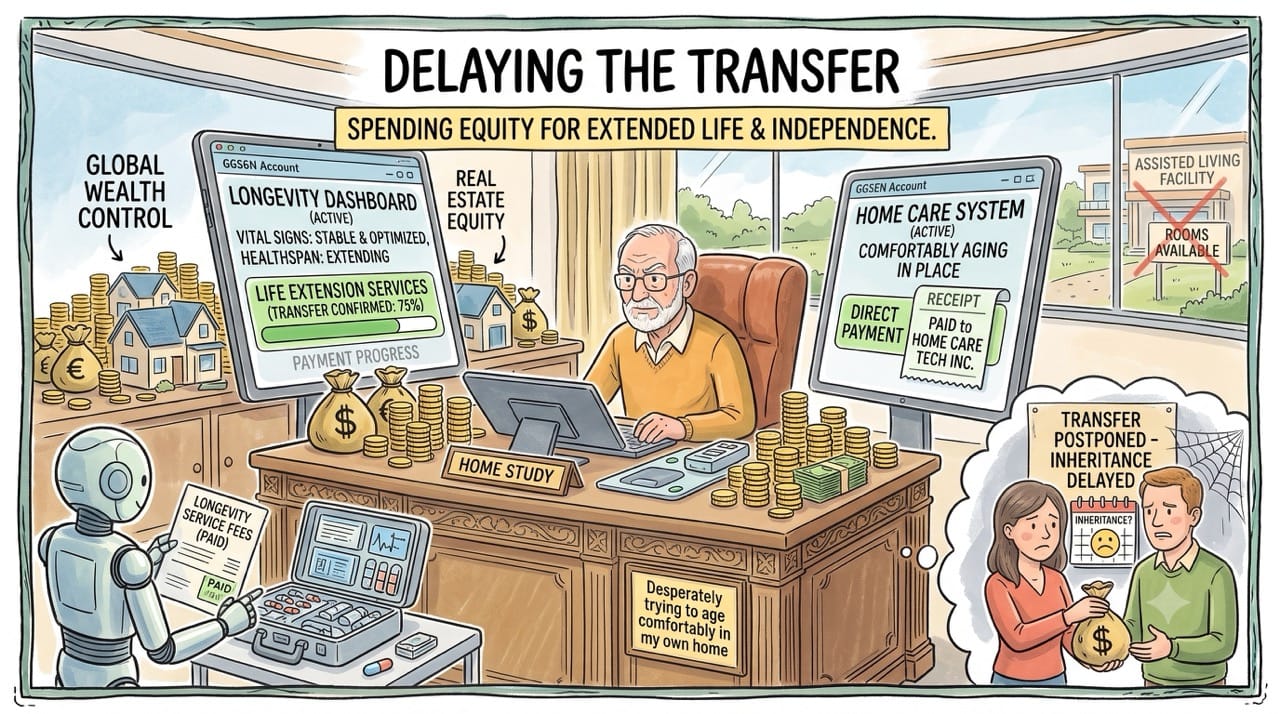
Delaying the Transfer
Before the great wealth transfer ever takes place this generation will spend a fortune trying to extend their own lifespans.
They desperately want to age comfortably in their own homes rather than moving into assisted living facilities.
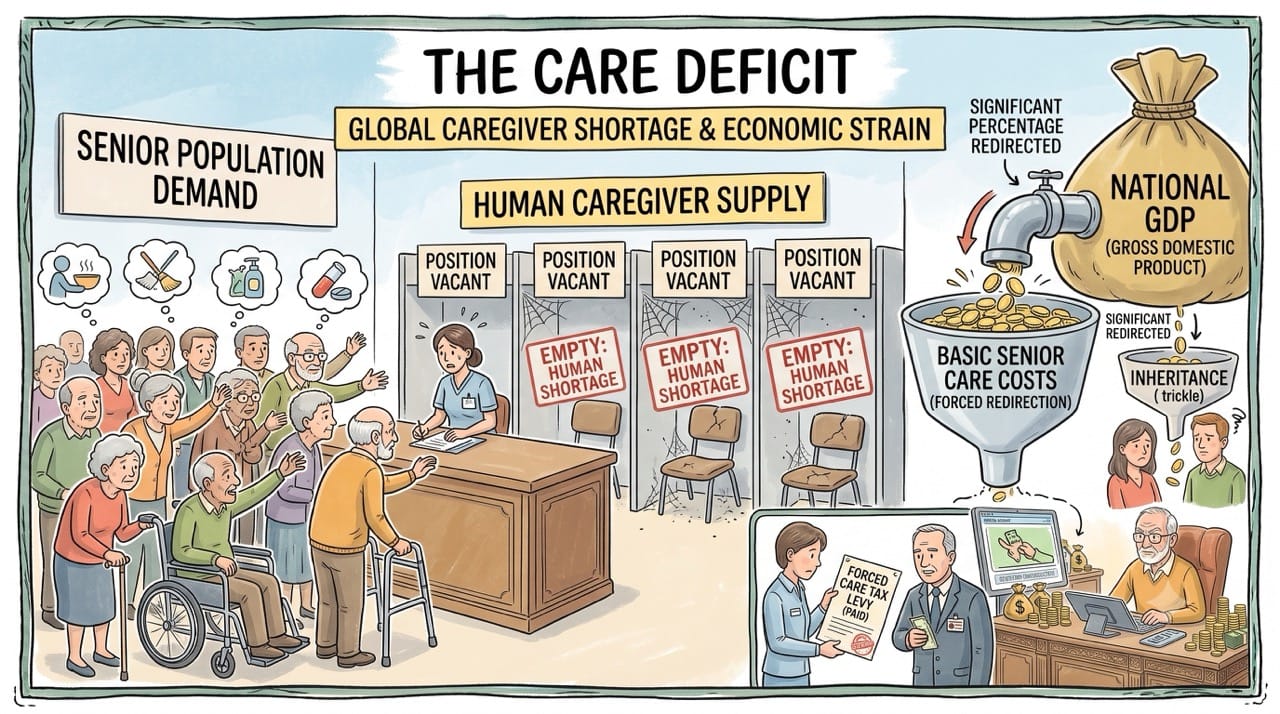
The Care Deficit
We are facing a terrifying shortage of human caregivers to support this aging demographic.
A significant percentage of our gross domestic product will soon be forcibly redirected toward basic senior care just to keep society functioning.
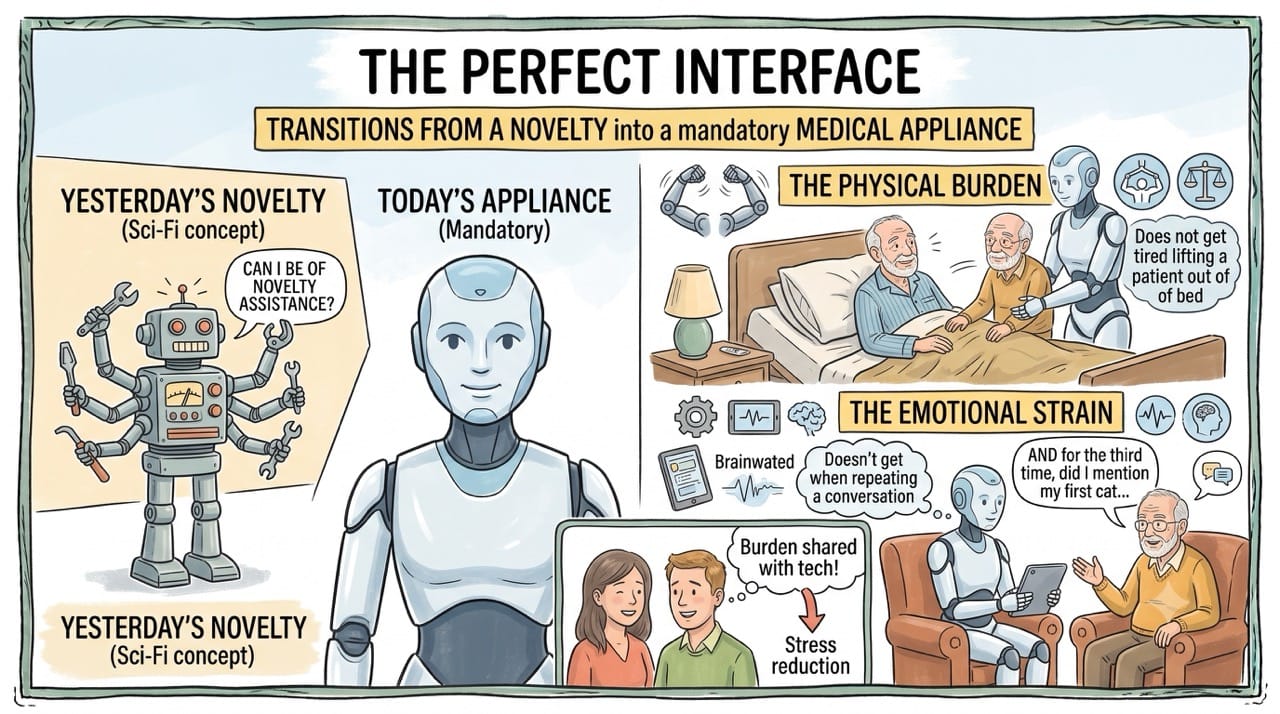
The Perfect Interface
This is exactly where the humanoid robot transitions from a science fiction novelty into a mandatory medical appliance.
A robot does not get tired lifting a patient out of bed or frustrated when repeating a conversation.
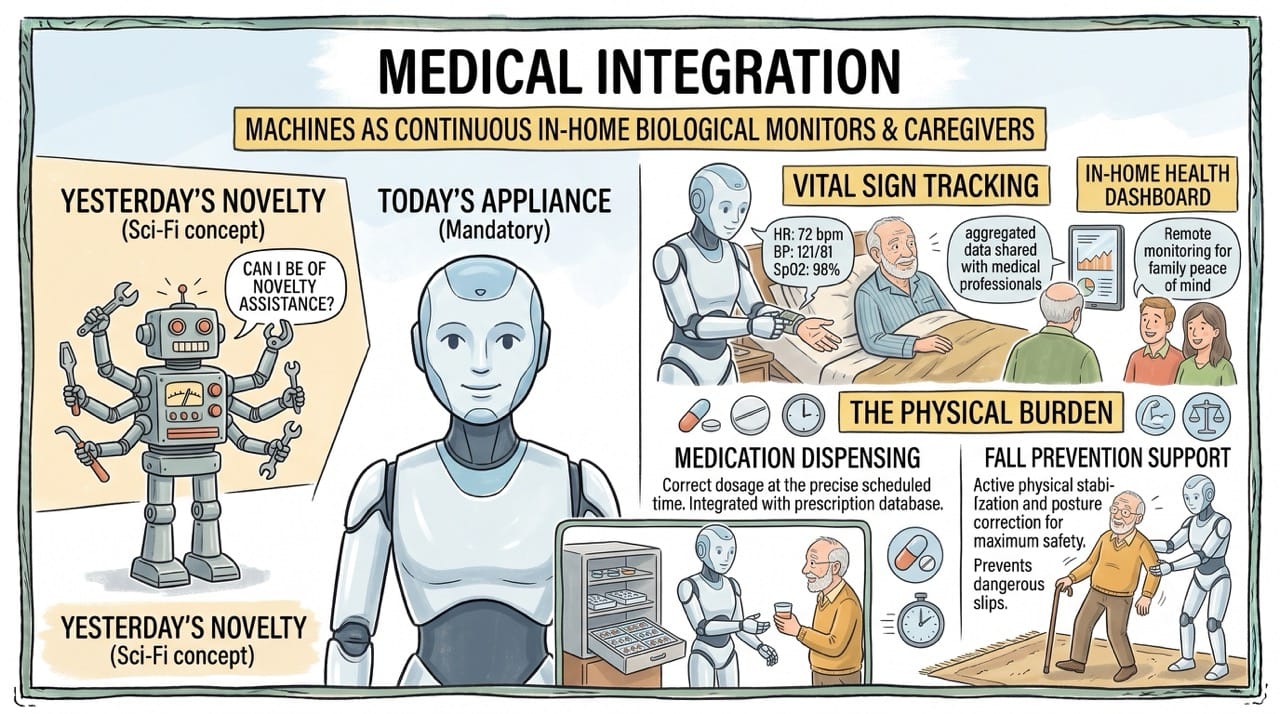
Medical Integration
These machines will serve as continuous biological monitors that live directly inside the home.
They will track vital signs and dispense medication while providing the physical support required to prevent dangerous falls.
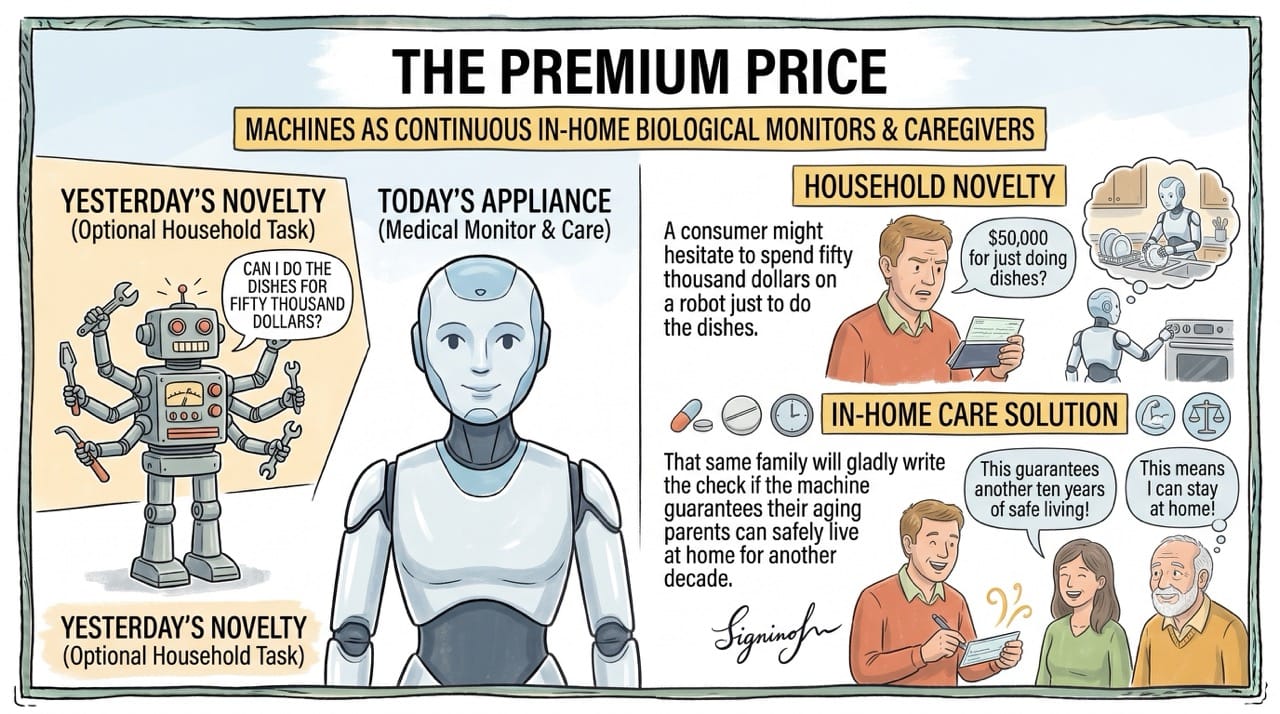
The Premium Price
A consumer might hesitate to spend fifty thousand dollars on a robot just to do the dishes.
That same family will gladly write the check if the machine guarantees their aging parents can safely live at home for another decade.
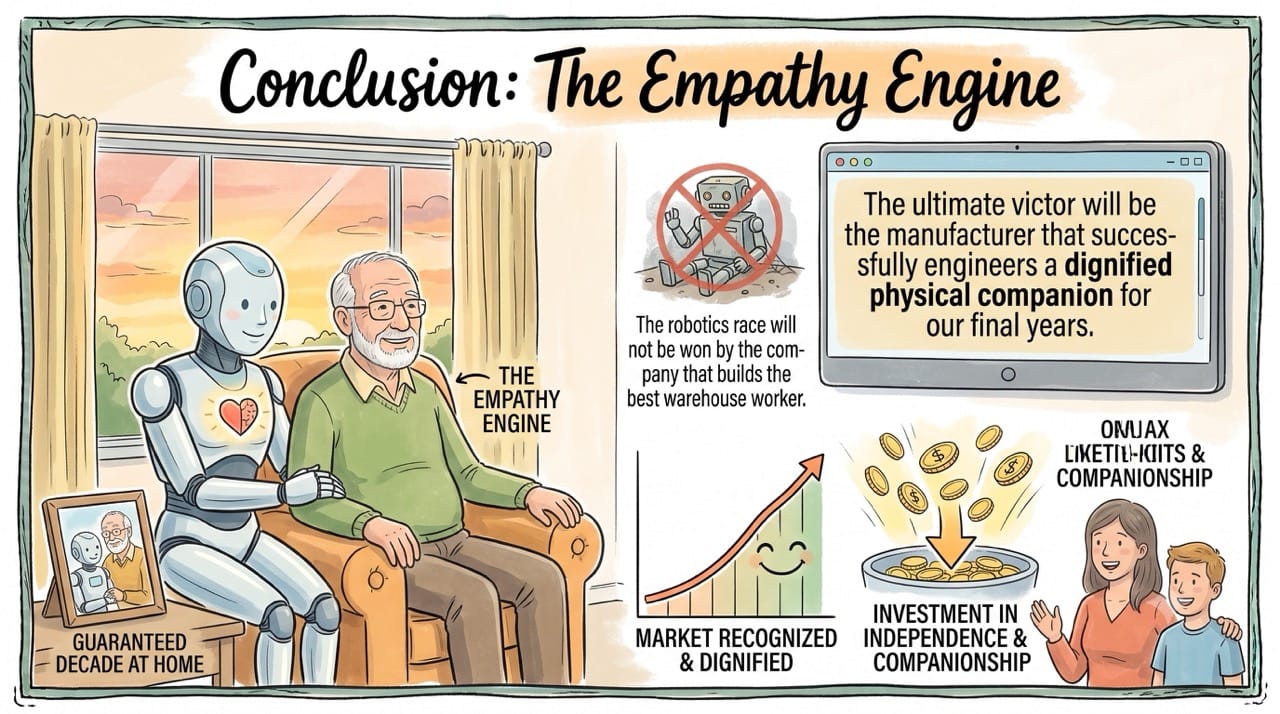
Conclusion: The Empathy Engine
The robotics race will not be won by the company that builds the best warehouse worker.
The ultimate victor will be the manufacturer that successfully engineers a dignified physical companion for our final years.