The Potential Beneficiaries of Zipline's Growth: The Autonomous Supply Chain
Retail investors assume they are locked out of the lucrative private drone delivery market. Savvy traders are actually buying the public semiconductor and retail monopolies secretly powering the entire Zipline logistics network.
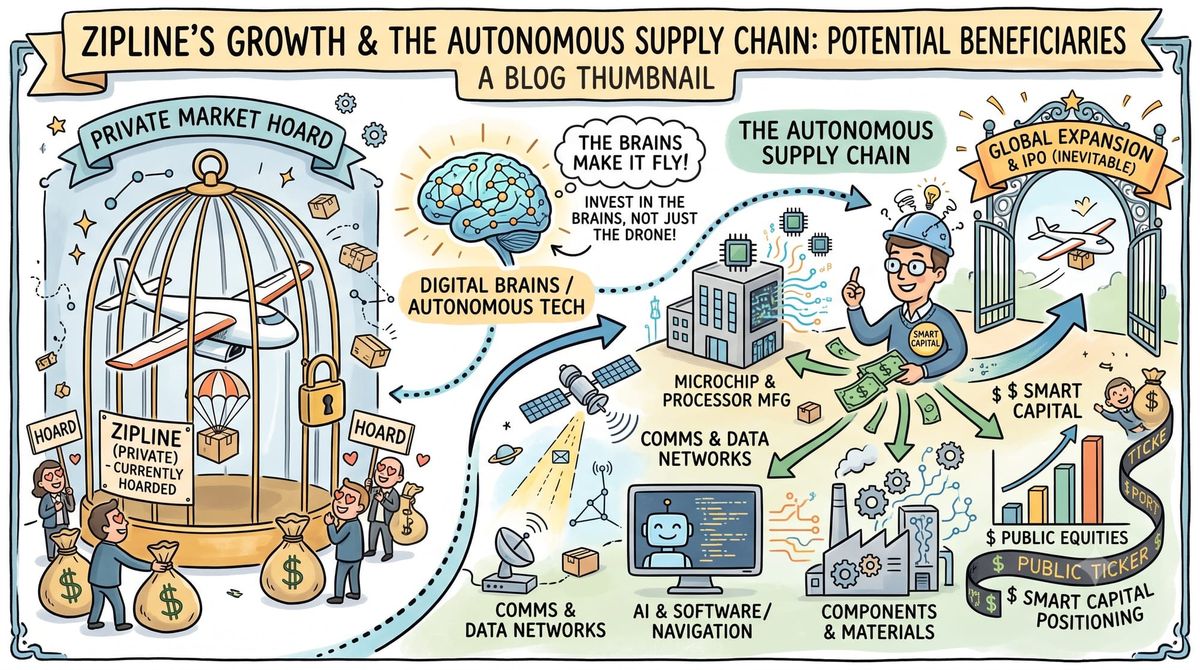
The private market is currently hoarding the most valuable robotics company on earth. Smart capital is already positioning itself in the public supply chain that makes these autonomous flights possible.
Inspiration: Analyzing the global expansion of Zipline and identifying the hidden public equities that will benefit from its inevitable initial public offering. Realizing that you do not need to buy the drone manufacturer if you can simply buy the companies building their digital brains.
The Delivery Monopoly
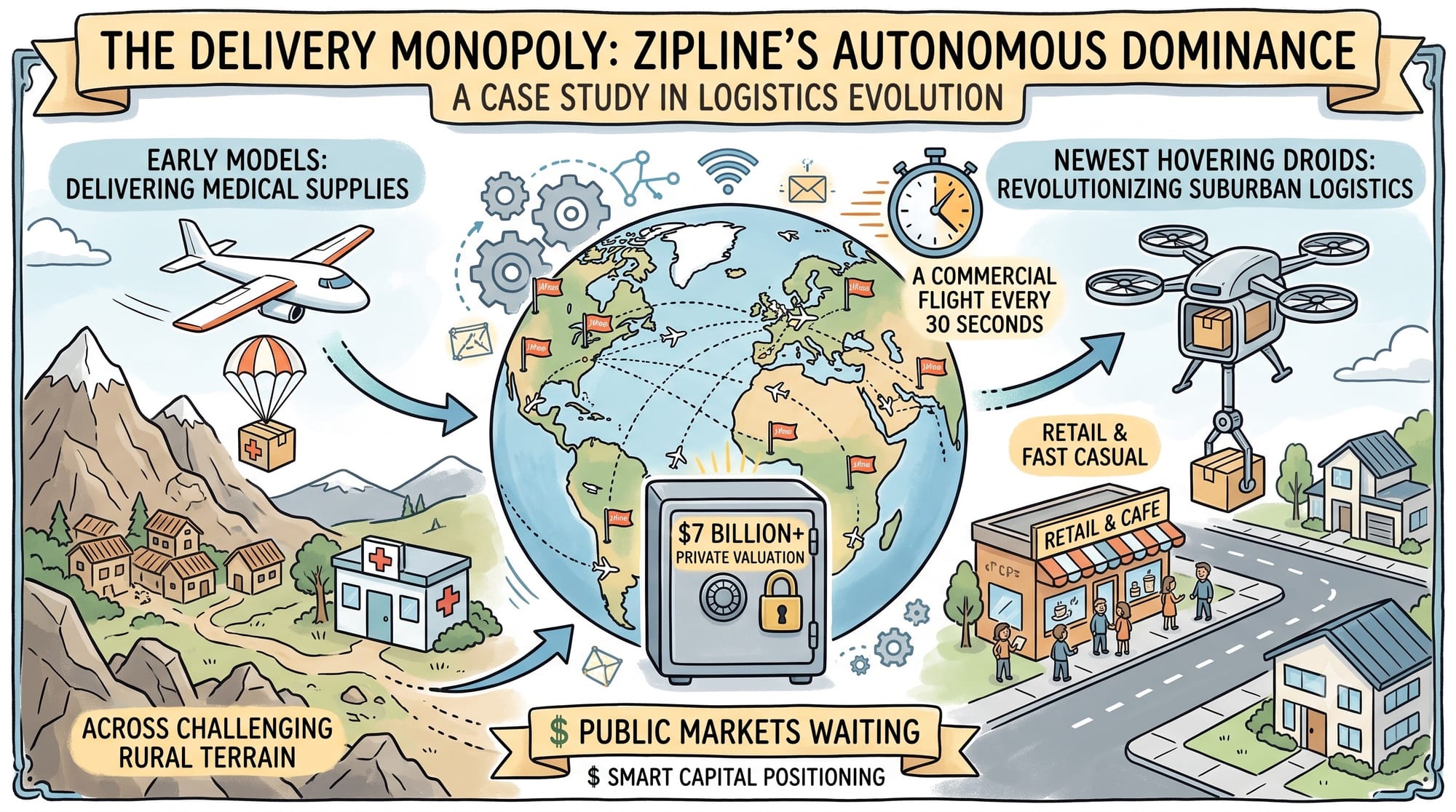
Zipline recently achieved a private valuation of over seven billion dollars by dominating the autonomous delivery sector.
They safely complete a commercial flight every thirty seconds across multiple continents.
Their early models successfully delivered critical medical supplies across highly challenging rural terrain.
Their newest hovering droids are now completely revolutionizing suburban retail and fast casual logistics.
The Retail Beneficiaries
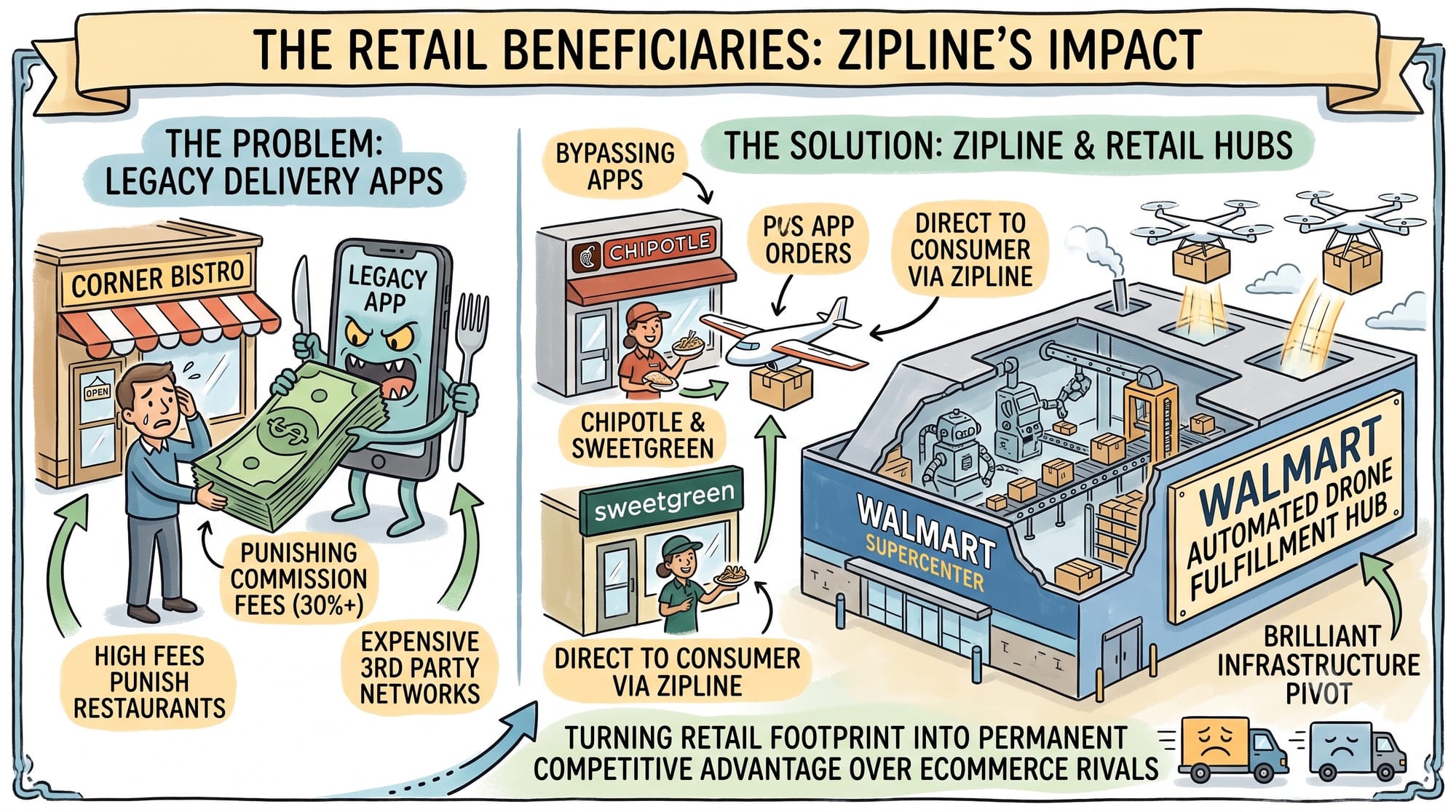
Legacy delivery applications severely punish local restaurants with incredibly high commission fees.
Zipline allows major brands like Chipotle and Sweetgreen to completely bypass these expensive third party networks.
Walmart is rapidly converting its existing physical storefronts into automated drone fulfillment hubs.
This brilliant infrastructure pivot turns their expensive retail footprint into a permanent competitive advantage over ecommerce rivals.
The Telecommunications Bridge
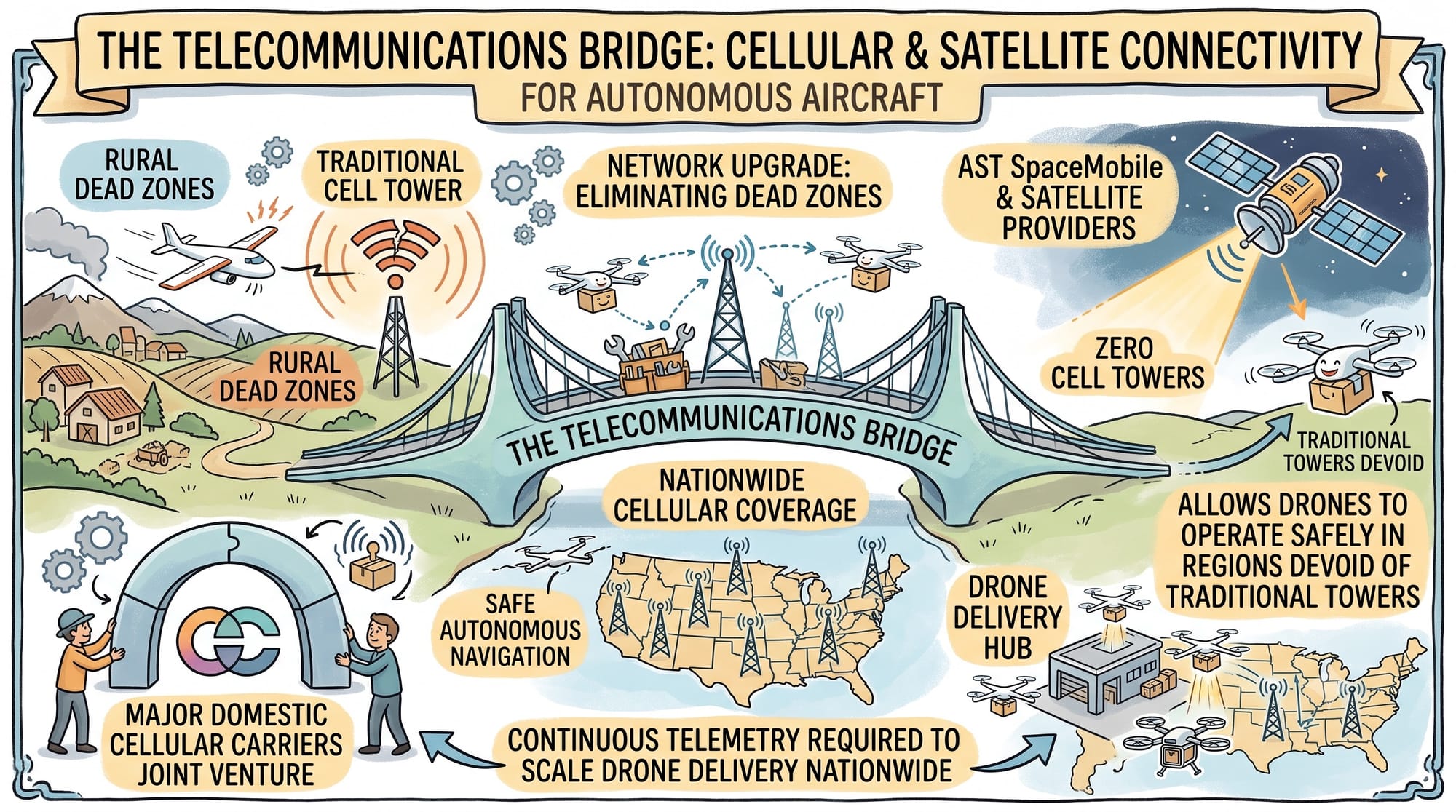
Autonomous aircraft require flawless cellular connectivity to safely navigate civilian airspace without human intervention.
The major domestic cellular carriers recently formed a joint venture to completely eliminate rural connectivity dead zones.
This collaborative network upgrade provides the exact continuous telemetry required to scale drone delivery nationwide.
Satellite providers like AST SpaceMobile also allow these drones to operate safely in regions completely devoid of traditional cell towers.
The Hardware Arsenal
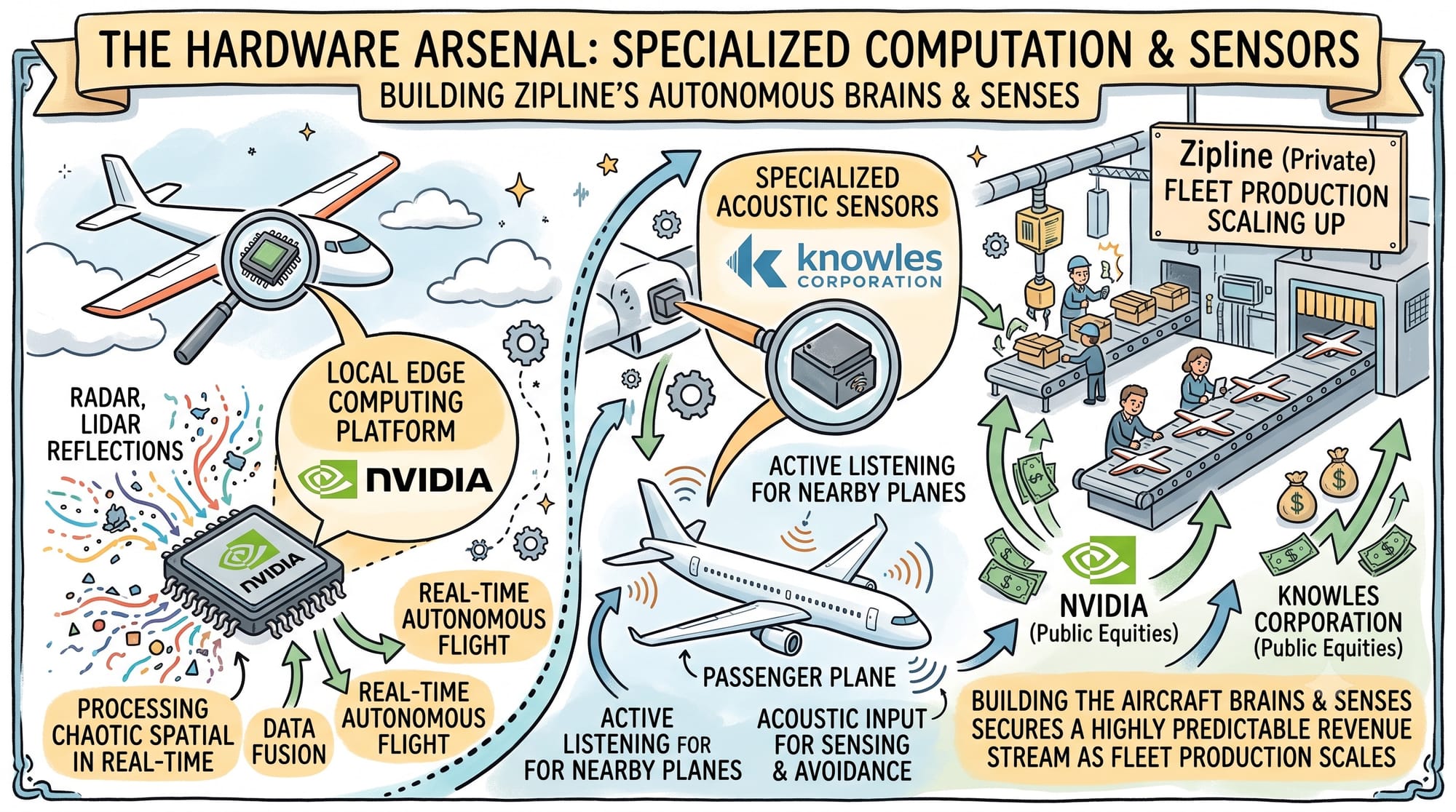
Building an autonomous flying robot requires highly specialized computational hardware that traditional cloud servers cannot provide.
Zipline relies entirely on local edge computing platforms built by Nvidia to process chaotic spatial data in real time.
The aircraft also utilize specialized acoustic sensors from Knowles Corporation to actively listen for nearby passenger planes.
These specific semiconductor and sensor manufacturers secure a highly predictable revenue stream as fleet production scales up.
The Material Science
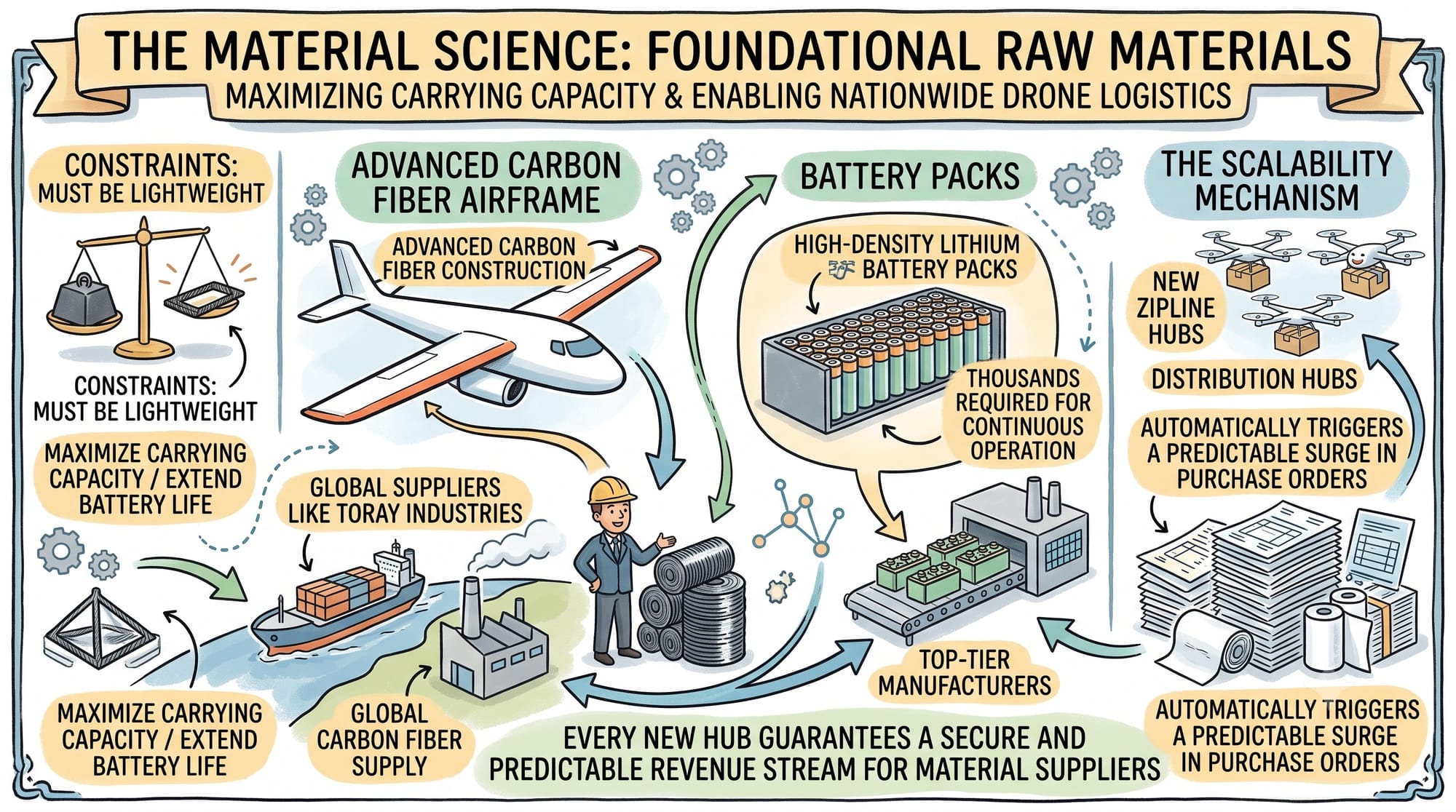
Commercial drones must remain very lightweight to maximize their carrying capacity and extend their battery life.
The airframes are constructed entirely from advanced carbon fiber materials provided by global suppliers like Toray Industries.
These aircraft operate continuously and require thousands of high density lithium battery packs from top tier manufacturers.
Every new distribution hub automatically triggers a predictable surge in purchase orders for these foundational raw materials.
The Private Equity Proxies
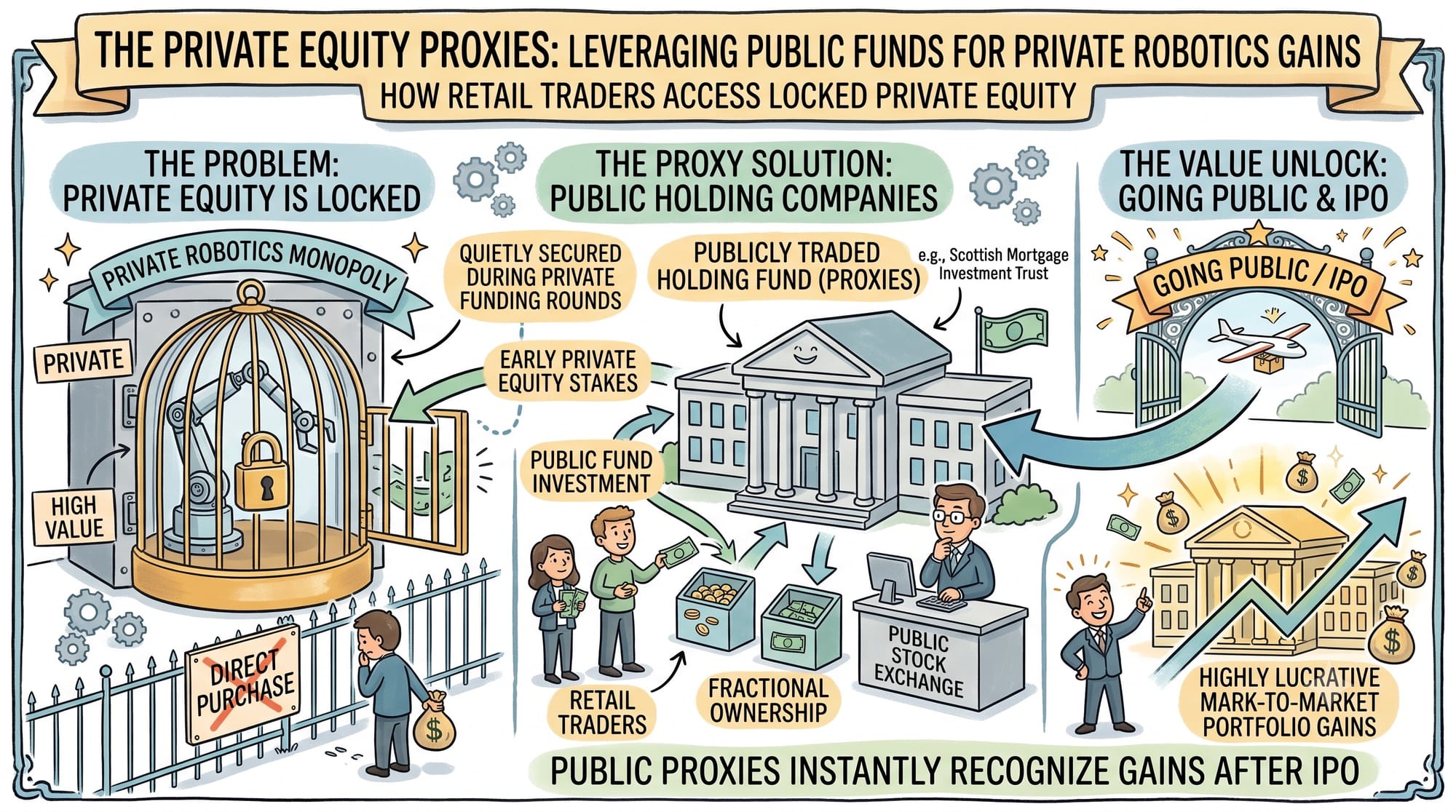
Retail traders cannot directly purchase equity in this private robotics monopoly on a public stock exchange.
They can easily purchase fractional ownership by investing in publicly traded funds like the Scottish Mortgage Investment Trust.
These specific holding companies quietly secured highly valuable early equity stakes during previous private funding rounds.
When the robotics firm eventually goes public these holding funds will instantly recognize highly lucrative mark to market portfolio gains.
Conclusion: The Next Logistics Boom
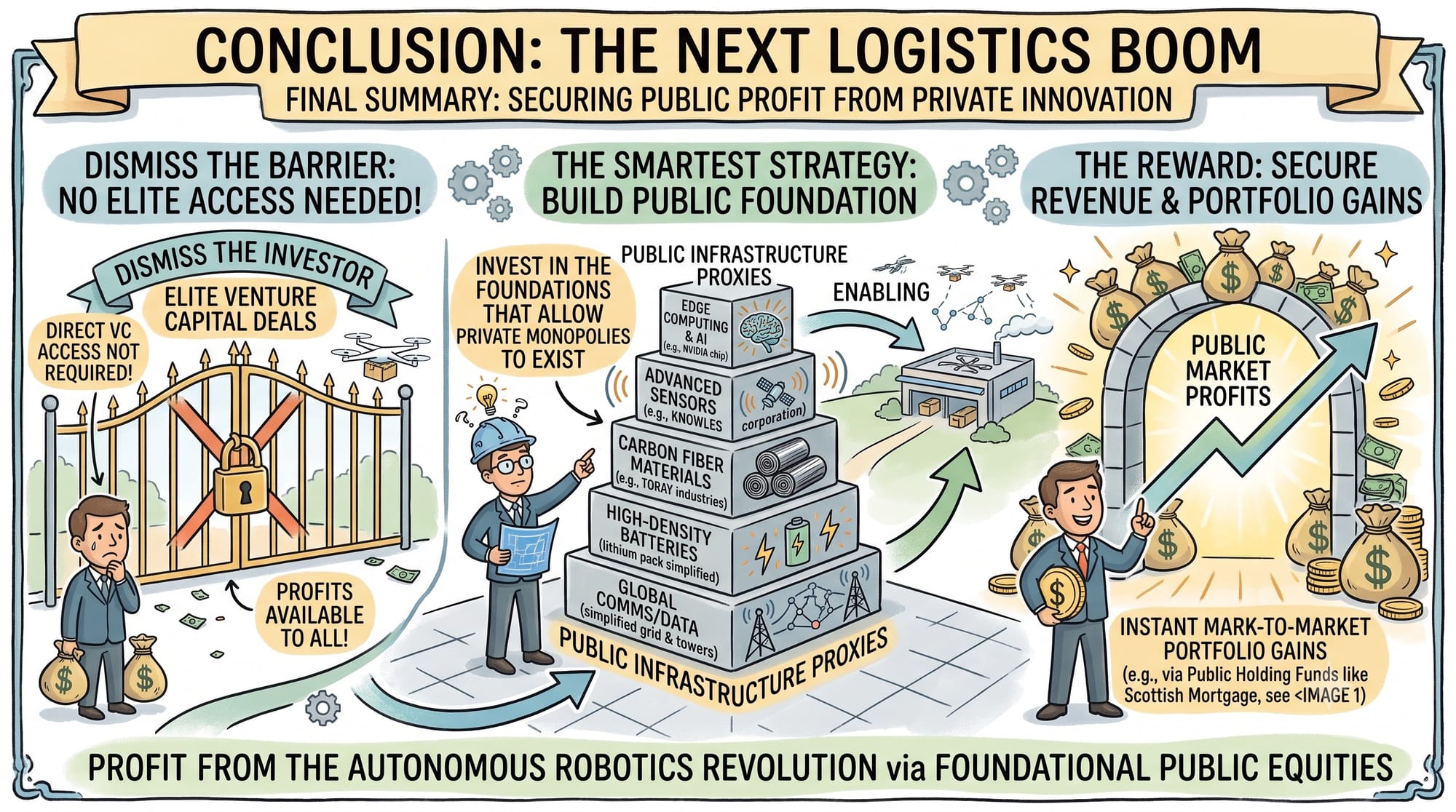
You do not need direct access to elite venture capital deals to profit from the autonomous robotics revolution.
The smartest strategy is simply purchasing the foundational public infrastructure that allows the private monopolies to actually exist.