
MIT.nano: The Hundred Million Dollar Deep Tech Incubator
We assume building a successful technology startup just requires a clever founder and a laptop. MIT.nano proves that the most lucrative deep tech breakthroughs require hundred million dollar microscopic foundries to actually get off the ground.
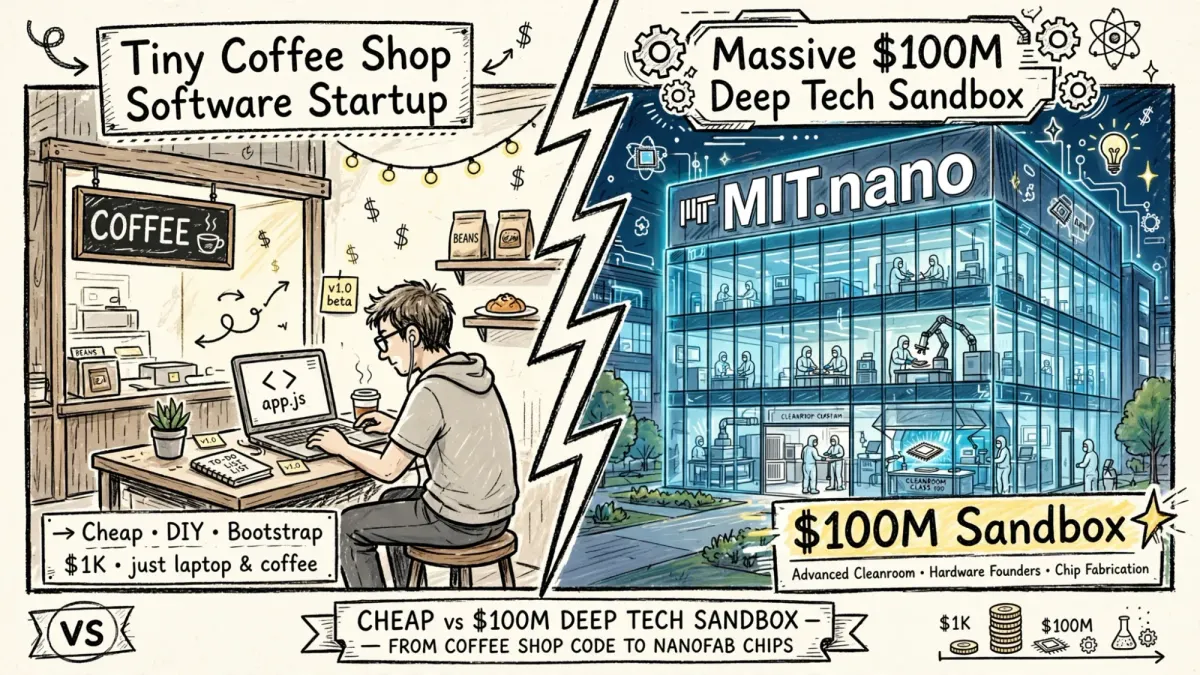
Software startups are cheap to build but hard to defend. The true macroeconomic moat of the next decade is physical hardware and MIT just built the ultimate sandbox for hardware founders.
Inspiration: Analyzing the infrastructure and recent breakthroughs coming out of the MIT.nano facility. Realizing that the barrier to entry for deep tech hardware is so astronomically high that it essentially requires a centralized academic and corporate partnership to even launch a prototype.
The Software Illusion
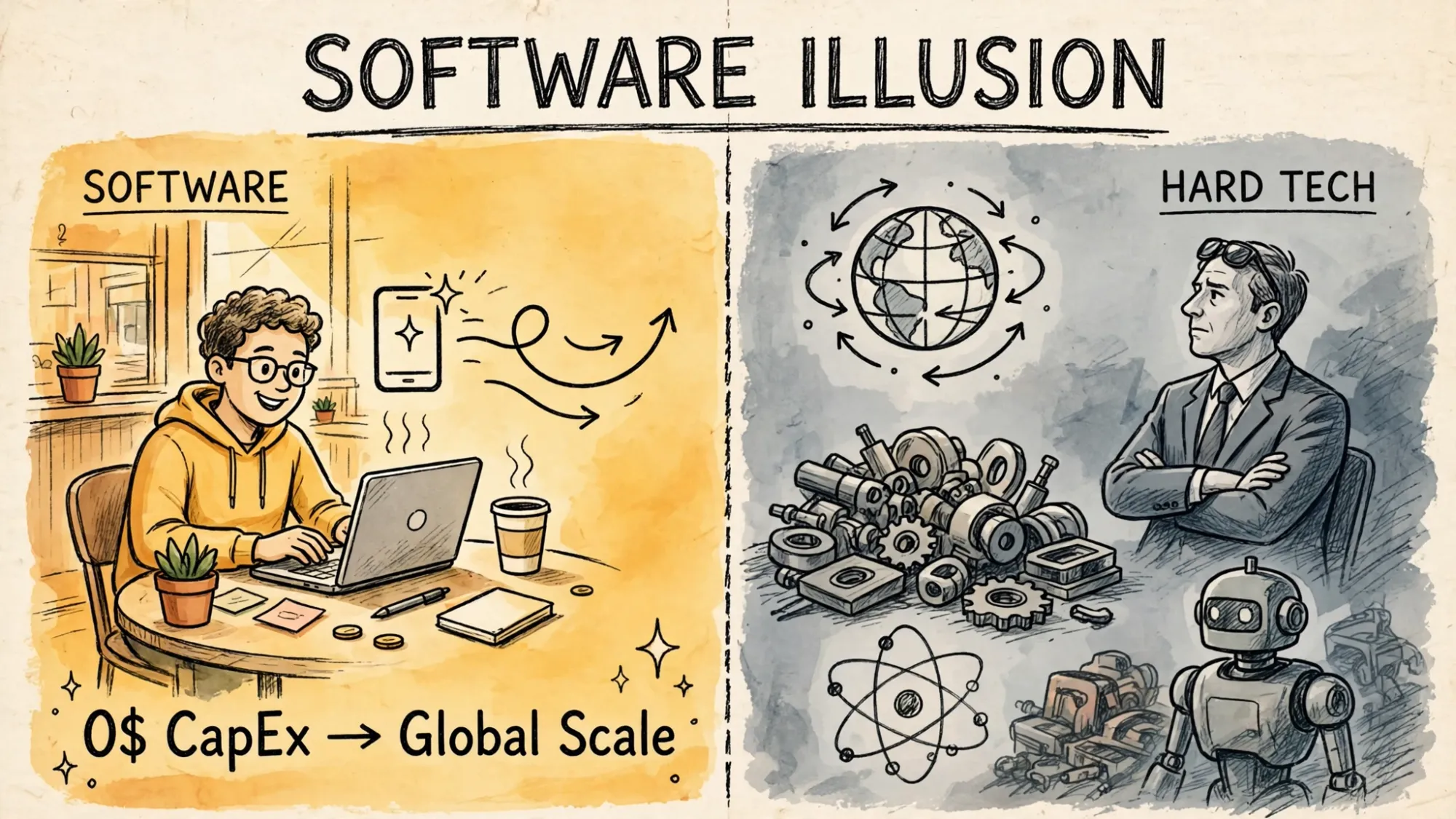
For the past twenty years the venture capital ecosystem has been completely obsessed with the software startup model.
The financial appeal is obvious because an ambitious founder can write code in a coffee shop and theoretically scale a consumer application globally with practically zero initial capital expenditure.
This created a severe funding blindspot for hard tech and physical sciences. Investors naturally gravitated toward the cheap and fast software deals while actively avoiding startups that actually required bending metal or manipulating physical atoms.
The Hardware Bottleneck
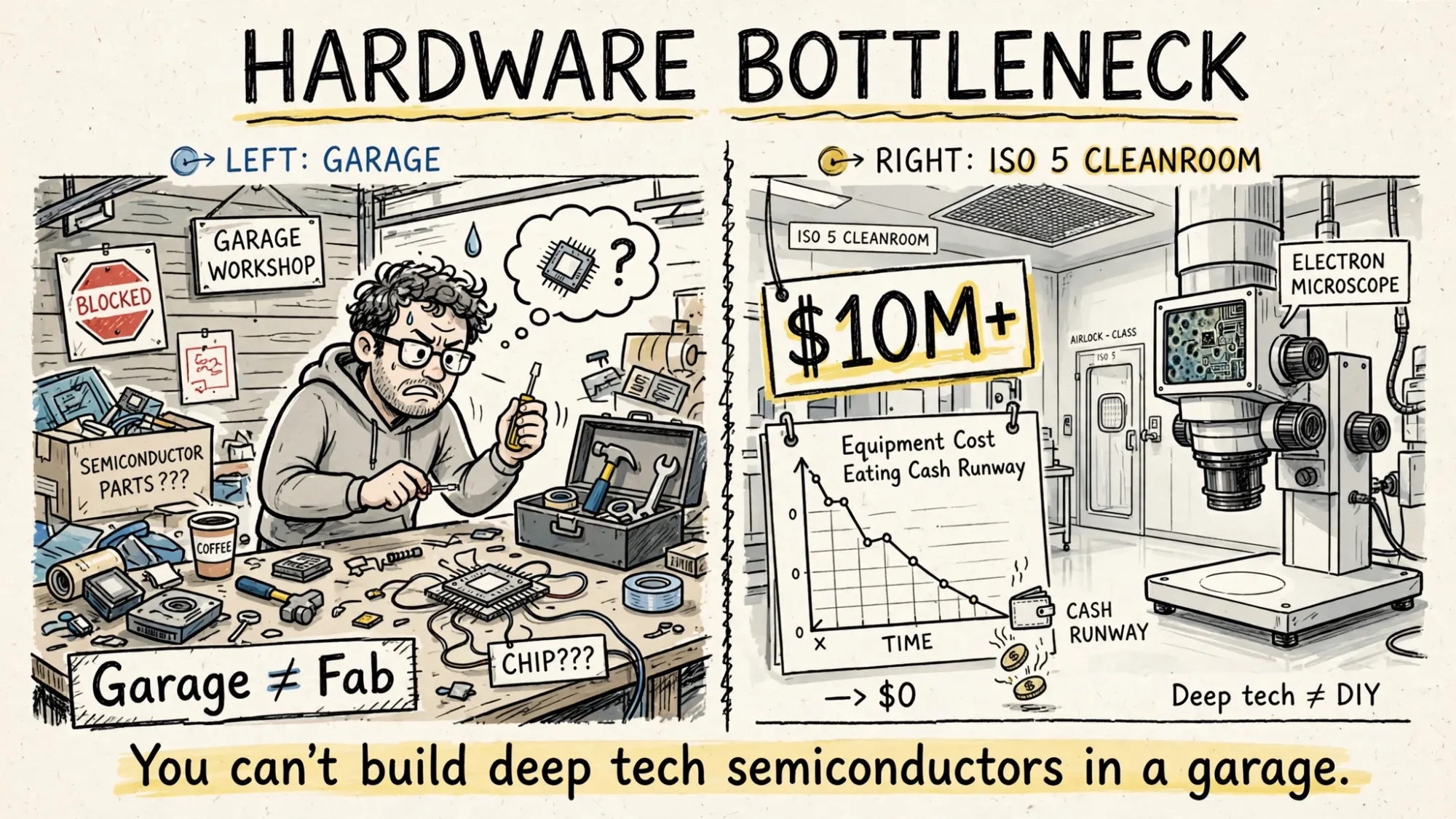
Building a deep tech startup in areas like advanced semiconductors, quantum computing, or synthetic biology is incredibly hostile to the traditional venture capital model.
A brilliant material science founder cannot just build a prototype in their garage.
Fabricating a next generation semiconductor or testing a novel nanomaterial requires access to ISO 5 cleanrooms and advanced metrology equipment that often costs tens of millions of dollars.
If a young startup has to spend eighty percent of its initial seed funding just to buy a single electron microscope they will run out of cash long before they ever reach the commercial market.
The Centralized Solution
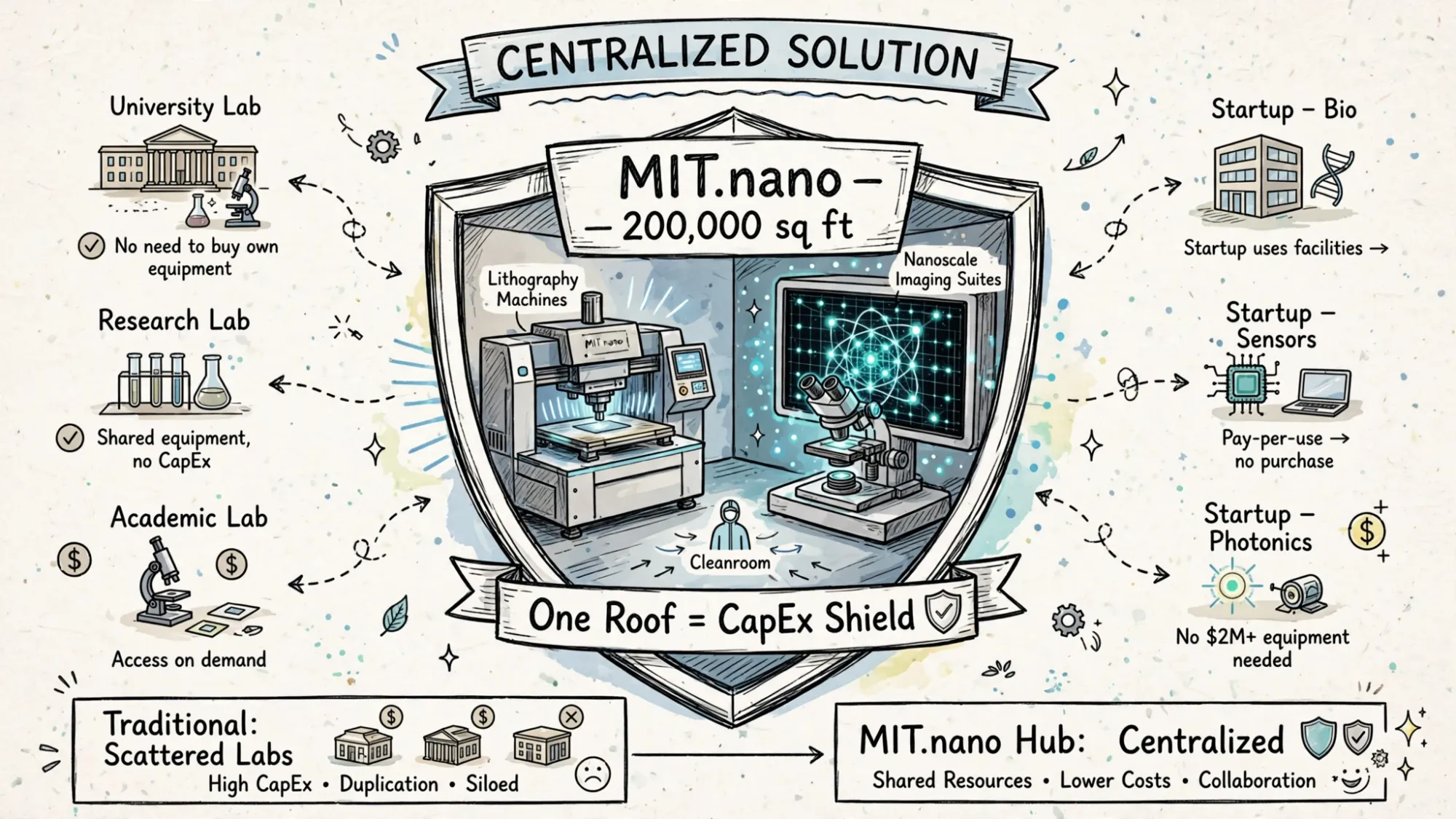
This specific infrastructural bottleneck is exactly why the Massachusetts Institute of Technology built the MIT.nano facility.
They constructed a massive centralized resource spanning over two hundred thousand square feet in the absolute center of their campus.
By grouping the most advanced lithography and nanoscale imaging suites under a single roof MIT completely eliminated the need for individual research labs or early stage startups to duplicate these expensive physical purchases.
The university essentially built a centralized capital expenditure shield for deep tech founders.
The START.nano Accelerator
The true commercial genius of this facility is not just academic research but its active pipeline to the public markets.
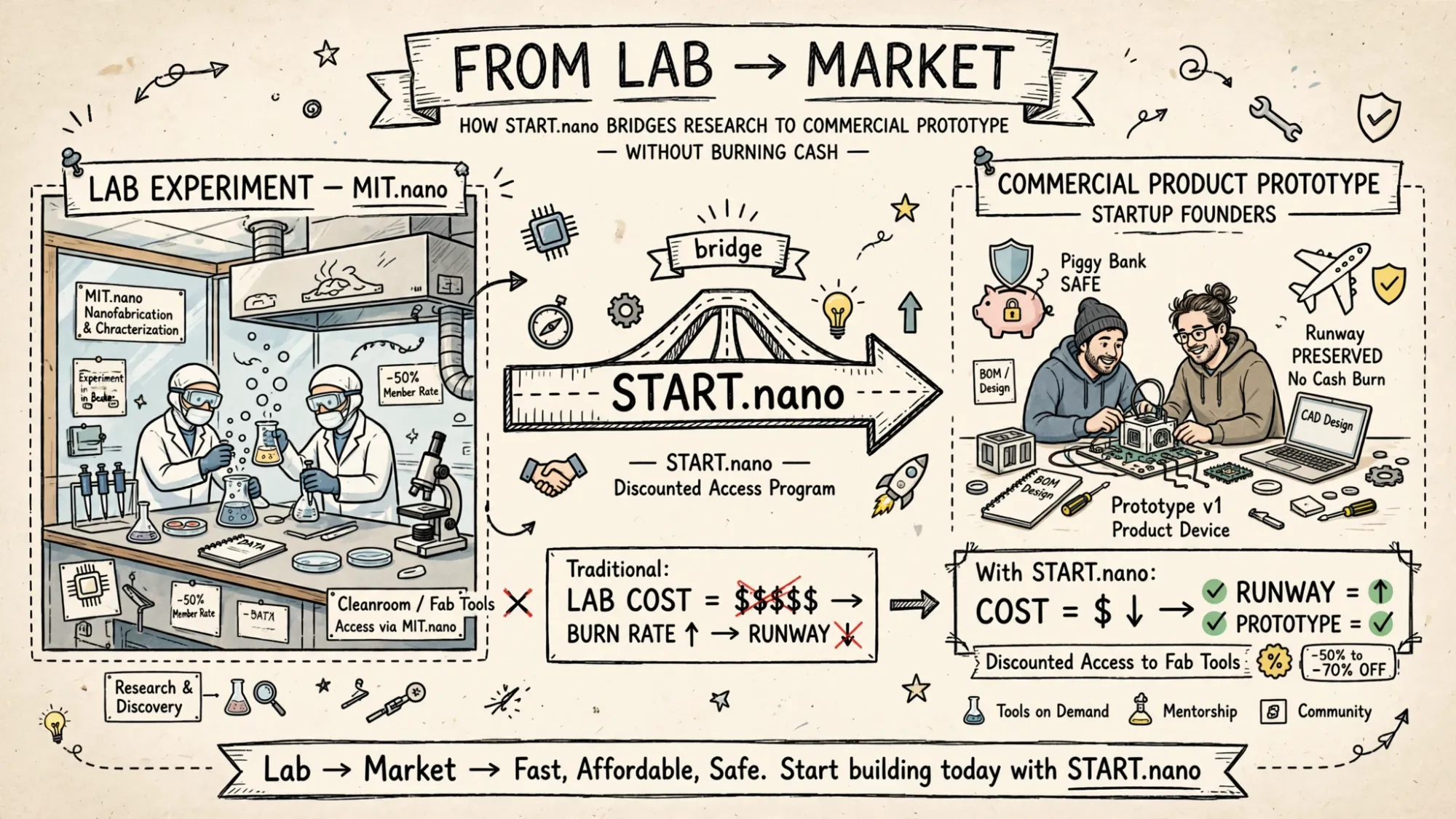
The university launched the START.nano accelerator specifically to ease the brutal financial transition from a laboratory experiment into a viable commercial product.
The program grants early stage deep tech companies highly discounted access to the world class fabrication and characterization tools housed inside MIT.nano.
This completely flips the financial equation for a hardware founder because they can immediately begin prototyping advanced materials without burning their precious runway on capital equipment.

The Next Supercycle
If you look at the startups currently operating inside this specific accelerator you can perfectly map the next macroeconomic supercycle.
These founders are not building derivative software applications or social media platforms.
They are building companies like Vertical Semiconductor to commercialize high voltage gallium nitride for the next era of compute power.
They are funding groups like Quantum Formatics to speed the discovery of new superconductors using artificial intelligence.
This is the exact foundational infrastructure required to solve the impending global energy crisis and sustain the artificial intelligence boom.
The Asymmetric Defense
While deep tech startups are incredibly expensive and difficult to launch they possess an asymmetric commercial advantage once they actually scale.
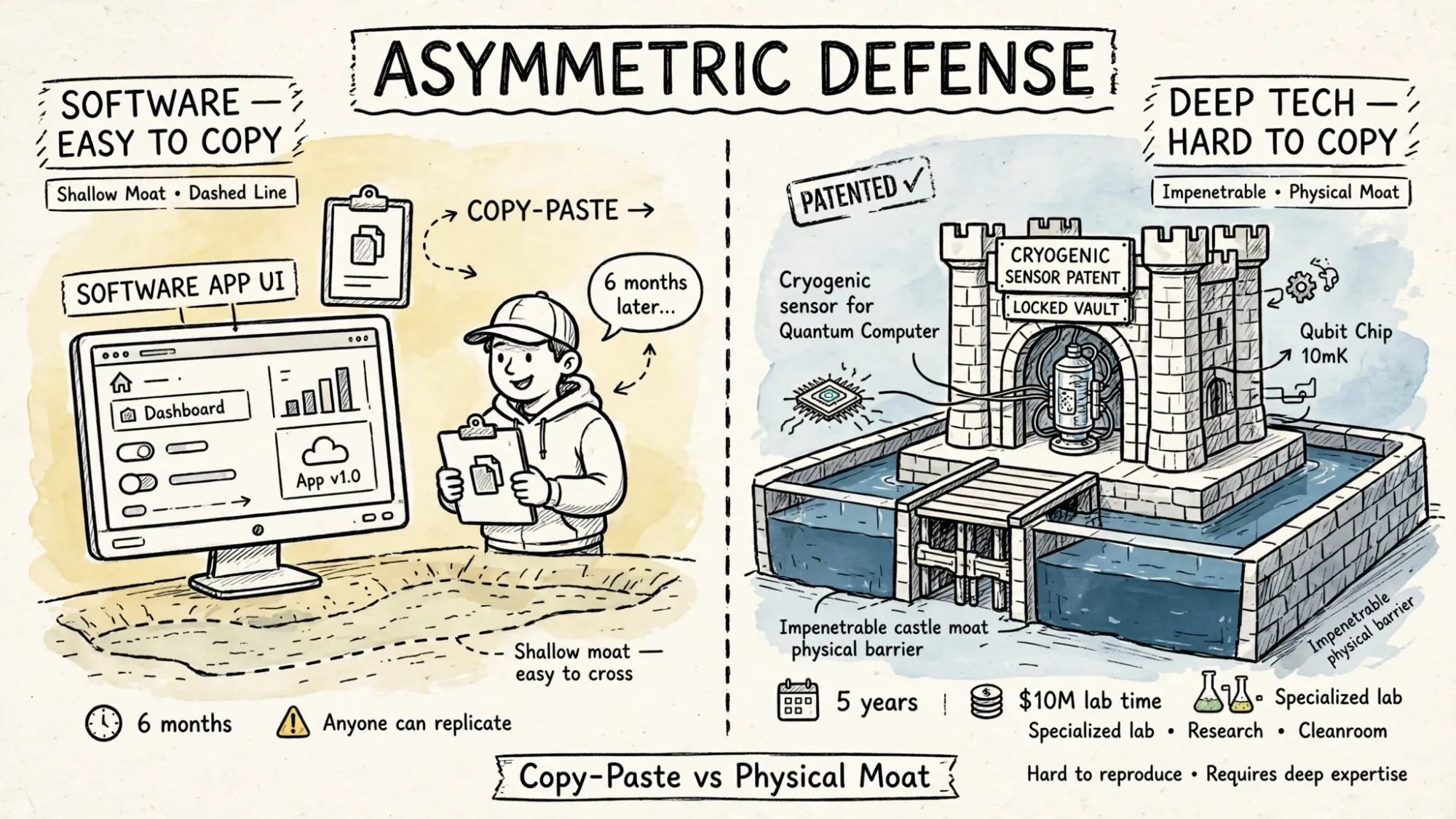
If you build a software application a competitor can easily copy your user interface and steal your market share in six months.
If you utilize the MIT.nano cleanrooms to patent a completely novel way to manufacture a cryogenic sensor for a quantum computer you have built an impenetrable physical moat.
Competitors cannot simply copy and paste a physical patent that took five years and ten million dollars of lab time to perfect.

Conclusion: The Physical Frontier
We spent the last decade celebrating founders who figured out how to optimize digital advertising pixels on a flat glass screen.
The founders who will truly reshape the next century are currently wearing cleanroom suits and manipulating reality at the atomic level.