Digital Marketing Agency Briefs: Use Docs, Not Sheets
We assume spreadsheets are the ultimate organizational tool for digital marketing agencies. The reality is that stuffing creative briefs into a grid completely blinds the artificial intelligence agents trying to optimize your campaigns.
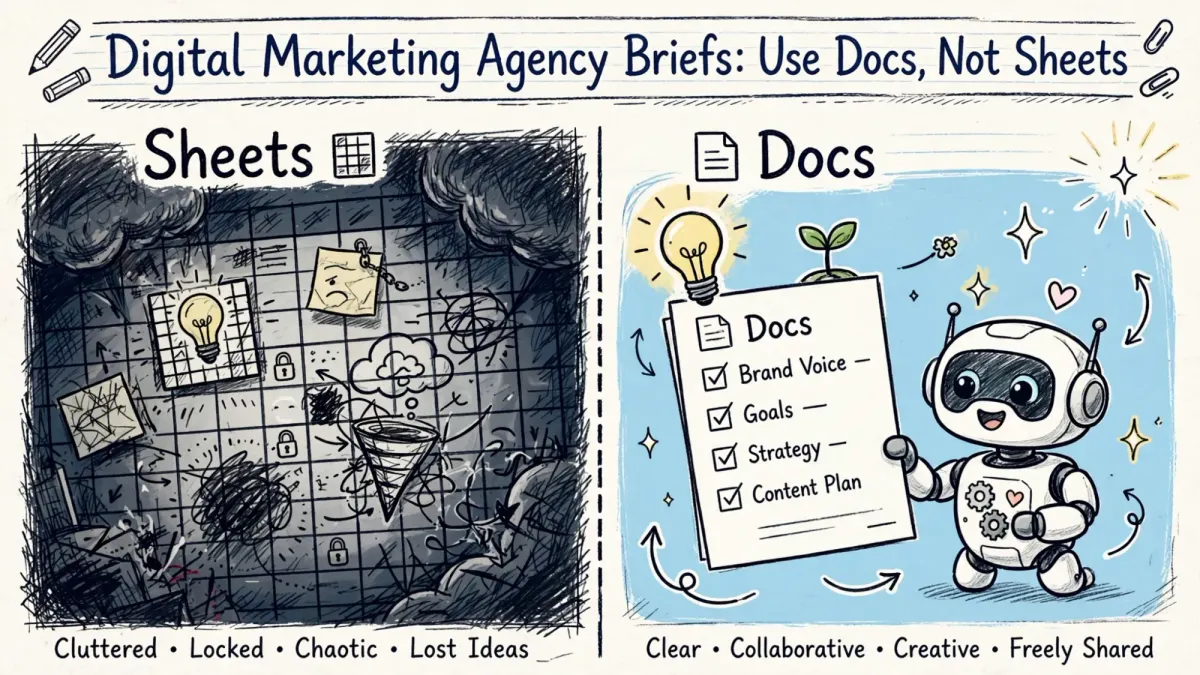
The industry standard spreadsheet is actually a data trap. If you want algorithms to read and optimize your creative strategy you must return to the traditional text document.
Inspiration: Analyzing the friction between legacy agency workflows and modern algorithmic capabilities. Realizing that digital agents struggle to parse spreadsheets but flawlessly ingest structured text documents and Markdown files.
The Spreadsheet Illusion
The advertising industry operates on a very specific set of legacy workflows.
For the past decade every major digital agency defaulted to using spreadsheets to organize their creative briefs.
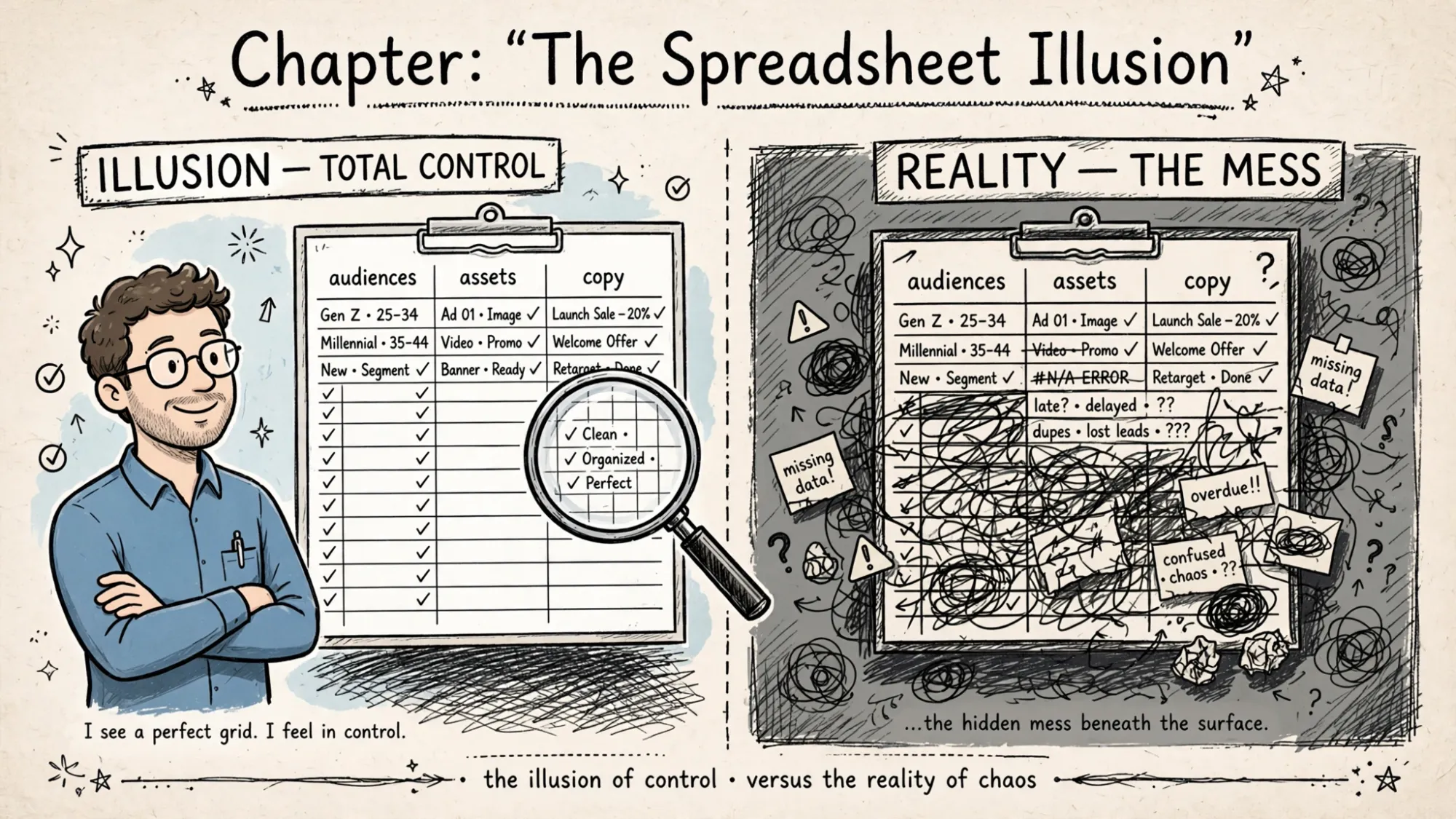
The grid layout feels incredibly clean to the human eye.
It allows an account manager to perfectly align target audiences, visual assets, and advertising copy into neat little columns.
It creates a powerful illusion of total organizational control and project management supremacy.
The Algorithmic Blindspot
The fatal flaw in this workflow is that the human eye is no longer the most important reader of your marketing brief.
We are officially entering an era where autonomous agents are responsible for proofreading copy and generating campaign optimizations.
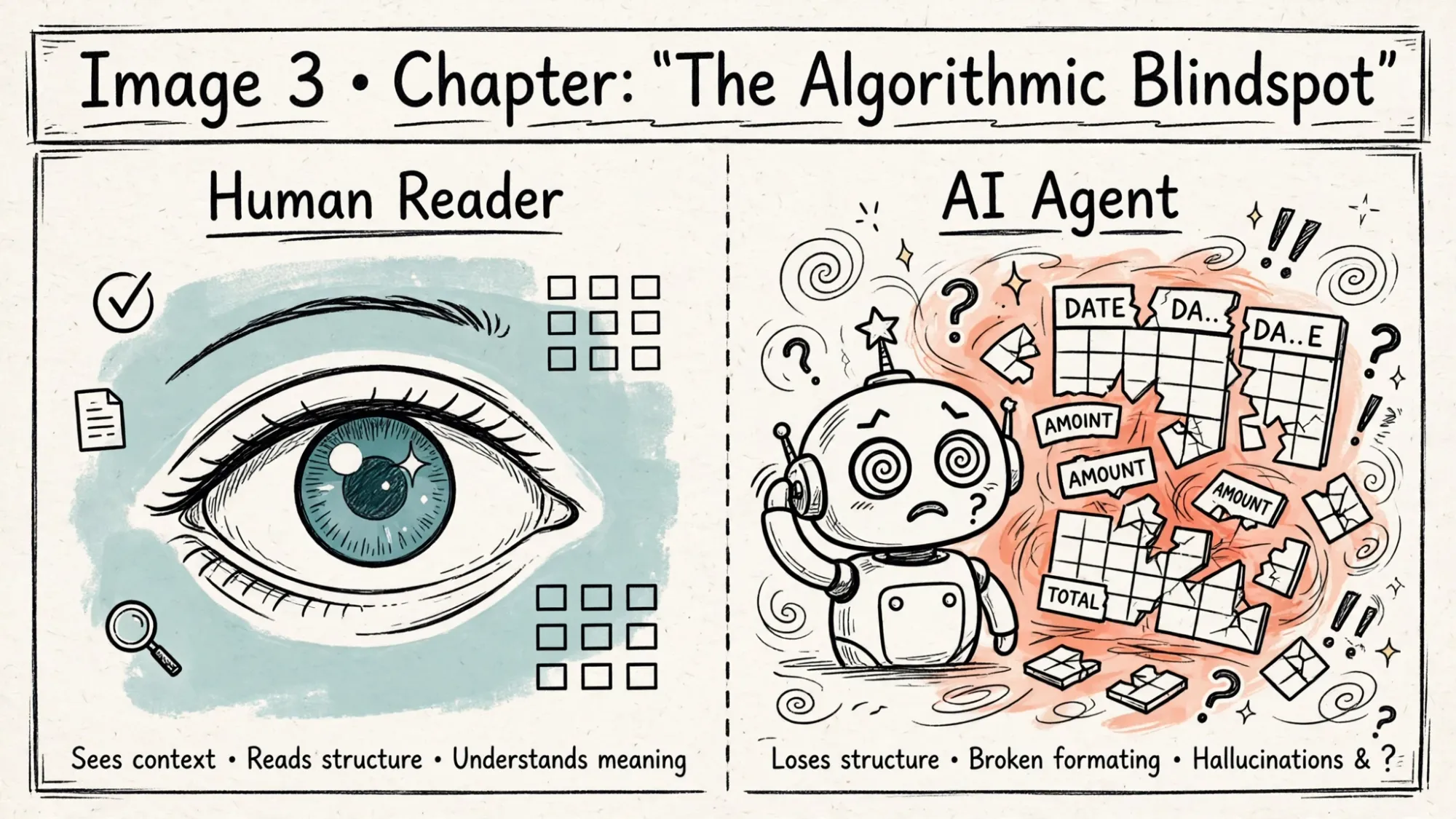
When you feed a complex spreadsheet into a language model the underlying spatial formatting completely shatters.
The algorithm struggles to understand the relationship between a cell in row four and a header in column two.
Even the smartest models built directly by Google constantly hallucinate when trying to parse complex information trapped inside their own spreadsheet software.
The Text Document Revival
To survive the agentic era marketing teams must aggressively pivot back to traditional text documents.
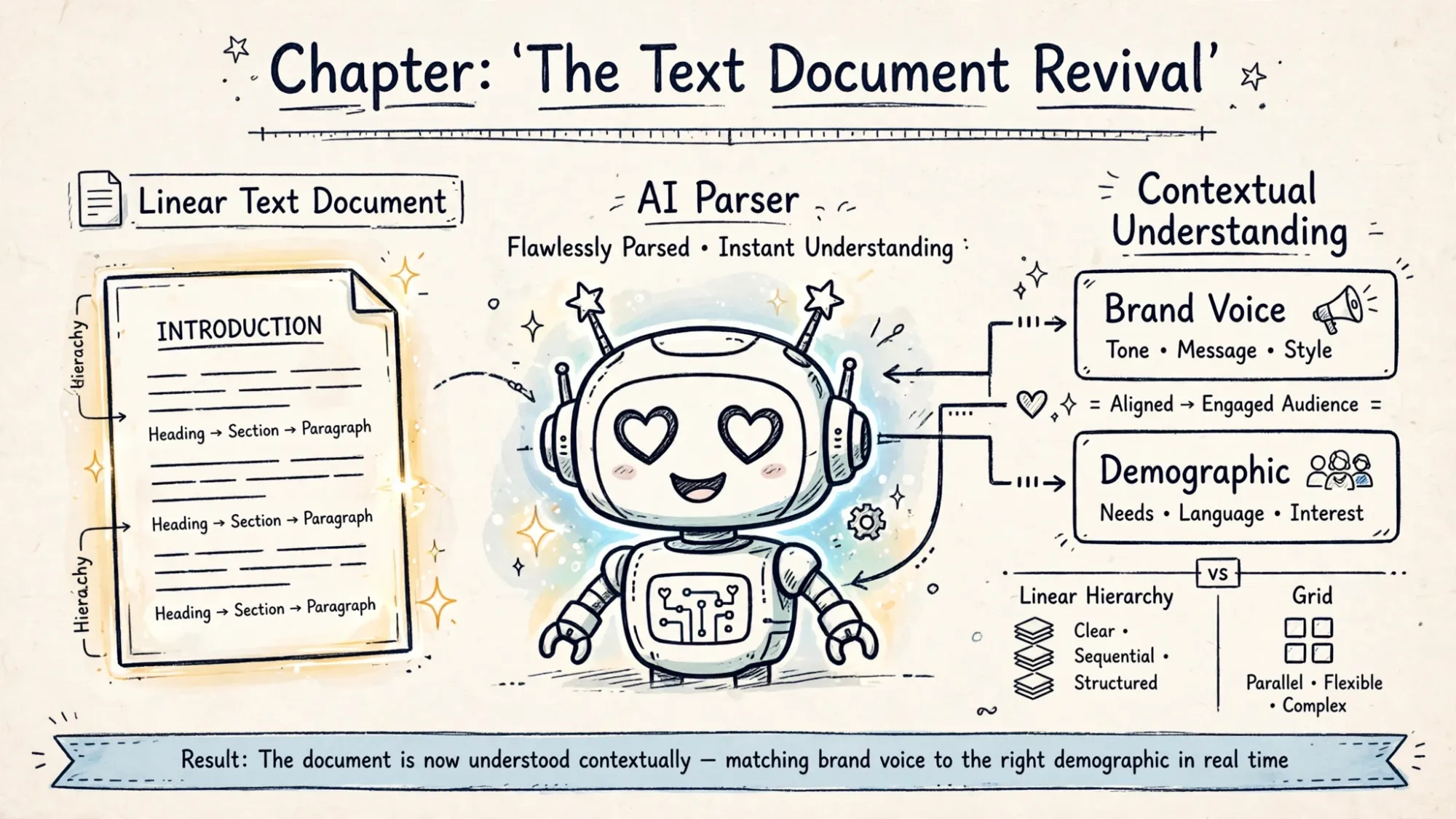
A standard document utilizes a linear hierarchy that language models can parse flawlessly.
When you write a brief using standard paragraphs and clear heading structures the artificial intelligence instantly grasps the contextual relationship between the brand voice and the target demographic.
You are serving the data exactly how the machine naturally wants to consume it.
The Markdown Bridge
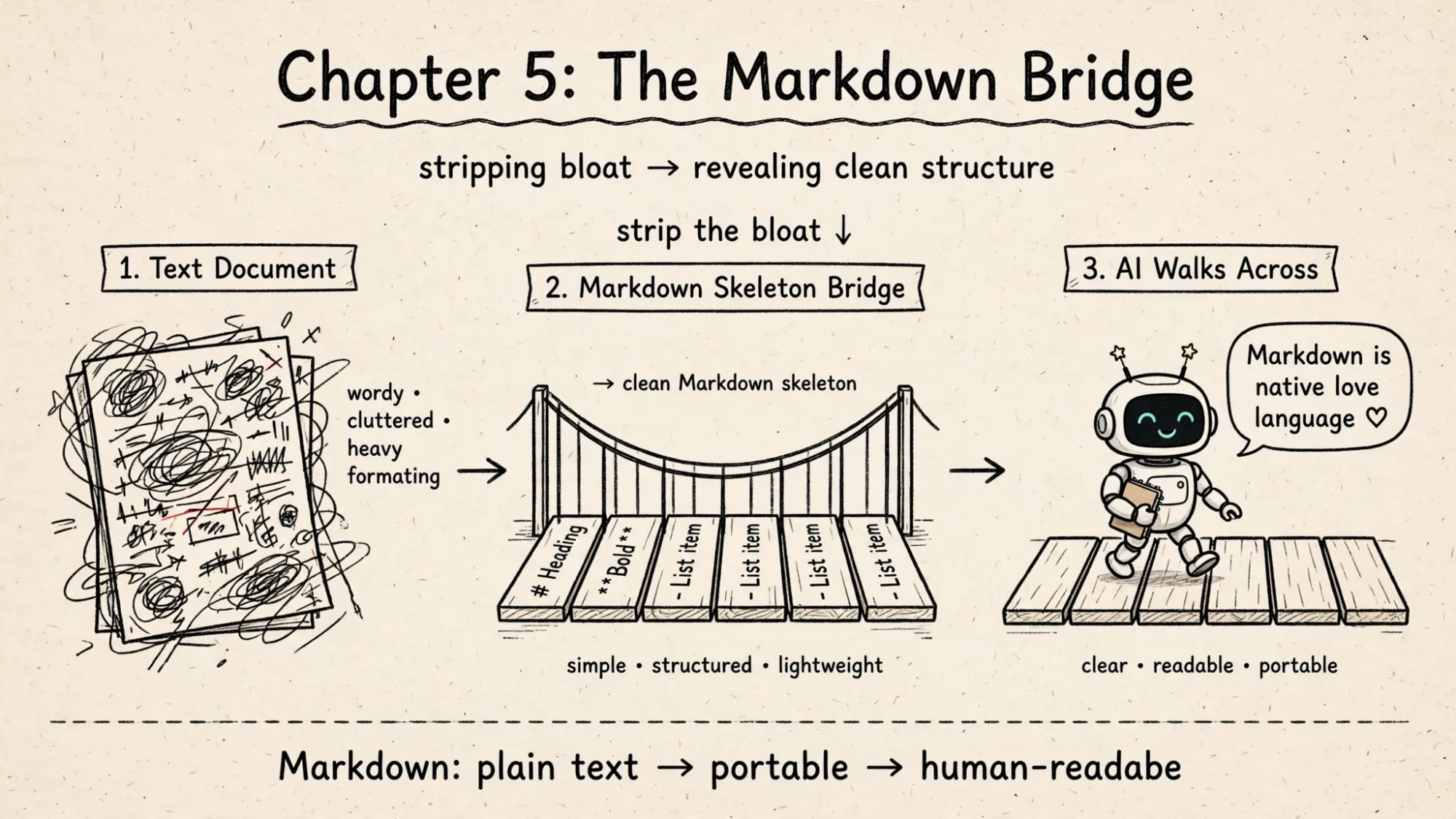
The most lucrative advantage of a text document is its underlying architecture.
A properly structured document can be instantly translated into Markdown format.
Markdown is essentially the native love language of modern artificial intelligence. It strips away all the heavy visual bloat and leaves a perfectly clean skeleton of text.
If you want an autonomous agent to rewrite your headlines or analyze your market positioning a Markdown file guarantees zero loss of context during the ingestion phase.
Pacing the Human Reader
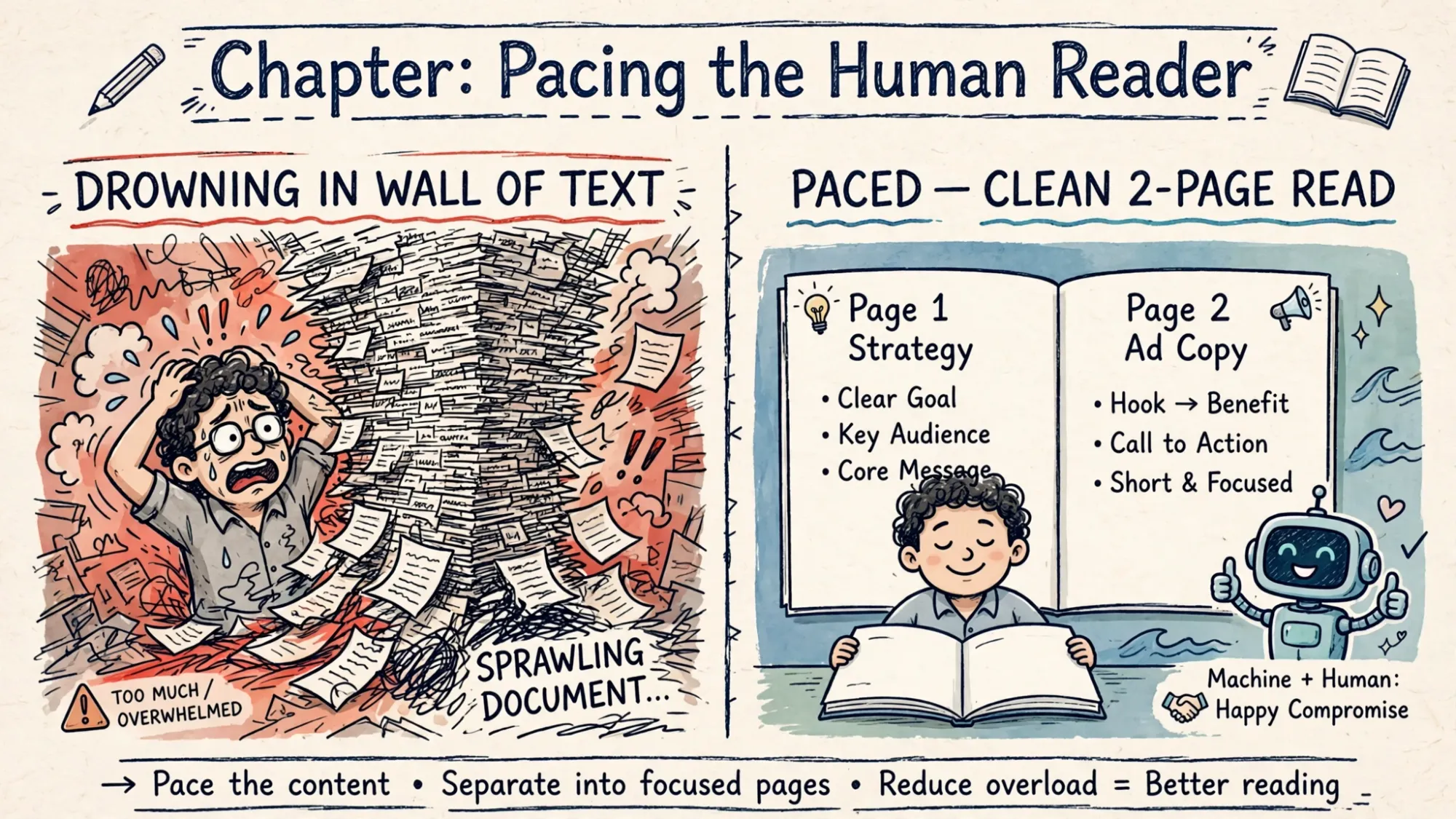
Agency executives usually resist this transition because a sprawling text document feels incredibly overwhelming to a human client.
They fear the client will get lost in a wall of text without the comforting borders of a spreadsheet grid.
You solve this human friction by utilizing hard page breaks and strict visual formatting.
You dedicate a single page to the overarching strategy and a completely separate page for the actual advertising copy.
This brilliant compromise paces the visual experience perfectly for the human reader while keeping the underlying data structure fully optimized for the machine.
Conclusion: The Format Shift
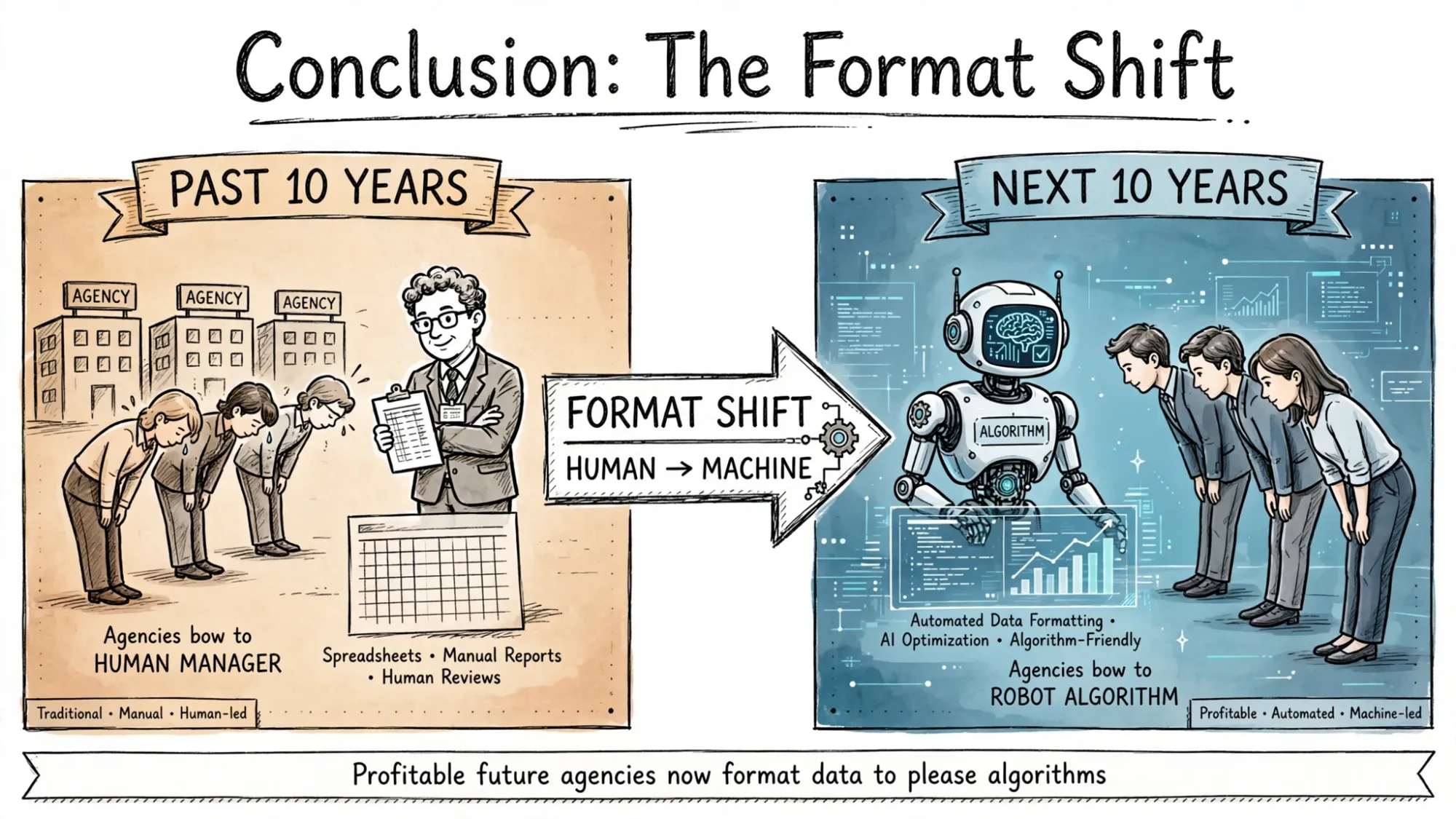
We spent the last ten years formatting our marketing strategies to please the aesthetic preferences of human managers.
The most profitable agencies of the next decade will simply format their data to please the algorithms actually doing the work.