How Google and Meta Will Win the AI Software War
We assume independent laboratories will dominate the future of artificial intelligence software. The reality is a quiet silicon alliance between Google and Meta will commoditize the industry and crush standalone competitors.
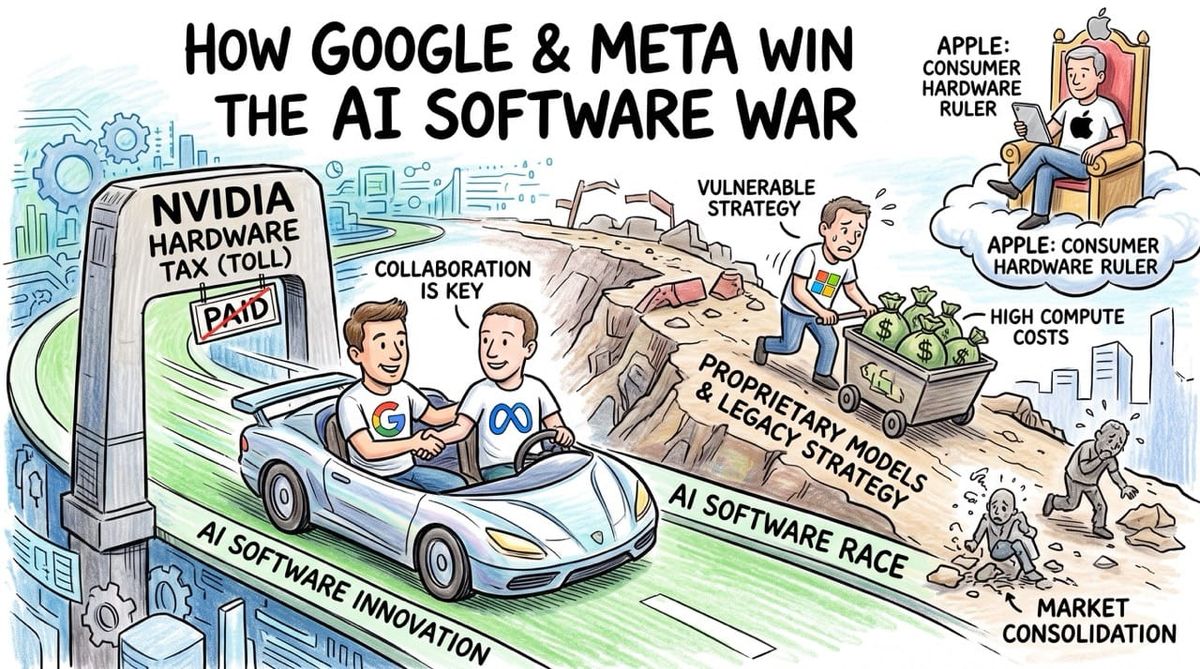
Bypassing the hardware tax will trigger a brutal market consolidation that bankrupts independent developers and leaves Microsoft highly vulnerable.
Inspiration: Analyzing the recent stagnation in Nvidia valuations and their aggressive push into open model deals. Realizing that a compute partnership between Google and Meta perfectly positions them to dominate the software race while leaving Apple to rule consumer hardware.
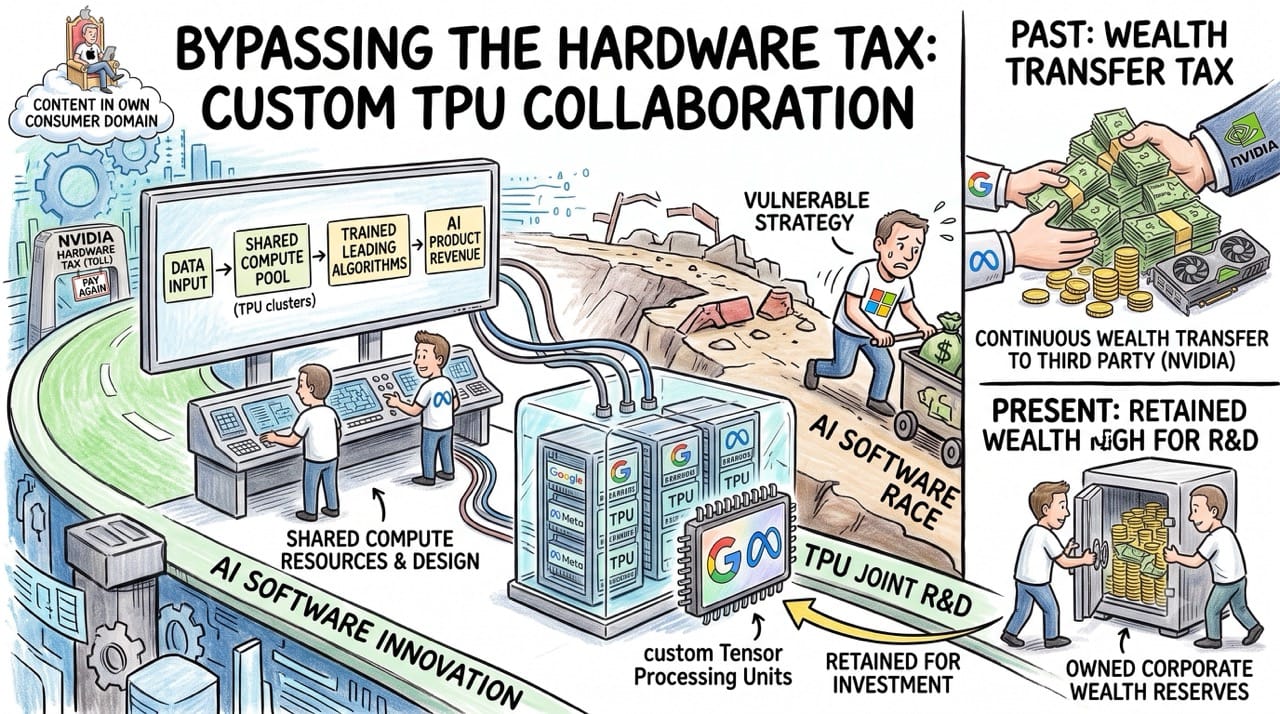
The Hardware Tax
For the last two years the entire technology industry was forced to pay an exorbitant premium for graphics processing units.
Google and Meta are perfectly positioned to bypass this expensive bottleneck by collaborating closely on custom Tensor Processing Units.
Sharing compute resources allows them to train industry leading algorithms without continuously transferring their corporate wealth directly to a third party vendor.
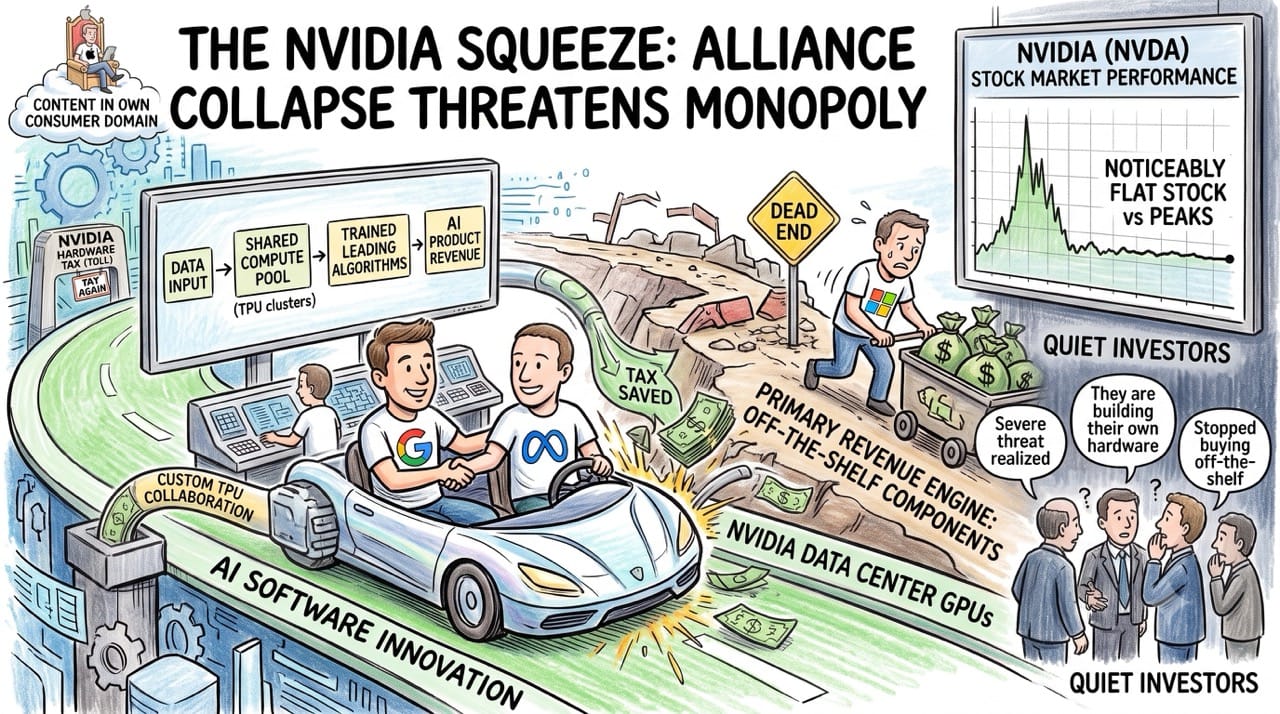
The Nvidia Squeeze
This strategic computing alliance poses a severe threat to the primary revenue engine of the reigning hardware monopoly.
We are already seeing this friction reflected in the public markets as Nvidia stock remains noticeably flat compared to its historical peaks.
Investors are quietly realizing that the biggest hyperscalers on earth are aggressively building the infrastructure required to stop buying off the shelf components.
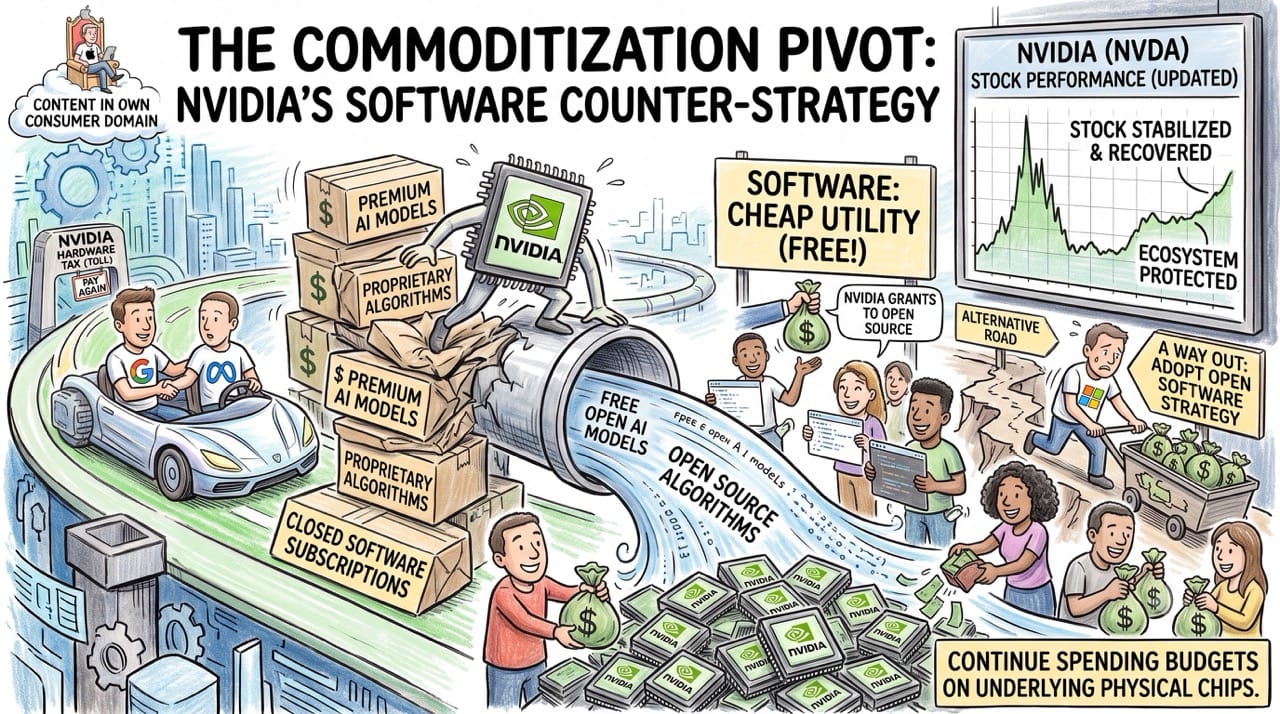
The Commoditization Pivot
To protect their ecosystem Nvidia is now aggressively pushing into the software space by releasing highly capable open artificial intelligence models.
Recent news highlights their strategy to heavily fund open source developers and deploy their own free algorithms.
They desperately want to commoditize the entire software layer so corporate clients view intelligence as a cheap utility rather than a premium subscription.
If the software is free developers will continue to spend their budgets on the underlying physical chips.
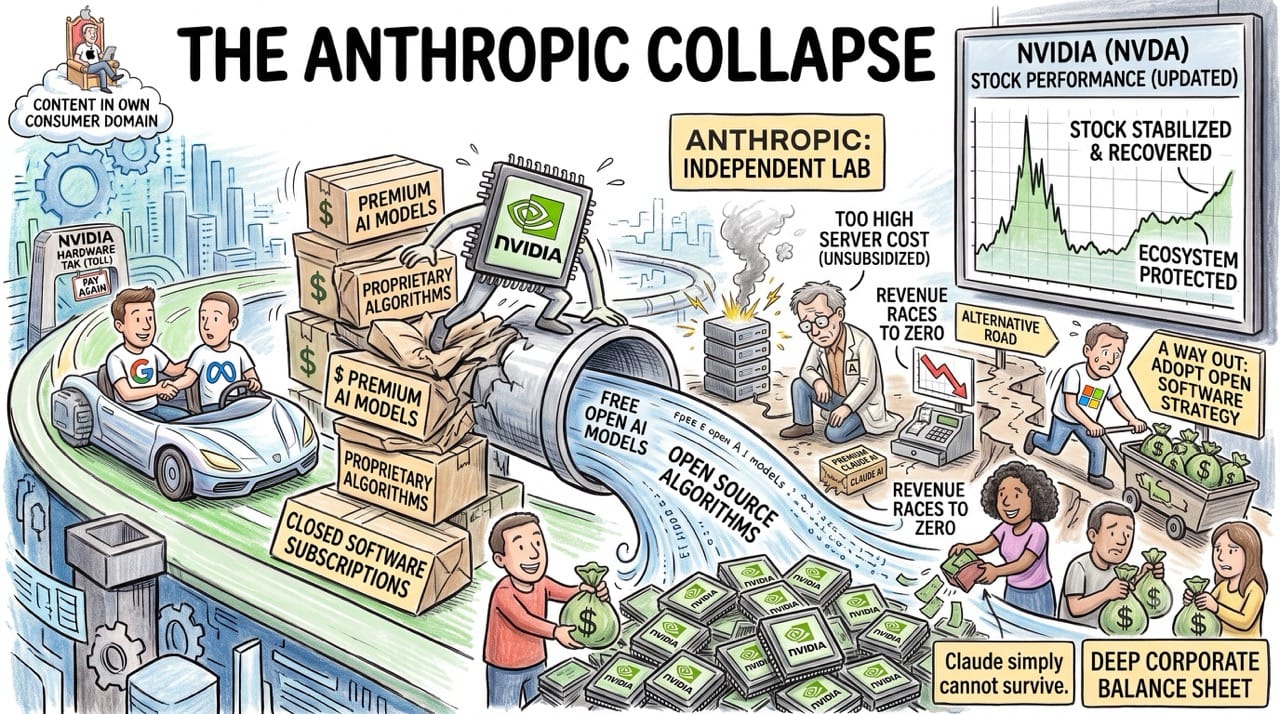
The Anthropic Collapse
This open model flood creates a fatal economic environment for independent laboratories like Anthropic.
Claude simply cannot survive a brutal price war against a hardware giant actively giving away equivalent intelligence for free.
These private companies lack the deep corporate balance sheet required to subsidize endless server costs when their subscription revenue races toward zero.
The Microsoft Vulnerability
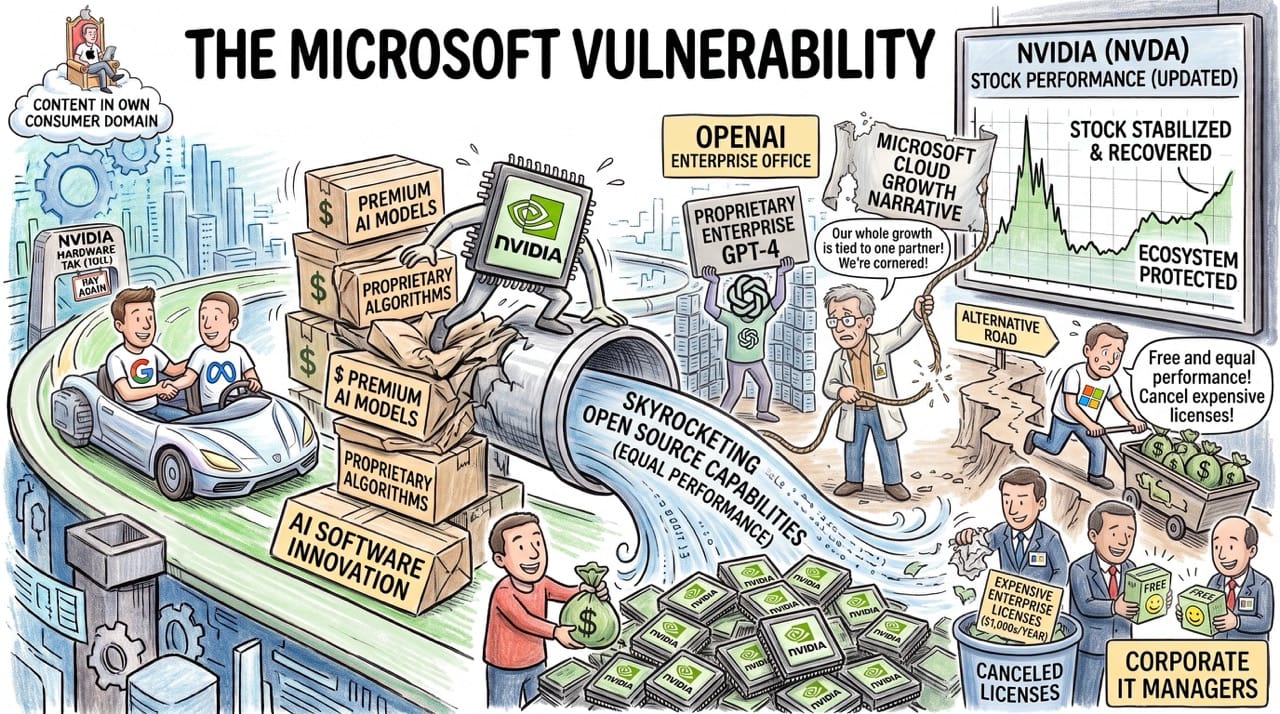
As these open source capabilities skyrocket OpenAI will find themselves completely cornered in the enterprise market.
This places Microsoft in a highly dangerous position because their recent cloud growth narrative relies almost entirely on the continued dominance of a single proprietary partner.
If corporate clients realize they can get the exact same cognitive performance from a free open model they will immediately cancel their expensive enterprise licenses.
The Apple Fortress
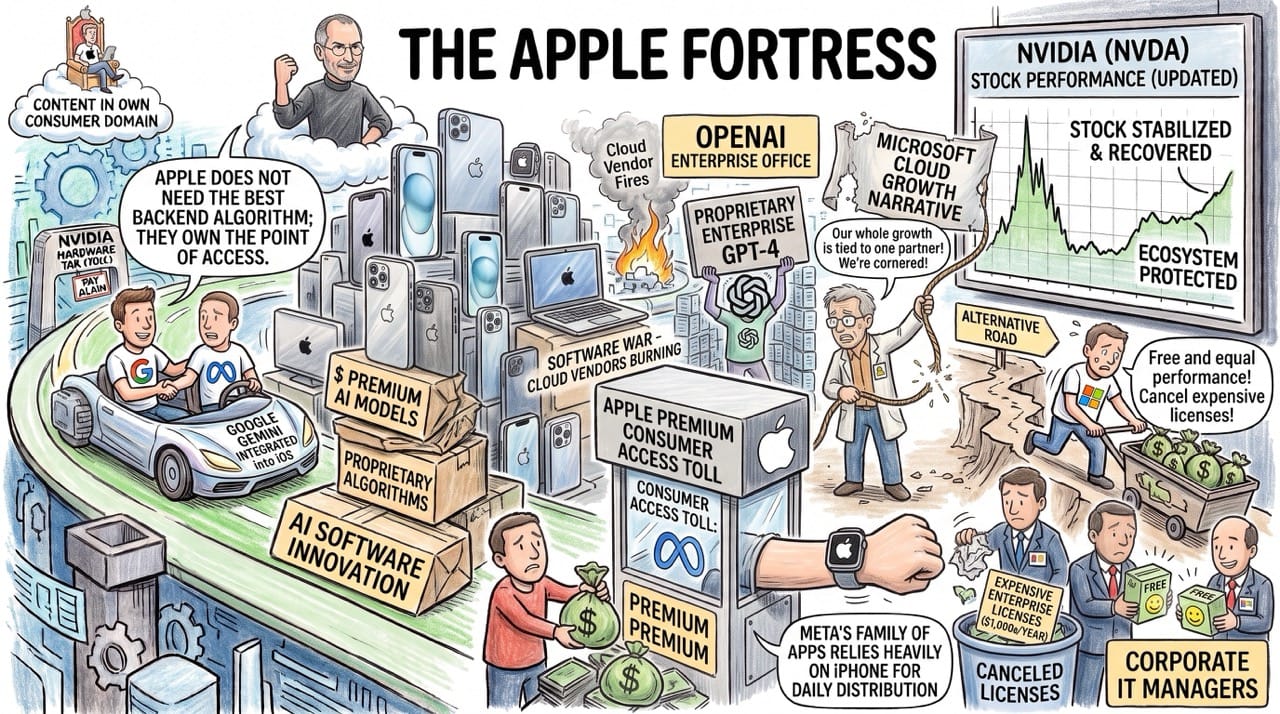
While the software war burns down the cloud vendors Apple will effortlessly maintain its iron grip on the physical consumer.
Meta cannot realistically challenge this hardware monopoly because their entire family of applications relies heavily on the iPhone for daily distribution.
Apple understands they do not need to train the best backend algorithm to win the decade.
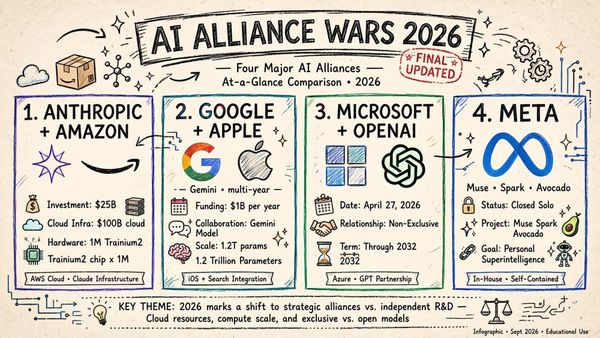
They are simply integrating Google Gemini directly into their operating system and charging a premium toll for the consumer access point.
Conclusion: The Unified Stack
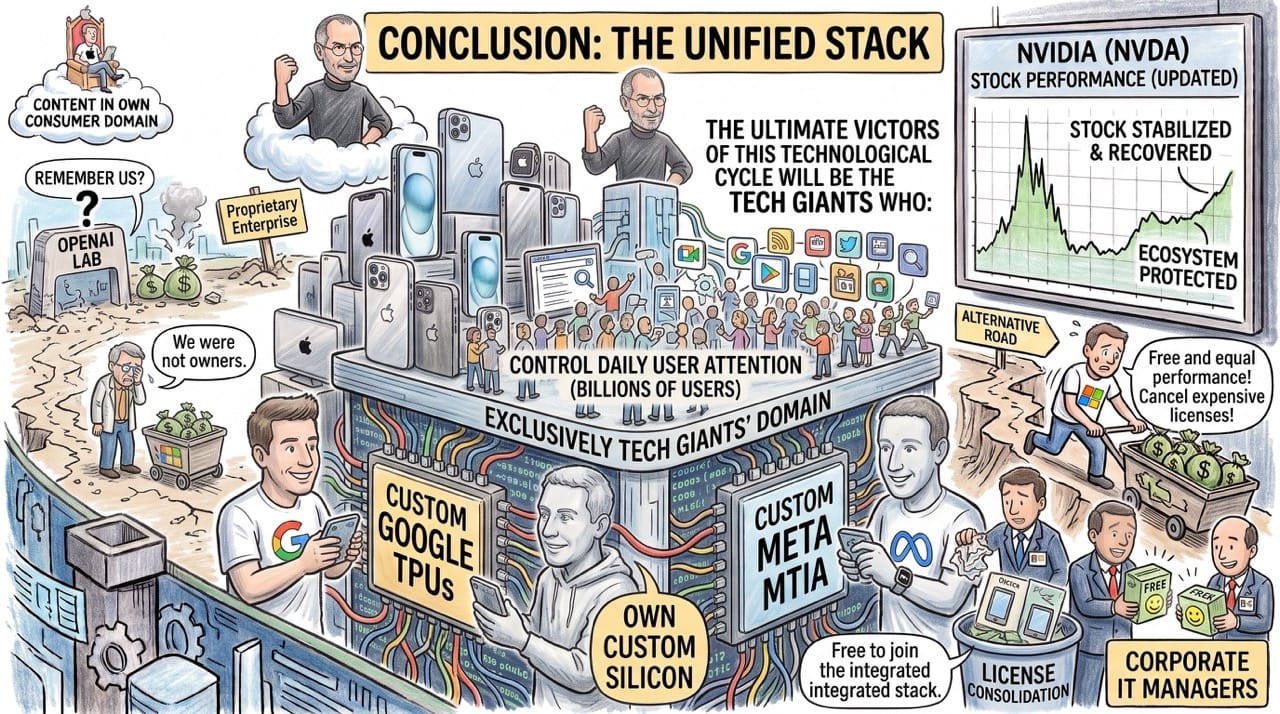
The ultimate victors of this technological cycle will not be the standalone software laboratories heavily funded by venture capital.
The market belongs exclusively to the tech giants who own their own custom silicon and control the daily attention of billions of users.