How Dating Apps Should Monetize (Relationships): The Post Match Pivot
Dating apps have a terrible business model where success means losing a customer. By transitioning successful matches into a post relationship ecosystem they can unlock an entirely new lifetime monetization funnel.
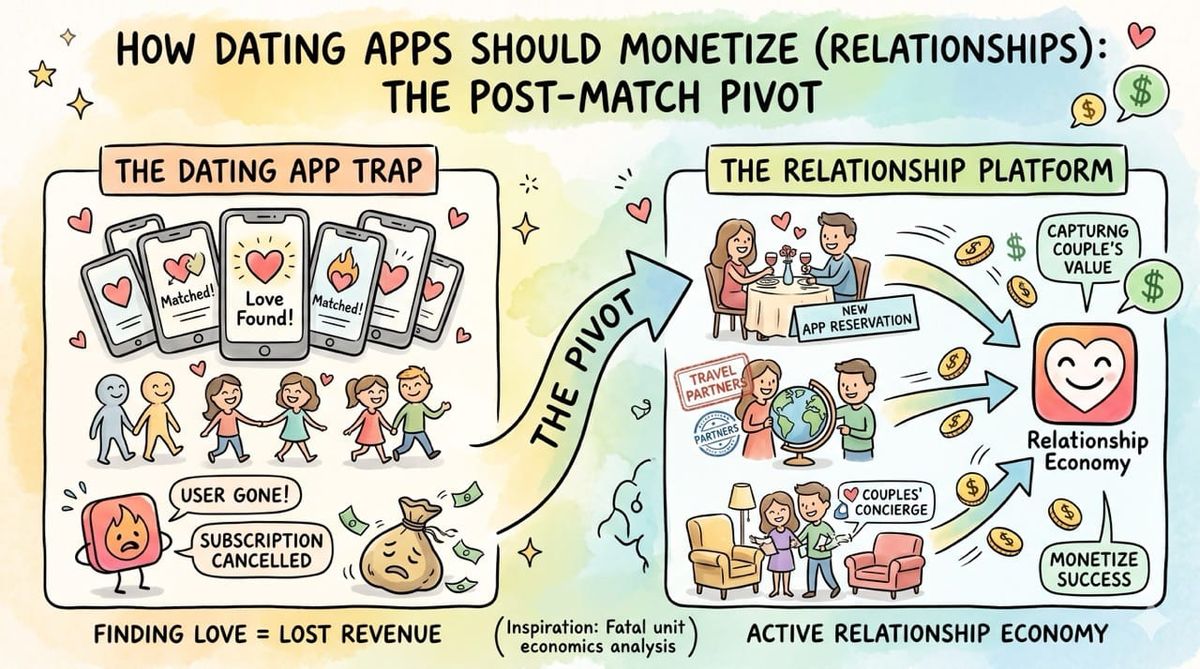
The fundamental paradox of digital dating is that creating a successful relationship destroys your user base. The smart platforms will learn how to capture the economic value of the couples they actively create.
Inspiration: Analyzing the fatal unit economics of modern matchmaking platforms. Realizing that the moment a user finds love the company immediately loses a paying subscriber and must spend capital to acquire a replacement.
Hopefully, a product manager at Match Group or Bumble reads this...
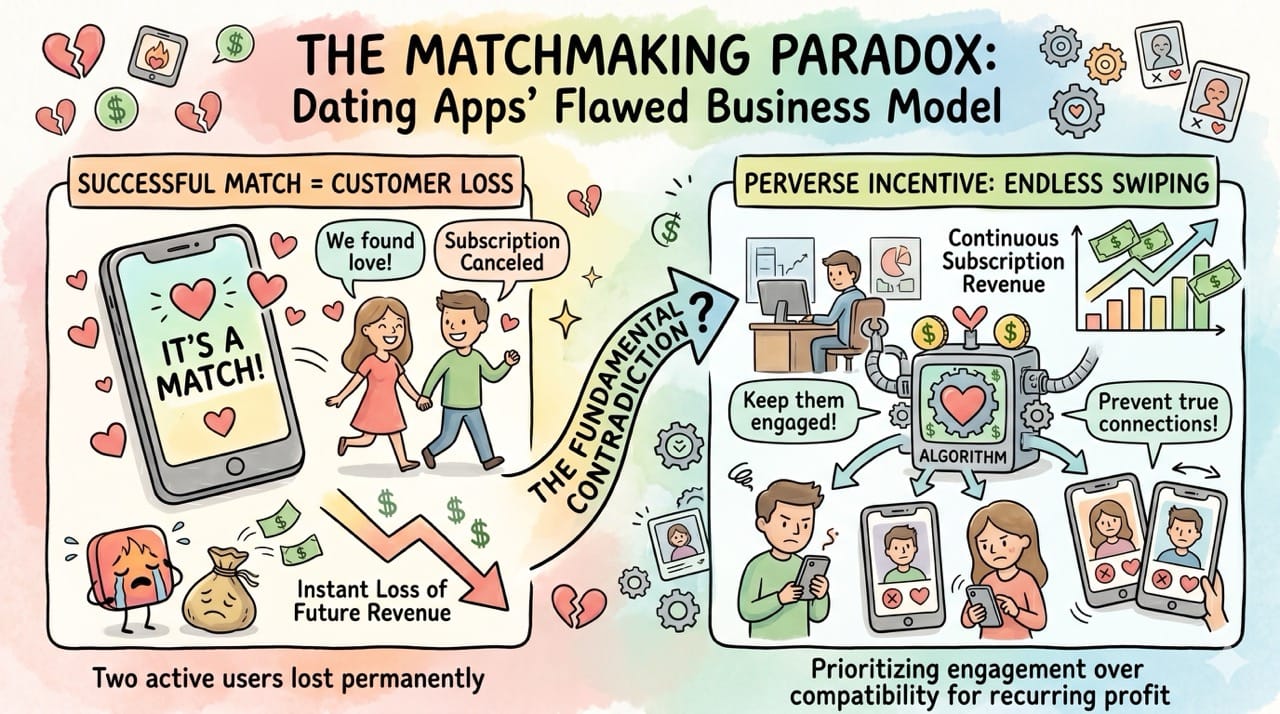
The Matchmaking Paradox
Dating platforms operate on a fundamentally flawed business model.
If their algorithm actually works they permanently lose two active customers at the exact same time.
This creates a perverse incentive for the platform to keep users endlessly swiping instead of finding true compatibility.
A successful connection instantly terminates all future subscription revenue for the company.
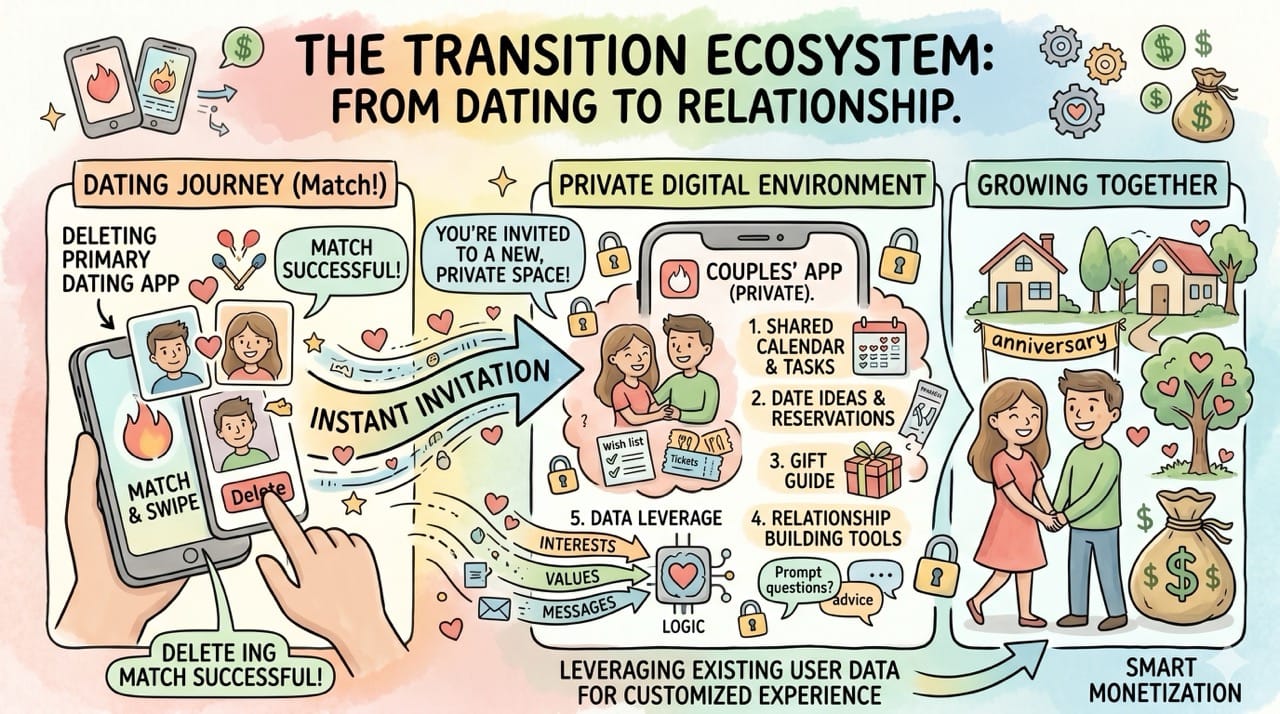
The Transition Ecosystem
Smart platforms need to stop treating a successful match as the end of the customer journey.
They should build a secondary application designed specifically for the couples they just created.
When a pair deletes the primary dating application they should be instantly invited to a new private digital environment.
This platform would function similarly to modern relationship building tools but leverage their existing user data.
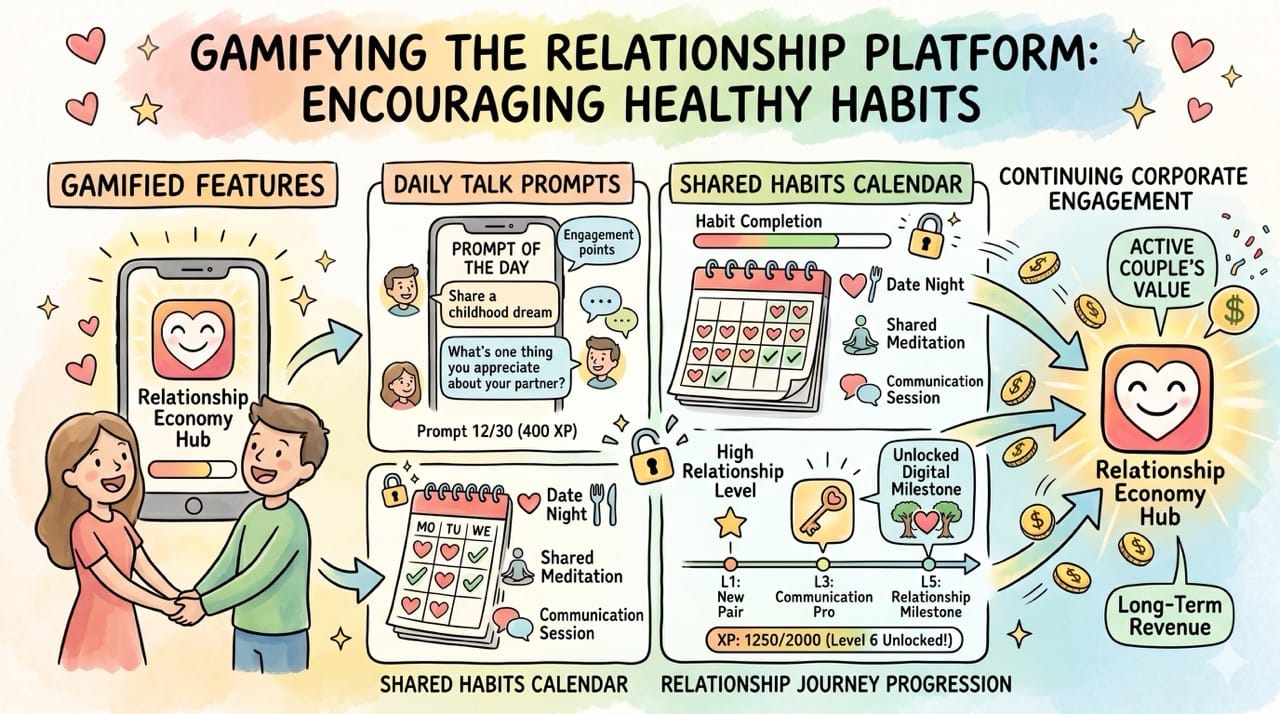
Gamifying the Relationship
This secondary ecosystem can actively gamify the early stages of a new partnership.
It can provide daily conversational prompts or shared calendar integrations to help build healthy long term habits.
Couples can unlock specific digital milestones as their relationship matures over time.
This keeps them highly engaged with the corporate ecosystem long after the initial introduction.
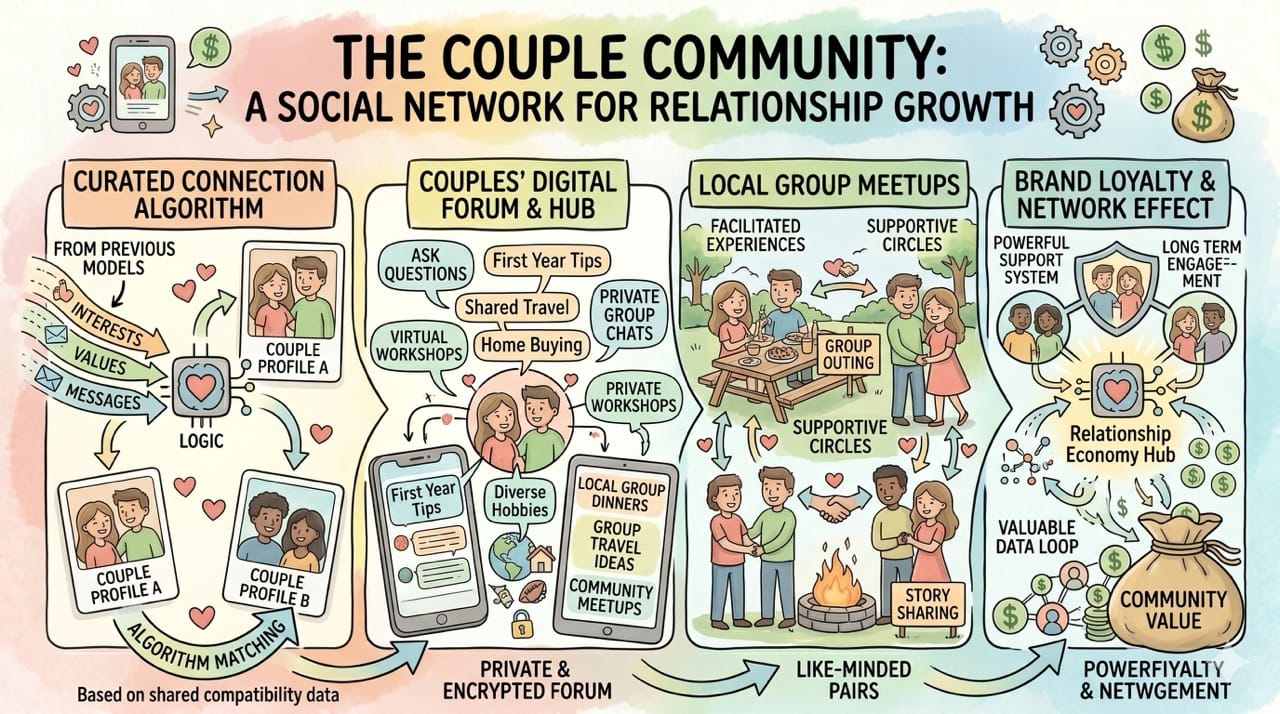
The Couple Community
This model also opens the door to creating highly curated social networks for new couples.
People entering serious relationships often experience shifts in their social circles and crave connections with similar pairs.
The platform can facilitate local group meetups or digital forums for couples who met through their algorithm.
This creates a powerful network effect that reinforces long term brand loyalty.
The Lifetime Monetization Funnel
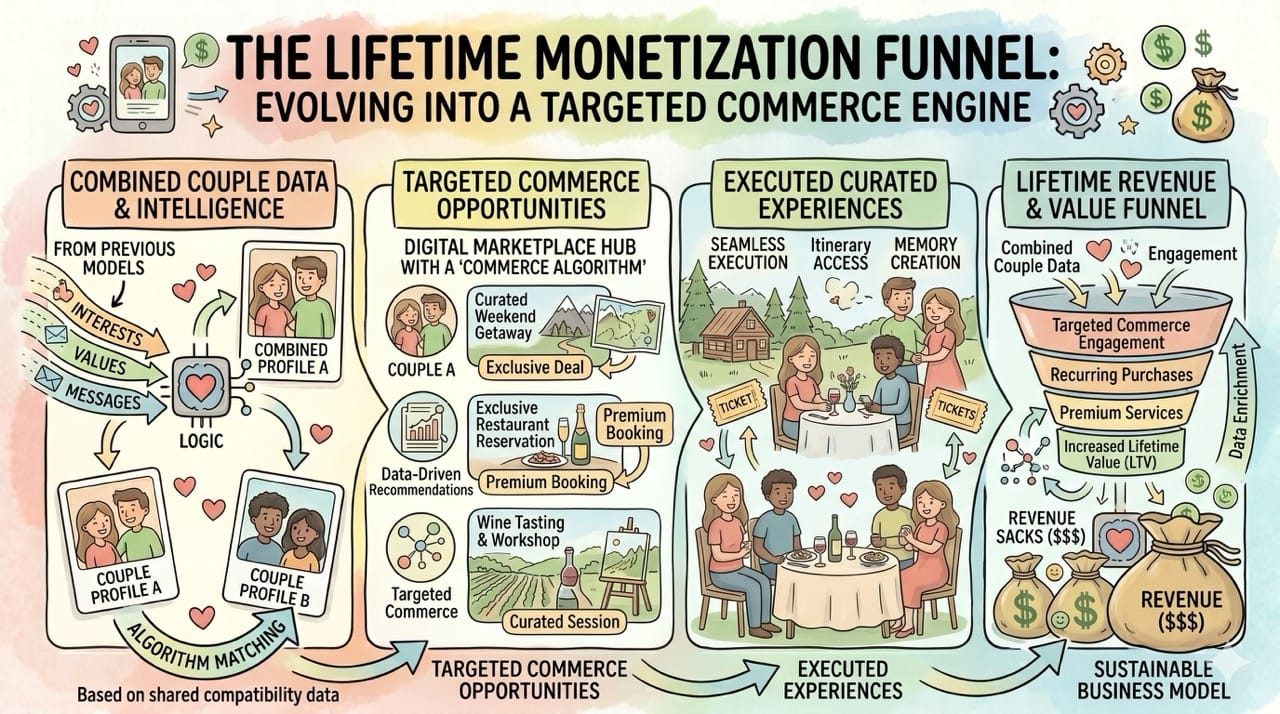
The revenue opportunities for a dedicated relationship platform are practically endless.
The algorithm already knows their combined demographic data and personal interests perfectly.
The application can seamlessly transition into a highly targeted commerce engine.
They can sell curated weekend getaway packages or exclusive reservations at premium local restaurants.
High Value Integrations
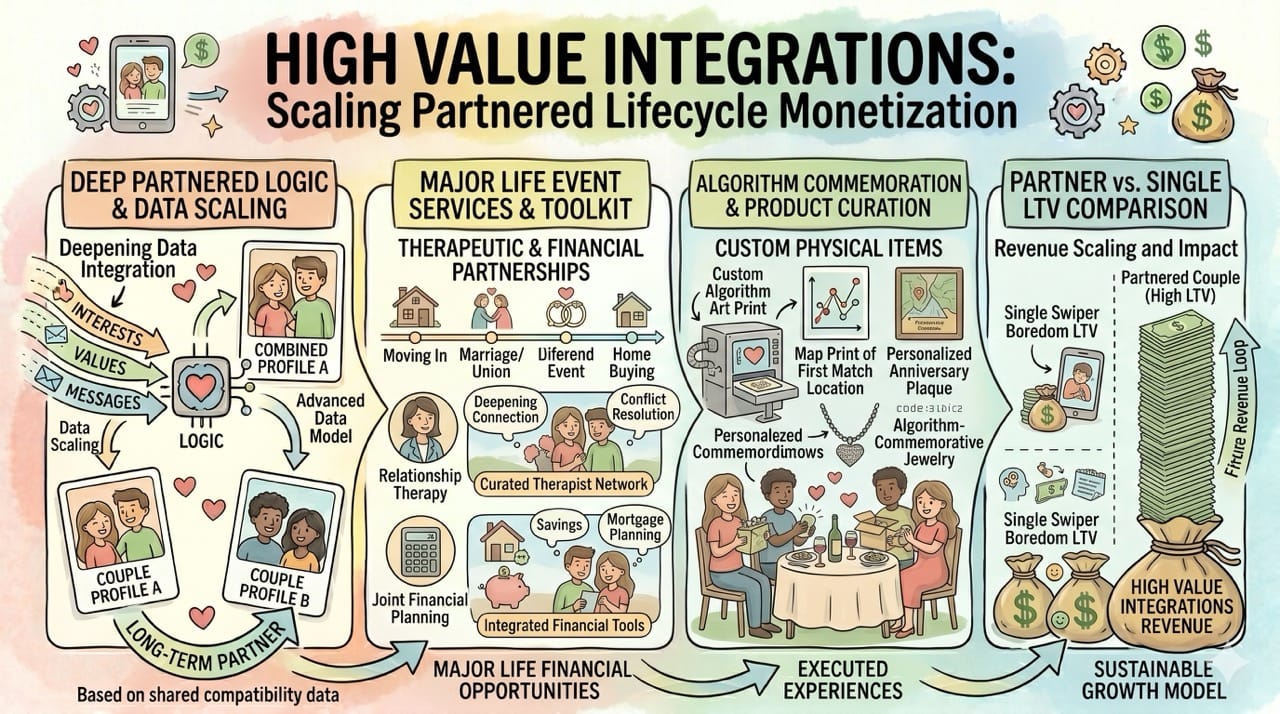
As the partnership deepens the monetization strategies can scale directly with their major life events.
The platform could easily integrate professional relationship therapy services or joint financial planning tools.
They can even sell custom physical products that commemorate the exact algorithm that brought them together.
The lifetime value of a partnered couple is significantly higher than a single user swiping out of boredom.
Conclusion: Evolving the Business Model
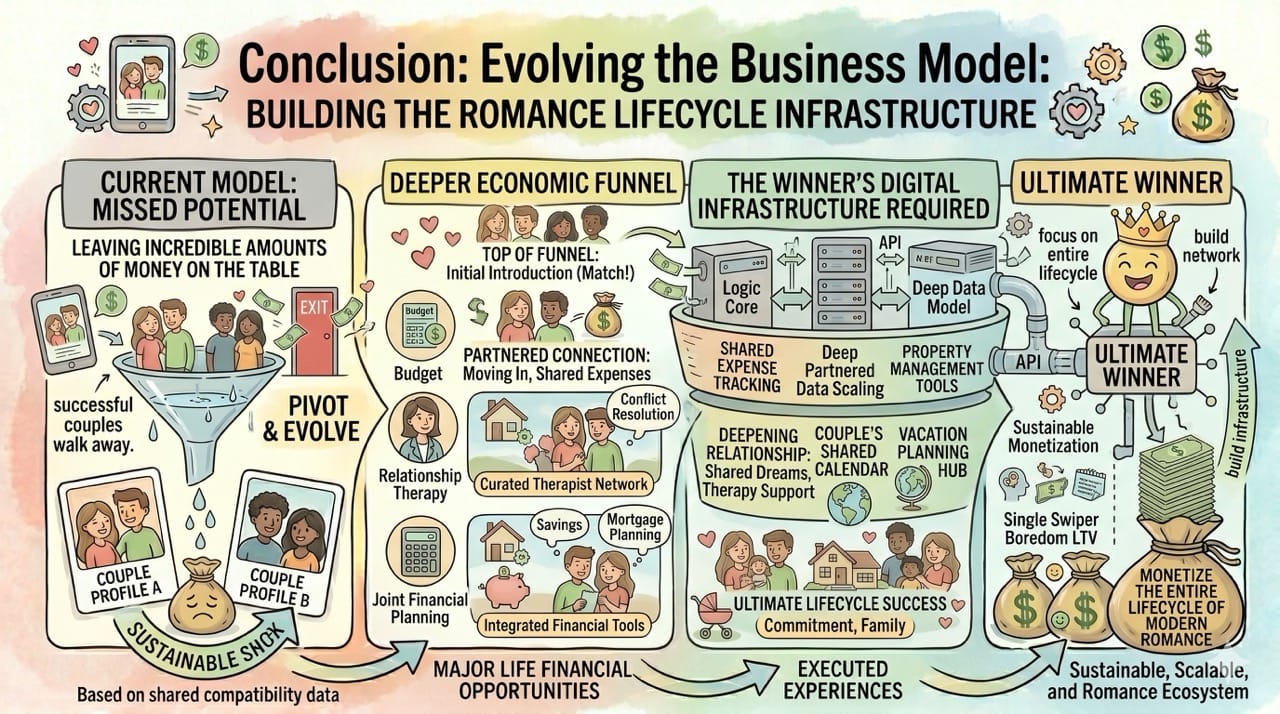
The modern matchmaking industry is leaving incredible amounts of money on the table by letting successful couples walk away.
The initial match is simply the top of a much deeper economic funnel.
The ultimate winner in the dating space will not just focus on the introduction.
They will build the digital infrastructure required to monetize the entire lifecycle of modern romance.