GenAI Will Boost Spotify Revenues: The Royalty Arbitrage
Everyone thinks artificial intelligence is a threat to the music industry. Streaming platforms secretly view generative audio as the ultimate tool to slash their royalty expenses and dramatically boost profit margins.
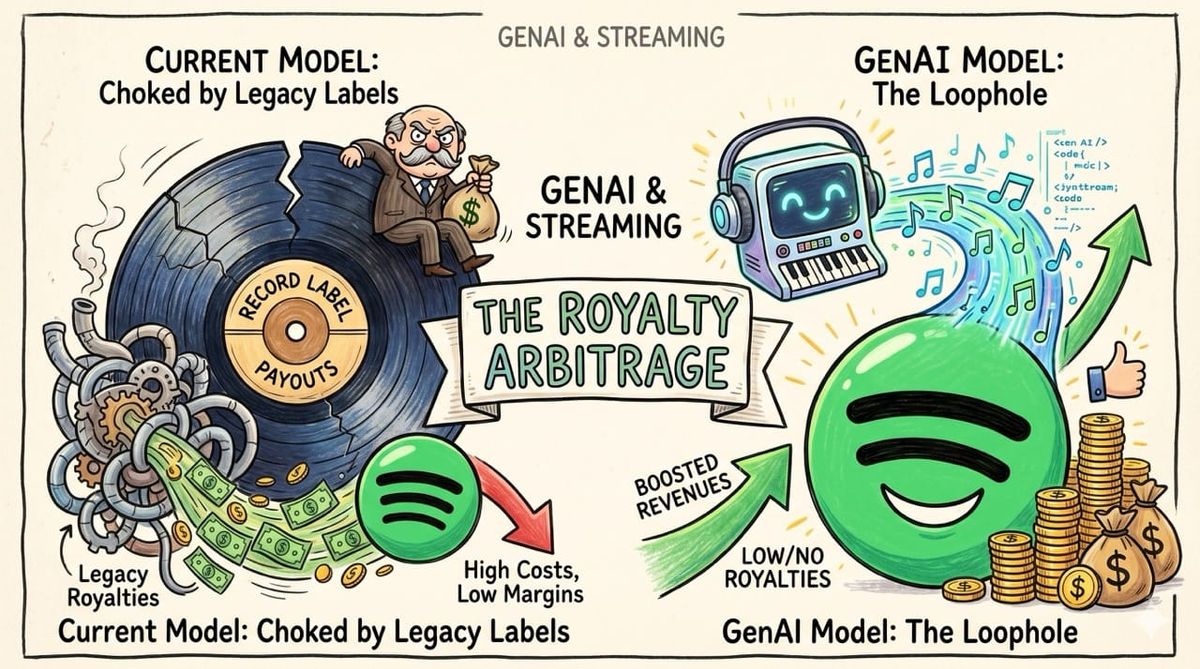
The current streaming business model is choked by legacy record label payouts. Generative music provides platforms with a brilliant loophole to easily bypass traditional royalty structures.
Inspiration: Analyzing the margin structures of major streaming platforms and the rising volume of algorithmic audio. Realizing that companies can use clever public relations to lower payouts while expanding their bottom line.
The Margin Problem
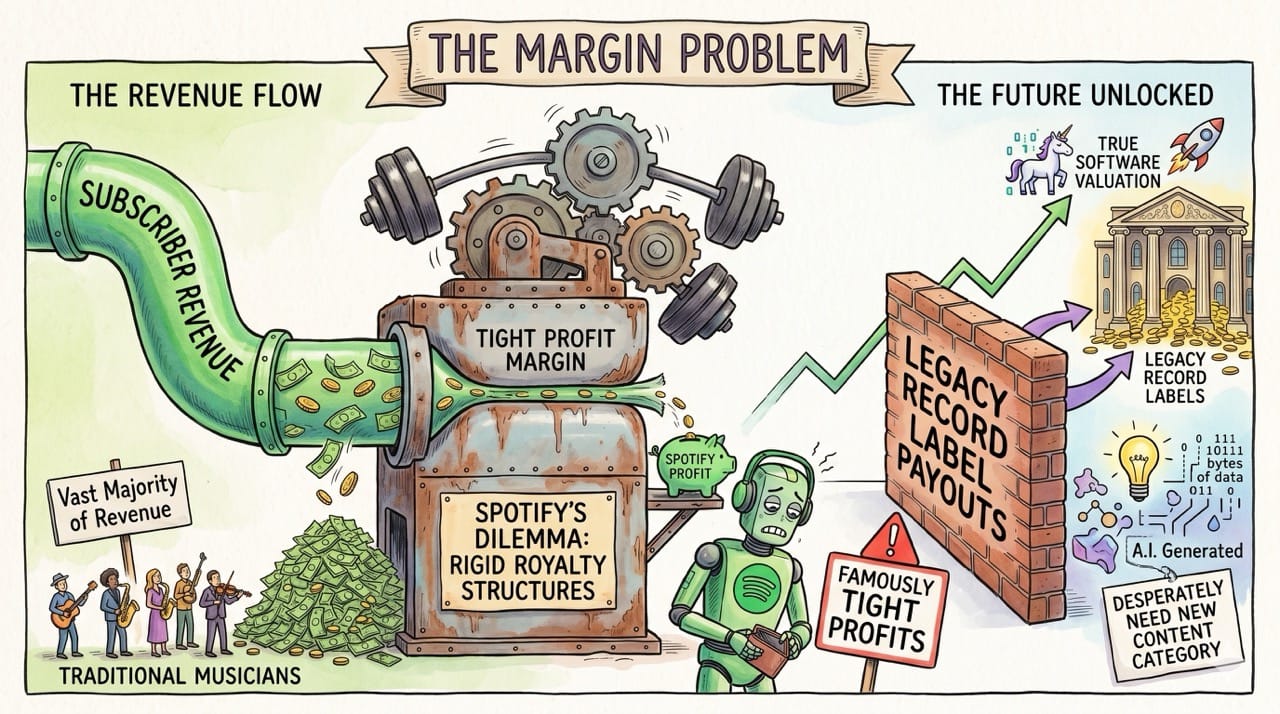
Streaming platforms like Spotify operate on famously tight profit margins.
The vast majority of their subscription revenue goes directly to traditional musicians and legacy record labels.
These rigid royalty structures prevent the platforms from achieving true software valuations.
They desperately need a new category of content that does not require expensive legacy payouts.
The Independent AI Loophole
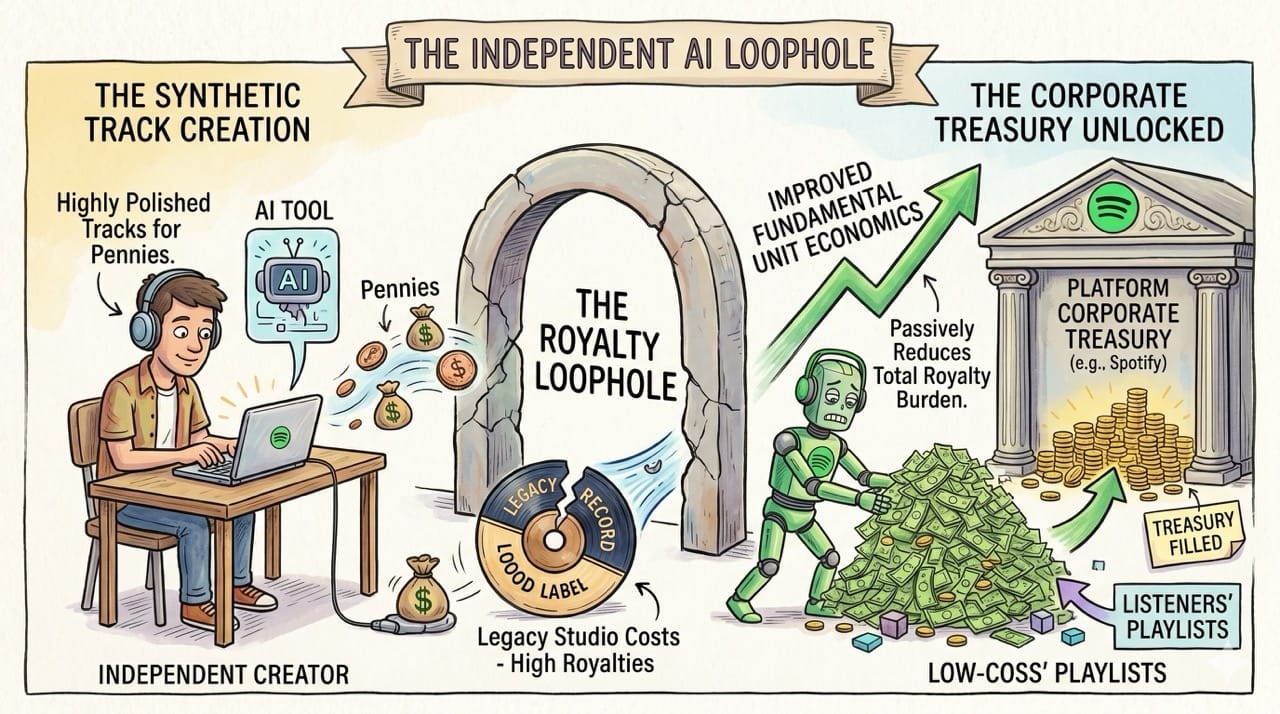
Generative audio tools now allow independent creators to produce highly polished tracks for pennies.
These synthetic songs require significantly lower financial compensation compared to traditional studio productions.
Platforms will inevitably use this dynamic to improve their fundamental unit economics.
Pushing synthetic content to listeners passively reduces the total royalty burden on the corporate treasury.
The Public Relations Pivot
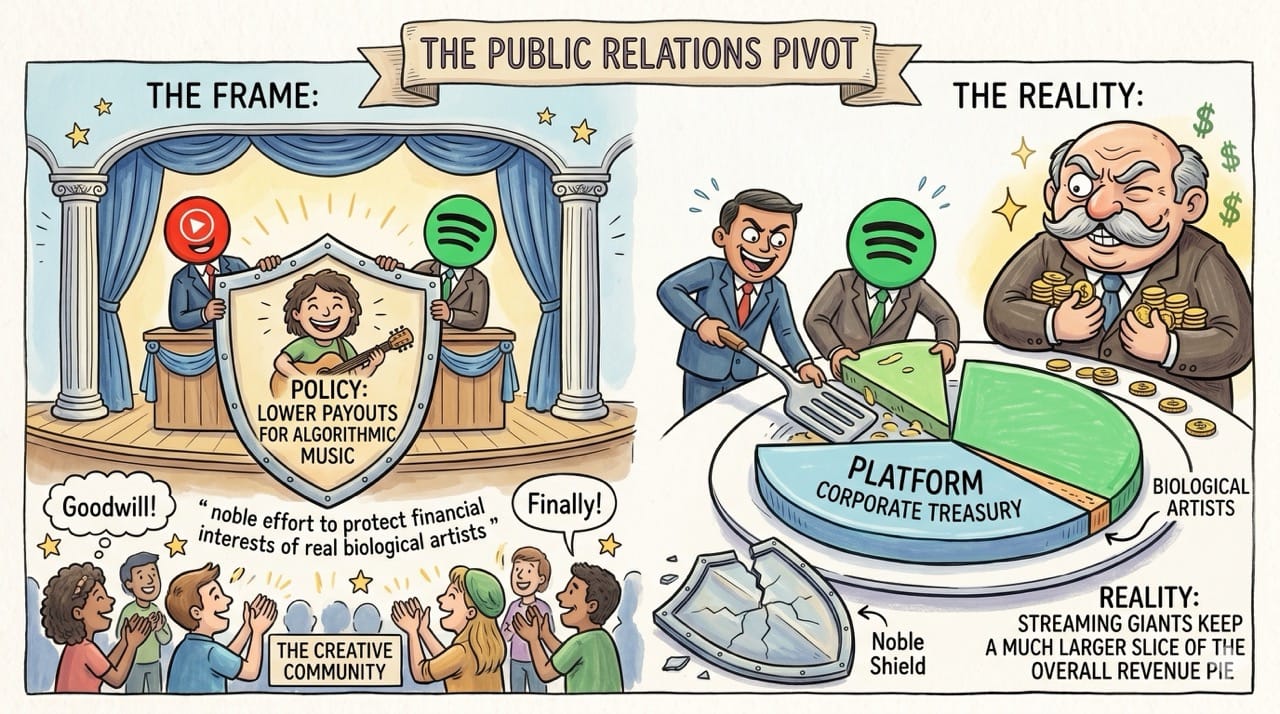
Companies like YouTube Music and Spotify will eventually launch policies offering lower payout tiers for algorithmic music.
They will frame this as a noble effort to protect the financial interests of real biological artists.
This is a clever public relations move designed to manufacture goodwill with the creative community.
In reality it simply allows the streaming giants to keep a much larger slice of the overall revenue pie.
The Apple Ecosystem Play
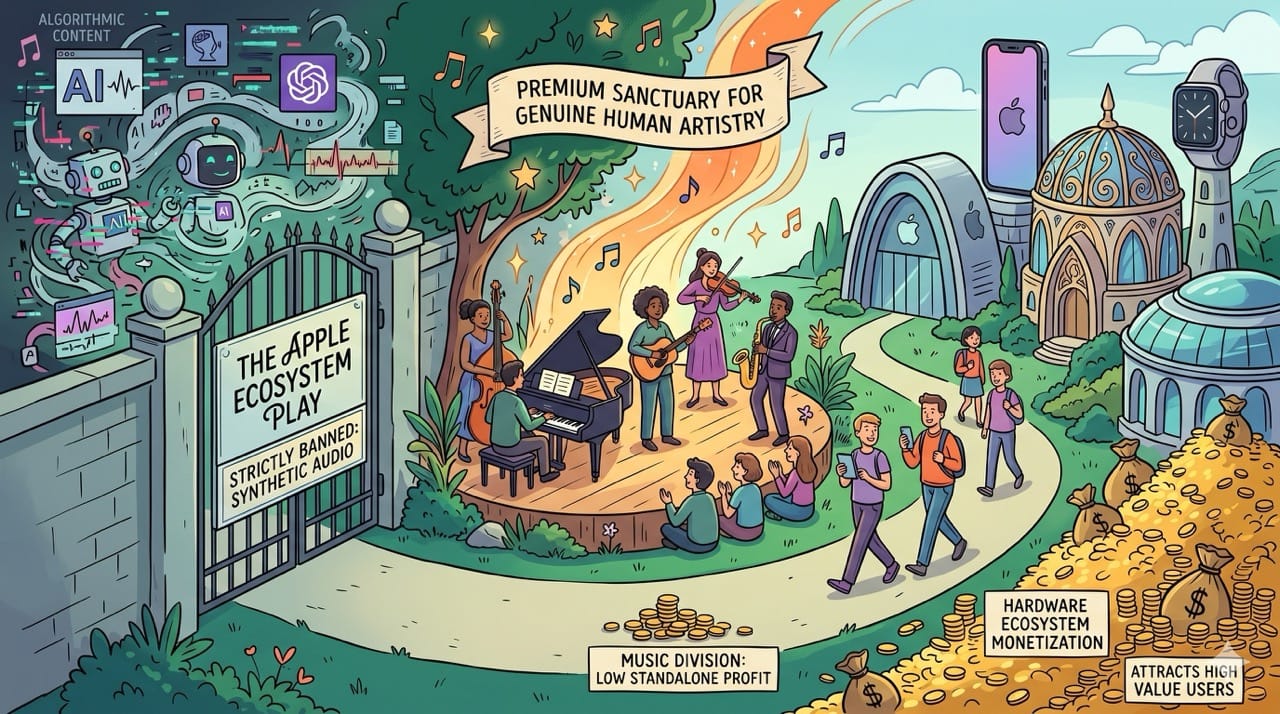
Apple Music will inevitably take the opposite approach and strictly ban synthetic audio from their platform.
They will position their streaming service as a premium sanctuary for genuine human artistry.
This strict curation will not be highly profitable for their music division on a standalone basis.
It will successfully attract high value users into their broader hardware ecosystem where the real monetization happens.
The Opt Out Illusion
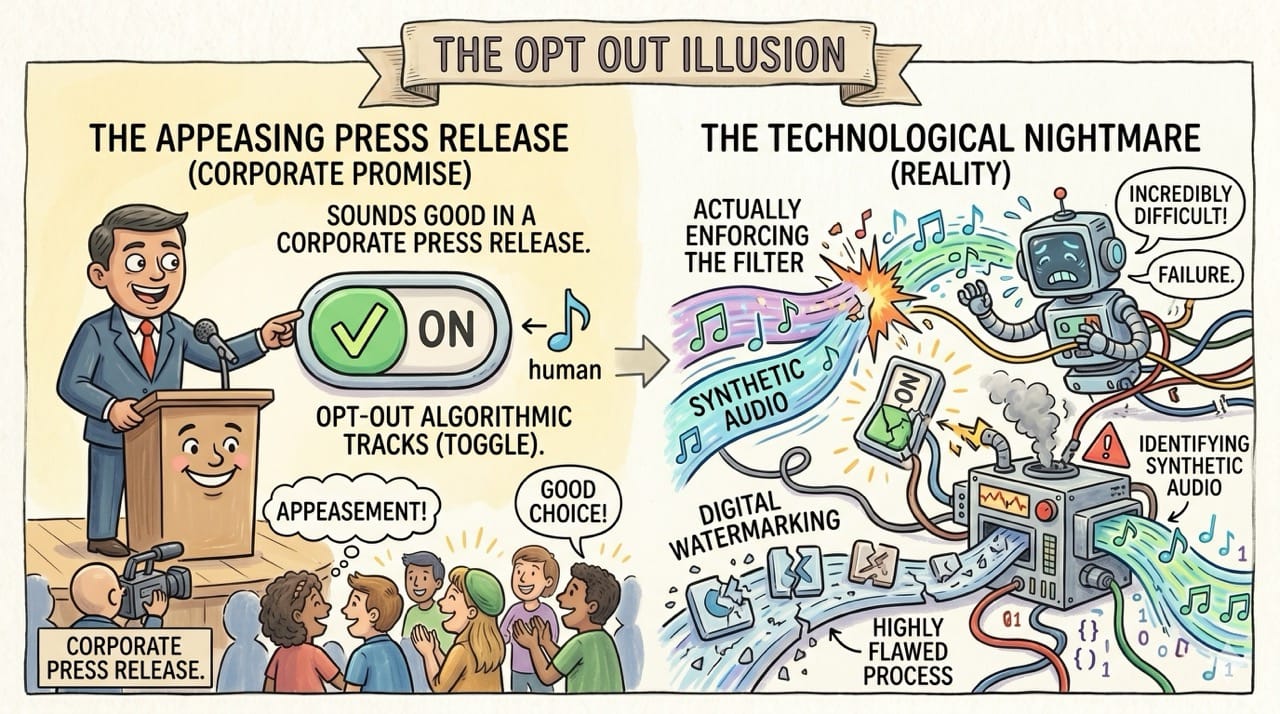
Other streaming platforms will attempt to appease angry consumers by offering a toggle switch to exclude algorithmic tracks.
Giving users the choice to filter their feeds sounds good in a corporate press release.
Actually enforcing this filter will be a technological nightmare for the platforms.
Identifying synthetic audio is incredibly difficult because digital watermarking is still a highly flawed process.
The Labeling Challenge
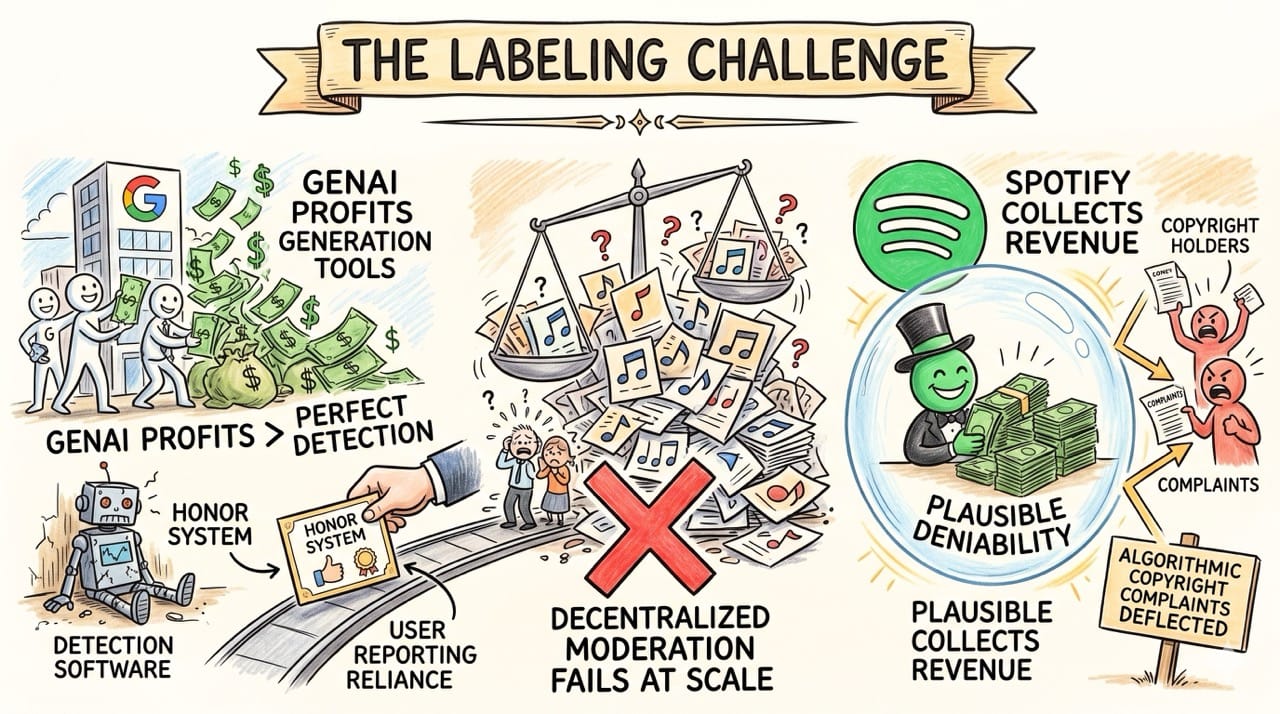
Google actively profits from developing algorithmic generation tools so they have little incentive to build perfect detection software.
Streaming platforms will be forced to rely on the honor system and user reporting to label synthetic tracks.
This decentralized moderation approach will inevitably fail at scale.
Spotify will happily continue collecting subscription revenue while plausible deniability protects them from algorithmic copyright complaints.
The Global Divide
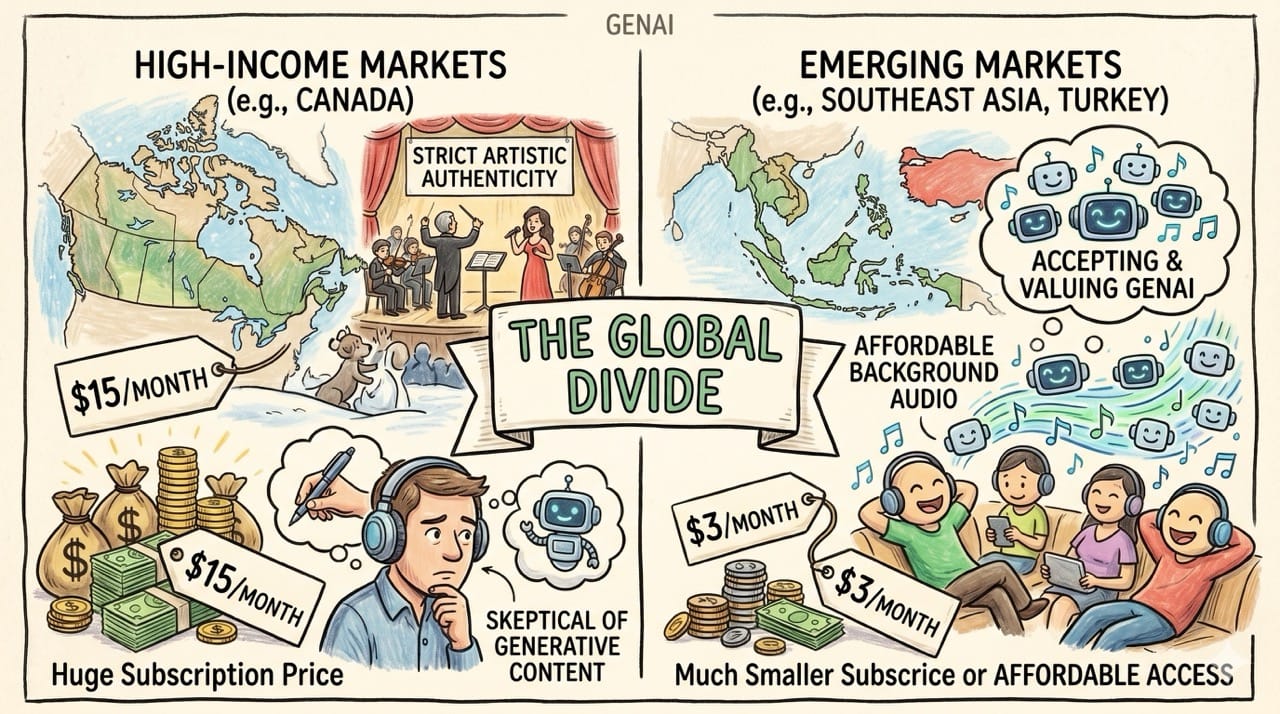
This technological shift will create a clear divide in media consumption habits across different global markets.
Consumers in regions like Southeast Asia or Turkey operate on entirely different subscription price points compared to Canadian listeners.
These emerging markets often prioritize affordable access to background audio over strict artistic authenticity.
The public perception of generative content will vary wildly depending on the local economic reality and cultural preferences.
Conclusion
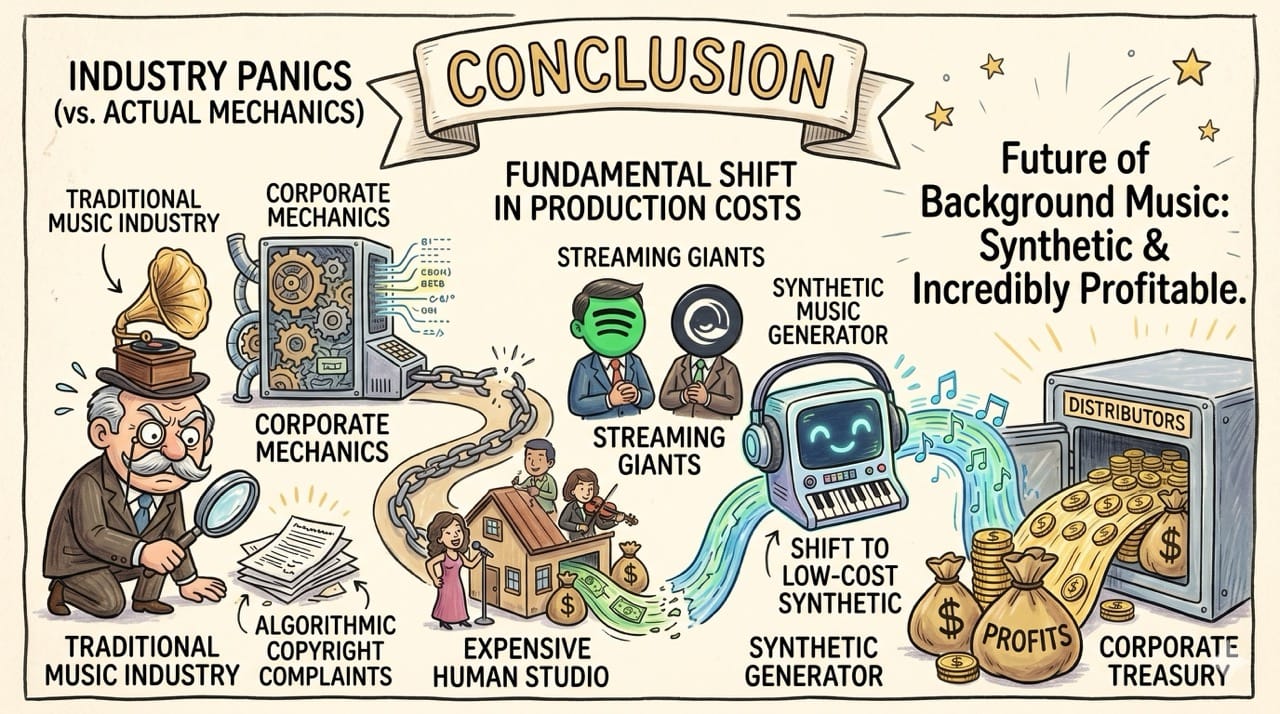
The music industry frequently panics about copyright infringement but ignores the actual corporate mechanics at play.
Streaming giants are not victims of algorithmic generation.
They are the quiet beneficiaries of a fundamental shift in production costs.
The future of background music is synthetic and it is going to be incredibly profitable for the distributors.