Gen Z's Sex Recession Is A Loneliness Problem
Young Americans are having less sex than earlier generations, and the data points to fewer nights out more than to any change in desire. Phones, fear of being filmed and a culture of self-optimization have made the first move harder, and I think the fix starts offline.
I watched Andrew Callaghan's Channel 5 episode on Gen Z's "sex recession" this week.
It's a strange, sometimes uncomfortable mix of spring break footage, looksmaxxing camps and long interviews with experts.
Under the spectacle, I think it makes a serious point.
Young people still want connection, but many have lost the places and habits that used to make it happen.
What The Numbers Say
The headline numbers deserve some care.
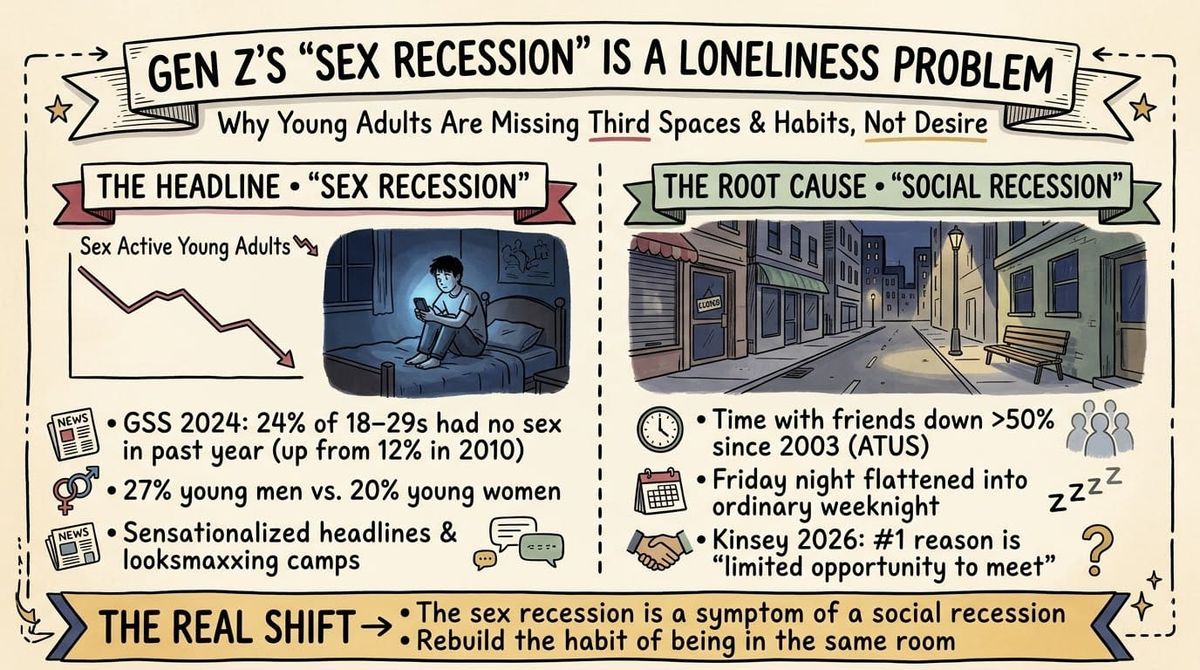
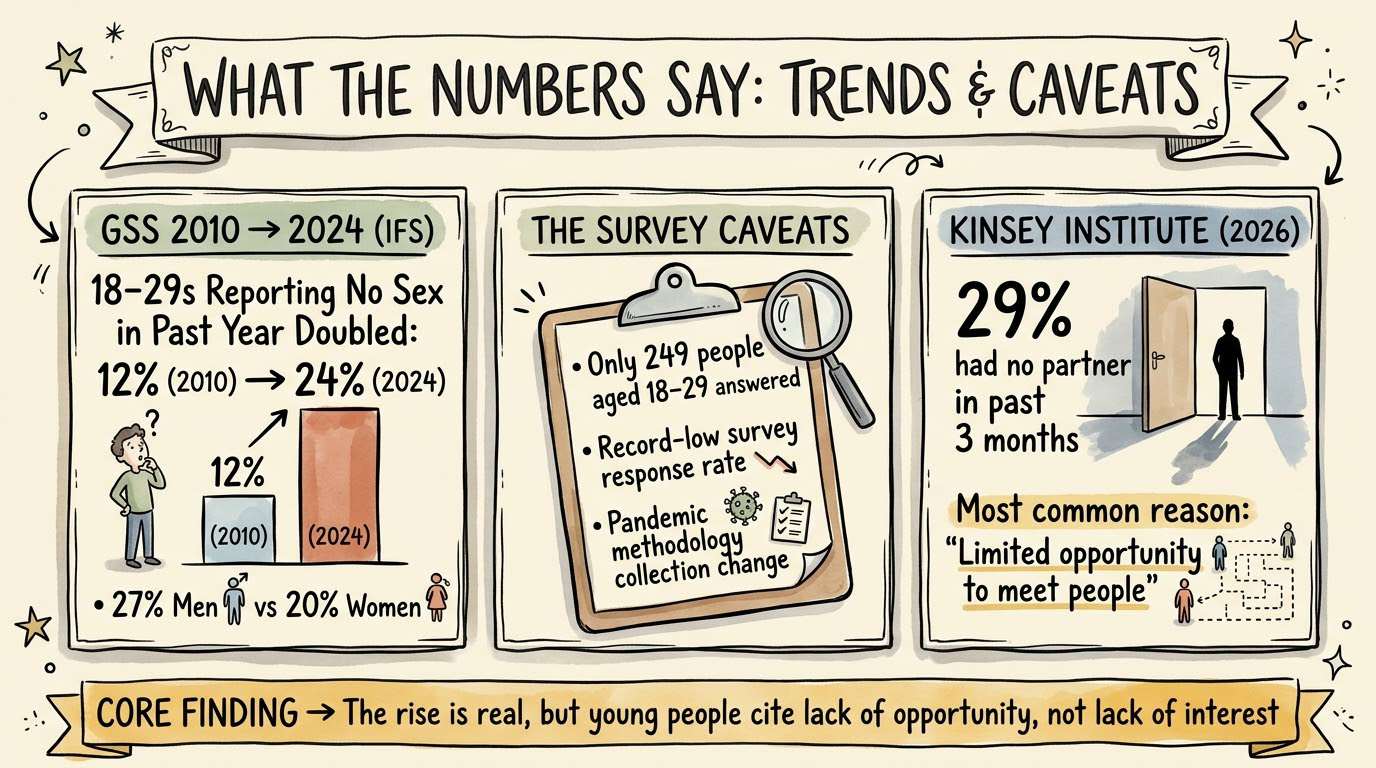
The General Social Survey is the best long-running source, and the Institute for Family Studies found the share of 18- to 29-year-olds reporting no sex in the past year doubled from 12% in 2010 to 24% in 2024.
In the 2024 data, that figure was 27% for young men and 20% for young women.
The caveats are real, though.
Only 249 people in that age group answered the question, the response rate hit a record low and the survey changed how it collects answers during the pandemic.
The episode also cites larger jumps, including a tripling for young men, that I couldn't trace to a source.
A 2026 study from the Kinsey Institute, Playboy and Julie found that 29% of 18- to 29-year-olds had no partner in the past three months.
The most common reason they gave was limited opportunity to meet people.
That answer shaped how I read the rest of the episode.
Friday Night Disappeared
If the main problem is opportunity, the bigger story is how little time people now spend together in person.
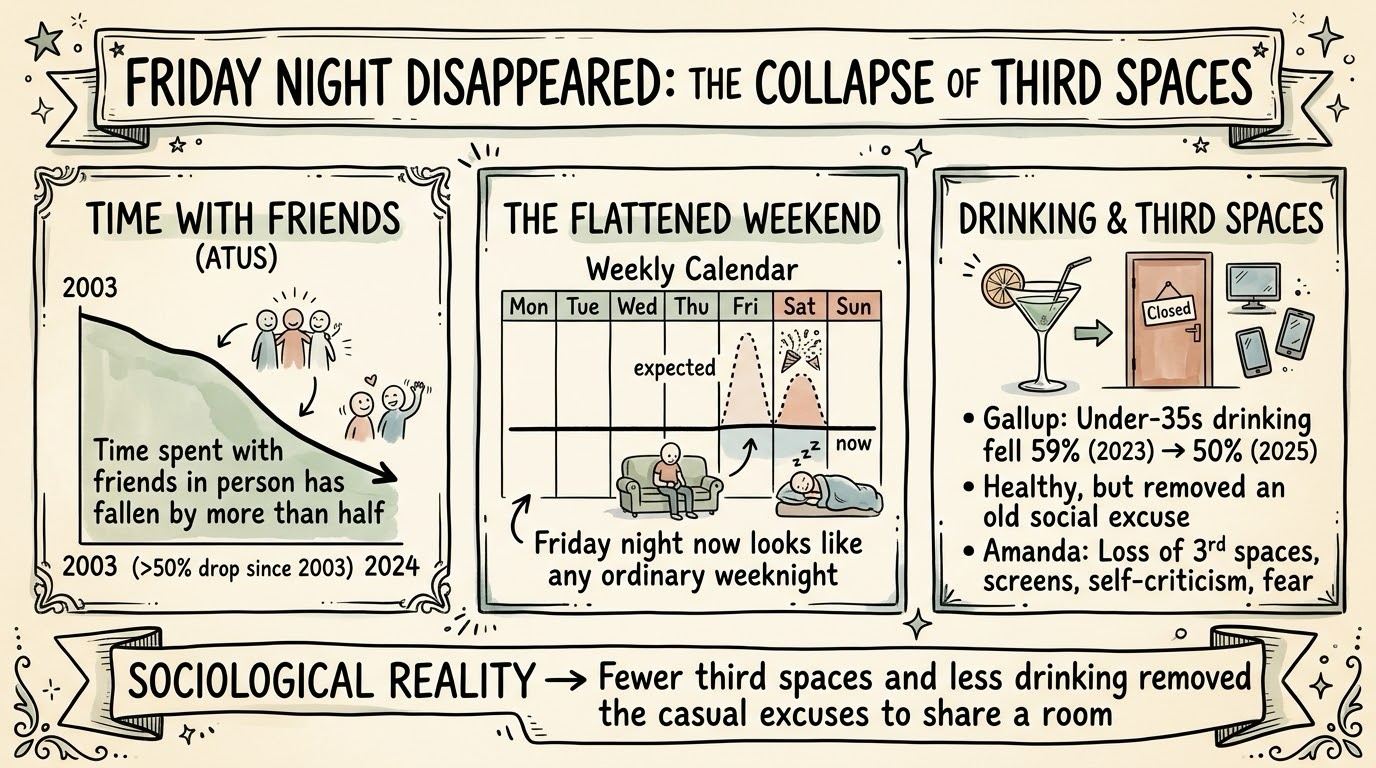
A new analysis of the American Time Use Survey found that time with friends has fallen by more than half since 2003.
The old Friday and Saturday night peaks have flattened, and Friday now looks like any weeknight.
Drinking has dropped too.
Gallup found that only 50% of adults under 35 said they drank in 2025, down from 59% in 2023.
I think that's mostly a healthy change.
It also removed one of the oldest excuses people had to be in the same room, loosen up and talk to someone new.
The intimacy coordinator in the episode, Amanda, named the decline of drinking and "third spaces" as one of the four main drivers, alongside screen time, self-criticism and fear of rejection.
The Phone Is Always In The Room
The part of the episode that stayed with me most was about being watched.
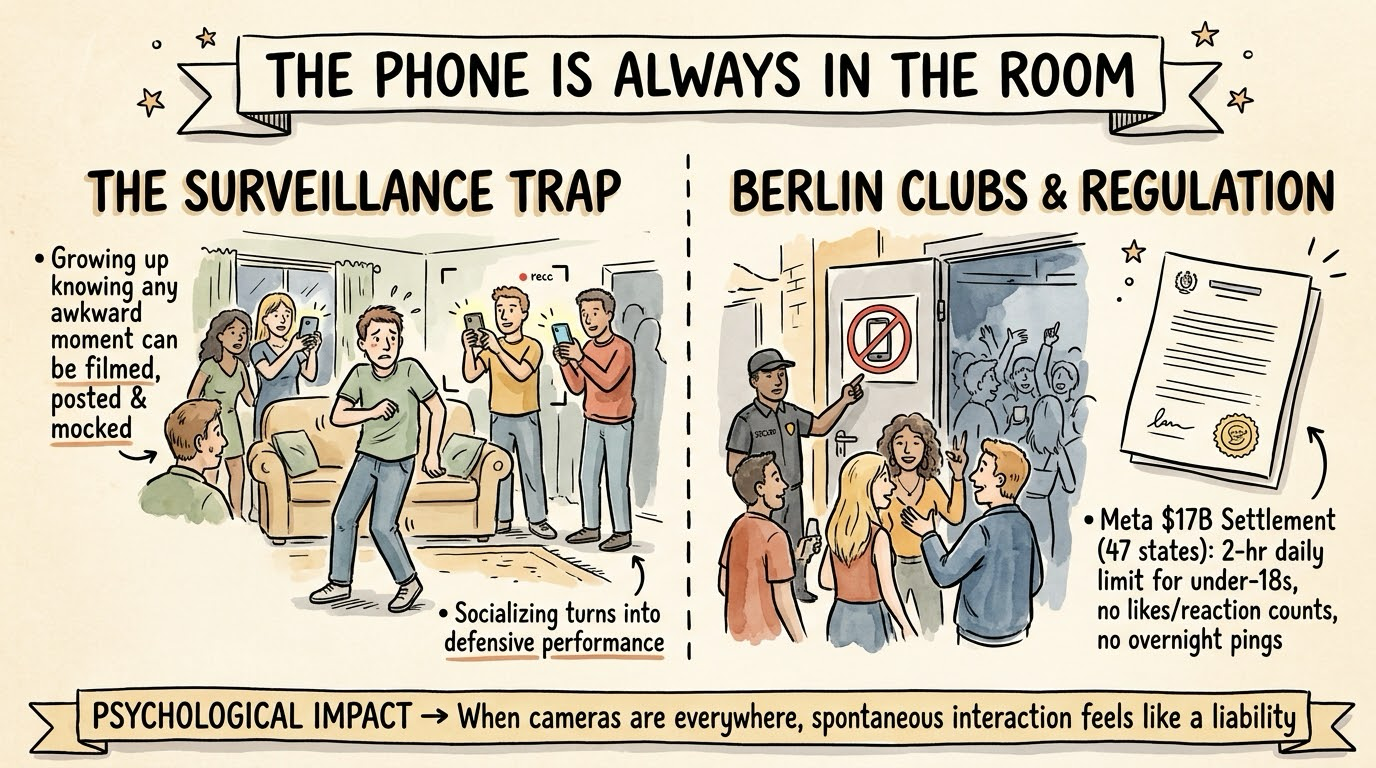
Young people grew up knowing that any awkward moment could be filmed, posted and mocked by strangers.
That changes how anyone behaves at a party.
The episode's contrast is Berlin, where clubs that ban phones feel noticeably freer because nobody is performing for a camera.
Regulators are starting to treat the design of these apps as the problem.
In August, Meta agreed to a settlement of up to $17 billion with 47 states over claims that it made its products addictive for children.
It includes a daily two-hour limit for users under 18, no likes or reaction counts shown to them and no notifications overnight or during school hours.
The deal still needs a judge's approval.
Porn Got There First
The episode also points to pornography, and the data here is sobering.
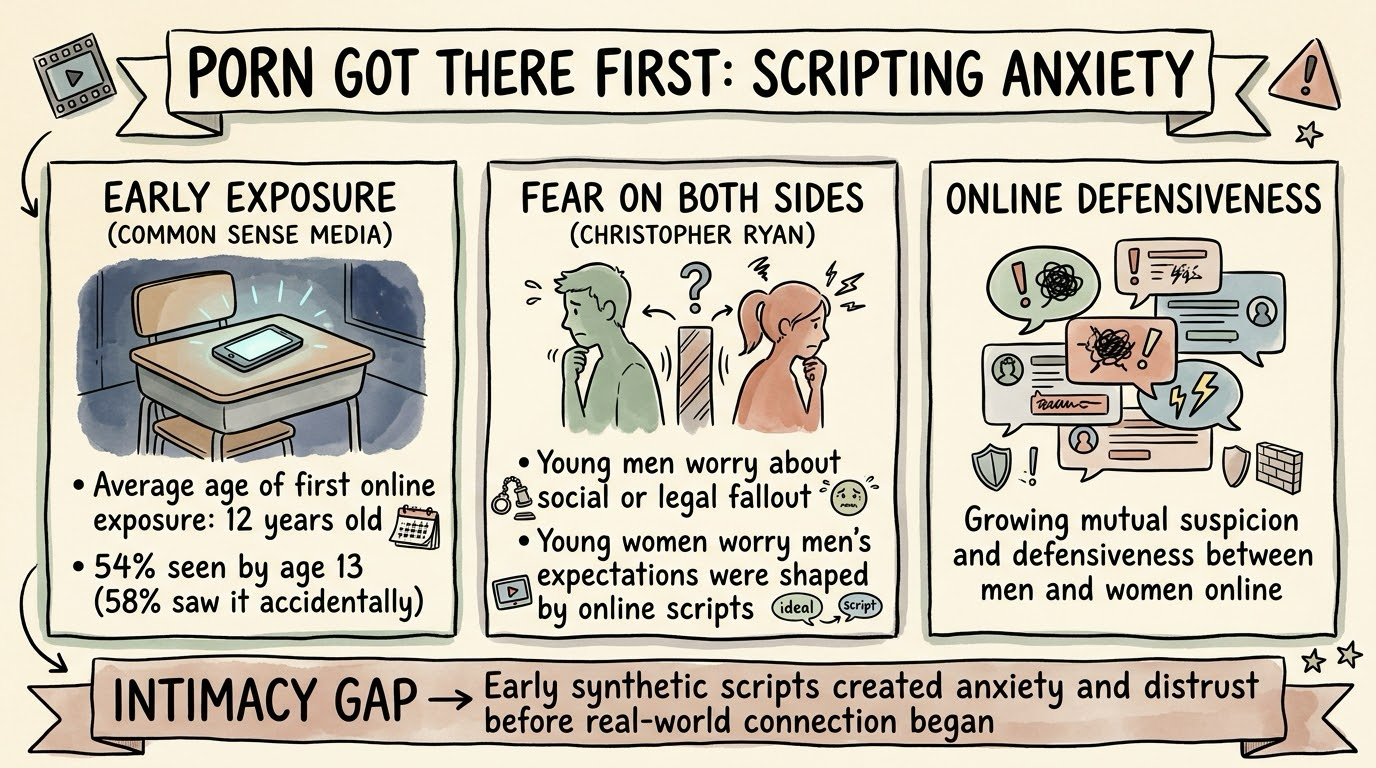
Common Sense Media found that teens first saw online porn at an average age of 12, and 54% had seen it by 13.
58% said they came across it accidentally.
Christopher Ryan argues this has created fear on both sides.
In his telling, many young men worry about social or legal fallout, while many young women worry that men's expectations were shaped by porn.
I can't measure that, but it fits a broader pattern of men and women growing more suspicious of each other online.
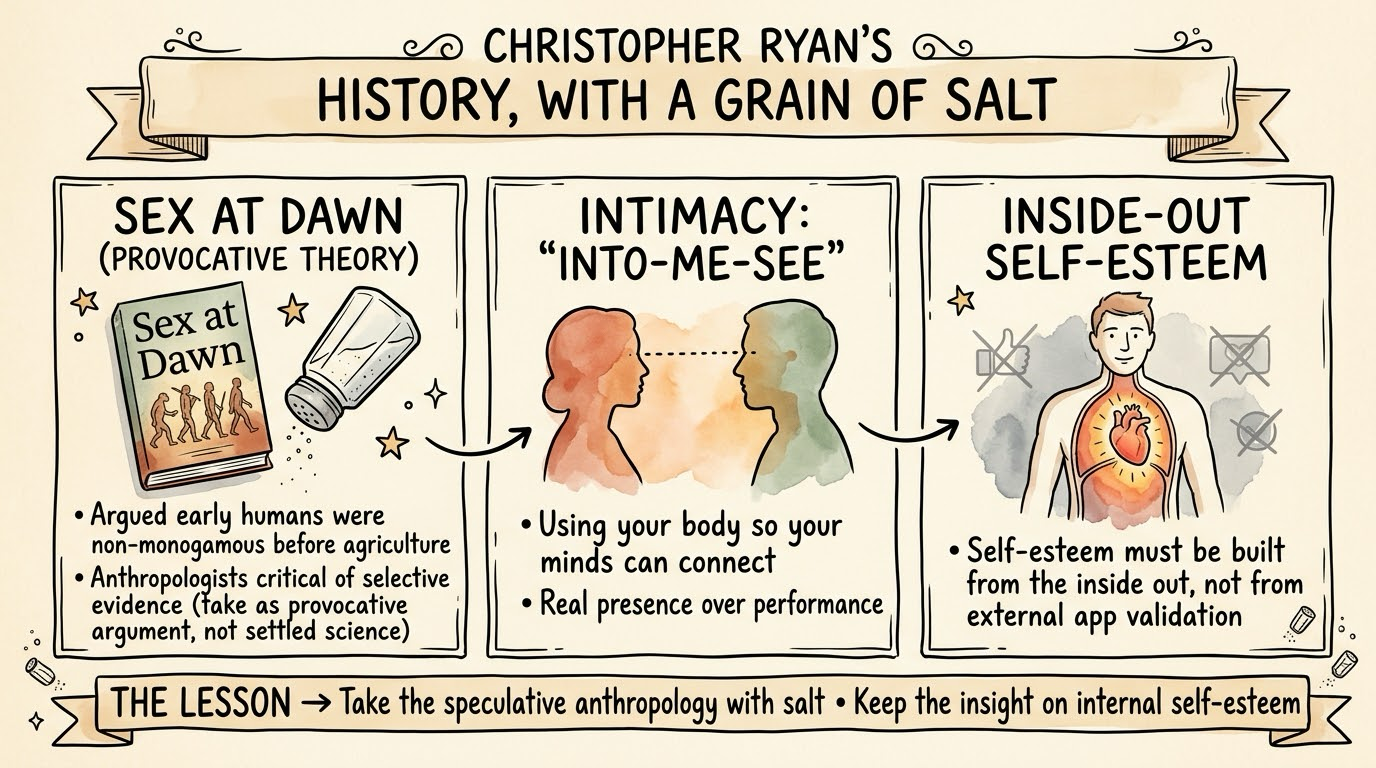
Christopher Ryan's History, With A Grain Of Salt
Ryan co-wrote Sex at Dawn, which argues that early humans were far less monogamous than we assume and that agriculture and private property changed that.
It's a popular book, but most academic reviewers were critical, with anthropologists accusing it of selective use of evidence.
So I'd take his history lesson as a provocative argument rather than settled science.
His advice is easier to agree with.
He defines intimacy as "into-me-see," and shares his wife's line that real sex is about "using your body so your minds can connect."
He also argues that self-esteem has to be built from the inside out, which I think applies far beyond dating.
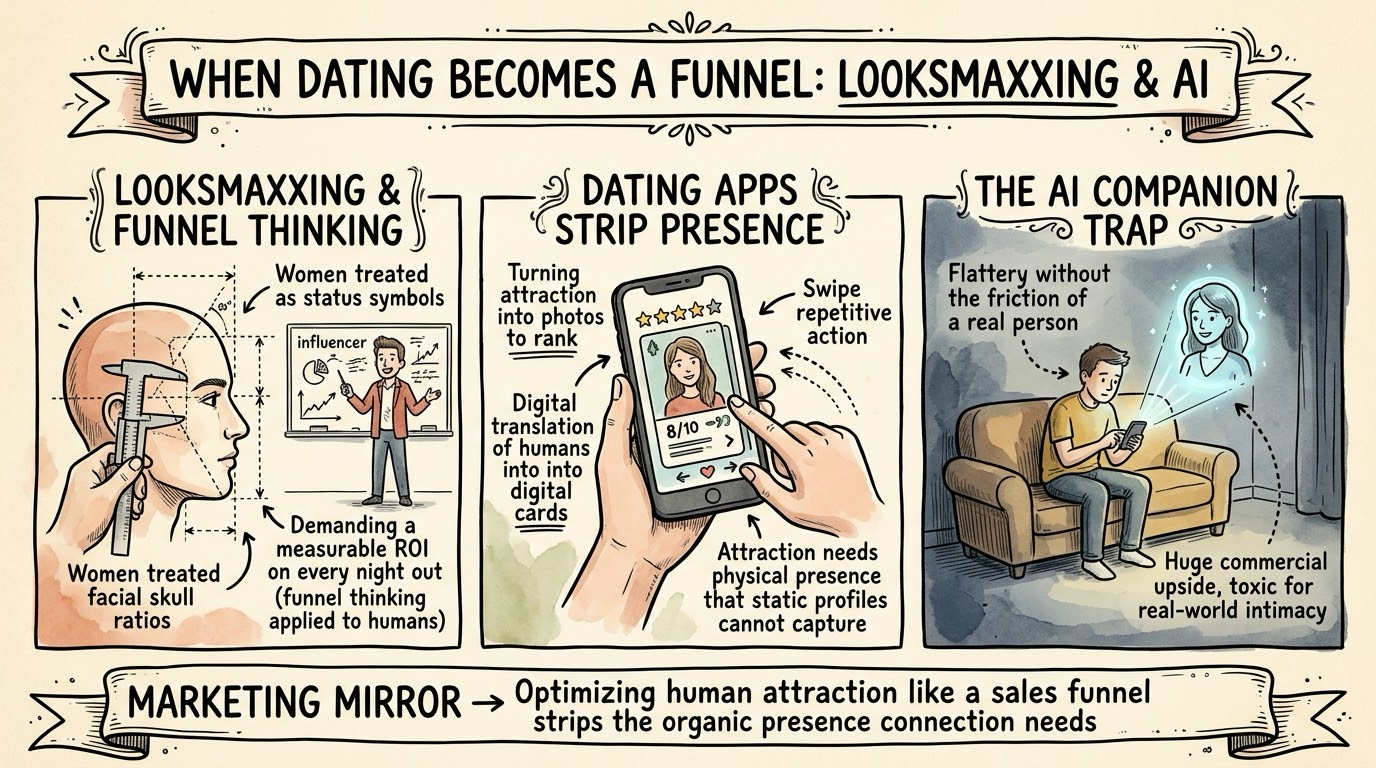
When Dating Becomes A Funnel
The looksmaxxing segments were hard to watch as a marketer.
The influencers in the episode talk about women as status symbols, rate faces by skull ratios and want a measurable return on every night out.
That's funnel thinking applied to people.
Dating apps encourage some of the same habits, turning attraction into a stream of photos to rank and swipe.
Ryan argues that attraction depends heavily on presence, which a static profile can't capture.
I've argued that Meta should build for human-to-human connection as feeds fill with AI content, and this episode made that feel more urgent.
Ryan's biggest warning is about AI companions that flatter users without any of the friction of a real person.
That's a product that could do very well commercially, and I think it would make this problem worse.
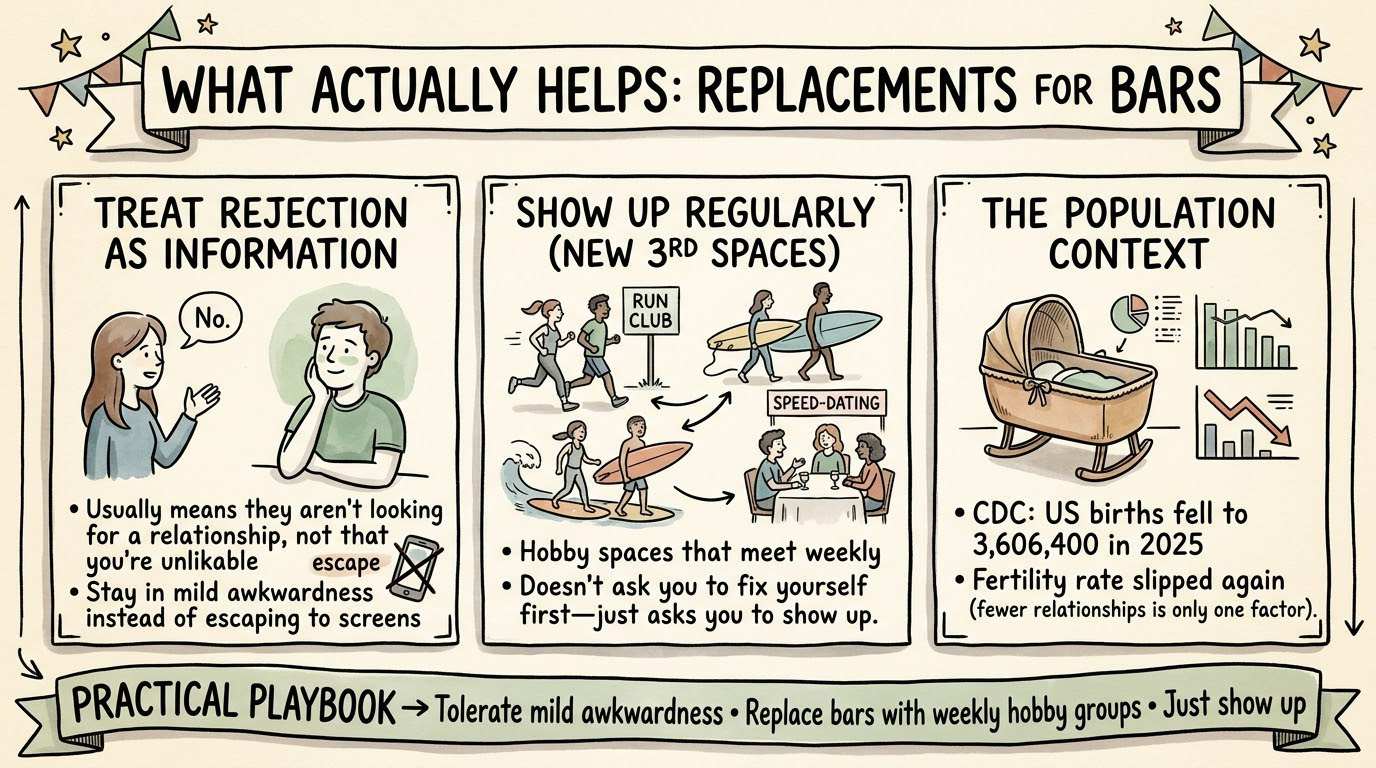
What Actually Helps
Amanda's advice is the most practical part of the episode.
She suggests treating rejection as information, since it usually means the other person isn't interested in a relationship, not that you're unlikable.
She encourages people to stay in mildly awkward moments instead of escaping into their phones.
And she points to hobby-based spaces like run clubs, surfing groups and speed-dating events as replacements for bars.
I like this answer because it doesn't ask anyone to fix themselves first.
It asks them to show up somewhere regularly.
The population angle is real too, but I'd be careful with it.
US births fell to 3,606,400 in 2025, and the fertility rate slipped again.
Fewer relationships is only one of many explanations for that.
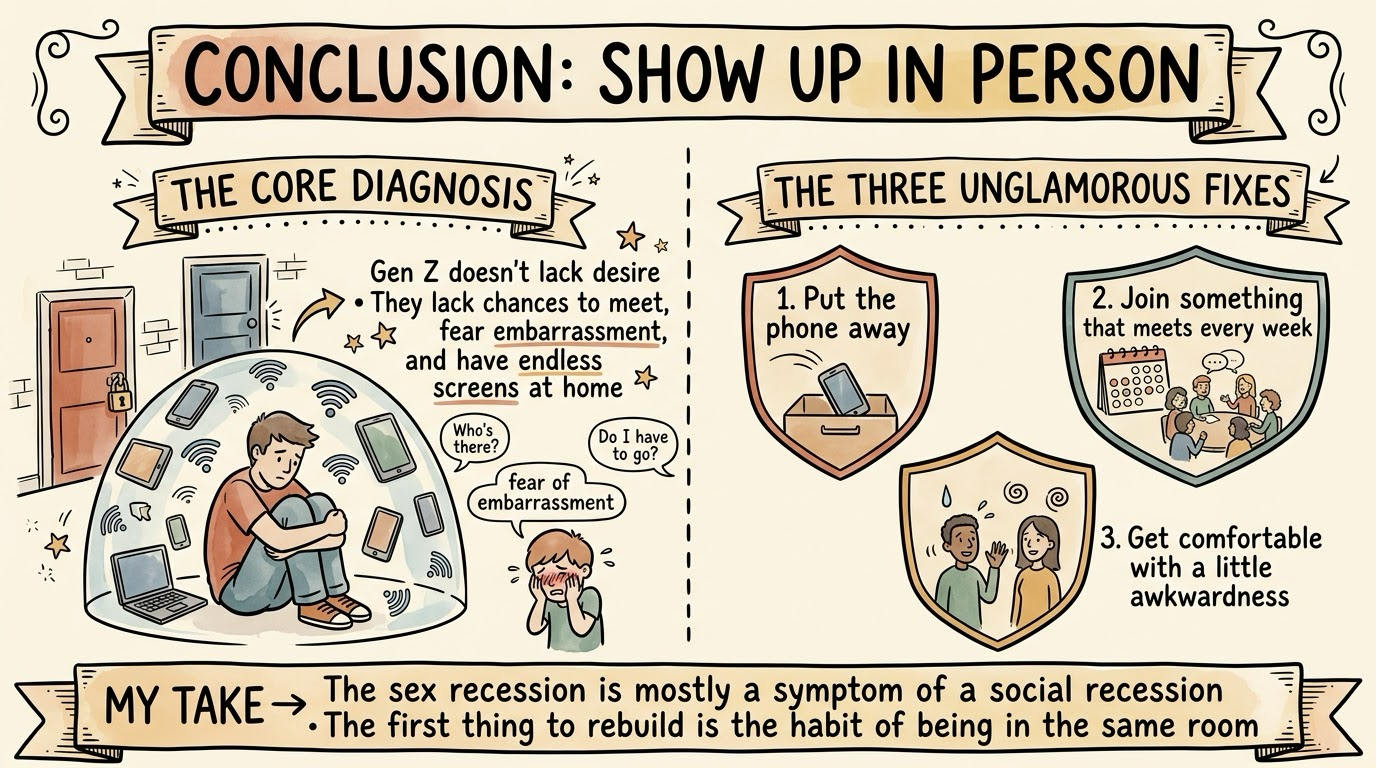
Conclusion: Show Up In Person
I don't think Gen Z has a problem with desire.
I think it has fewer chances to meet people, more reasons to fear embarrassment and endless options to stay home with a screen.
The fixes are unglamorous: put the phone away, join something that meets every week and get used to a little awkwardness.
Platforms can help by building for real meetups rather than endless scrolling.
My Take: The sex recession is mostly a symptom of a social recession, and the first thing to rebuild is the habit of being in the same room.
Sources
Pages I opened for the facts in this post:
- Institute for Family Studies: The sex recession
- Nuance Pill: Sexual activity in the 2024 GSS
- YPulse: The Gen Z sex recession is real but complicated
- Marginal Revolution: The end of Friday nights with friends
- Axios: Gallup on drinking
- CalMatters: Meta's $17 billion settlement
- Common Sense Media: Teens and pornography
- Wikipedia: Sex at Dawn
- CDC: US births in 2025