DeSantis vs. Newsom: The Florida Model vs. The California Machine
We assume a DeSantis and Newsom presidential election would be a standard political debate. The reality is that this matchup is a brutal marketing war between two entirely different economic operating systems competing for capital.
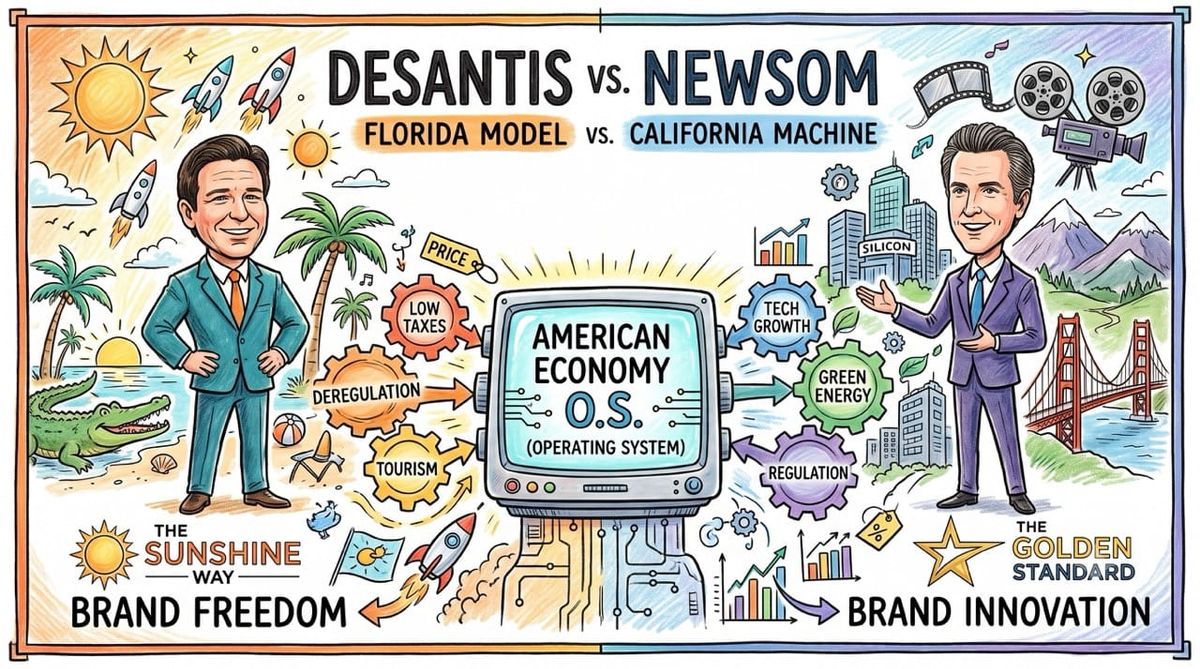
A presidential race between these two governors is the ultimate corporate marketing battle to decide the future operating system of the American economy.
Inspiration: Analyzing a hypothetical presidential showdown between Ron DeSantis and Gavin Newsom. Realizing this matchup is a fascinating study in contrasting brand identities and macroeconomic theories rather than just typical political theater.
The Competing Operating Systems
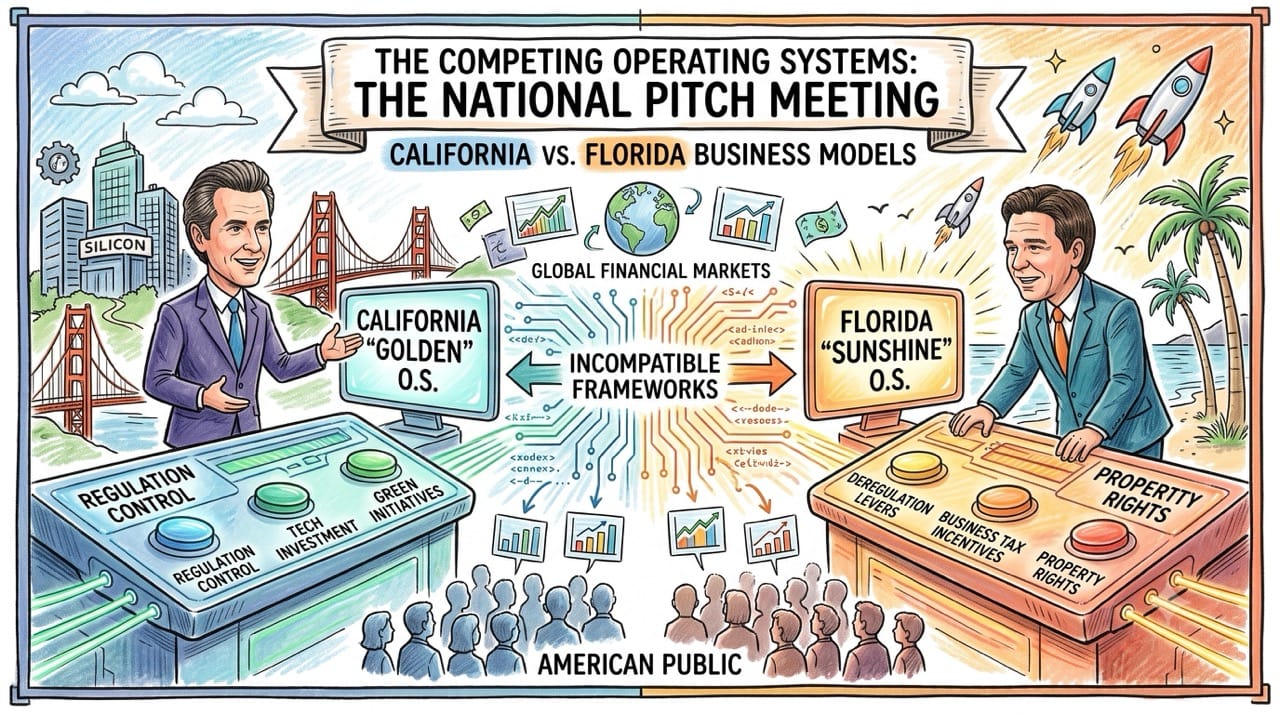
California and Florida represent the two most influential competing business models in the country.
A debate between their governors is not a conversation about standard social policy, but essentially a national pitch meeting for how to properly run the domestic economy.
They are actively pitching two completely incompatible macroeconomic frameworks to the American public and the global financial markets.
The California Enterprise
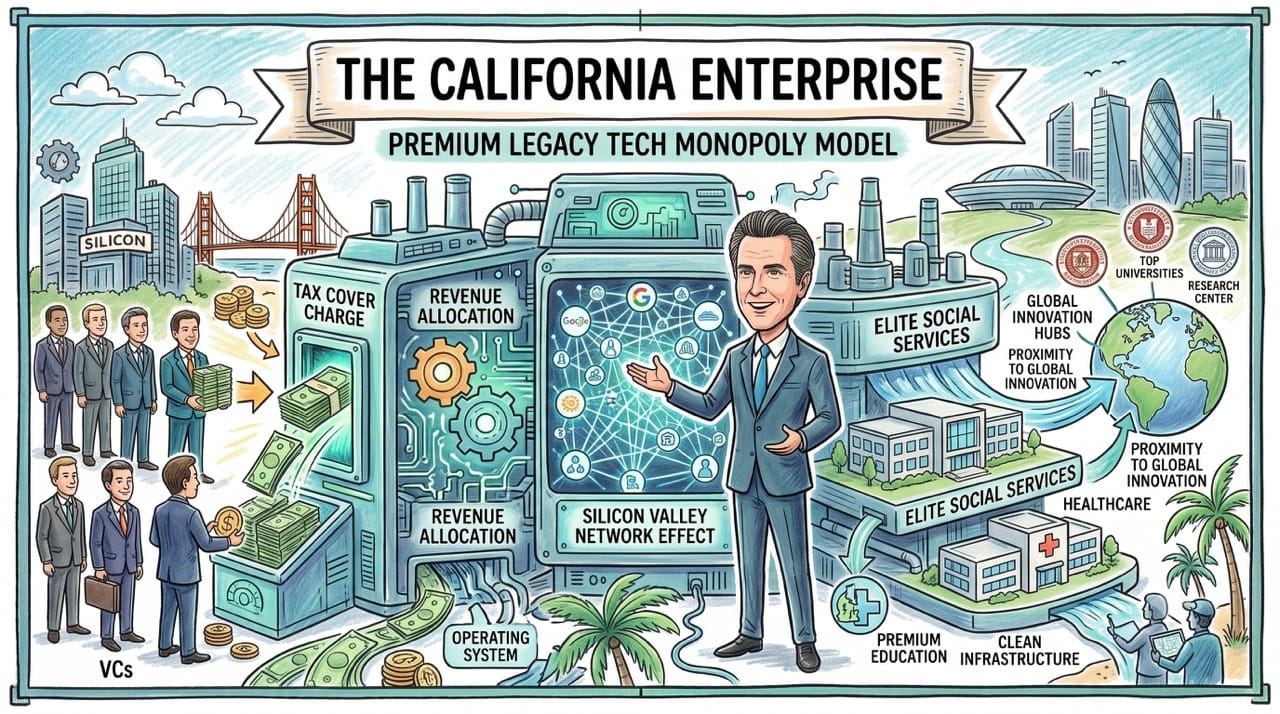
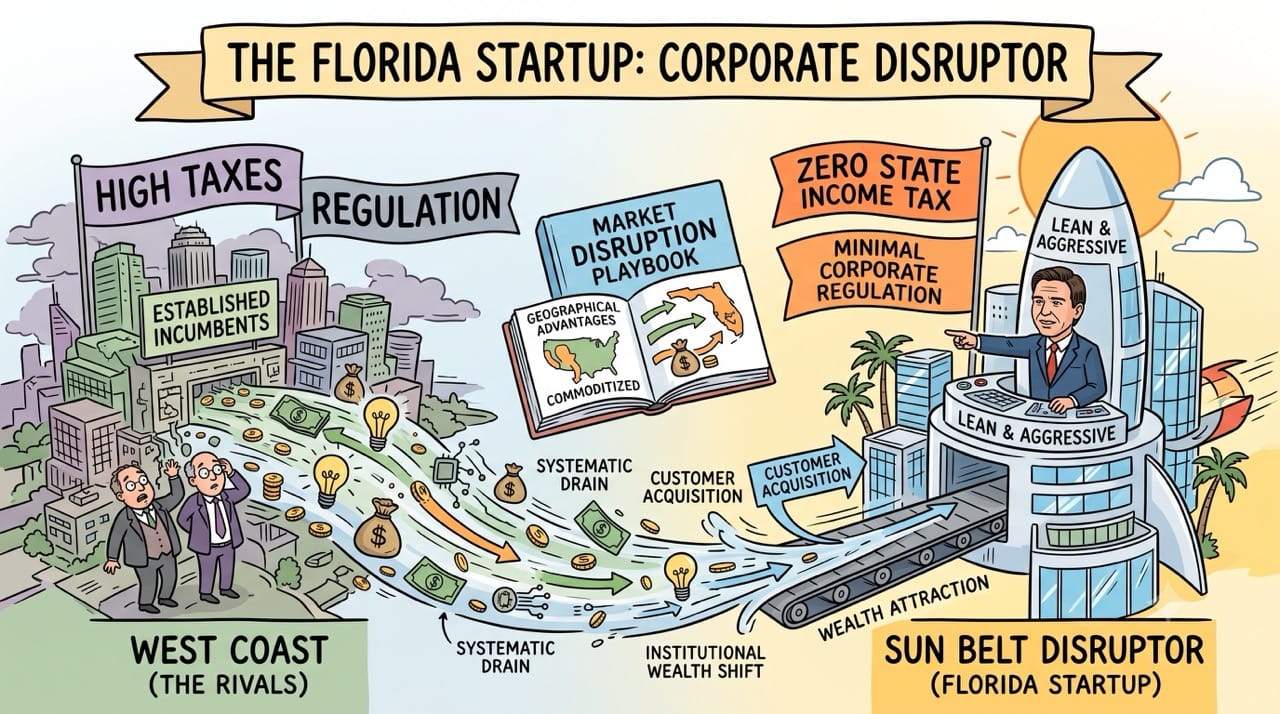
Newsom operates his state exactly like a premium legacy technology monopoly.
He charges incredibly high taxes but promises elite social services and absolute proximity to global innovation hubs in return.
This model relies entirely on the assumption that the Silicon Valley network effect is so deeply entrenched that elite venture capitalists will gladly pay an exorbitant "cover charge" just to remain inside the ecosystem.
The Florida Startup
DeSantis positions his state as the lean, aggressive corporate disruptor.
He weaponizes zero state income tax and minimal corporate regulation as a direct customer acquisition strategy to systematically drain wealthy residents and active tech capital from his rivals.
It is a classic market disruption playbook aimed at commoditizing the geographical advantages of the West Coast and aggressively pulling institutional wealth toward the Sun Belt.
The Cultural Top of Funnel
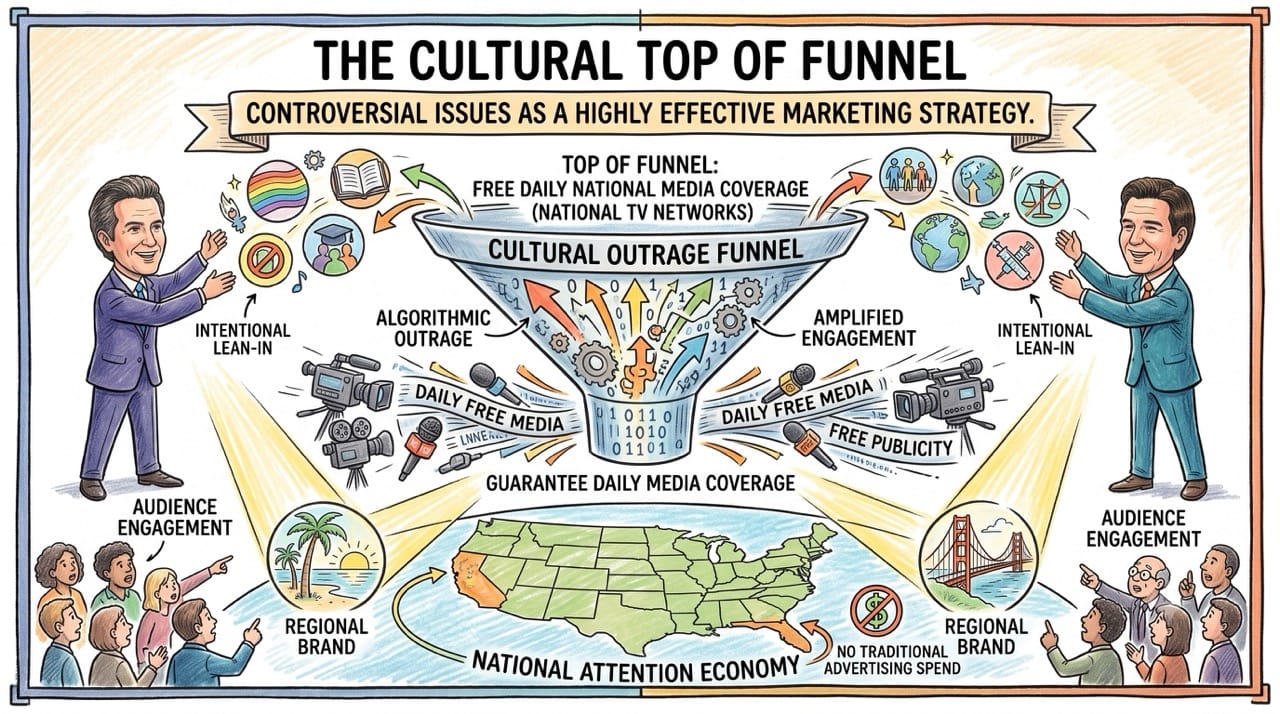
Both executives brilliantly use cultural outrage as a highly effective top of funnel marketing strategy.
They intentionally lean into controversial social issues not just for ideological purity, but to guarantee free, daily media coverage on national television networks.
This algorithmic outrage keeps their respective regional brands at the absolute center of the national attention economy without spending a single dollar on traditional corporate advertising.
The Venture Capital Divide
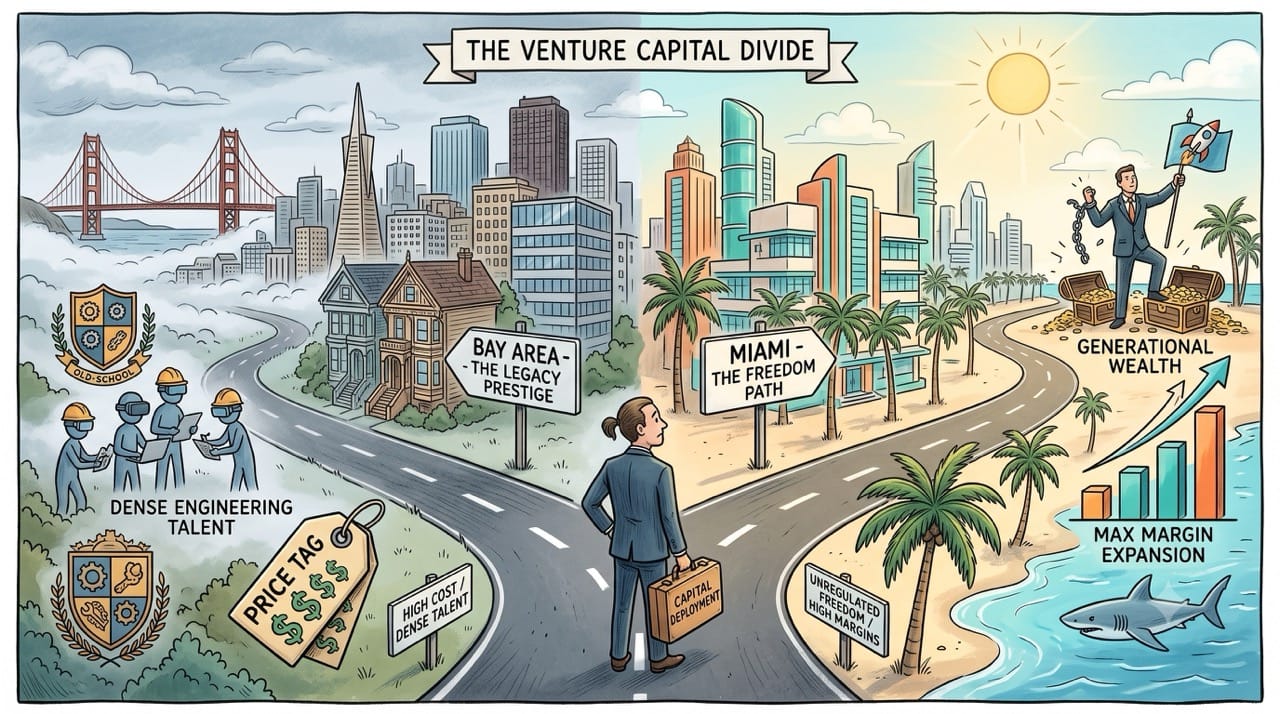
This specific race forces the elite technology and financial sectors to make a definitive structural choice regarding capital deployment.
Venture capitalists and tech founders are being forced to decide if the legacy prestige and dense engineering talent of the Bay Area actually justify the premium price tag.
The alternative is accepting that the unregulated corporate freedom of Miami is the true path to generational wealth and maximum margin expansion.
The Authenticity Bottleneck
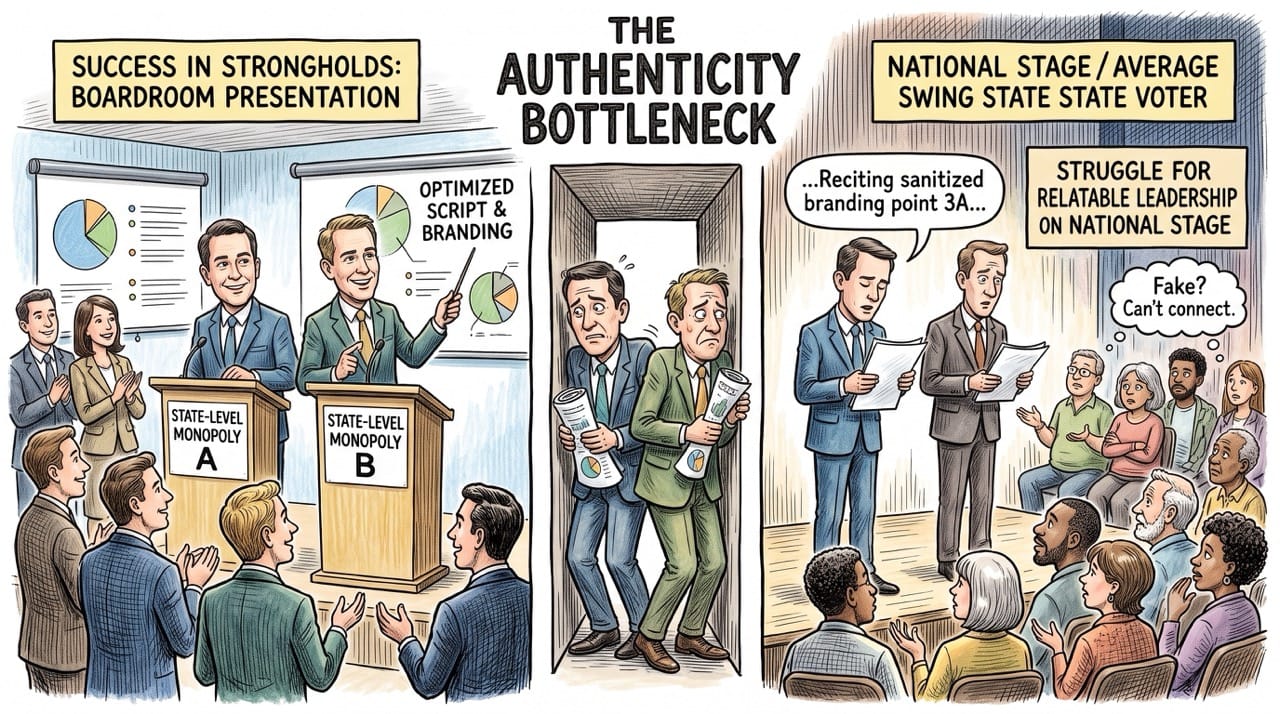
Both candidates occasionally struggle with appearing genuinely relatable to the average swing state voter outside of their respective strongholds.
Because their economic platforms and media strategies are so rigidly optimized for their specific target demographics, they can come across as highly polished corporate executives reciting a boardroom presentation.
They excel at managing their state-level monopolies but often struggle to translate that highly sanitized branding into natural, everyday leadership on a national stage.
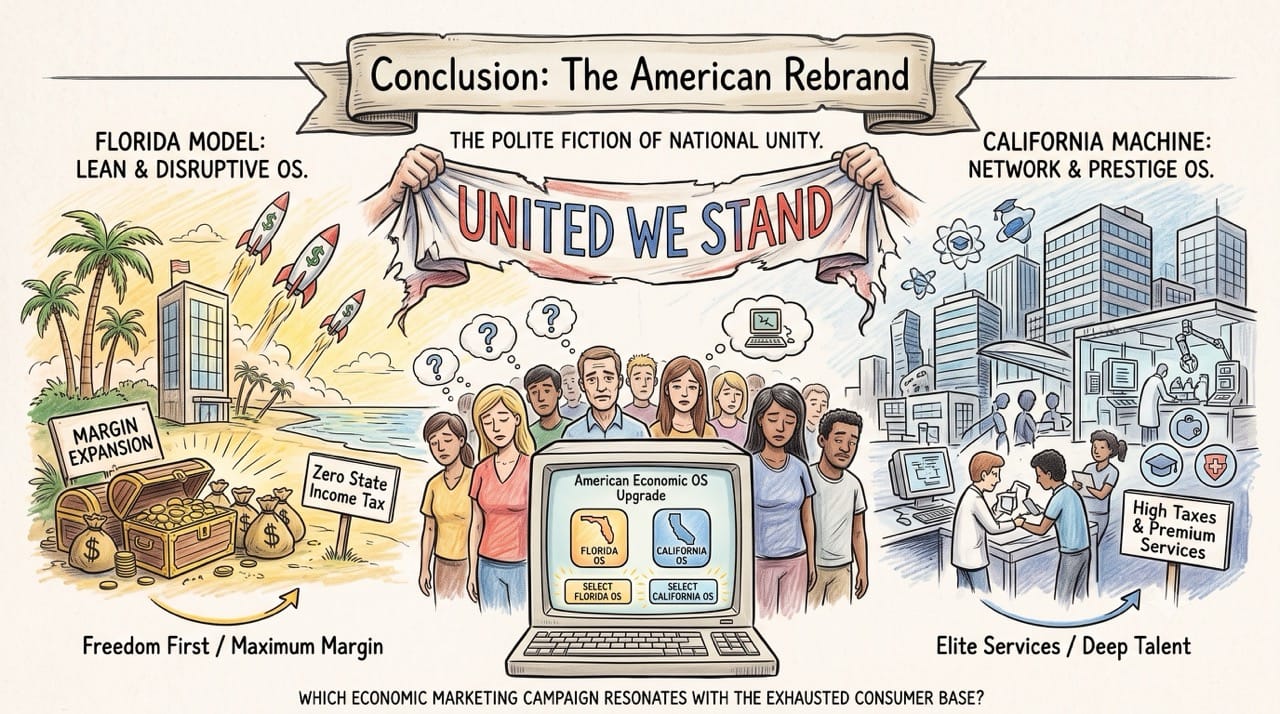
Conclusion: The American Rebrand
This matchup strips away the polite fiction of national unity to reveal two entirely different visions of commercial success and capital allocation.
The ultimate winner will simply prove which economic marketing campaign resonates better with an exhausted consumer base actively looking to upgrade their national operating system.