
Amazon Leo & The Future of Connectivity
We assume the low earth orbit space race is simply about bringing broadband to rural farmhouses. The reality is that Amazon's upcoming 5G satellite network is a brilliant infrastructure play designed to own the invisible tollbooth between your smartphone and the cloud.
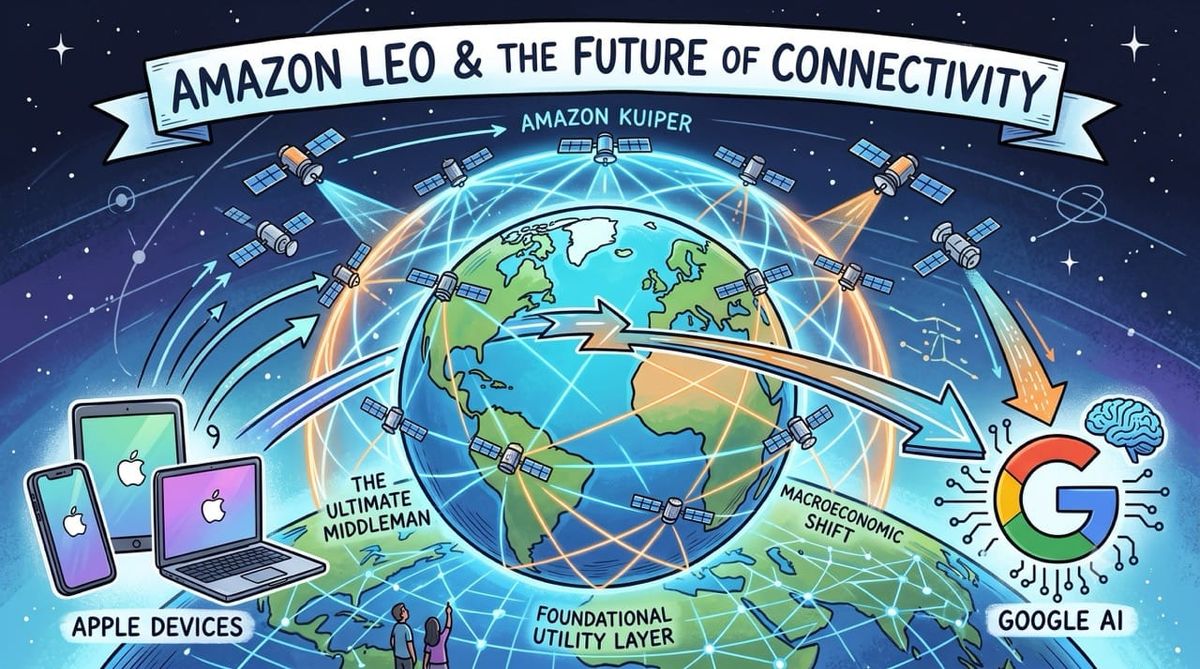
Project Kuiper was not just about competing with Starlink. It is a strategic masterstroke to become the ultimate middleman connecting Apple's hardware directly to Google's artificial intelligence.
Inspiration: Analyzing the upcoming rollout of Amazon's Project Kuiper and the broader 5G direct-to-device satellite race. Realizing this represents a massive macroeconomic shift where Amazon positions itself as the foundational utility layer for the next generation of mobile computing.
The Direct-to-Device Transition
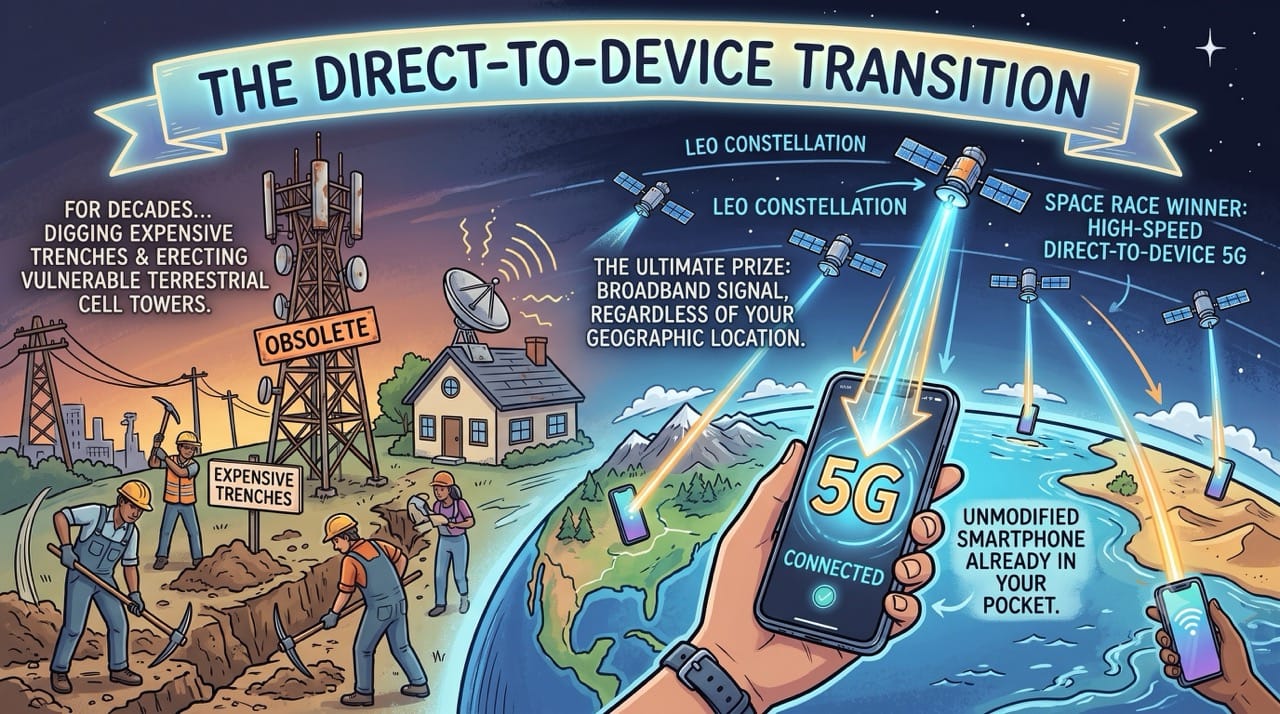
For decades, the global telecommunications industry relied on digging expensive trenches and erecting highly vulnerable terrestrial cell towers.
But the architecture of mobile connectivity is experiencing a permanent structural shift toward low earth orbit.
The ultimate prize in this new space race isn't selling a bulky receiver dish to a homeowner.
It is achieving high-speed, direct-to-device 5G connectivity, beaming a reliable broadband signal straight to the unmodified smartphone already sitting in your pocket, regardless of your geographic location.
The Amazon Middleman Playbook
When analyzing Amazon, you have to remember they rarely care about winning the flashy consumer hardware battle.
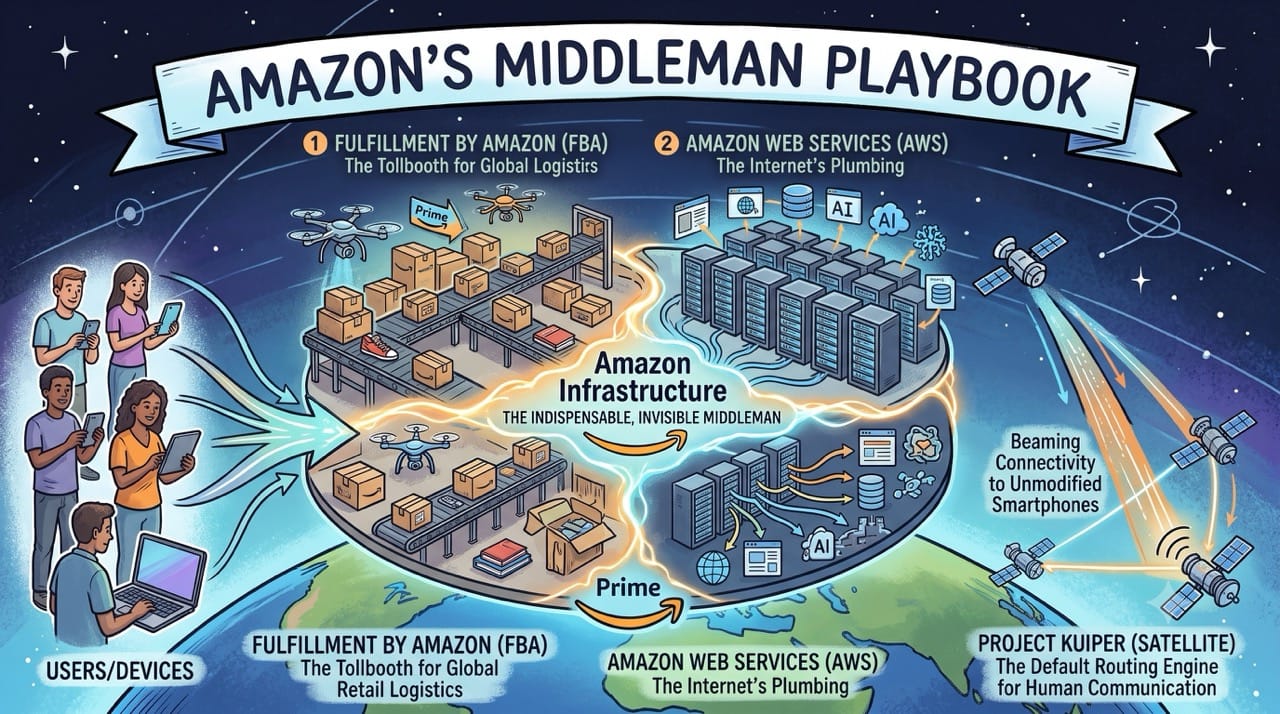
Their entire corporate DNA is built around becoming the indispensable, invisible middleman for global commerce.
Just look at their historical footprint. They built Fulfillment by Amazon (FBA) to become the tollbooth for global retail logistics, and they built Amazon Web Services (AWS) to become the underlying plumbing for the modern internet.
Project Kuiper is simply the exact same infrastructure playbook applied to global telecommunications. They want to be the default routing engine for human communication.
The 5G Utility Squeeze
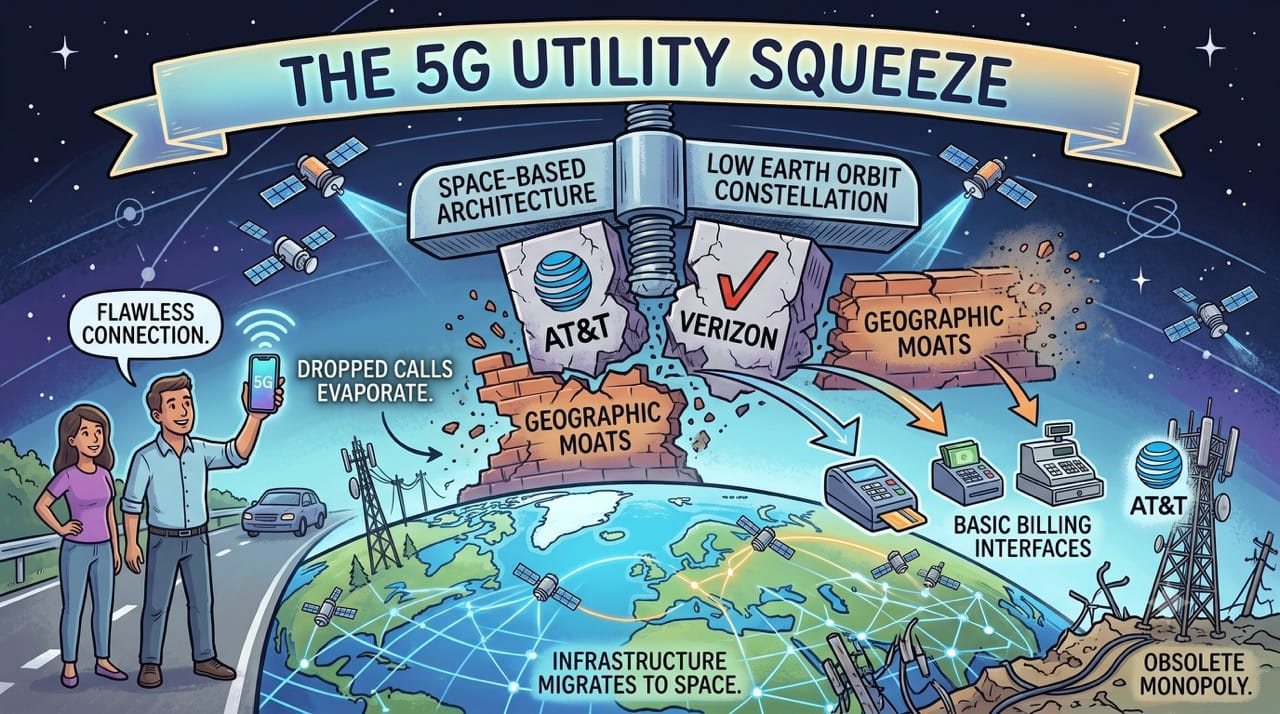
This space-based architecture presents a terrifying existential threat to legacy telecom monopolies like AT&T and Verizon.
Traditional carriers spent billions acquiring terrestrial spectrum and building cell towers, effectively trapping consumers in regional monopolies.
But as satellite 5G comes online, those geographic moats evaporate instantly.
Why would a consumer tolerate dropped calls on a highway when a low earth orbit constellation guarantees a flawless, uninterrupted connection anywhere on the planet?
The legacy carriers are actively being commoditized into basic billing interfaces while the actual network infrastructure migrates to space.
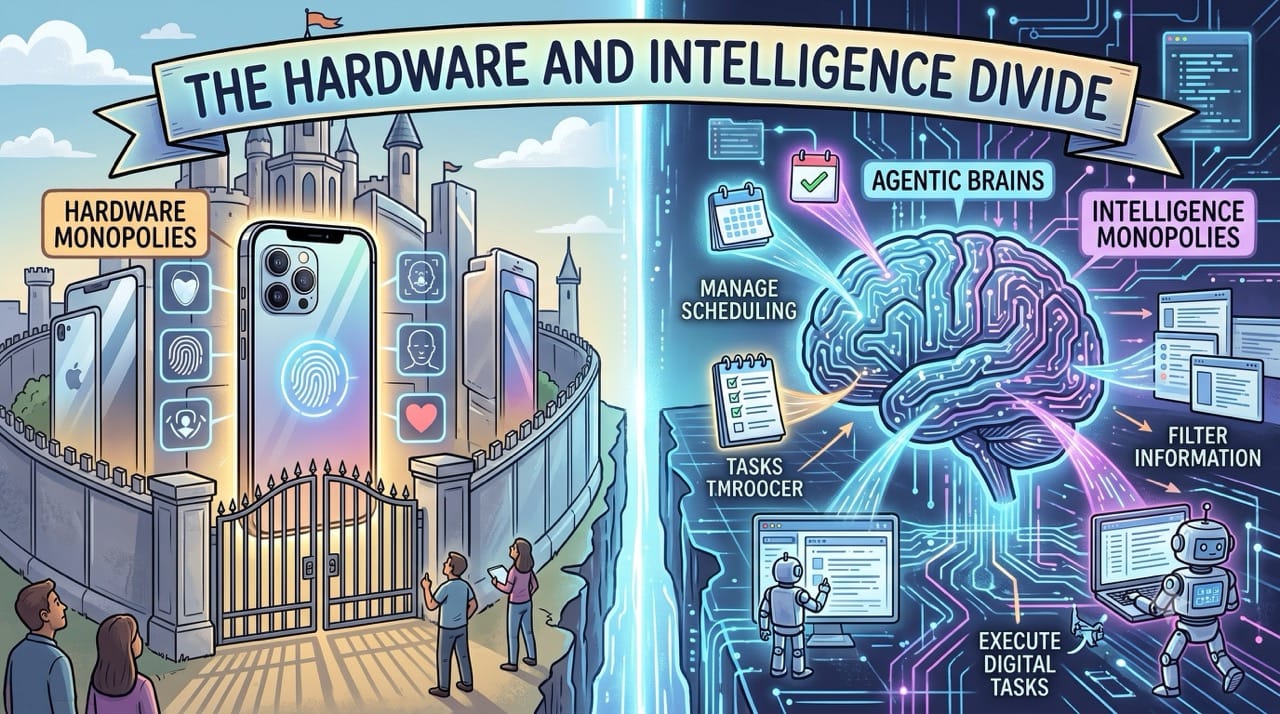
The Hardware and Intelligence Divide
To understand why Amazon is doing this, we have to look at the current power dynamic in the mobile market.
- The Hardware Monopolies: Companies like Apple successfully monopolized the physical entry point. The iPhone is the premium, gated interface that consumers trust with their biological data and daily attention.
- The Intelligence Monopolies: Search giants like Google are rapidly monopolizing the artificial intelligence layer. They are building the agentic brains that will soon manage our schedules, filter our information, and execute complex digital tasks.
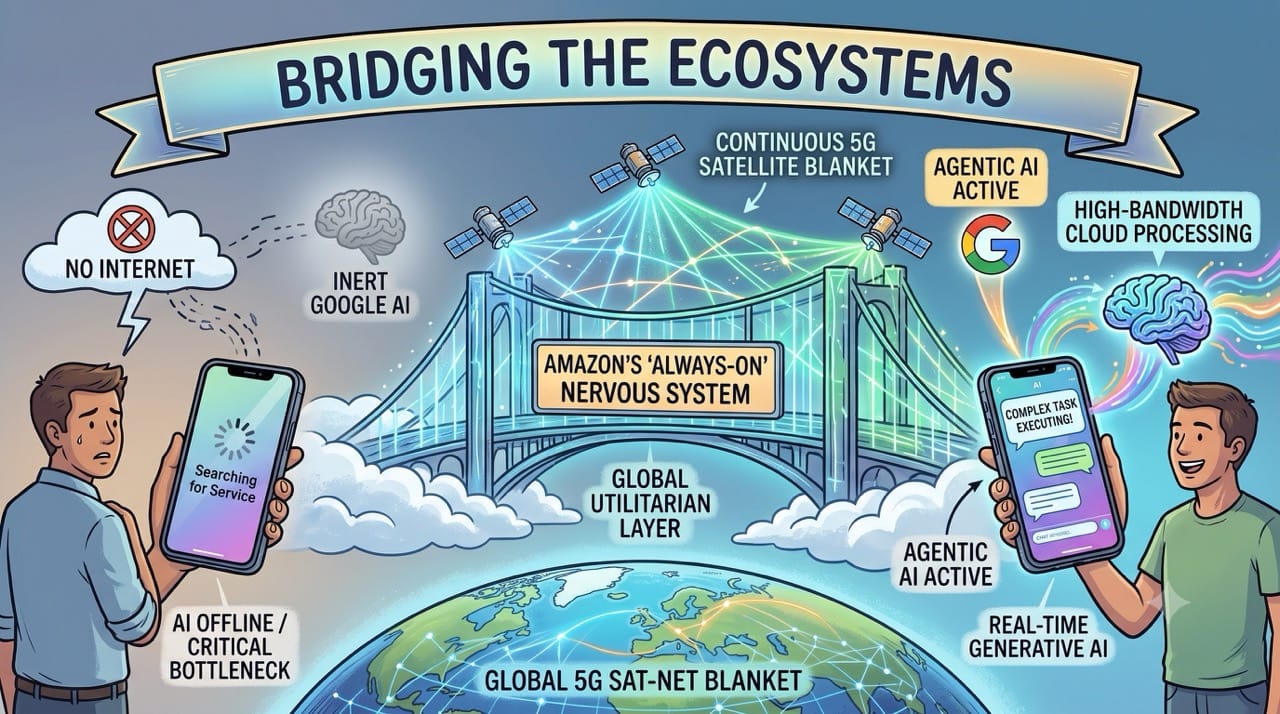
Bridging the Ecosystems
Here is the critical macroeconomic bottleneck: Google's artificial intelligence is functionally useless on an iPhone if the device loses internet connectivity.
True agentic AI requires a continuous, high-bandwidth connection to the cloud to process complex generative tasks in real-time.
This is exactly where Amazon brilliantly inserts itself into the value chain. By blanketing the globe in 5G satellites,
Amazon guarantees the "always-on" nervous system required to bridge Apple's hardware with Google's software.
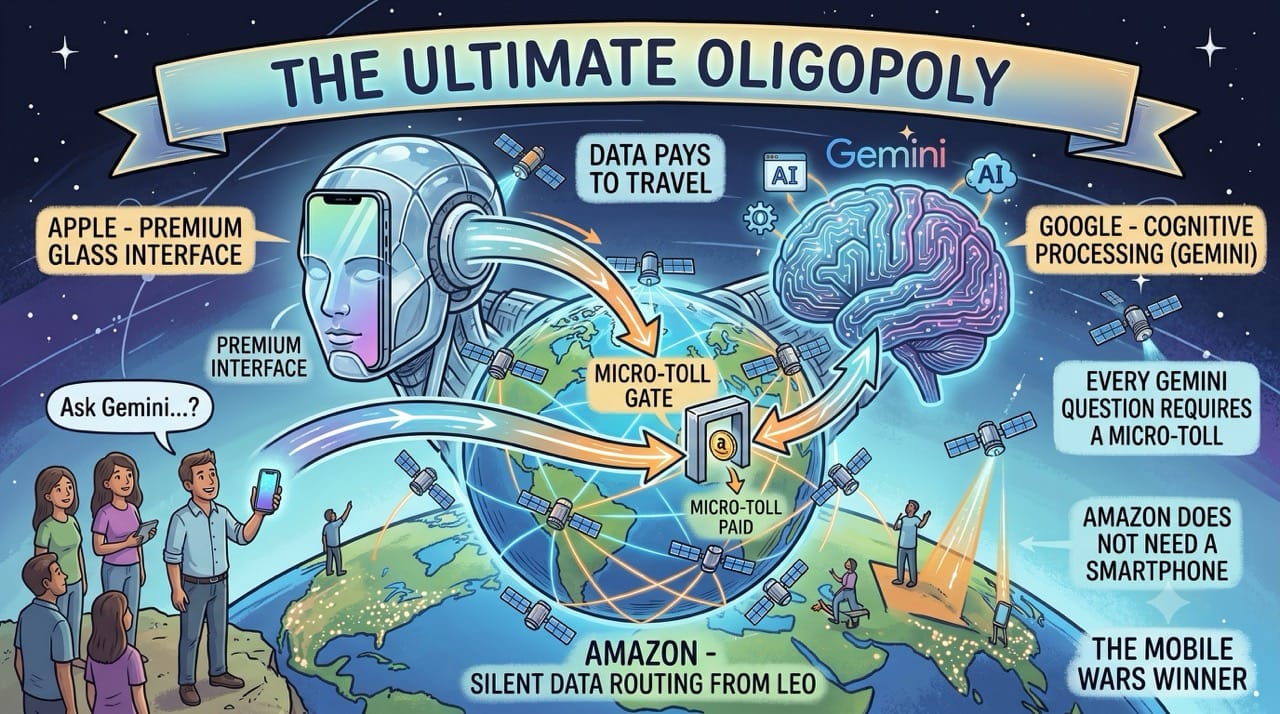
The Ultimate Oligopoly
We are watching the formation of a highly specialized, three-headed tech oligopoly.
Apple builds the premium glass interface, Google provides the underlying cognitive processing, and Amazon silently routes the data between them from low earth orbit.
Amazon does not need to build a successful smartphone to win the mobile wars.
They just need to ensure that every single time an iPhone user asks Gemini a question, the data has to pay a micro-toll to travel through an Amazon satellite.
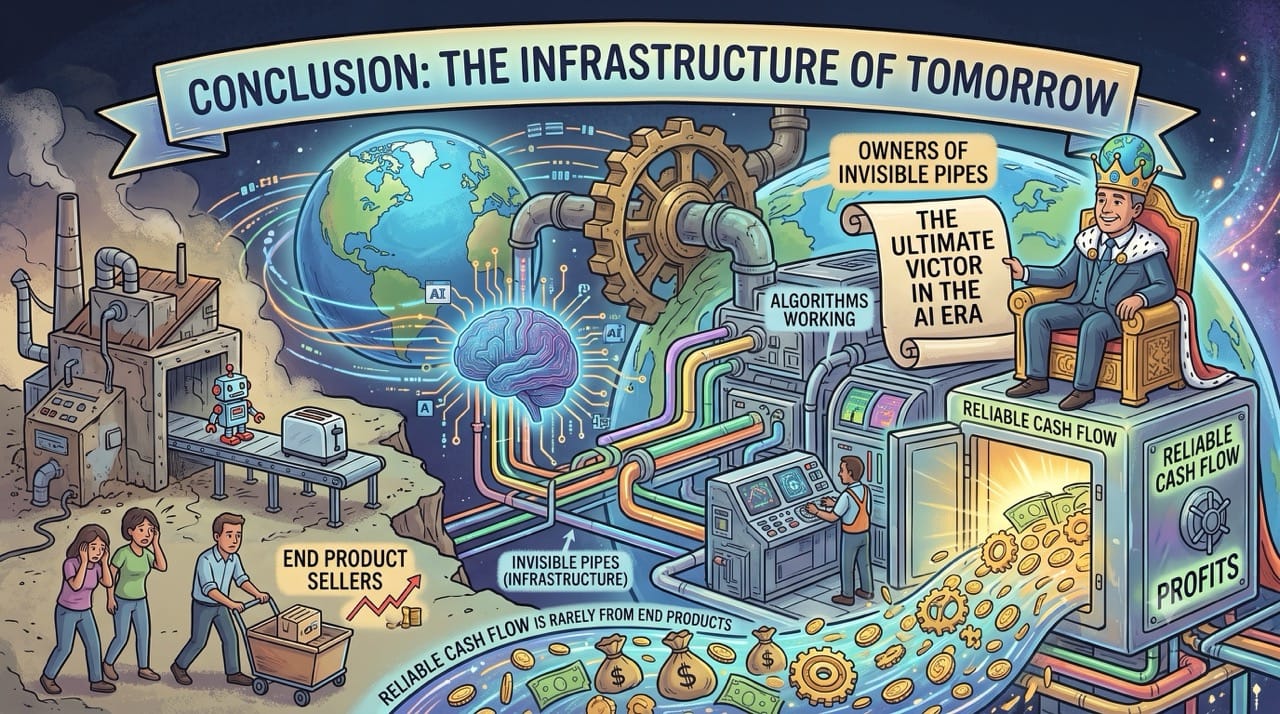
Conclusion: The Infrastructure of Tomorrow
The companies that generate the most reliable cash flow are rarely the ones selling the end product.
The ultimate victor in the artificial intelligence era will simply be the corporate empire that owns the invisible pipes required to make the algorithms work.