AI Monetization & Generational Lag: Why The Best Customers Haven't Been Born Yet
Google's first year had 350 advertisers. AI's first generation is just experimenting. The real money comes from the natives — and costs are collapsing 60x per year to make it possible.
The Pattern No One Talks About
The first generation that a product releases in might not monetize the best, yet the following / younger generation that is native to the platform will use it a lot.
We saw this with Google.
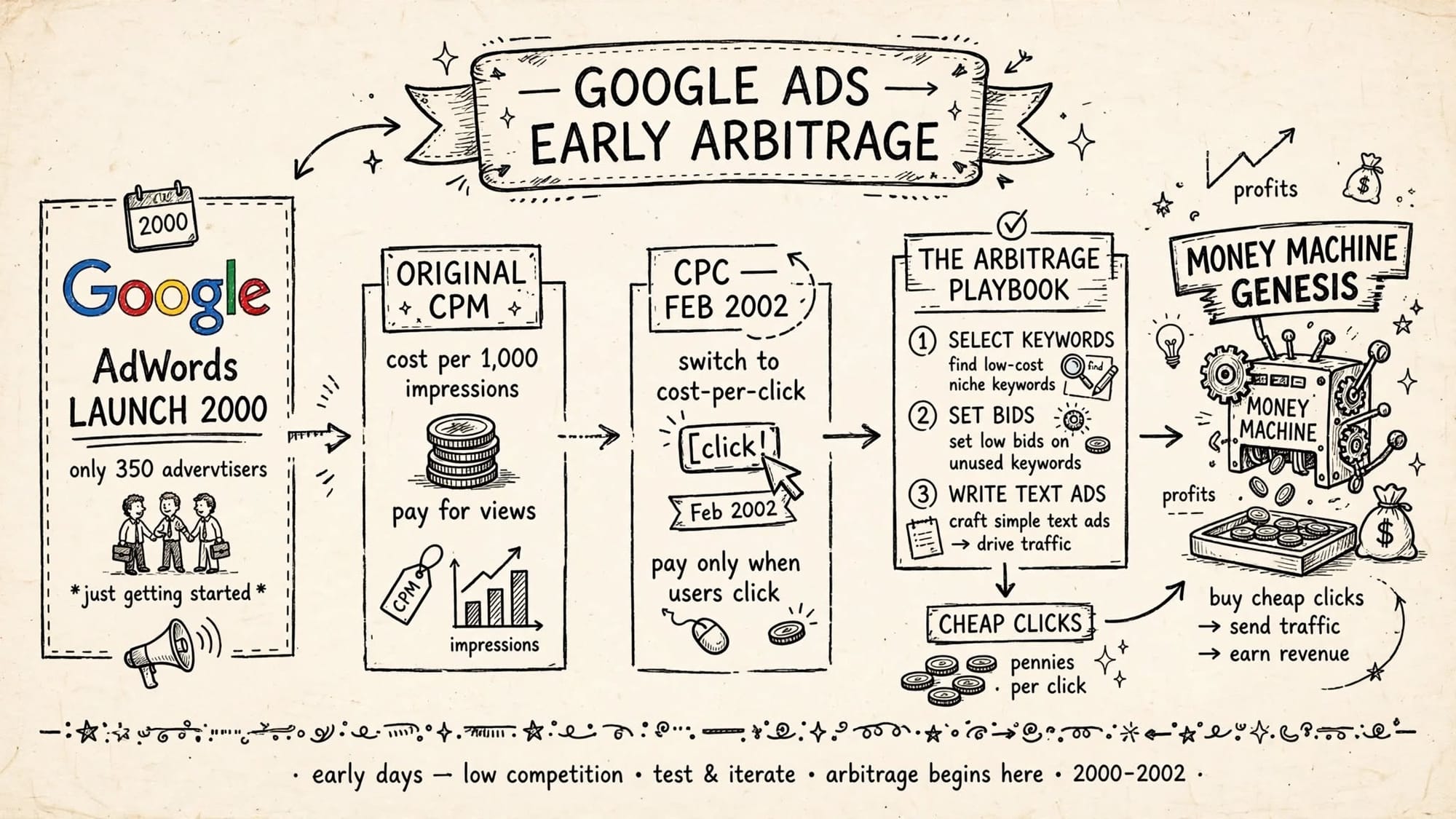
In its original system, ads were sold on a cost per impression basis, rather than cost per click.
The CPC change came later, and AdWords especially took off when it happened.
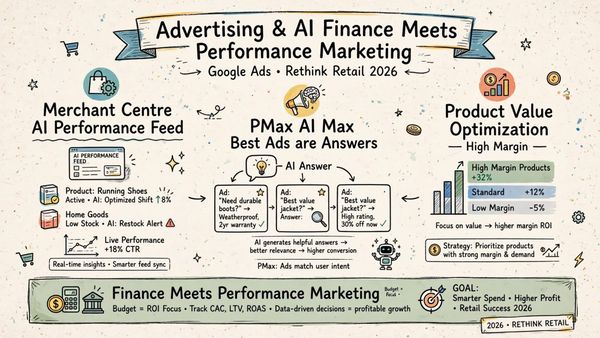
In Google Ads first year it had only 350 advertisers. Model was simple: select keywords, set bids, write text ads, measure conversions.
CPC pricing introduced February 2002.
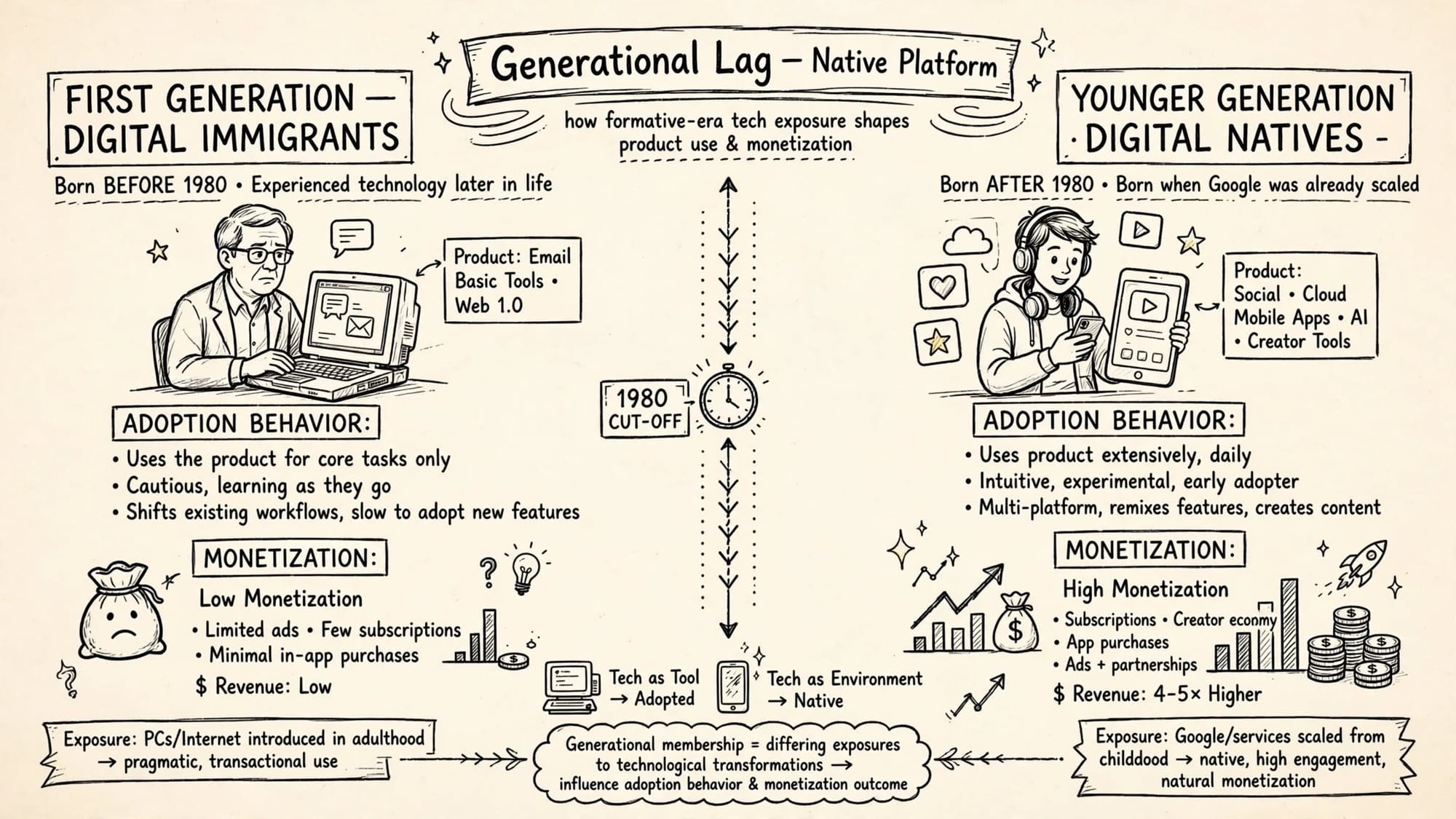
People born after 1980 are digital natives; those born before are digital immigrants.
Generational membership, shaped by differing exposures to technological, economic, and social transformations, may exert a more profound influence on adoption behaviour.
Translation: My dad used Google to search.
My little cousin lives in Google.
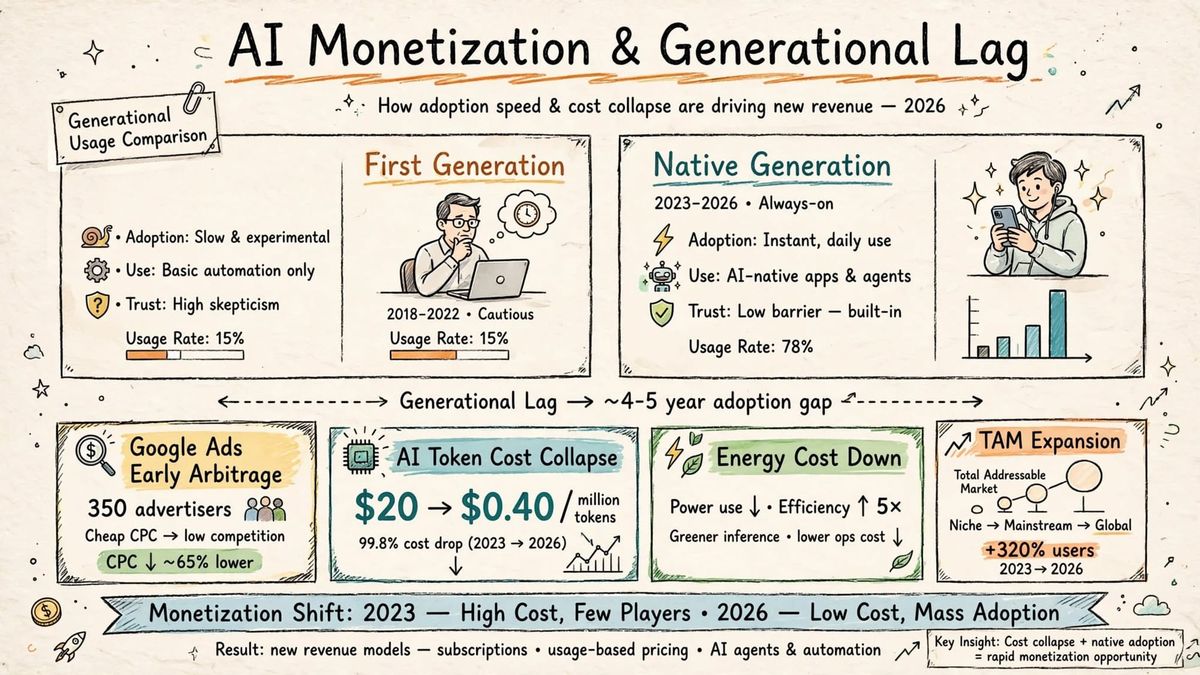
Usage Rate: 15% vs 78%.
Same is happening with AI now. First Generation (2018-2022): Slow & experimental, basic automation only, high skepticism.
Native Generation (2023-2026): Always-on, AI-native apps & agents, low barrier built-in, instant daily use.
Google Ads Arbitrage (And Why AI Is Bigger)
Early Google Ads was an arbitrage: low competition, cheap CPC, ∼65% lower than today, few advertisers knew how to bid. Those who got in early built empires on $0.05 clicks.
AI is the same, but inverted.
Costs are collapsing:
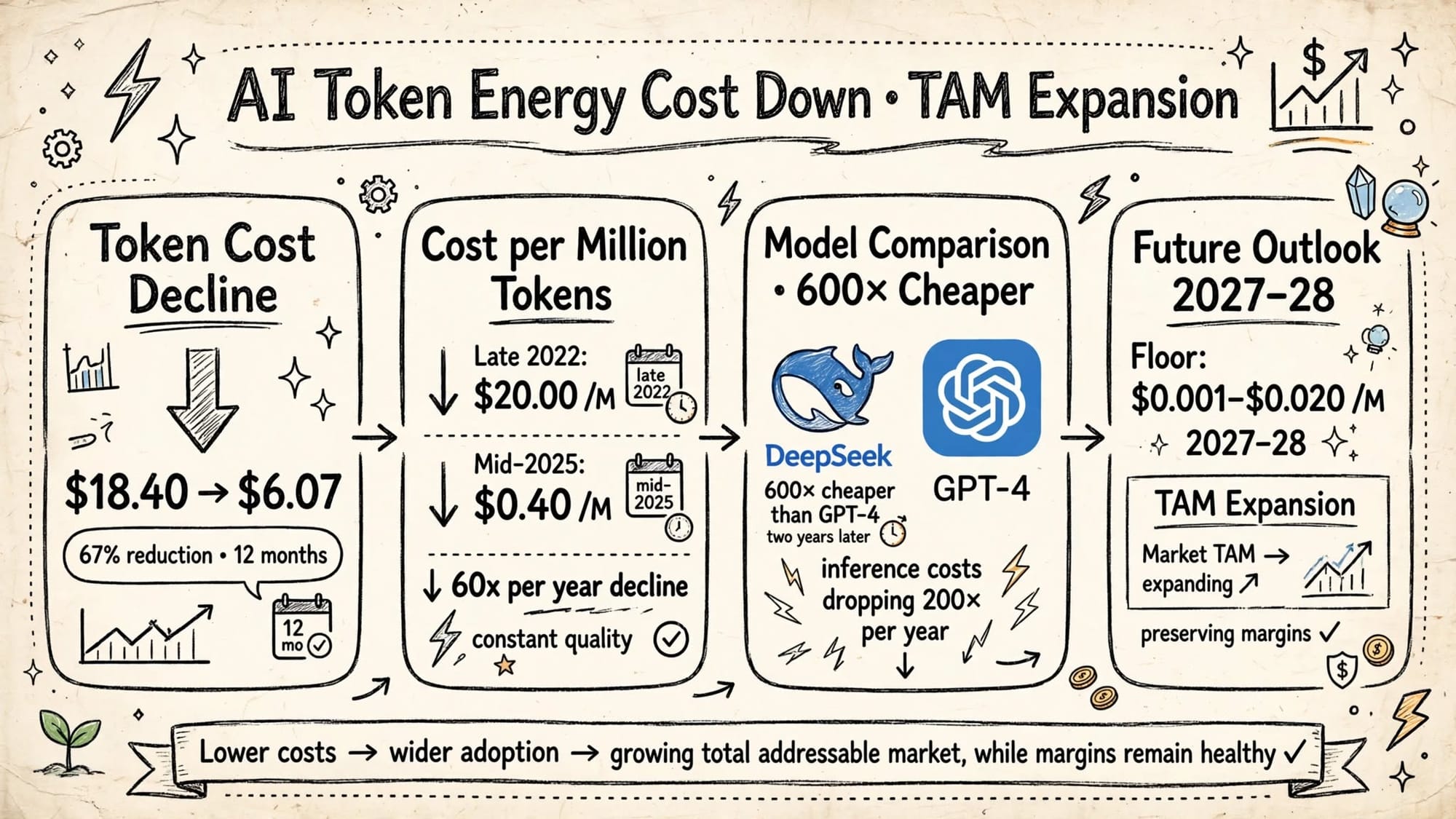
Twelve months ago, blended cost per million tokens averaged $18.40.
As of April 30, 2026, that figure stands at $6.07, a 67% reduction.
Costs have fallen from roughly $20 per million tokens in late 2022 to around $0.40 per million by mid-2025.
The curve: ∼60x/year cost decline at constant quality; DeepSeek was ∼600x cheaper than GPT-4 two years later.
Inference costs dropping at rates approaching 200x per year.
Average output costs fell from around $12 for GPT-3.5 in 2022 to below $2 by 2024.
Floor for commoditized inference is estimated at $0.001–0.020/M tokens by 2027–2028.
My Strategic Take: TAM Expansion While Preserving Margins
This is the magic formula Google never had:
1. Generational Lag = Monetization Lag
First gen experiments, second gen depends. People born when Google already scaled use it 5x more.
Kids born in 2023 when ChatGPT already exists will never know a world without AI agents. Their usage rate won't be 15%, it will be default.
That means monetization scales in future generations, not current.
2. Token + Energy Cost Collapse = Margin Expansion
Google Ads arbitrage was temporary, CPCs rose as competition rose.
In AI, token and energy costs will go down 60x per year. So even as you lower price to acquire natives, your margin stays healthy.
Lower costs → wider adoption → growing total addressable market, while margins remain healthy.
3. Result: New Revenue Models
2023: High Cost, Few Players, subscription.
2026: Low Cost, Mass Adoption, usage-based pricing, AI agents & automation, +320% users 2023→2026.
Opportunities to monetize and expand TAM while preserving margins:
- Agentic workflows: 1,000x tokens per task vs chat, but cost 600x cheaper = you can charge per outcome, not per token
- Vertical agents: Legal, health, finance natives will pay $50/mo not $20/mo because AI is their OS
- Energy arbitrage: Greener inference + 5x efficiency = lower ops cost → pass savings to users → more usage
Google's story: 350 advertisers → 10M advertisers over 20 years.
AI's story: 15% experimental usage → 78% native daily use in 4 years, with cost dropping 99.8%.
The best time to buy Google Ads was 2002.
The best time to build AI distribution is now, before the native generation hits buying power.
Cost collapse + native adoption = rapid monetization opportunity.
We are still in first generation.