Atoms and the UberEats Merger: The Return of Travis Kalanick
We assume Uber will dominate the next decade purely through autonomous ride hailing. The brutal reality of robotaxi competition means their true profit engine relies entirely on acquiring Travis Kalanick and his robotic food startup Atoms.
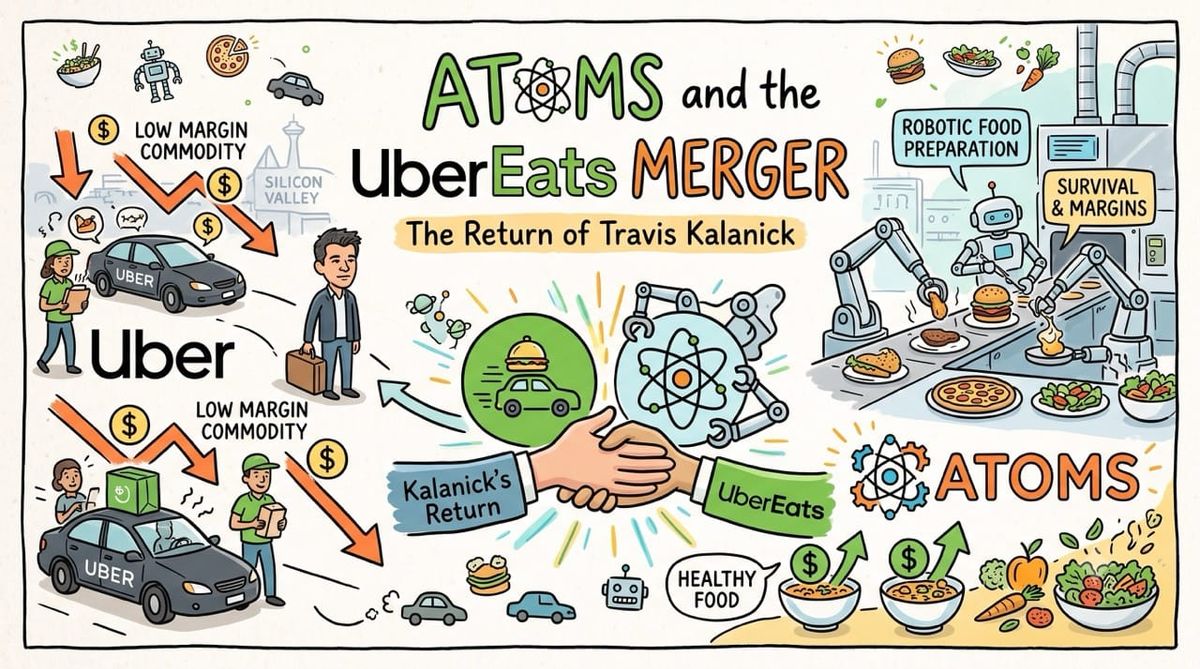
The autonomous driving market is about to become a low margin commodity. Uber must aggressively pivot to robotic food preparation to survive and that means buying out their exiled founder.
Inspiration: Analyzing the recent public launch of Atoms by Travis Kalanick and the margin compression facing the ride hailing industry. Realizing that a future merger between Uber and Atoms represents a perfect strategic reunion in Silicon Valley history.
The Foundation of Ride Hailing
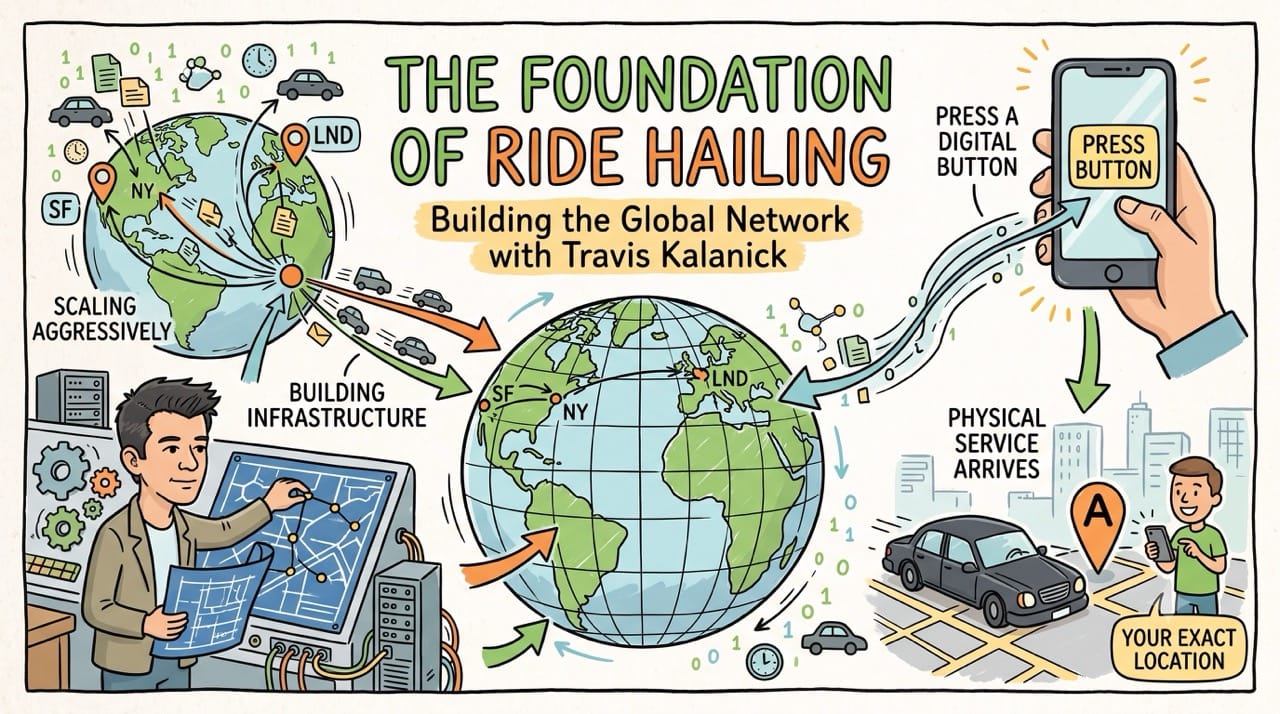
Travis Kalanick built the original foundation of Uber by aggressively scaling a global logistics network.
He normalized the concept of pressing a digital button and having a physical service arrive at your exact location.
The UberEats Pivot
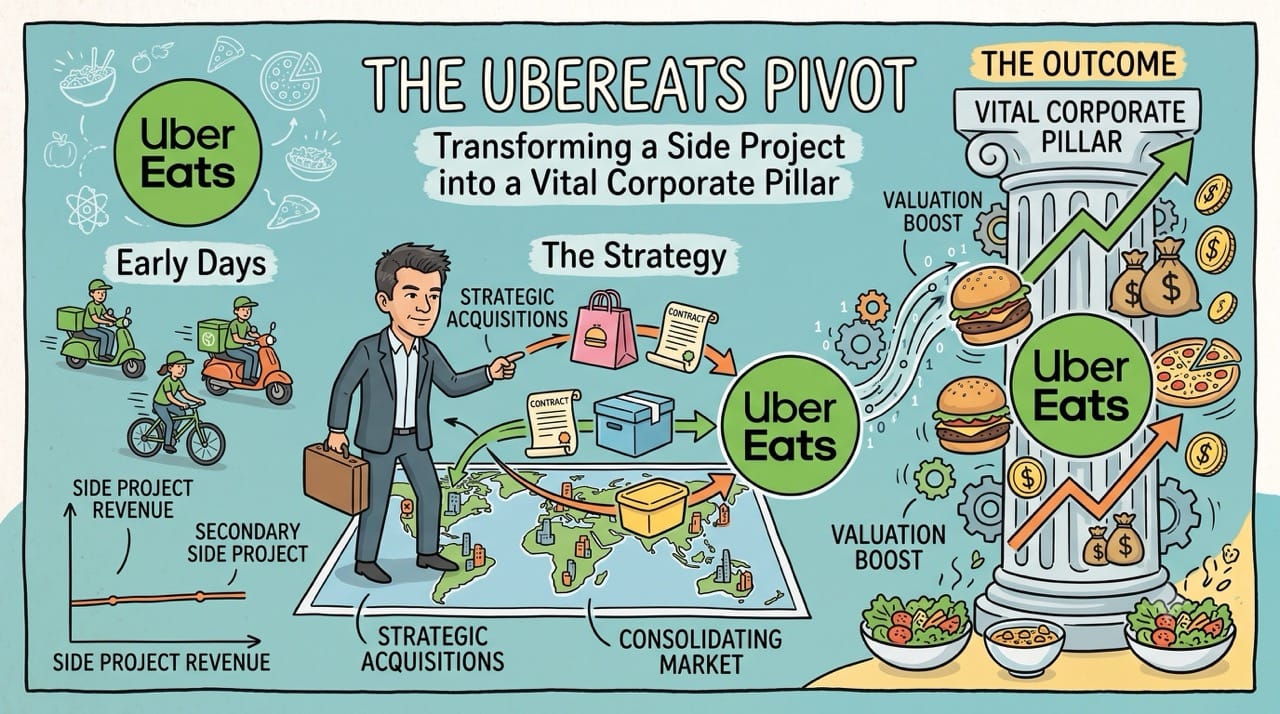
Uber doubled down on UberEats by executing strategic acquisitions to consolidate the delivery market.
Food delivery quickly transformed from a secondary side project into a vital pillar of their corporate valuation.
The Autonomous Threat
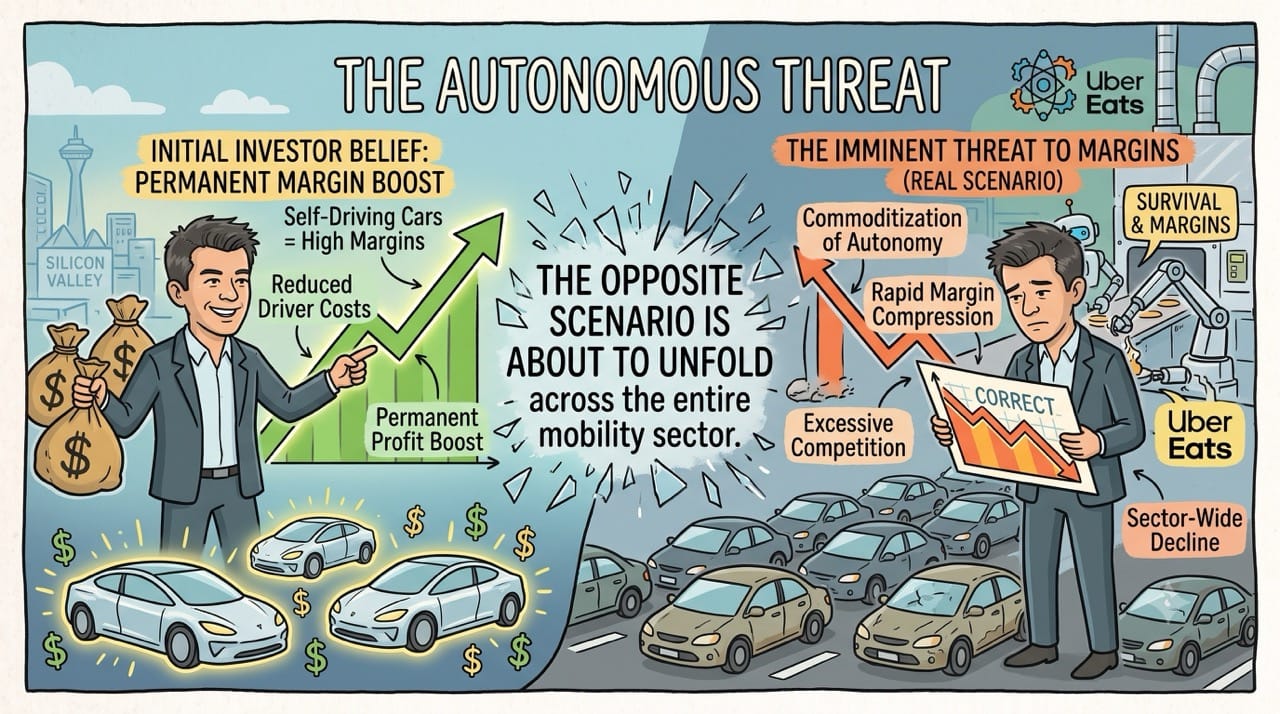
Investors currently believe that self driving cars will permanently boost the profit margins of ride hailing.
The exact opposite scenario is actually about to unfold across the entire mobility sector.
The Margin Squeeze
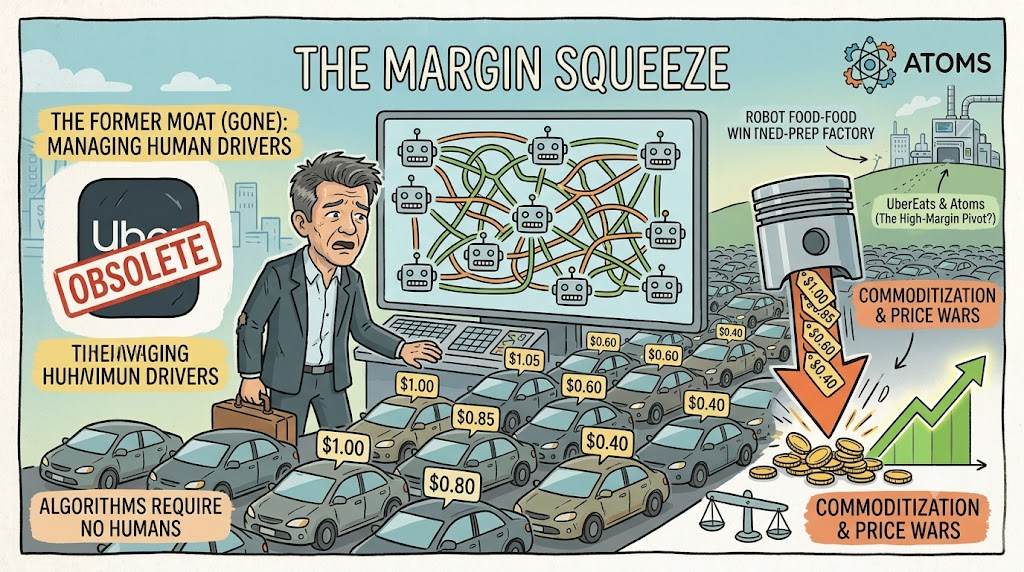
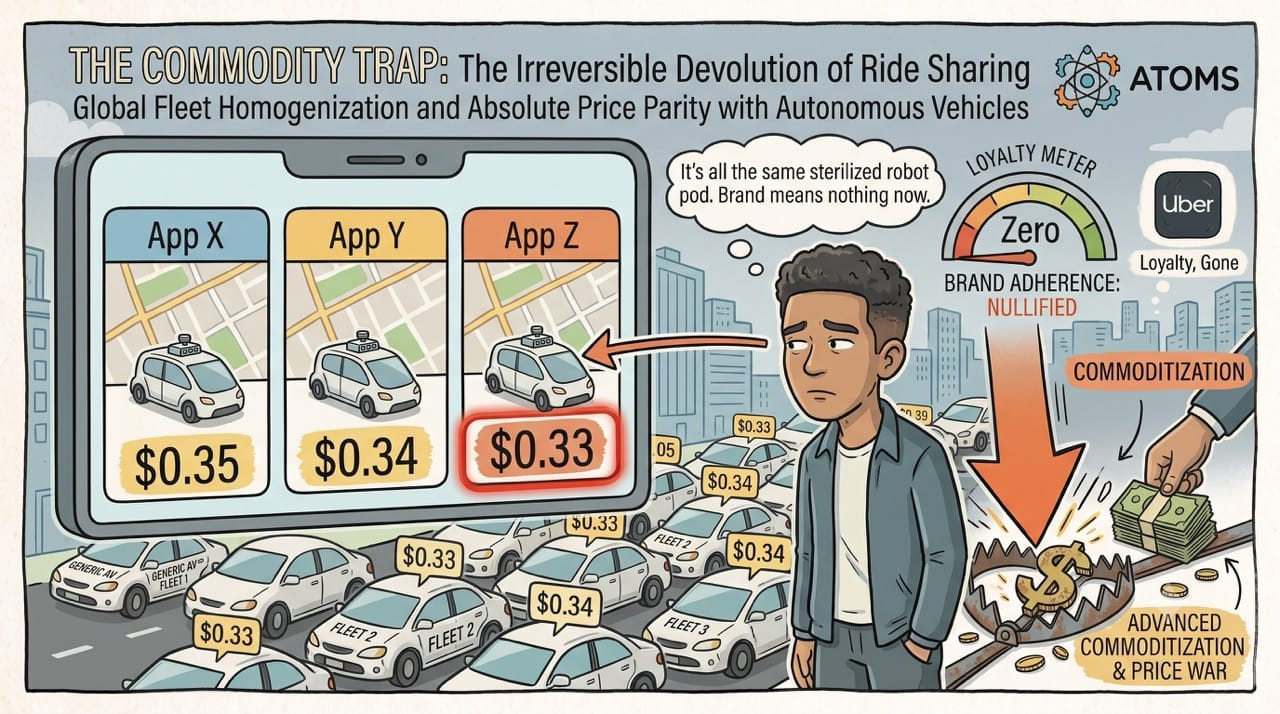
The autonomous driving market will soon become flooded with identical robotaxis competing strictly on price.
Uber will lose its primary economic moat because routing algorithms will no longer require managing human drivers.
The Commodity Trap
Ride sharing will devolve into a low margin commodity business where customer loyalty simply does not exist.
Consumers will just open whichever app offers the cheapest autonomous vehicle at that exact second.
The Food Opportunity
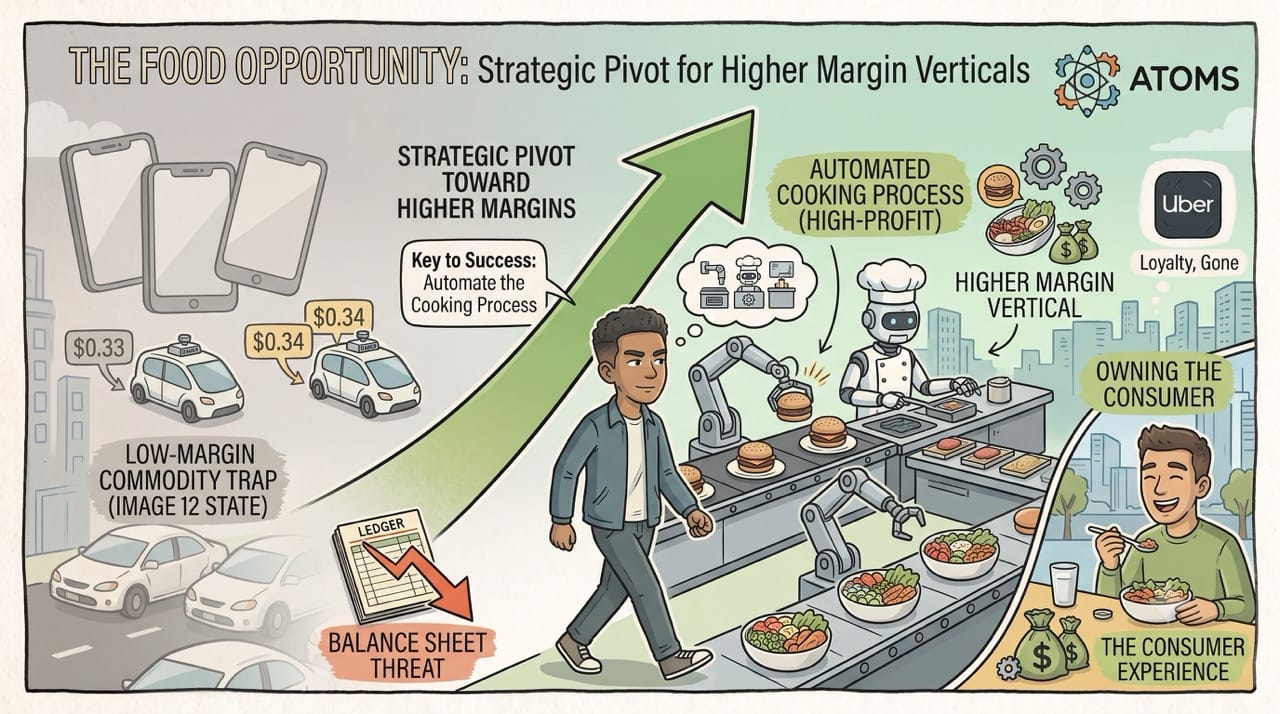
To protect their balance sheet the company must pivot toward higher margin verticals where they still control the consumer experience.
Food delivery represents the perfect opportunity if they can successfully automate the underlying cooking process.
The Kitchen Bottleneck
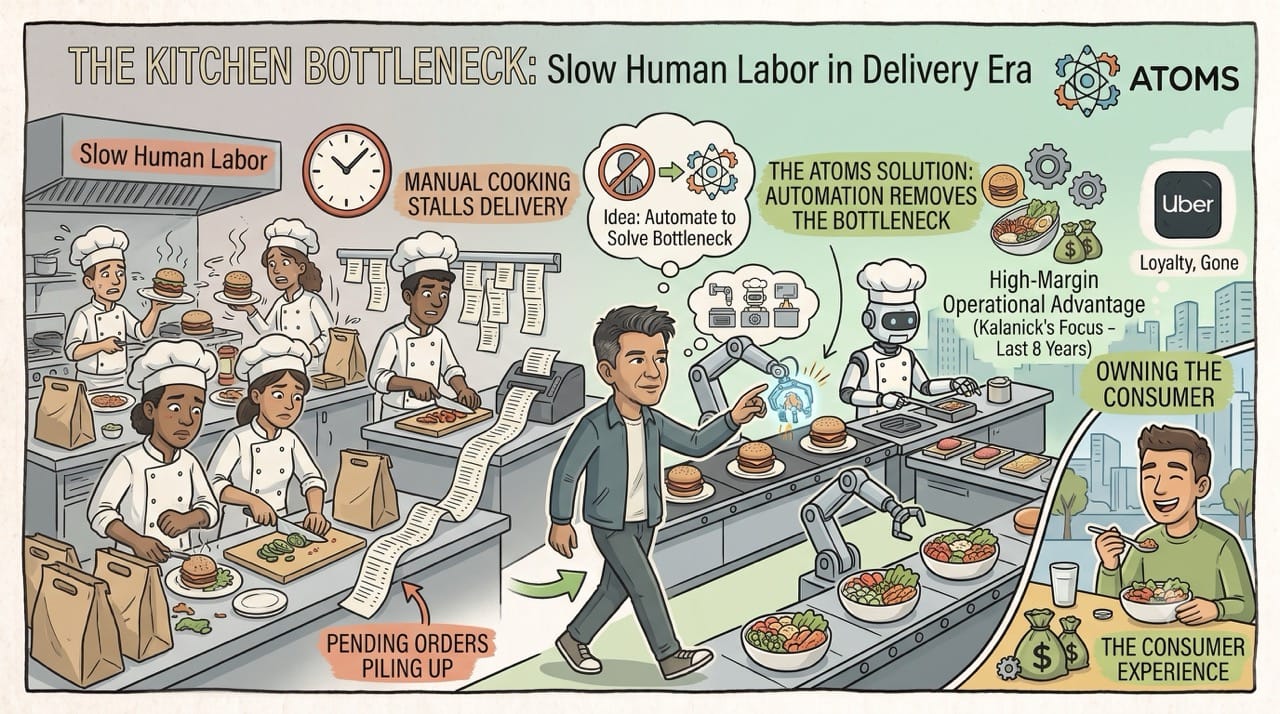
The biggest bottleneck in modern restaurant delivery is the slow human labor required inside the commercial kitchen.
This is exactly why Kalanick spent the last eight years quietly building his new startup Atoms.
The Atoms Solution
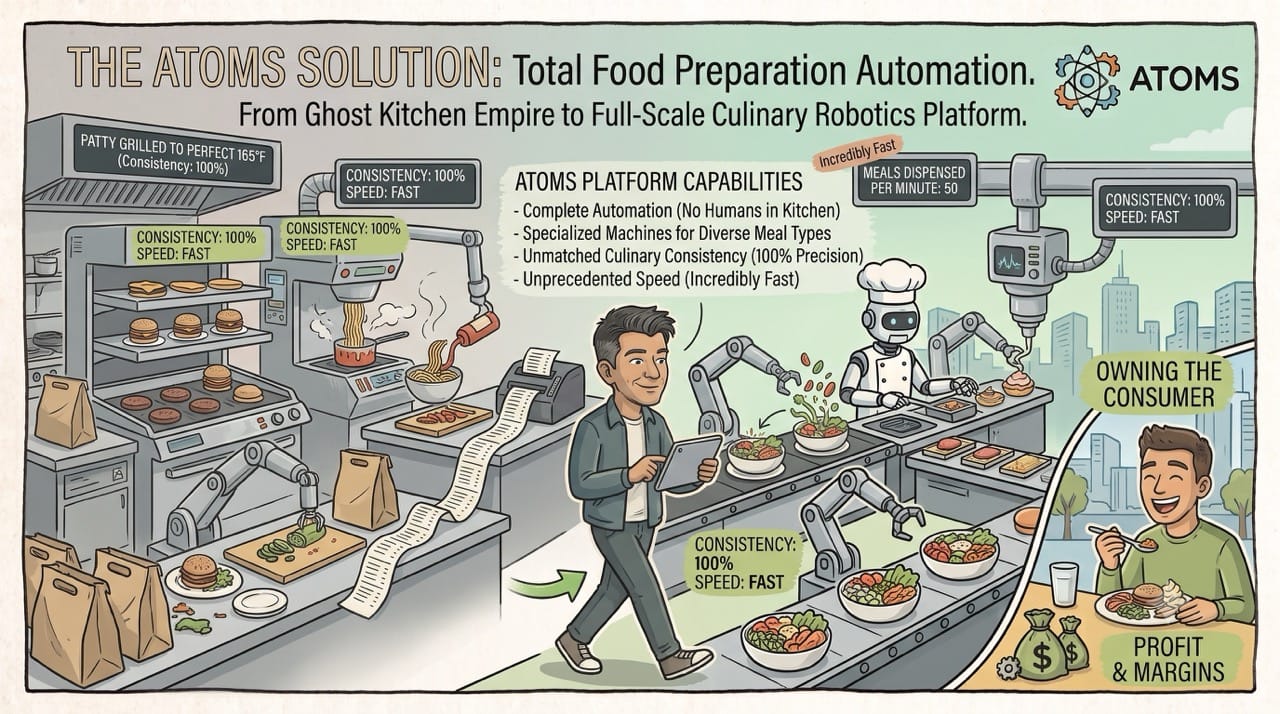
He transitioned his ghost kitchen empire into a full scale industrial robotics platform designed to completely automate food preparation.
Atoms builds specialized machines that cook and dispense meals with incredible speed and perfect consistency.
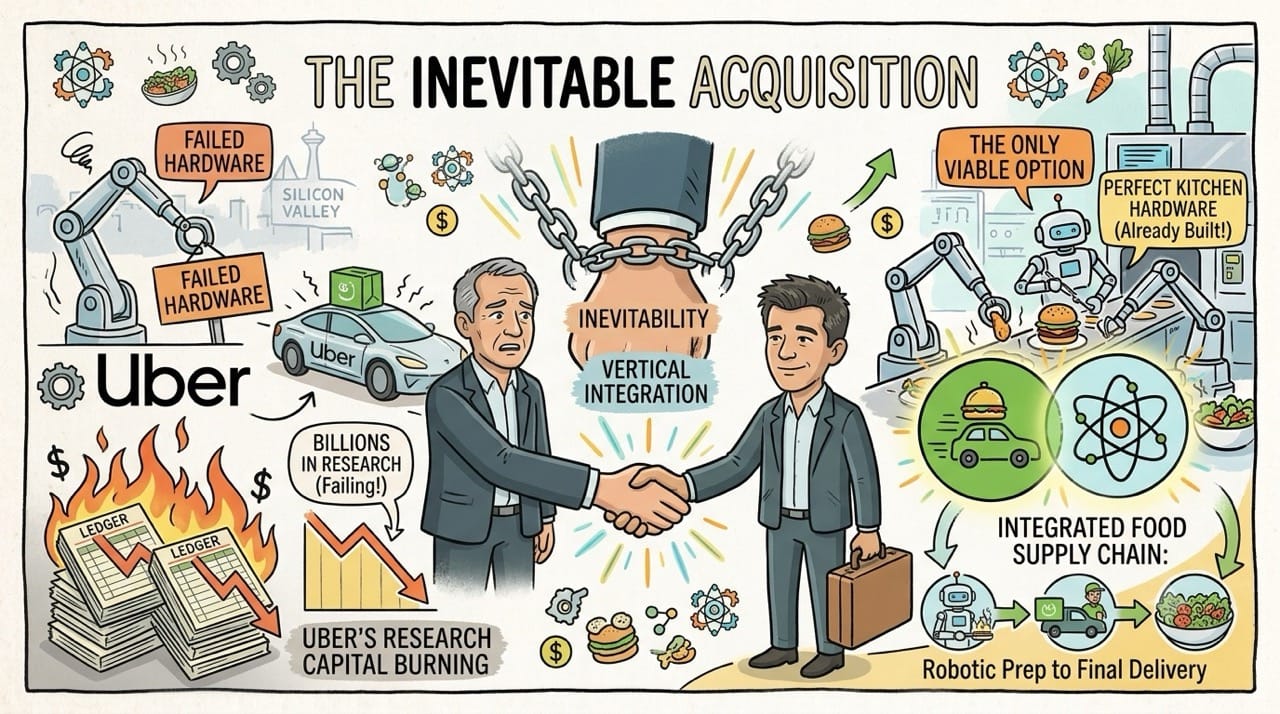
The Inevitable Acquisition
Uber cannot build this level of specialized kitchen hardware on their own without burning billions in research capital.
They will inevitably be forced to acquire Atoms to vertically integrate the entire food supply chain from robotic preparation to final delivery.
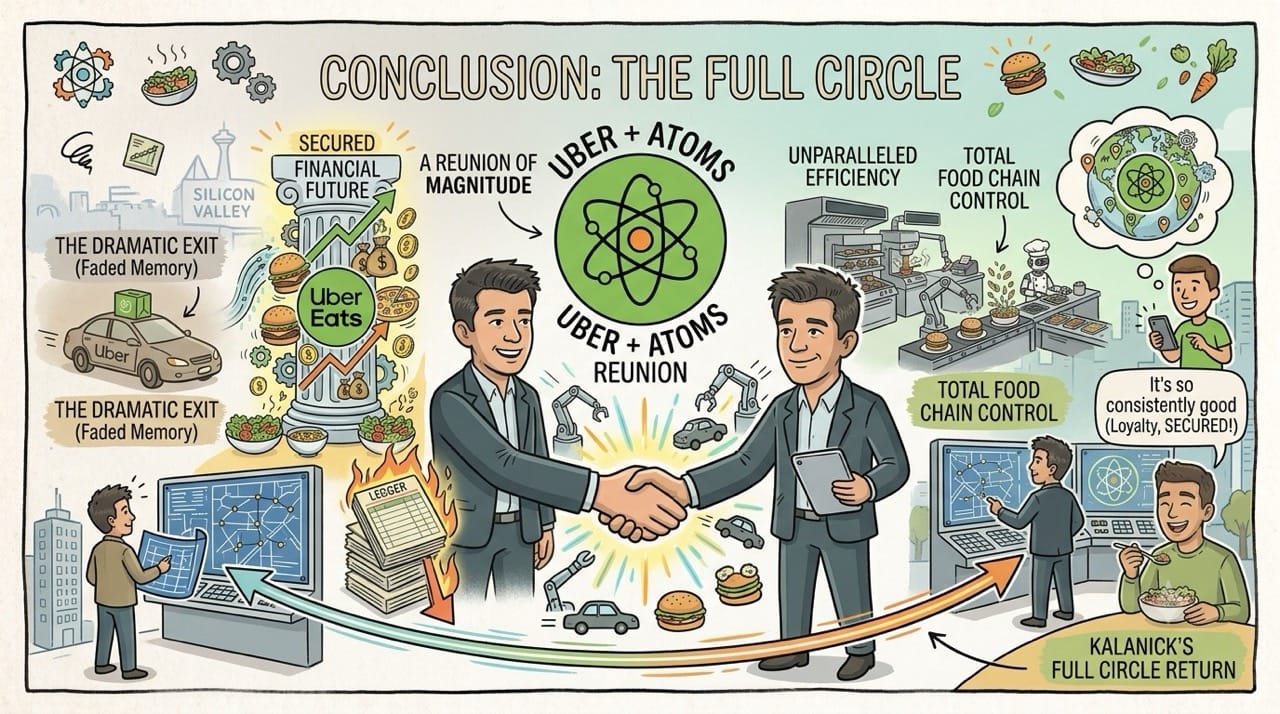
Conclusion: The Full Circle
Silicon Valley is famous for dramatic founder exits but rarely witnesses a strategic reunion of this magnitude.
Uber buying Atoms would secure their financial future while bringing Kalanick full circle back to the empire he originally built.