
Why Uber and Airbnb Are Embracing Legacy Competitors (The Aggregator Paradox)
We assume disruptive technology companies permanently destroy the legacy industries they initially target. In reality the ultimate growth stage for these digital monopolies requires completely absorbing the exact traditional businesses they originally promised to replace.
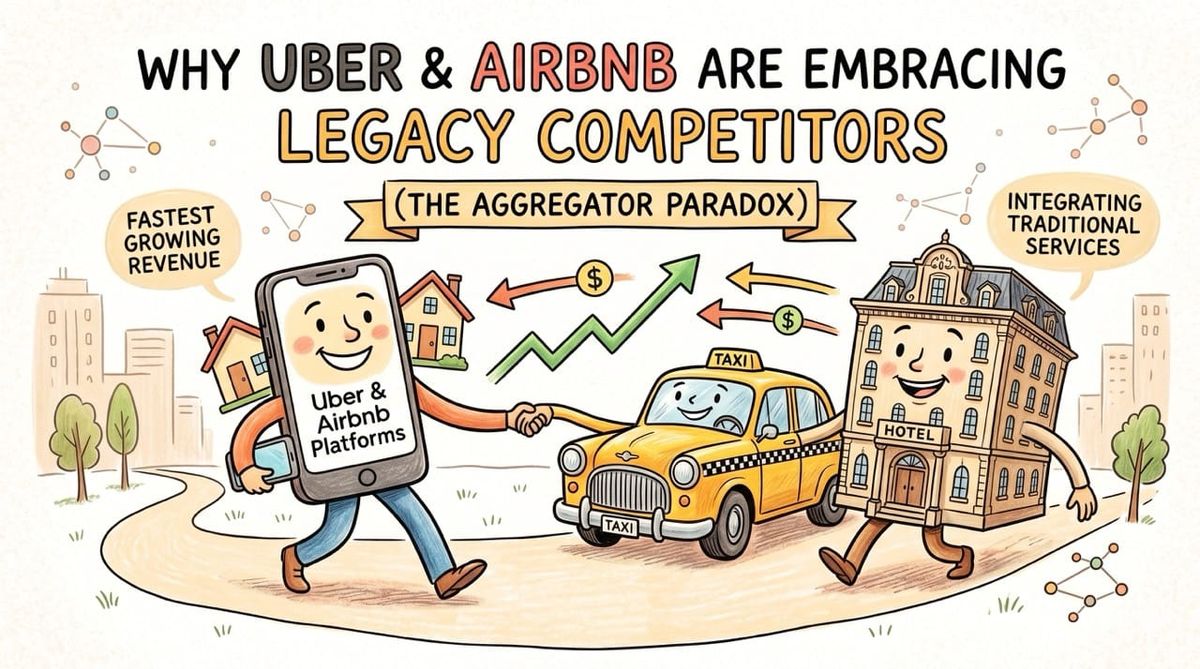
The most famous peer to peer platforms in history are quietly abandoning their original decentralized models. Their fastest growing revenue streams now rely entirely on integrating the exact traditional services they once tried to destroy.
Inspiration: Analyzing the fascinating corporate pivot where traditional taxis recently became the fastest growing business segment within the Uber ecosystem. Realizing that Airbnb is mathematically guaranteed to execute this exact same strategy regarding traditional commercial hotels.
The Supply Bottleneck
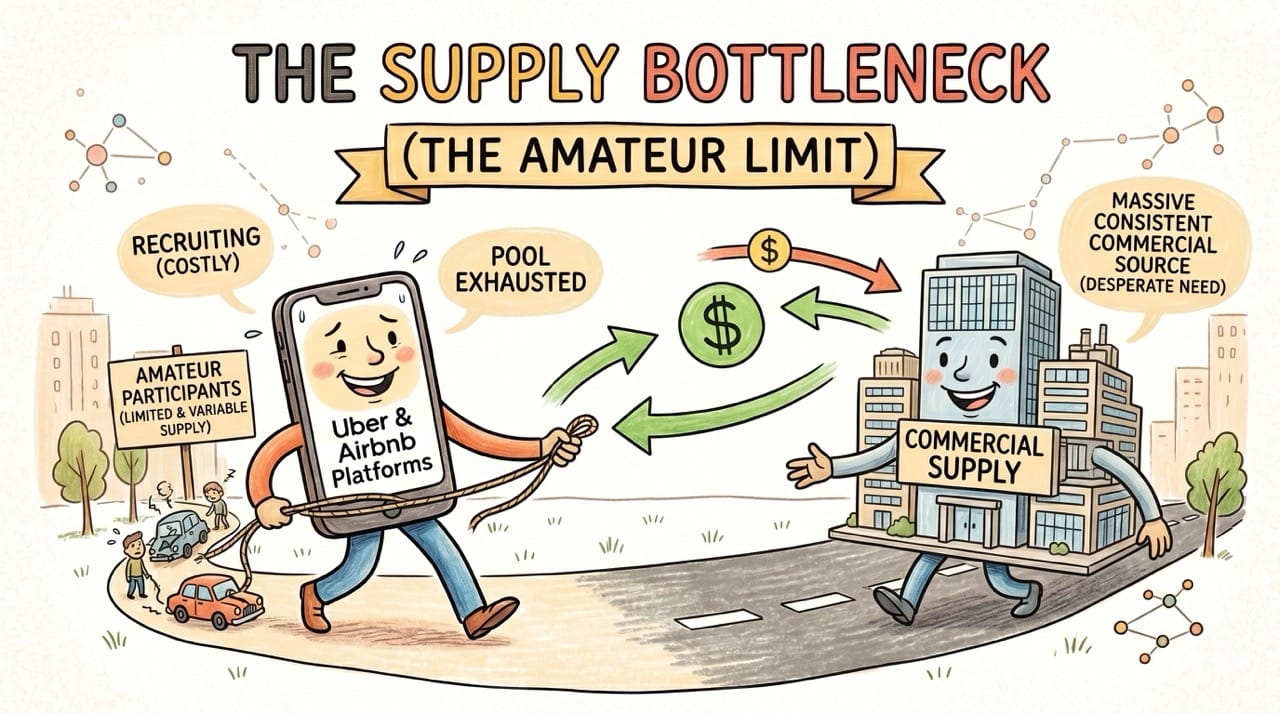
Recruiting individual citizens to casually drive their personal vehicles or rent their spare bedrooms is incredibly expensive.
These massive technology platforms eventually exhaust the available pool of reliable amateur participants willing to tolerate variable income.
To achieve continuous global expansion they must desperately find a massive new source of highly consistent commercial supply.
The Taxi Surrender
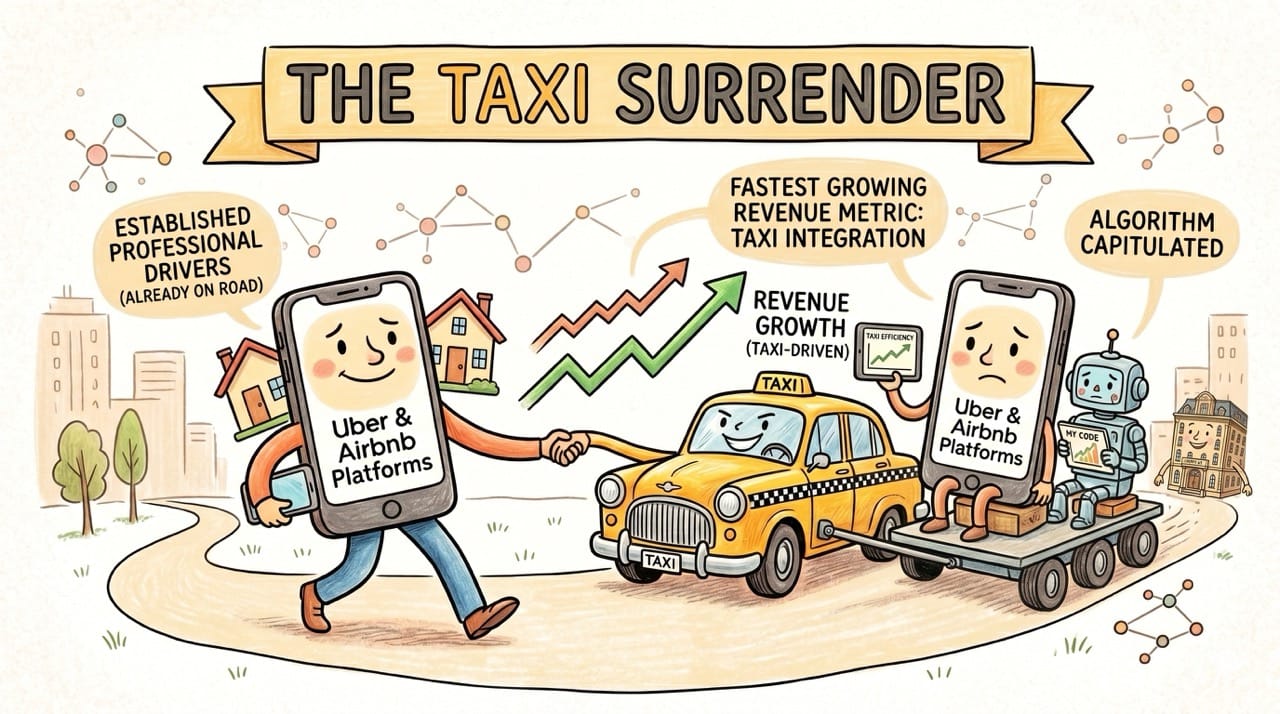
Uber originally built its entire brand identity around completely bypassing the heavily regulated traditional taxi industry.
Today integrating these exact legacy taxi fleets onto their digital platform represents their absolute fastest growing business metric.
The algorithm essentially capitulated to the undeniable efficiency of utilizing established professional drivers who are already on the road.
The Hospitality Trajectory
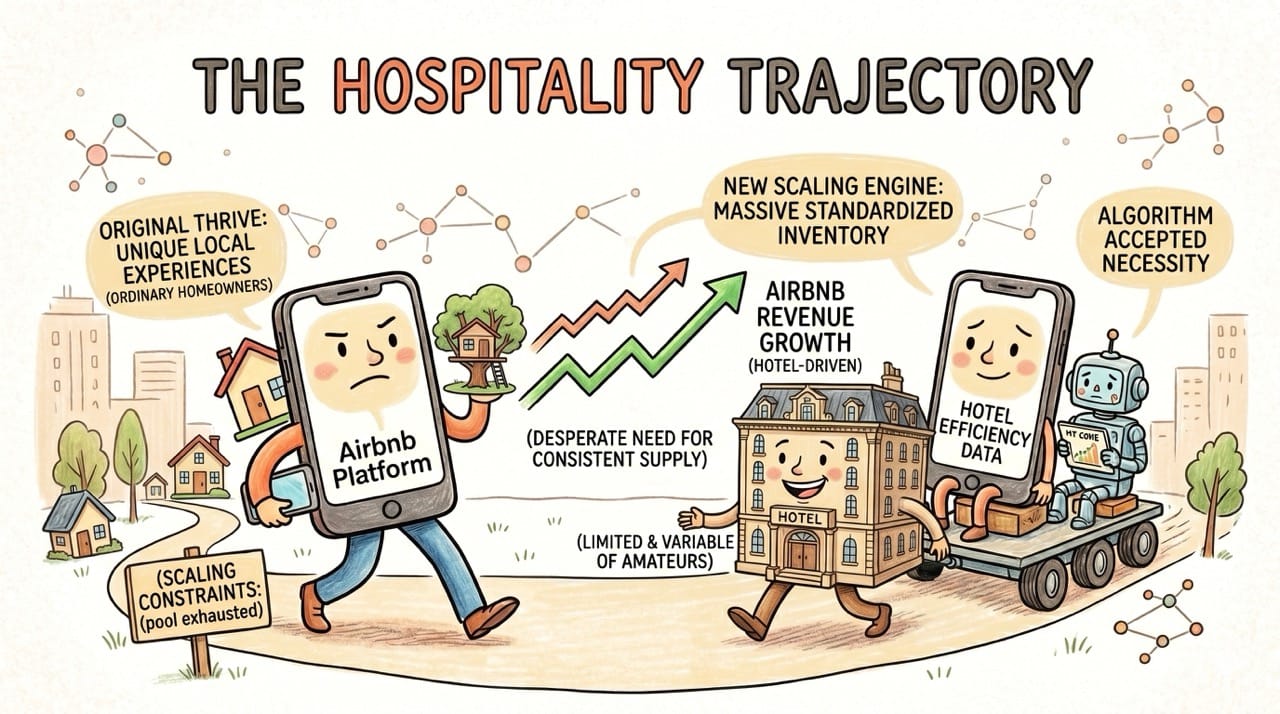
This exact same economic reality is currently forcing Airbnb to fundamentally alter its core hospitality marketplace.
The platform originally thrived by offering incredibly unique and highly localized lodging experiences hosted by ordinary homeowners.
However scaling a global travel monopoly ultimately requires the massive standardized inventory that only traditional hotels can actually provide.
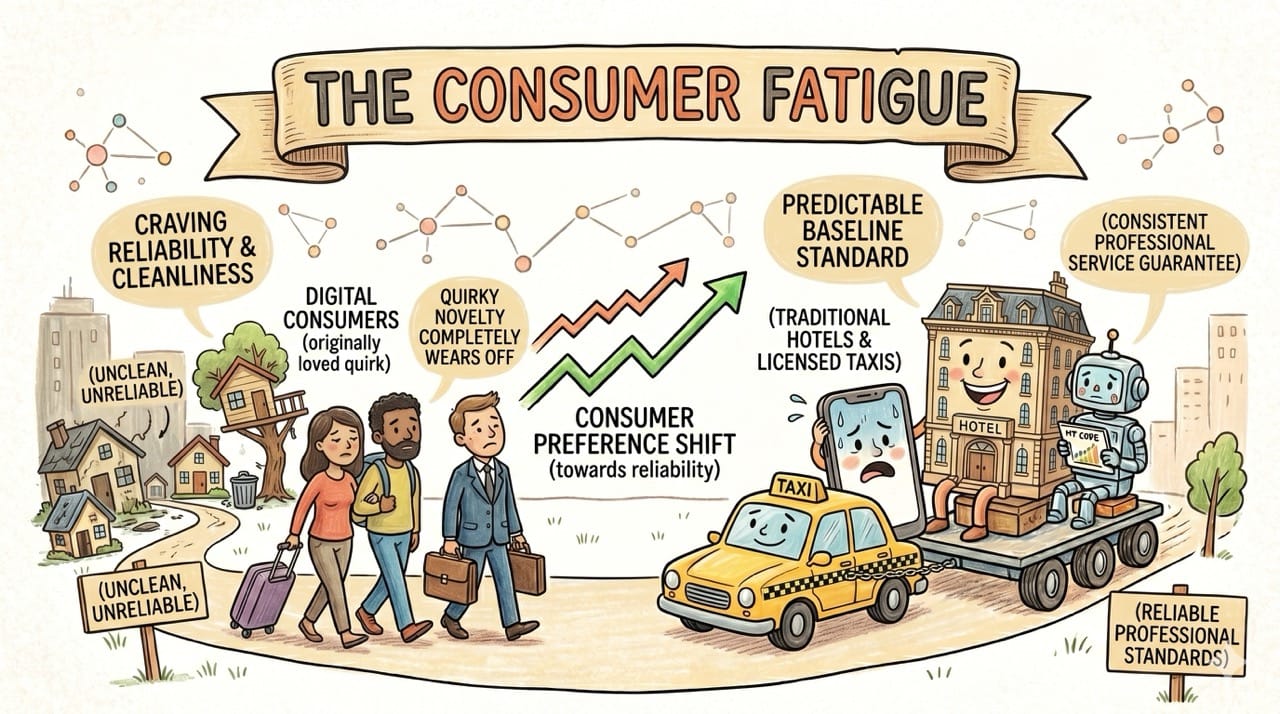
The Consumer Fatigue
Digital consumers initially loved the quirky charm of staying in a random residential neighborhood or riding in a personal car.
Over time this chaotic novelty completely wears off and travelers begin desperately craving absolute reliability and professional cleanliness.
Traditional hotels and licensed taxis offer a predictable baseline standard that decentralized amateur networks simply cannot consistently guarantee.
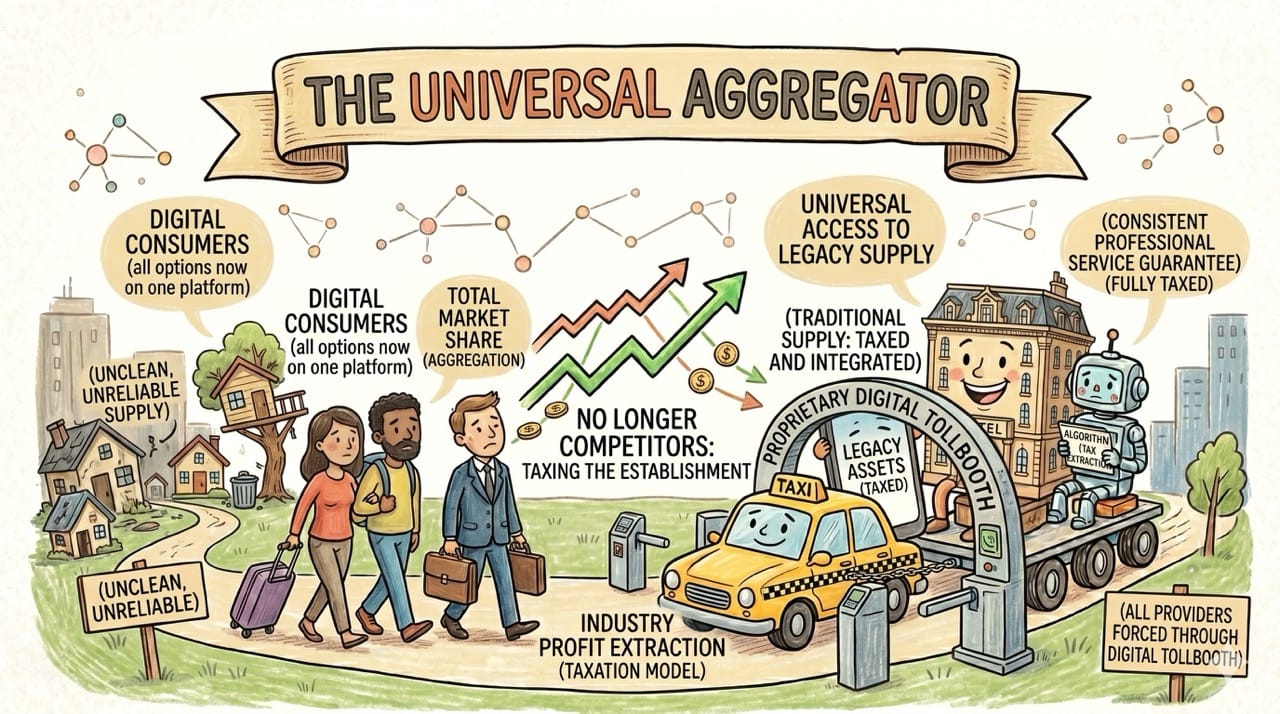
The Universal Aggregator
These technology giants are officially transitioning from disruptive alternatives into absolute universal aggregators of their entire respective industries.
They no longer want to compete against the legacy establishment because they realized it is much more profitable to simply tax them.
The ultimate corporate goal is forcing every single booking or ride through their proprietary digital tollbooth regardless of the actual provider.
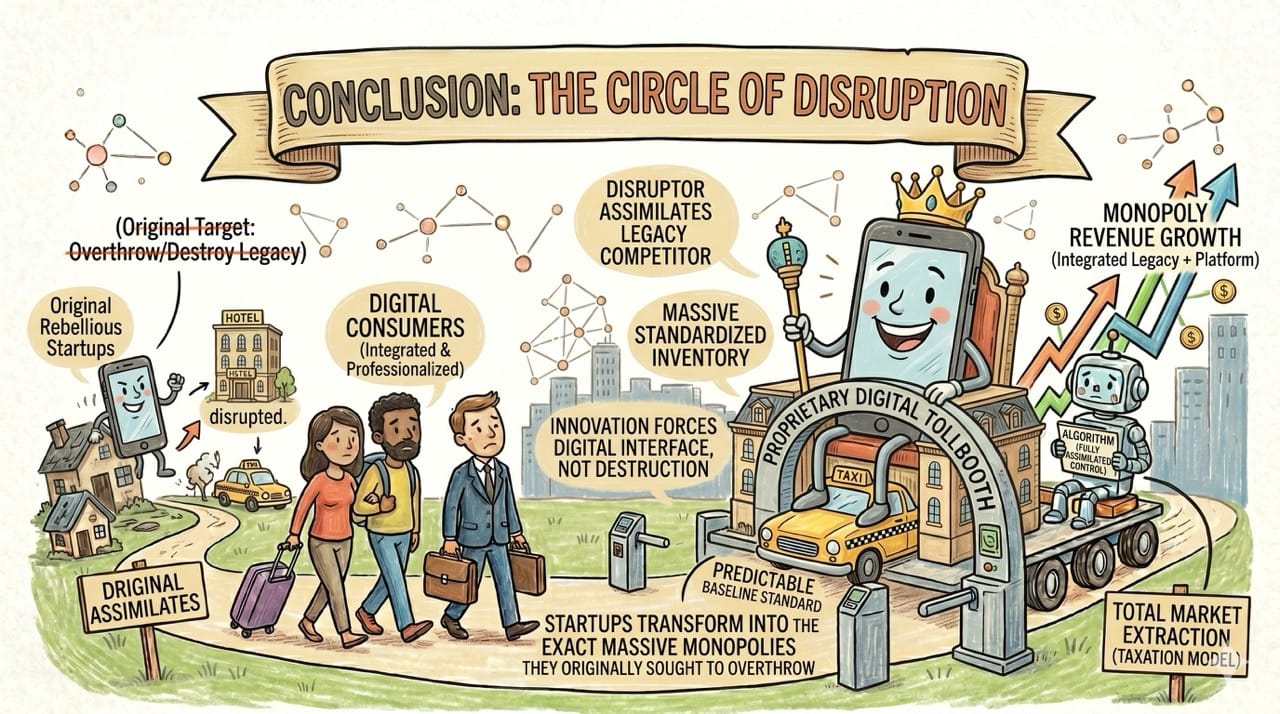
Conclusion: The Circle of Disruption
The lifecycle of a digital disruptor always ends with the complete assimilation of the original legacy competitor.
Innovation rarely destroys a traditional industry but rather forces it to permanently adopt a completely new digital interface.
The rebellious startups of yesterday are rapidly transforming into the exact massive monopolies they originally sought to overthrow.