Why a SpaceX Public Offering Will Reset Expectations (The Orbital Reality Check)
We assume the eventual public offering of the most famous rocket company will instantly validate the booming orbital economy. In reality opening those financial books will violently prove that conquering the solar system is an incredibly slow and agonizingly expensive business.
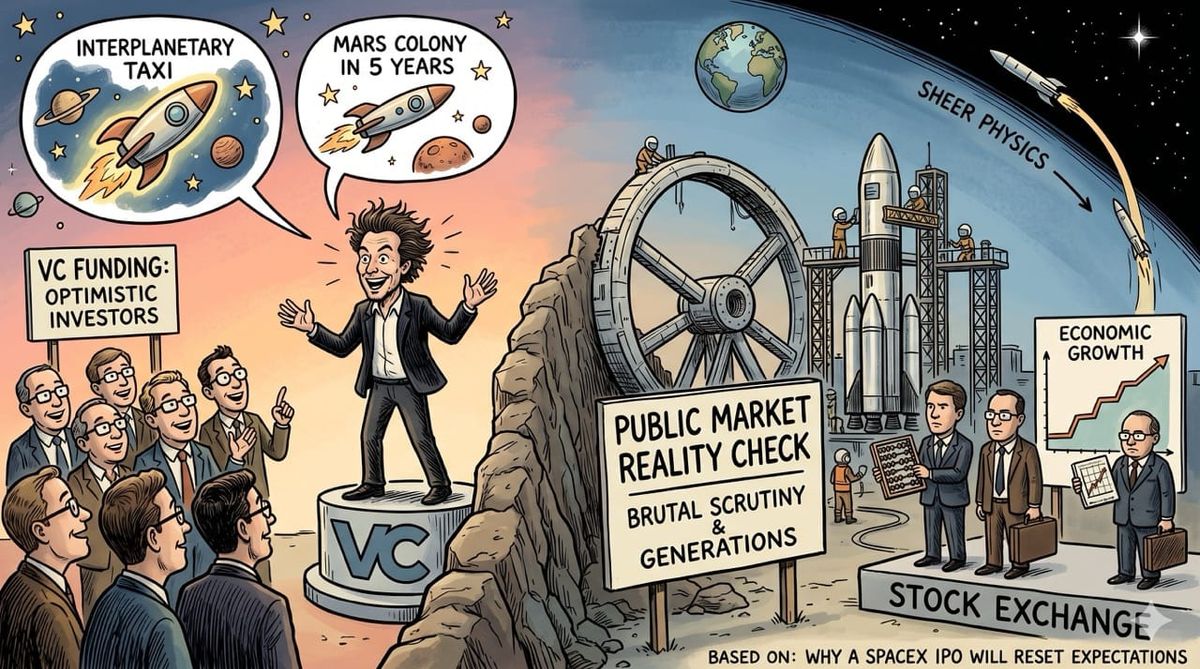
Private venture capital allows charismatic founders to sell science fiction timelines to highly optimistic investors. The brutal scrutiny of the public stock exchange will mathematically reveal that building interplanetary infrastructure requires generations of patient capital.
Inspiration: Analyzing the inevitable public market debut of the absolute largest commercial space monopoly in history. Realizing that the sheer physics of escaping gravity guarantees a vastly slower economic growth curve than modern software investors currently expect.
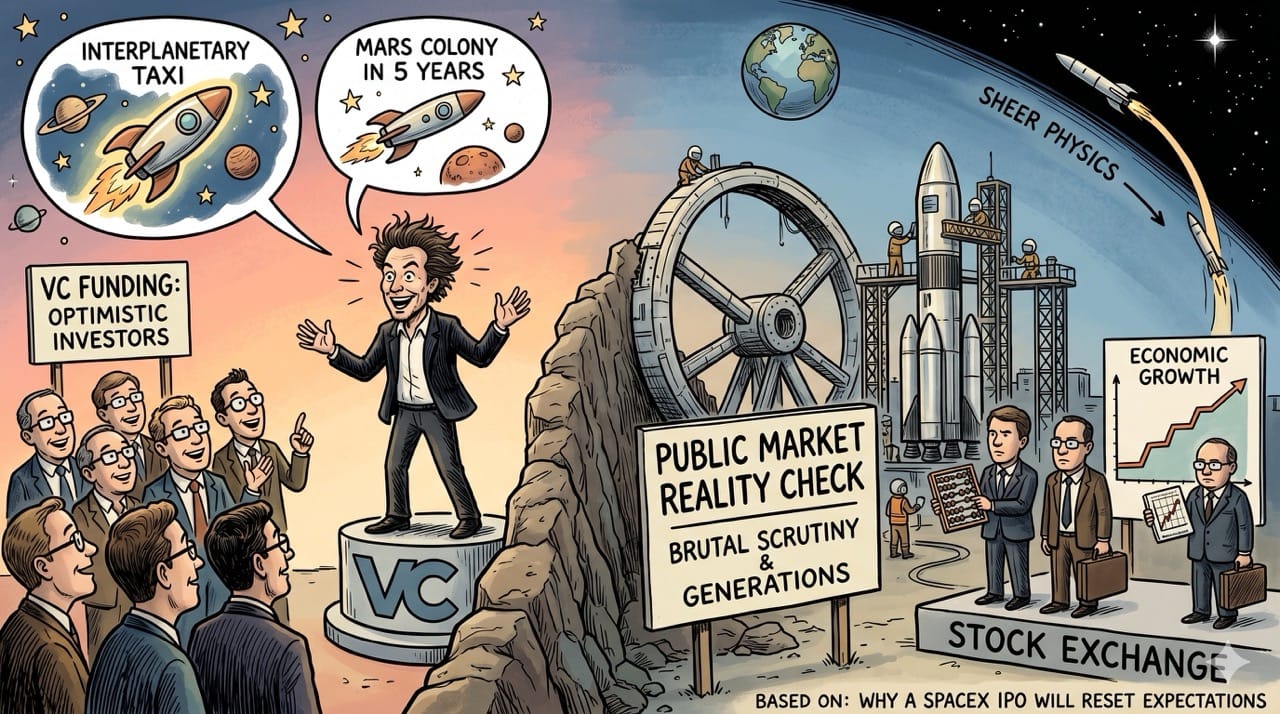
The Private Illusion
Private markets are incredibly forgiving environments where visionary leaders can easily mask massive operational losses with spectacular technological demonstrations.
Launching a massive reusable rocket creates an incredible viral media moment that completely distracts from the agonizingly slow timeline of actual commercial monetization.
A private valuation can remain astronomically high entirely based on distant futuristic promises rather than actual immediate cash flow.
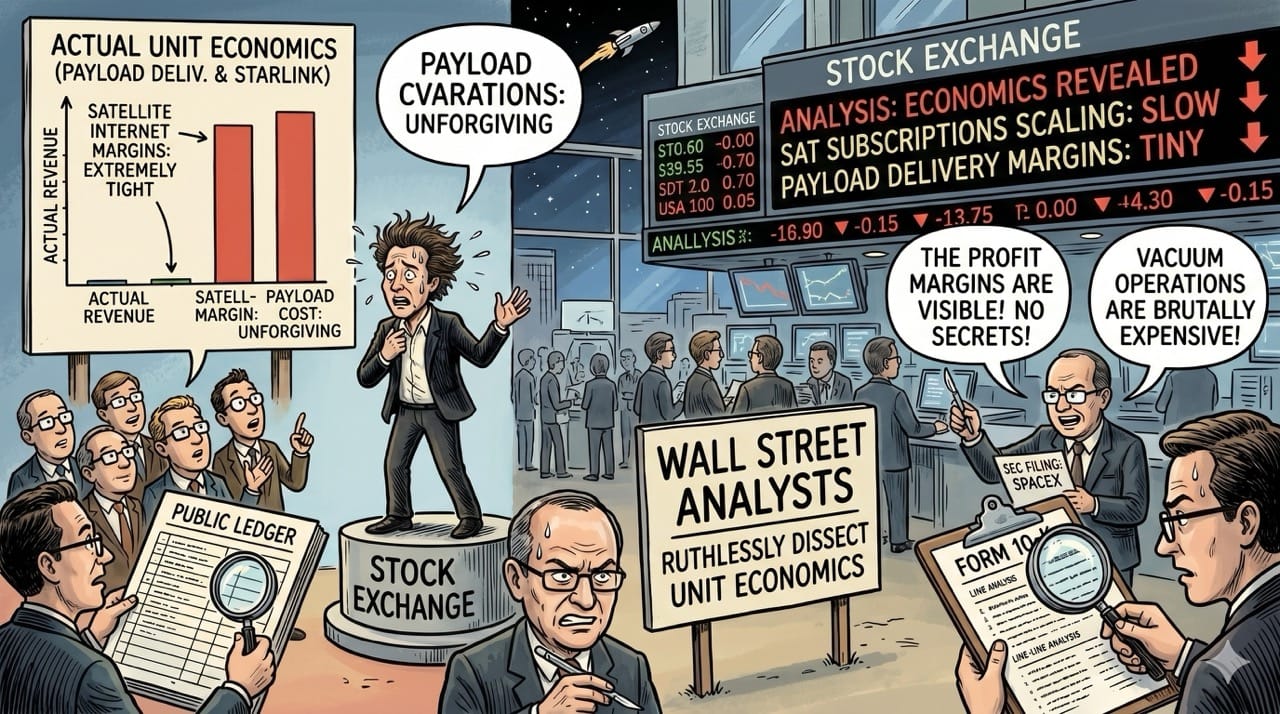
The Public Ledger
When a massive aerospace corporation finally lists on a public exchange it must completely surrender its absolute financial secrecy.
Wall Street analysts will ruthlessly dissect the actual profit margins of satellite internet subscriptions and orbital payload delivery.
They will immediately discover that the unit economics of operating in a vacuum are brutally unforgiving and completely resistant to rapid scaling.
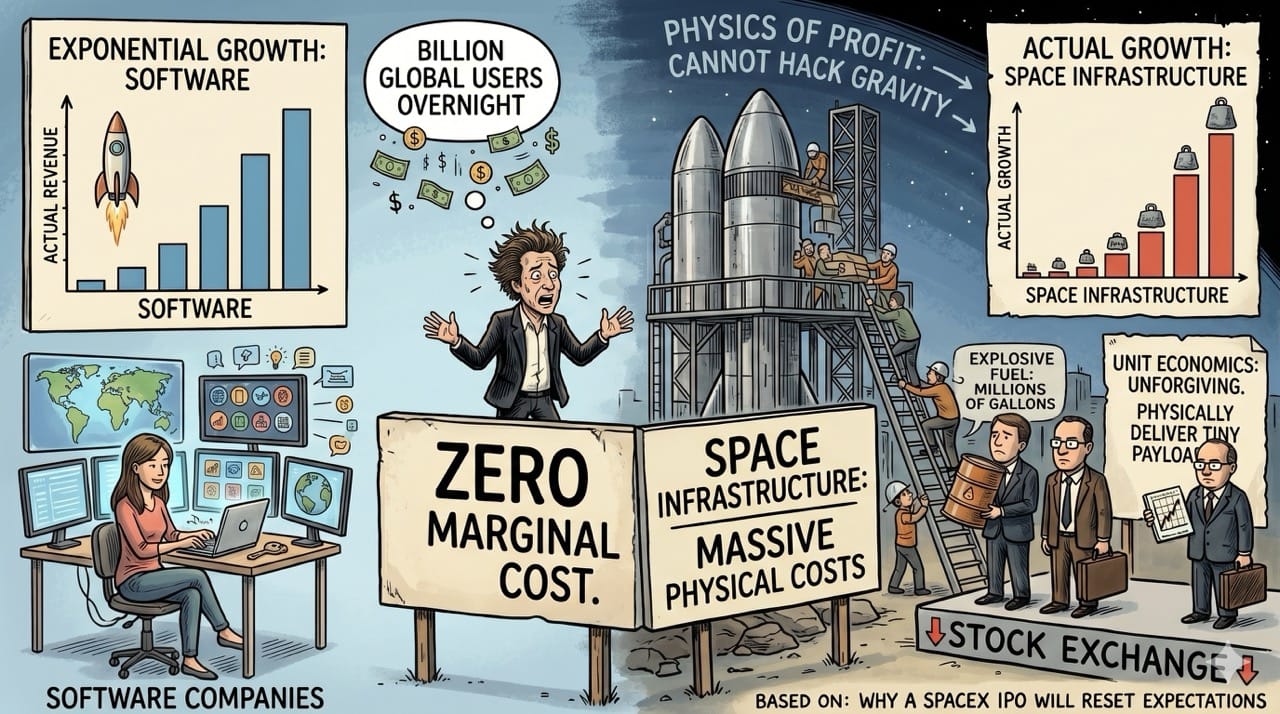
The Physics of Profit
Software companies can easily distribute a new digital product to a billion global users overnight with virtually zero marginal cost.
Space infrastructure requires physically building massive metal silos and burning millions of gallons of explosive fuel just to deliver a tiny payload.
You simply cannot hack the fundamental laws of physics to achieve the exponential quarterly growth that modern technology investors ruthlessly demand.
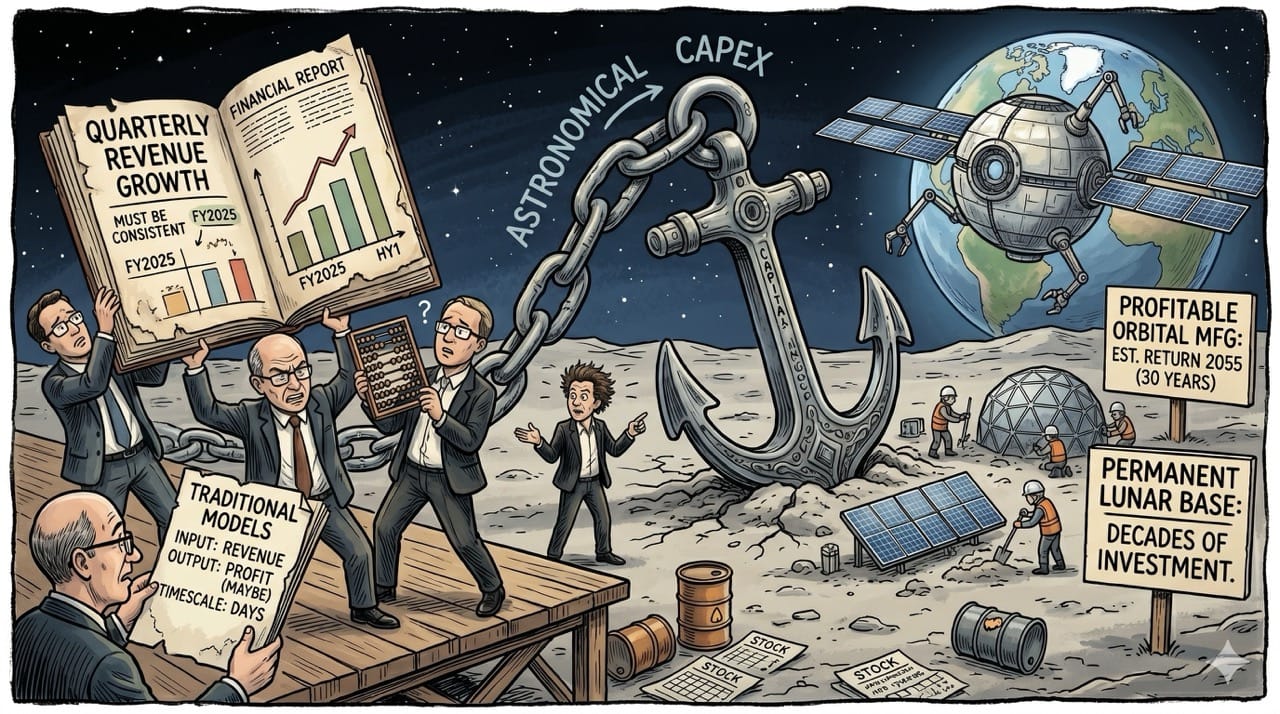
The Capital Anchor
Building a permanent lunar base or a profitable orbital manufacturing facility requires decades of absolutely astronomical capital expenditure.
A public company must somehow justify burning billions of dollars today for a theoretical financial return that might not materialize for thirty years.
This massive timeline completely breaks the traditional investment models used by institutional funds that require consistent quarterly revenue growth.
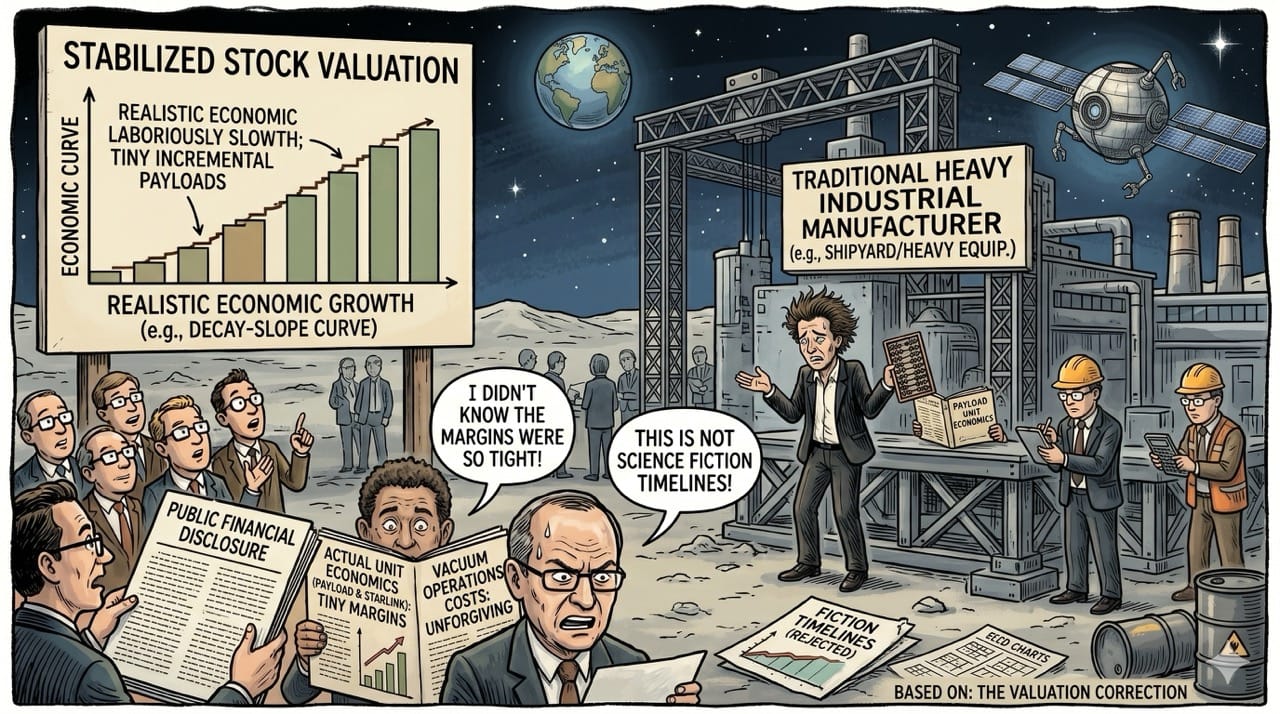
The Valuation Correction
Once retail investors actually read the public financial disclosures the broader market will experience a massive psychological reset regarding the orbital economy.
The stock price will eventually stabilize but the company will be valued like a traditional heavy industrial manufacturer rather than a magical technology startup.
This brutal reality check will mathematically force the entire commercial space industry to abandon their science fiction timelines and embrace realistic economic growth.
Conclusion The Patient Horizon
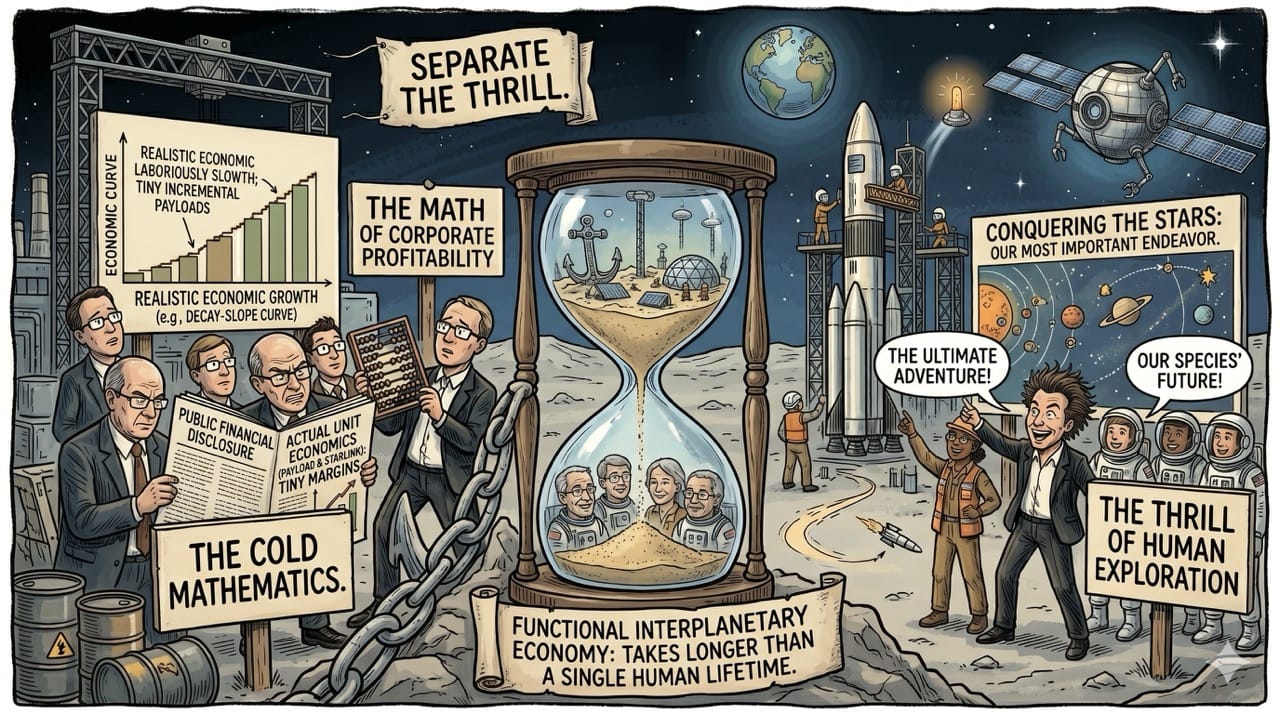
An intelligent investor must always completely separate the thrill of human exploration from the cold mathematics of corporate profitability.
Conquering the stars is absolutely the most important physical endeavor in the history of our entire species.
We must simply accept that building a functional interplanetary economy will take significantly longer than a single human lifetime to actually achieve.