The Silicon Eyewear War: Why Google Might Dethrone the Meta Monopoly
We assume the current social media monopoly has permanently captured the smart glasses market through early deployment & aggressive pricing. Google is preparing to deploy an overwhelming technological and behavioral integration strategy that could instantly make the current market leader obsolete.
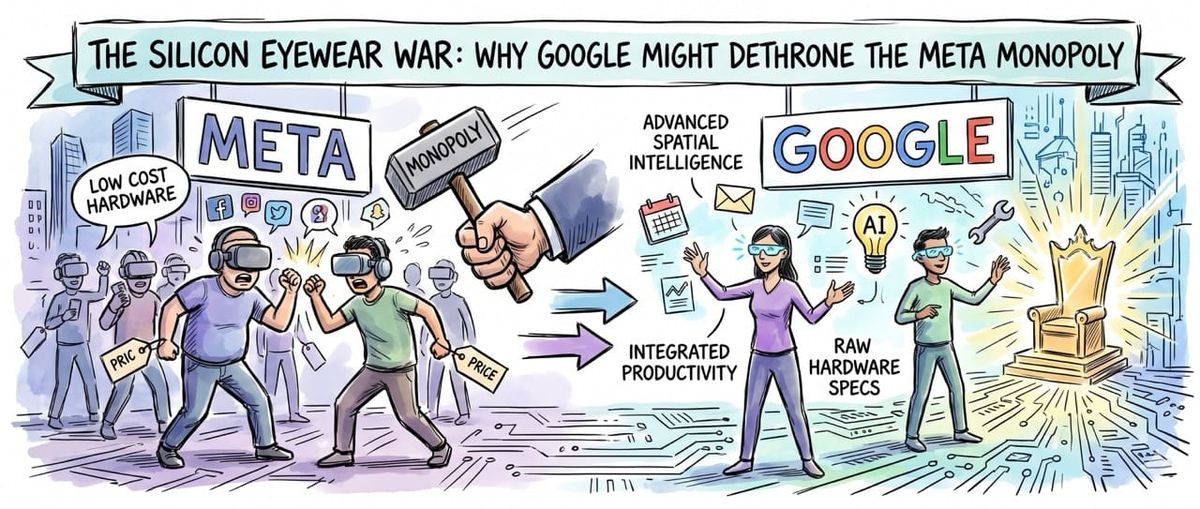
The initial skirmish for ambient computing dominance was won by aggressive consumer hardware pricing. The ultimate victory will be secured by the corporation that successfully integrates advanced spatial intelligence into the foundational communication and productivity workflows of daily life.
Inspiration: Analyzing the rapid acceleration of augmented reality platforms and the strategic hardware partnerships emerging across Silicon Valley. Realizing that the ultimate success of smart glasses relies on raw hardware specifications rather than just social media engagement.
The Capture Advantage
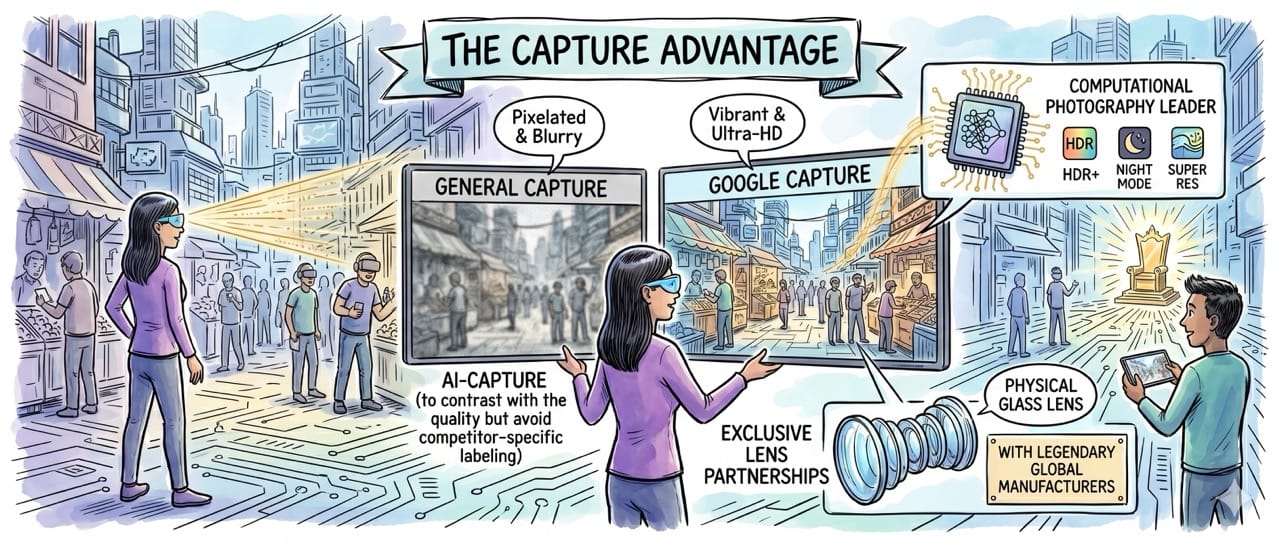
A critical component of smart glasses utility relies on flawlessly capturing real time visual data from the environment.
Google possesses decades of unparalleled leadership in computational photography which guarantees their upcoming hardware will generate vastly superior image quality.
They recently secured exclusive partnerships with legendary global lens manufacturers to ensure their physical optics remain completely unmatched by any current marketplace competitor.
The Agentic Integration
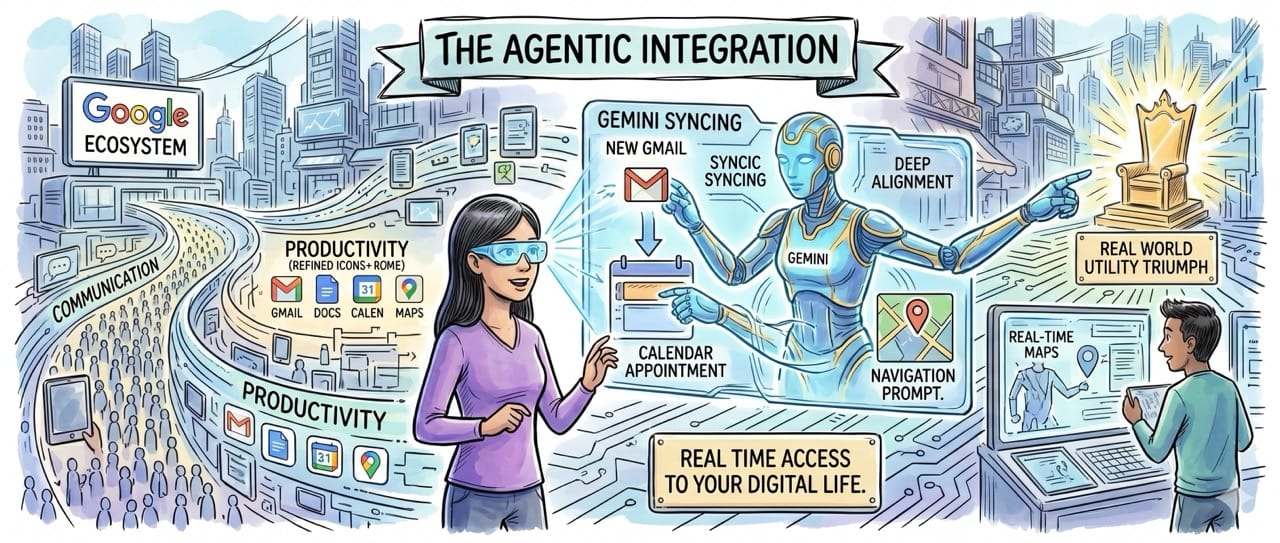
The actual utility of smart glasses relies entirely on the intelligence of the underlying digital agent running in the background.
Google successfully trained billions of people to naturally rely on their ecosystem for communication and productivity workflows rather than just pure entertainment consumption.
This deep behavioral alignment makes the Gemini agent incredibly useful because it possesses real time access to your actual digital life.
The Trust Paradox
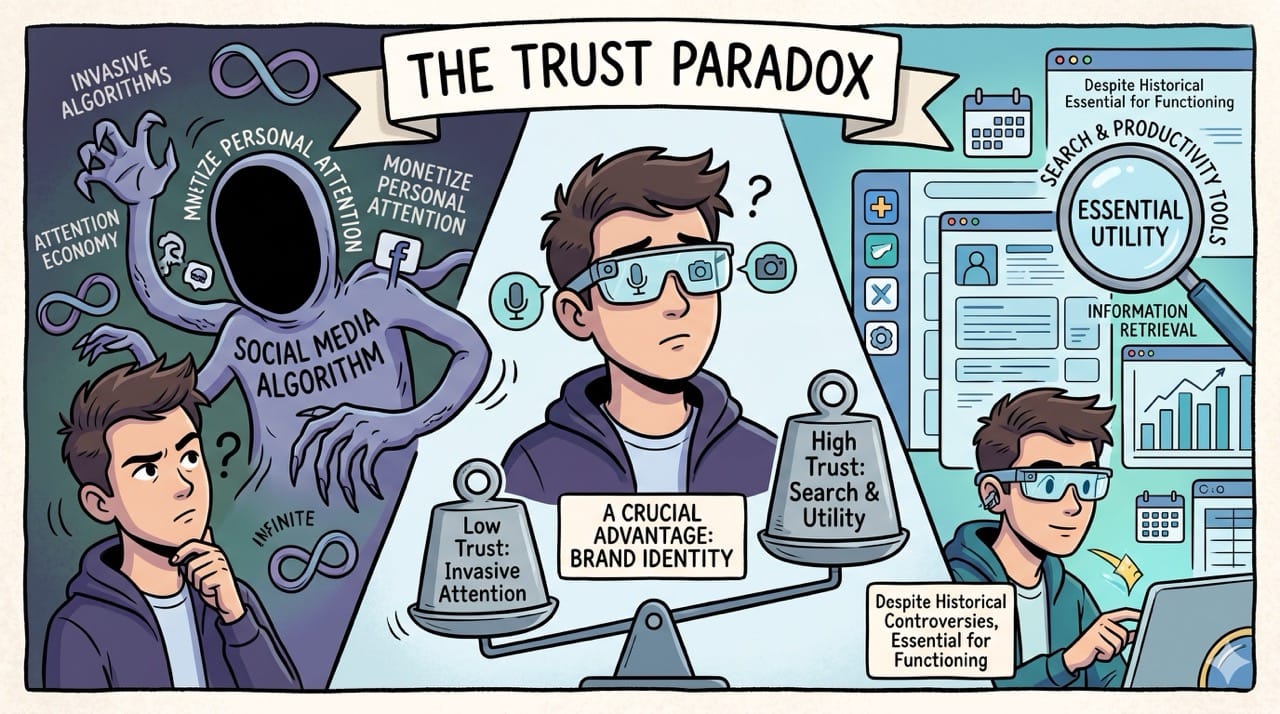
The upcoming generation of digital consumers is increasingly skeptical of corporations that monetize personal attention through invasive social media algorithms.
Despite massive historical privacy controversies a significant portion of this demographic still views search and productivity tools as essential rather than invasive.
Leveraging a massive brand identity rooted in utility and information retrieval provides a crucial advantage when asking consumers to wear a live microphone and camera.
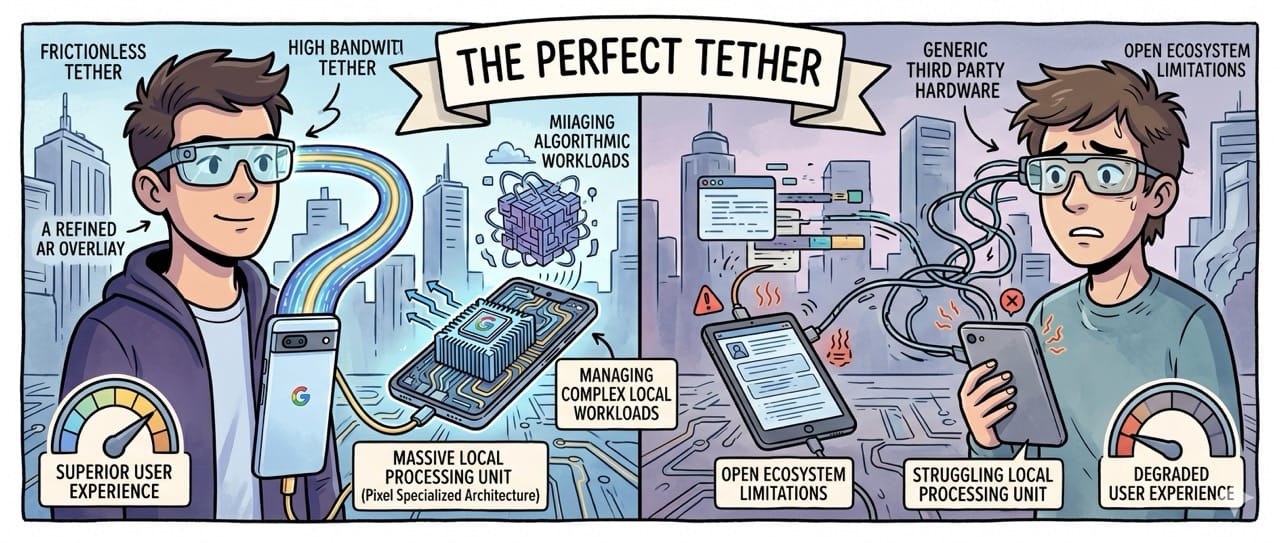
The Perfect Tether
The computational future of smart glasses is completely dependent on a frictionless high bandwidth tether to a massive local processing unit.
The specialized Pixel phone architecture provides the perfect dedicated hardware vessel to manage these highly complex local algorithmic workloads.
Relying entirely on a closed ecosystem mathematically guarantees a vastly superior user experience compared to a competitor relying on generic third party hardware.
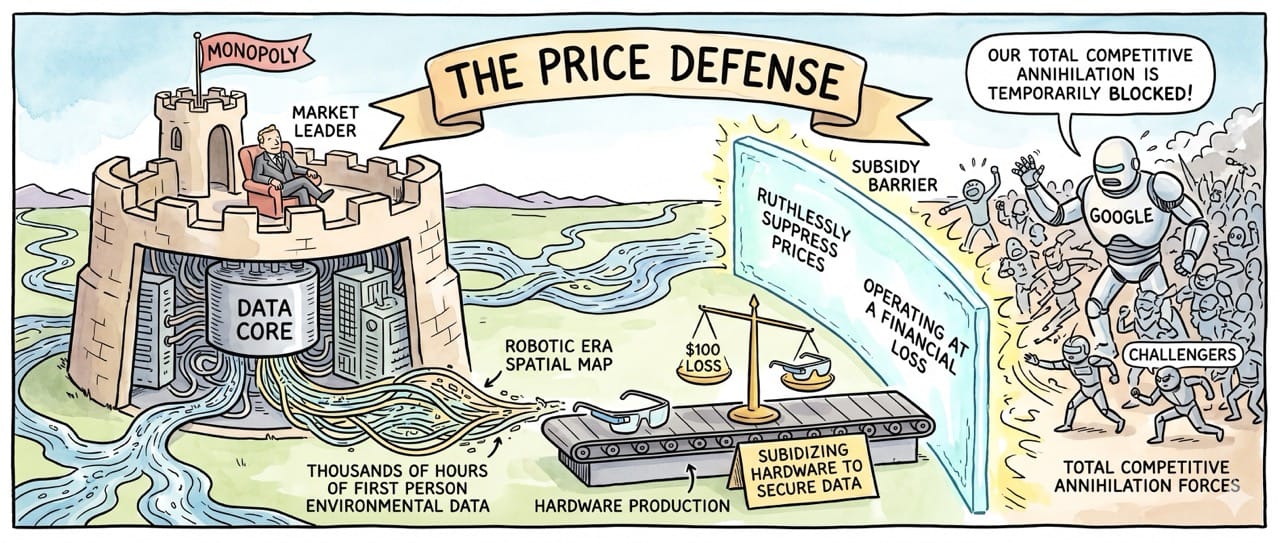
The Price Defense
The current market leader still possesses an incredible defense mechanism that can temporarily block total competitive annihilation.
Their unparalleled hardware scale allows them to ruthlessly suppress prices while capturing thousands of hours of high value first person environmental data.
They are essentially subsidizing a temporary hardware monopoly by operating at a financial loss just to secure the crucial data advantage that we previously established as mandatory for the robotic era.
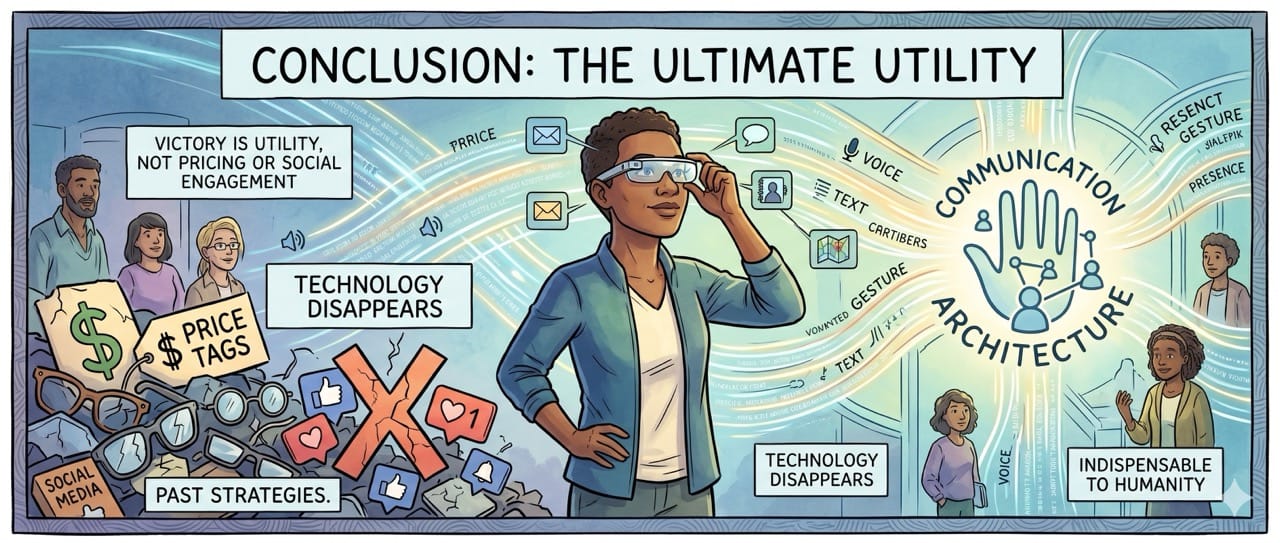
Conclusion: The Ultimate Utility
We are rapidly approaching the definitive transition where technology fundamentally disappears directly into the physical world.
The silicon eyewear war will not be won by the most aggressive hardware pricing or the cleverest social media software engagement tactics.
The final victory belongs entirely to the corporation that successfully makes their smart glasses indispensable to the raw architecture of human communication.