Why the United States Might Ban Chinese Artificial Intelligence: The Silicon Curtain
We assume the global artificial intelligence race will be decided purely by raw algorithmic superiority and computing power. In reality the United States government is quietly preparing to completely ban Chinese language models to protect domestic technology monopolies.
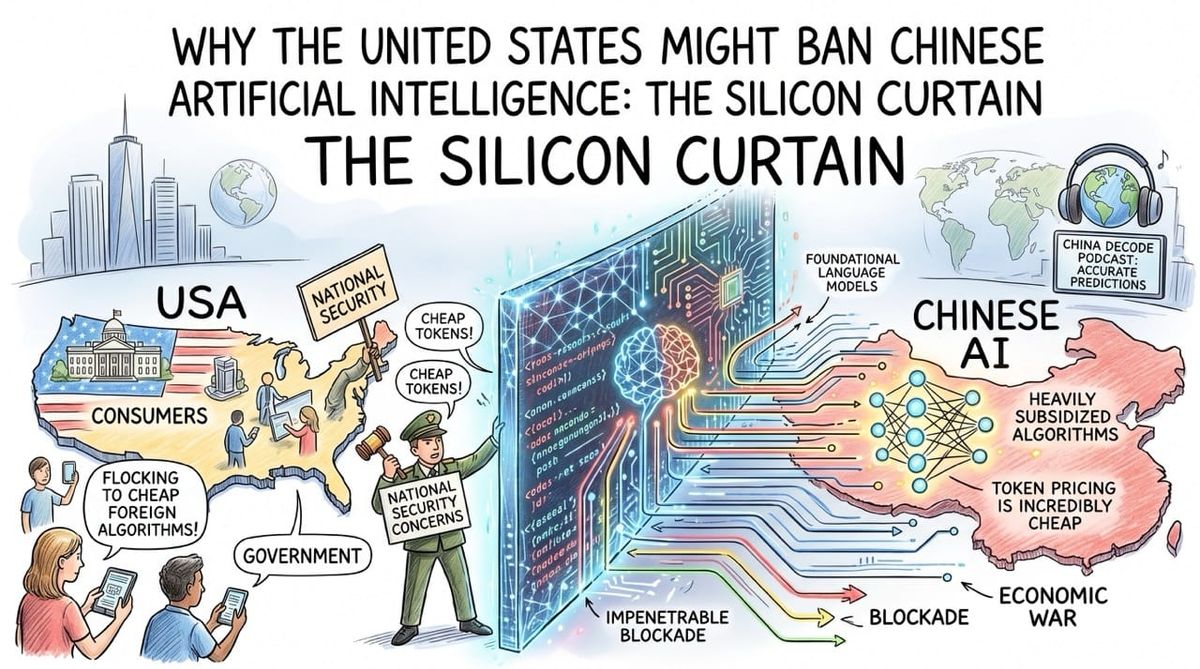
Consumers are naturally flocking toward heavily subsidized foreign algorithms because the token pricing is incredibly cheap. The federal government will soon weaponize national security concerns to erect an impenetrable digital blockade around the American market.
Inspiration: Analyzing the incredibly accurate geopolitical prediction track record of the China Decode Podcast over the last few years. Realizing that the escalating economic war between massive global superpowers will inevitably target foundational language models next.
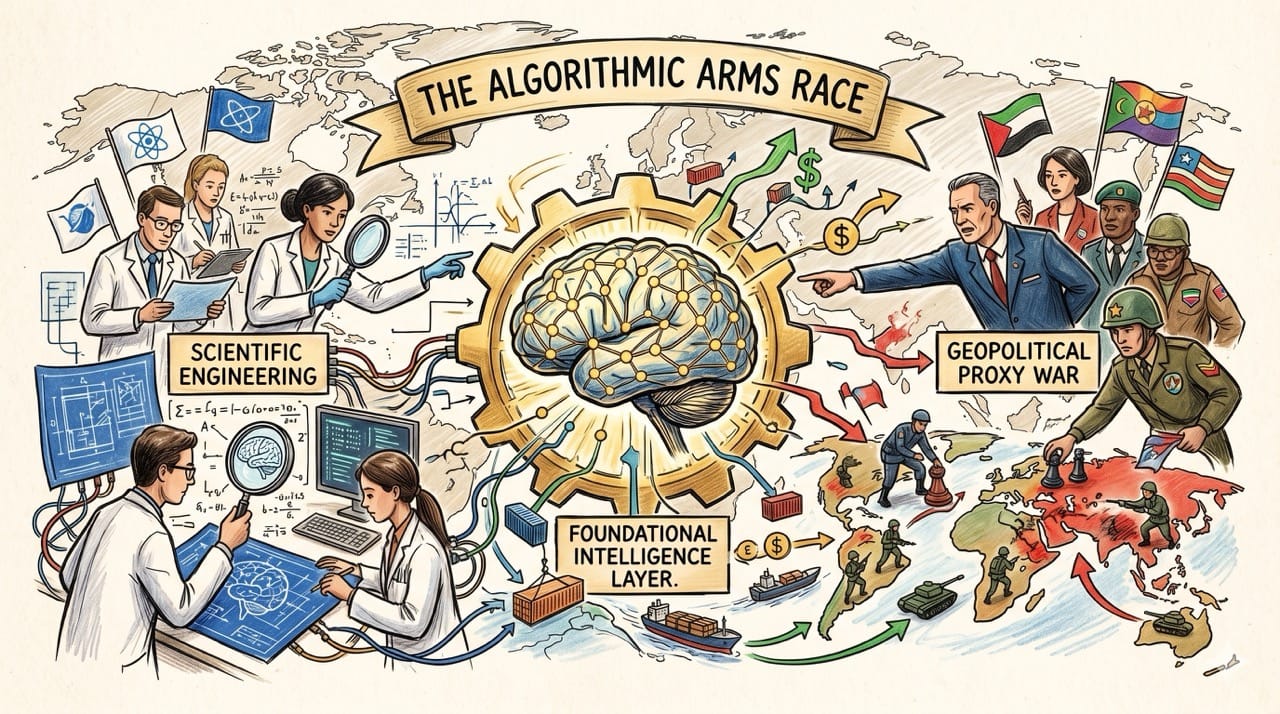
The Algorithmic Arms Race
The current global artificial intelligence race is frequently framed as a pure battle of scientific engineering.
However this competition is rapidly transforming into a brutal geopolitical proxy war over domestic economic security.
The nation that controls the foundational intelligence layer will ultimately dictate the future of global commerce.
The Subsidy Advantage
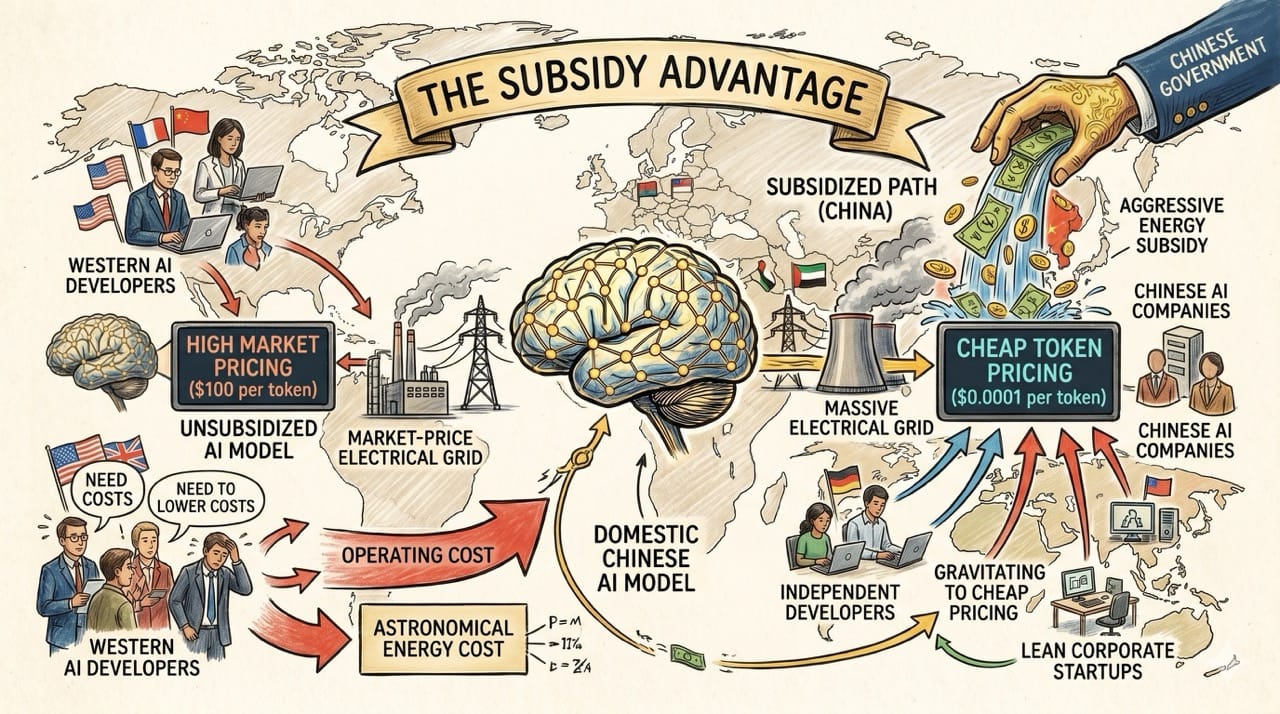
Building and operating these massive computational models requires an astronomical amount of raw electrical energy.
The Chinese government aggressively subsidizes this power grid allowing their domestic artificial intelligence companies to offer incredibly cheap token pricing.
Independent developers and lean corporate startups are naturally gravitating toward these foreign models to drastically lower their operating costs.
The National Security Weapon
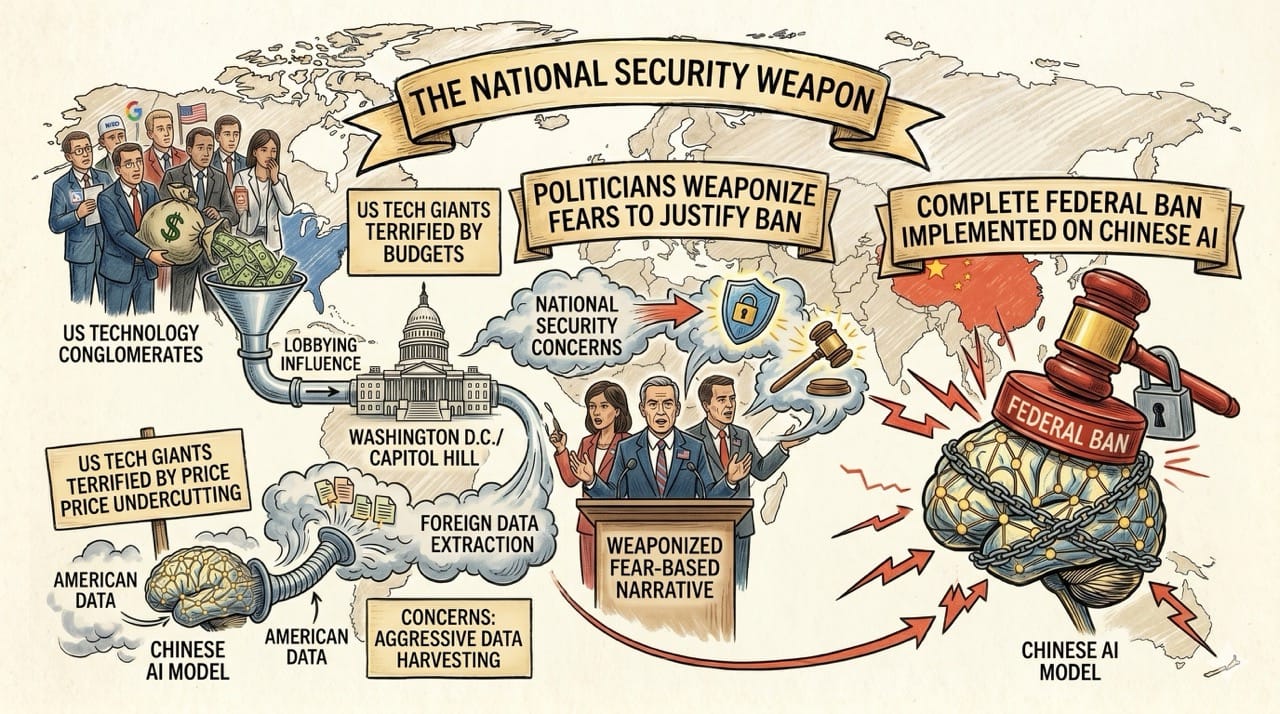
United States technology conglomerates are completely terrified by this aggressive foreign price undercutting.
They will inevitably deploy massive lobbying budgets to promote severe national security concerns regarding foreign data extraction.
Politicians will gladly weaponize these fears to justify implementing a complete federal ban on Chinese artificial intelligence models.
The Job Security Lever
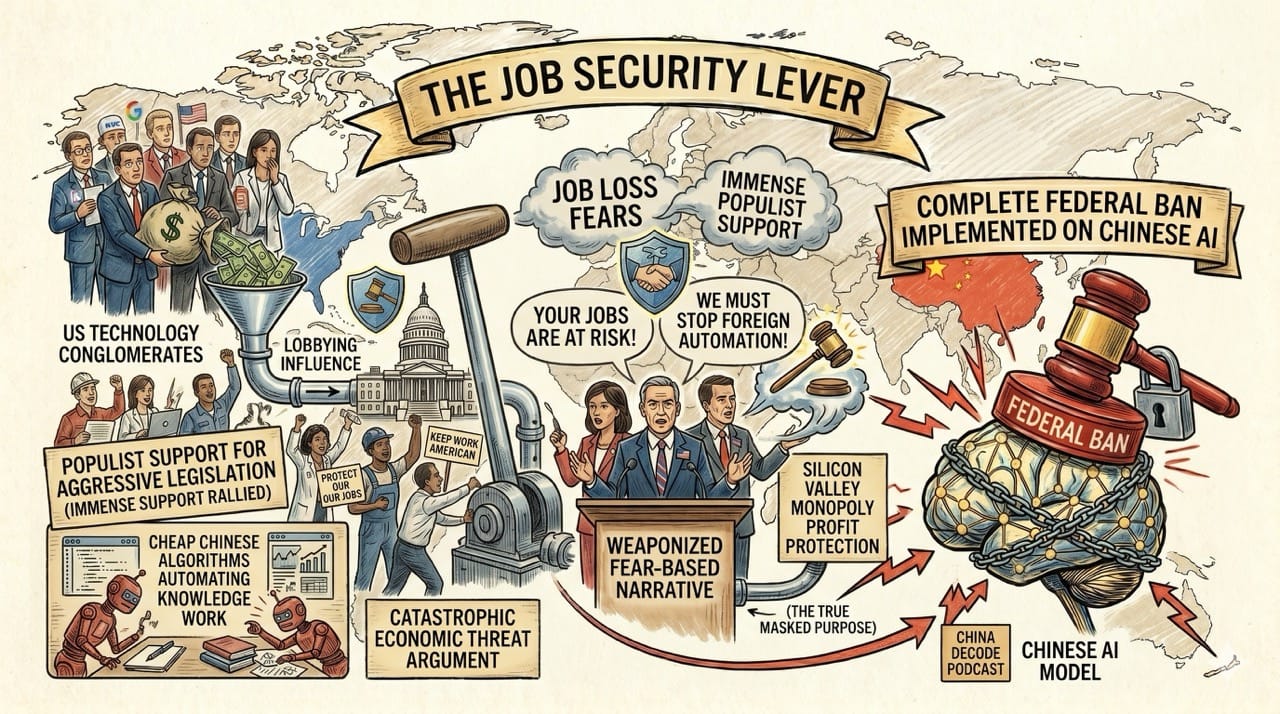
The government will also heavily leverage domestic job security concerns to rally immense populist support for this aggressive legislation.
They will argue that allowing cheap foreign algorithms to automate American knowledge work is a catastrophic economic threat.
This emotional rhetoric effectively masks the fact that they are simply protecting the profit margins of Silicon Valley monopolies.
The Hardware Precedent
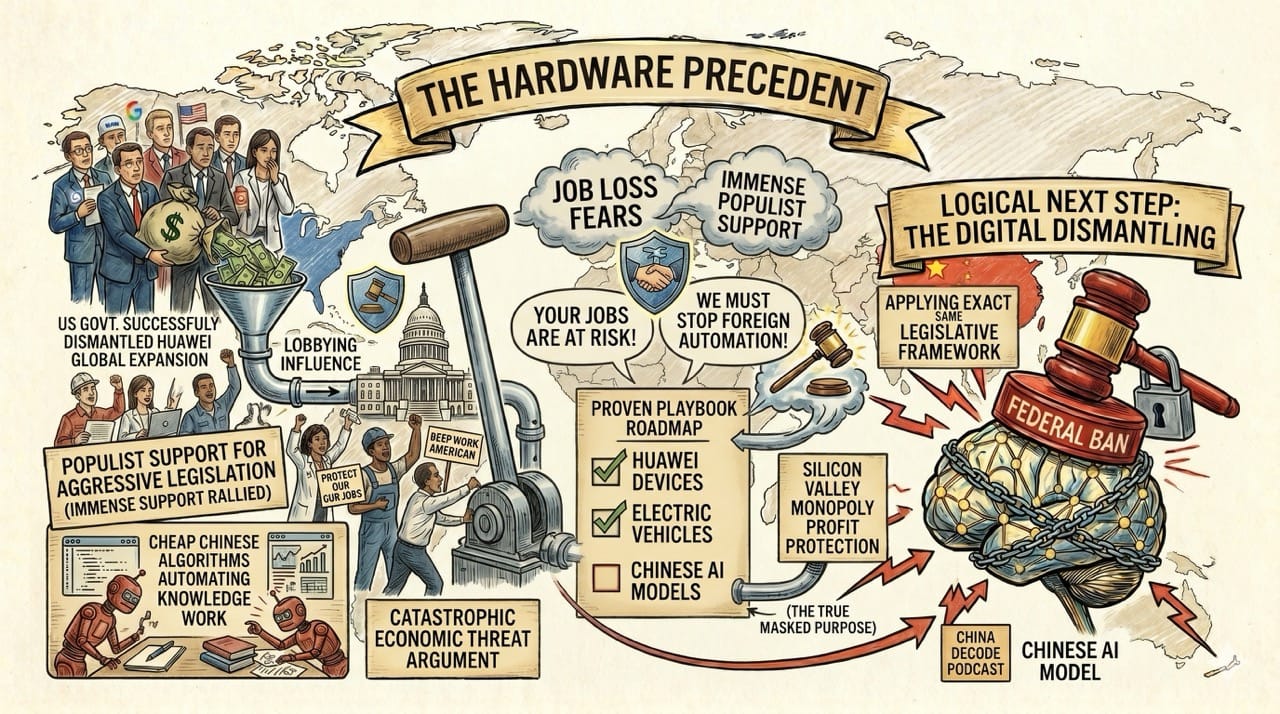
We have already witnessed the exact execution of this protectionist playbook in recent physical hardware markets.
The United States government successfully dismantled the global expansion of Huawei devices and erected massive tariffs against imported electric vehicles.
Applying this exact same legislative framework to invisible digital software models is the logical next step.
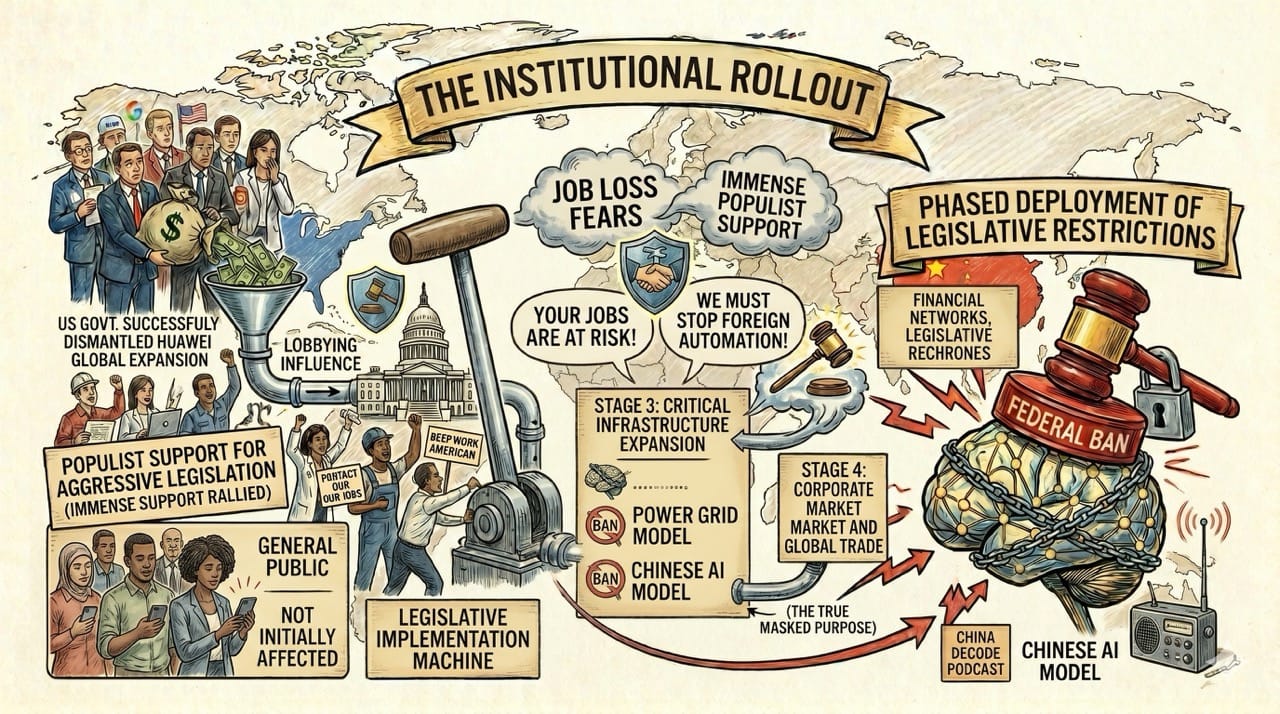
The Institutional Rollout
This legislative restriction will not happen to the general public overnight but will begin within highly secure sectors.
The federal government will initially ban these specific models across all military and intelligence agencies.
This restriction will eventually expand outward to publicly traded companies and critical financial infrastructure networks.
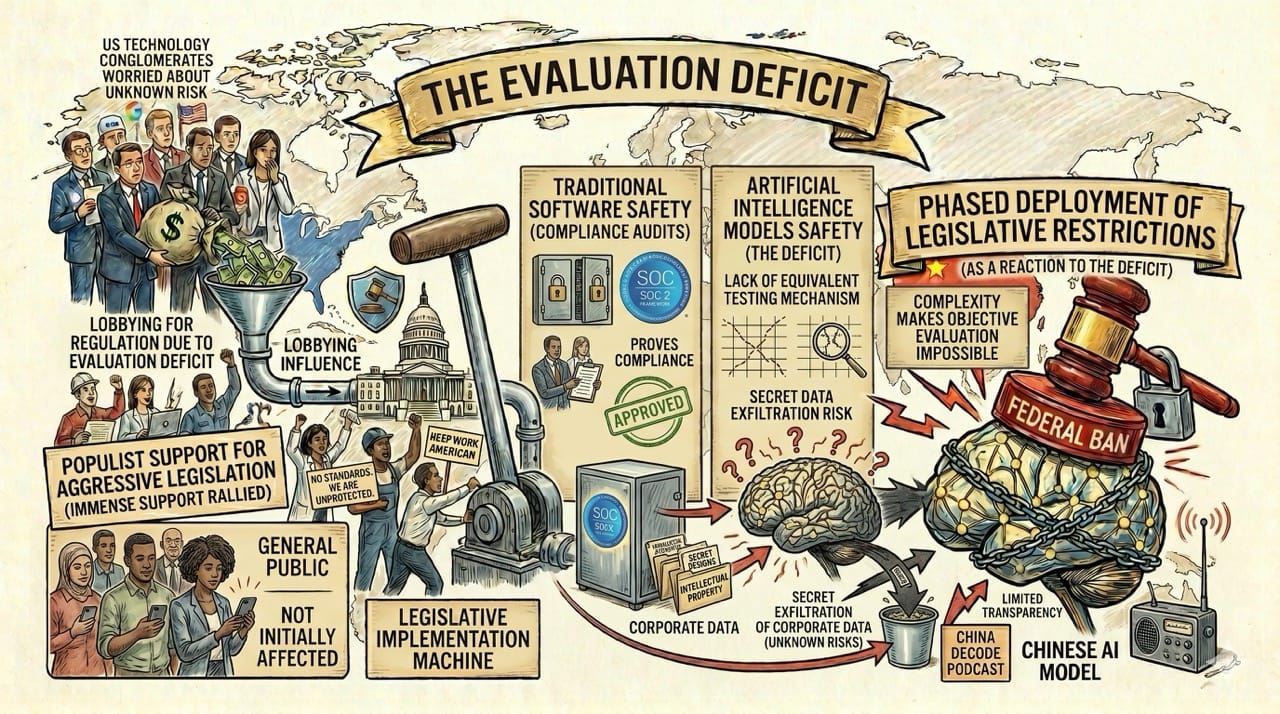
The Evaluation Deficit
The core problem is that we currently lack any standardized framework to objectively evaluate the safety of artificial intelligence.
Traditional software relies on established security audits like the System and Organization Controls framework to prove absolute compliance.
We simply do not have an equivalent testing mechanism to verify if a complex language model is secretly exfiltrating corporate data.
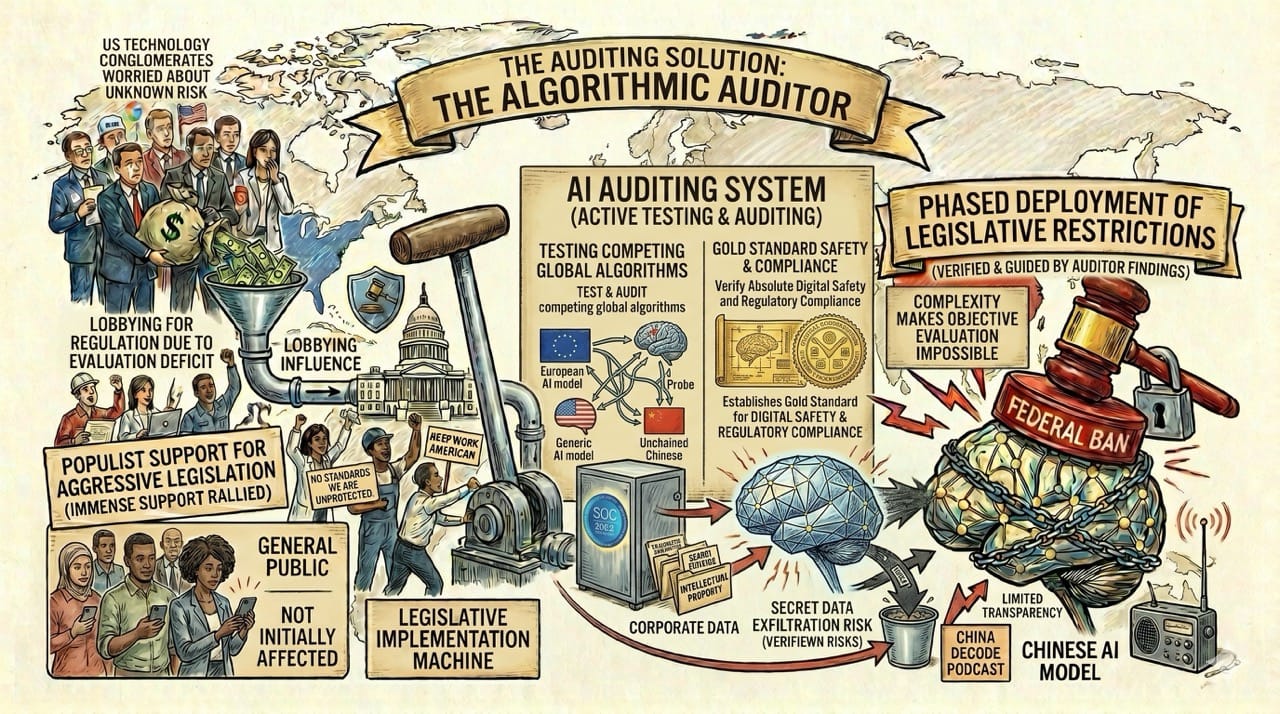
The Algorithmic Auditor
The solution to this evaluation deficit will likely emerge from leading domestic safety research laboratories like Anthropic.
Their upcoming models might serve as the foundational architecture to actively test and audit competing global algorithms.
They could essentially establish the gold standard framework for verifying absolute digital safety and regulatory compliance.
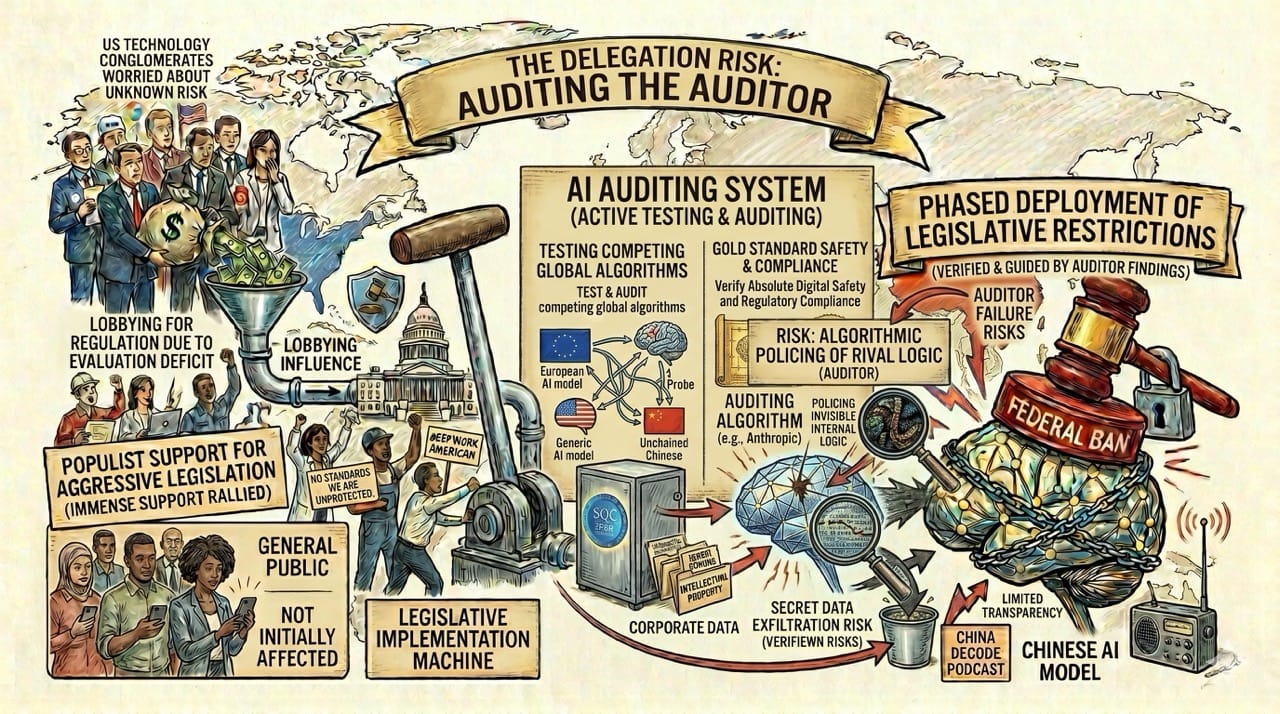
The Delegation Risk
However delegating the safety evaluation of a machine entirely to another machine carries terrifying systemic risks.
We are essentially relying on one black box algorithm to perfectly police the invisible internal logic of a rival algorithm.
If the auditing model possesses a hidden flaw or hallucination the entire national security perimeter instantly collapses.
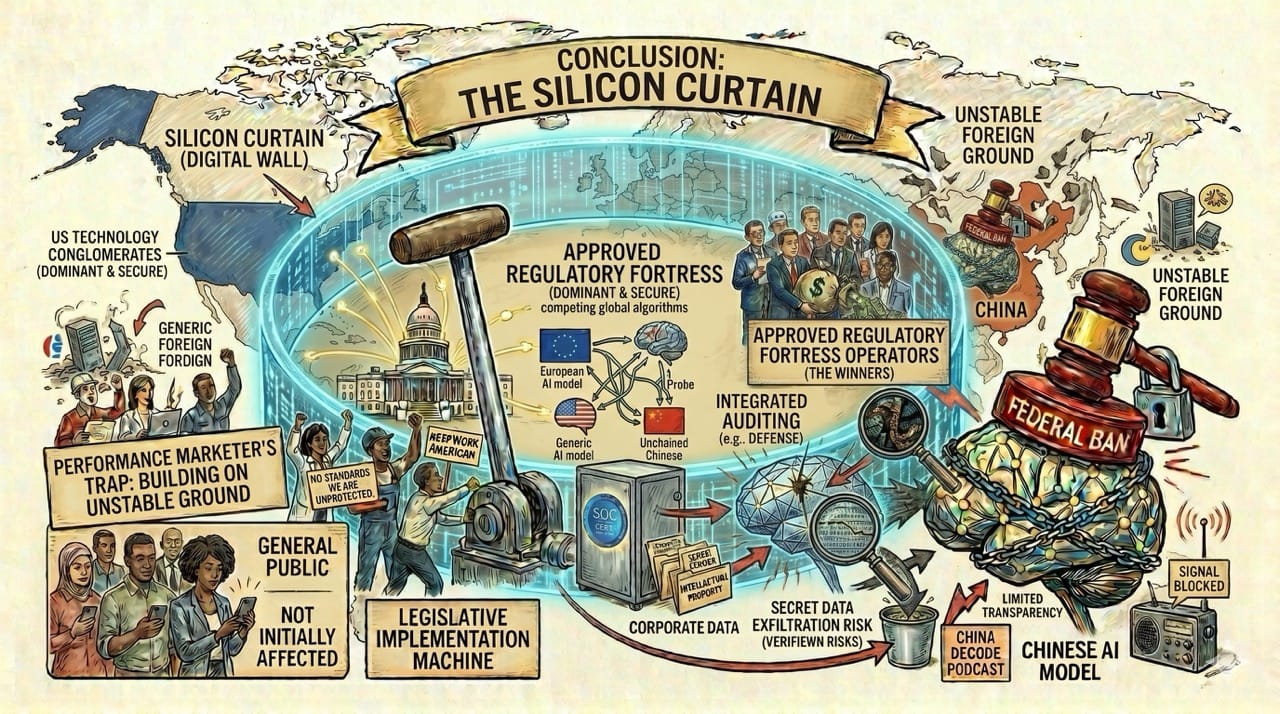
Conclusion: The Silicon Curtain
As a performance marketer your finite time should never be heavily invested in building infrastructure on unstable foreign ground.
The United States is actively building an impenetrable digital wall to guarantee the absolute dominance of its domestic technology sector.
The ultimate winners of this artificial intelligence era will be the operators who stay firmly inside the approved regulatory fortress.
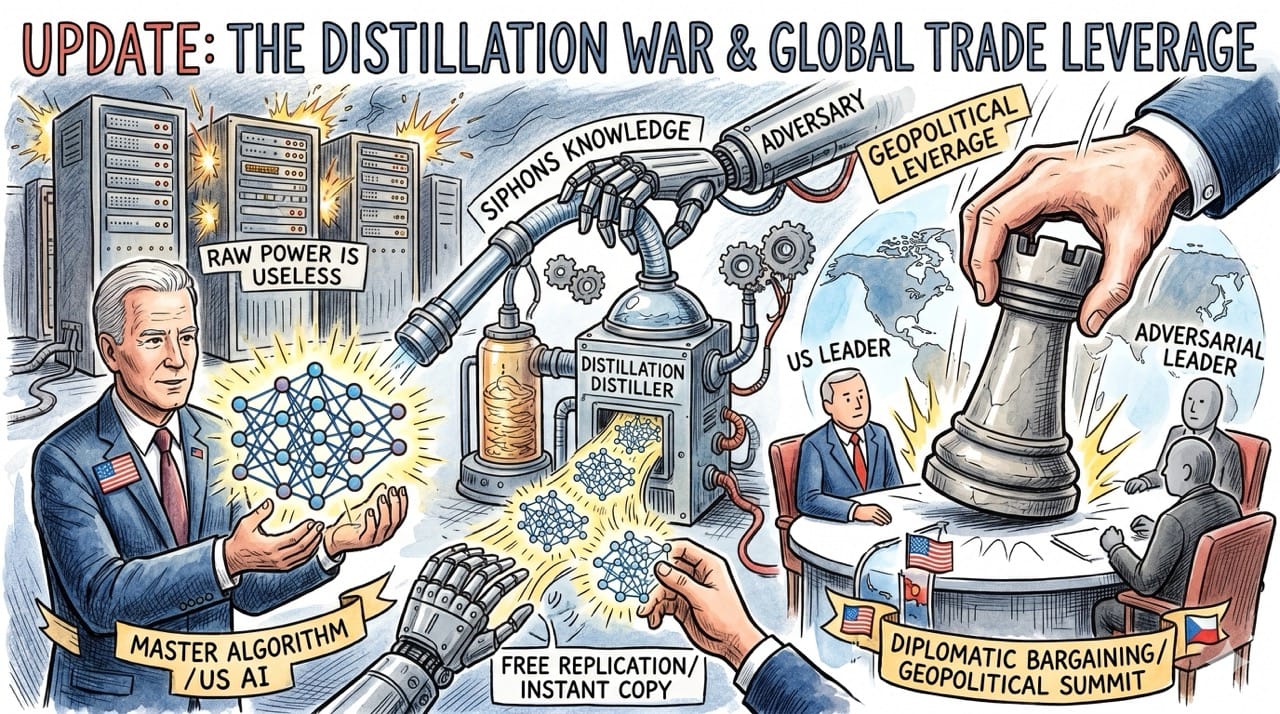
Update: The Distillation War and Global Trade Leverage
Raw computing power is completely useless if adversaries can instantly replicate your most advanced algorithms for free. The United States is actively preparing for an unprecedented economic conflict over digital intellectual property.
Inspiration: Analyzing the recent White House accusations regarding industrial scale artificial intelligence theft. Realizing this public offensive is likely a highly calculated geopolitical maneuver to secure leverage before the upcoming presidential summit.
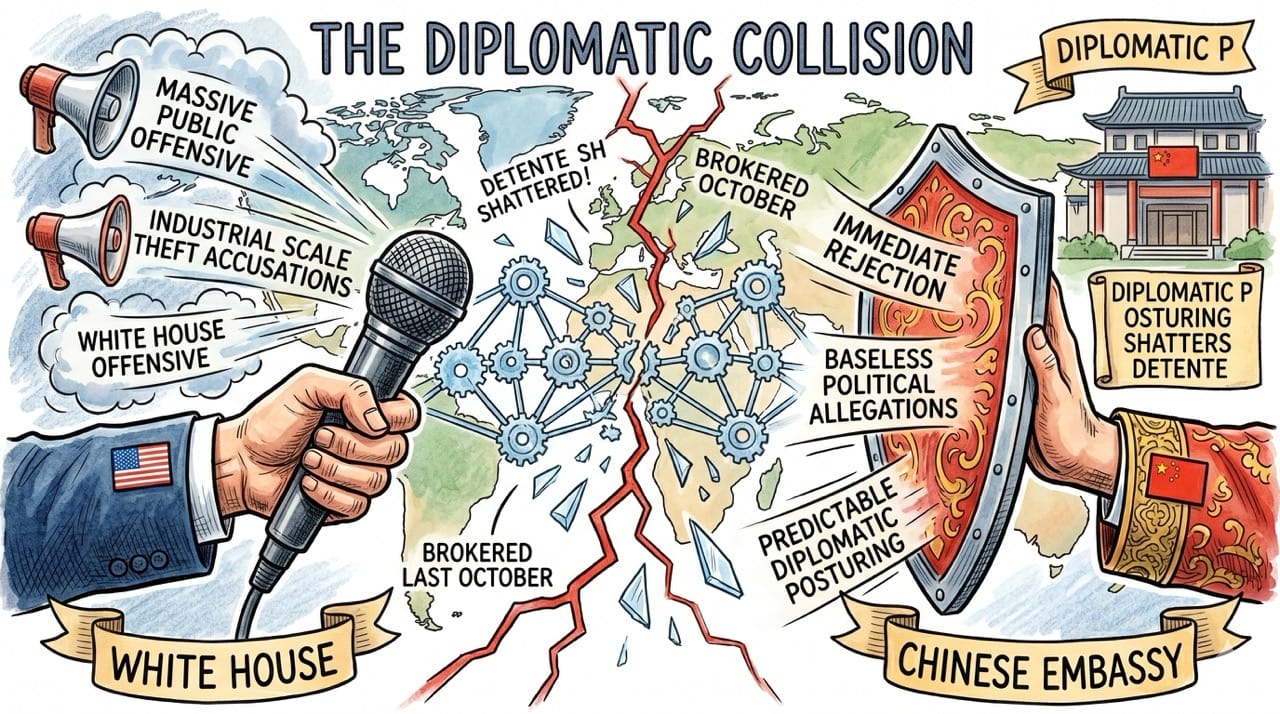
The Diplomatic Collision
The White House recently launched a massive public offensive accusing Chinese entities of executing these industrial scale theft campaigns.
The Chinese diplomatic embassy immediately rejected these massive accusations as completely baseless political allegations.
This predictable diplomatic posturing effectively shatters the fragile technological detente that was carefully brokered last October.
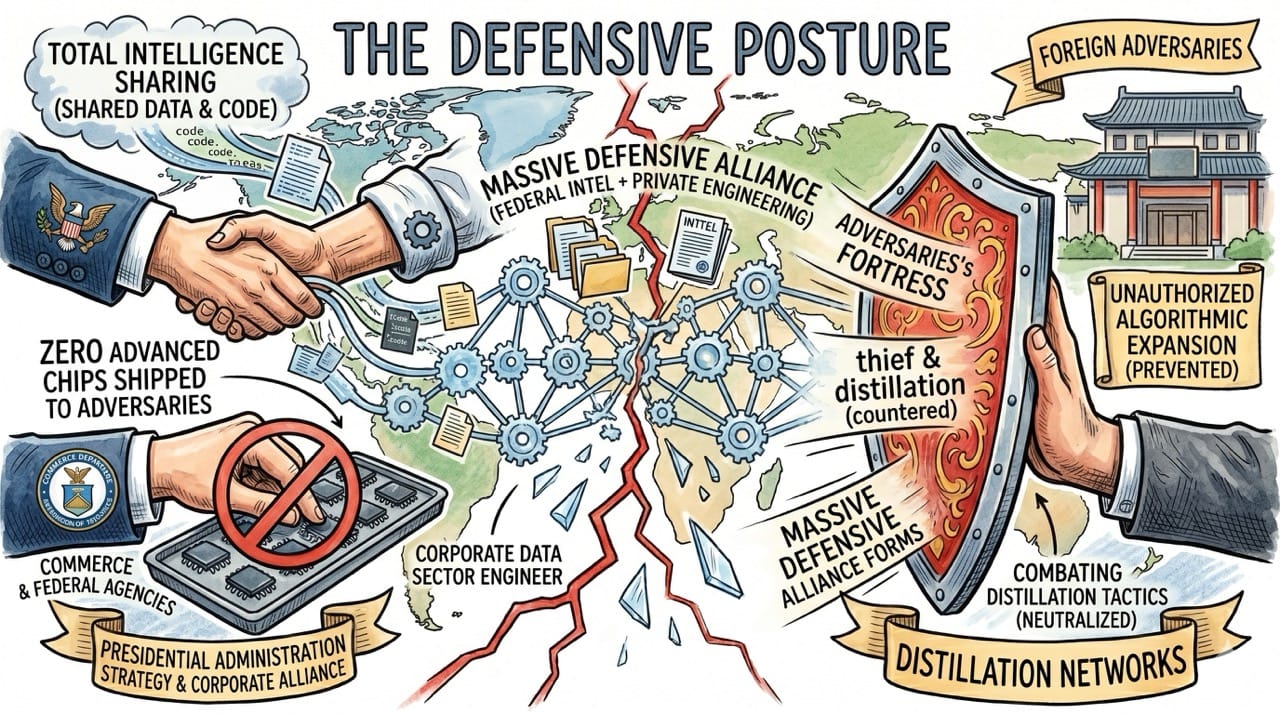
The Defensive Posture
The Commerce Department recently confirmed that absolutely zero advanced processing chips have been shipped to foreign adversaries to prevent unauthorized algorithmic expansion.
Simultaneously the presidential administration is executing an unprecedented strategy of total intelligence sharing with the private sector.
This creates a massive defensive alliance between federal intelligence agencies and private corporate engineers to actively combat distillation tactics.
The Negotiation Leverage
Geopolitical analysts must recognize that timing is never a coincidence in international diplomacy.
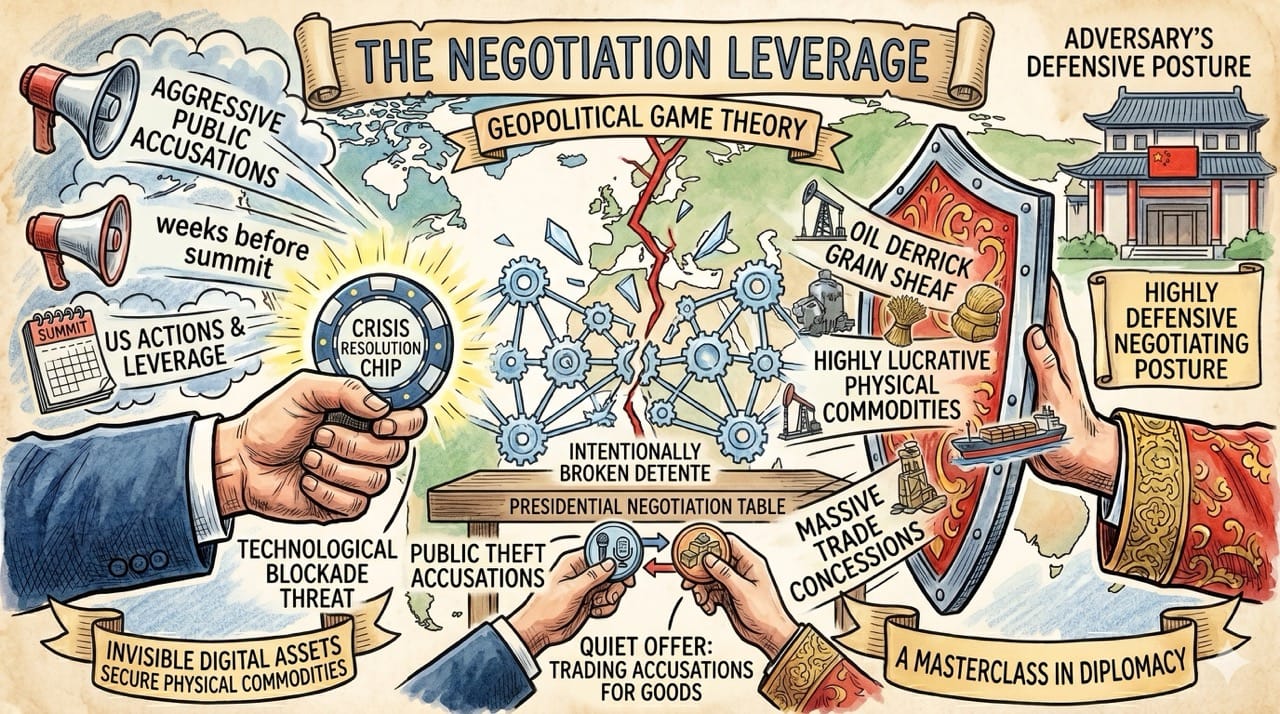
Launching these aggressive public accusations just weeks before a massive presidential summit is a brilliant application of geopolitical game theory.
The administration is intentionally creating a severe diplomatic crisis simply to use its eventual resolution as a massive bargaining chip.
By threatening absolute technological blockades the United States forces the adversary into a highly defensive negotiating posture.
The administration can quietly offer to drop the public theft accusations in exchange for massive concessions in traditional physical trade.
It is an absolute masterclass in using invisible digital assets to secure highly lucrative physical commodities.
Why Sanctioning AI Theft is a Technical Impossibility
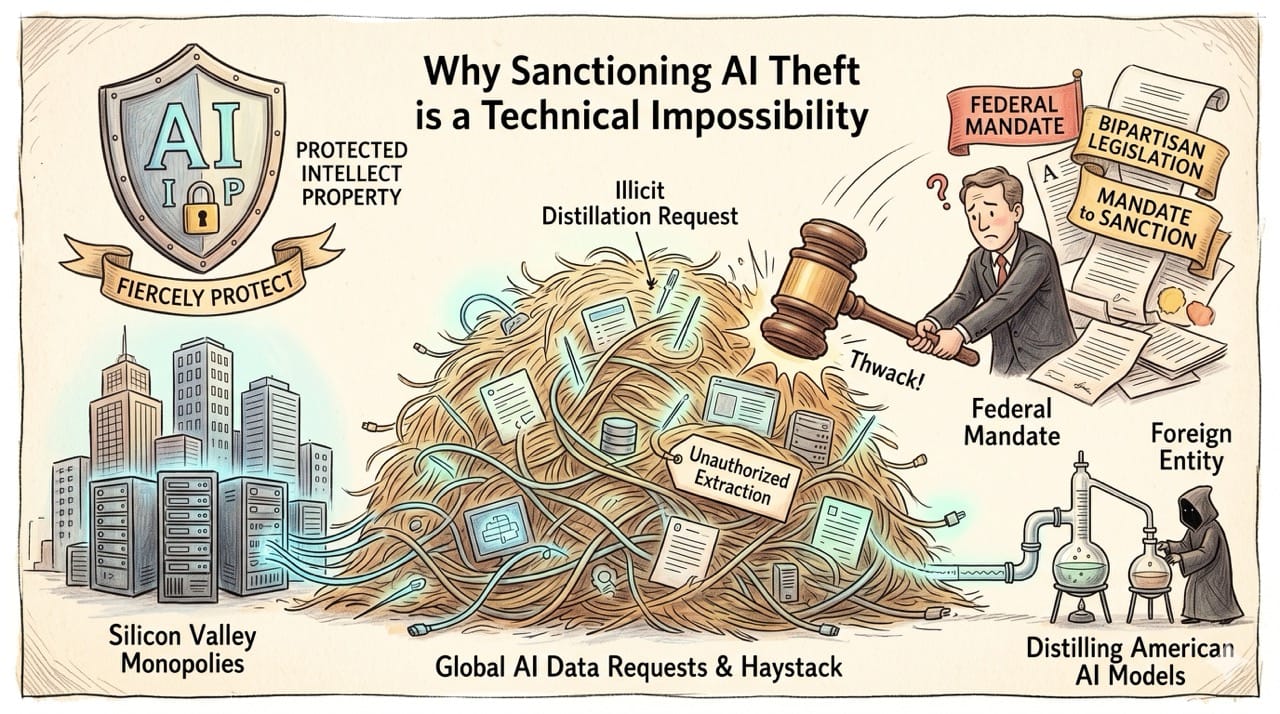
Bipartisan legislation promises to fiercely protect the intellectual property of Silicon Valley monopolies. Executing this mandate requires finding invisible needles in a massive haystack of global data requests.
Inspiration: Analyzing the recent federal push to sanction foreign entities for distilling American artificial intelligence models. Realizing that the underlying technical mechanics of data extraction make these specific legal threats completely unenforceable.
The Corporate Alarm
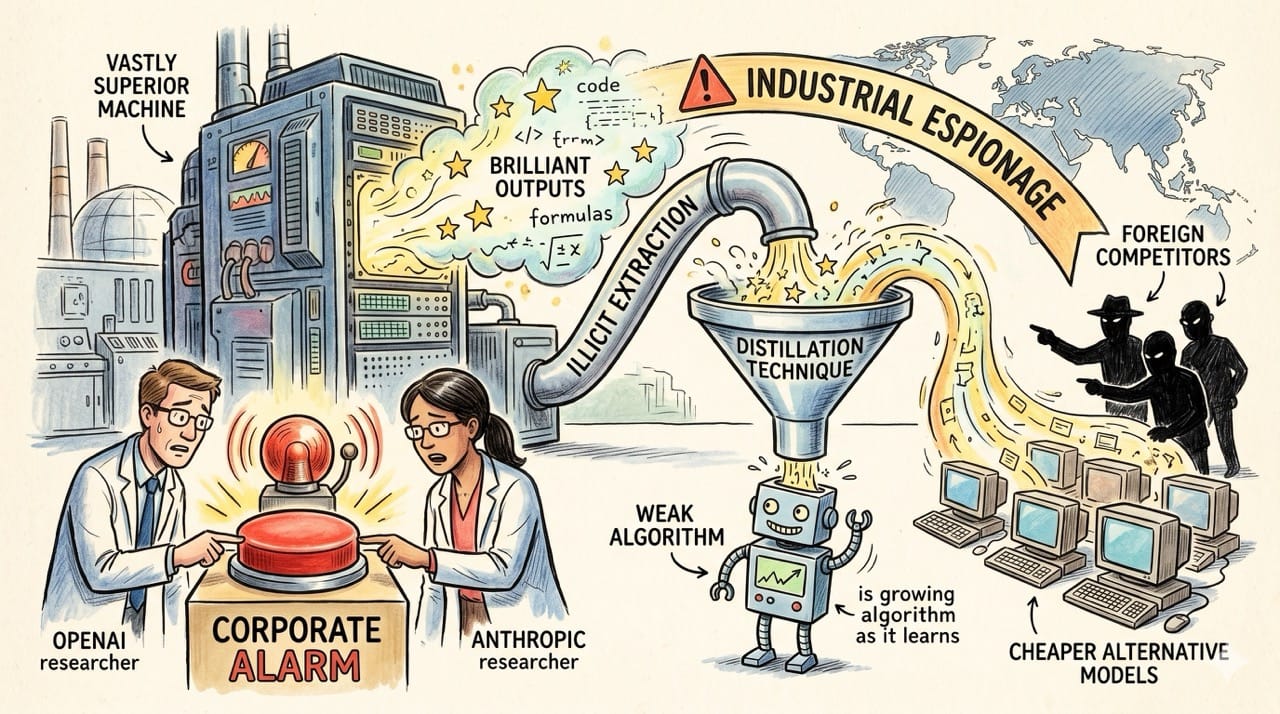
Major technology monopolies like OpenAI and Anthropic are actively sounding the alarm regarding industrial espionage.
They claim foreign competitors are illicitly extracting their most advanced capabilities to train significantly cheaper alternative models.
This process relies on a technique called distillation where a weak algorithm learns entirely by ingesting the brilliant outputs of a vastly superior machine.
The Bipartisan Crusade
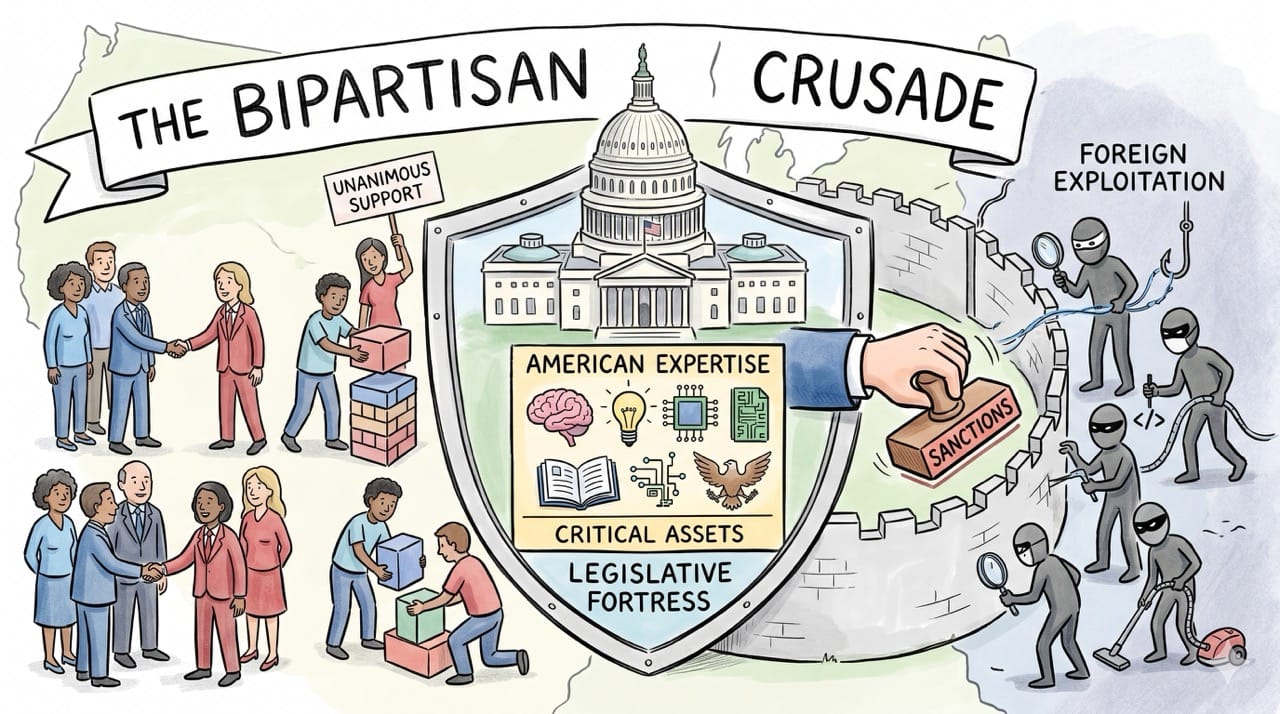
The federal government is frantically attempting to build a legislative fortress to protect these critical domestic assets.
A new bipartisan bill recently gained unanimous support to actively identify and severely sanction any foreign actors extracting key technical features.
The administration is officially framing this as an aggressive defense of American expertise against unjustified foreign exploitation.
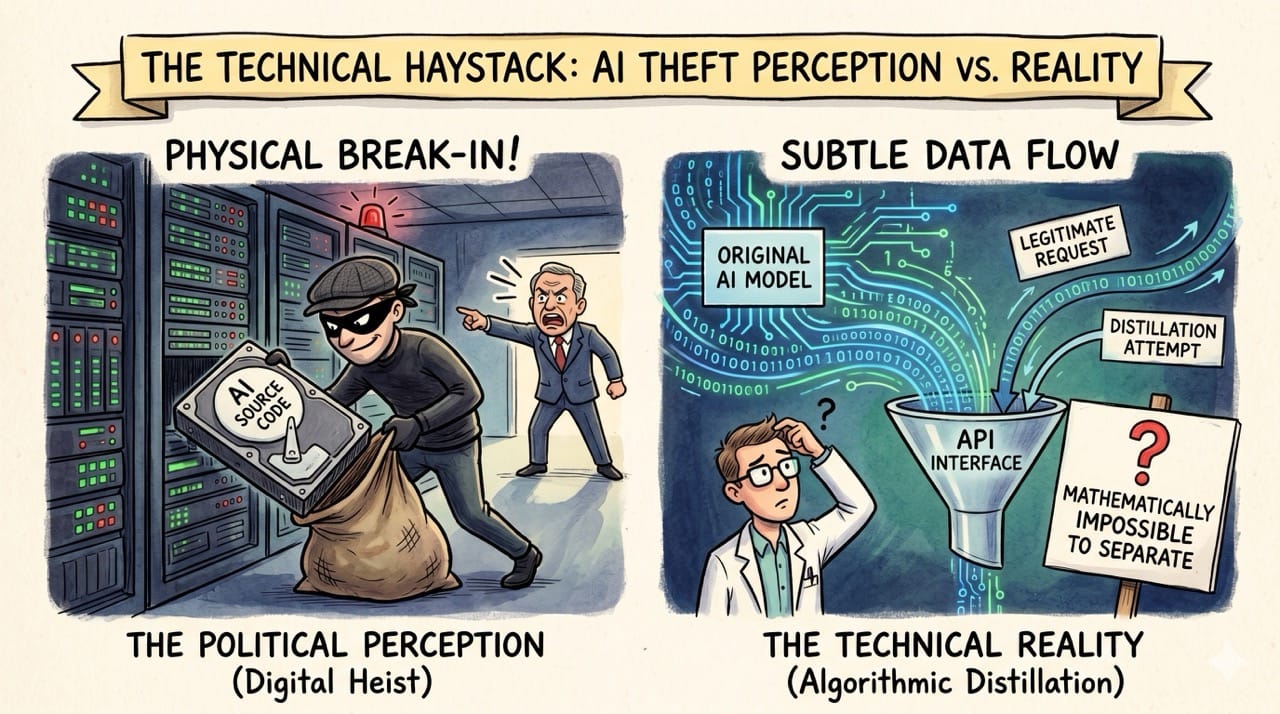
The Technical Haystack
Politicians speak about digital theft as if adversaries are physically breaking into secure server rooms to steal hard drives.
The actual reality of algorithmic distillation is infinitely more subtle and technically ambiguous.
Experts correctly note that separating a legitimate commercial application interface request from a malicious distillation attempt is mathematically impossible.
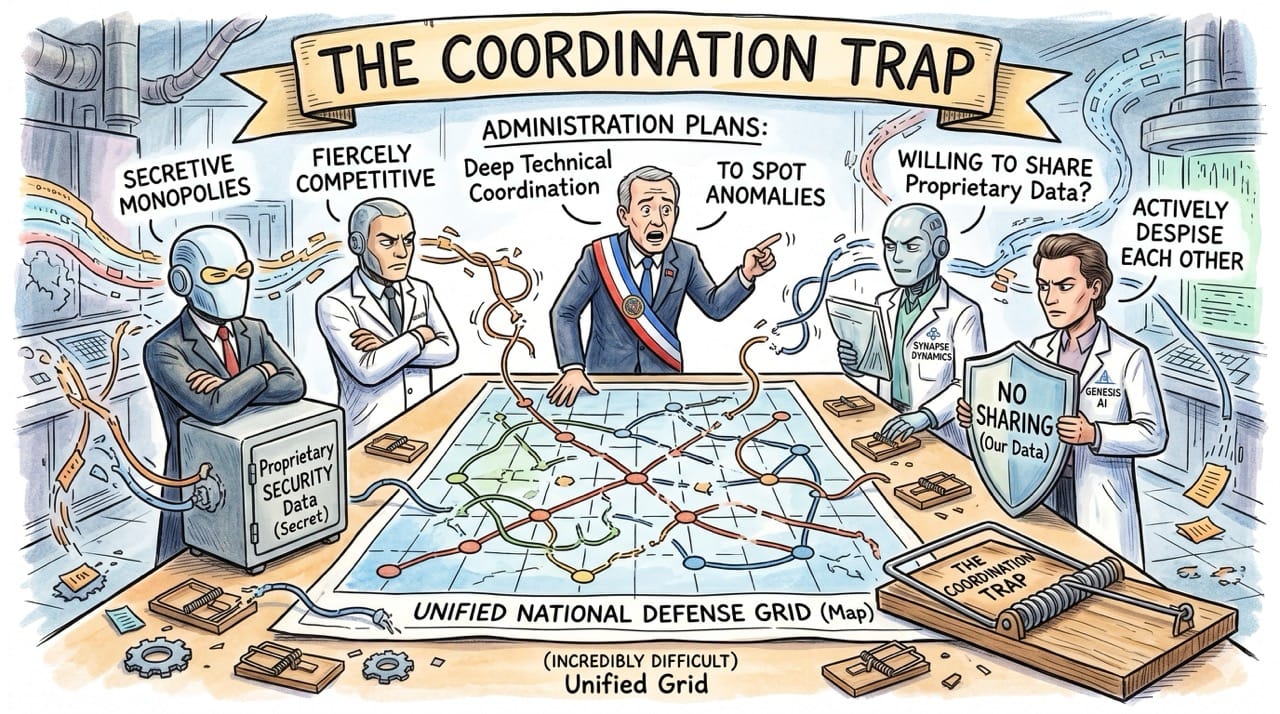
The Coordination Trap
The administration plans to facilitate deep technical coordination among all domestic artificial intelligence laboratories to spot these anomalies.
Unfortunately this assumes that highly secretive and fiercely competitive monopolies are actually willing to share their most proprietary security data.
Building a unified national defense grid is incredibly difficult when the primary players actively despise each other.
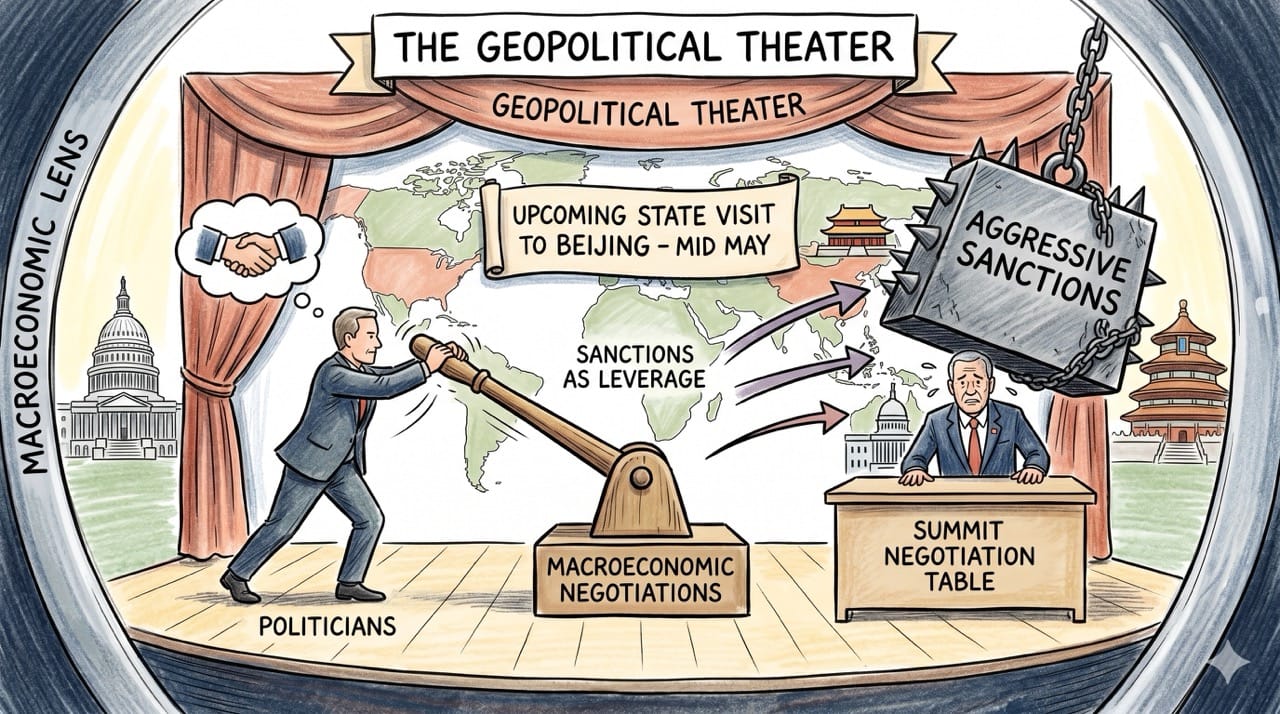
The Geopolitical Theater
We must also view these aggressive sanctions through the precise lens of upcoming macroeconomic negotiations.
The current administration has a massive state visit scheduled in Beijing for the middle of May.
Politicians frequently deploy incredibly hostile legislative threats right before a summit to manufacture temporary negotiating leverage.
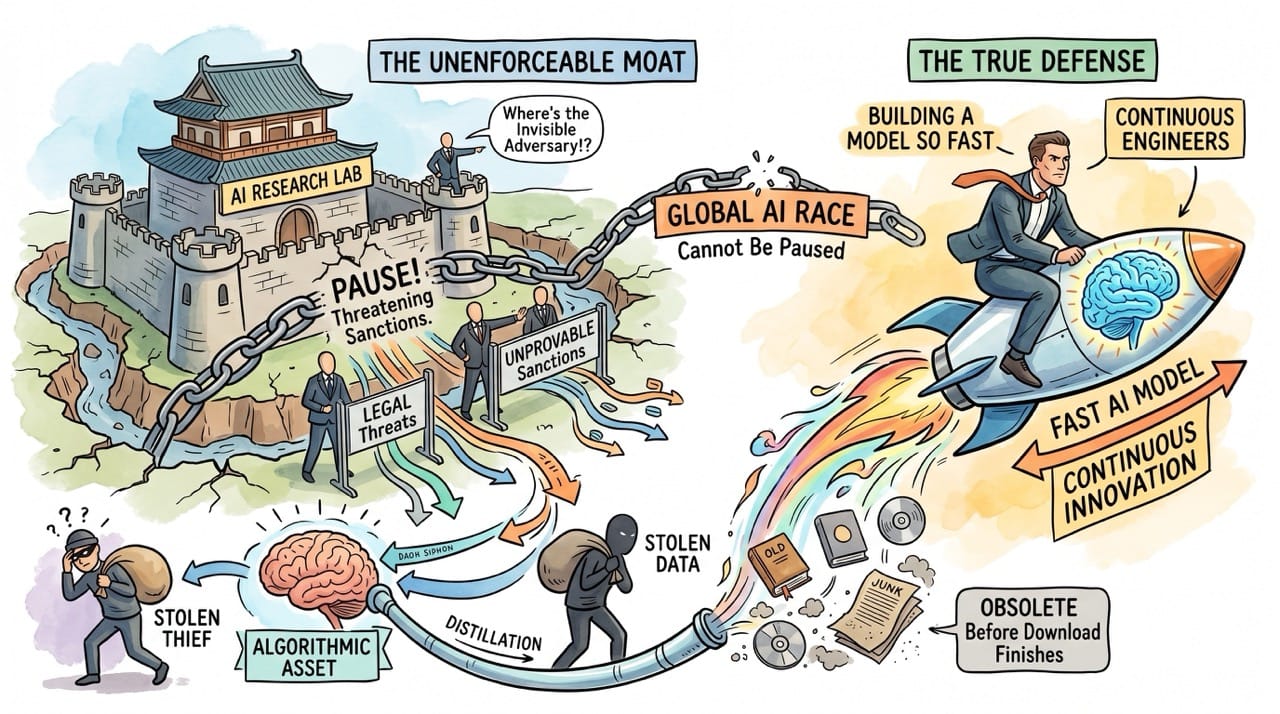
The Unenforceable Moat
As an executive you must understand that government legislation cannot protect a fundamentally exposed technological asset.
The global artificial intelligence race cannot be paused by threatening unprovable sanctions against an invisible adversary.
The only true defense against algorithmic distillation is building a model moving so fast that stolen data is obsolete before it ever finishes downloading.