Why the AI Memory Shortage is a Secret Consumer Victory: The Silicon Pendulum
We assume massive corporate demand for computer hardware permanently destroys consumer affordability. In reality the current artificial intelligence memory shortage is aggressively funding the exact innovations that will eventually flood the retail market with incredibly cheap storage.
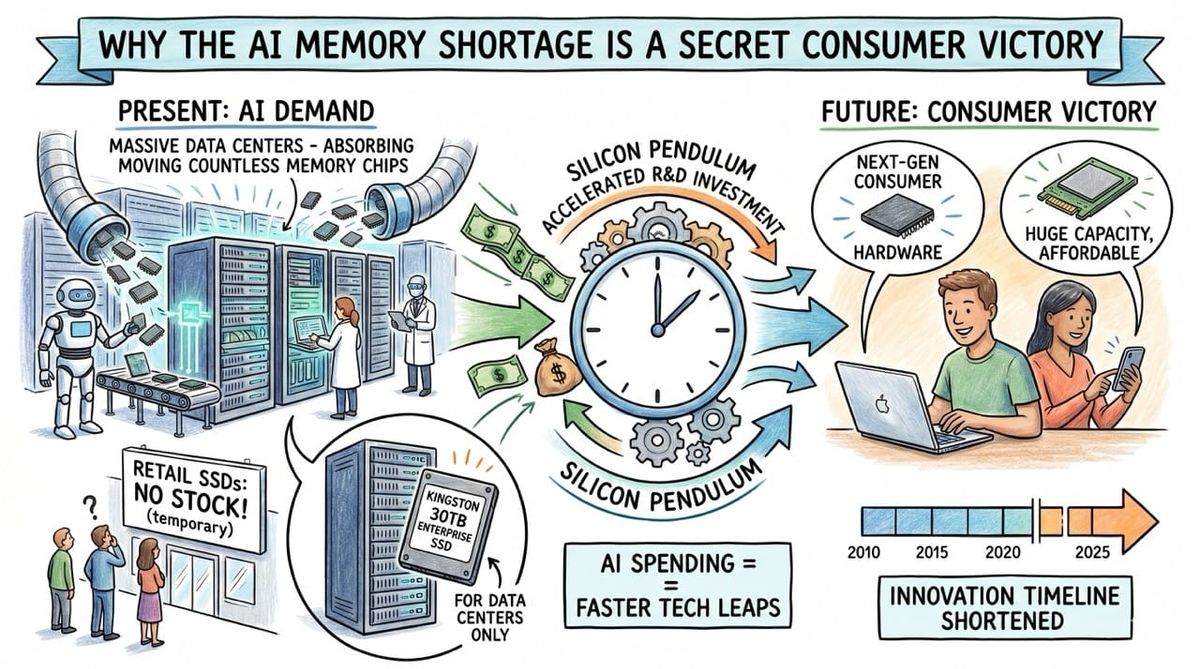
Massive data centers are currently absorbing the entire global supply of advanced memory chips. This temporary retail scarcity is quietly financing a massive technological leap that will ultimately benefit the everyday consumer.
Inspiration: Observing recent industry news regarding Kingston launching an incredibly massive thirty terabyte solid state drive strictly for enterprise servers. Realizing that the insatiable algorithmic appetite for memory is violently accelerating the timeline for next generation consumer hardware.
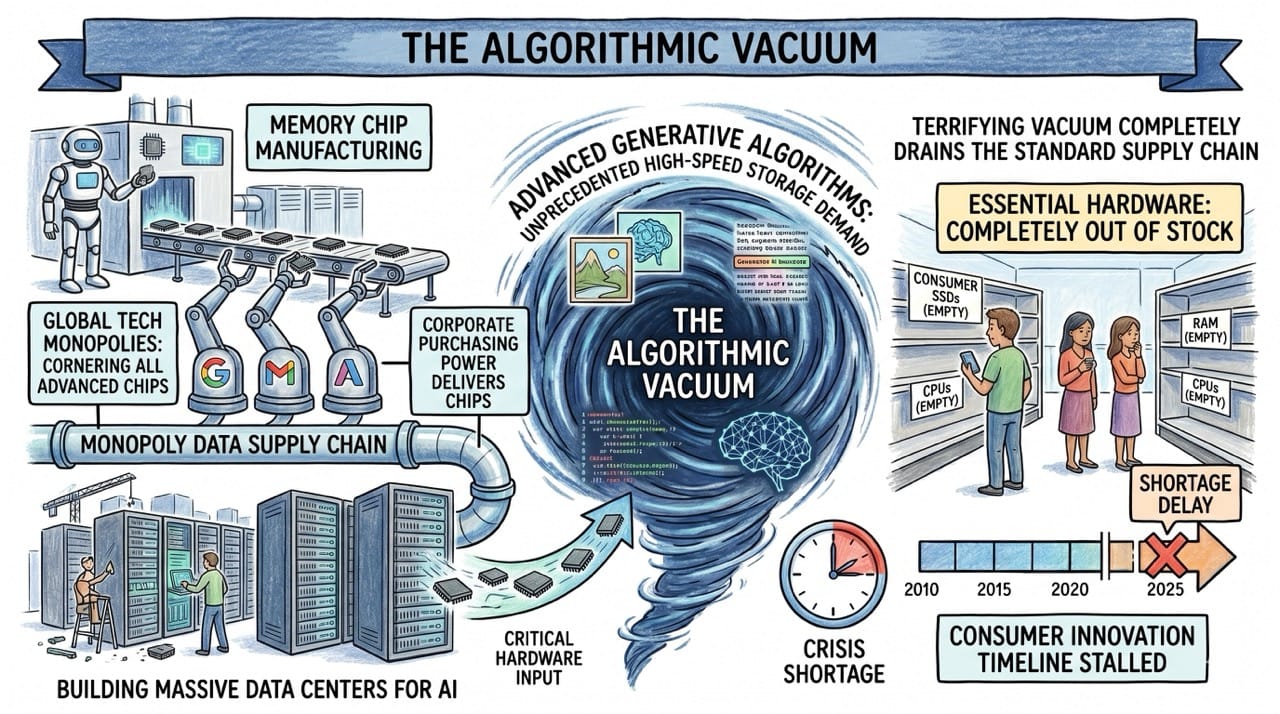
The Algorithmic Vacuum
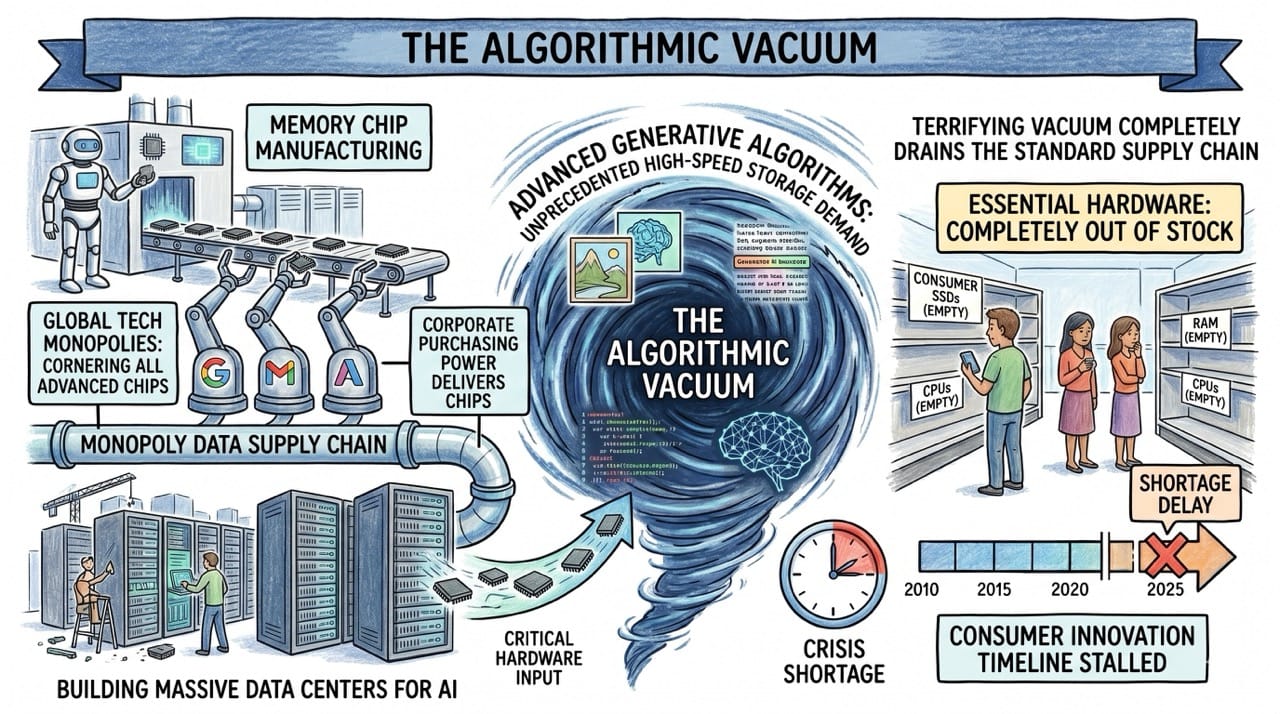
The explosion of advanced generative algorithms requires absolutely unprecedented amounts of high speed digital storage to function properly.
Global technology monopolies are currently purchasing every single advanced memory chip rolling off the manufacturing lines to build massive new data centers.
This insatiable corporate appetite creates a terrifying vacuum that completely drains the standard supply chain of essential hardware components.
The Retail Squeeze
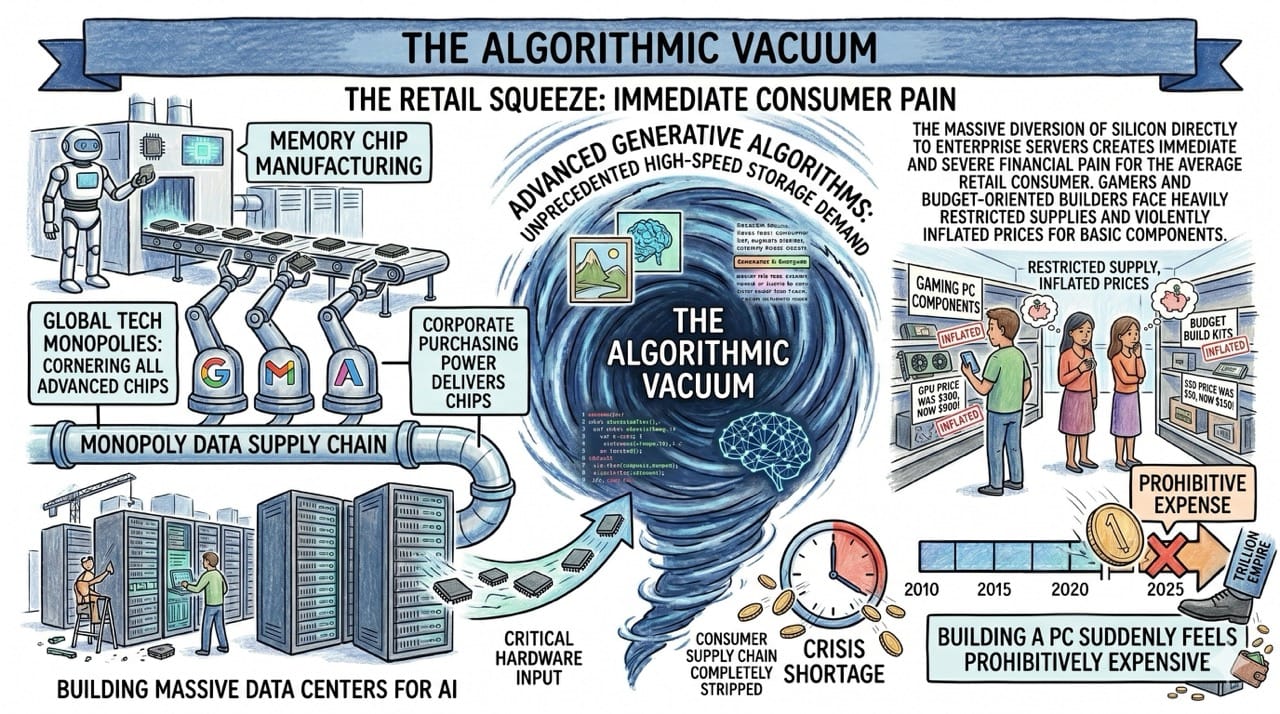
This massive diversion of silicon directly to enterprise servers creates immediate and severe financial pain for the average retail consumer.
Gamers and budget oriented computer builders are facing heavily restricted supplies and violently inflated prices for basic storage components.
Building a standard personal computer suddenly feels prohibitively expensive simply because you are directly bidding against trillion dollar technology empires.
The Innovation Engine
While this temporary retail squeeze feels incredibly frustrating it is actually the ultimate catalyst for profound technological innovation.
The massive influx of enterprise capital allows hardware manufacturers to aggressively fund completely unprecedented research and development cycles.
Companies like Kingston are currently pushing the absolute physical boundaries of read and write speeds solely because massive corporations are willing to pay any price.
The Pendulum Swing
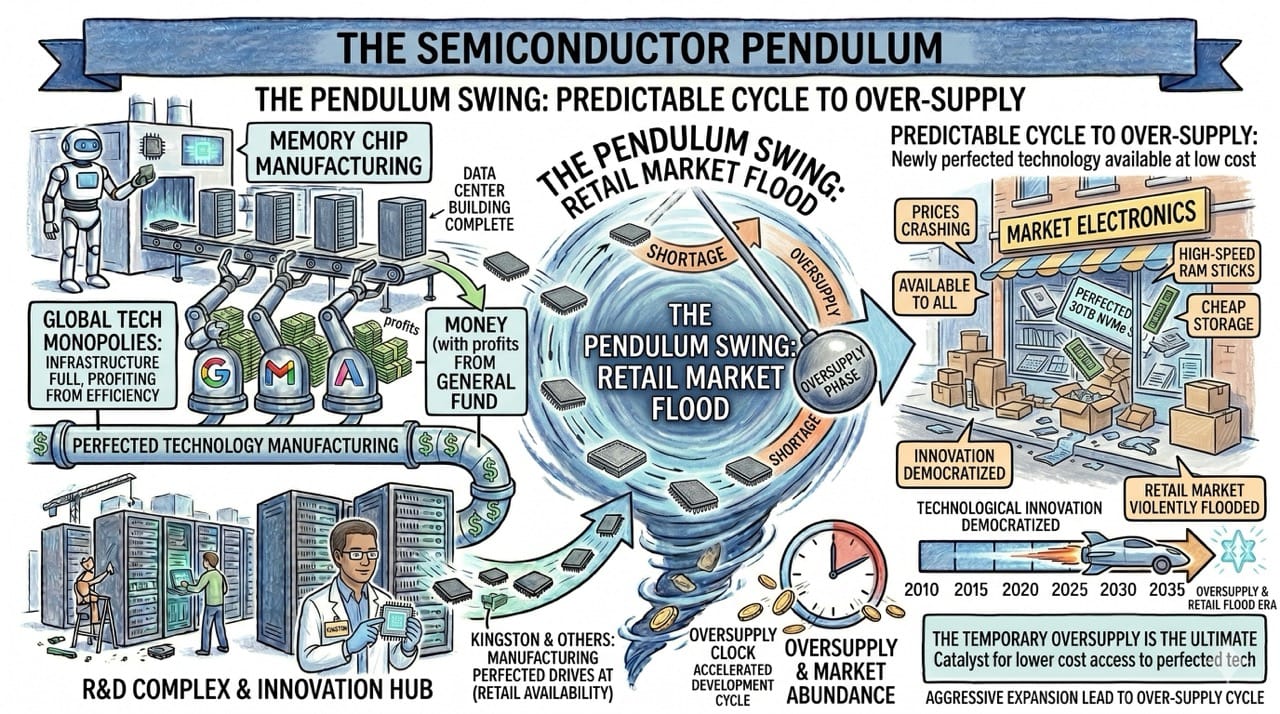
The semiconductor industry operates on a highly predictable cycle of aggressive expansion followed by massive oversupply.
Once these colossal data centers are fully built the manufacturing lines will still be producing incredibly advanced memory chips at maximum capacity.
The global supply chain pendulum will inevitably swing backward and violently flood the retail market with this newly perfected technology.
The Consumer Victory
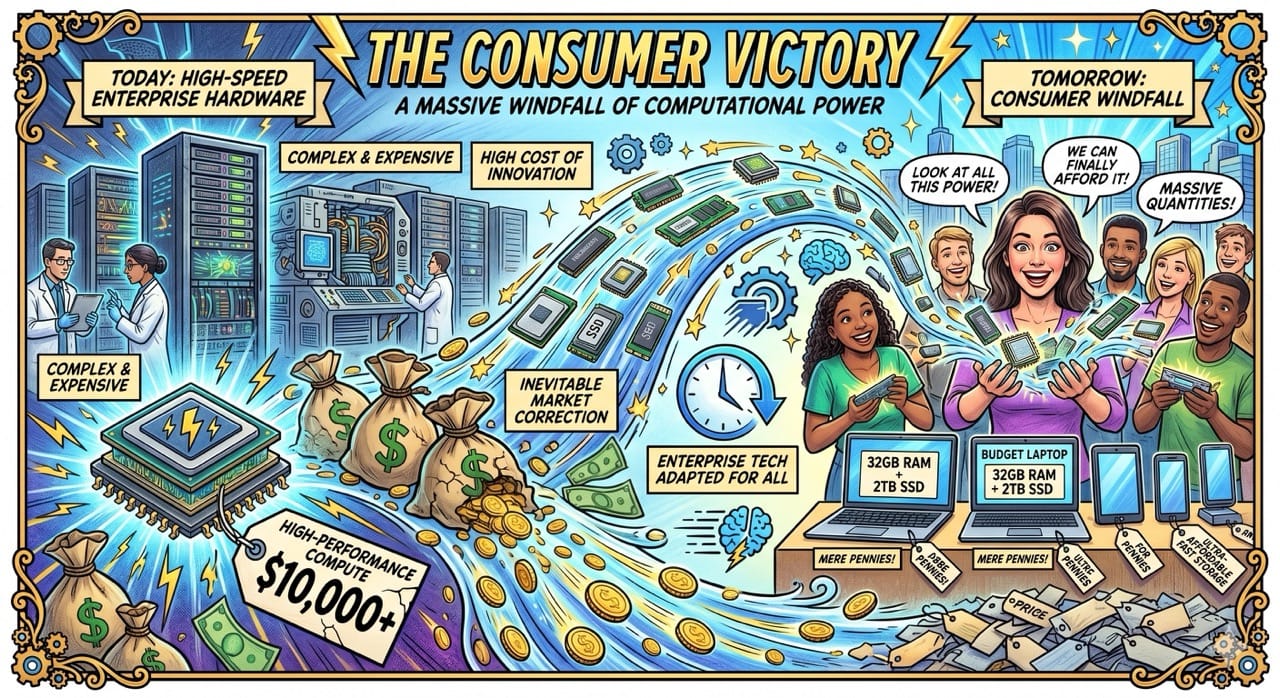
When this inevitable market correction occurs the everyday consumer will experience an absolute windfall of computational power.
The incredibly expensive enterprise hardware of today will rapidly become the highly affordable standard storage for budget laptops tomorrow.
Consumers will eventually purchase massive quantities of lightning fast memory for mere pennies on the dollar.
Historical Precedents
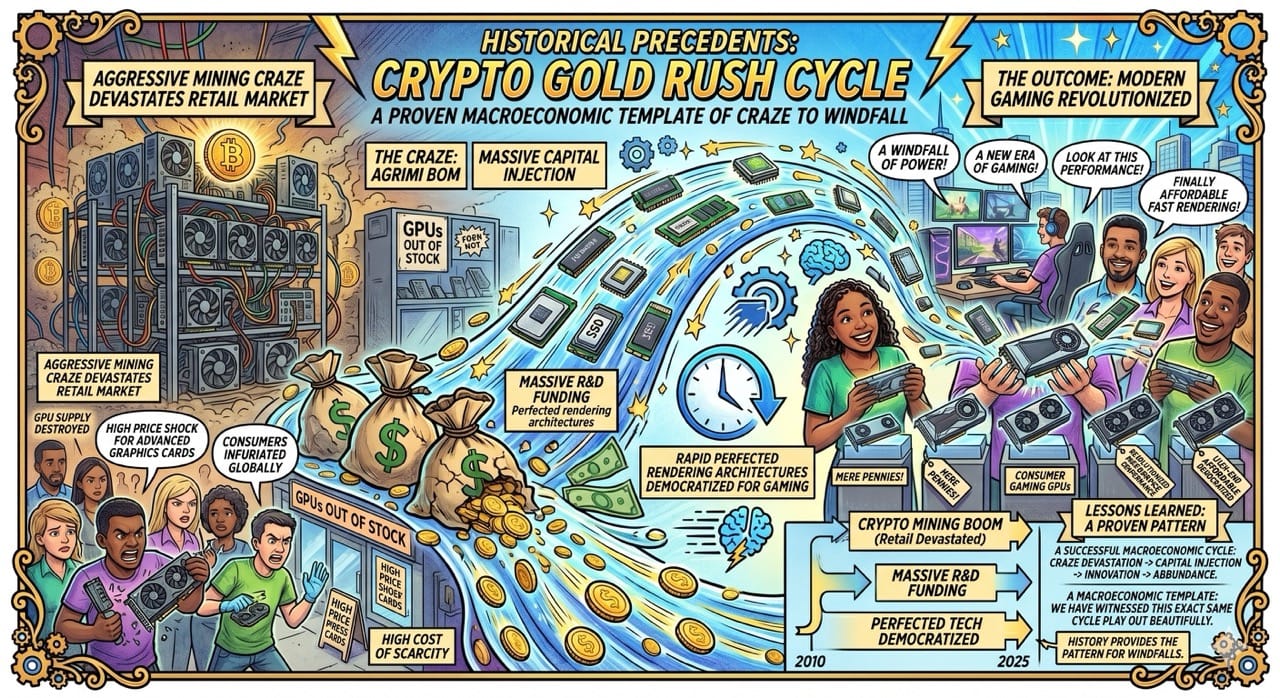
We have witnessed this exact same macroeconomic cycle play out beautifully during previous technological gold rushes.
The aggressive cryptocurrency mining craze temporarily destroyed the retail market for advanced graphics cards and infuriated millions of global consumers.
However that exact massive capital injection allowed manufacturers to rapidly perfect rendering architectures that eventually revolutionized modern consumer gaming.
Conclusion: The Patient Capital
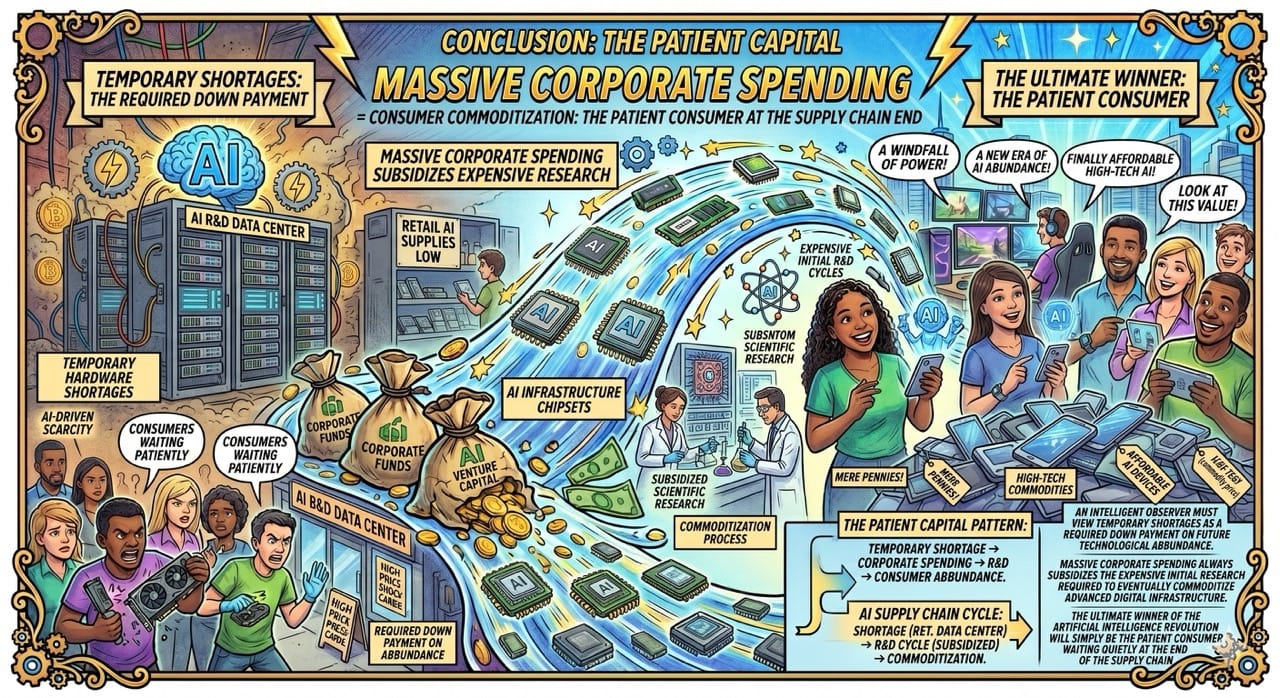
An intelligent observer must view temporary hardware shortages as a required down payment on future technological abundance.
Massive corporate spending always subsidizes the expensive initial research required to eventually commoditize advanced digital infrastructure.
The ultimate winner of the artificial intelligence revolution will simply be the patient consumer waiting quietly at the end of the supply chain.