Why Nvidia Must Abandon the Cloud for Robotics (The Silicon Pivot)
We assume Nvidia's CUDA software creates an unbreakable moat protecting their hardware dominance. The reality is that open source abstraction languages are actively commoditizing that advantage, forcing Nvidia to pivot aggressively into physical robotics.
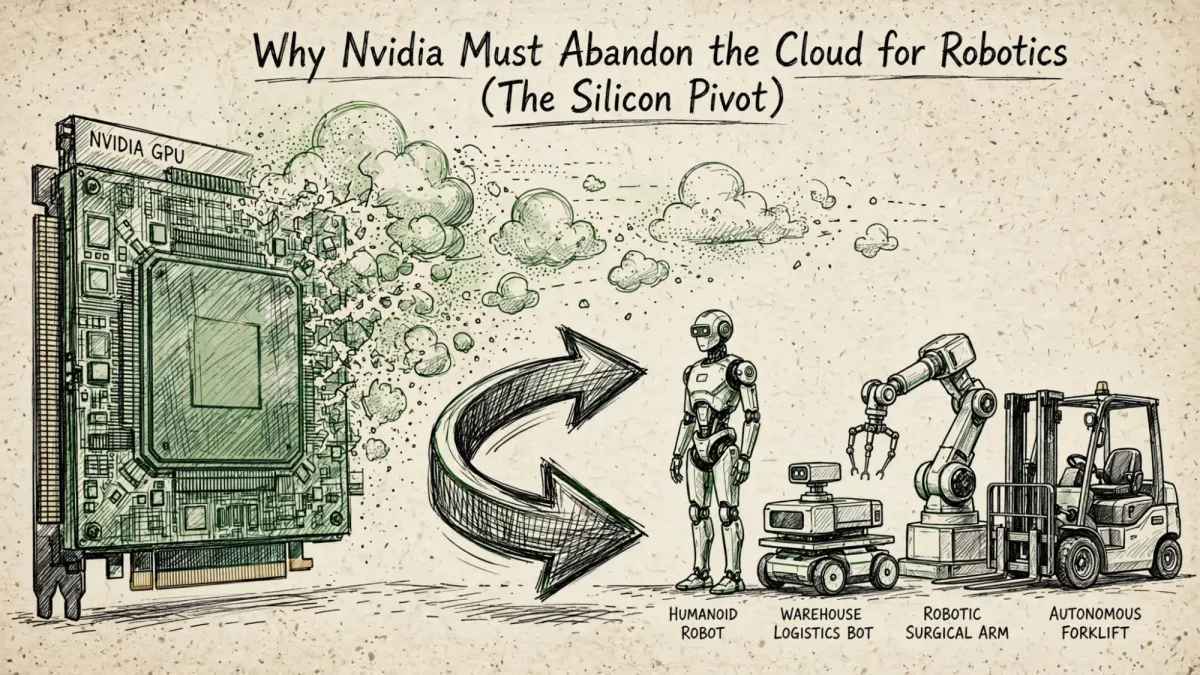
The graphics processing giant dominated the last decade through software lock in. To survive the upcoming valuation crash, they must aggressively rebrand as the foundation of physical automation.
Inspiration: Analyzing the rapid rise of abstraction languages like TileLang and the release of DeepSeek's TileKernels. Realizing that the historical software moat built by CUDA is actively decaying, which requires Nvidia to completely overhaul its corporate marketing and product focus toward physical robotics.

The CUDA Monopoly
For the past decade Nvidia operated the most impenetrable monopoly in the technology sector.
Wall Street mistakenly believed this dominance was based purely on manufacturing the fastest physical silicon chips.
The true secret to their unprecedented valuation was a proprietary software architecture called CUDA.
By forcing millions of developers to write machine learning code specifically optimized for Nvidia architecture they created a heavy psychological and financial switching cost.
Once a corporation built its entire backend using CUDA they were practically trapped into buying Nvidia hardware forever.

The Abstraction Threat
This brilliant strategy is currently facing a severe existential threat from the very artificial intelligence it helped create.
The open source community is actively building powerful abstraction layers designed to completely bypass the CUDA monopoly.
We are watching this play out in real time with the rise of domain specific programming languages like TileLang.
These tools allow developers to write highly optimized computing kernels in Python without ever needing to understand or interact with low level CUDA complexity.
The DeepSeek Catalyst
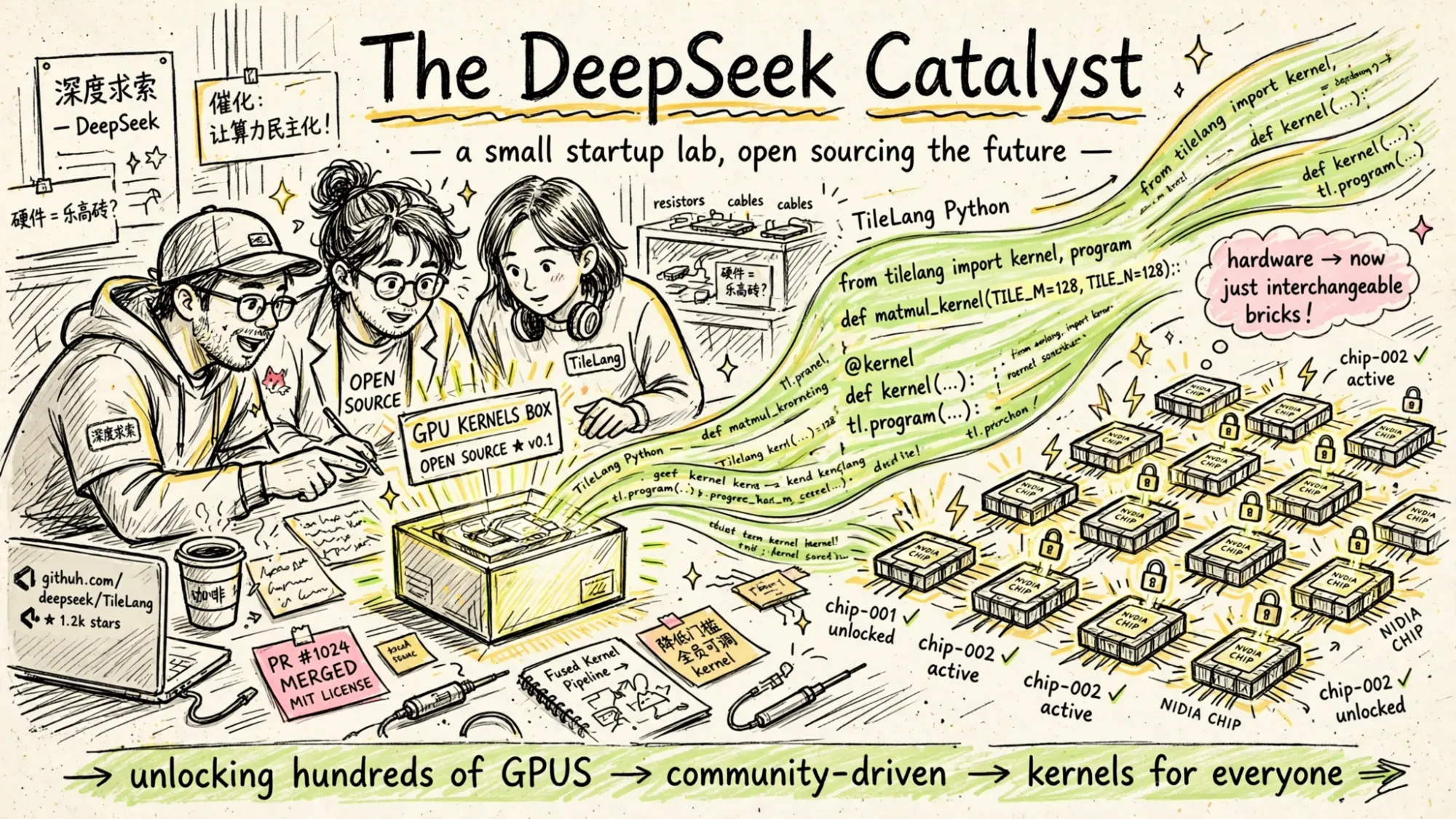
The Chinese startup DeepSeek just accelerated this commoditization by open sourcing their internal GPU kernels entirely written in TileLang.
This is not just a niche academic release.
They are publicly proving that a developer can achieve near maximum hardware performance on an Nvidia chip without relying on Nvidia's proprietary software tools.
When the software layer becomes agnostic the underlying hardware simply becomes a dumb, interchangeable commodity.
If developers can seamlessly port their code across different architectures, corporations will instantly start buying cheaper chips from AMD or building their own custom silicon.
The Valuation Cliff
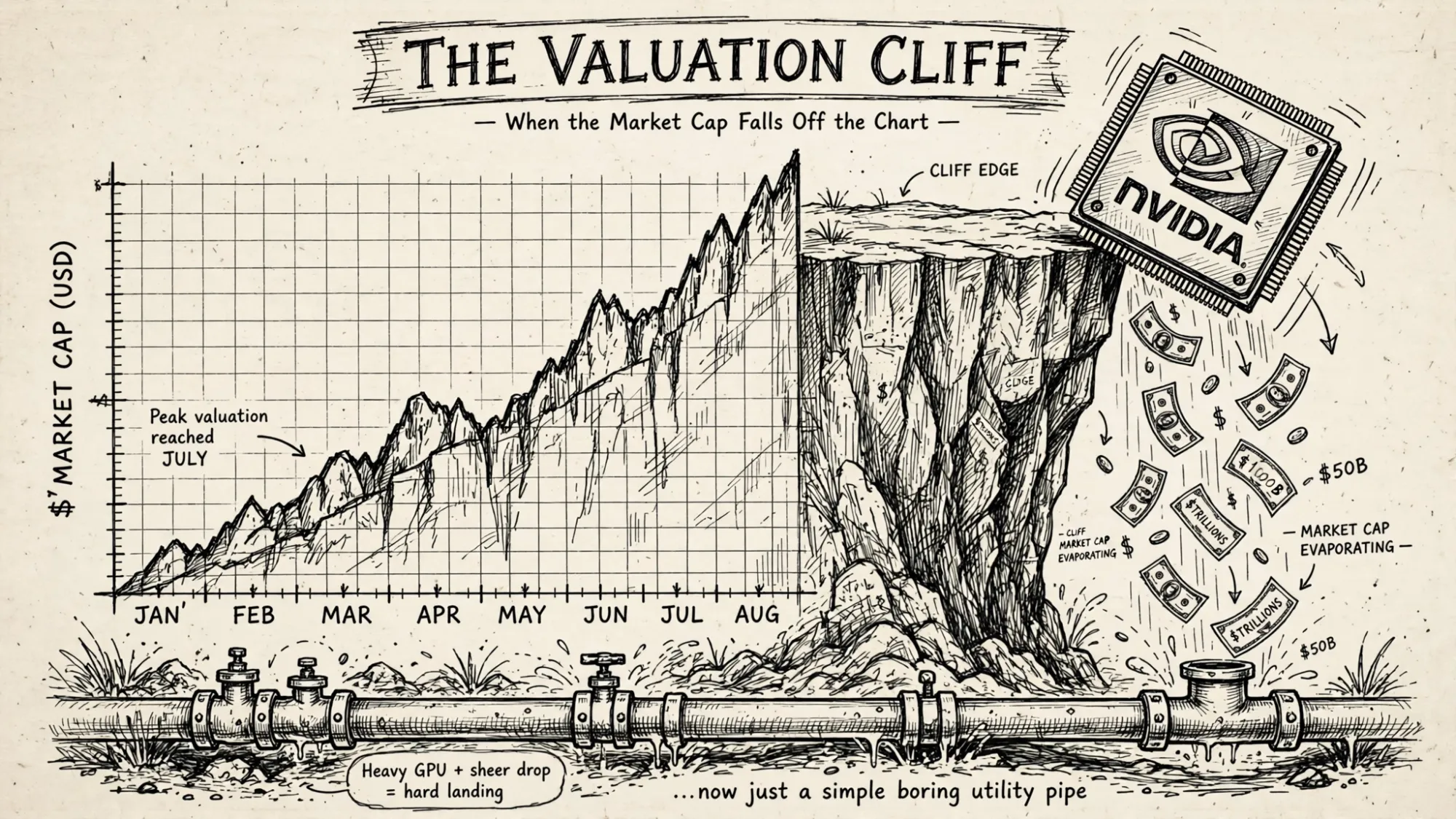
This software commoditization creates a terrifying scenario for the Nvidia balance sheet.
The public market currently values the company as a software monopoly wrapped in a hardware business.
When Wall Street finally realizes that developers are actively bypassing CUDA to extract hardware performance, the stock will face a brutal valuation correction. Y
ou cannot command a premium, multi trillion dollar market capitalization if your flagship product is slowly degrading into a basic utility pipe.
The Robotics Lifeline
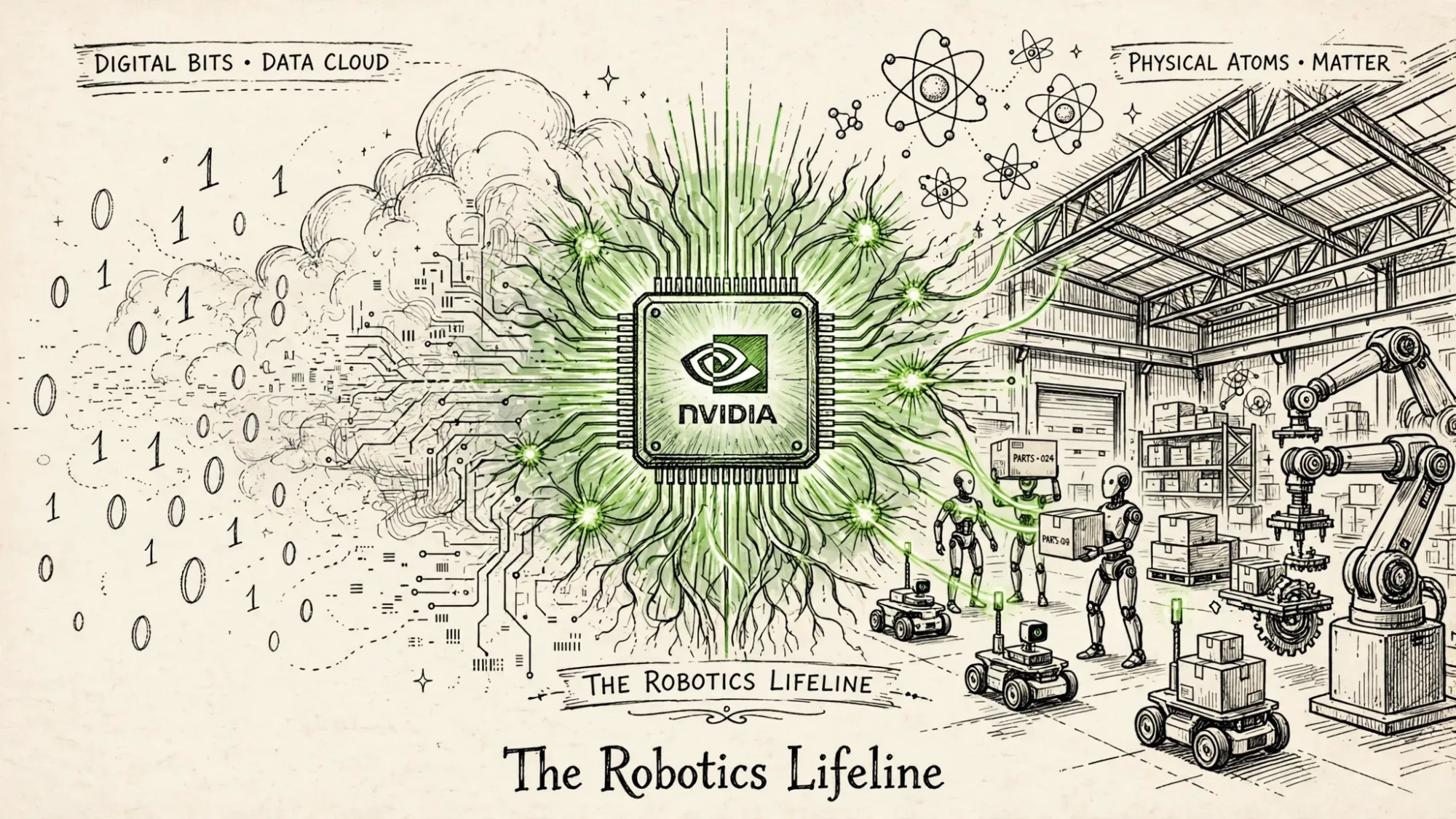
To survive this impending sentiment shift Nvidia must aggressively alter its entire corporate narrative.
They need to transition from being the engine of cloud computing to the undisputed foundation of physical artificial intelligence.
The robotics market represents the ultimate total addressable market because it involves moving physical atoms instead of just digital bits.
By repositioning themselves as the absolute standard for autonomous logistics, humanoid labor, and physical manufacturing, they can capture the imagination and capital of the next major tech supercycle.
Rewiring the Marketing Engine
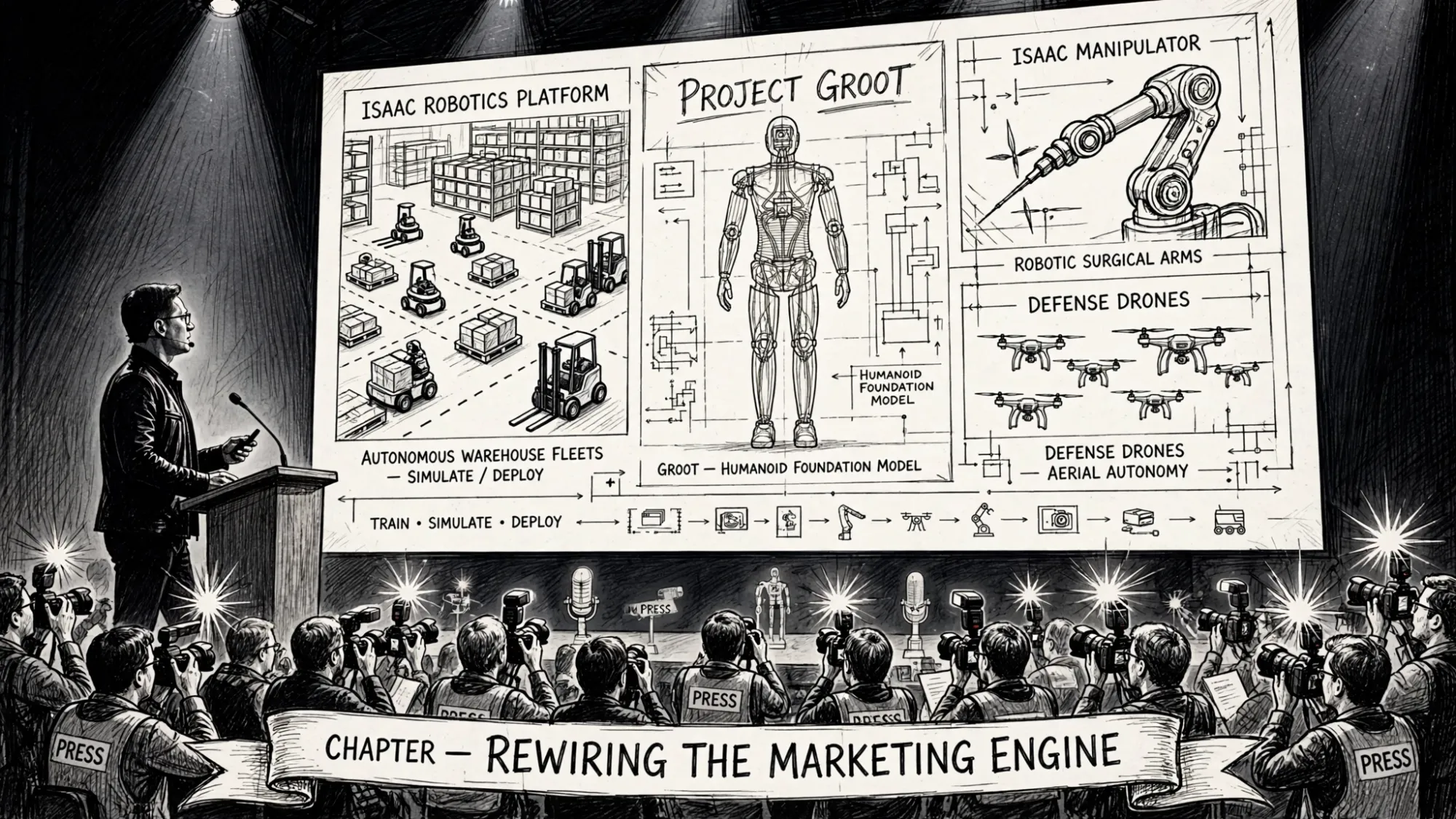
This transition requires an immediate overhaul of their public relations strategy and shareholder communications.
Nvidia CEO Jensen Huang must stop obsessing over large language models and digital chatbots during his keynote presentations.
Every product launch, developer conference, and quarterly earnings call must focus entirely on their Isaac robotics platform and Project GR00T.
They must flood the media cycle with imagery of Nvidia silicon powering autonomous warehouse fleets, robotic surgical arms, and next generation defense hardware.
They need to convince the market that owning Nvidia stock is the only way to invest in the physical automation of the global economy.

Conclusion: The Moving Target
The greatest danger for a technology monopoly is falling in love with the specific product that made them rich.
Nvidia conquered the cloud by building a brilliant software trap, but the market has already figured out how to pick the lock.