Why Google's Intelligent Eyewear Is Better Branding Than Meta's AI Glasses
We assume the term artificial intelligence remains the ultimate marketing buzzword to guarantee consumer adoption. In reality consumer sentiment has completely soured making Google replacing the cursed acronym with the word intelligent an absolutely brilliant branding maneuver.
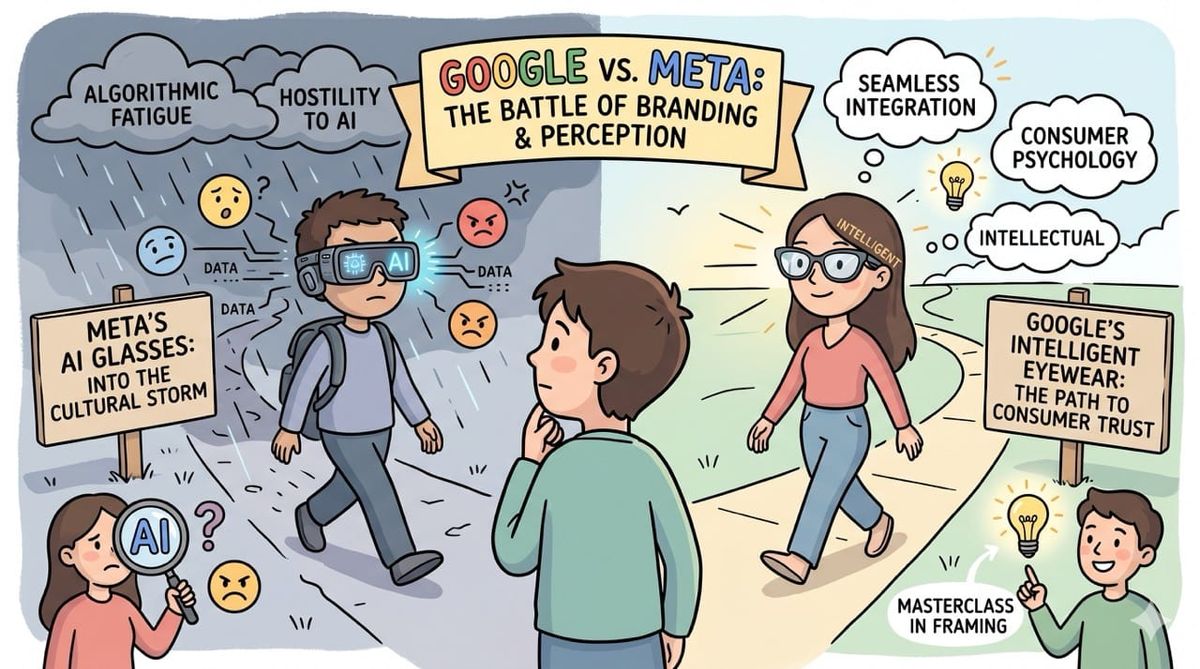
The general public is experiencing massive algorithmic fatigue and active hostility toward artificial intelligence. By completely abandoning the toxic acronym for their upcoming smart glasses Google is quietly executing a masterclass in consumer psychology while Meta blindly steers directly into a cultural storm.
Inspiration: Analyzing the recent Google hardware announcements where they intentionally branded their upcoming wearable devices as intelligent eyewear rather than using the standard acronym. Realizing that semantic framing is absolutely critical when attempting to launch highly intimate hardware during a period of massive consumer skepticism.
The Toxic Acronym
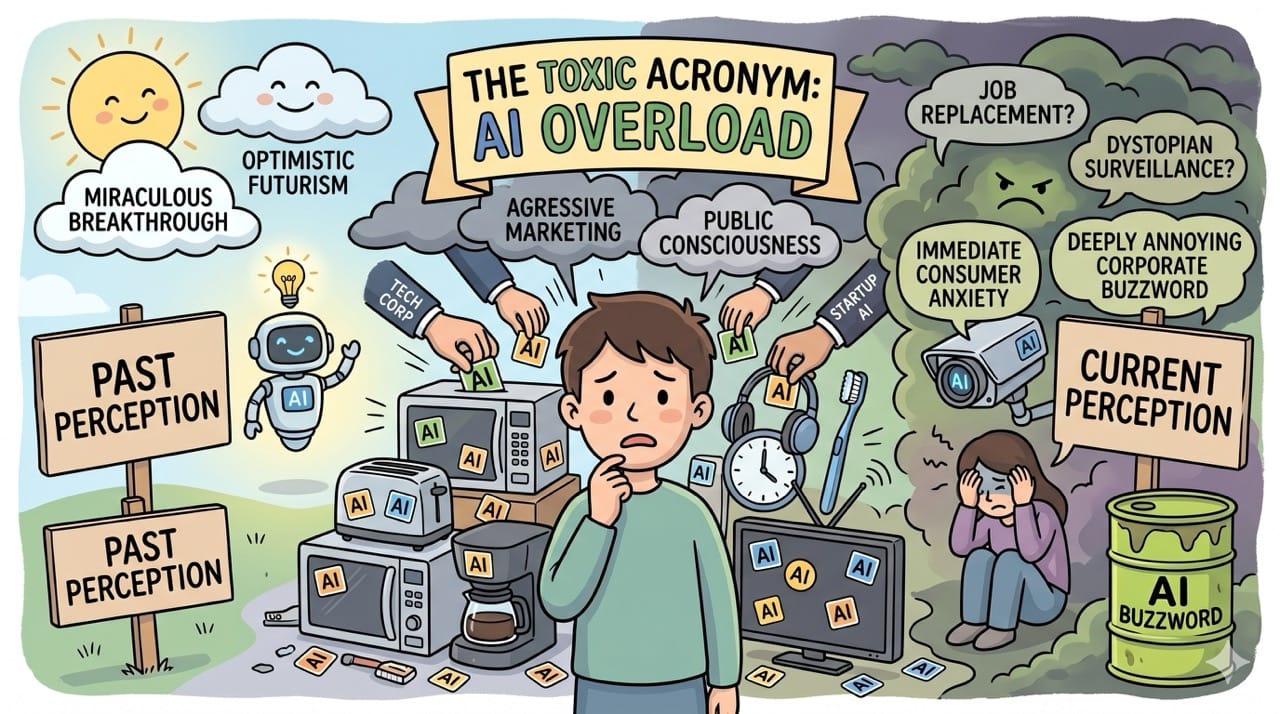
For the past several years technology companies eagerly slapped the artificial intelligence label onto absolutely every single consumer product.
This aggressive marketing completely oversaturated the public consciousness and transformed a miraculous technological breakthrough into a deeply annoying corporate buzzword.
The phrase no longer evokes optimistic futurism but rather triggers immediate consumer anxiety regarding job replacement and dystopian surveillance.

The Public Backlash
We are currently witnessing unprecedented public hostility toward the exact algorithms that Silicon Valley desperately wants to monetize.
When legendary technology figures like Eric Schmidt are literally booed offstage during speeches about artificial intelligence the cultural temperature is undeniable.
The average consumer is officially exhausted by the endless algorithmic hype cycle and actively rejects products that aggressively force the acronym into their daily lives.
The Semantic Pivot
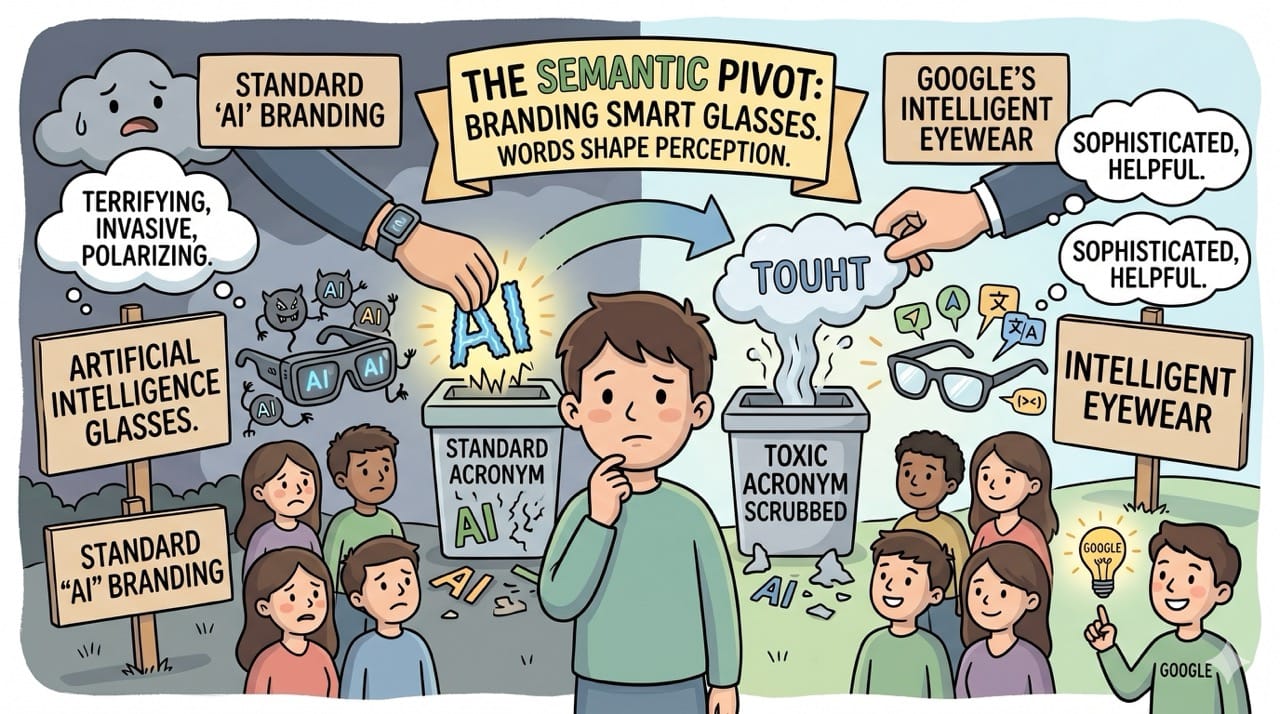
Google brilliantly recognized this massive cultural shift during their recent developer conference by completely scrubbing the toxic acronym from their new hardware.
They intentionally introduced their upcoming audio and display glasses as intelligent eyewear rather than leaning into the polarizing artificial intelligence branding.
This subtle semantic pivot makes the highly advanced wearable hardware sound sophisticated and helpful rather than terrifying and invasive.
The Meta Miscalculation
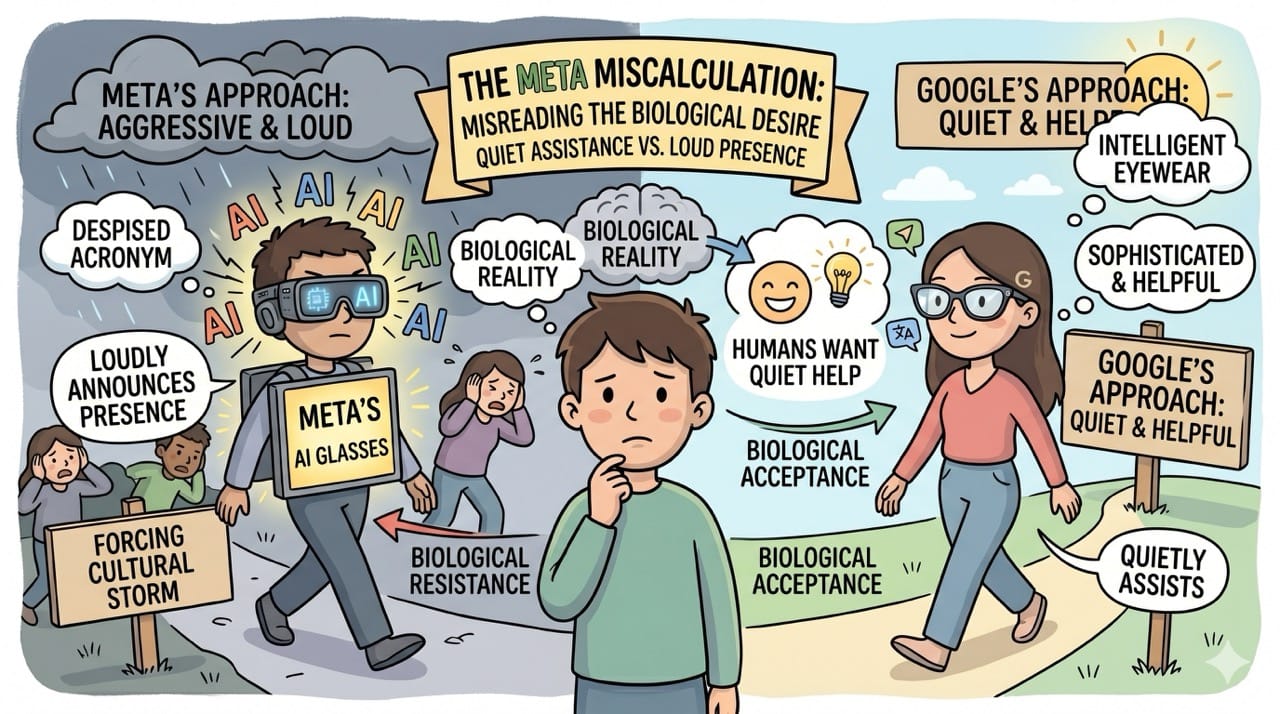
Meanwhile Meta continues to aggressively double down on branding their own wearable hardware using the exact acronym that consumers currently despise.
They are effectively forcing their customers to walk around wearing a highly visible billboard for a highly controversial technology.
This stubborn marketing strategy completely ignores the biological reality that humans want technology to quietly assist them rather than loudly announce its algorithmic presence.
The Integration Strategy
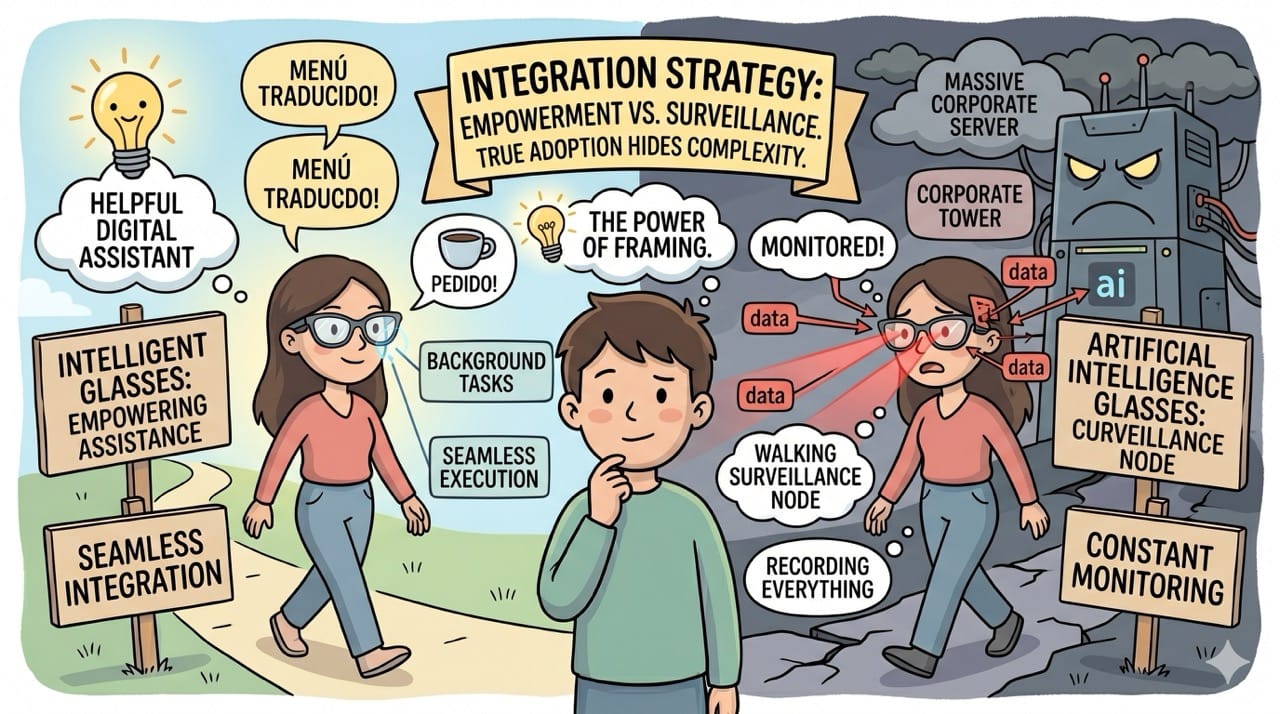
True technological adoption requires completely hiding the complex underlying software behind an incredibly simple and elegant consumer interface.
A person wearing intelligent glasses feels empowered by a helpful digital assistant seamlessly executing background tasks like ordering coffee or translating menus.
Conversely forcing someone to wear artificial intelligence glasses makes them feel like a walking surveillance node constantly monitored by a massive corporate server.
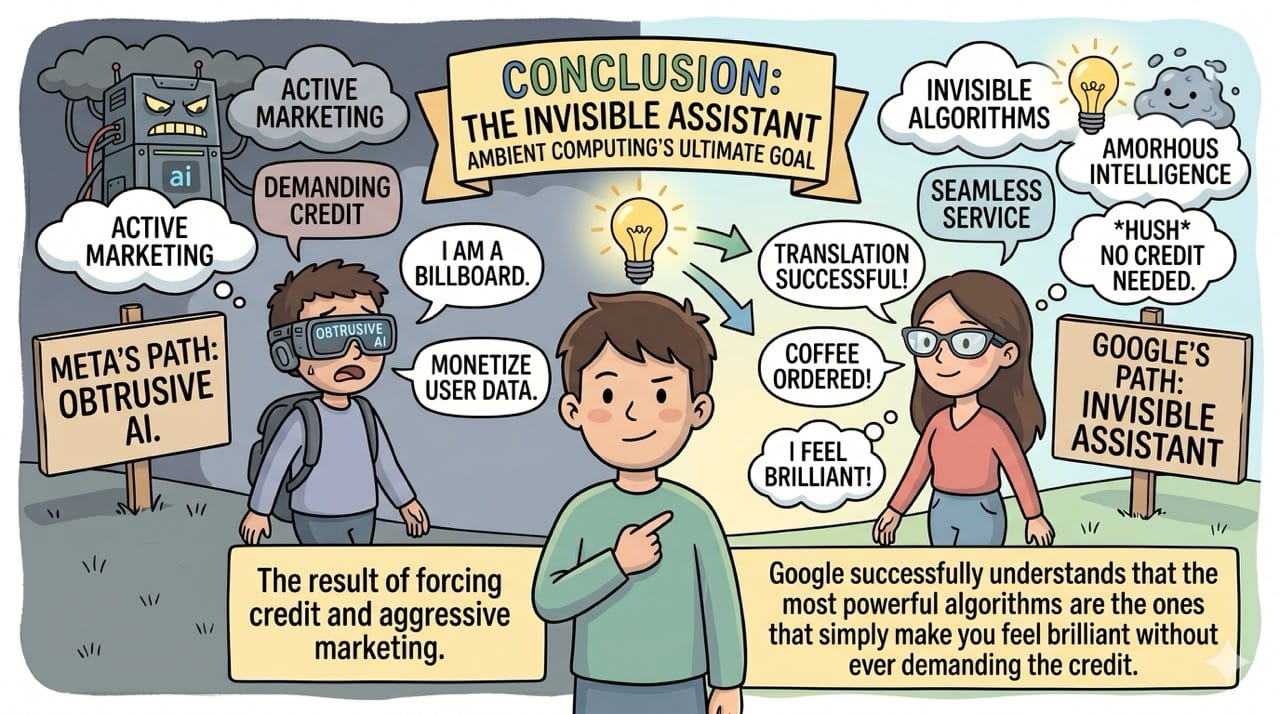
Conclusion The Invisible Assistant
The ultimate goal of ambient computing is completely disappearing into the background of our daily physical lives.
An intelligent observer must recognize that the absolute best software branding is the kind that refuses to actively market itself.
Google successfully understands that the most powerful algorithms are the ones that simply make you feel brilliant without ever demanding the credit.