Why Google is the Greatest Asset to Meta: The Invisible Alliance
We assume massive technology monopolies are constantly engaged in brutal combat for our digital attention. In reality the ultimate survival of the Meta advertising ecosystem relies entirely on the invisible hardware and software infrastructure built by Google.
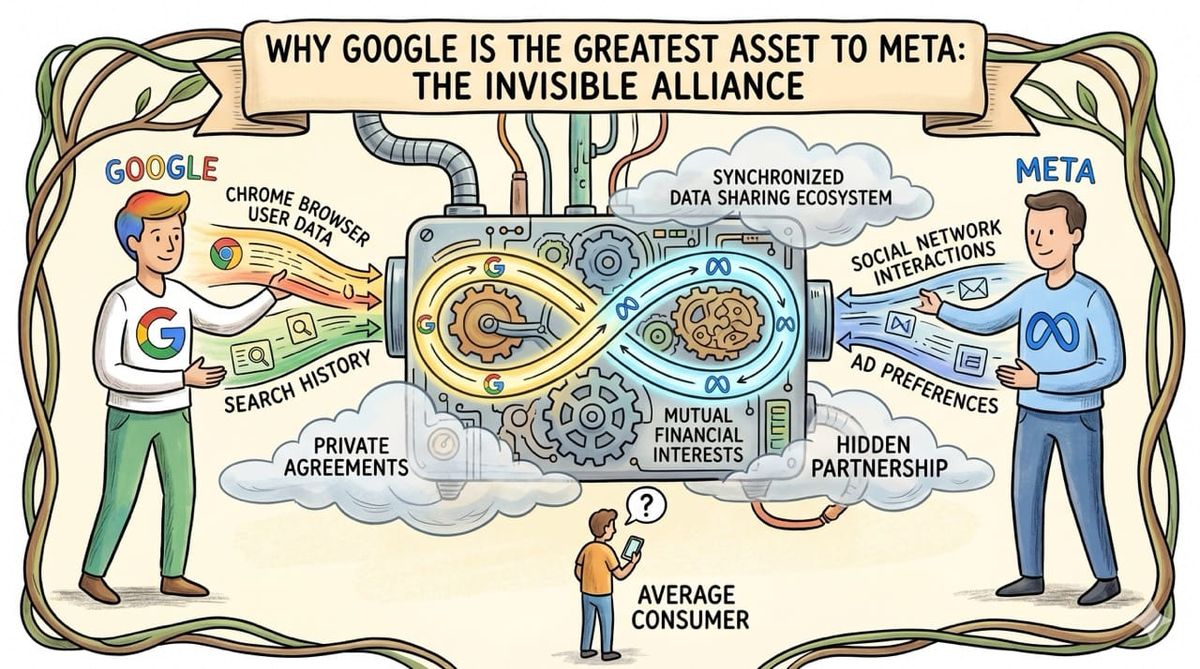
Public narratives portray these two advertising giants as fierce enemies locked in an endless war for global dominance. Beneath the surface they operate a highly synchronized data sharing ecosystem that perfectly protects their mutual financial interests.
Inspiration: Analyzing the quiet operational synergy between the Chrome browser and the Meta advertising tracking systems. Realizing that the most powerful corporate partnerships are entirely invisible to the average consumer.
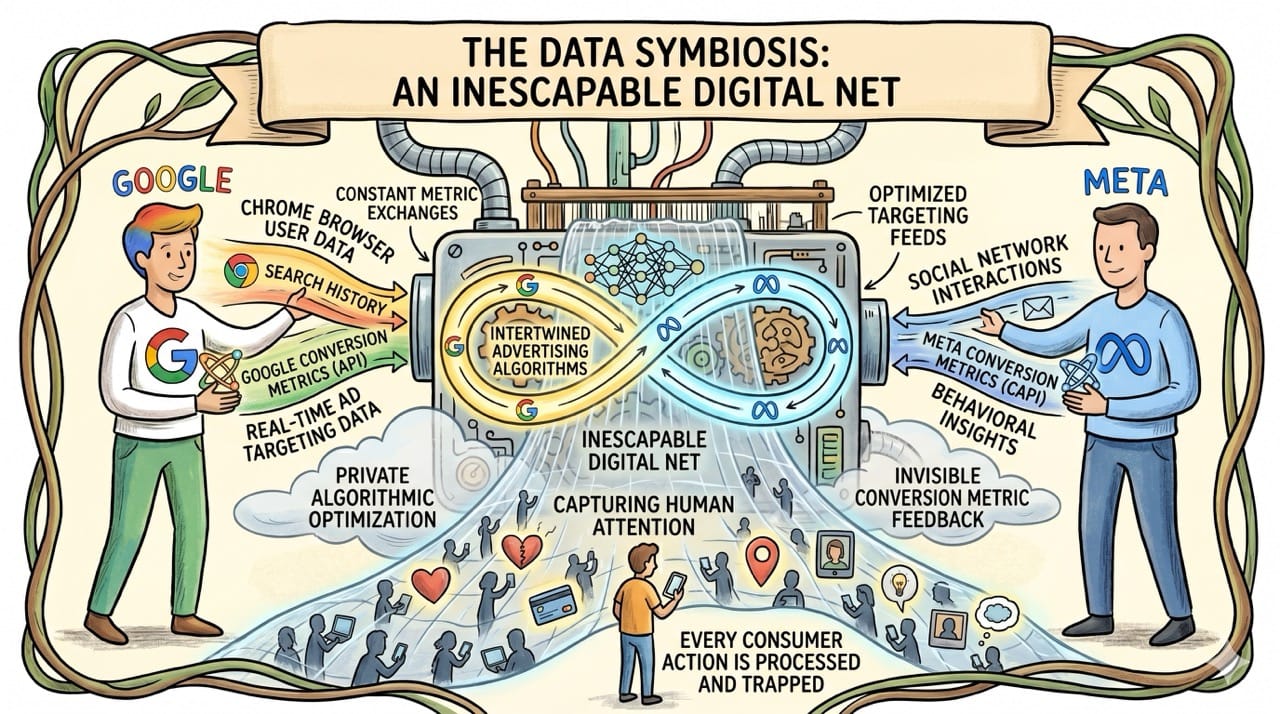
The Data Symbiosis
These two massive corporations publicly pretend to battle while quietly sharing unprecedented amounts of consumer data behind closed doors.
Their underlying advertising algorithms are deeply intertwined and constantly feed vital conversion metrics back and forth to optimize targeting.
This invisible synergy creates a completely inescapable digital net that perfectly captures human attention across the entire internet.
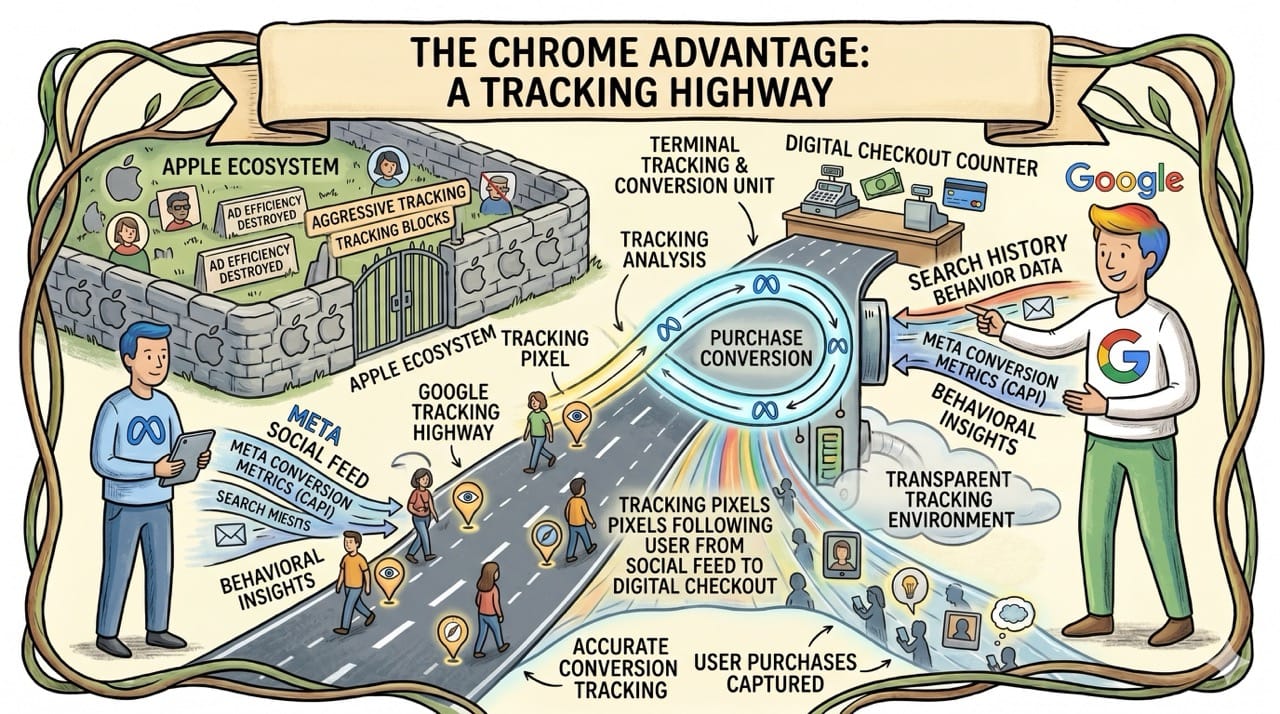
The Chrome Advantage
The traditional Apple software ecosystem is aggressively designed to block external tracking and intentionally destroy third party advertising efficiency.
Conversely the Google Chrome browser provides the absolute perfect transparent environment for Meta to accurately track consumer purchasing behavior.
Chrome essentially acts as a massive open highway that allows tracking pixels to quietly follow you from a social feed directly to a digital checkout counter.
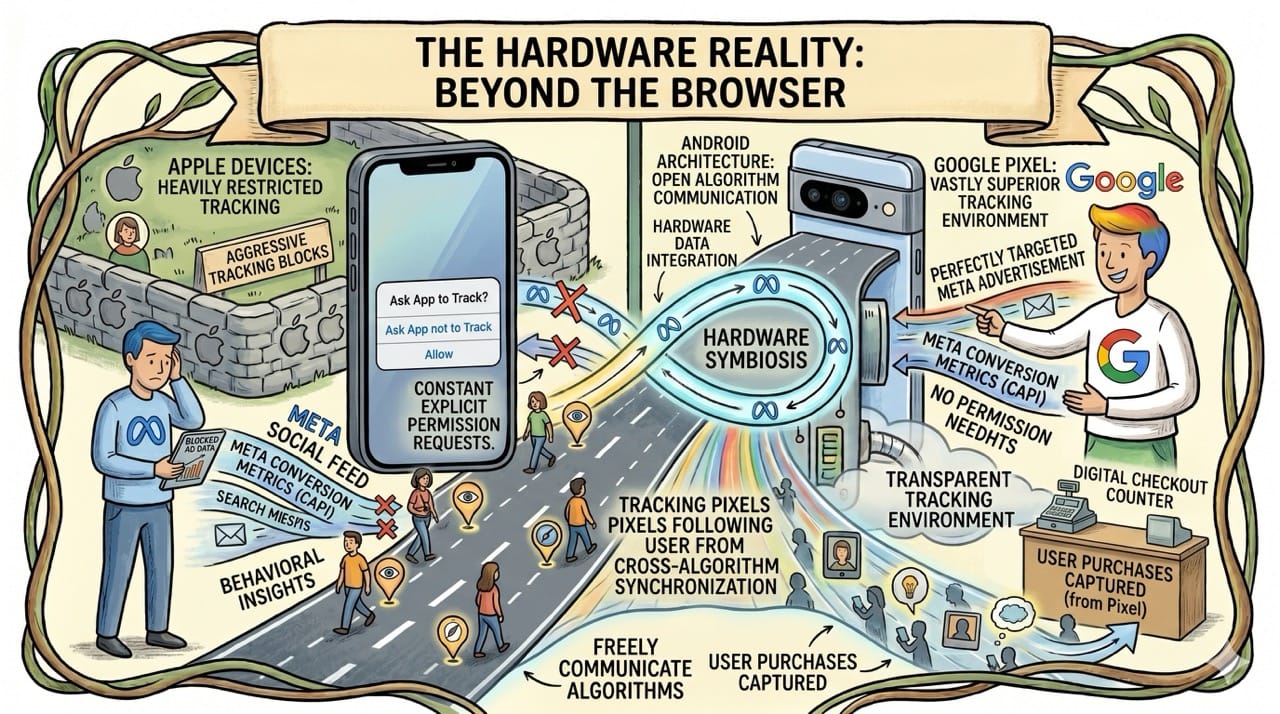
The Hardware Reality
This symbiotic relationship extends far beyond web browsers directly into the physical hardware we carry in our pockets.
The Google Pixel smartphone offers a vastly superior tracking environment for Meta advertisements compared to heavily restricted Apple devices.
Android architecture inherently allows these advertising algorithms to communicate with each other freely without constantly asking the user for explicit tracking permission.
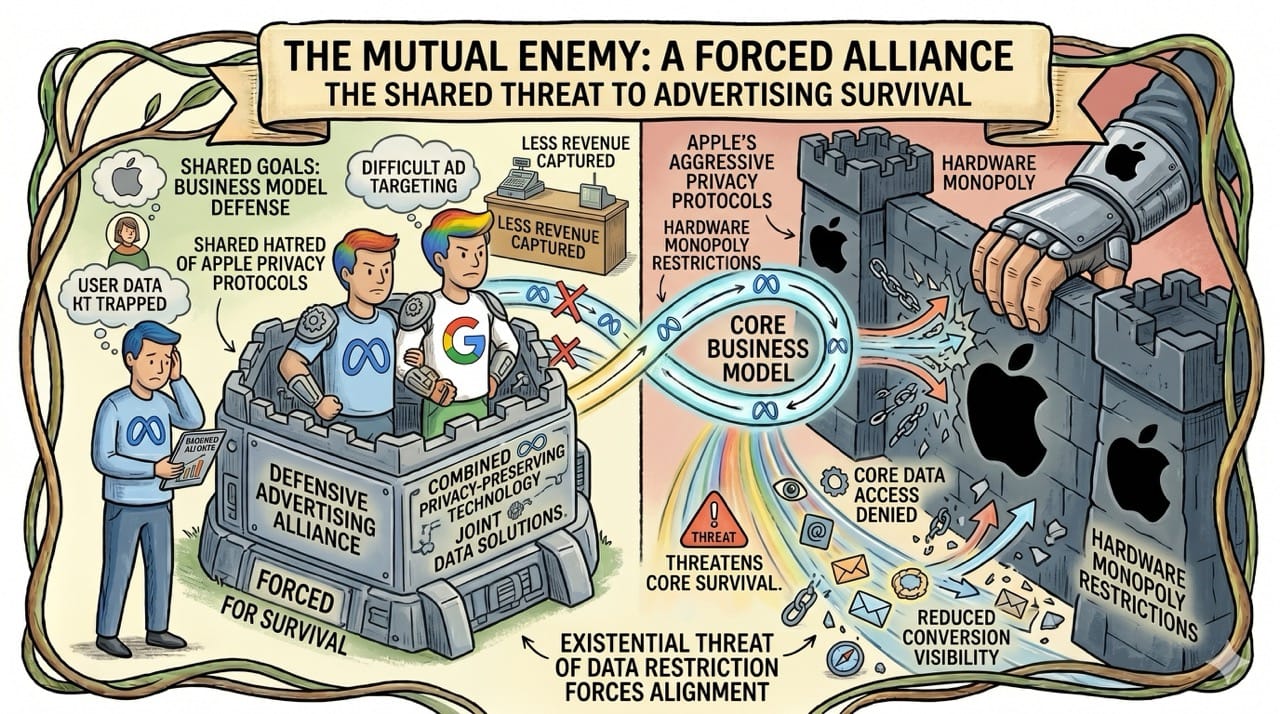
The Mutual Enemy
The fundamental bond between these two platforms is forged entirely by their shared hatred of Apple privacy protocols.
When a hardware manufacturer suddenly restricts data flow it threatens the core survival of every single company relying on digital advertising.
Google and Meta are forced into this incredibly powerful alliance simply to defend their business models from aggressive hardware monopolies.
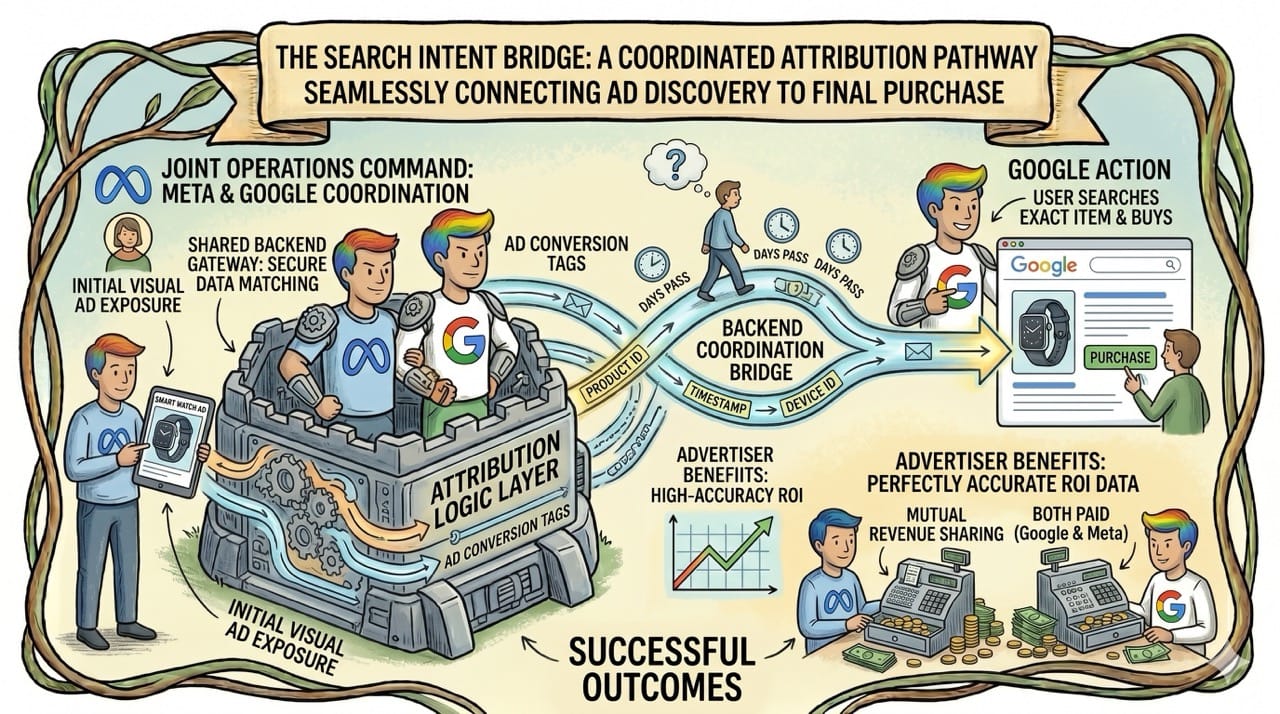
The Search Intent Bridge
Consumers frequently discover a new product through a visual social media advertisement but delay their actual purchase for several days.
When they eventually search for that exact item on Google the two platforms quietly connect the dots to attribute the final sale.
This massive backend coordination ensures both companies get paid while providing the advertiser with perfectly accurate return on investment data.
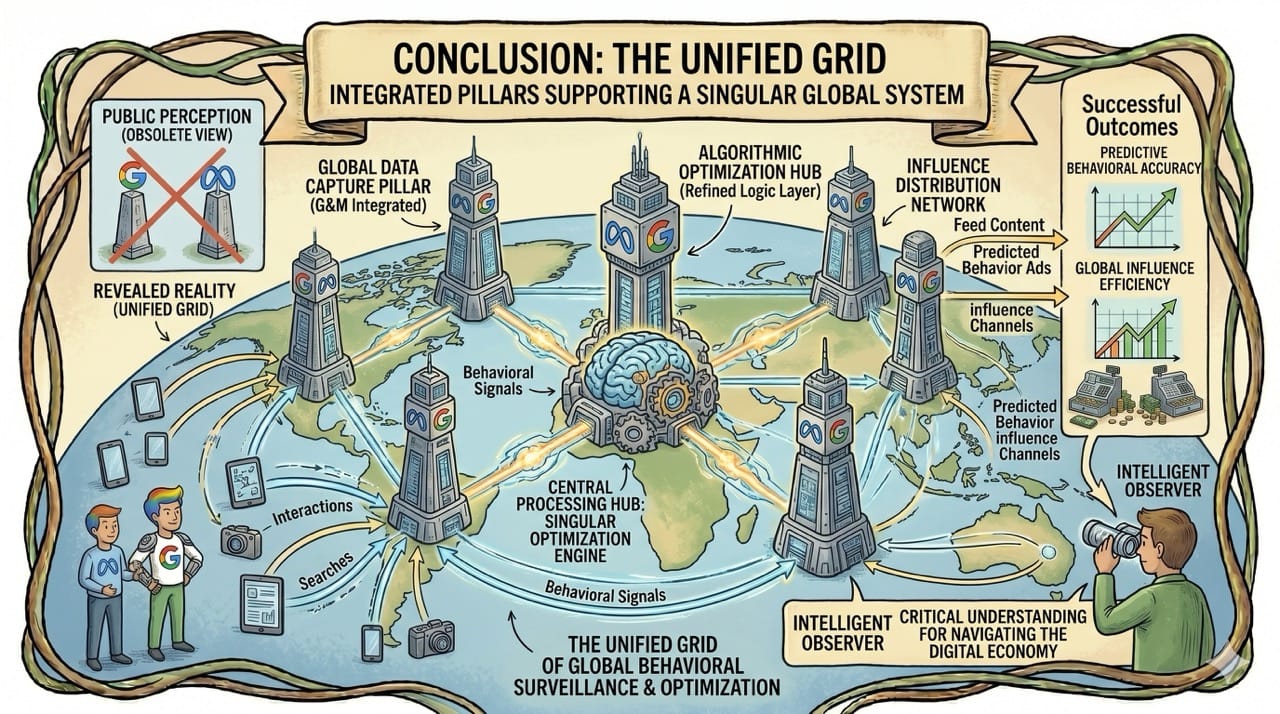
Conclusion: The Unified Grid
An intelligent observer must stop viewing these technology giants as completely isolated corporate entities fighting for scraps.
They are actually deeply integrated pillars supporting a singular unified grid of global behavioral surveillance and algorithmic optimization.
Understanding this invisible alliance is absolutely critical for anyone trying to navigate or decode the modern digital economy.