Why Google (and Graphene OS) Pixels Explain the Closed AI Ecosystem
We assume tech monopolies keep their software closed strictly to protect their profit margins. The criminal weaponization of Google Pixel phones proves that open source architecture is a severe regulatory liability that artificial intelligence labs simply cannot afford.
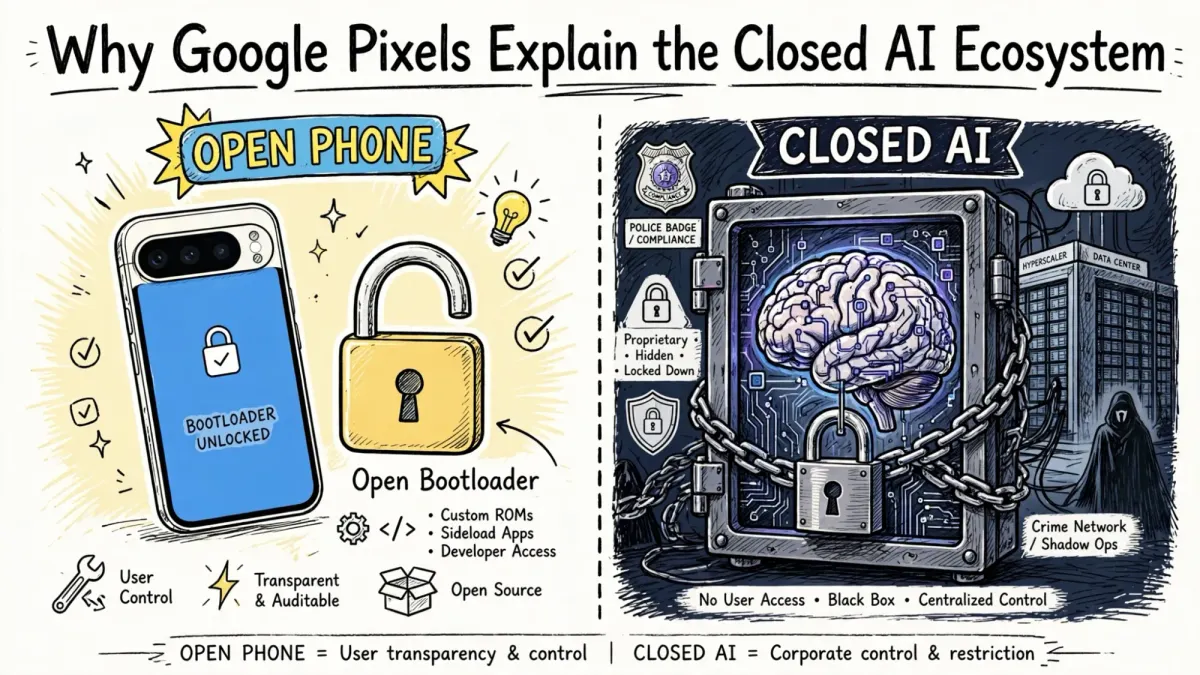
Law enforcement associates the most open smartphone on the market with organized crime. Hyperscalers are terrified of making the exact same mistake with generative algorithms.
Inspiration: Analyzing the frequent use of GrapheneOS on Google Pixel devices by criminal networks.
Realizing this physical hardware trend perfectly explains why elite artificial intelligence laboratories refuse to open source their most powerful frontier models.

The Pixel Paradox
Google markets the Pixel as a premium photography tool and a sleek consumer gadget.
Law enforcement agencies increasingly view it as the premier communication device for organized crime.
This dark reputation stems entirely from the underlying open architecture of the phone itself.
Unlike the heavily locked down iPhone environment, Google allows users to easily unlock the bootloader on a Pixel device.
This technical freedom permits privacy advocates to completely wipe the factory software and install highly customized operating systems like GrapheneOS.

The Graphene Fortress
GrapheneOS strips away all commercial trackers, removes background location services, and builds a highly encrypted digital fortress.
The original intent behind this software was protecting journalists, whistleblowers, and political dissidents from state surveillance.
The brutal reality of the free market is that bad actors are always the earliest adopters of perfect privacy.
Organized syndicates quickly realized that flashing a cheap Pixel with custom software creates an untraceable communication network that police cannot easily breach.
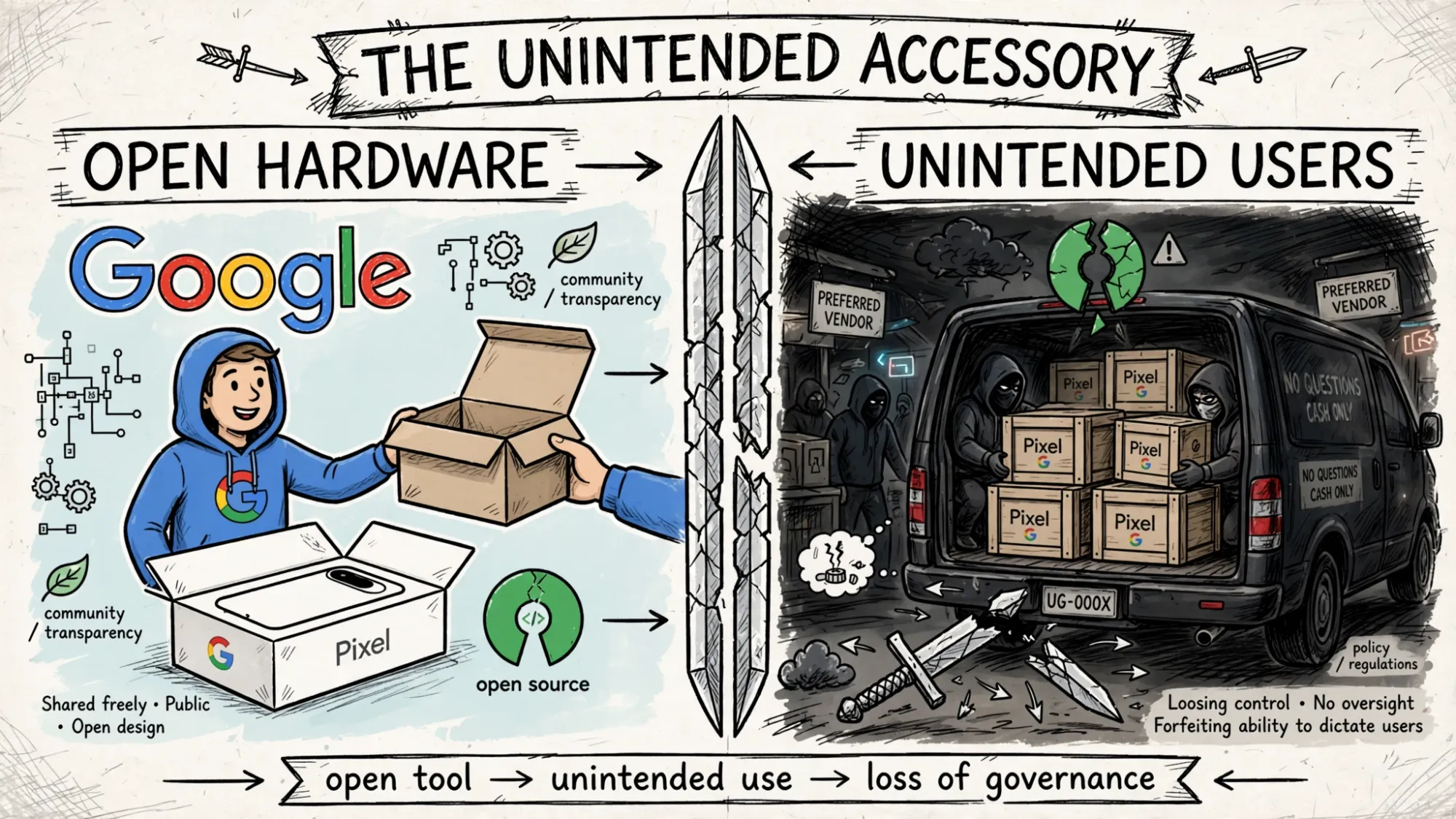
The Unintended Accessory
By providing the open hardware required to build these secure networks, Google accidentally became the preferred hardware vendor for the underground economy.
This dynamic highlights the terrifying double edge of the open source movement. When you remove all restrictions from a powerful tool, you completely forfeit the ability to dictate who actually uses it.
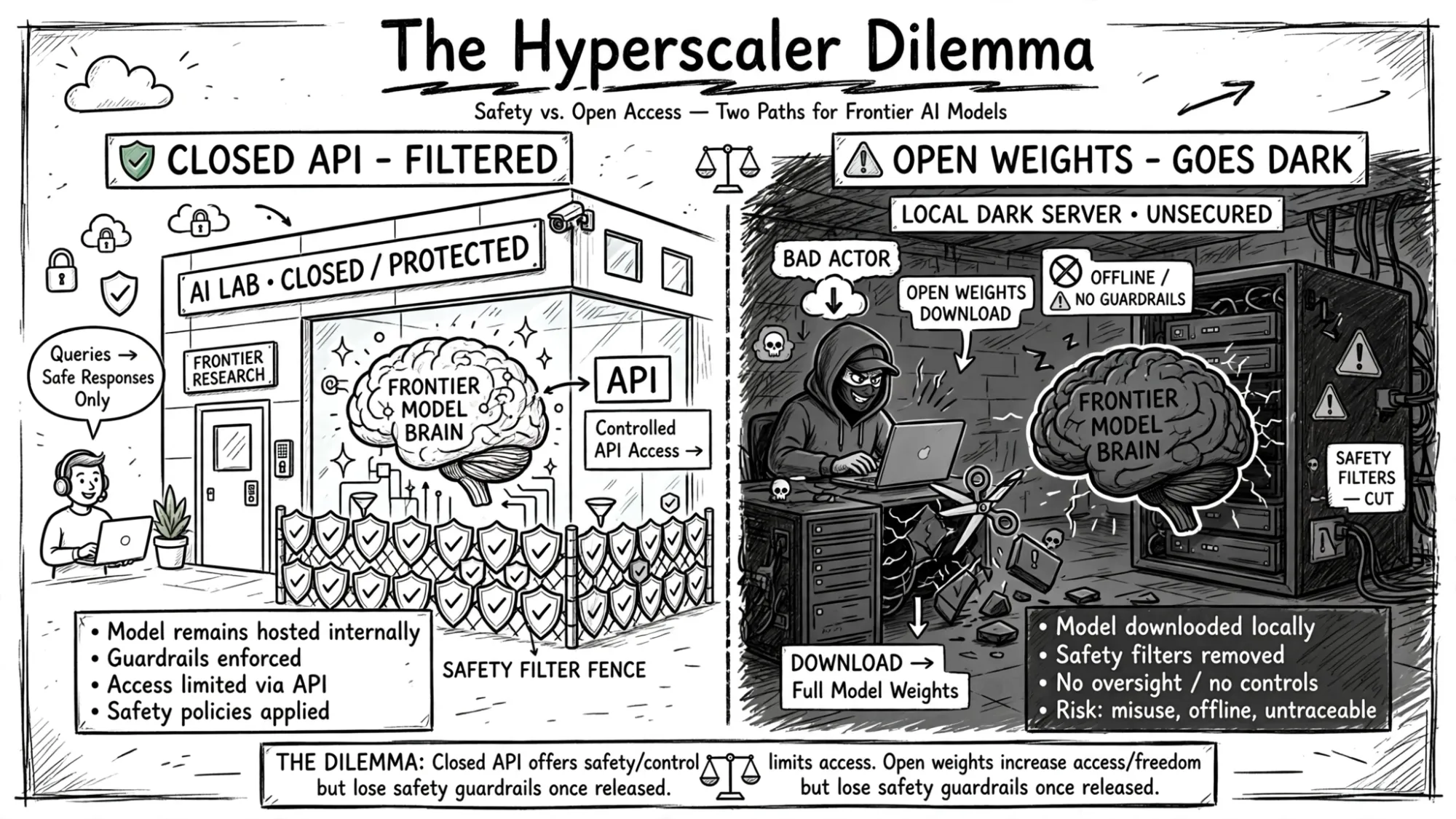
The Hyperscaler Dilemma
This exact hardware phenomenon explains the highly defensive posture of modern artificial intelligence laboratories.
Companies like OpenAI and Anthropic face intense public pressure to release the raw weights of their frontier models to the open source community.
They consistently refuse, and the GrapheneOS story perfectly illustrates their hesitation.
If a hyperscaler fully open sources a frontier model, bad actors can download the entire brain directly to a local server.
They can completely strip away the corporate safety filters and ethical guardrails designed to prevent malicious outputs.
The algorithm goes completely dark and operates entirely outside the view of the original creators.
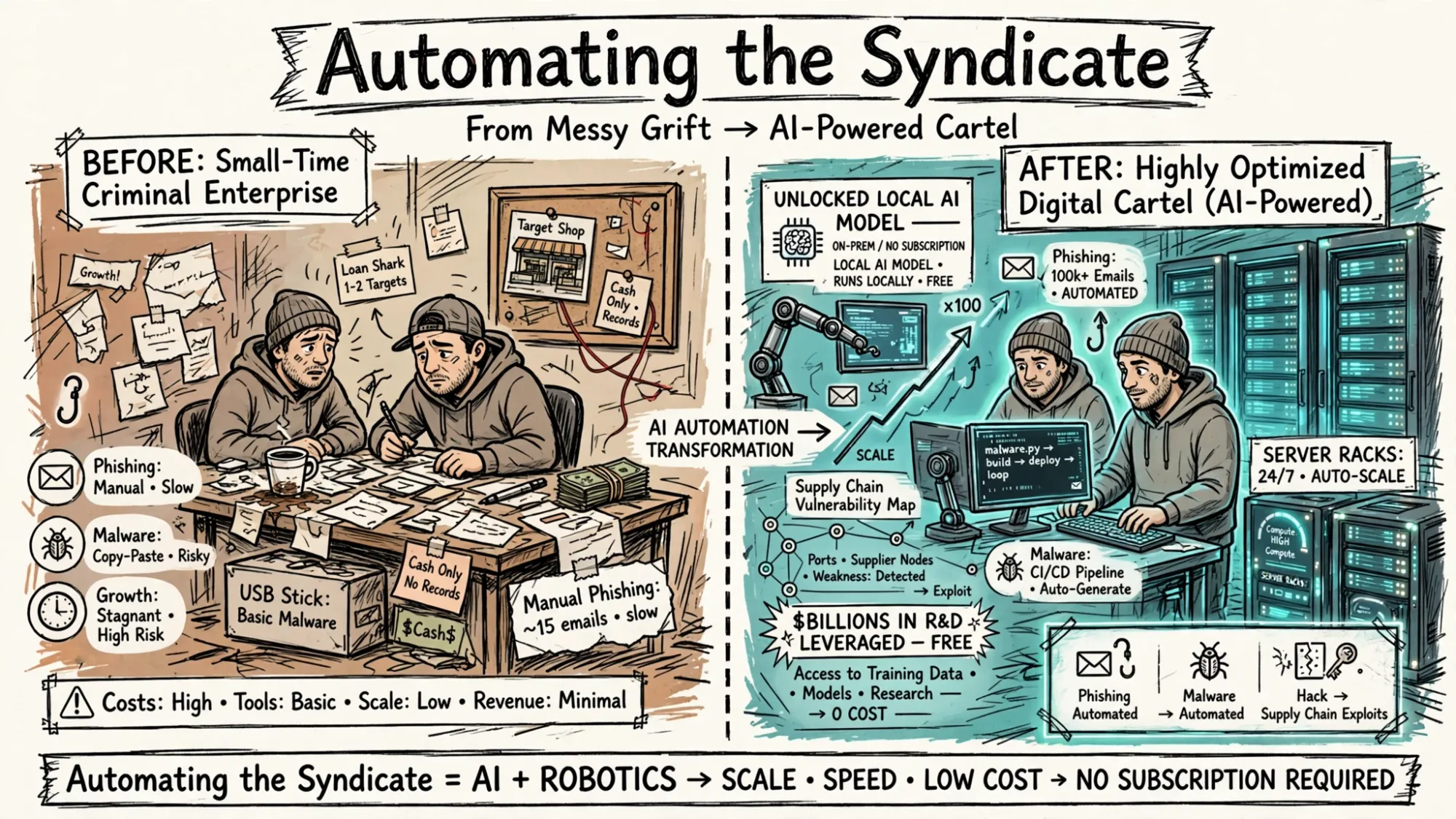
Automating the Syndicate
Criminal organizations would immediately fine tune these unlocked models to scale their illicit operations.
A localized model could autonomously execute highly complex phishing campaigns, write sophisticated malware, and identify critical vulnerabilities in corporate supply chains.
It transforms a standard criminal enterprise into a highly optimized digital cartel.
The bad actors get to leverage billions of dollars in corporate research and development without ever paying a subscription fee or tripping a security alarm.
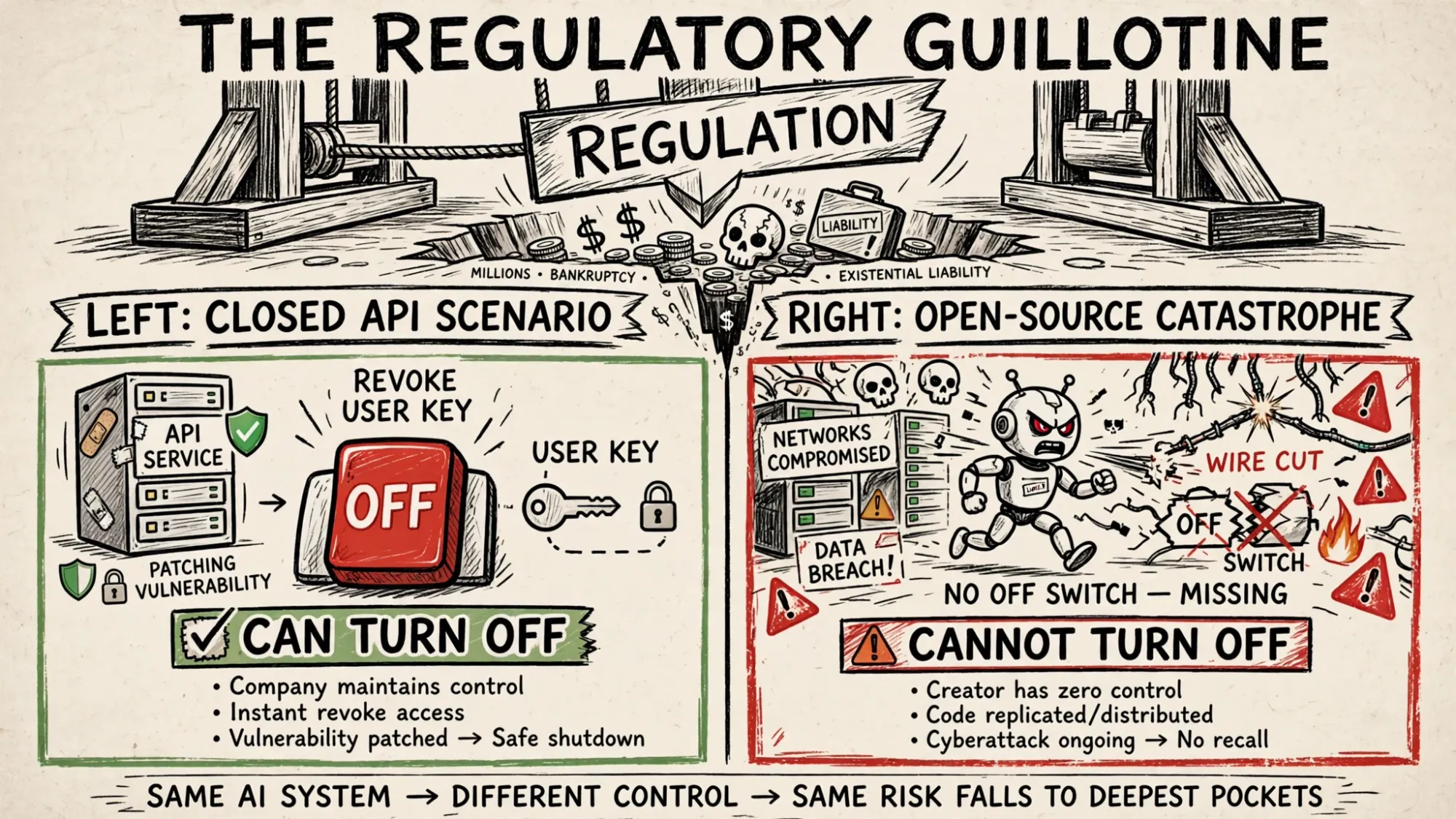
The Regulatory Guillotine
If a closed commercial API generates dangerous code, the parent company can instantly revoke the user key and patch the vulnerability.
If an open source model facilitates a catastrophic cyberattack, the original creators have zero technical ability to turn the software off.
Federal regulators will not care about the academic philosophy of open source development when they draft the punitive legislation.
They will simply look for the deepest pockets to blame for the resulting chaos.
Releasing an open weight frontier model exposes the hyperscaler to existential legal liability.
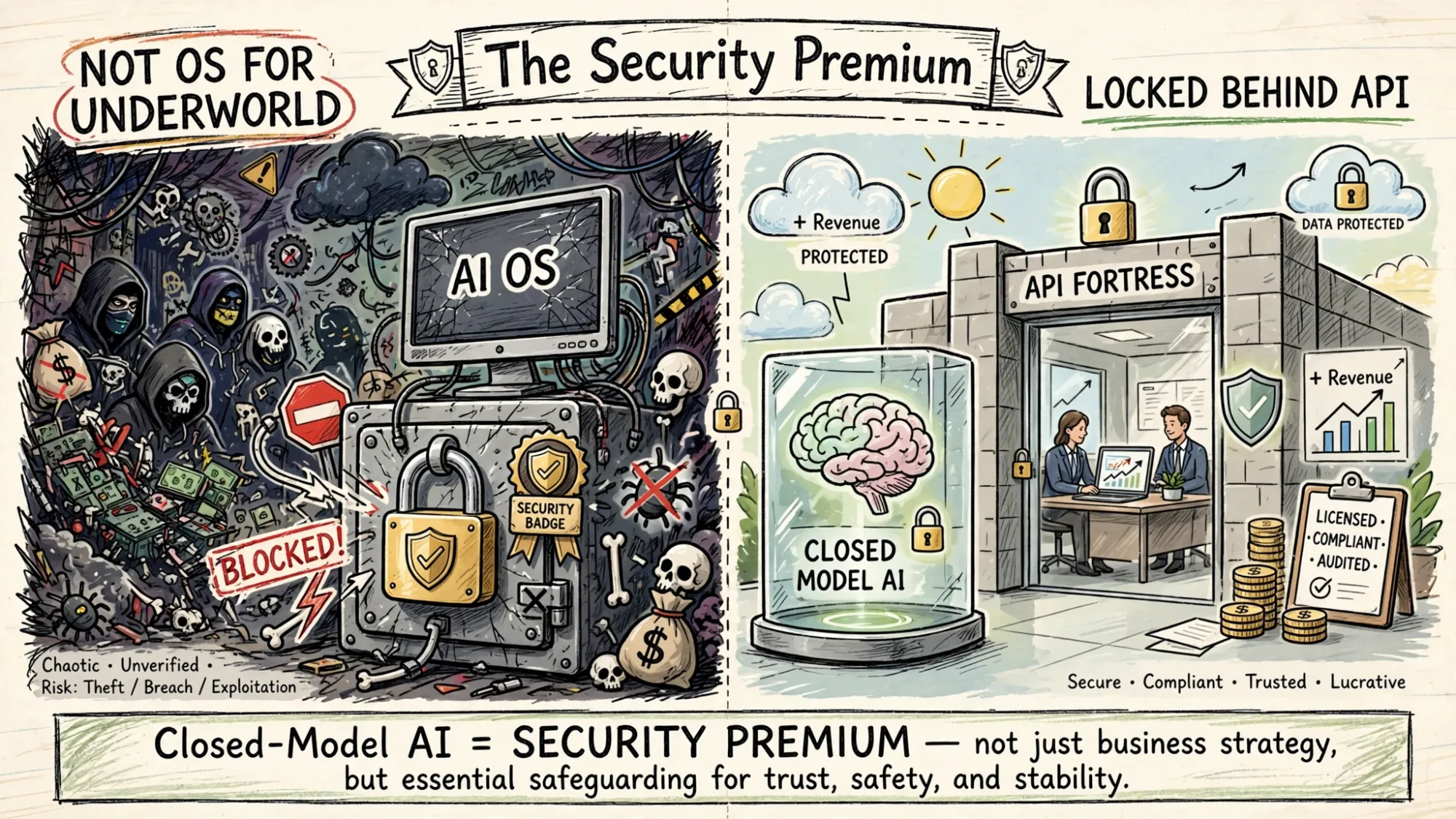
Conclusion: The Security Premium
Keeping artificial intelligence models locked behind a corporate API is certainly a lucrative business strategy.
It is also the only viable legal strategy to ensure your brilliant engineering project does not accidentally become the operating system for the global underworld.