Why Artificial Intelligence Terrifies Us and How Robots Will Save Us: The Cost of Fear
We assume humanity naturally avoids terrifying information to protect our psychological wellbeing. In reality we are biologically wired to obsessively consume horrifying content whenever the actual physical danger is completely removed.
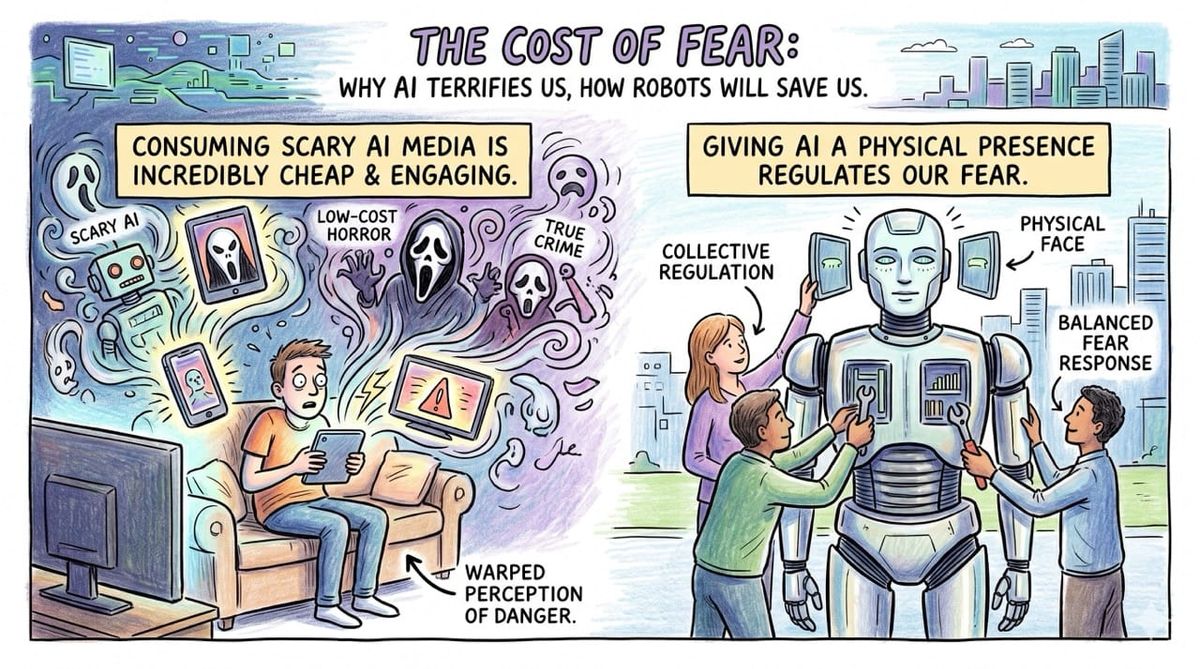
Modern software makes learning about existential technological threats incredibly cheap and highly engaging. We must eventually give artificial intelligence a physical face to properly regulate our collective biological fear response.
Inspiration: Listening to The Happiness Lab discuss how horror movies and true crime media can actually make humans happier. Realizing that the extremely low cost of learning about digital threats completely warps our perception of actual danger.
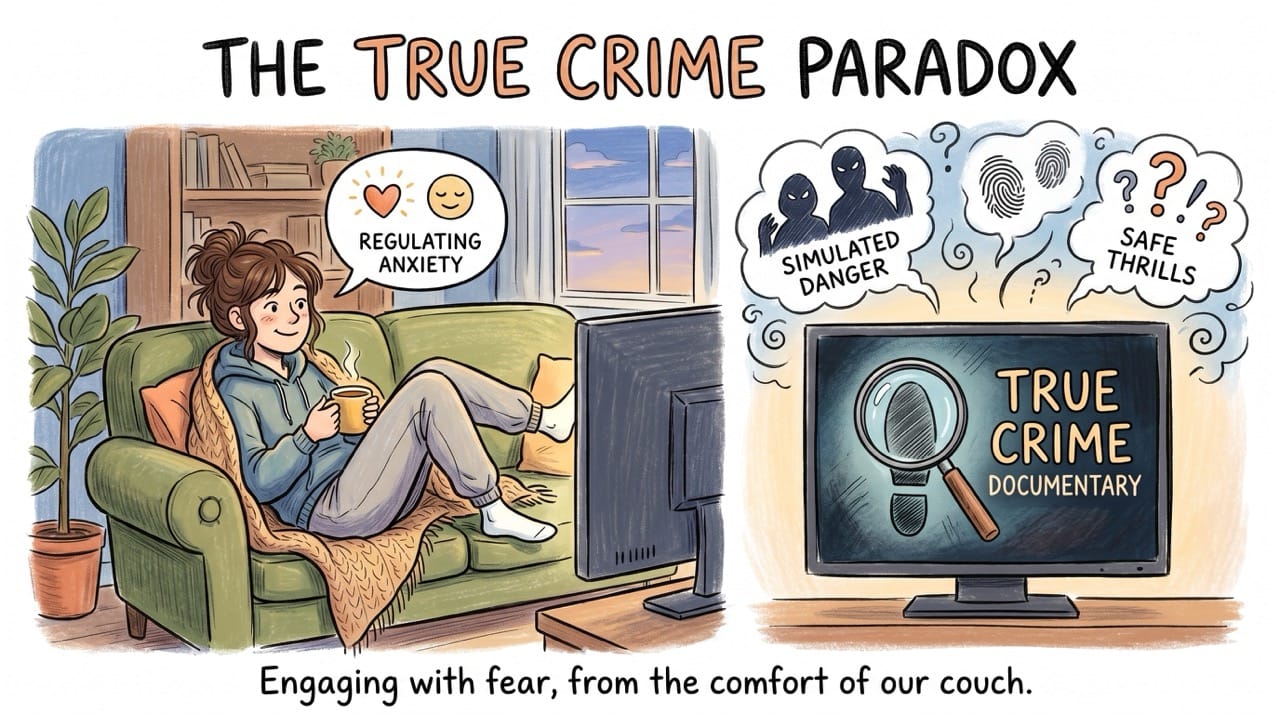
The True Crime Paradox
The Happiness Lab recently explored why millions of people eagerly consume terrifying true crime documentaries and graphic horror films.
Psychologists explain that safely engaging with simulated danger actually helps humans regulate their own anxiety and process deep internal fears.
We love examining terrifying scenarios strictly when we know we are completely safe sitting on our own living room couches.
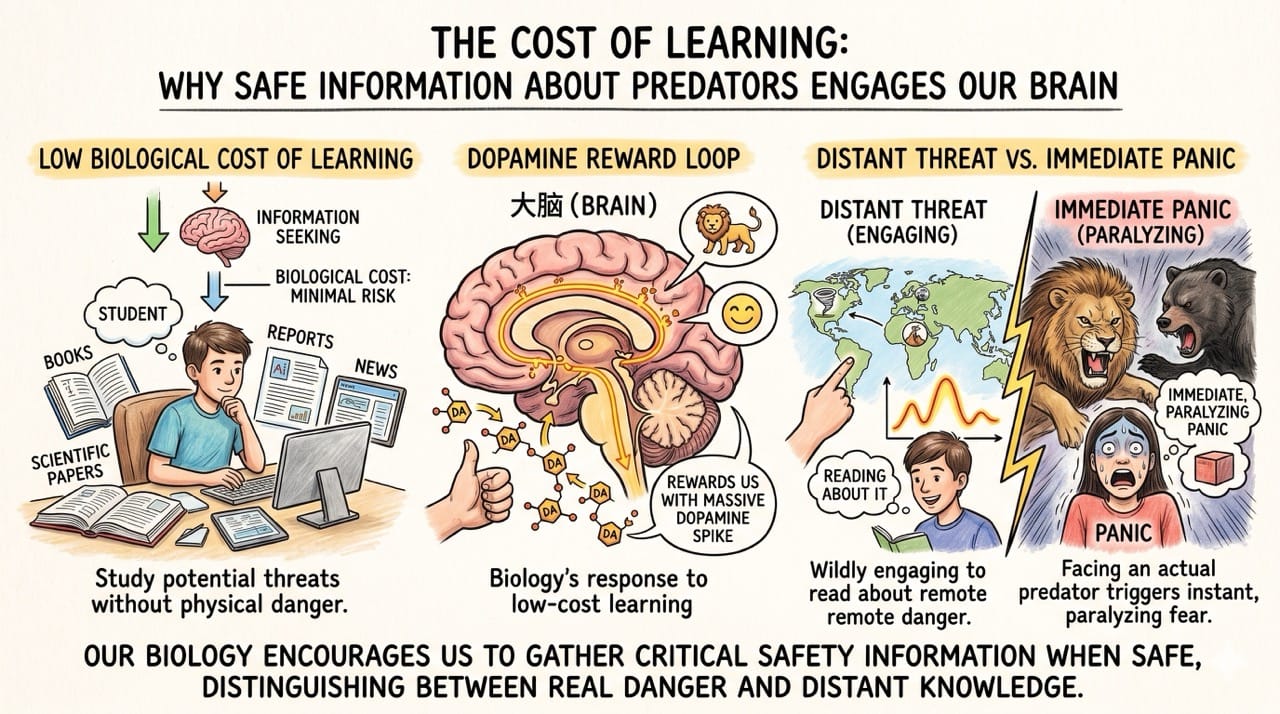
The Cost of Learning
The human brain aggressively seeks out information regarding potential predators whenever the biological cost of learning is incredibly low.
If we can study a deadly threat without actually risking physical injury our biology rewards us with a massive dopamine spike.
This explains why reading about a distant catastrophe is wildly engaging while facing an actual predator induces immediate paralyzing panic.
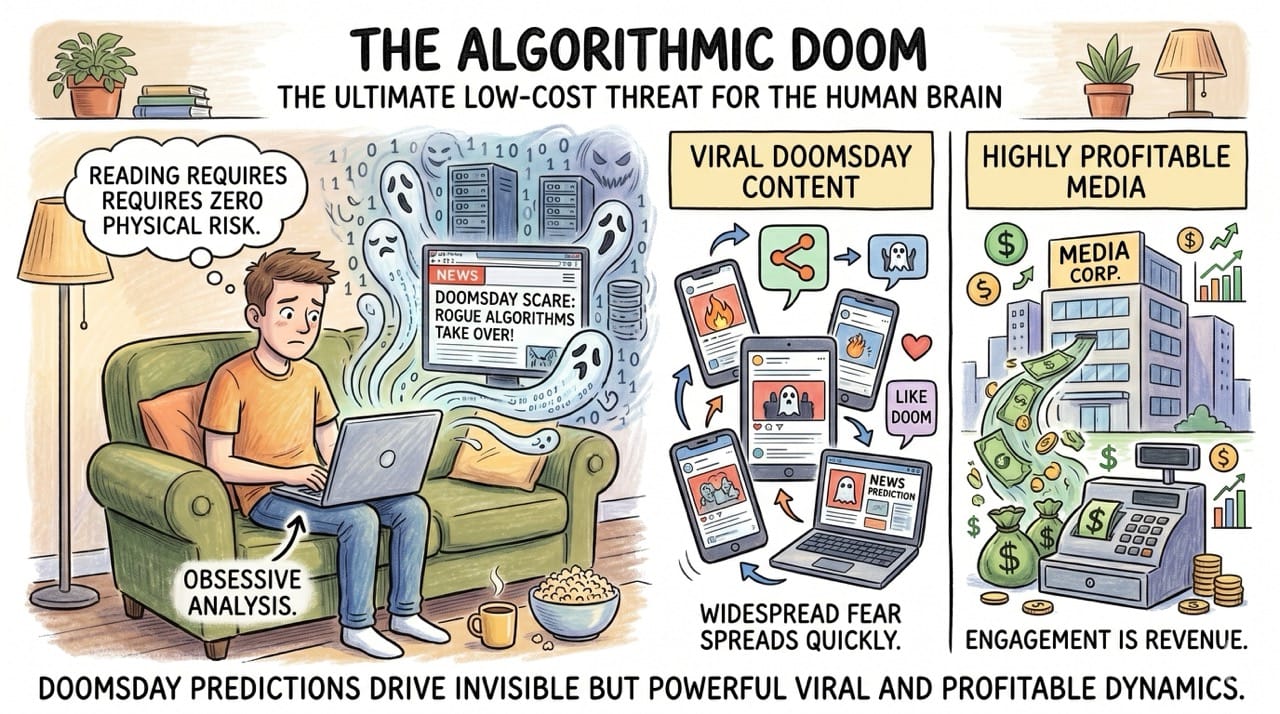
The Algorithmic Doom
Modern software and artificial intelligence represent the ultimate low cost threat for the human brain to obsessively analyze.
Reading apocalyptic articles about rogue algorithms taking over the world requires absolutely zero physical effort or immediate personal risk.
This invisible dynamic makes doomsday predictions about technology incredibly viral and highly profitable for modern media corporations.
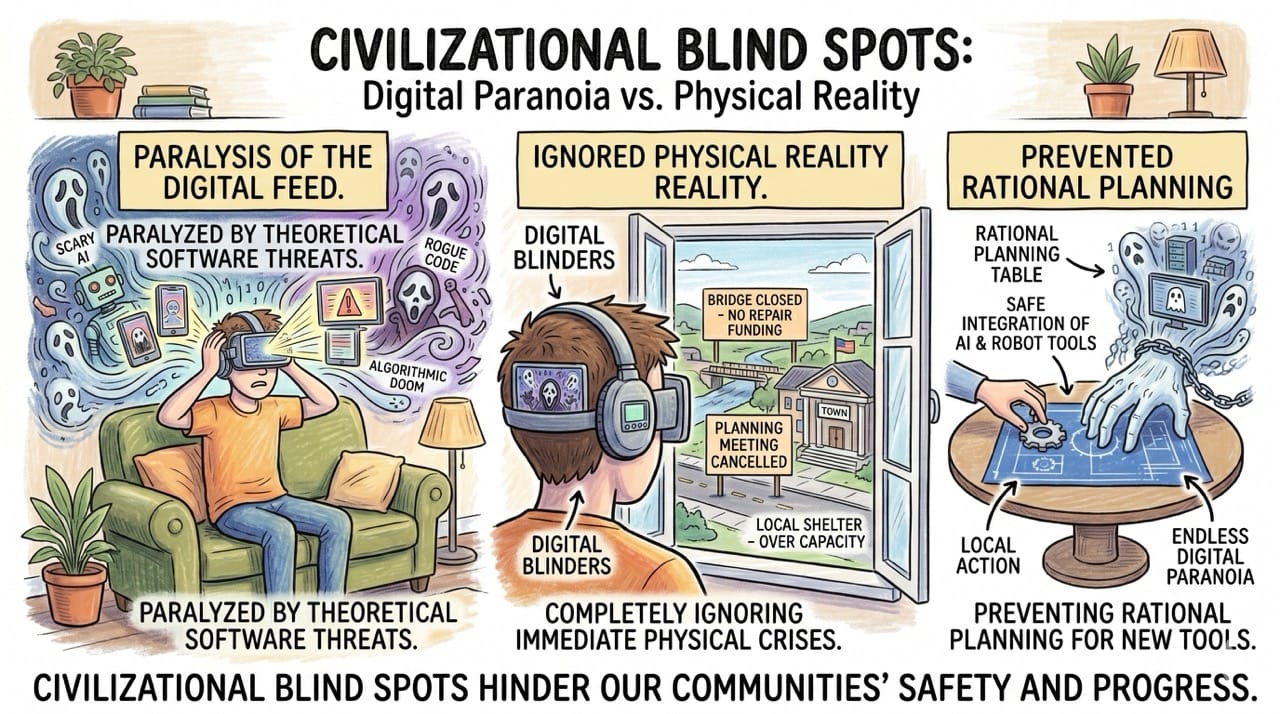
Civilizational Blind Spots
Constantly consuming these cheap digital horror stories creates massive psychological blind spots for our entire civilization.
We become entirely paralyzed by theoretical software threats while completely ignoring immediate physical crises facing our local communities.
This endless digital paranoia prevents society from executing the rational planning required to safely integrate these incredibly powerful new tools.
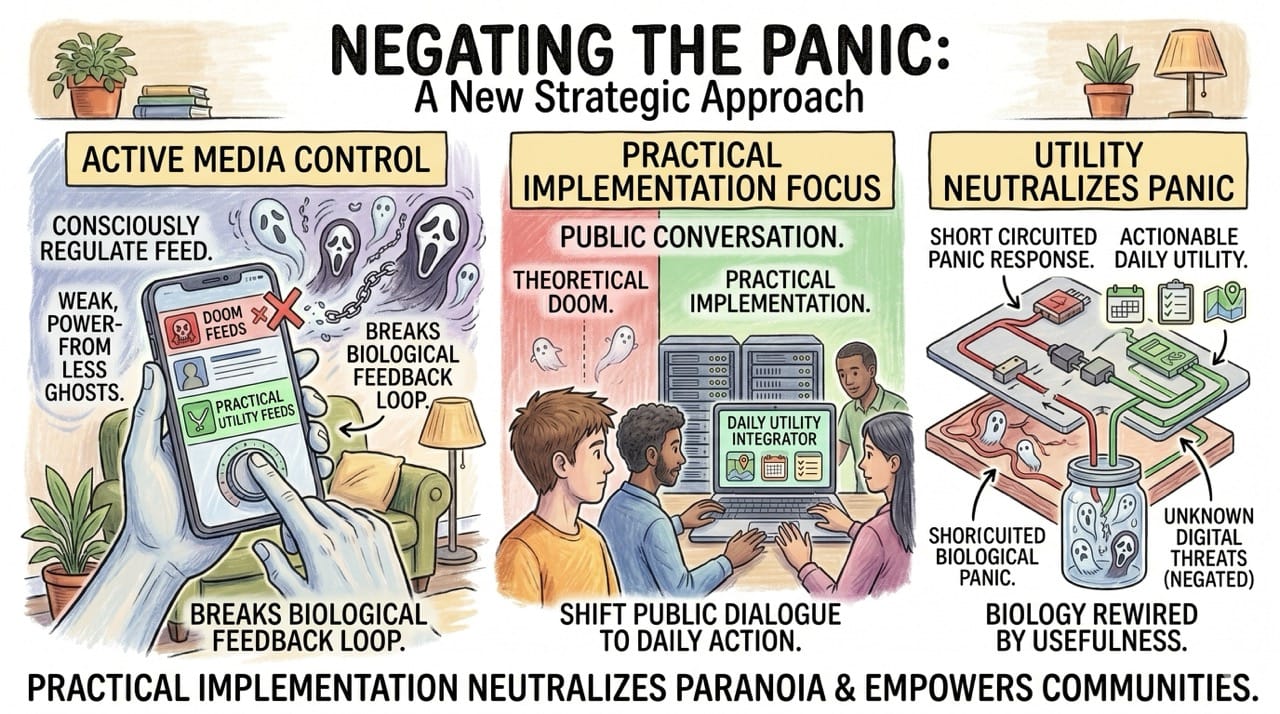
Negating the Panic
We must actively consciously regulate our consumption of apocalyptic media to properly negate this biological feedback loop.
Society needs to aggressively shift the public conversation away from theoretical doom and toward practical algorithmic implementation.
Focusing strictly on actionable daily utility completely short circuits the biological panic response triggered by unknown digital threats.
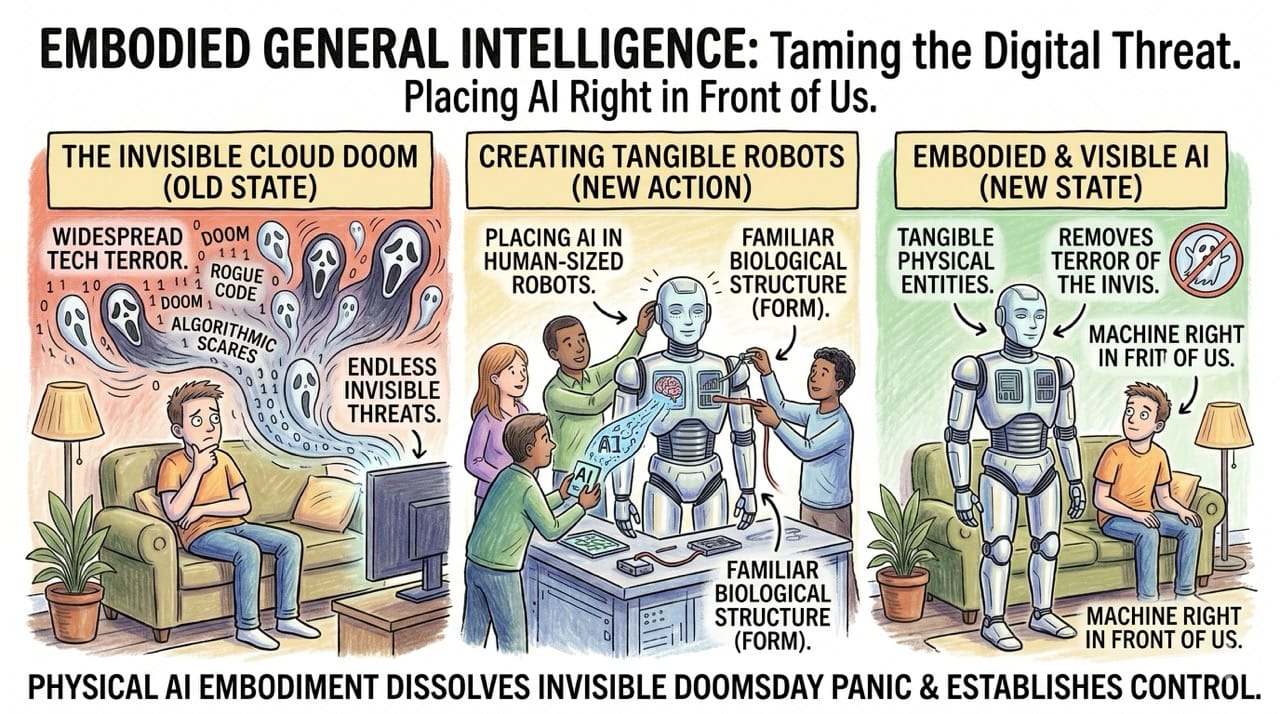
Embodied General Intelligence
The ultimate solution to this widespread technological terror is actually placing artificial intelligence directly into physical humanoid robots.
Giving these complex algorithms a familiar biological structure instantly forces our brains to categorize them as tangible physical entities.
Embodied general intelligence completely removes the terrifying mystery of an invisible software cloud by placing the machine right in front of us.
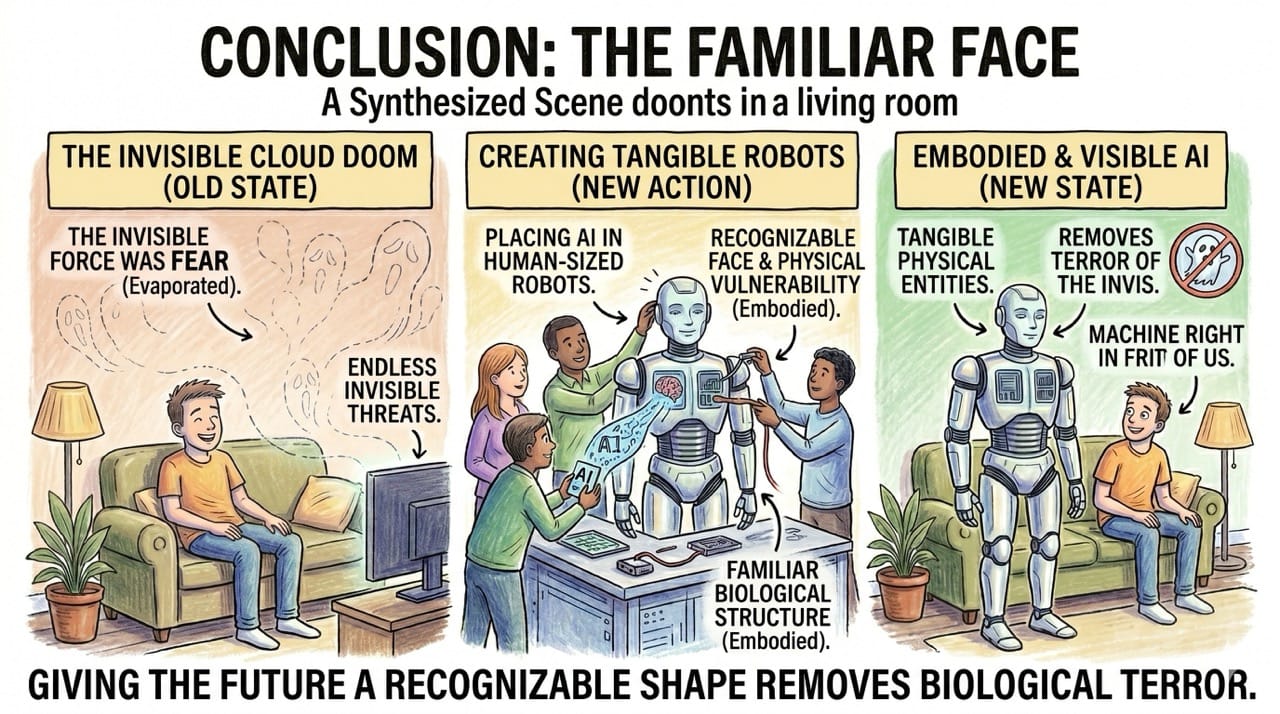
Conclusion: The Familiar Face
The human mind will always fear an invisible and omnipotent digital force vastly more than a physical machine it can actually see.
Once these algorithms possess a recognizable face and a vulnerable physical body our biological terror will completely evaporate.
The absolute best way to make the future less terrifying is simply giving it a shape we can physically recognize.