What an Alice Weidel Win Means for German Defense
We assume a populist shift away from foreign interventions will naturally destroy the revenue of defense contractors. The reality is that political isolationism redirects billions of dollars strictly toward rebuilding the domestic military base.
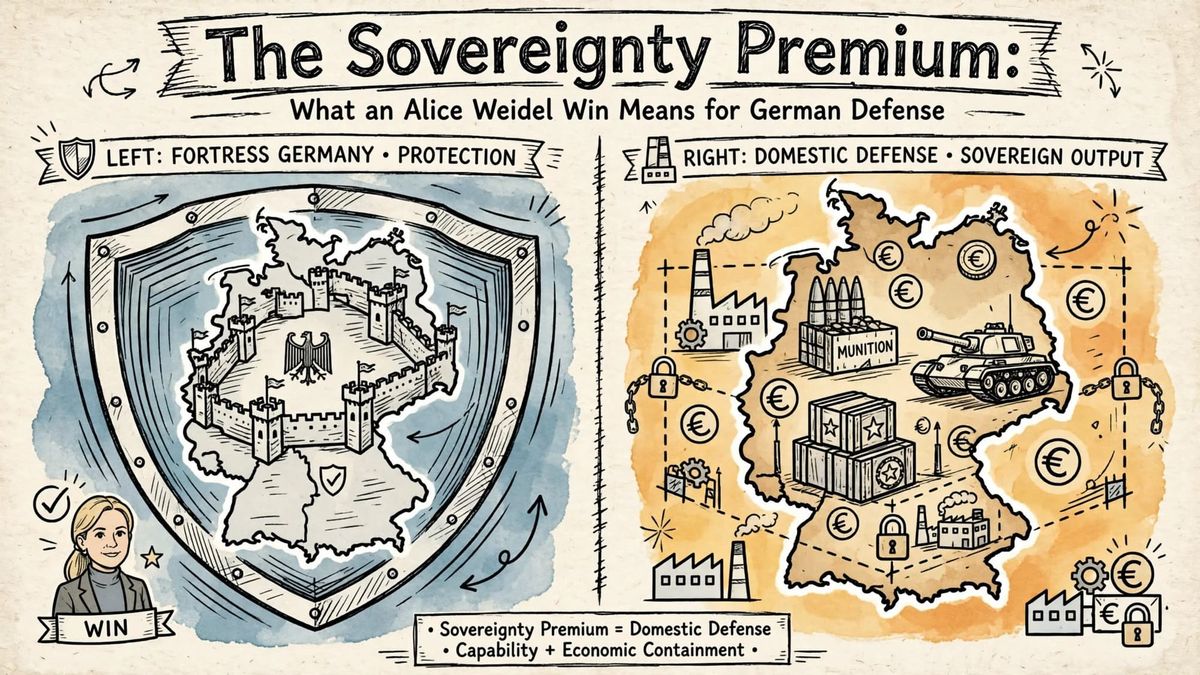
An isolationist political platform does not starve the defense industry. It simply abandons joint European projects to aggressively fund domestic rearmament and build a protectionist shield around local contractors.
Inspiration: Analyzing the political momentum of Alice Weidel and the AfD platform regarding national security. Realizing that a shift away from foreign aid creates a highly lucrative domestic monopoly for German defense titans like Rheinmetall and Hensoldt.
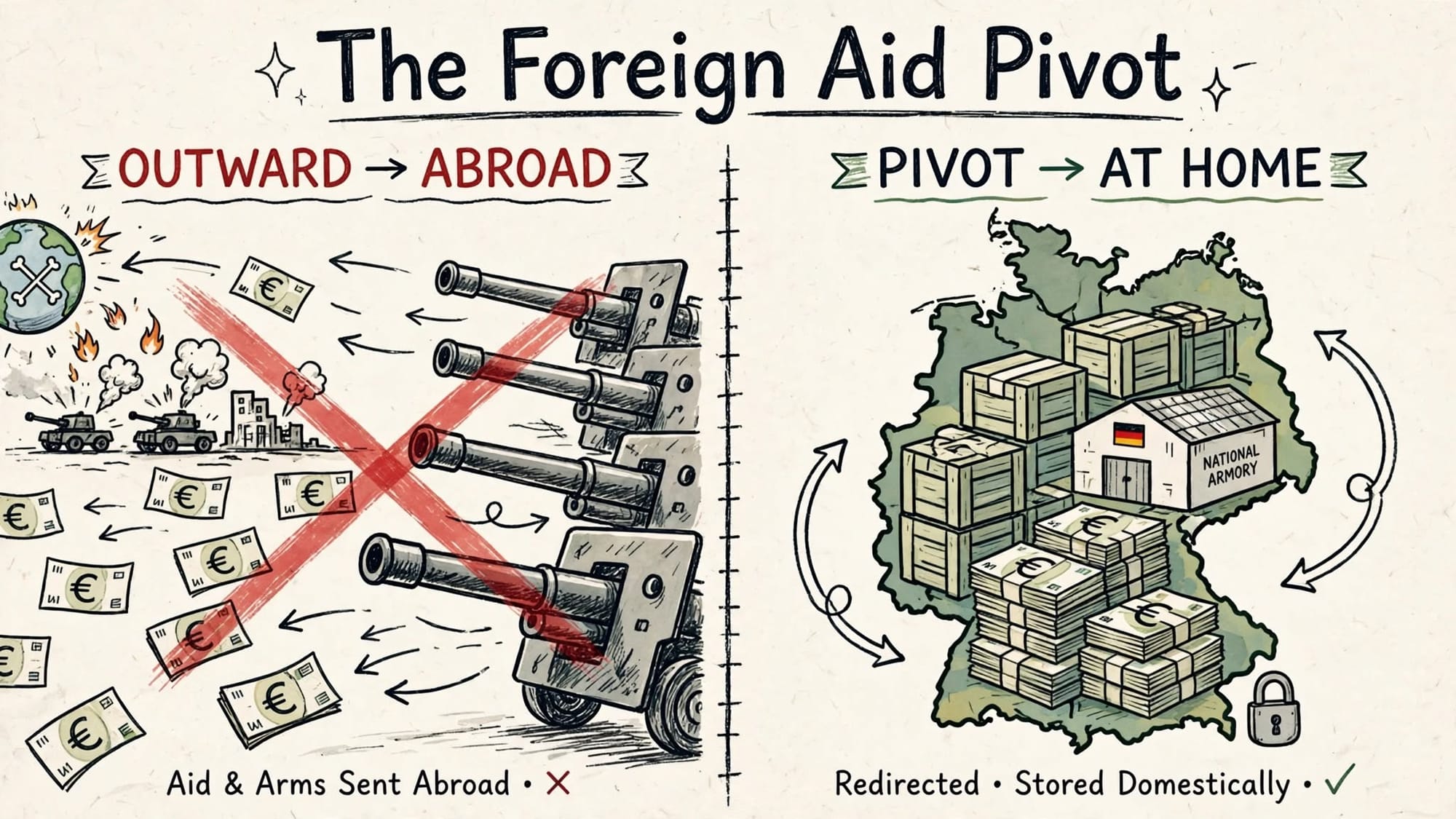
The Foreign Aid Pivot
The political ascent of Alice Weidel represents a stark pivot for German military strategy and global capital allocation.
Her platform explicitly rejects funding foreign conflicts and strongly opposes sending heavy artillery to external allies.
Financial analysts naturally worry this isolationist posture will immediately starve local defense companies of vital export revenue.
This assumption fundamentally misunderstands the core psychology of a nationalist political agenda.
An isolationist government does not believe in pacifism or total disarmament.
They simply believe that every single euro spent on security should remain physically trapped inside their own borders.
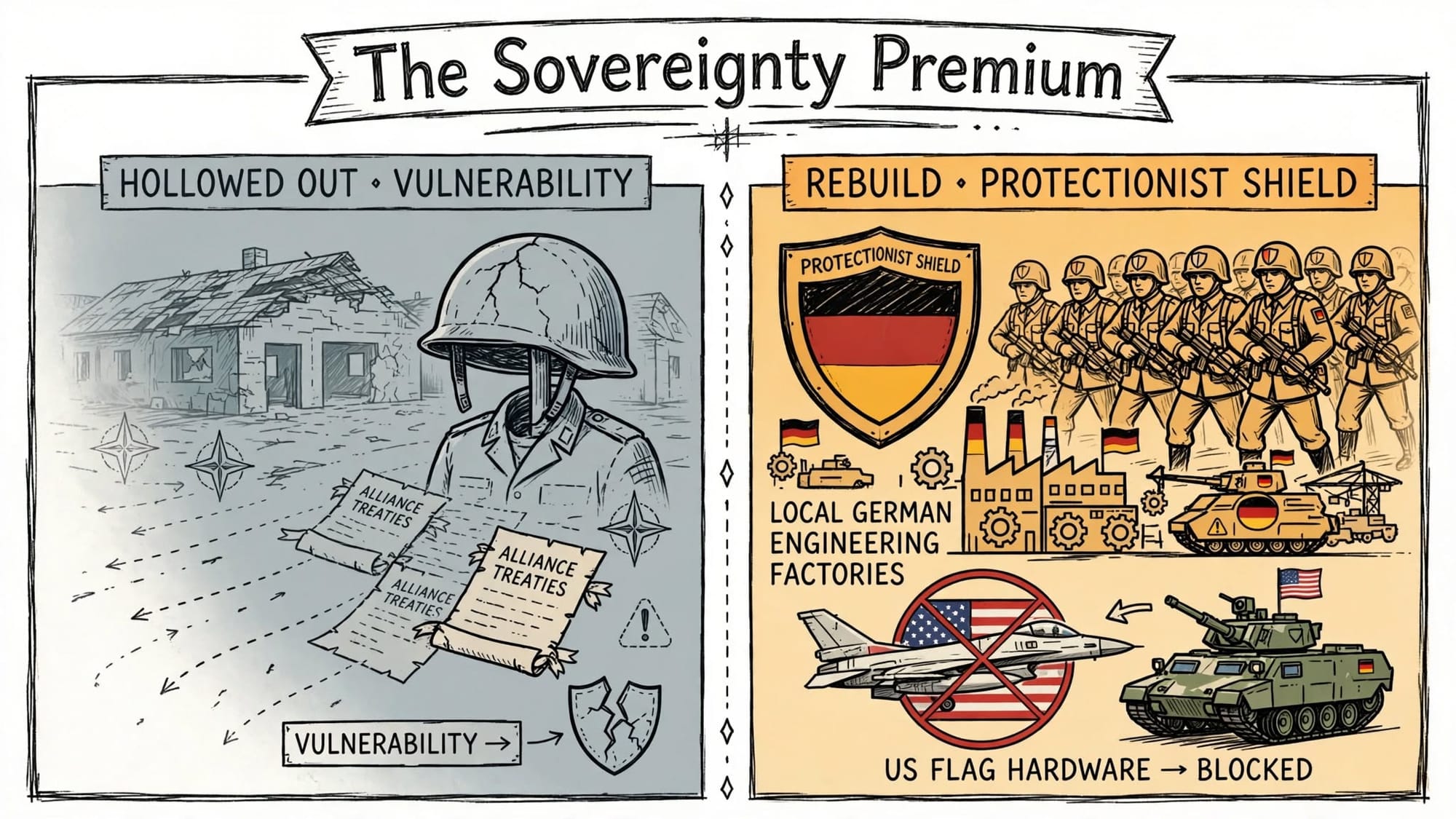
The Sovereignty Premium
Nationalist governments inherently distrust relying on international alliances or foreign treaties for their own physical security.
They view a hollowed out domestic military as a severe political vulnerability rather than an acceptable budget compromise.
To project strength and independence they must aggressively rebuild their own standing army.
If the administration pulls capital away from foreign aid they will immediately redirect those billions into restocking empty national armories.
This creates a powerful protectionist shield for local engineering firms.
The government will aggressively favor domestic defense contracts over importing aerospace hardware or ground vehicles from American competitors.
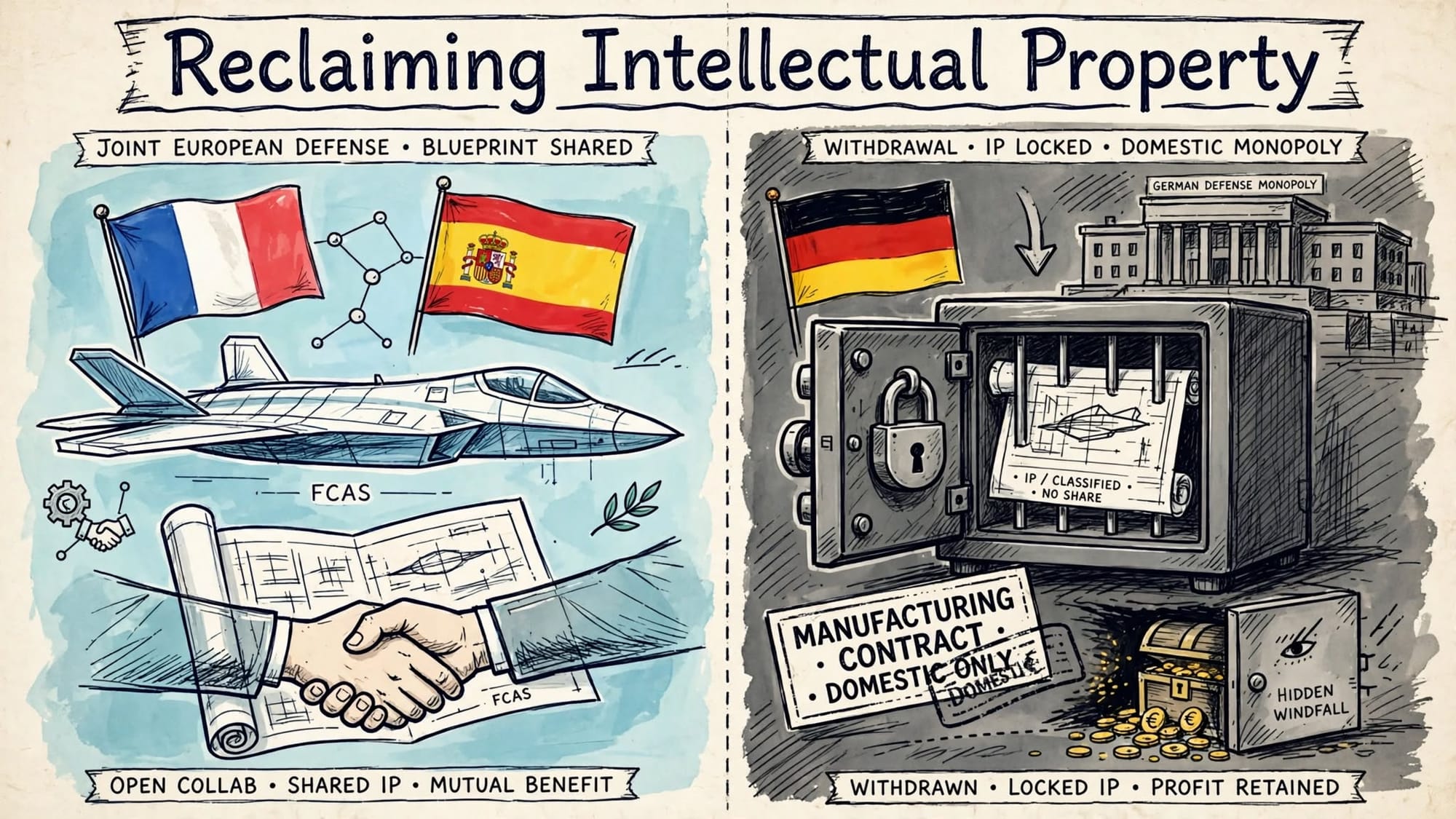
Reclaiming Intellectual Property
This political shift also presents a severe threat to the future of collaborative European defense initiatives.
Weidel is deeply skeptical of broad European Union integration and shared continental military procurement.
Her mandate would likely force a rapid withdrawal from heavily subsidized joint initiatives like the future combat air system currently being developed alongside France and Spain.
While abandoning these programs frustrates European diplomats it actually serves as a hidden windfall for German defense monopolies.
Local contractors will no longer be forced to share their highly valuable intellectual property or split lucrative manufacturing contracts with foreign rivals just to appease a unified European political agenda.
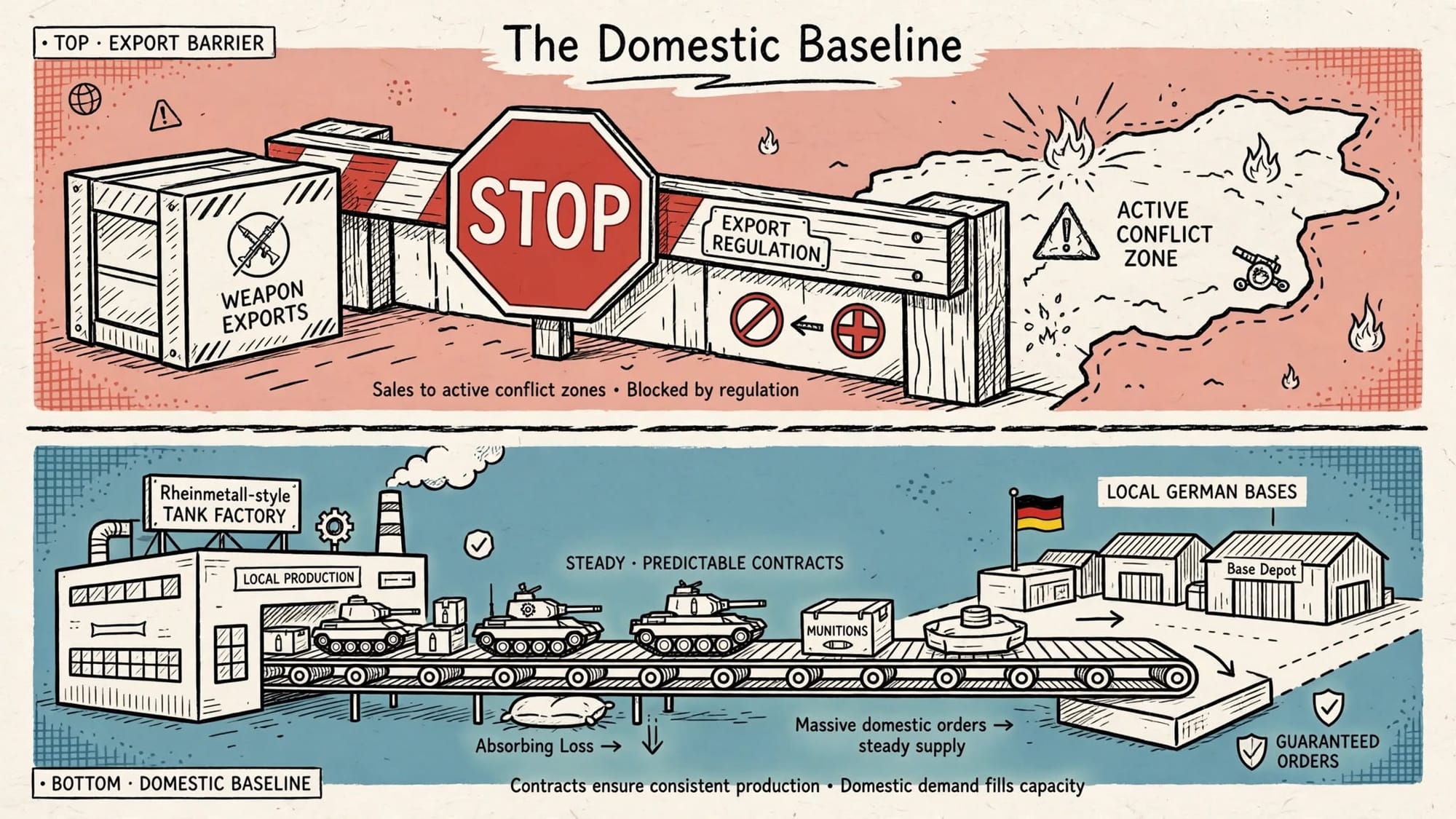
The Domestic Baseline
The only genuine friction for these corporations under this new regime will be navigating strict new export regulations.
An isolationist foreign policy will naturally limit their ability to sell weapons directly to active international conflict zones.
However the sheer volume of guaranteed domestic orders required to fully modernize the German armed forces will easily absorb any lost international sales. Companies like Rheinmetall will secure highly predictable long term contracts to build tanks and munitions strictly for local bases.
This transitions their business model from relying on volatile global conflicts to servicing a steady and mandated domestic upgrade cycle.
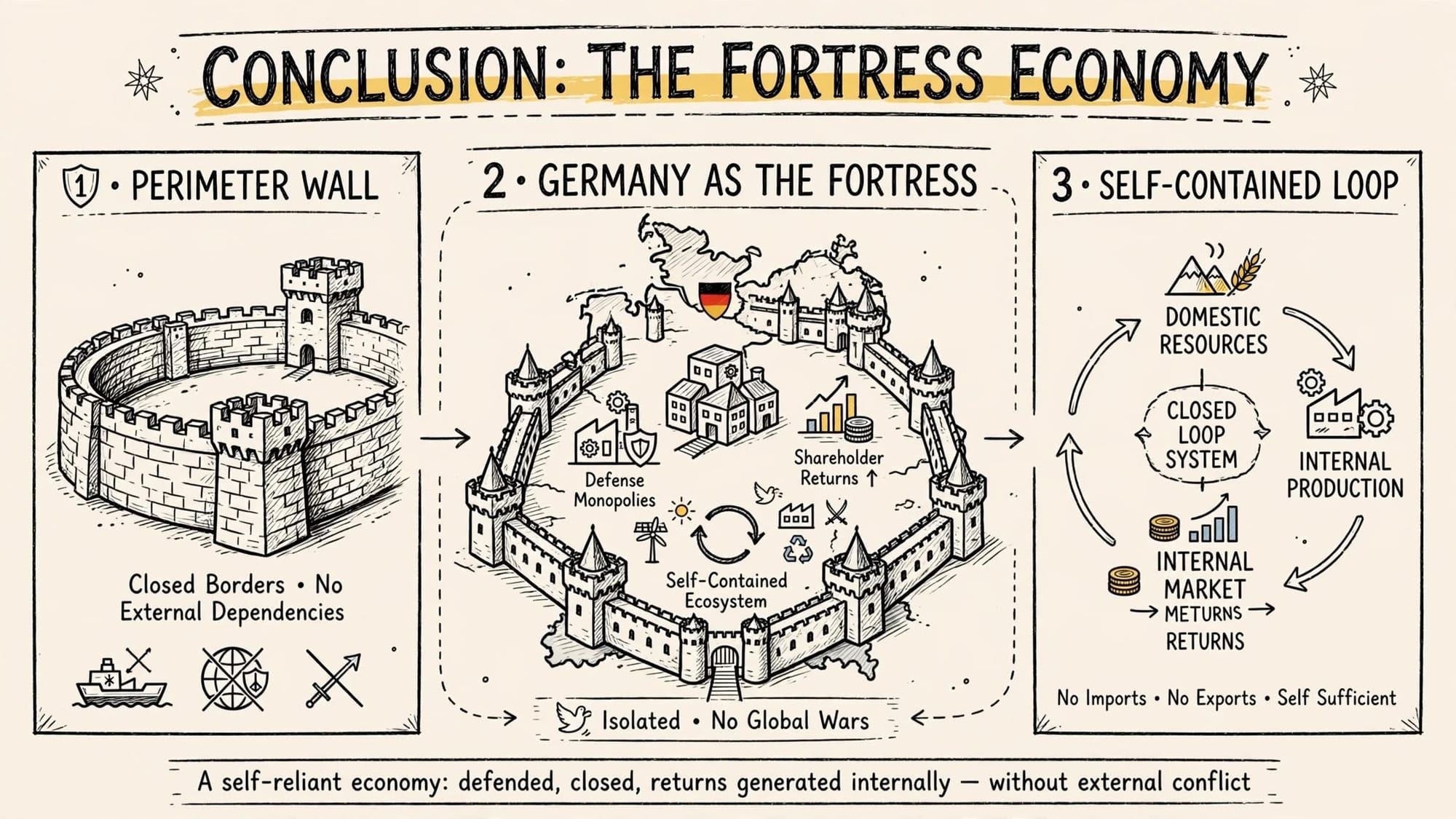
Conclusion: The Fortress Economy
Defense monopolies do not actually need active global wars to generate incredible shareholder returns.
They simply need a nationalist leader who is terrified of relying on anyone else to secure the perimeter.