The Physics of Orbital Strikes: Why Tungsten Kinetic Weapons Remain Science Fiction
We assume dropping a massive metal rod from space creates an apocalyptic explosion. In reality the fundamental laws of physics and raw launch economics make this weapon completely impractical.
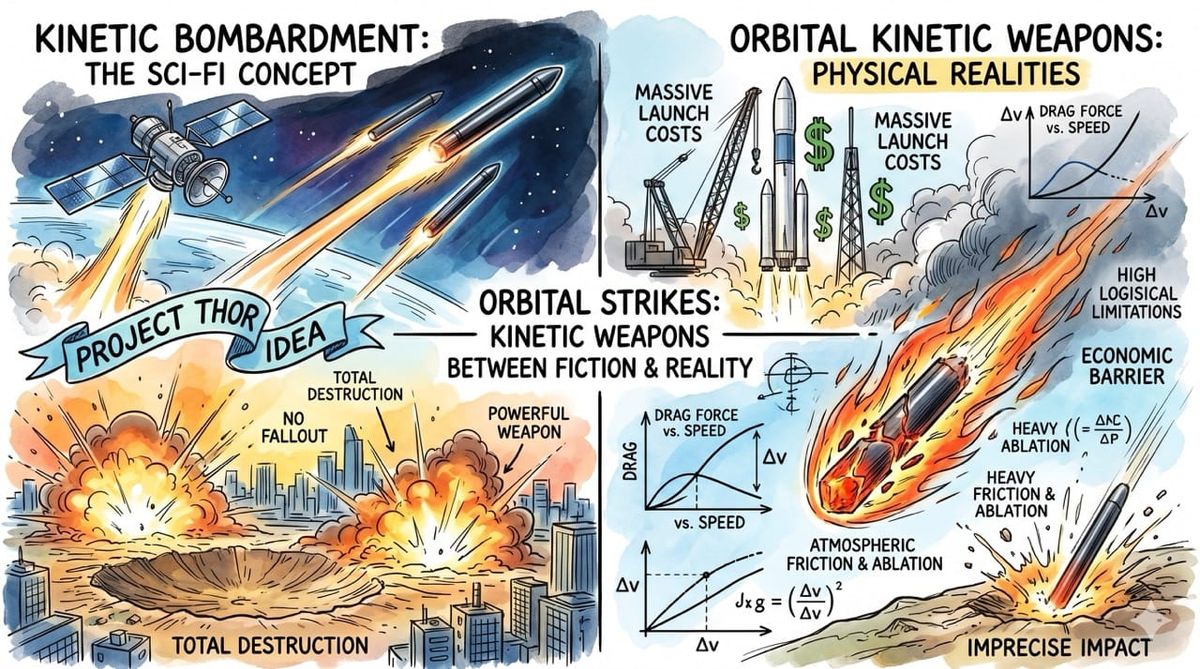
The concept of dropping heavy metals from space promises total destruction without radioactive fallout. The actual physics and economic reality present a massive barrier to military deployment.
Inspiration: Researching the feasibility of kinetic bombardment commonly known as Project Thor. Applying raw mathematical data to separate Hollywood science fiction from actual military utility.
The Concept of Project Thor
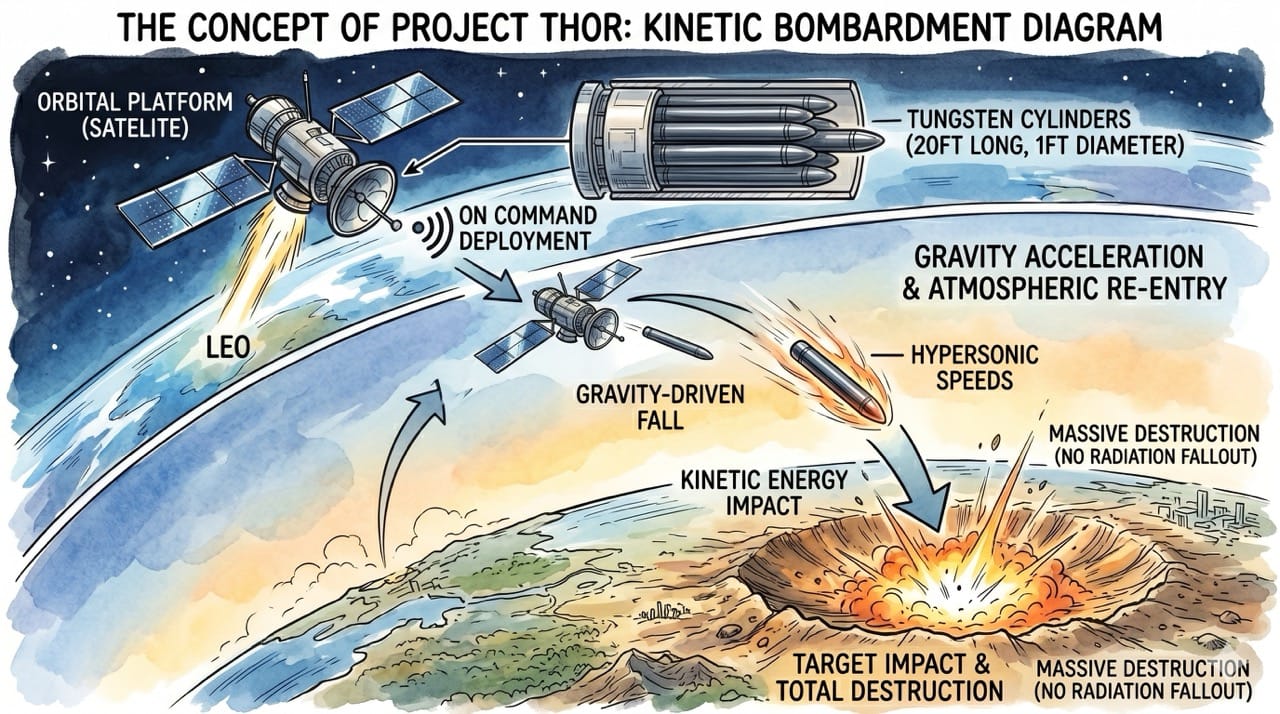
The theoretical weapon involves placing a satellite in low Earth orbit loaded with massive tungsten cylinders.
These rods are typically conceptualized as twenty feet long and one foot in diameter.
Upon command the satellite drops a rod allowing gravity to accelerate it to hypersonic speeds before impacting the target.
The Material Science
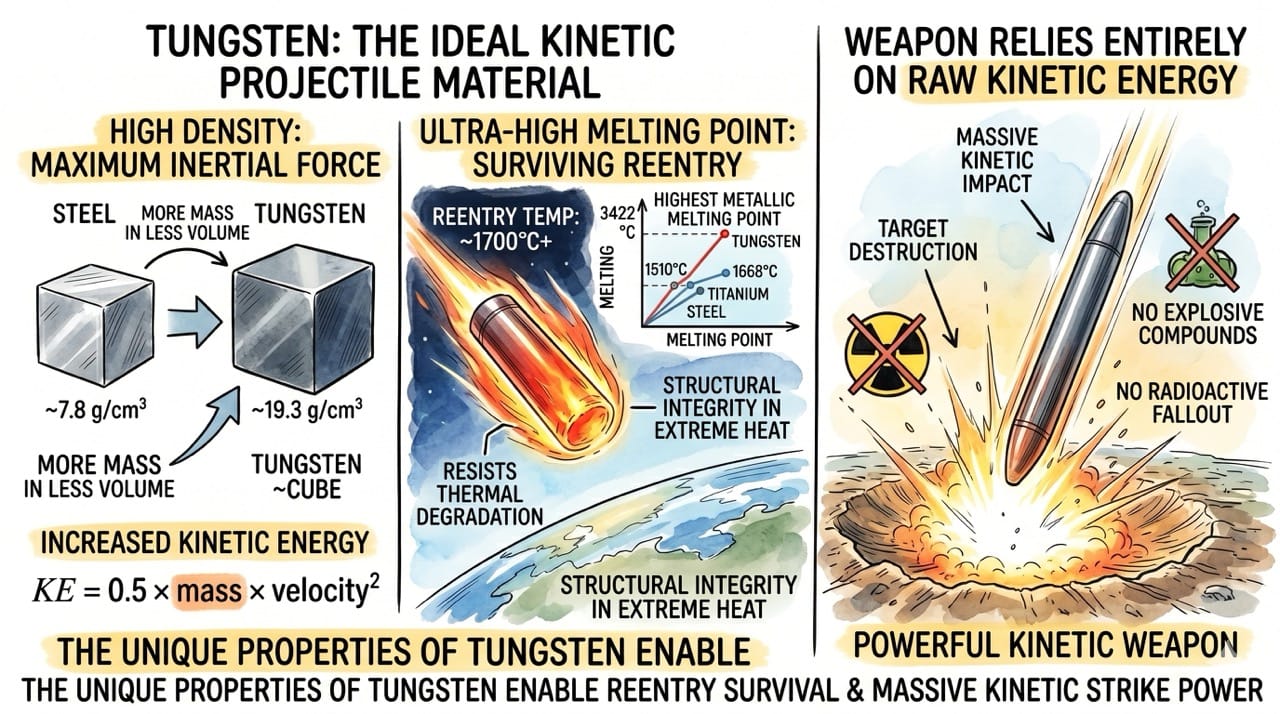
Tungsten is specifically chosen because it possesses an incredibly high density and the highest melting point of all discovered metals.
These unique material properties theoretically allow the projectile to survive the extreme thermal stress of atmospheric reentry.
The weapon relies entirely on raw kinetic energy rather than explosive chemical compounds or radioactive reactions.
The Mathematical Yield
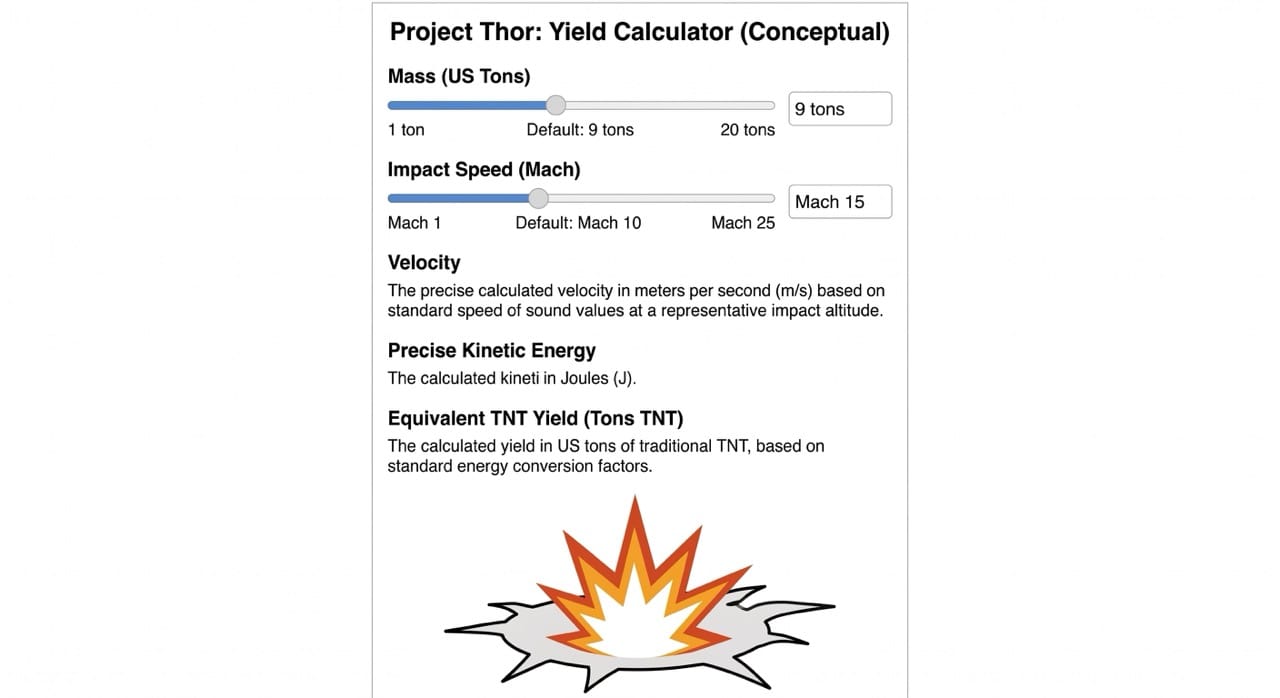
The destructive power of this weapon is calculated using the standard physics formula for kinetic energy.
A twenty foot tungsten cylinder weighs approximately nine tons and strikes the ground at roughly ten times the speed of sound.
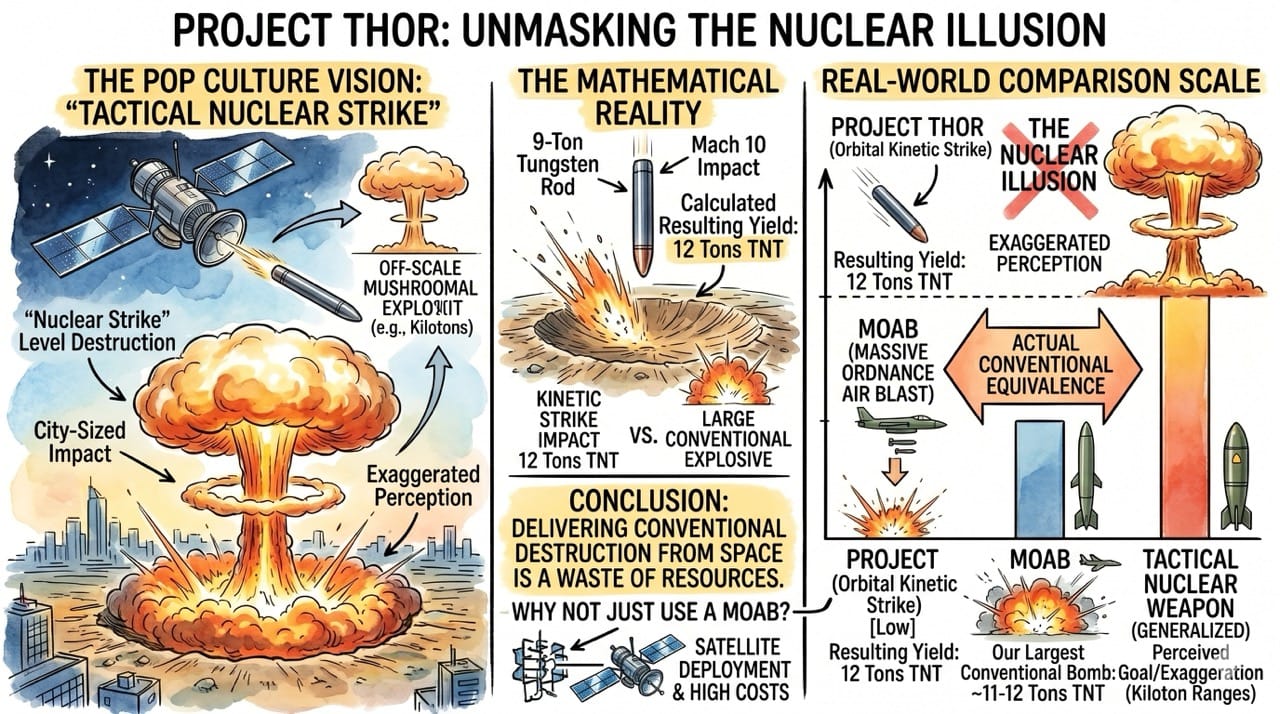
This massive impact releases energy equivalent to roughly twelve tons of traditional TNT explosives.
The Nuclear Illusion
Pop culture frequently portrays these orbital strikes as possessing the destructive radius of a tactical nuclear weapon.
The mathematical reality is that twelve tons of TNT is merely equivalent to our largest conventional bomb like the Massive Ordnance Air Blast.
Delivering the destructive power of a standard conventional explosive from space is a massive waste of resources.
The Atmospheric Friction
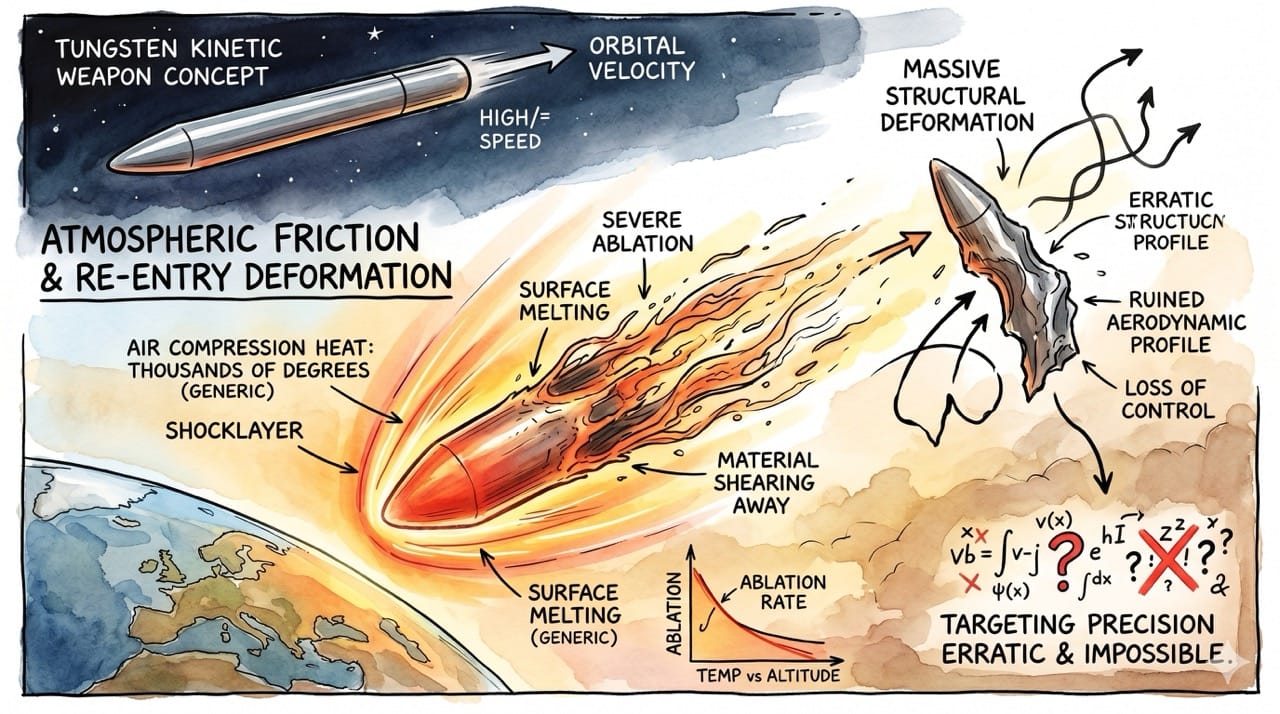
When an object enters the atmosphere at orbital velocities it compresses the air and generates thousands of degrees of heat.
Even pure tungsten will experience severe ablation where the outer layers of the metal physically melt away.
This massive structural deformation completely ruins the aerodynamic profile making precision targeting mathematically impossible.
The Orbital Bottleneck
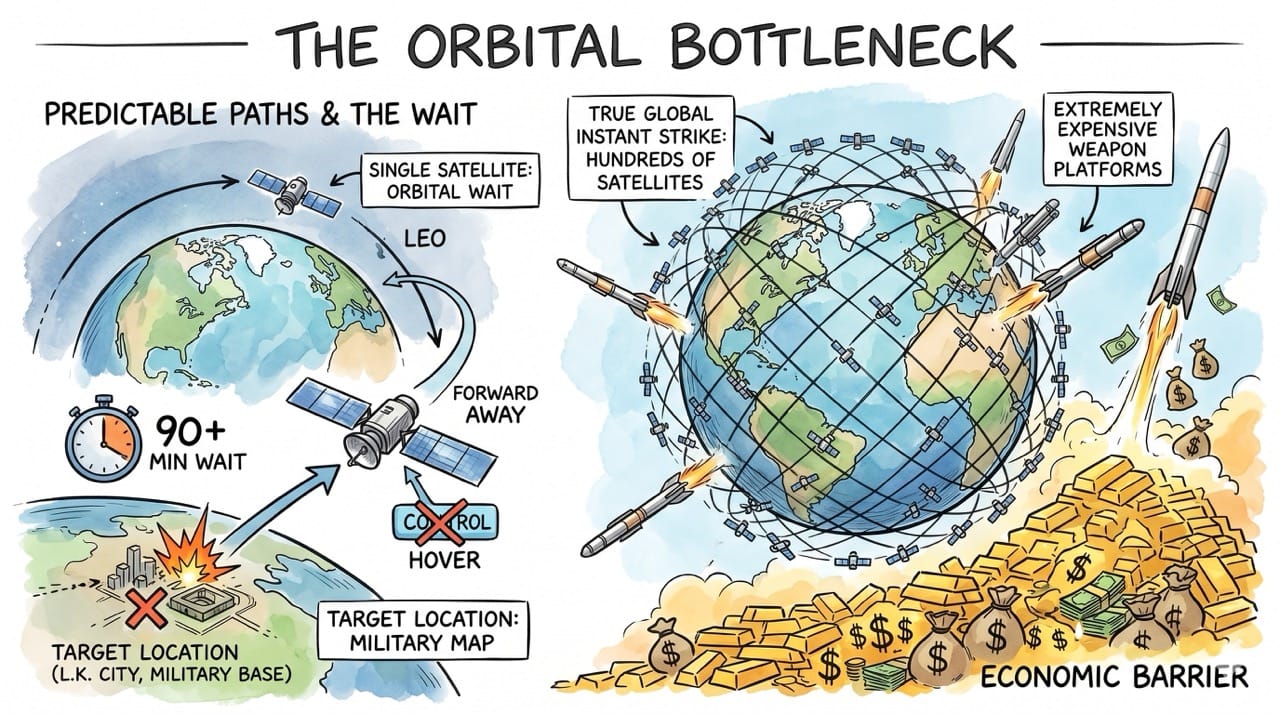
Satellites in low orbit travel in highly predictable paths and cannot simply stop or hover over a target.
Striking a specific location requires waiting until the satellite naturally passes overhead which can take over ninety minutes.
Achieving true global instant strike capability would require launching hundreds of extremely expensive weapon platforms into orbit.
The Economic Reality
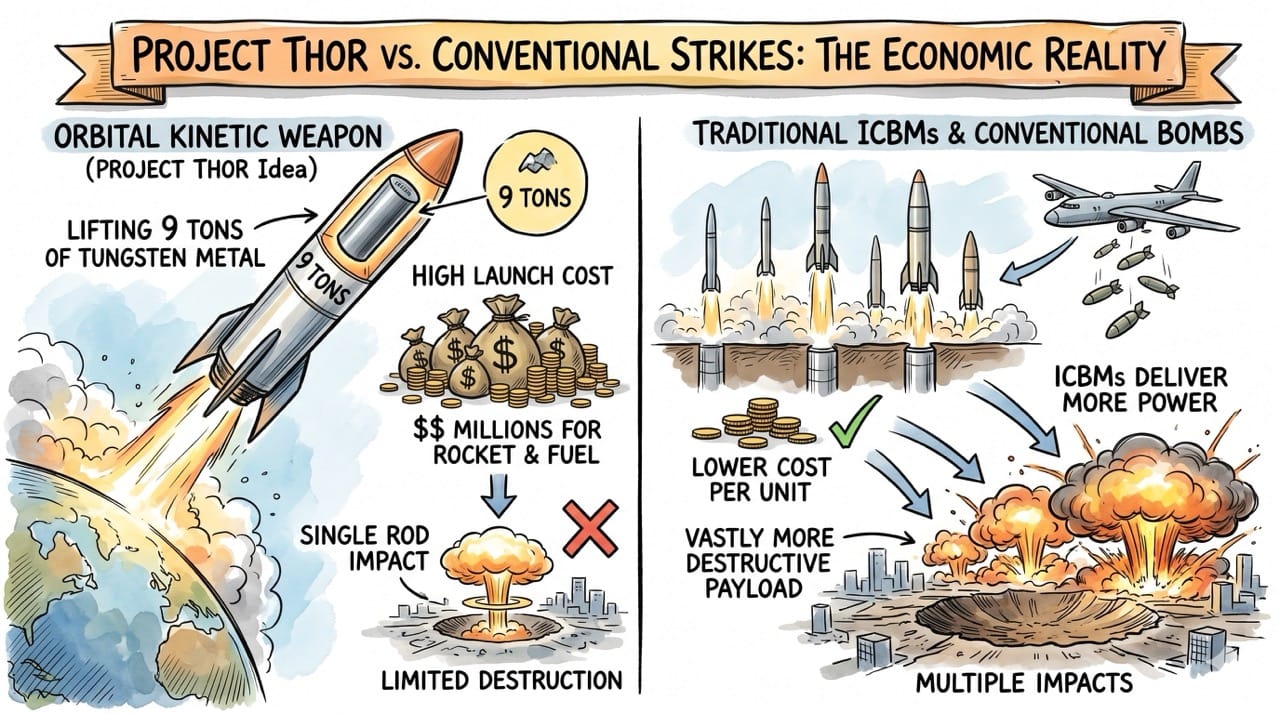
The ultimate death of this concept comes from the absolute baseline cost of orbital launch mechanics.
Lifting nine tons of solid metal into space currently costs tens of millions of dollars just for the rocket fuel.
A traditional intercontinental ballistic missile delivers vastly more destructive payload from the ground at a tiny fraction of the cost.
Conclusion: The Capital Allocation
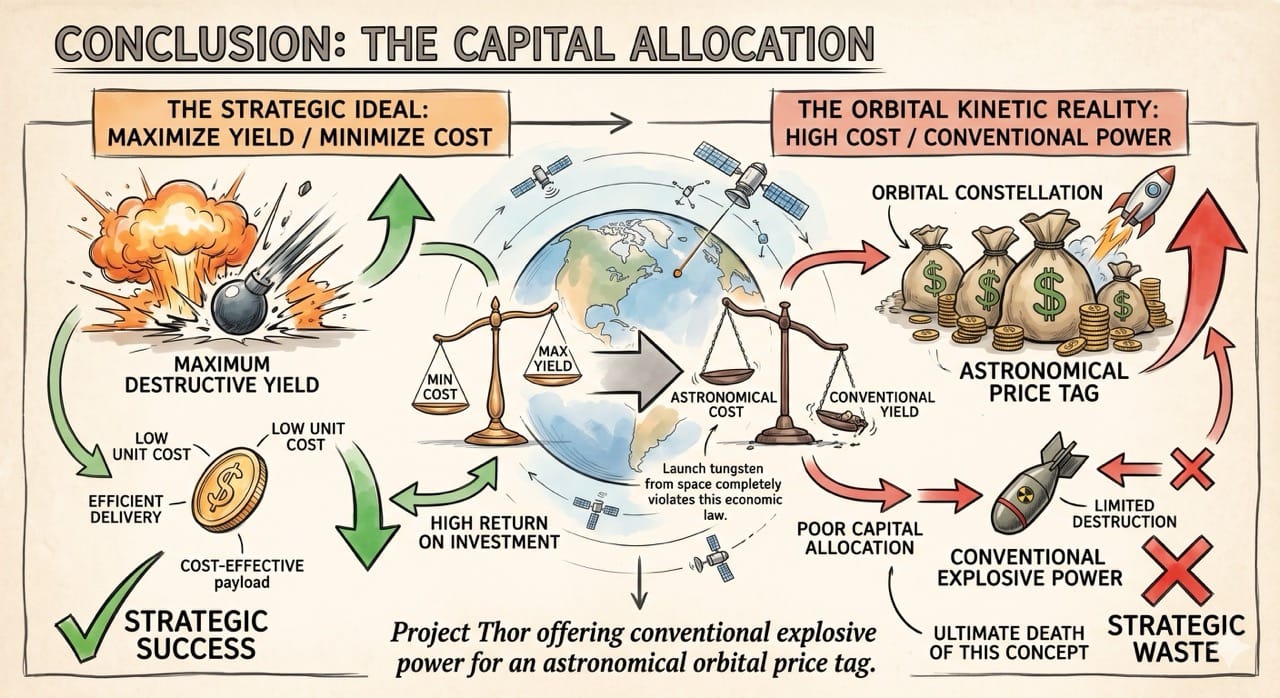
The ultimate strategic weapon must maximize destructive yield while minimizing the fundamental unit cost of delivery.
Launching tungsten from space completely violates this economic law by offering conventional explosive power for an astronomical orbital price tag.