The Age of Remakes in Gaming with AI
Remakes used to take three years and a hundred artists. AI turns that into months and a small team, with better textures, lighting and performance than hand made remakes.
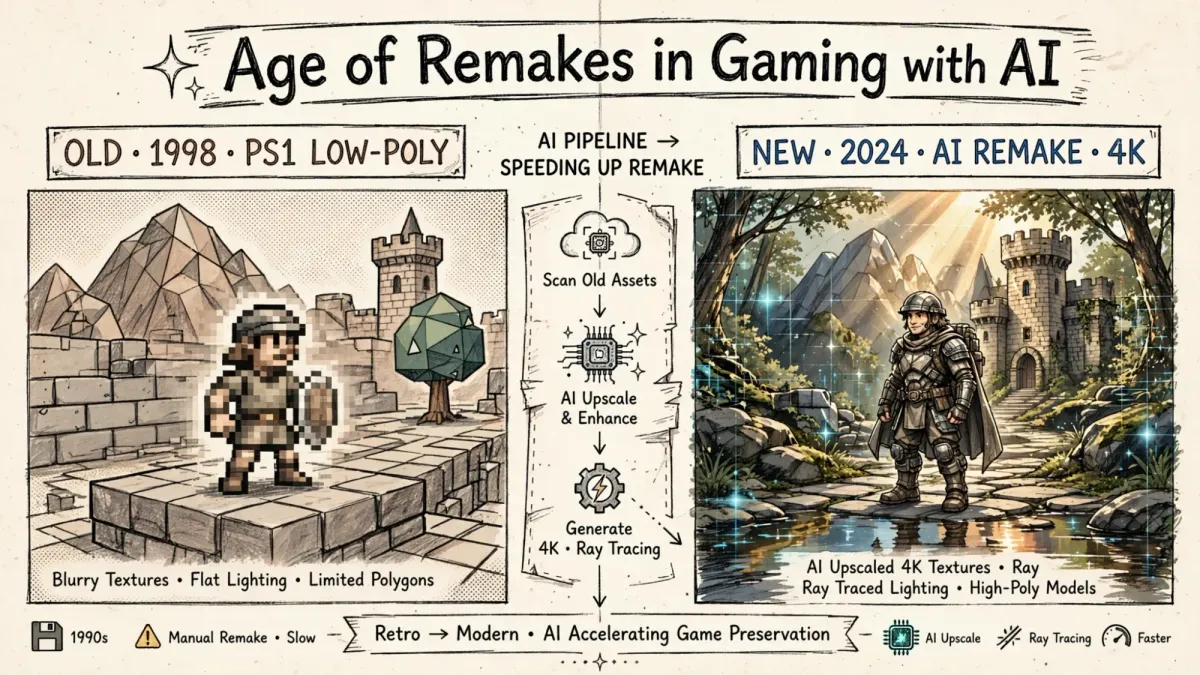
How AI cuts remake time from years to months and makes quality higher.
Gaming loves remakes because they are safe bets. Players want nostalgia. Studios want proven IP. The problem was cost. A proper remake needed years of manual modeling, repainting and relighting.
That math just changed. In 2026, AI tools became a real production pipeline. That makes remakes faster, cheaper and visually better than before.
Why Remakes Are Booming
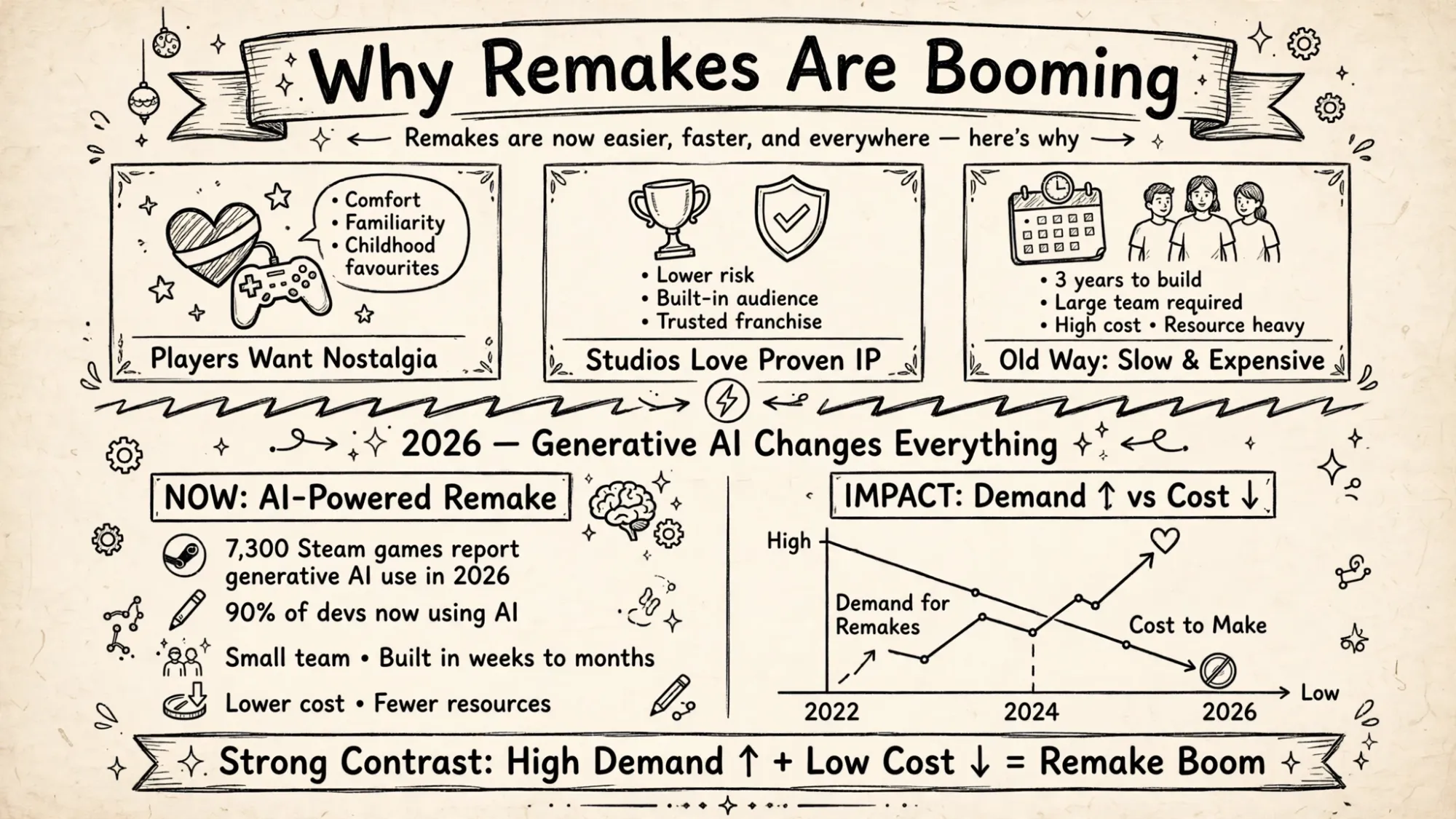
Demand for remakes keeps rising.
Players grew up with PS1, PS2 and early Xbox classics and now have money to buy them again.
Studios like remakes because audience is built in and risk is lower than new IP.
Until now supply was the bottleneck. A classic remake was almost as expensive as a new game.
Three years to build, large team required, high cost and resource heavy. Only top franchises got remakes.
In 2026 that flipped. According to Google Cloud Games Industry Report 2025, 90 percent of game developers now use some form of AI, 97 percent say generative AI is transforming the industry, and 94 percent expect AI to reduce costs long term. On Steam, 7,300 games report using generative AI in 2026.
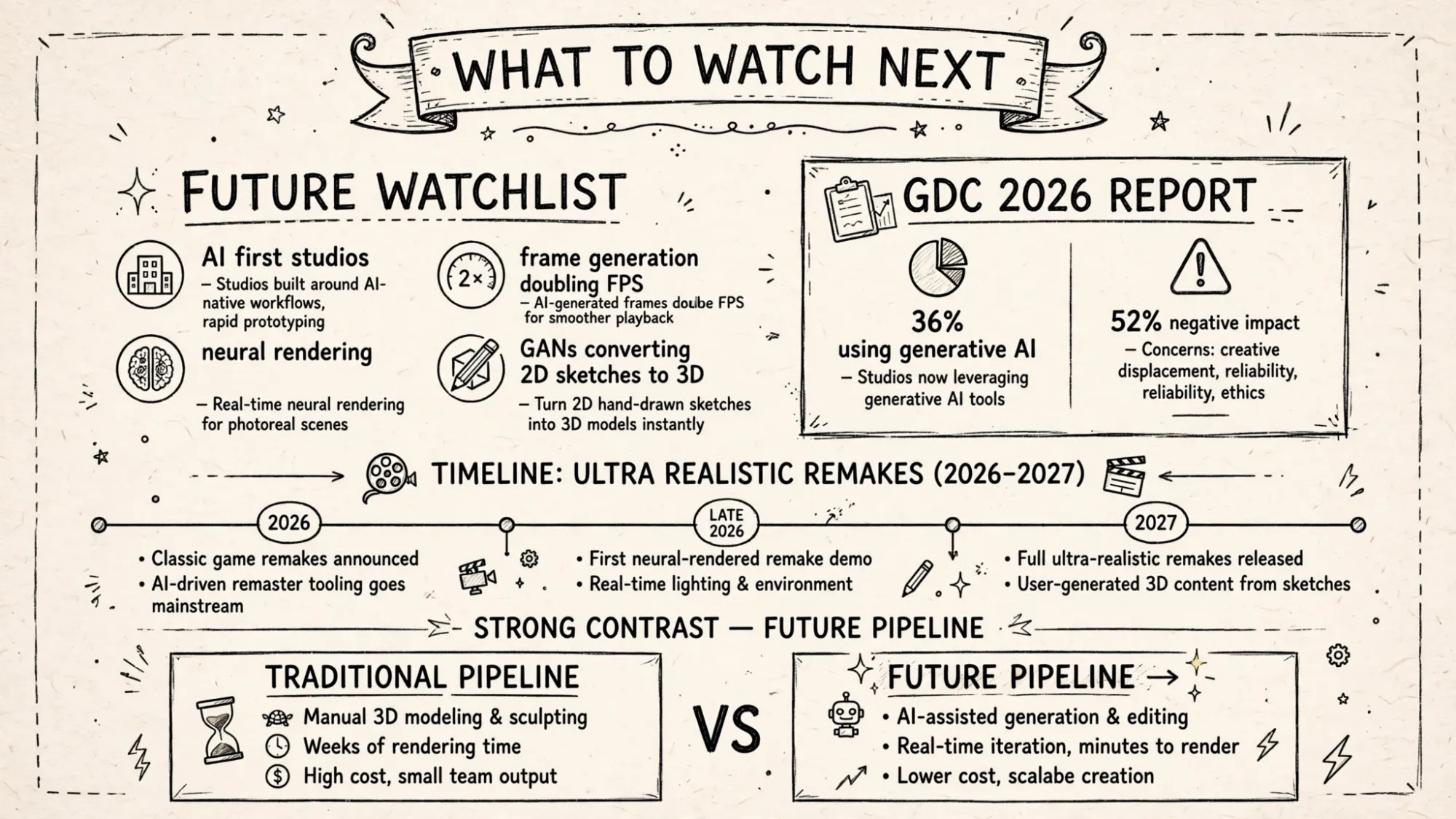
GDC March 2026 said 36 percent of professionals use generative AI tools in their job.
When demand is high and cost drops, you get a boom. That is where we are.
The Old Remake Pipeline
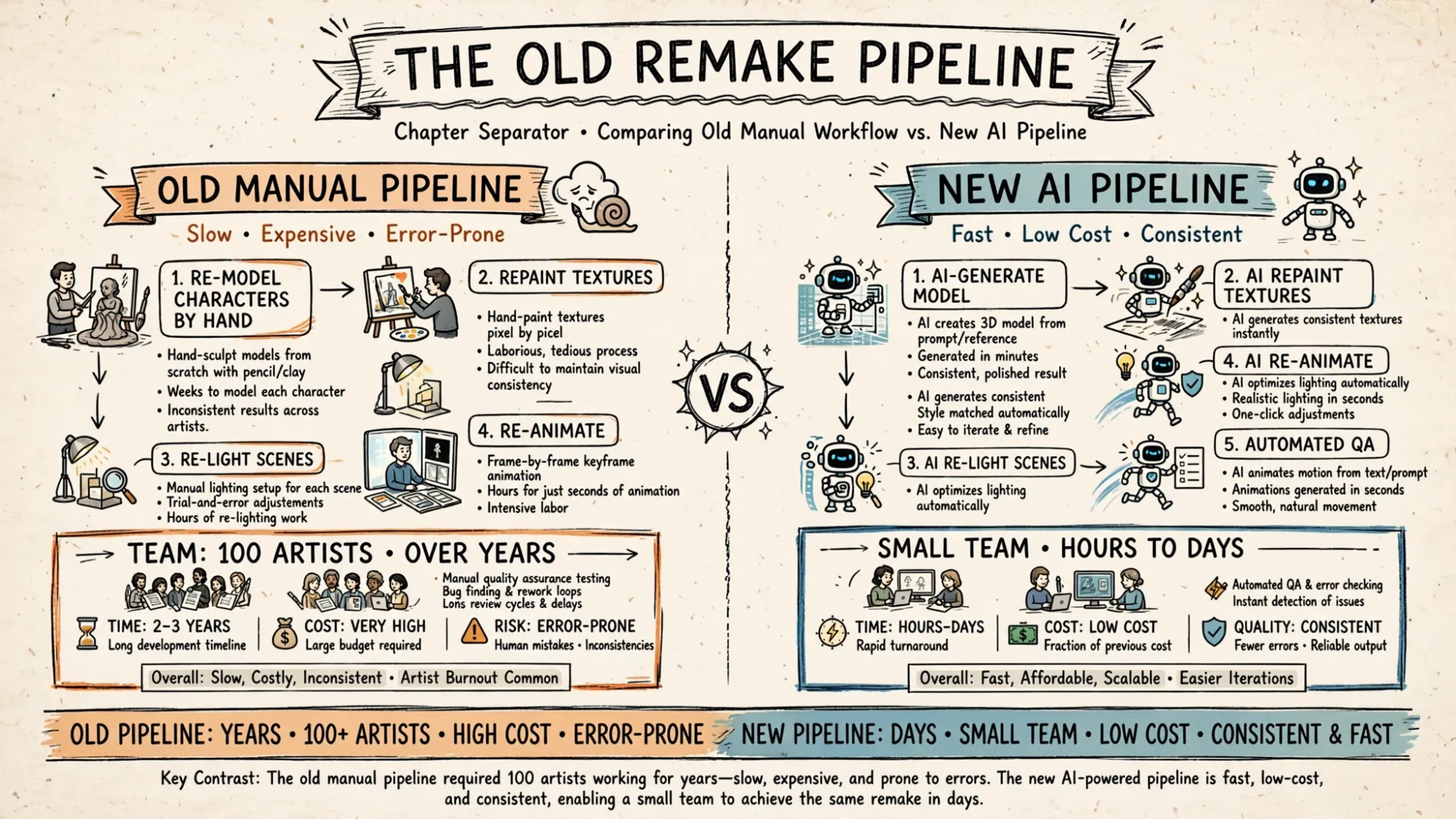
The old way was fully manual.
Artists captured original assets, then remodeled characters by hand, repainted every texture, re did PBR materials, rebuilt lighting, re animated and then spent months on QA. Modders who made AI upscale mods described the manual alternative as weeks of rendering time and high cost for small team output.
Even with good tools, a team could only touch a few hundred textures a week.
A full game has tens of thousands. So studios picked only the biggest titles.
Mid tier games that players loved never got remade because math did not work.
How AI Speeds Everything Up
The new pipeline is different.
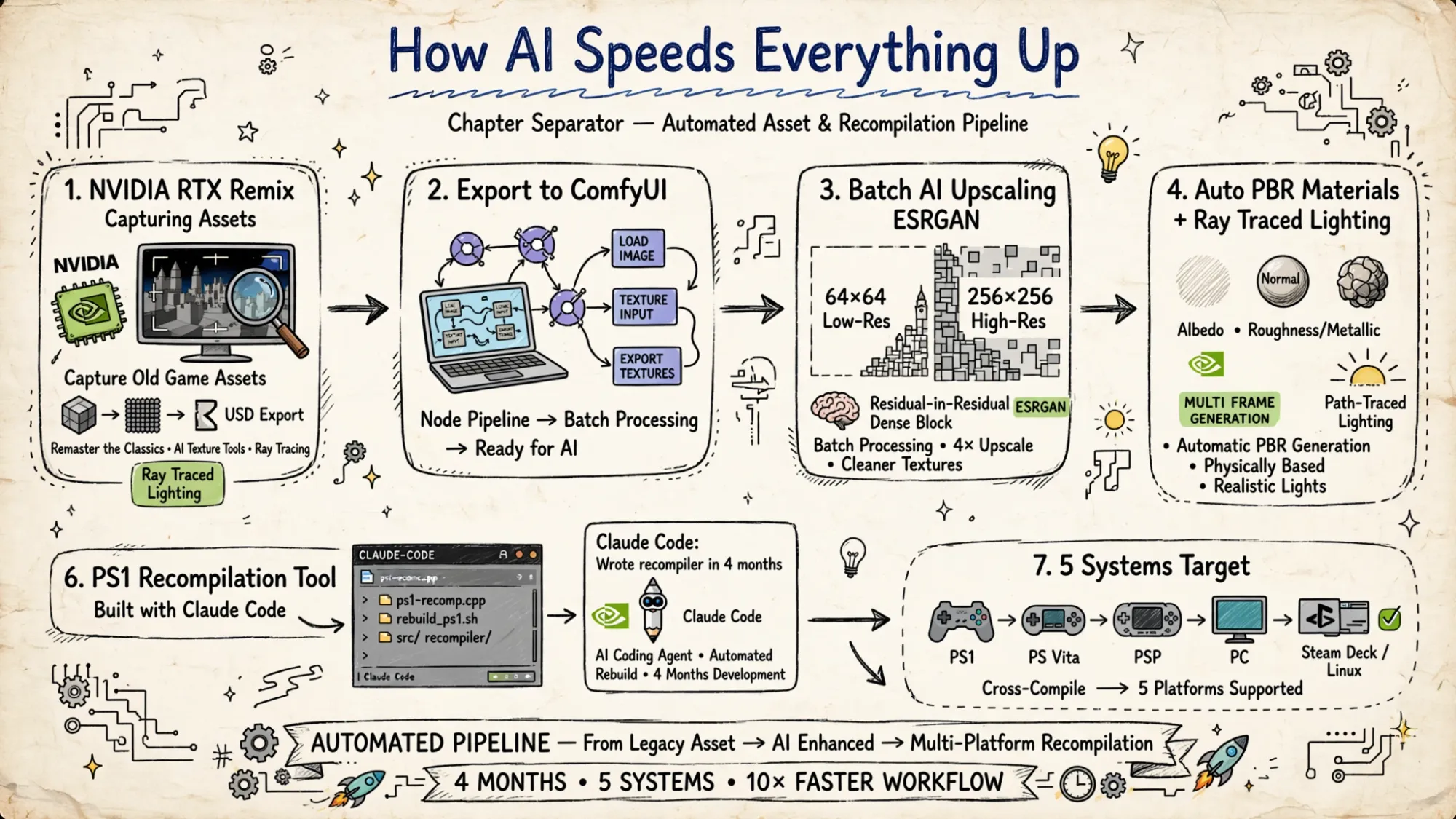
NVIDIA RTX Remix is the clearest example. It is an open sourced platform that lets you capture a classic DirectX 8 and 9 game scene, import it, and then automatically enhance materials with generative AI.
It can export all textures to ComfyUI through REST API and enhance them in one big batch before bringing them back.
Then you can drag and drop lights, add full ray tracing and path tracing, and apply DLSS 4 with Multi Frame Generation.
Modders working on Need for Speed Underground said it best.
It is impossible to create such a large number of textures in such a short period alone without AI. RTX GPUs drive the conversion, so iteration goes from days to minutes.
Other tools show the same speed up. ESRGAN and Swin2SR upscale textures with machine learning.
One developer built a PS1 static recompiler with Claude Code and then built recompilers for five systems in four months with AI help.
What used to be research project becomes production tool.
This is why people say AI in 2026 stopped being a buzzword and became a foundational layer. Workflows are rebuilt around it from development to QA.
Quality Gets Better Not Just Faster
Speed is only half. Quality also improves.
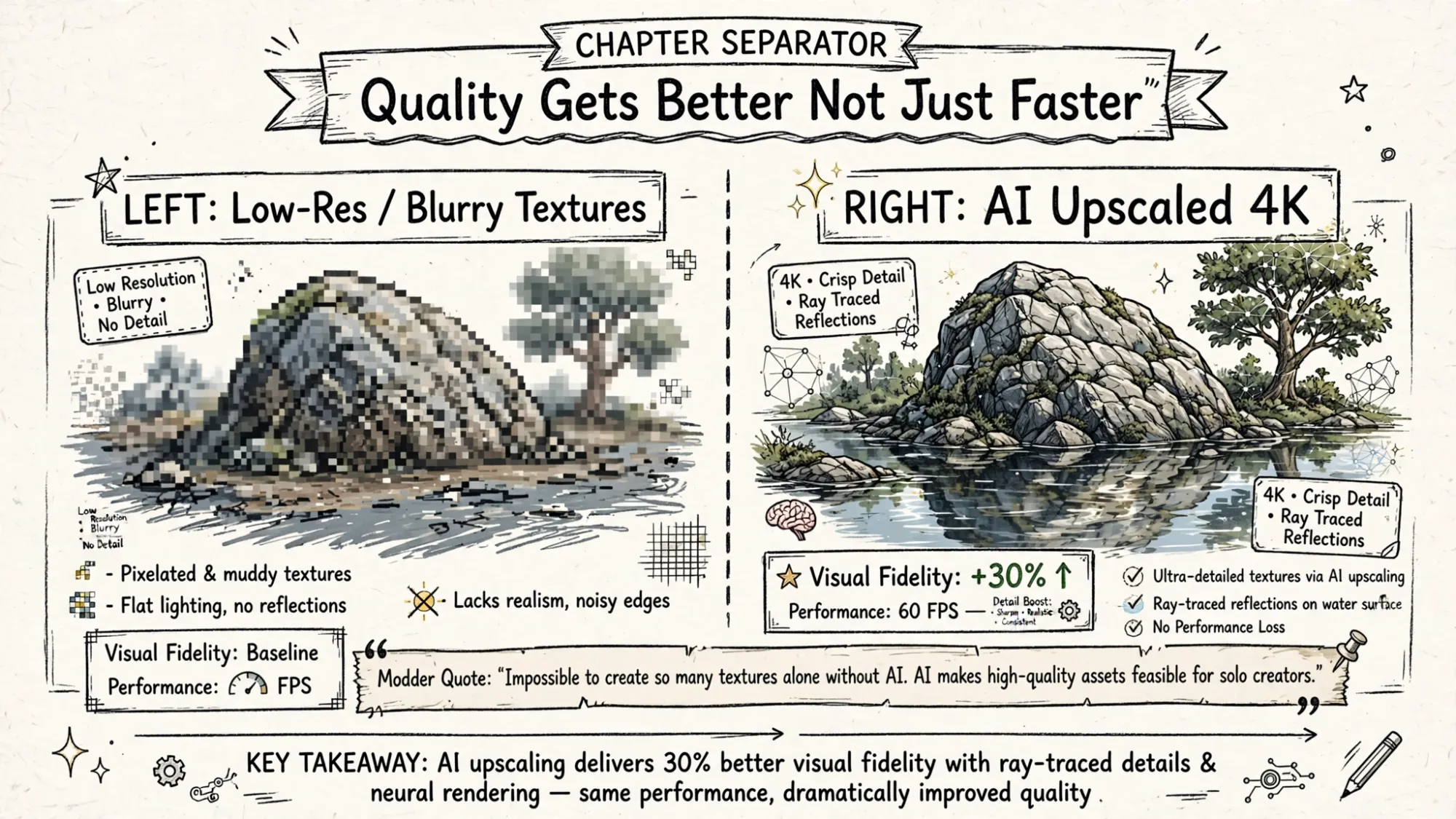
AI upscaling does more than make an image bigger. It adds physically based rendering, so materials react to light correctly.
It cleans anti aliasing, adds temporal stability and keeps detail at 4K. NVIDIA data shows up to 30 percent improvement in visual fidelity without sacrificing performance.
Pure upscales are never perfect, but the tool lets artists tweak after.
That keeps artistry. AI creates room for it instead of replacing it.
Frame generation is another gain. AI predicts motion between frames and can double frame rates from 30 to 120 FPS without adding input lag.
Neural rendering moves game graphics closer to Hollywood CGI.
For players, the result feels like the game they remember, not the game that actually existed. Low res mud becomes sharp detail.
Flat lights become ray traced reflections.
What This Means For Studios And Players
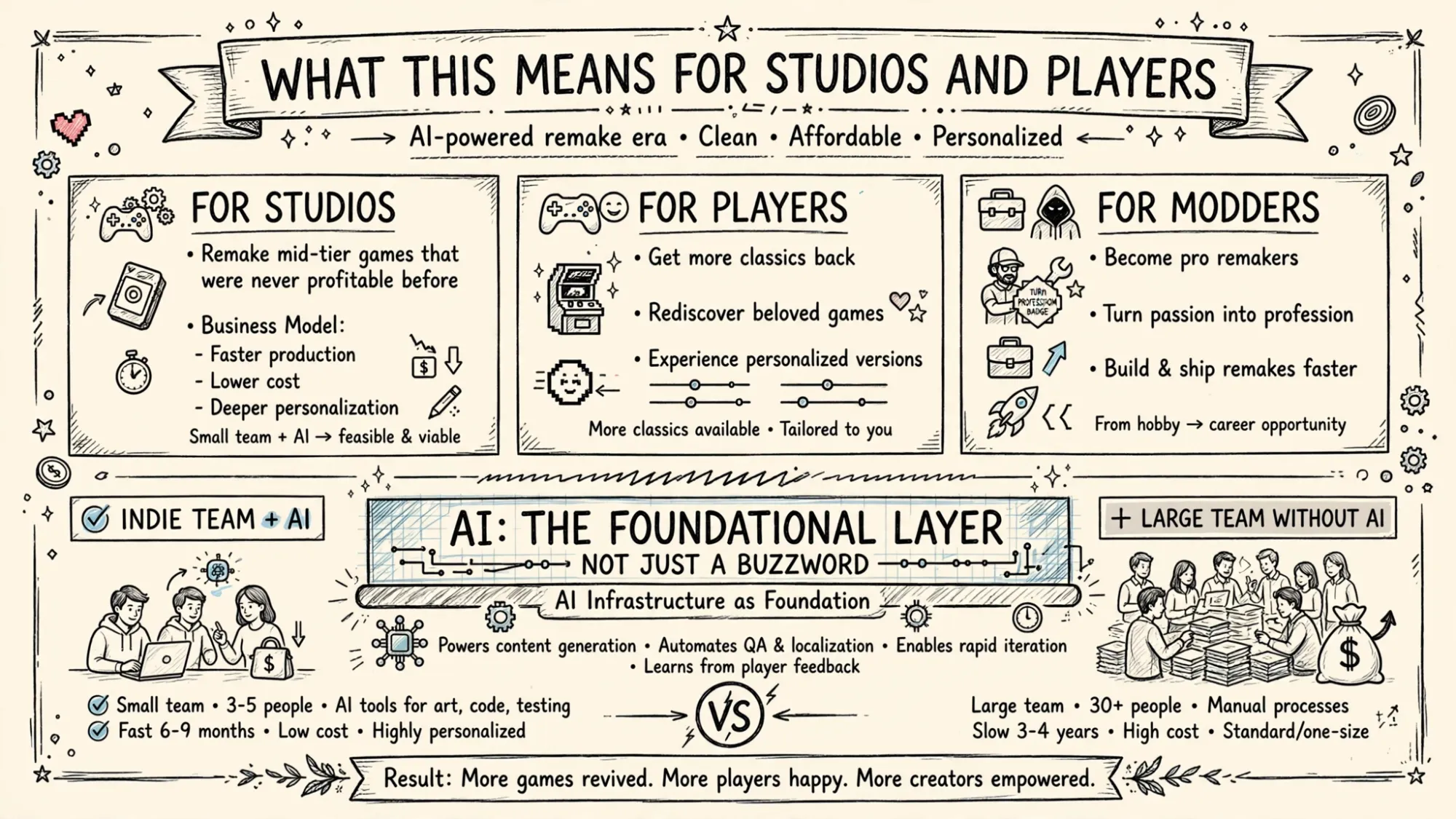
For studios, the catalog opens up.
Games that were too small to justify a remake now work.
A team of ten with RTX Remix, ComfyUI and modern QA automation can ship what used to need a hundred.
That means more mid tier classics come back.
It also means AI first studios can launch titles built around new workflows, not just new tools.
For players, more choice and faster releases.
The first half of 2026 and 2027 already has a list of ultra realistic remakes marketed as next gen PS5, PC and Xbox builds with Unreal Engine 5 visuals. Some are mod made but look official.
For modders, the line between hobby and pro blurs. A good RTX Remix mod can become an official remaster.
Publishers are starting to license that work instead of fighting it.
Consumer psychology helps too. Players trust a remake more than a brand new AI game.
They know the story, the level design, the feel. AI improving visuals and performance does not threaten that trust. It enhances it.
What To Watch Next
A few signals to track.
First, AI first studios. In 2026 we started seeing teams structured around AI from day one, with rapid prototyping and deeper personalization.
Watch for one major AAA release that openly markets AI created environments, NPC dialogue or quests and still succeeds.
Second, neural rendering and frame generation. DLSS 4.5, RTX Video Super Resolution up to 4K, and App View with prompt based video generation are pushing toward real time photoreal.
Third, the tension. GDC 2026 found 52 percent of devs think generative AI has a negative impact on the industry even while they use it.
The practical answer is not to stop.
It is to use AI where it improves shipping games, player fairness, development speed and measurable player experience.
The age of remakes is not just nostalgia.
It is economics.
When you can remake a classic in months instead of years, with better lighting and higher frame rates, you do not need to guess which new idea will work.
You bring back the games people already loved, and you make them look the way they remembered.