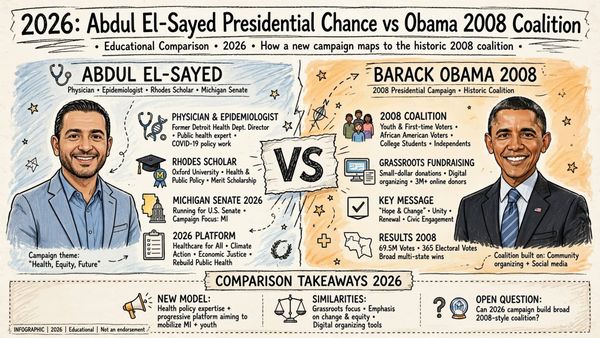
Public Backlash for Flock Safety Will Simply Force Them to Improve and Make Their Product Better (Not Go Obsolete)
Everyone wants to cancel Flock Safety right now. Cameras vandalized, contracts canceled, Ring walking away after a Super Bowl ad. That backlash is not going to kill them. It is going to force them to build a better product.
Flock Safety is a $7.5 billion Atlanta startup with a simple product: solar-powered, pole-mounted cameras that photograph the back of every passing vehicle and collect license plate data.
They now have more than 12,000 customers and tout scanning 20 billion plates a month.
It works. Police credit it for finding missing seniors and catching car thieves, and it has been used in high-profile cases like the search for a suspect in a fatal shooting at Brown University.
It also scares people. And that fear is boiling over.
1. The Backlash Was Inevitable
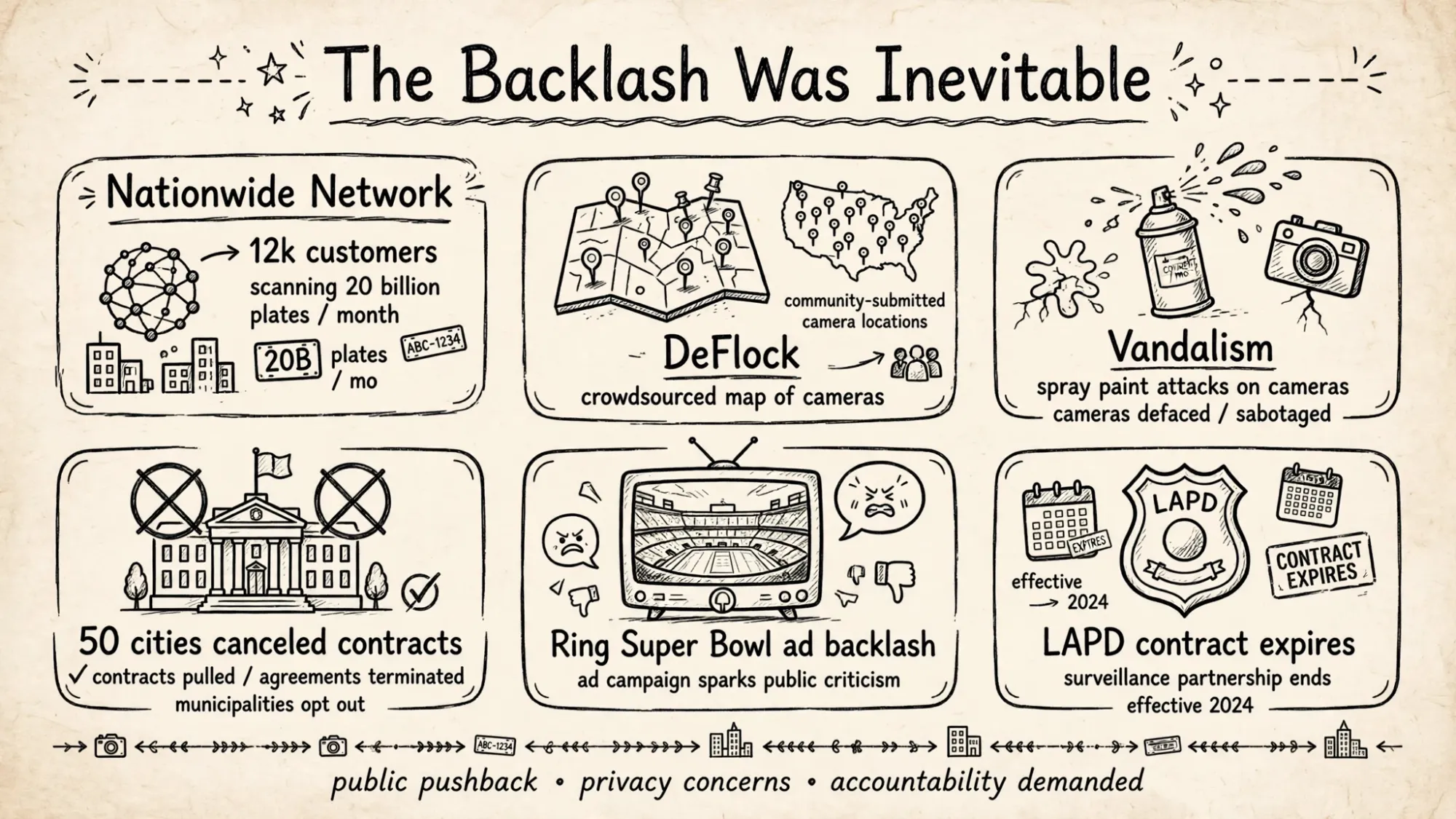
- A nationwide map of you. The company operates a vast nationwide network where thousands of law enforcement agencies in 49 states can search and share data across jurisdictions.
- DeFlock. In October 2024, an activist created a crowdsourced searchable map of Flock cameras called DeFlock.
- 50+ cities out. About 50 cities and counties have canceled Flock contracts or deactivated cameras since early last year, and more than 50 agencies have canceled, suspended, or rejected a contract since beginning of the year according to DeFlock's tracker.
- Vandalism. Cameras have been stolen, vandalized and purposefully obstructed, attacked with saws or spray paint.
- Ring fallout. Ring canceled its planned Flock integration after surveillance backlash — following a 30-second Super Bowl ad that was supposed to celebrate community. The integration never launched, so no Ring customer videos were ever sent to Flock Safety. LAPD also announced it would allow its three-year contract with Flock to expire.
Backlash that big usually means a company dies.
With Flock, it means a product finally gets guardrails.
2. What Critics Actually Found
This was not just vibes. There were real abuses:
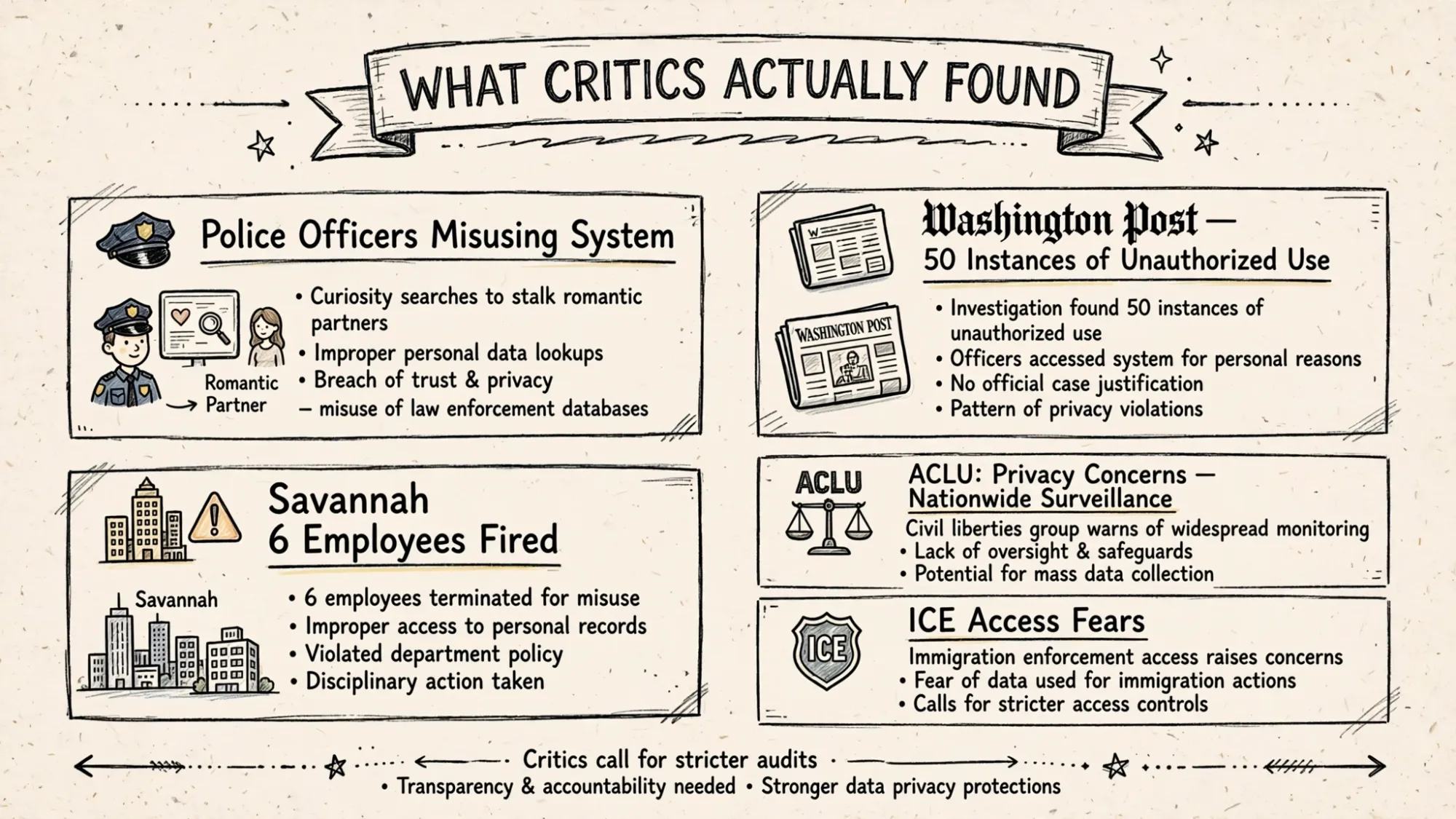
The Washington Post found nearly 50 instances of police officers charged or accused of using the cameras for unauthorized purposes, many for tracking current or former romantic partners or family members.
Just this week, six employees (including four officers) of the Savannah Police Department were fired after they were accused of searching for friends and family using the tool.
The department said it was made aware through Flock's voluntary audit function.
Critics say they violate privacy rights, citing incidents where officers have allegedly used Flock's cameras for stalking.
The ACLU argues the cameras are part of a nationwide surveillance system that has been misused in many ways and that there are no state laws that protect privacy in many places.
And then ICE. Local police departments have routinely searched Flock's database on ICE's behalf, and Flock has reportedly allowed ICE and other federal agencies to access its network.
That is what tipped Ring users to tell people to smash their cameras.
So the critics had a point: if anyone with policing experience could have foreseen curiosity searches would be a problem, searches for private reasons not related to police work, then the product shipped without adult supervision.
3. Backlash as a Product Feature
This is where it gets interesting.
Flock did not fight the backlash.
They turned it into a roadmap.
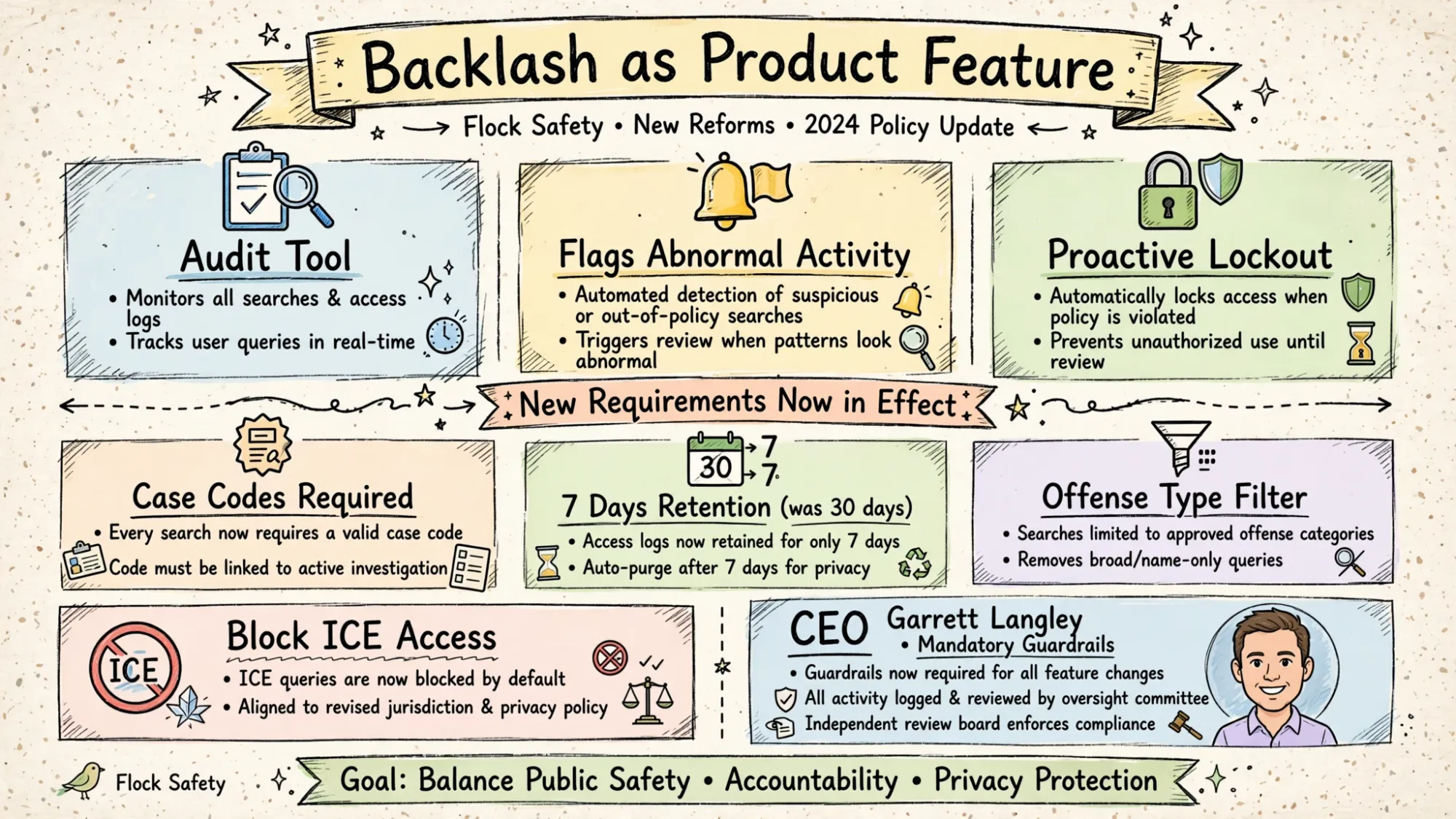
Last Thursday, Flock announced changes to its platform intended to quell privacy concerns and address documented abuses.
CEO Garrett Langley said many of the product changes will make what were once optional guardrails mandatory by January 1.
Here is what they committed to:
1. Mandatory audit + proactive lockout. All law-enforcement customers will be required by the end of 2026 to adopt a tool that flags abnormal activity for review. When the system detects abnormal behavior, the user would be locked out pending an internal review. Atlanta-based Flock said the tool has already been associated with the arrests of several officers accused of abusing the system. It will also institute a proactive lockout that suspends access when the system detects suspicious behavior.
2. Case codes for every search. Law enforcement users will now be required to enter a code from their records management system tying each search to a specific case. Overrides for emergencies would be automatically flagged for review.
3. Data retention 30 days → 7 days. Flock is shortening the standard data retention window from 30 days to seven, and will require case codes for all database searches and reduce the default data-retention period from 30 to seven days. Data can be preserved longer when it is evidence tied to a case number.
4. Community control over offense types. Customers will be allowed to decide which offense types — such as homicide or arson — outside agencies can search their data for, which would allow a customer to block outside searches related to immigration enforcement. Langley called it control to use the system in a manner consistent with community values.
These are exactly the changes civil liberties advocates asked for.
Chad Marlow at ACLU said shrinking retention could be an improvement if departments follow the nonmandatory guidelines.
He also said we do not know if they are catching 50 out of 52 inappropriate officers, or 50 out of 5,002 — which is a fair challenge, and also why mandatory audit is now mandatory.
4. Pressure Makes Better Products
Every important safety technology goes through this:
- Ship fast, prove utility
- Abuse happens, public backlash
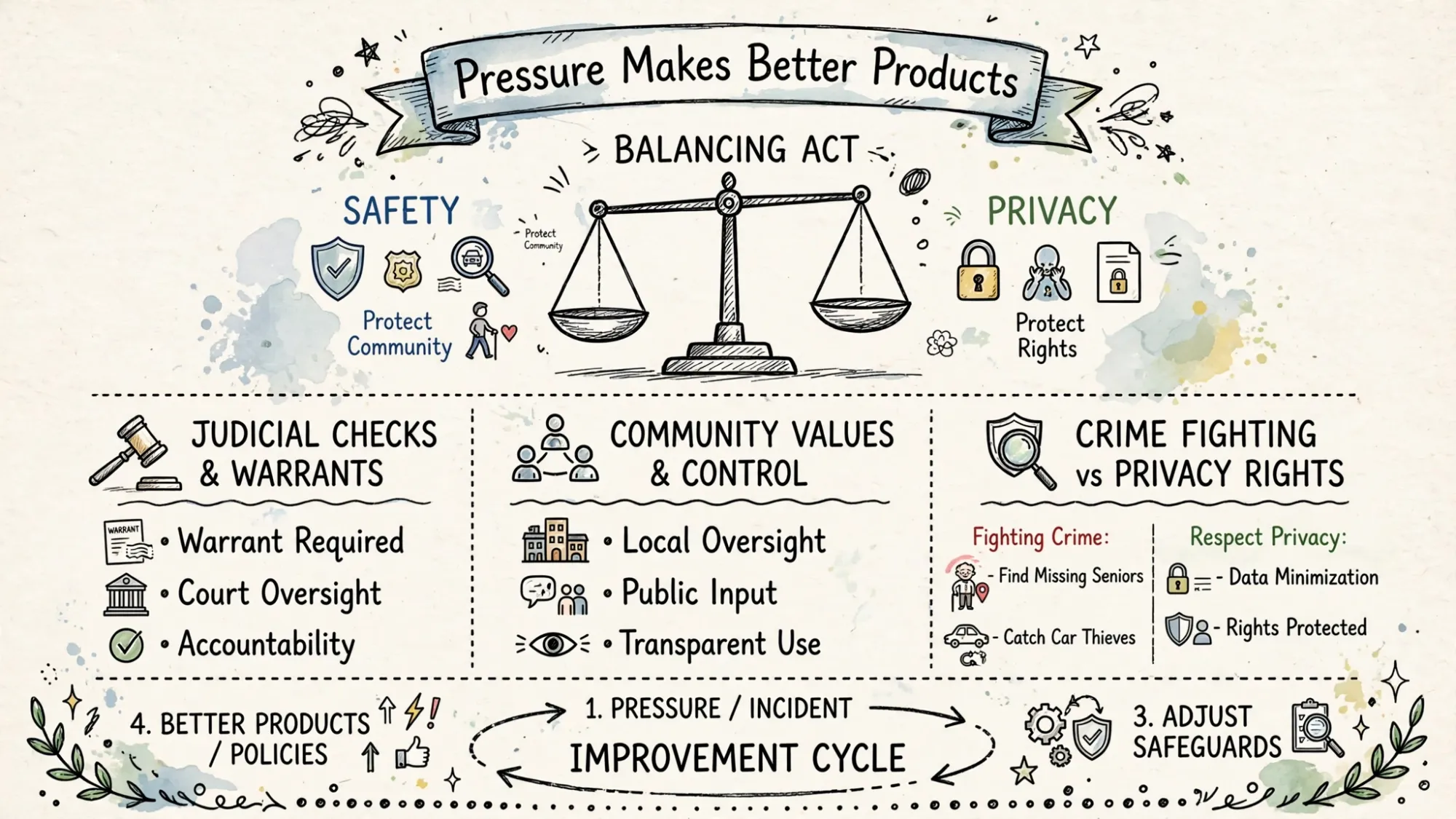
- Add judicial checks, accountability, and transparency
- Product becomes 10x better and harder to copy
Policing in a democracy is a balancing act, a community has a legitimate interest in how information is used, but also in effectiveness in preventing crime.
Flock learned that balance can not come from company policy alone, it has to come from department policy plus mandatory product constraints.
The backlash forced Flock to:
- Move from voluntary audit to mandatory lockout
- Move from implicit trust in officers to explicit case numbers and warrants
- Move from one-size-fits-all national search to local community values control
- Move from 30-day dragnet to 7-day minimization
Critics call it window dressing from a company in panic mode.
Maybe. But even panic-mode changes become real infrastructure when they are enforced in code.
My take: Cancel culture does not cancel infrastructure companies.
It audits them. Flock Safety will not disappear because 50 cities canceled.
It will become the company that cities can buy because it finally has the safeguards that should have been there on day one.
If you are building in public safety, do not fear backlash.
Design for it.
Make the audit log public.
Make the lockout automatic.
Make the case code required. The companies that survive this cycle will own the next decade.
That is what is happening to Flock right now.