Proton's Trust Crisis Could Be Tuta's Biggest Opportunity
Proton's CEO called security caution "loser thinking," a cooling failure took its services down, and it handed over data that helped the FBI unmask a protester. For Tuta, the smaller German rival, this is a rare opening. Here's whether it can take it.
For years, Proton was the default answer to a simple question: where do you go when you want to leave Google?
It built an entire ecosystem around that promise, with Mail, VPN, Drive, Pass and its Lumo AI assistant.
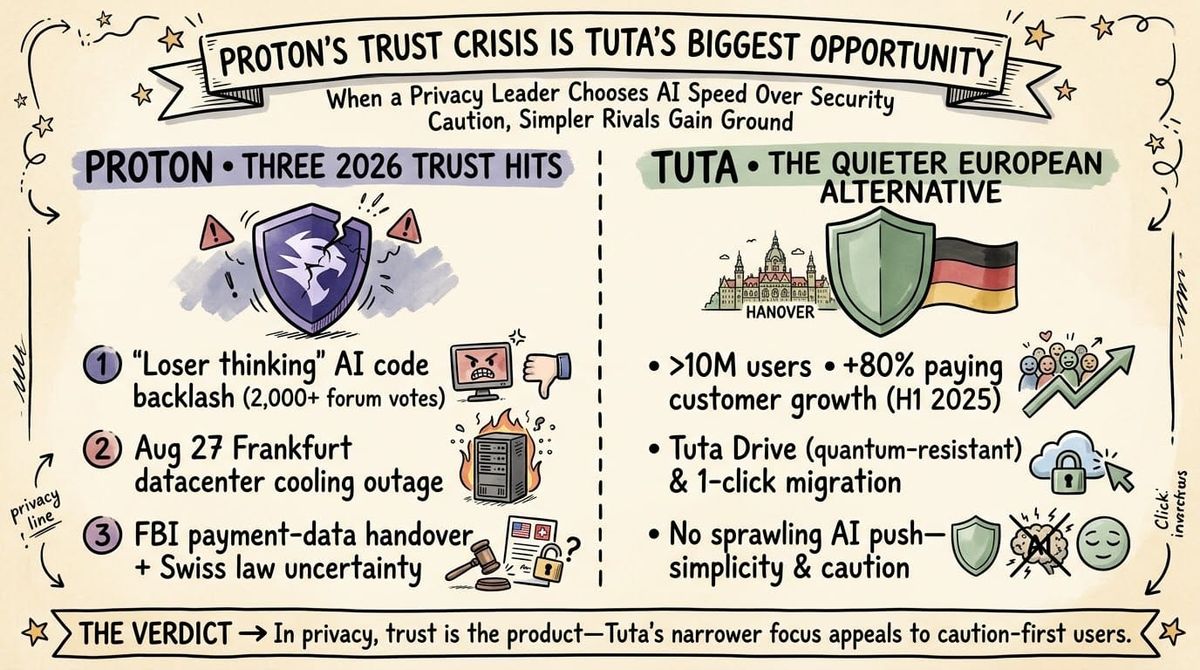
In 2026, that promise has taken several hits.
I wouldn't call it a downfall yet, because Proton is still huge and its encryption still works.
But I think it's the first real trust crisis in the company's history, and Tuta is the competitor best placed to benefit.
The "Loser Thinking" Backlash
The latest blow came in early November.
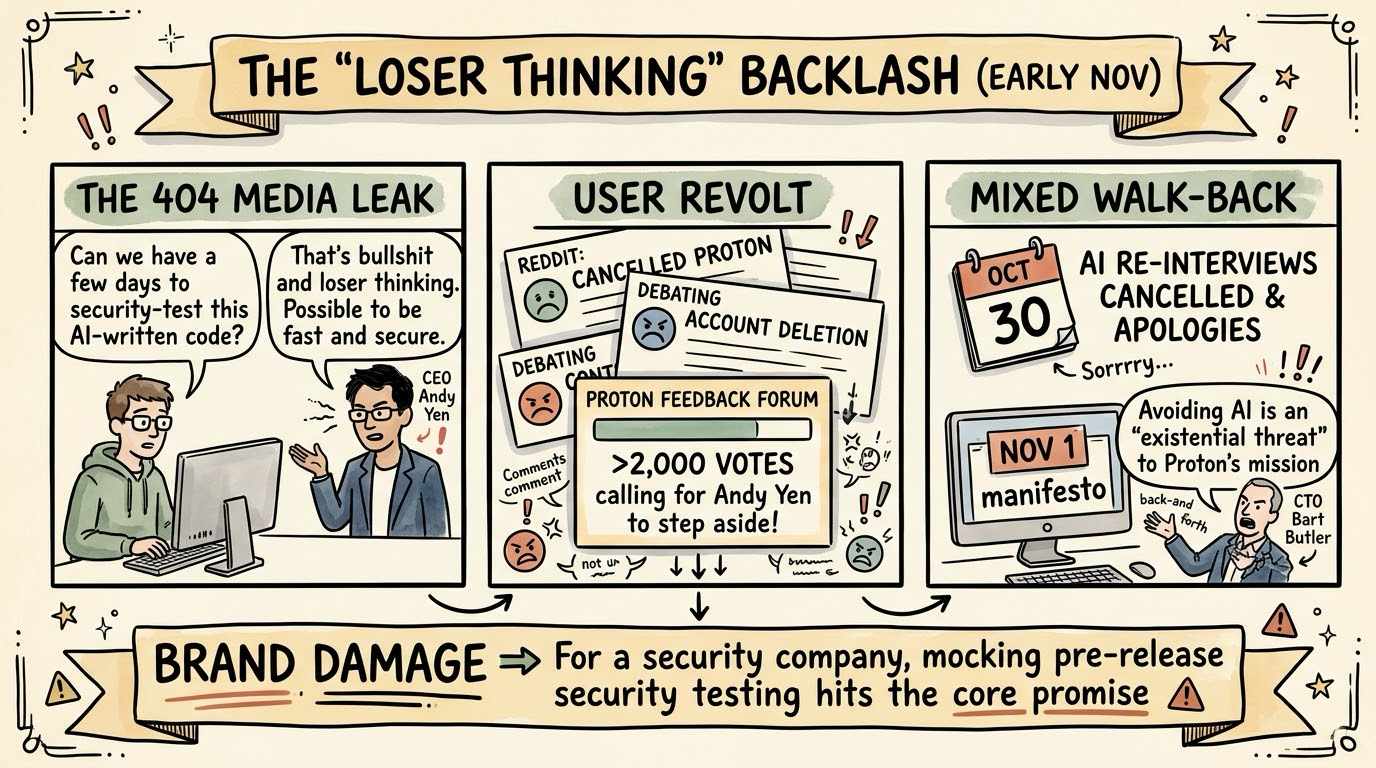
A 404 Media investigation, based on interviews with current and former employees, internal messages and meeting recordings, described how Proton's leadership has pushed staff to use AI to write code faster.
According to the report, a Proton employee asked in August for a few days to let specialists try to break into new code before release.
CEO Andy Yen reportedly replied: "That's bullshit and loser thinking. Of course it's possible to be fast and secure."
Management also planned to re-interview employees about how they use AI, which some staff feared could affect their jobs.
For a company that sells security, that's about the worst quote imaginable.
Users posted cancellation notices on Reddit and social media, and a suggestion on Proton's own feedback forum calling for Yen to step aside gathered more than 2,000 votes.
To be fair, there's no verified count of how many customers actually left.
Proton cancelled the re-interviews on October 30, admitted that managers had sometimes communicated too harshly and apologised.
It also committed to publishing its AI usage policies and its code and security review processes.
But on November 1, its CTO published a manifesto calling the avoidance of AI an "existential threat" to Proton's mission.
The AI push isn't going away.
The Outage
The second hit was operational.
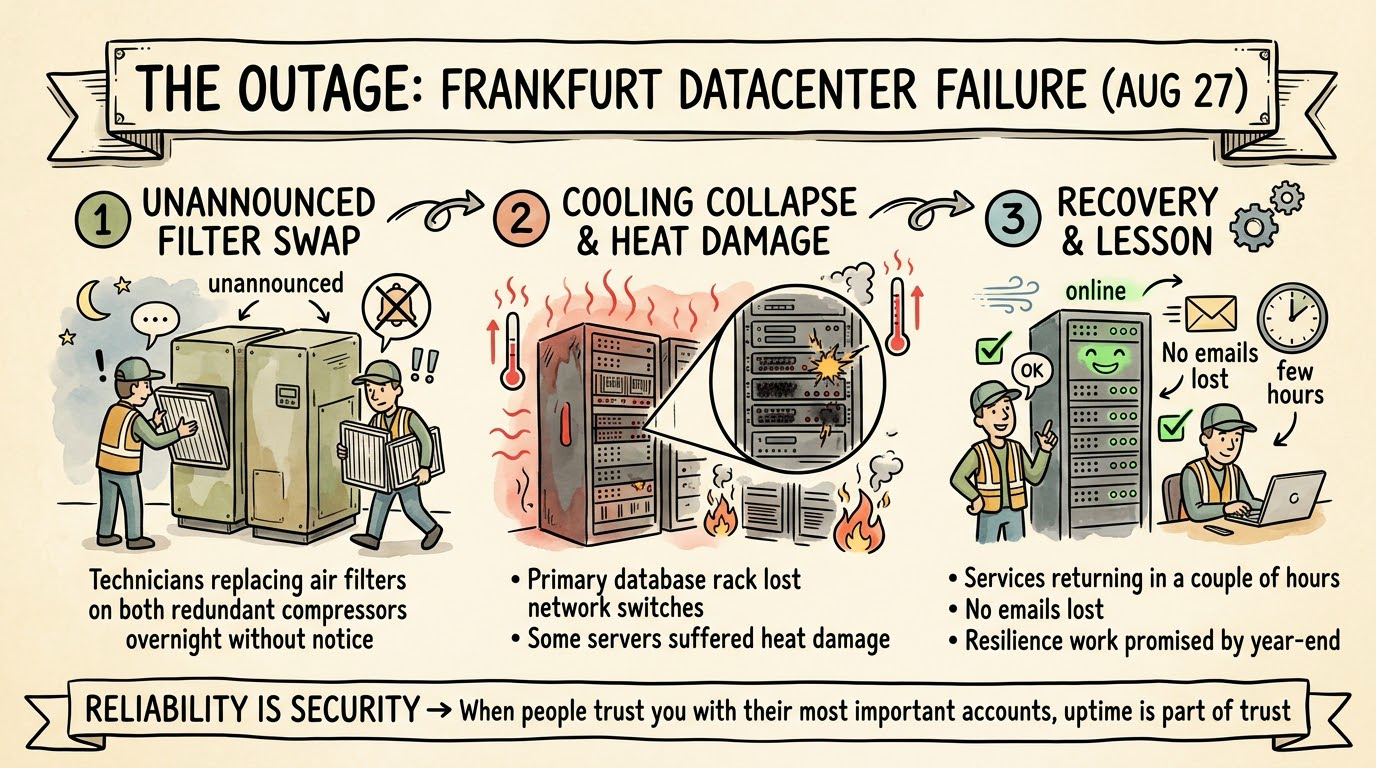
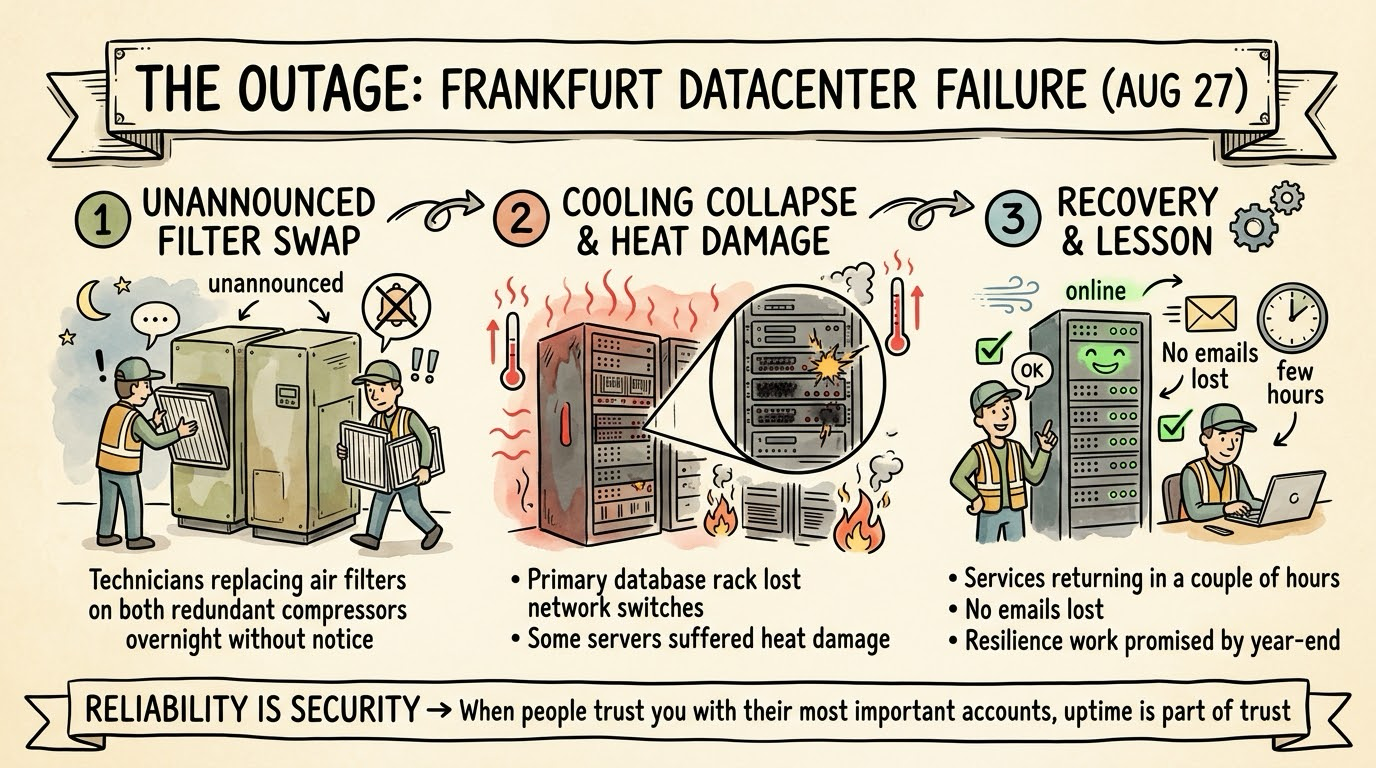
On August 27, a complete cooling failure at Proton's Frankfurt datacenter caused a widespread outage.
The datacenter operator had replaced air filters on both redundant compressors overnight without notice.
Temperatures rose, equipment started failing and a rack holding several primary database copies lost its network switches.
Most services came back within a couple of hours, and Proton says no emails were lost.
But some servers suffered heat damage, and Proton promised to finish its database resilience work by the end of the year.
For a service people trust with their most important accounts, reliability is part of security.
The FBI Case
The third hit was about what Proton can and can't protect.
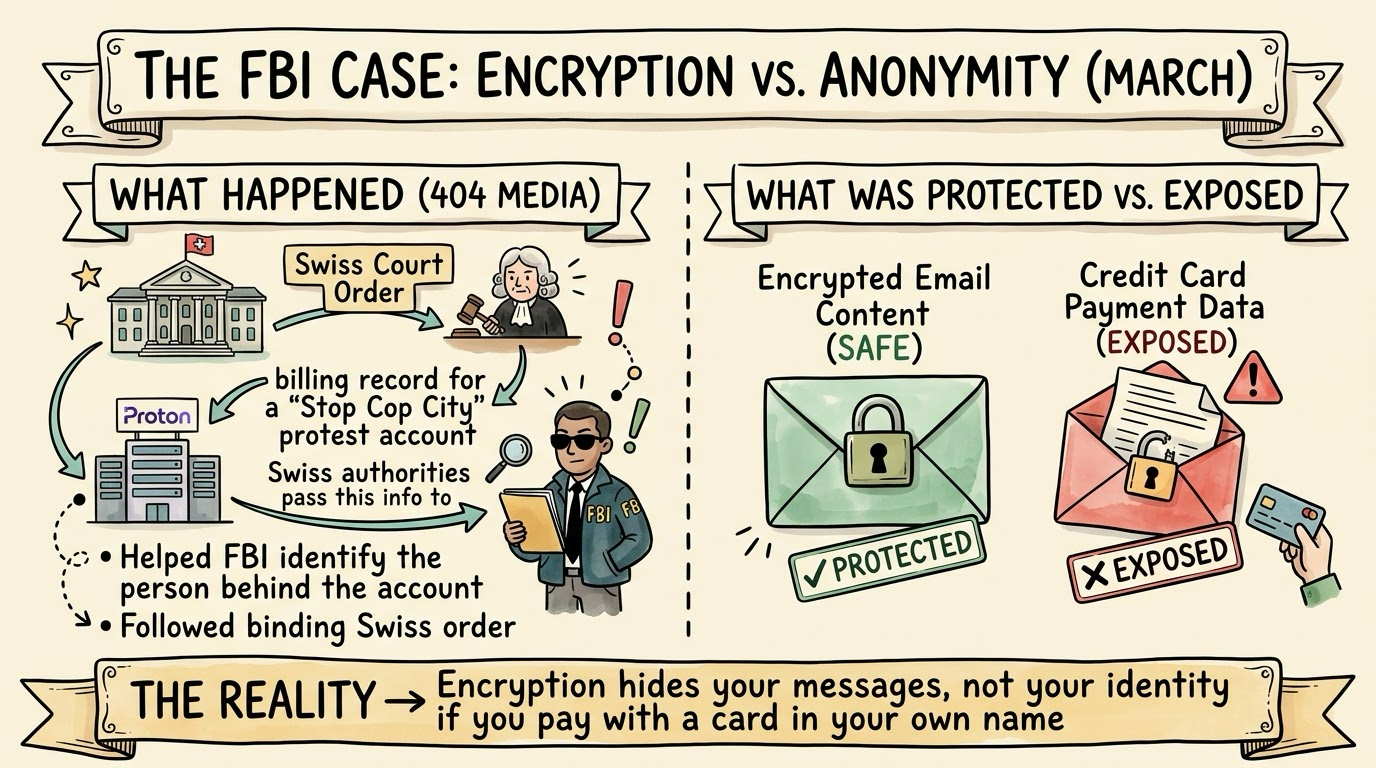
In March, 404 Media reported that Swiss authorities ordered Proton to hand over payment data for an email account used by the "Stop Cop City" protest movement in Atlanta.
That data helped the FBI identify the person behind the account.
Proton said it did not send any data directly to the FBI and only followed a legally binding Swiss order.
It handed over payment information, not the content of any emails.
That's consistent with how Proton has always worked.
Encryption protects your messages, but it doesn't make you anonymous if you pay with a card in your own name.
Switzerland Is No Longer A Clear Advantage
Proton has long marketed its Swiss jurisdiction as a privacy shield.
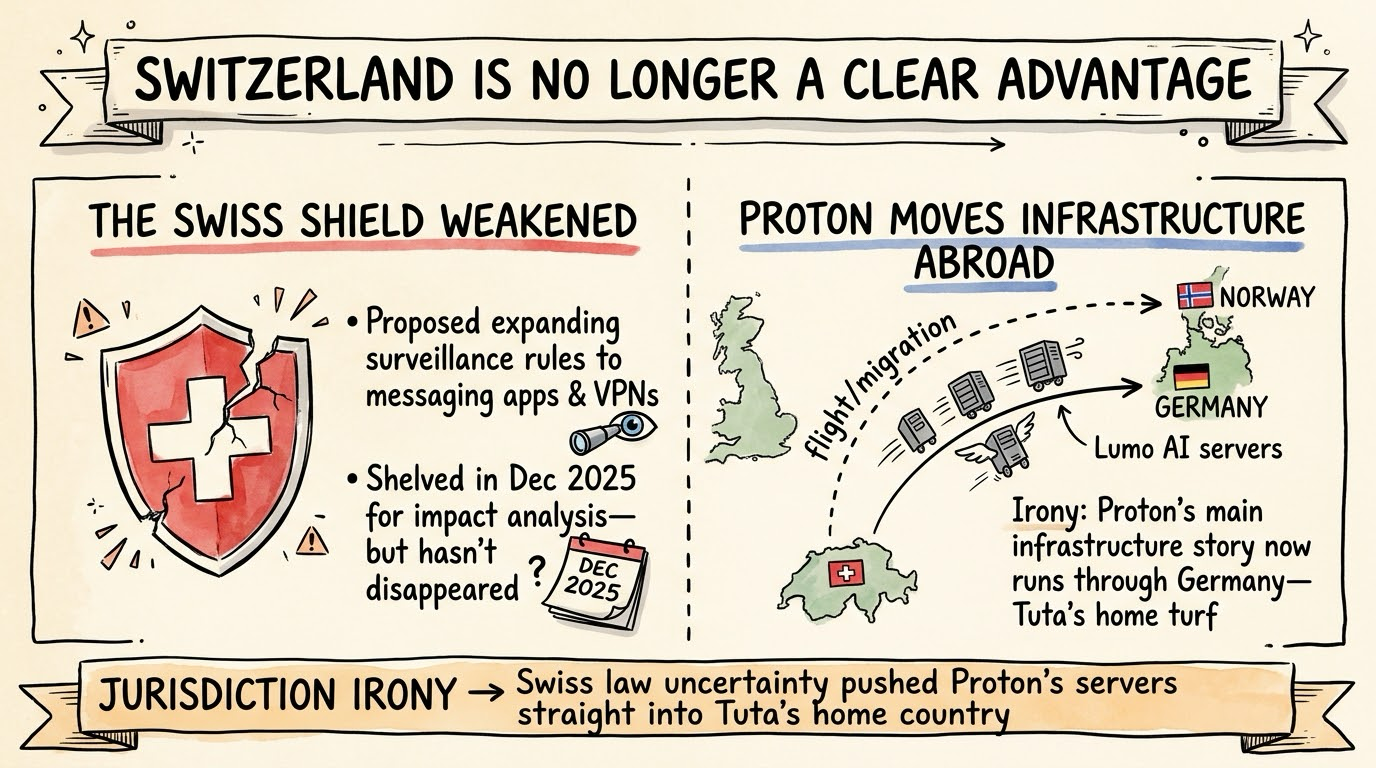
That shield got weaker when Switzerland proposed extending surveillance obligations to services like messaging apps and VPNs.
Proton responded by moving parts of its infrastructure abroad, starting with Lumo's servers in Germany, and by setting up locations in Norway.
In December 2025, the Swiss parliament effectively shelved the proposal for now and ordered an impact analysis first.
But the plan to expand surveillance requirements hasn't disappeared.
The irony is that Proton's main infrastructure story now runs through Germany, which is Tuta's home turf.
Why Tuta Is Well Placed
Tuta, formerly Tutanota, is a German company based in Hanover that says it has more than 10 million users.
It has been riding the digital sovereignty wave for a while.
In the first half of 2025, Tuta said its paying customers grew by more than 80% year on year, which it credited to the "Go European" movement and concerns about US tech companies.
It's also building out a fuller suite.
Tuta Drive, its quantum-resistant cloud storage, entered closed beta this year, and in July Tuta started testing one-click migration from providers like Gmail and Outlook.
Most importantly, Tuta's story is simple.
It does encrypted email, calendar and now storage, without a sprawling product line or a public fight over how its code gets written.
For users who joined Proton because they wanted less AI and more caution, that simplicity is a selling point.
I wrote about why privacy became a booming consumer market, and the winners in that market are the companies people trust most.
Why Tuta Might Not Win Big
I don't think this is a clean handover.
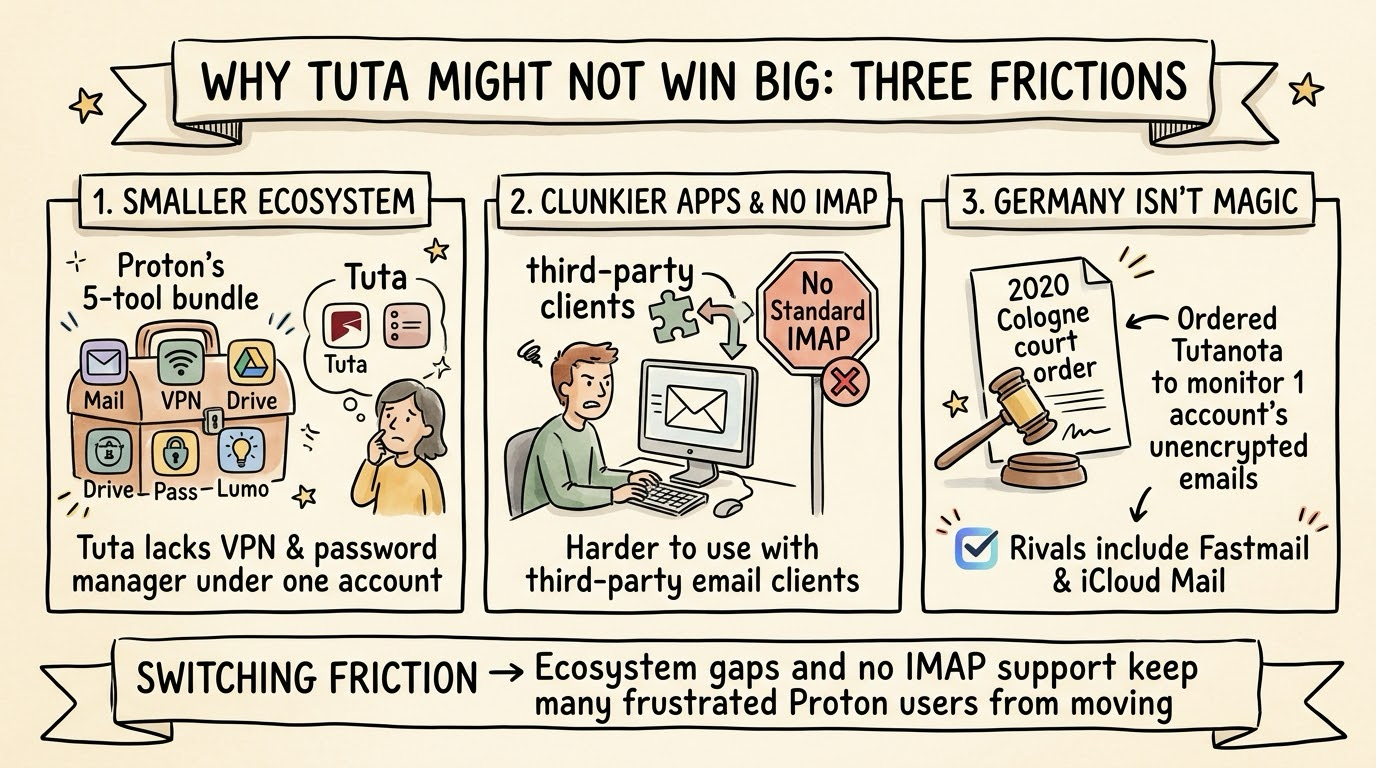
Proton's ecosystem is far broader, with a VPN, password manager, cloud storage and AI assistant all under one account.
Tuta doesn't offer most of that yet.
Tuta's apps can feel clunkier than Proton's, and it doesn't support standard IMAP access, which makes it harder to use with other email clients.
German jurisdiction isn't magic either.
In 2020, a court in Cologne ordered Tutanota to monitor a single account and hand over future unencrypted emails, although it couldn't decrypt the encrypted ones.
And the people leaving Proton have plenty of options, from Fastmail to Apple's iCloud Mail to staying put.
Conclusion: Trust Is The Product
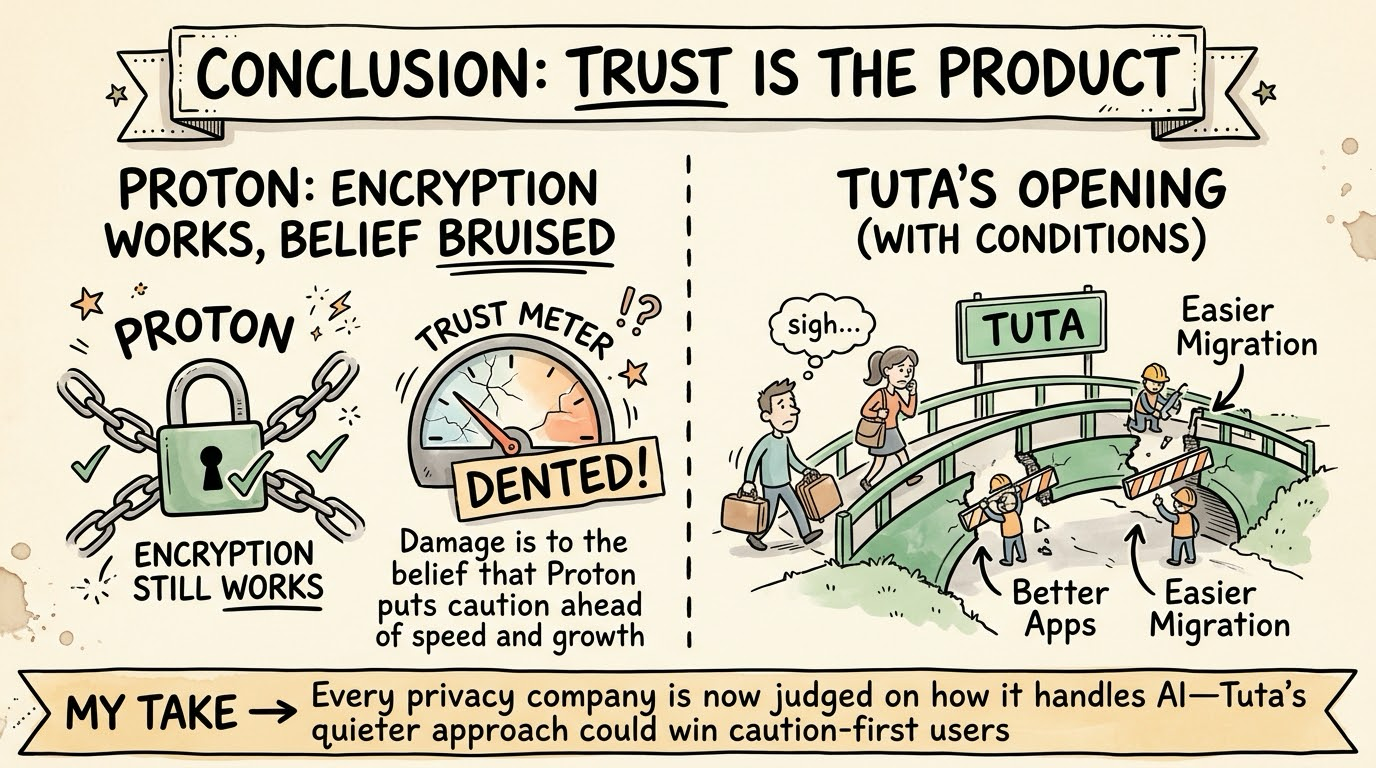
Proton's encryption still works.
The damage is to the belief that the company puts caution ahead of speed and growth.
In the privacy business, that belief is the product.
Tuta has a rare opening, but it will need better apps and easier migration to turn frustrated Proton users into loyal customers.
My Take: Proton isn't collapsing, but every privacy company is now judged on how it handles AI, and Tuta's quieter, narrower approach could win the users who care more about caution than features.
Sources
Pages I opened for the facts in this post:
- Decrypt: Proton users revolt after CEO calls security caution "loser thinking"
- ForkLog: Proton users demand CEO Andy Yen step down over AI strategy
- Proton: August 27 outage incident report
- heise: Proton and the FBI user identification
- heise: Proton relocates parts of its infrastructure from Switzerland
- TechRadar: Switzerland will revise proposed law change after backlash
- CryptPad: A conversation with Tuta
- Tuta: Go European, how "America First" drove record growth
- AlternativeTo: Tuta launches one-click migration and Tuta Drive apps
- TechCrunch: Tutanota forced to monitor an account after court ruling