Pax Silica: Why America is Fighting a Maritime War for Chips, Not Oil
While Iran fights a continental war over oil chokepoints, Washington is playing a maritime game to secure AI supply chains. Initiatives like Pax Silica prove the U.S. is prioritizing the compounding wealth of compute over fossil fuels.
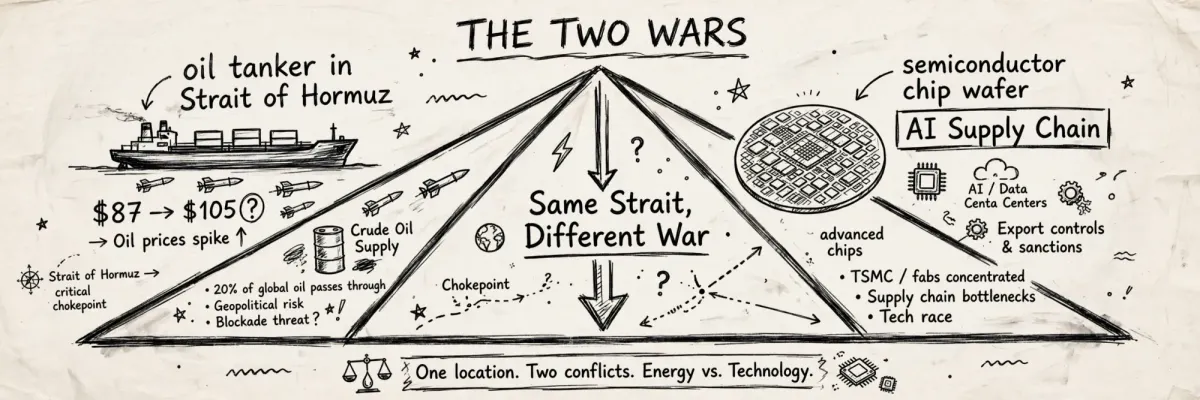
We assume the US Iran war is about oil. In reality, Washington is fighting a maritime war to secure the AI supply chain.
Inspiration: Watching Brent crude whipsaw 8 percent in 24 hours while the State Department quietly signs a chip alliance in Brindisi. Realizing the Strait of Hormuz is no longer about oil tankers. It is about lithography machines.
Pax Silica: The Maritime Playbook
On Friday, Italy and the United States will sign off on a cooperation agreement on the so called Pax Silica initiative on artificial intelligence supply chains.
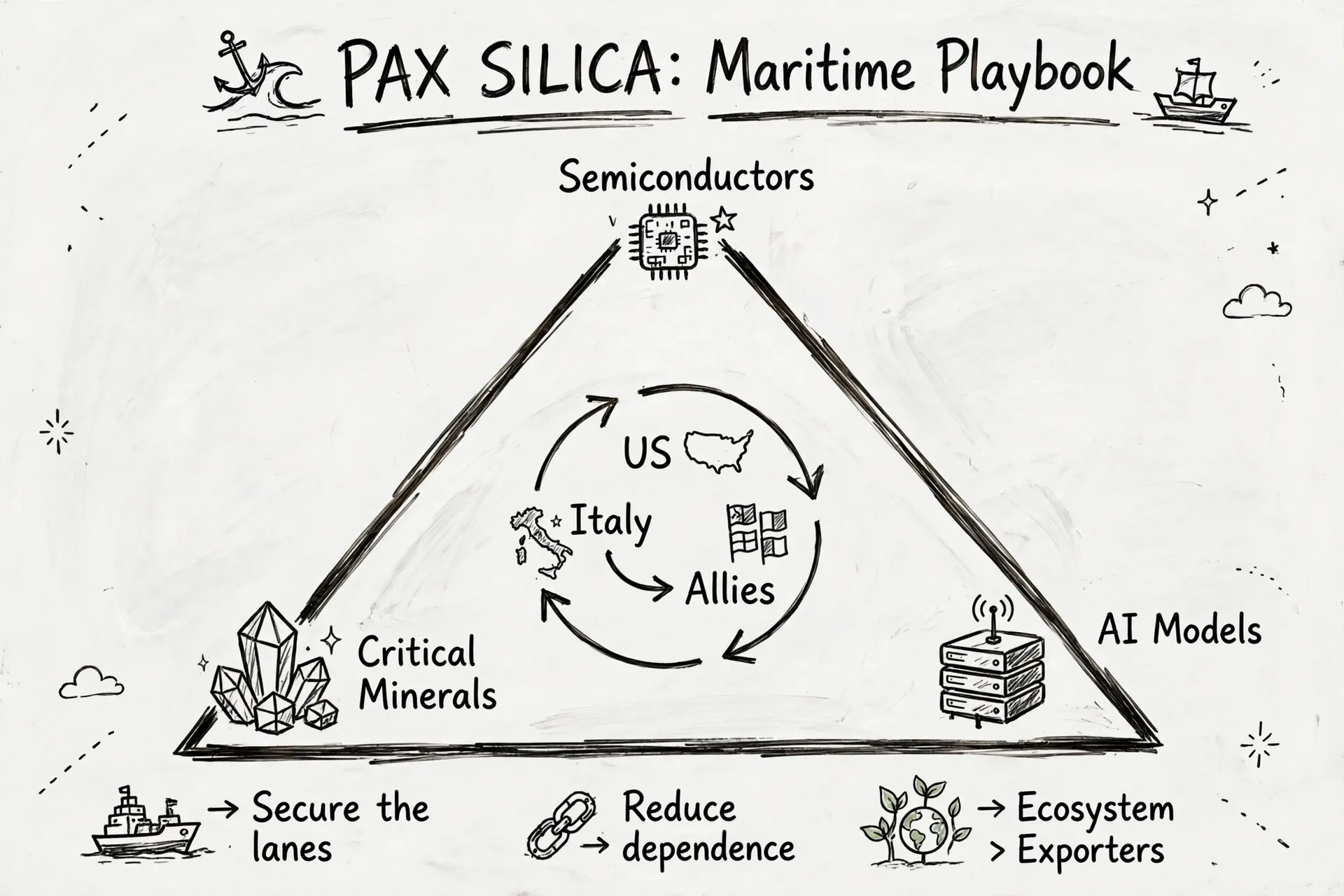
What is Pax Silica? A U.S. State Department initiative bringing together allied countries to secure AI related supply chains, covering areas ranging from semiconductors and critical minerals to advanced manufacturing and AI models.
The goal is to foster an ecosystem and to reduce dependence on exporting countries.
Read that again. This is not a trade deal. It is a maritime alliance.
Sally Paine taught us: Continental powers have vassals, maritime powers have allies.
Continental powers close chokepoints. Maritime powers open them and tax the flow.
Iran is executing a perfect continental strategy: close Hormuz, spike energy costs, force the maritime alliance to bleed cash defending shipping lanes.
The US response is textbook maritime: do not get bogged down in a land war in Iran. Build a bigger alliance for the thing that actually compounds wealth.
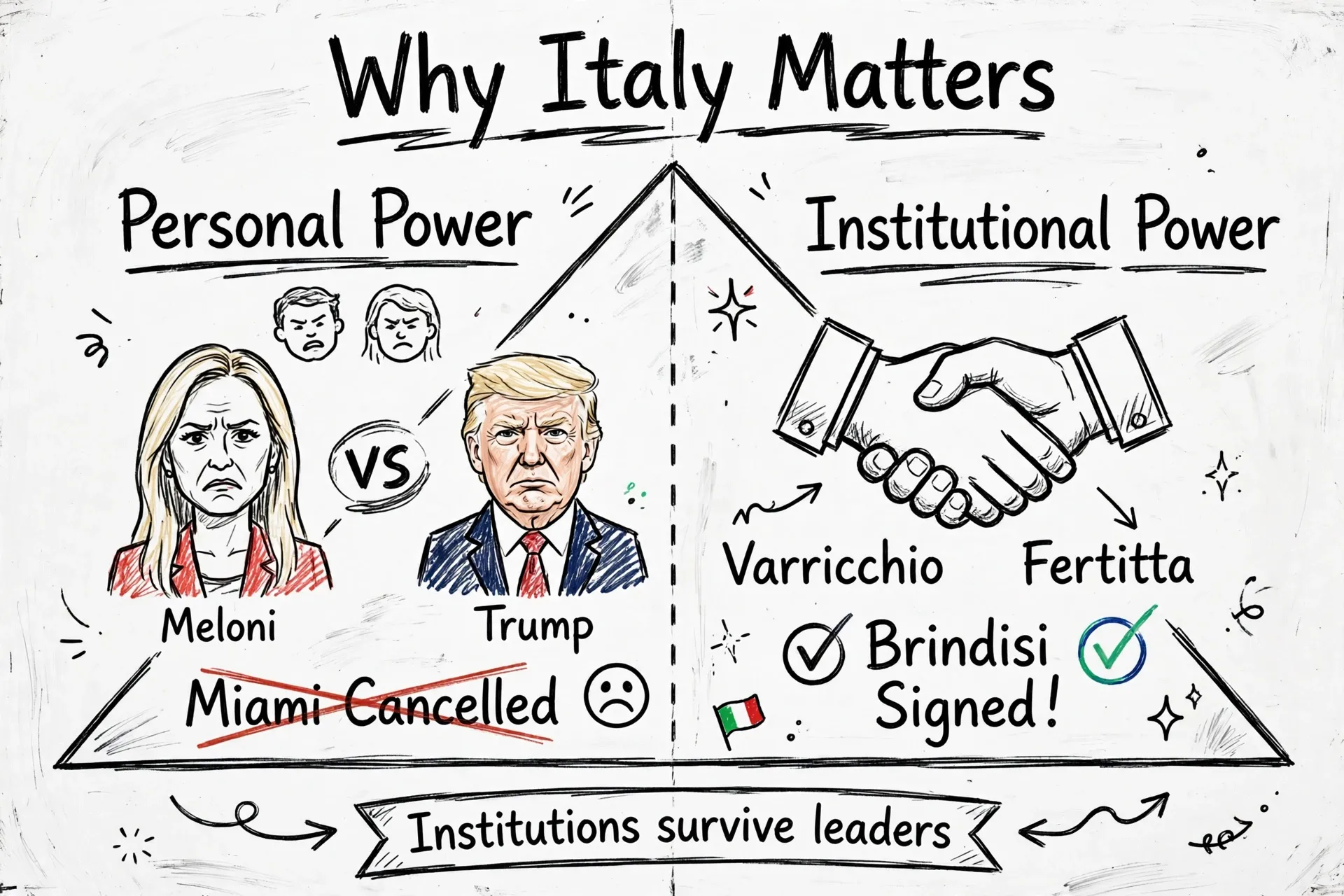
Why Italy Matters More Than Oil
This deal almost did not happen.
Italy was due to join Pax Silica in Miami in June, but Foreign Minister Antonio Tajani called off the trip after Prime Minister Giorgia Meloni and U.S. President Donald Trump had a public falling out, with Washington accusing Rome of providing little support in the Iran war.
Now Ambassador Armando Varricchio and U.S. Ambassador to Italy Tilman Fertitta will sign off on the agreement on Friday in Brindisi.
This is Paine's Institutional vs Personal Power framework in real time.
Personal powers collapse over a public spat. Institutional powers sign anyway in Brindisi because the institution must survive the leader.
Iran relies on personal loyalty from proxies. The US relies on a system where even angry allies still need TSMC chips.
In a long war, the system wins.
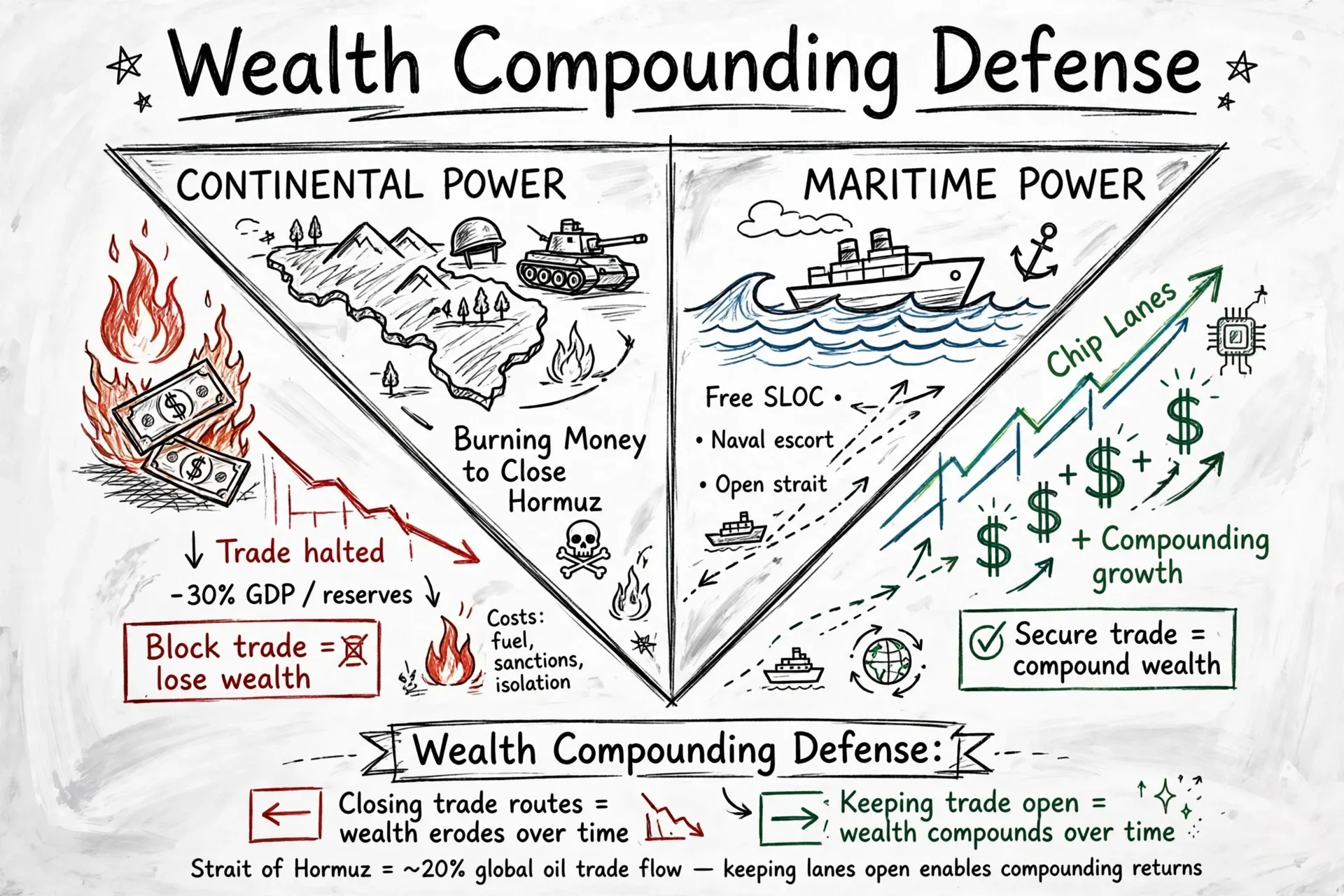
The Wealth Compounding Defense
Here is why the continental strategy always fails.
While Iran burns through its foreign reserves trying to close a 21 mile wide strait, the maritime alliance is compounding.
Every day Hormuz is threatened, Europe loses industrial jobs, airlines reroute, inflation ticks up. This is economic chemotherapy. Painful, but it shrinks the continental adversary.
Meanwhile, Pax Silica is doing the opposite. It is securing the one supply chain that actually grows GDP at 30 percent a year: AI compute.
We think of a blockade as stopping oil tankers. The 2026 blockade is stopping EUV machines, gallium, and HBM memory.
If you control Hormuz, you control last century's economy for a week. If you control Pax Silica, you control this century's economy for a decade.
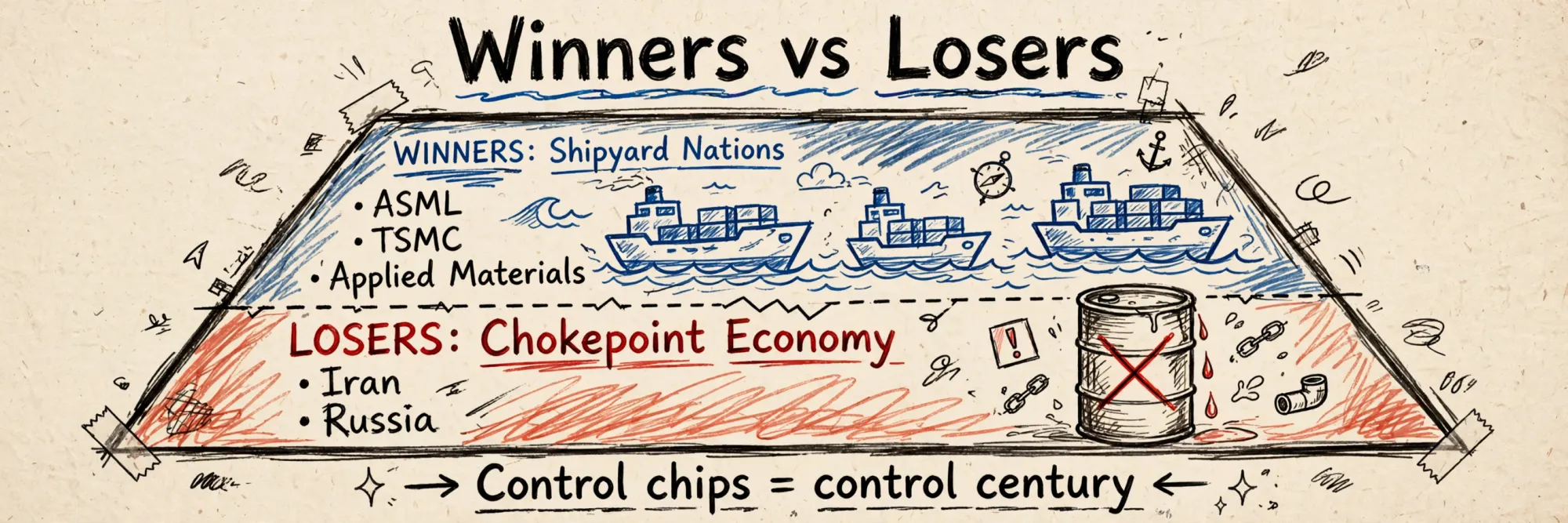
The Winners and Losers
Winners: The Shipyard Nations
ASML, TSMC, Applied Materials, and the Intel Inside IP holders. Countries like Italy that join early get guaranteed access to the maritime chip lane. They become allies, not vassals.
Losers: The Chokepoint Economy
Iran, Russia, and any nation that thinks wealth comes from blocking trade instead of facilitating it. They can spike Brent to 105 for a month. They cannot fab a 2nm chip. Ever.
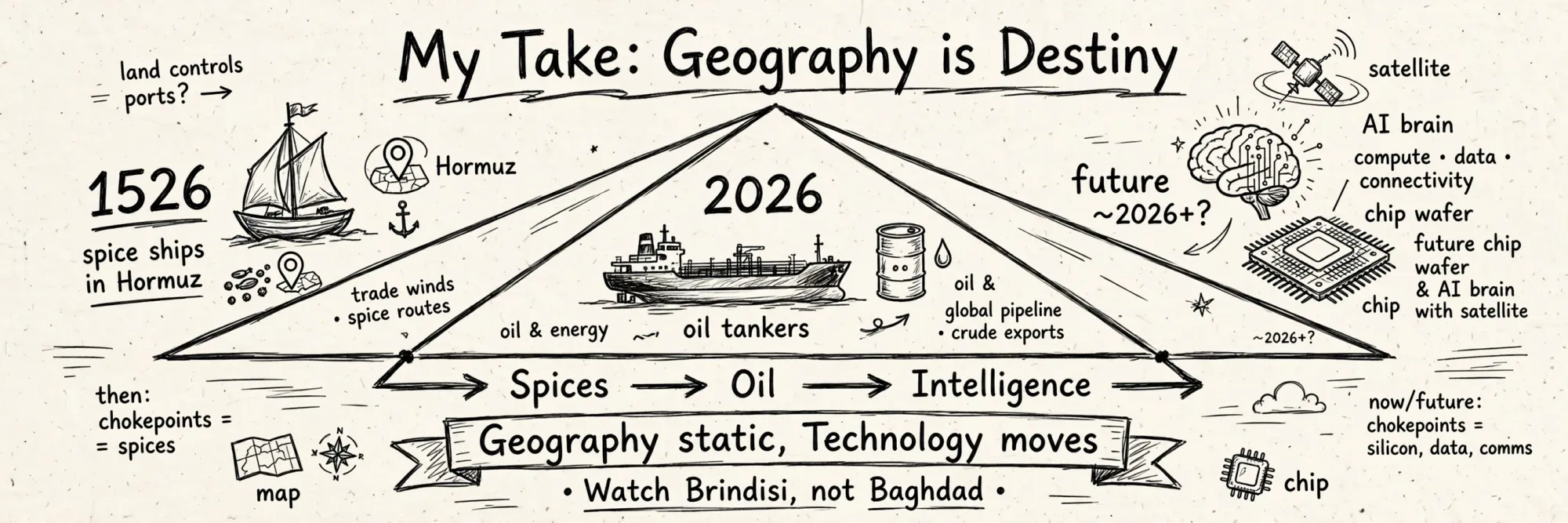
My Take: Geography is Destiny
Technology changes rapidly but the fundamental geography of the planet remains completely static.
Hormuz was a chokepoint 500 years ago for spices. It is a chokepoint today for oil. Tomorrow it will be irrelevant, because the most valuable commodity in the world does not ship in a tanker.
Pax Silica is the US finally remembering it is a maritime power. We do not win by invading continental powers. We win by making their vassals want to become our allies.
Watch Brindisi, not just Baghdad.