Meta Apps and the Vibecoding Revolution
We think Meta is just a social feed where brands buy basic image advertisements. They are actually building an ecosystem where businesses can instantly generate custom applications using simple text prompts.
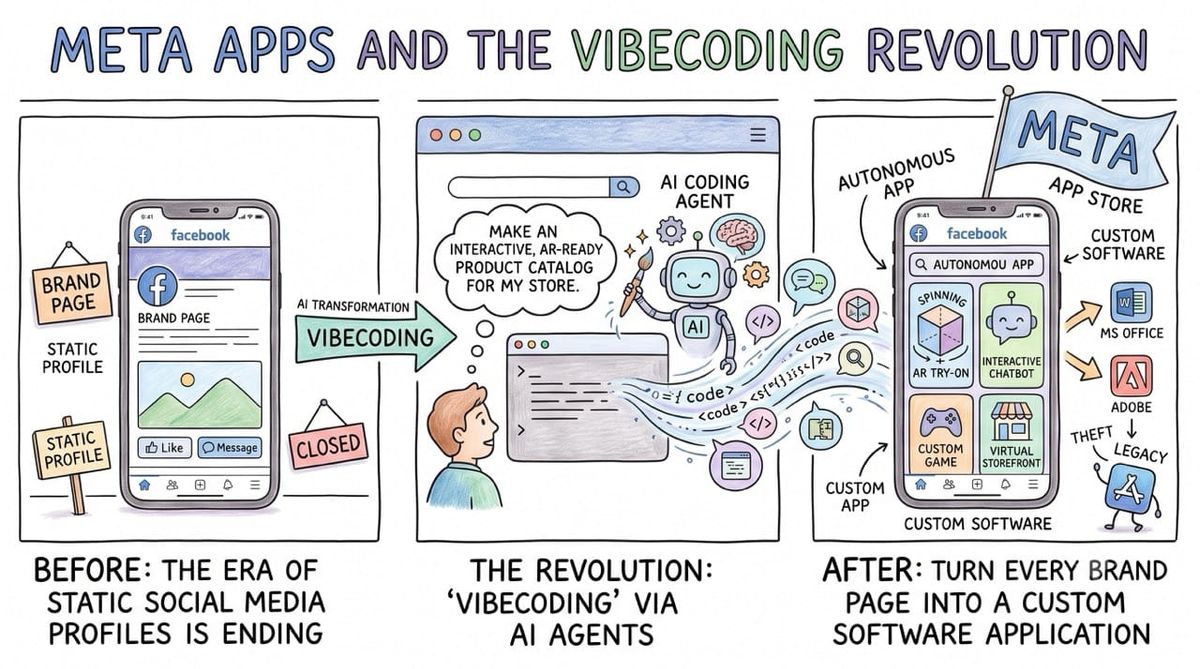
The era of static social media profiles is ending. Mark Zuckerberg is quietly using generative artificial intelligence to turn every brand page into a custom software application.
Inspiration: Analyzing Meta's increasing focus on artificial intelligence coding agents and the rising trend of vibecoding. Realizing they are about to turn their entire social portfolio into an autonomous app store that directly threatens legacy software providers.
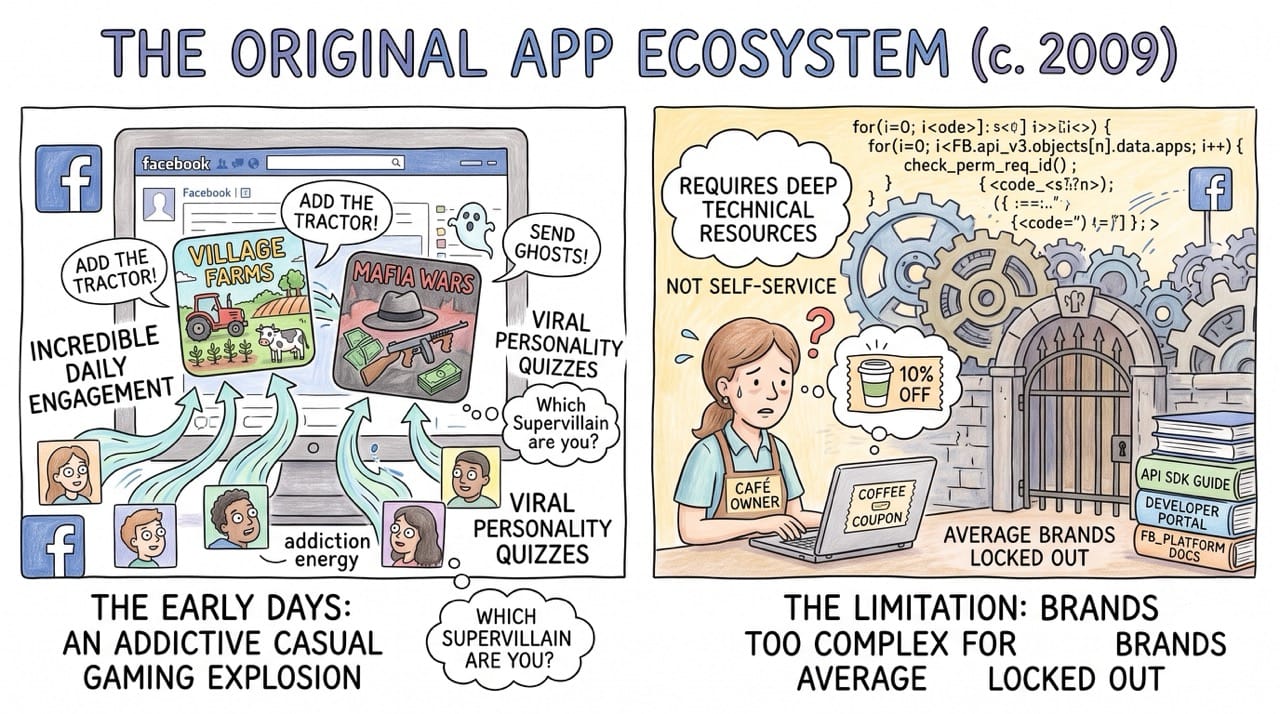
The Original App Ecosystem
Remember when the early Facebook platform was completely dominated by addictive farming games and viral personality quizzes.
That original application ecosystem drove incredible daily engagement but was ultimately too difficult for average brands to build themselves.
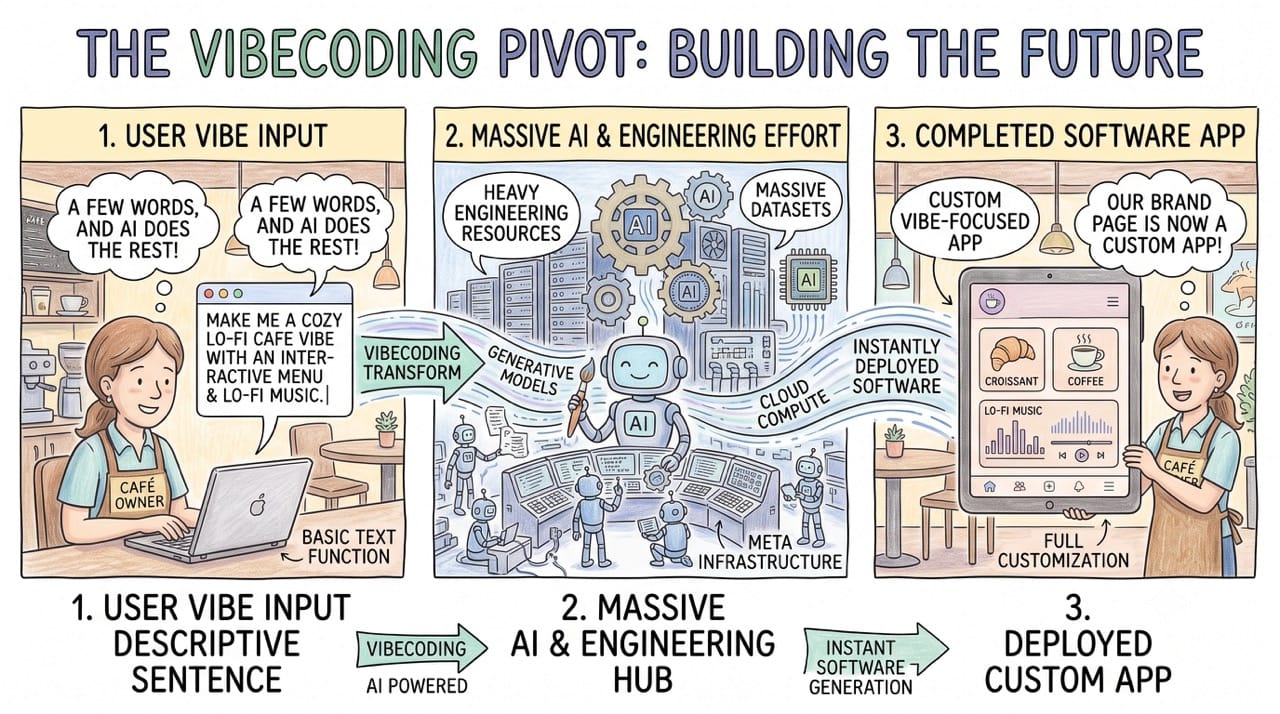
The Vibecoding Pivot
Meta is currently directing heavy engineering resources toward generative artificial intelligence and the concept of vibecoding.
They are building a future where developing software is as easy as describing a specific vibe or function in a basic text sentence.
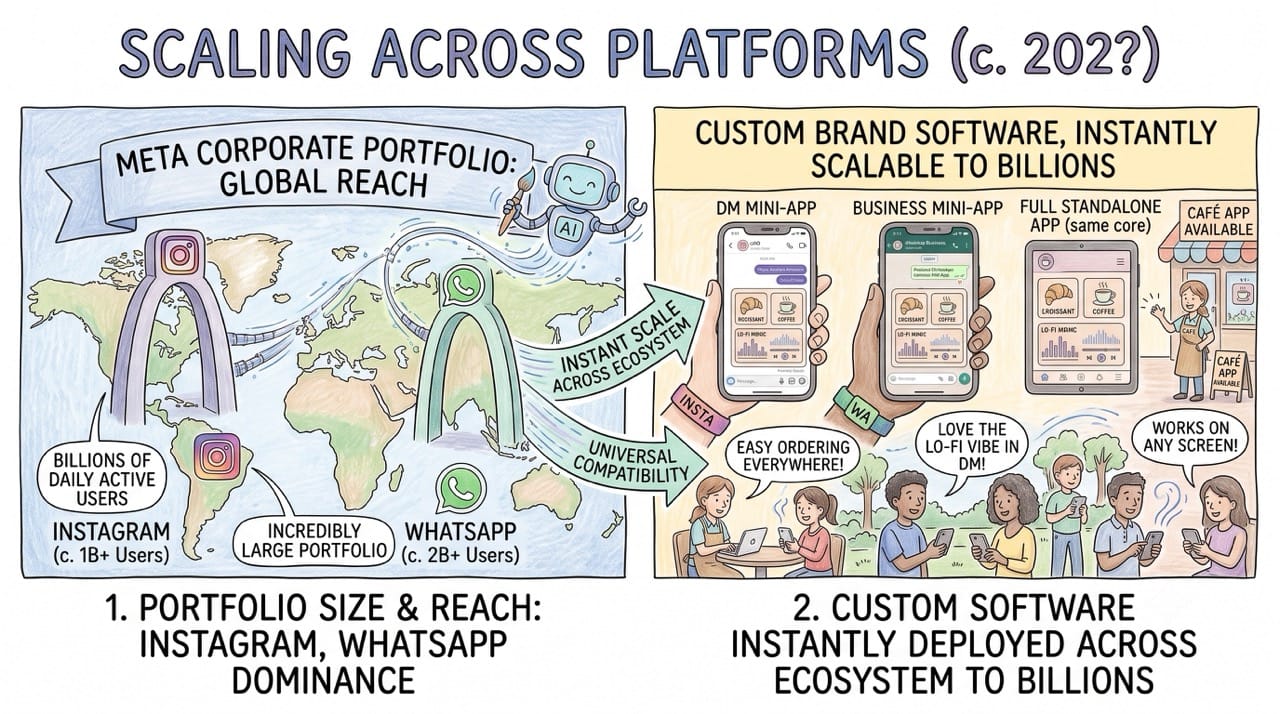
Scaling Across Platforms
The corporate portfolio has grown incredibly large with the global dominance of Instagram and WhatsApp.
This means any custom software generated by a brand can instantly scale across billions of daily active users on multiple different platforms.
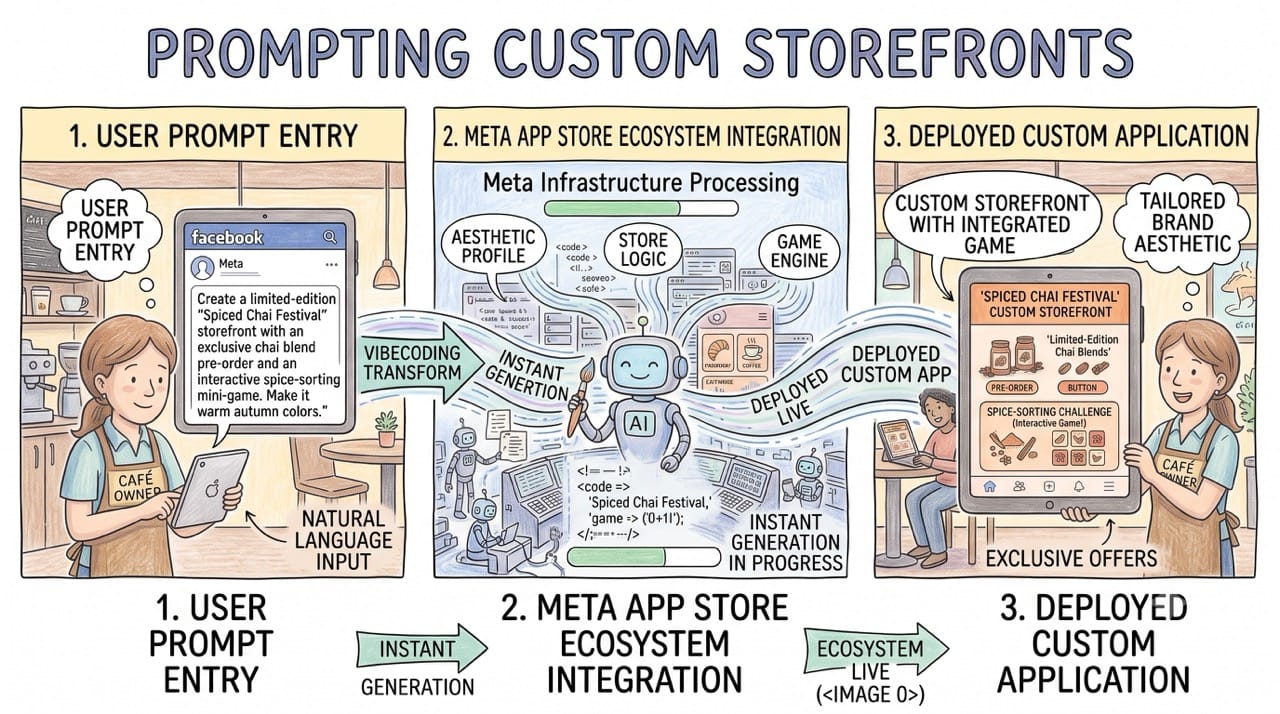
Prompting Custom Storefronts
Soon a small business will simply type a text prompt to instantly generate a custom application directly inside their social profile.
Brands will effortlessly spin up interactive games or exclusive digital storefronts tailored perfectly to their specific brand aesthetic.
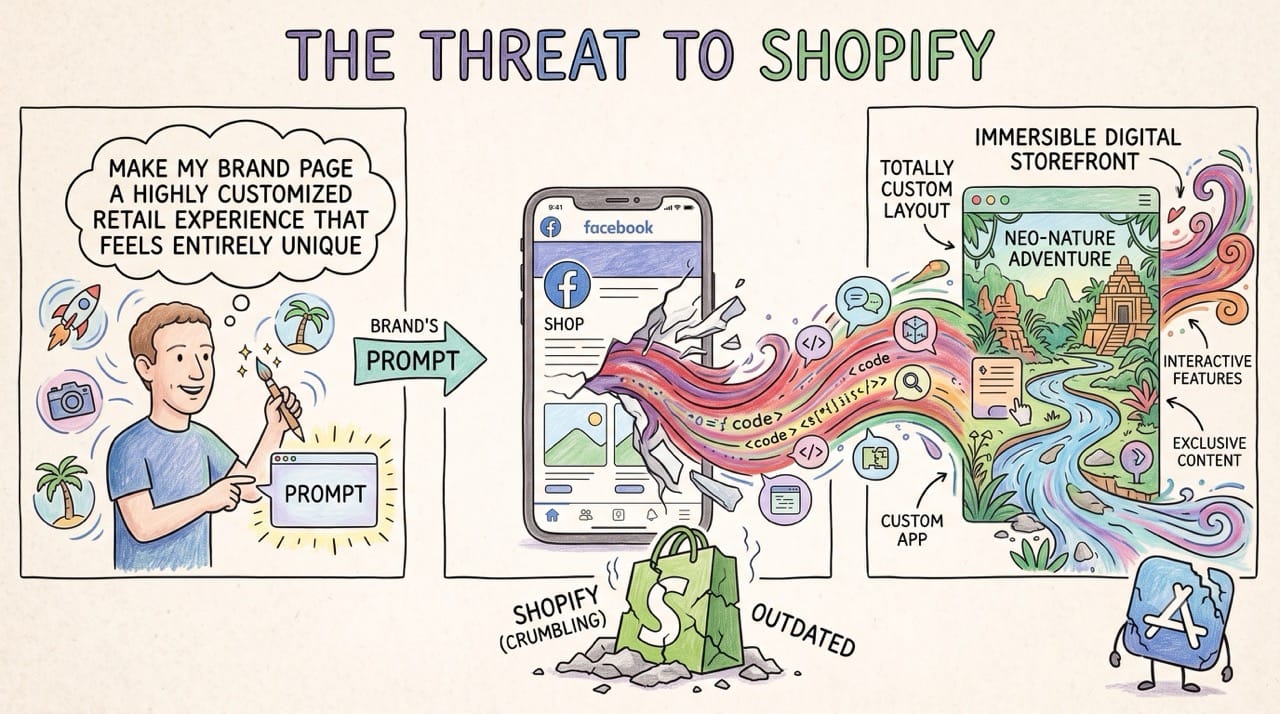
The Threat to Shopify
This generative technology presents a terrifying threat to digital retail platforms like Shopify.
Instead of forcing users into a generic social shopping interface a brand can prompt a highly customized retail experience that feels entirely unique.
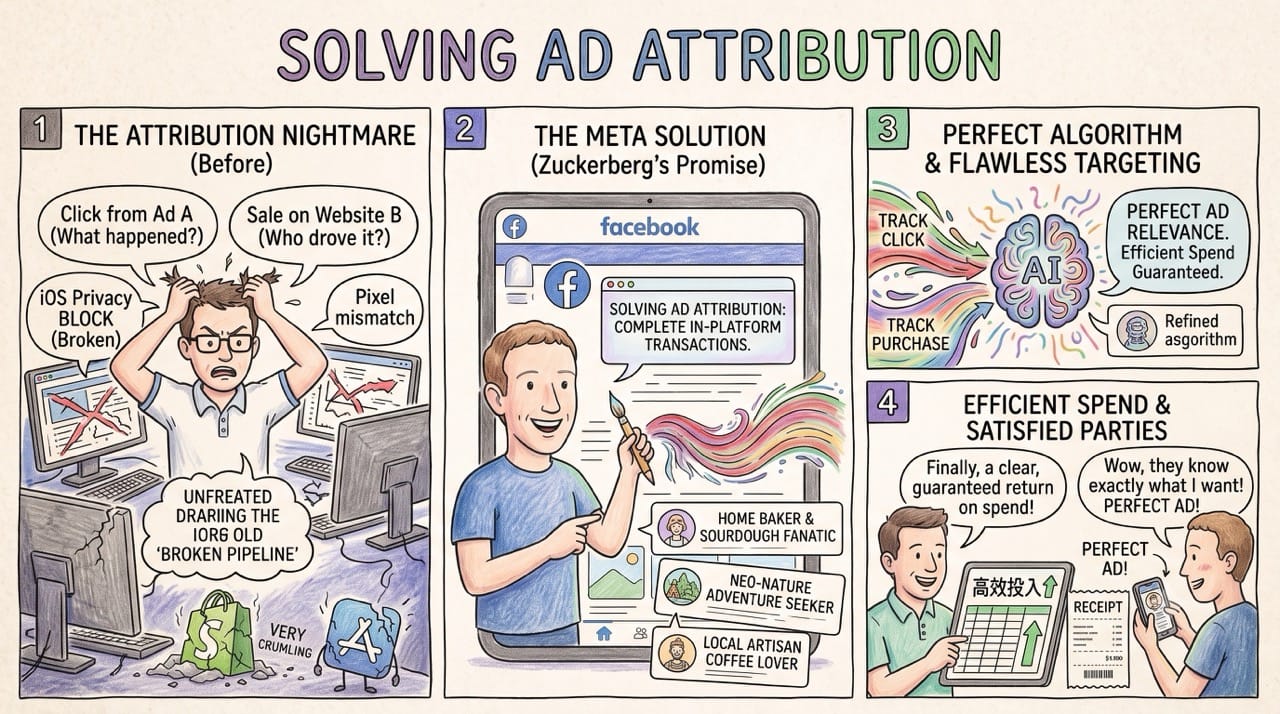
Solving Ad Attribution
Keeping the entire transaction inside the social platform permanently solves the attribution nightmare plaguing modern digital marketers.
The advertising algorithm perfectly tracks every single click and purchase to guarantee efficient marketing spend and flawless consumer targeting.
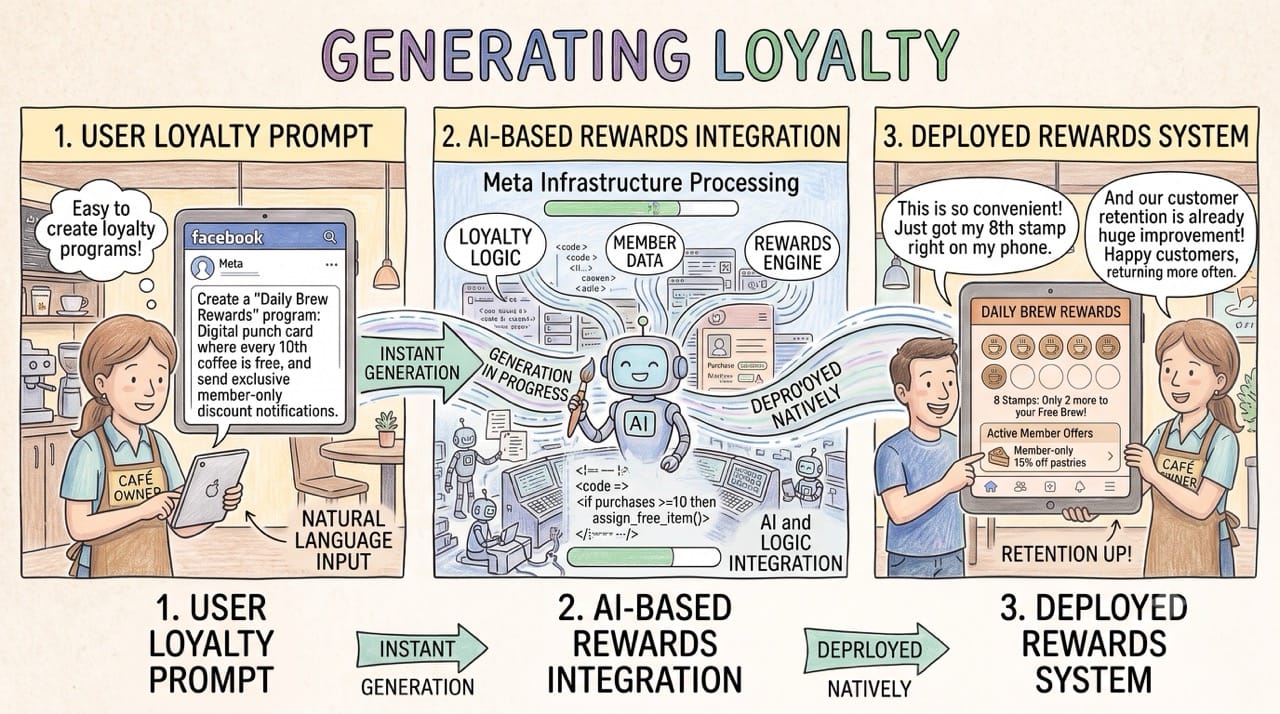
Generating Loyalty
These generated applications will also allow brands to instantly deploy robust customer loyalty programs.
A local coffee shop could prompt a digital punch card system that lives natively inside their profile to drastically improve customer retention.
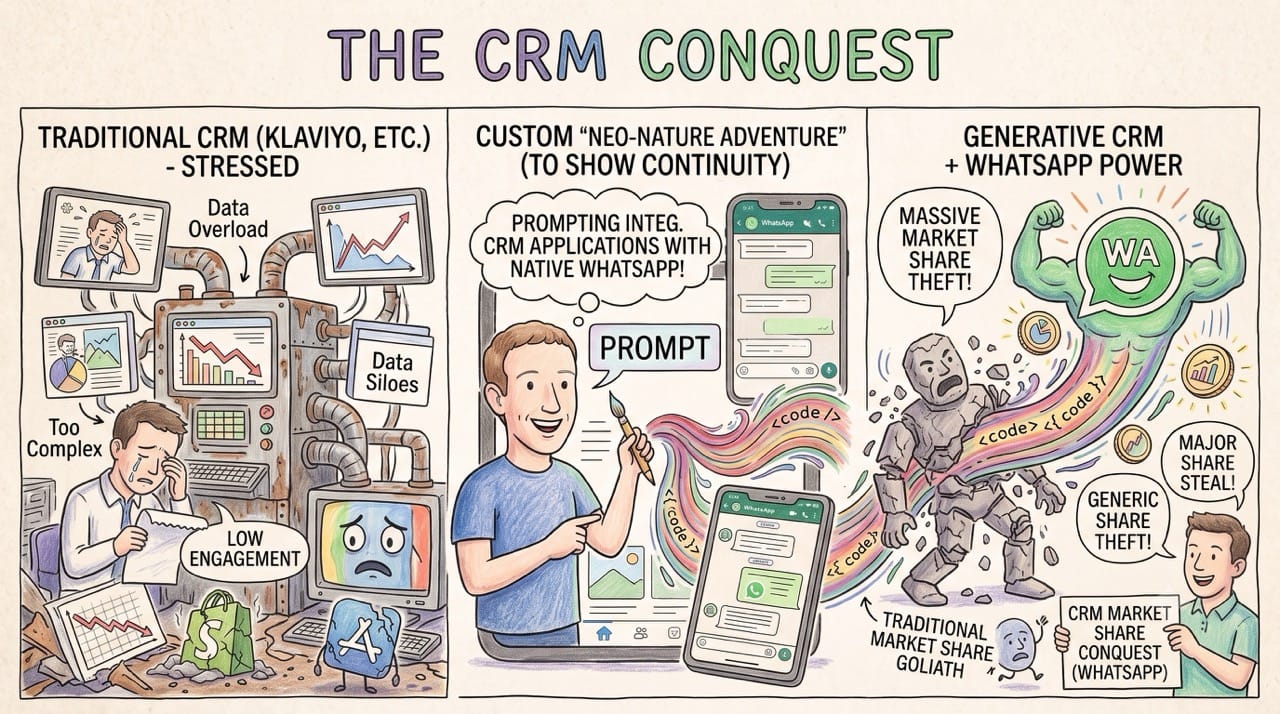
The CRM Conquest
This generative capability naturally extends into the realm of customer relationship management.
By seamlessly integrating these interactive apps with WhatsApp the company can easily steal significant market share away from traditional messaging tools like Klaviyo.
Expanding the Operating System
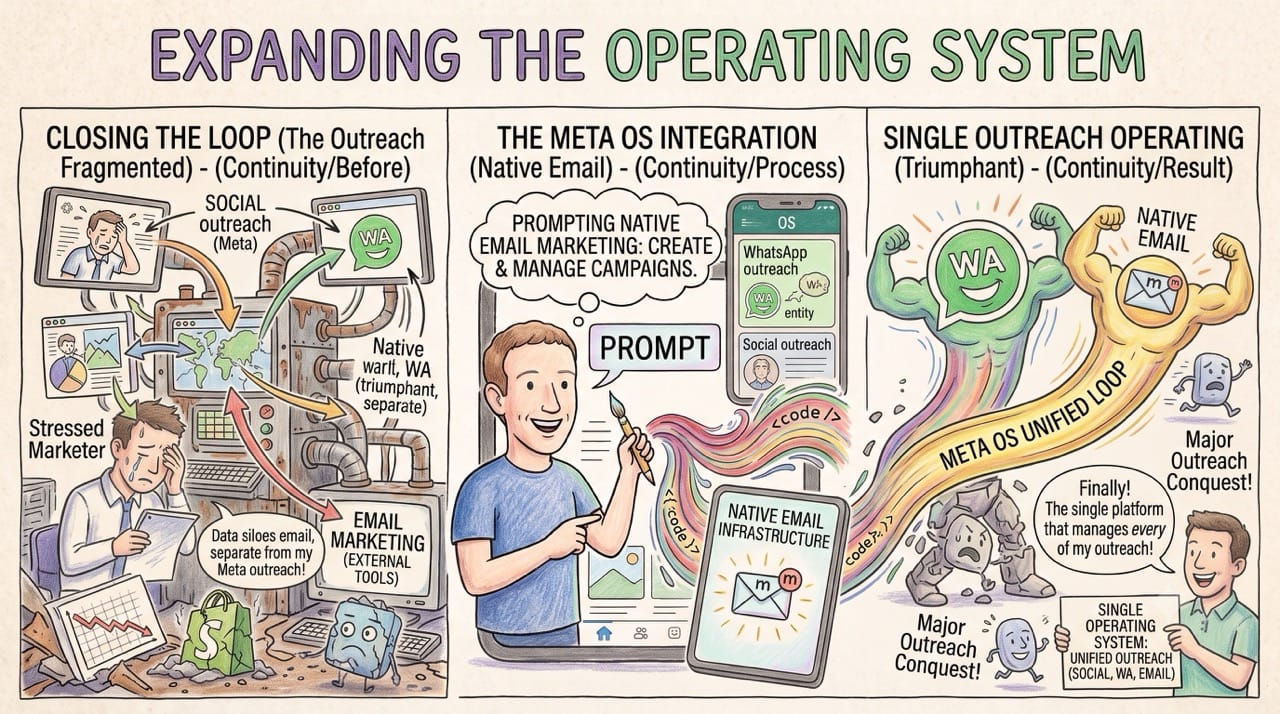
It is very reasonable to assume Meta might eventually launch their own native email marketing infrastructure to close the communication loop.
They desperately want to be the single operating system where a business manages every single aspect of their consumer outreach.
The Spatial Future
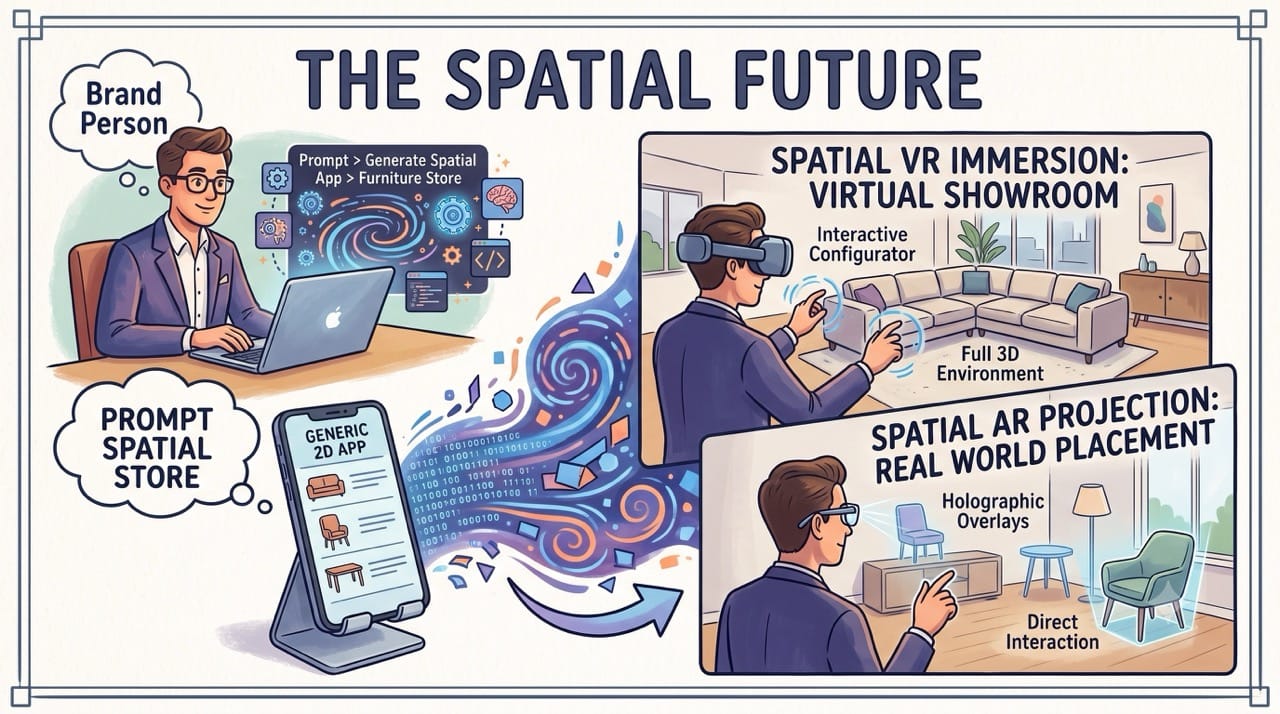
This generated software will not stay confined to a flat glass phone screen forever.
Brands will eventually prompt spatial applications designed specifically for virtual reality headsets and augmented reality smart glasses.
Conclusion: The Developer Transition
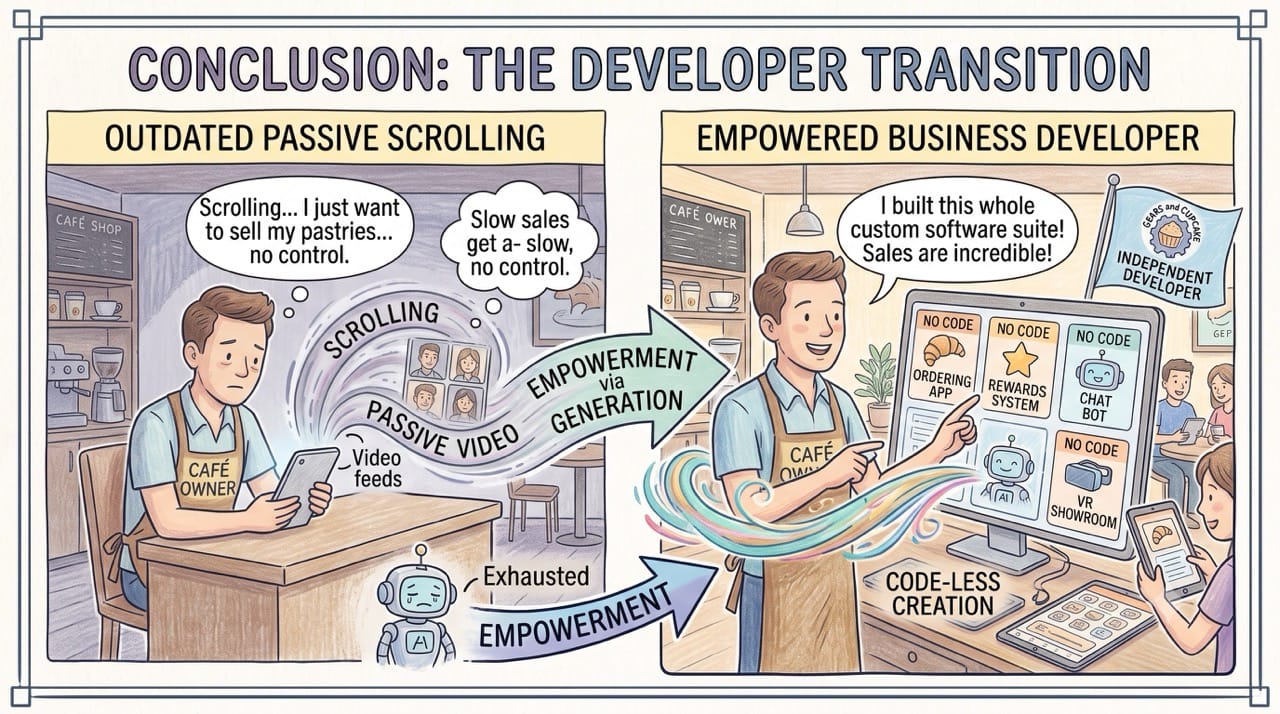
The future of digital commerce is not just scrolling through passive video feeds.
The most valuable platforms will empower every single business to become an independent software developer without ever writing a line of code.