Meta and the Genius of Micro Branding: The Architecture of Identity:
We assume corporate branding requires slapping the parent company name on every single new software feature. In reality Meta brilliantly engineered a massive portfolio of independent micro brands that completely isolates risk and maximizes user retention.
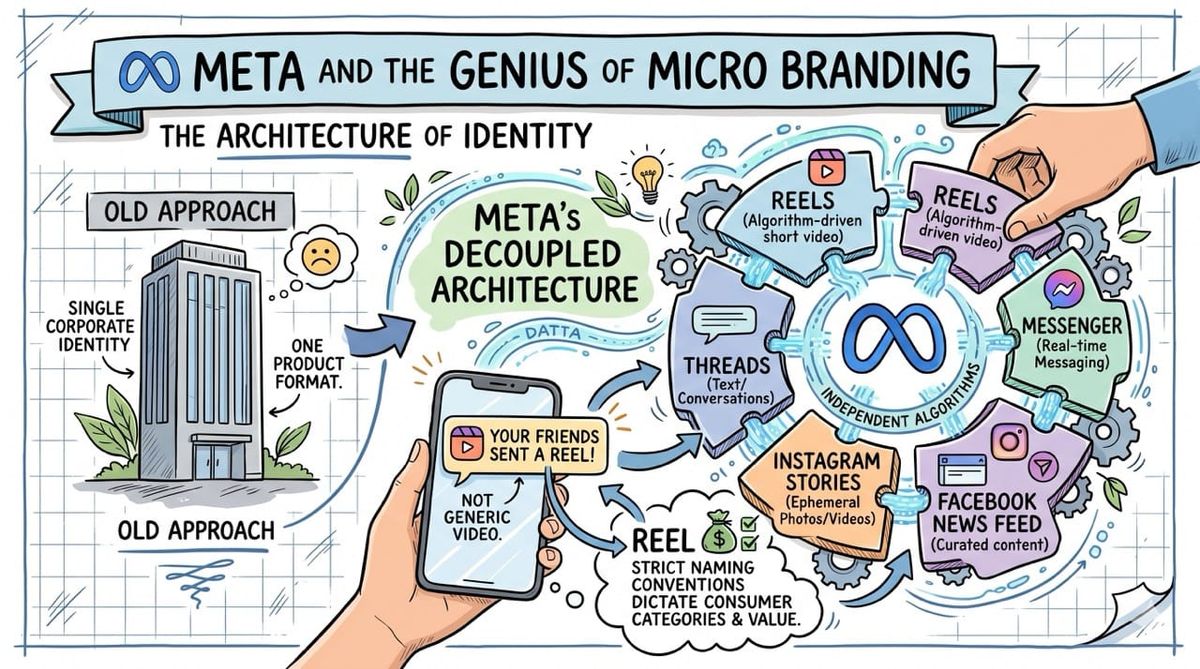
Most technology companies mistakenly tie their entire corporate identity to a single product format. Meta completely decoupled their structural architecture to create a highly optimized and incredibly resilient portfolio of independent algorithms.
Inspiration: Seeing a notification about friends sending Reels instead of generic videos. Realizing that strict naming conventions dictate exactly how consumers cognitively categorize and financially value digital formats.
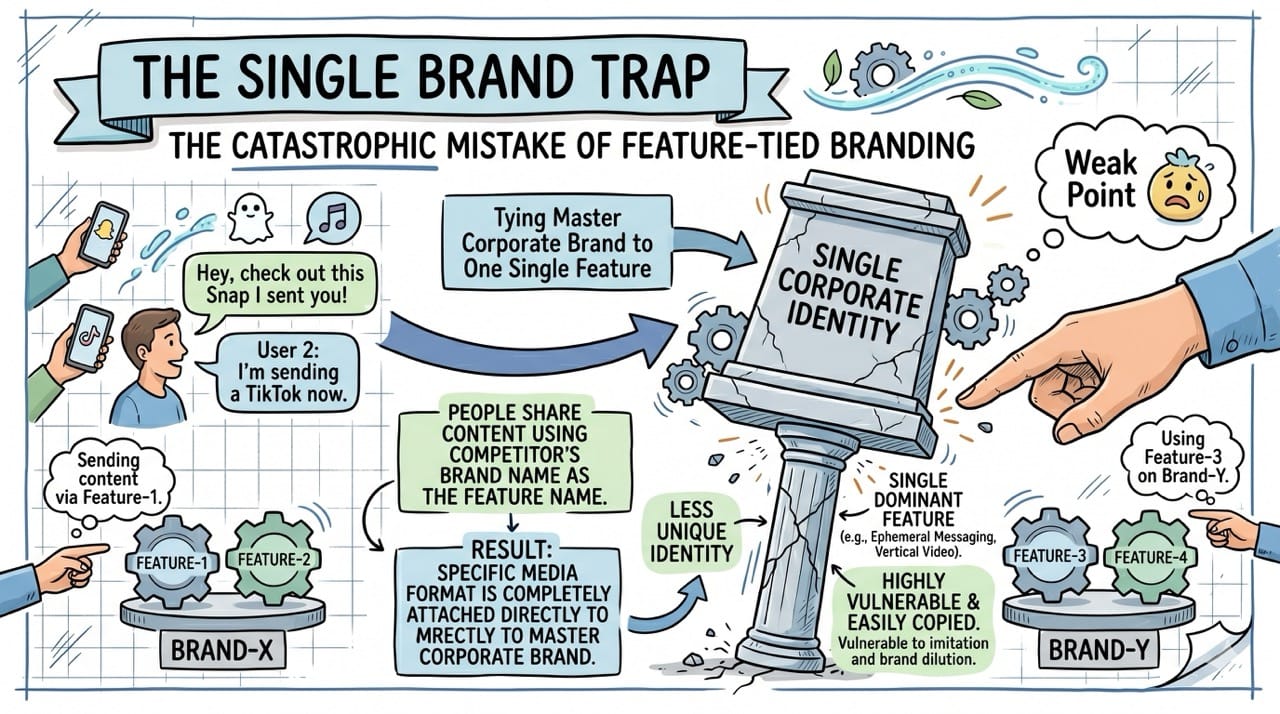
The Single Brand Trap
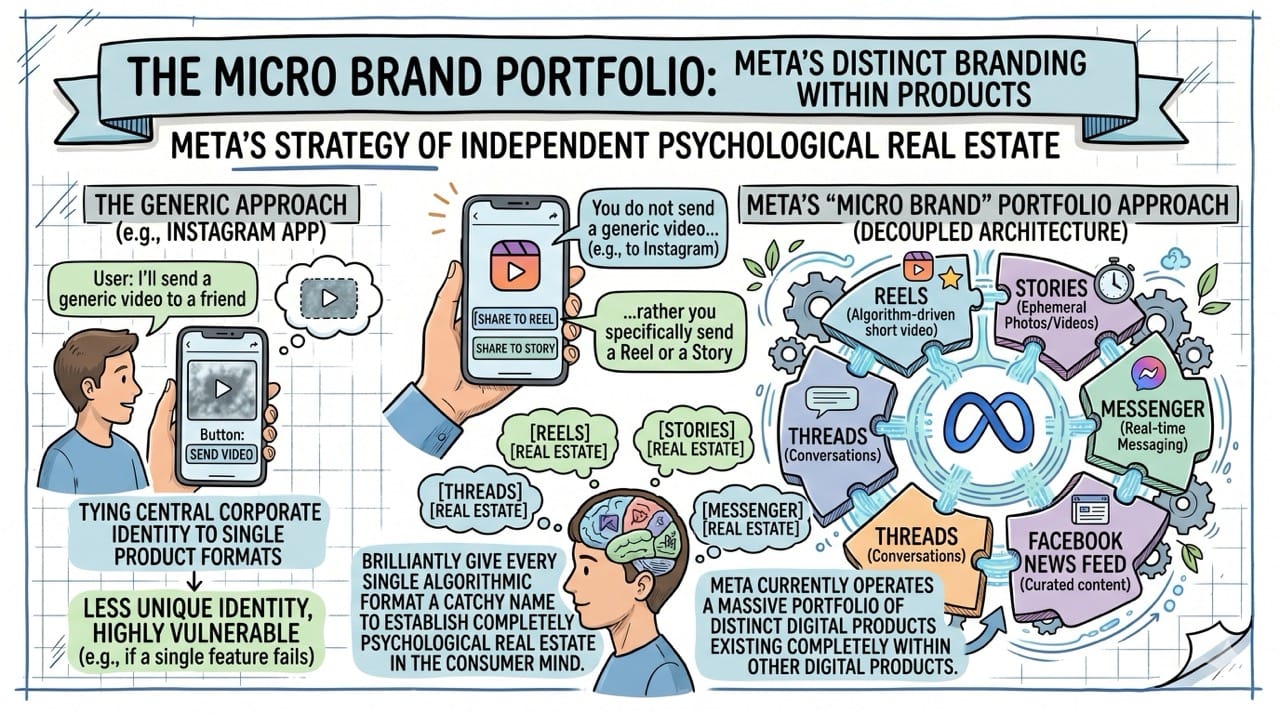
Most technology brands make the catastrophic mistake of tying their central corporate identity to a single feature.
When people share content on competing platforms they simply say they are sending a TikTok or sending a Snap.
This completely attaches the specific media format directly to the master corporate brand making it far less unique and highly vulnerable.
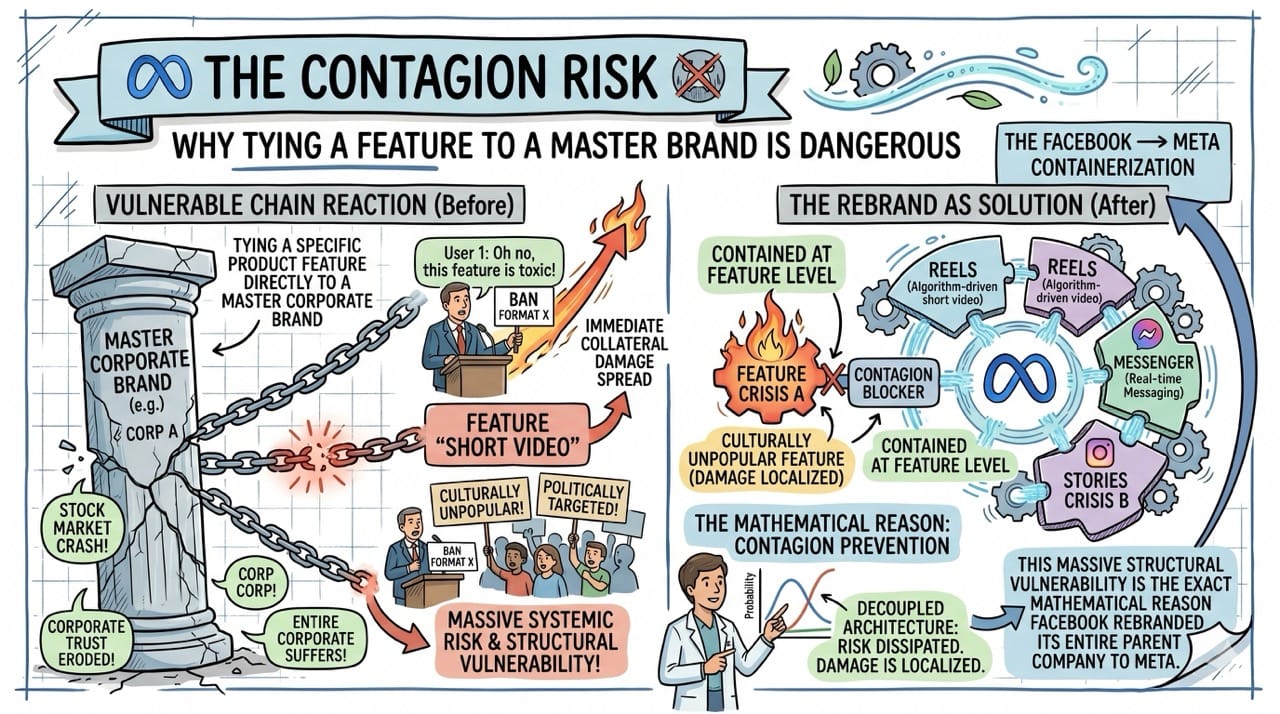
The Contagion Risk
Tying a specific product feature directly to a master corporate brand carries massive systemic risk.
If a specific format becomes culturally unpopular or politically targeted the entire corporate entity suffers immediate collateral damage.
This massive structural vulnerability is the exact mathematical reason Facebook previously rebranded its entire parent company to Meta.
The Micro Brand Portfolio
Meta currently operates a massive portfolio of distinct digital products existing completely within other digital products.
You do not send a generic video to a friend on Instagram but rather you specifically send a Reel or a Story.
They brilliantly give every single algorithmic format a catchy name to establish completely independent psychological real estate in the consumer mind.
The Complexity of Choice
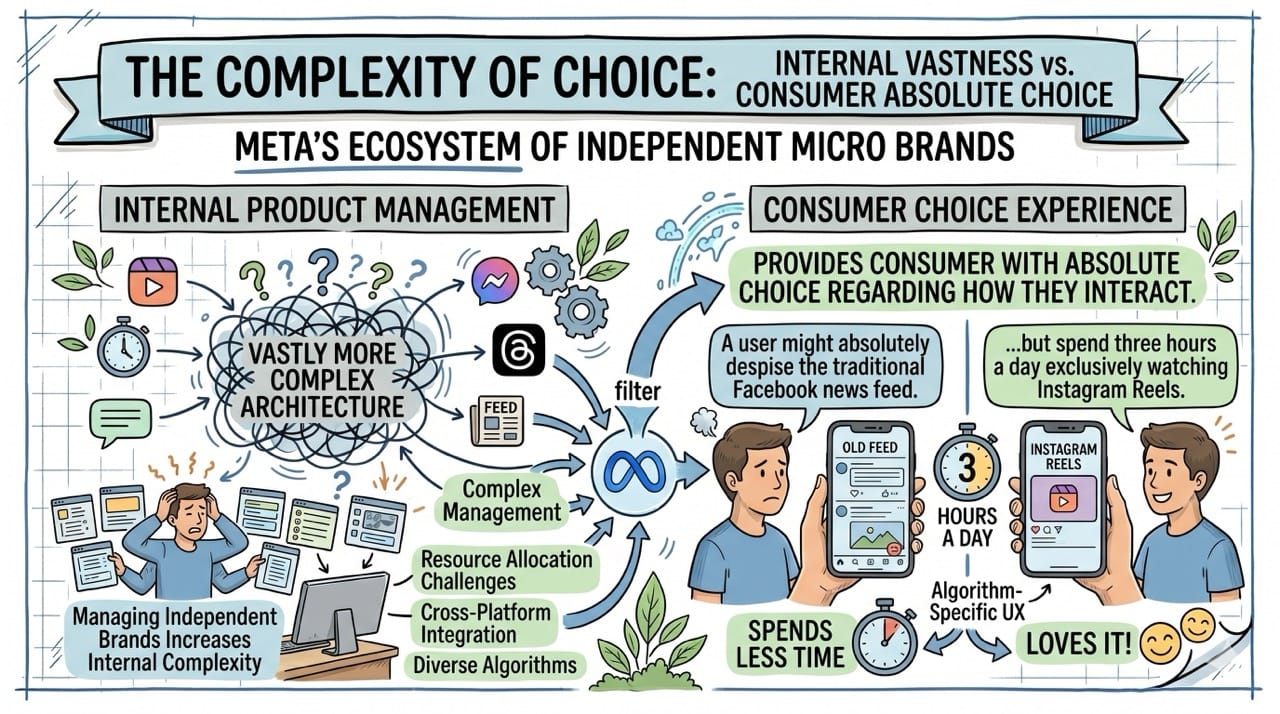
Managing this massive architecture of independent micro brands certainly makes internal product management vastly more complex.
However this structure provides the consumer with absolute choice regarding how they interact with the broader digital ecosystem.
A user might absolutely despise the traditional Facebook news feed but spend three hours a day exclusively watching Instagram Reels.
The Data Architecture
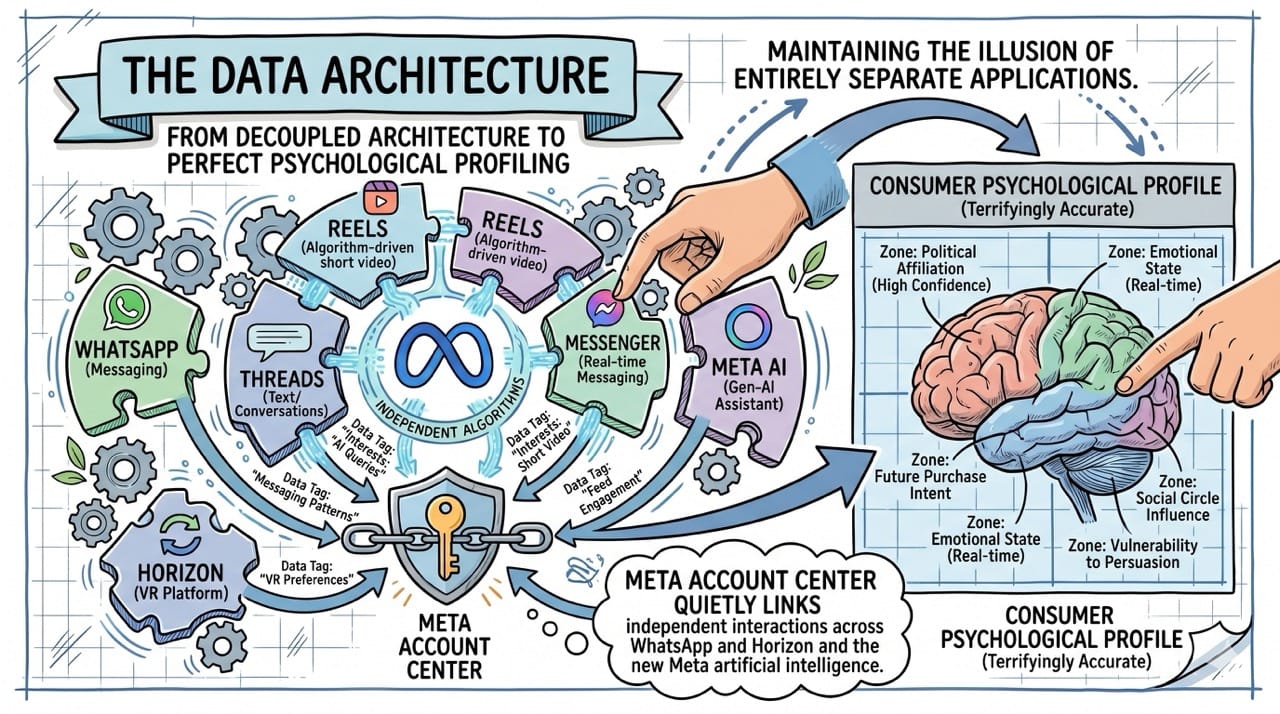
This granular product architecture allows the platform to collect incredibly diverse and perfectly labeled consumer data.
The Meta Account Center quietly links all these independent interactions across WhatsApp and Horizon and the new Meta artificial intelligence.
This interconnected grid provides a terrifyingly accurate psychological profile of the consumer while maintaining the illusion of entirely separate applications.
The Performance Marketing Advantage
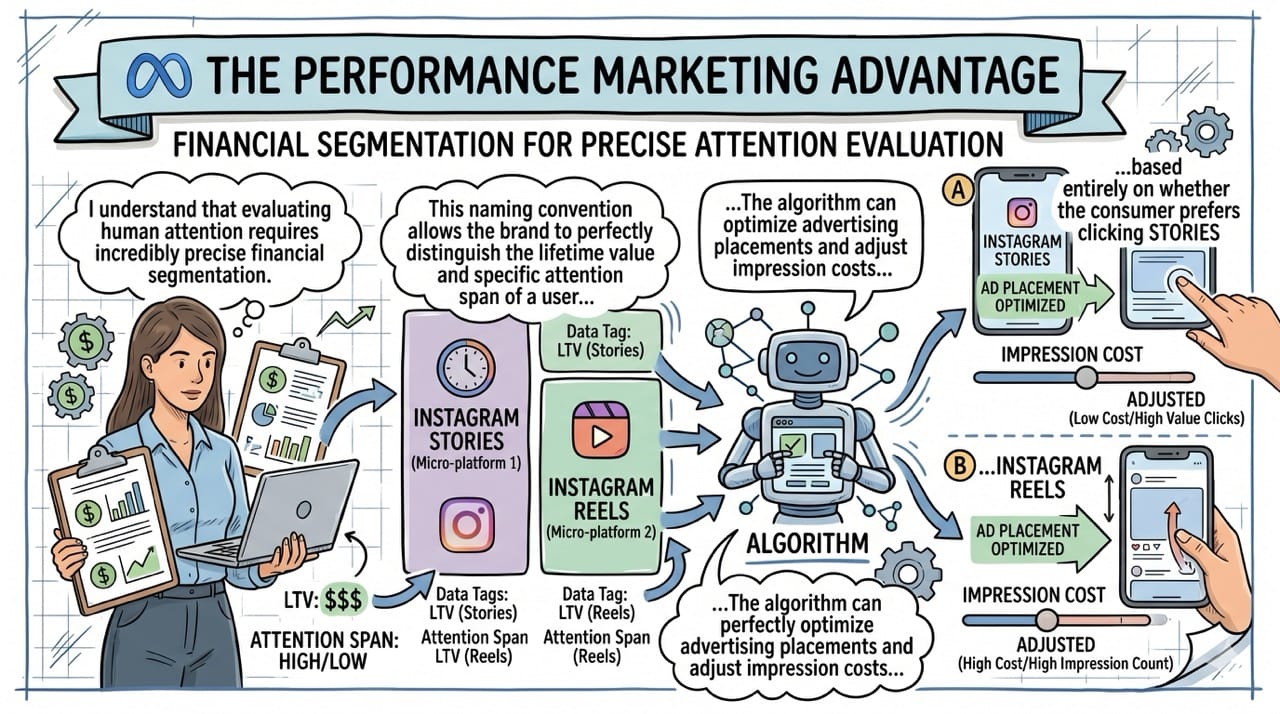
As a performance marketer, I understand that evaluating human attention requires incredibly precise financial segmentation.
This naming convention allows the brand to perfectly distinguish the lifetime value and specific attention span of a user on each distinct micro platform.
The algorithm can perfectly optimize advertising placements and adjust impression costs based entirely on whether the consumer prefers clicking Stories or scrolling Reels.
Historical Parallels
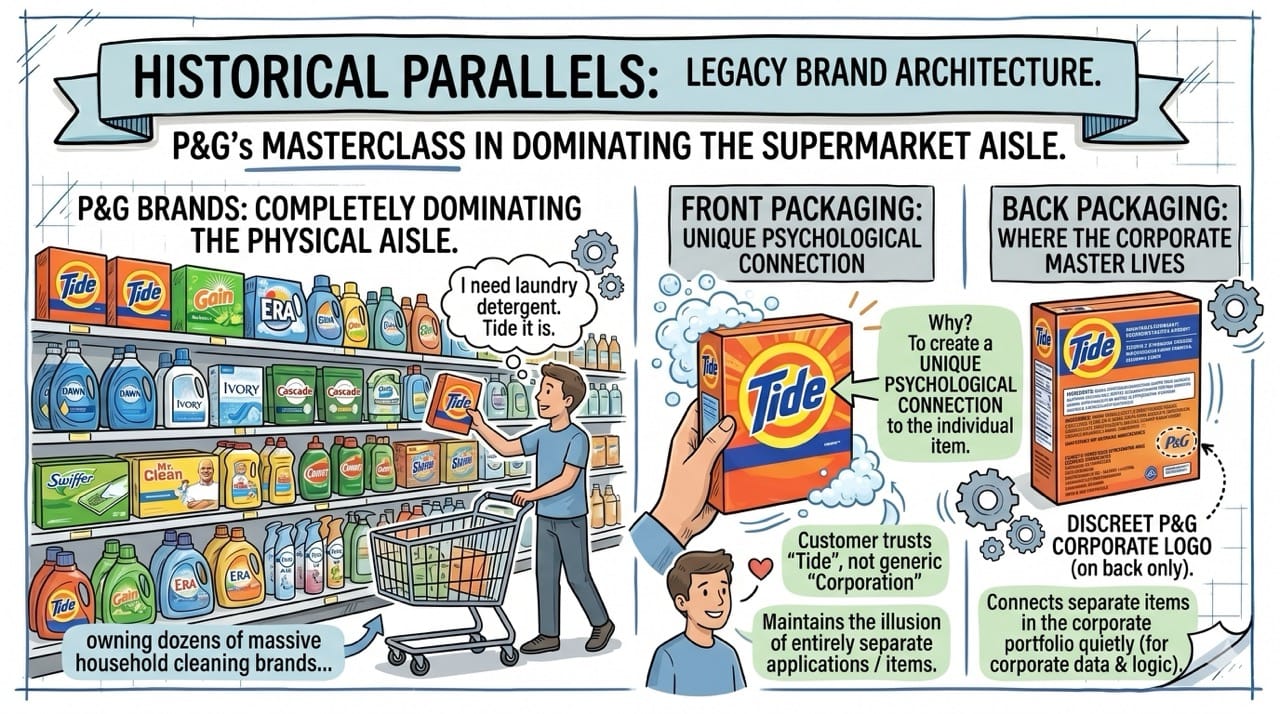
We have seen this exact masterclass in brand architecture executed brilliantly by legacy consumer goods conglomerates.
Procter and Gamble owns dozens of massive household cleaning brands that completely dominate the physical supermarket aisle.
They never slap their master corporate logo across the front of the packaging because they want the consumer to feel a unique psychological connection to the individual item.
Conclusion: The Algorithmic Shield
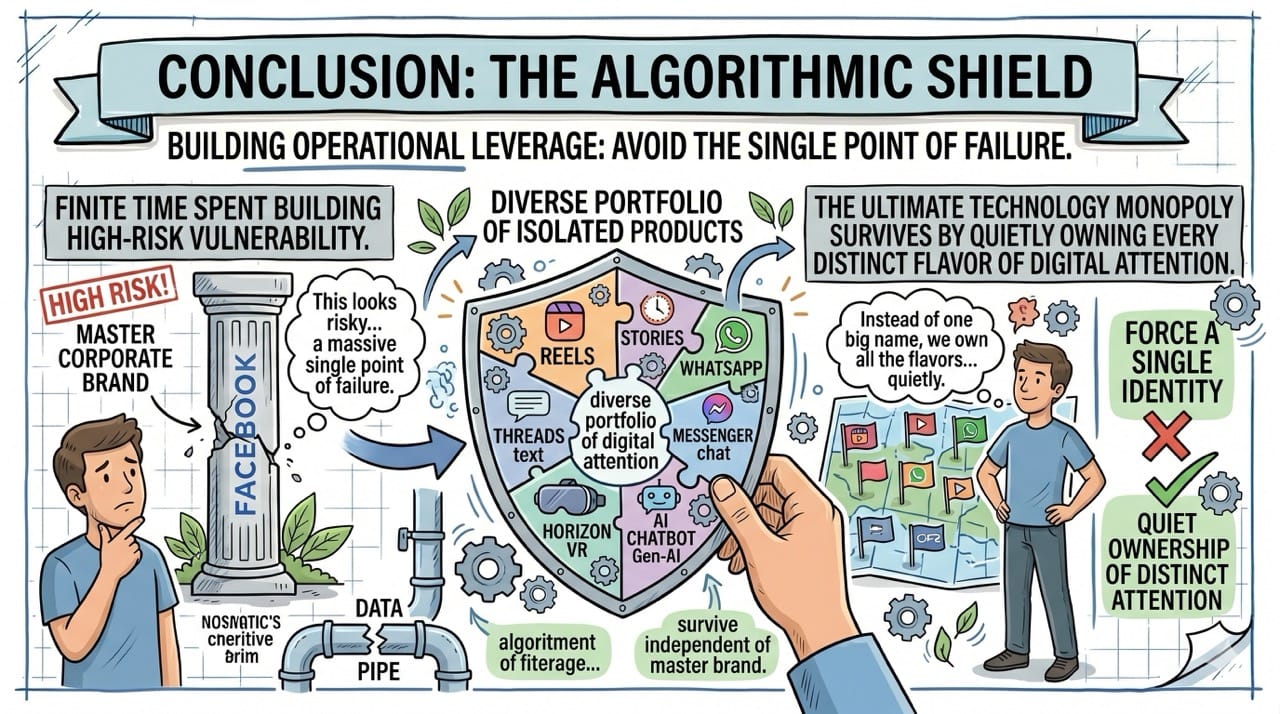
Your finite time should never be spent building a massive single point of failure within your corporate architecture.
True operational leverage requires building a diverse portfolio of isolated products that can survive completely independent of the master brand.
The ultimate technology monopoly survives not by forcing a single identity but by quietly owning every single distinct flavor of digital attention.