How Meta AI Generates Images in WebP (Which Is Better) and Google Does in PNG
Meta AI serves images in WebP. Google serves in PNG. WebP is 26 percent smaller than PNG and 3x smaller in lossy mode. One is optimized for distribution at billion scale. The other is optimized for fidelity in the lab.
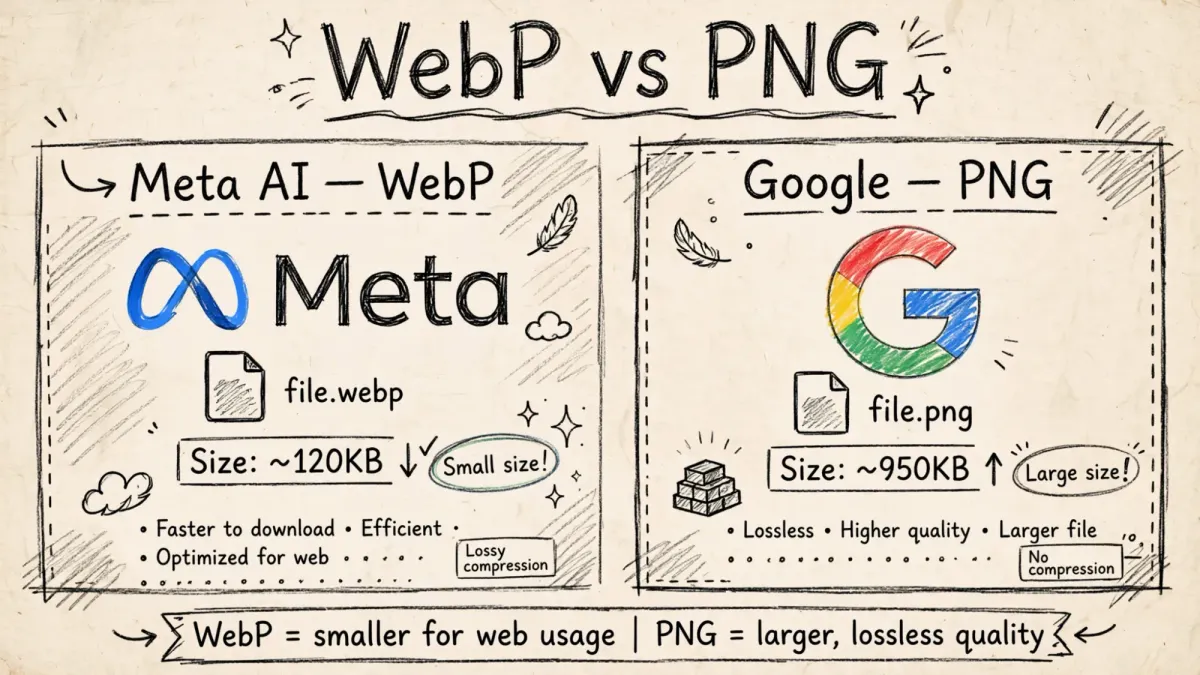
We assume PNG is better because it is lossless. In reality, distribution at scale rewards WebP, while research rewards PNG.
Inspiration: Seeing Meta AI export gallery as file.webp around 120KB and Google Imagen export same scene as file.png around 950KB. Same prompt, 8x difference. Realizing format choice reveals business model.
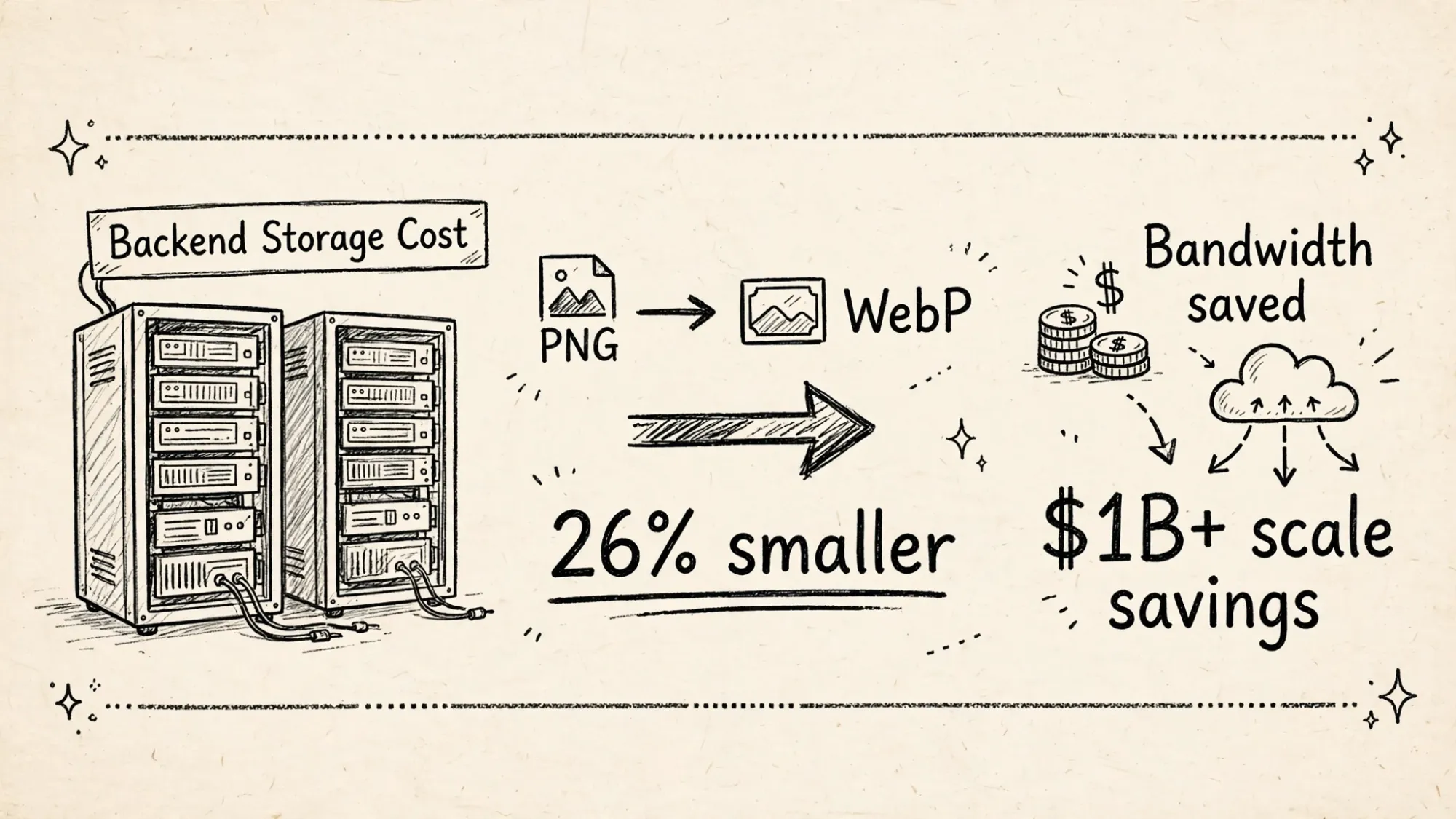
What Actually Happens Backend
Meta AI Image Generator outputs WebP. It shows as WebP smaller.
Google Imagen 4 outputs PNG lossless.
This is not random. It is architecture.
Backend generation pipeline has three steps. Model inference, encode, store and serve.
Meta optimizes for step three.
Google optimizes for step one.
Backend: Why Meta Chooses WebP
Meta is a social distribution company.
Every image generated will be sent, reshared, previewed, cached.
Scale is billions.
According to Google, lossless WebP images are 26 percent smaller than comparable PNG files.1
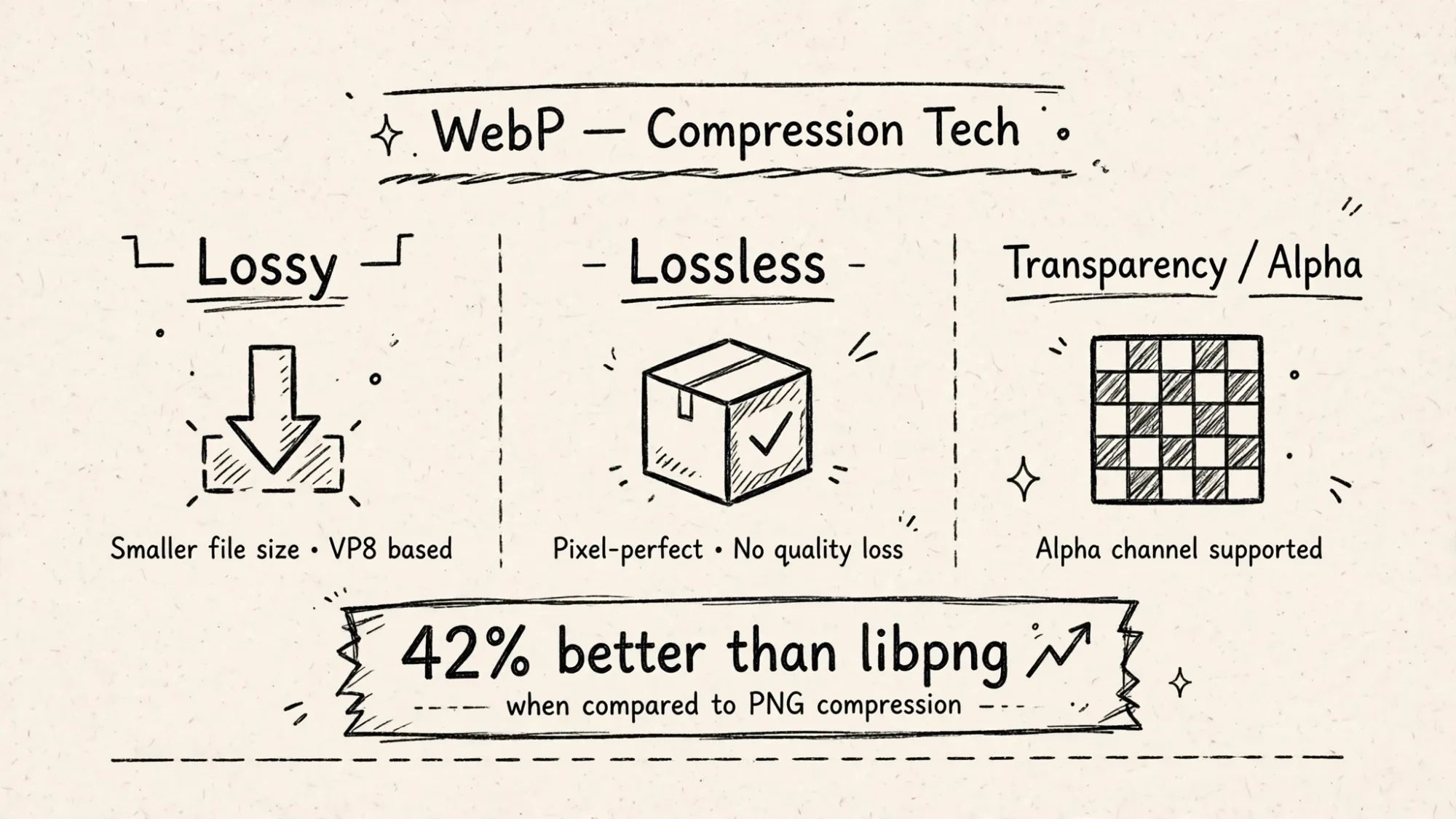
WebP outperforms PNG for web images, compressing 42 percent better than libpng and 23 percent better than ZopfliPNG.2
WebP with lossy compression results in file sizes 3 times smaller than comparable PNGs.3
That math compounds.
- 1 billion images times 950KB PNG equals 950 terabytes.
- Same billion times 120KB WebP equals 120 terabytes.
- Difference equals 830 terabytes less storage, less egress, less cache churn.
Using WebP can save server capacity as it maintains quality while offering smaller file sizes compared to formats like JPG, PNG, or GIF.4
Hosting many large images can get expensive. WebP files take up less space and use less bandwidth when visitors view them.5
For Meta, format is cost control.
WebP also supports both lossy and lossless compression within a single format.6
Transparency similar to PNG and even animation supported.6
One format for everything. Simpler pipeline.
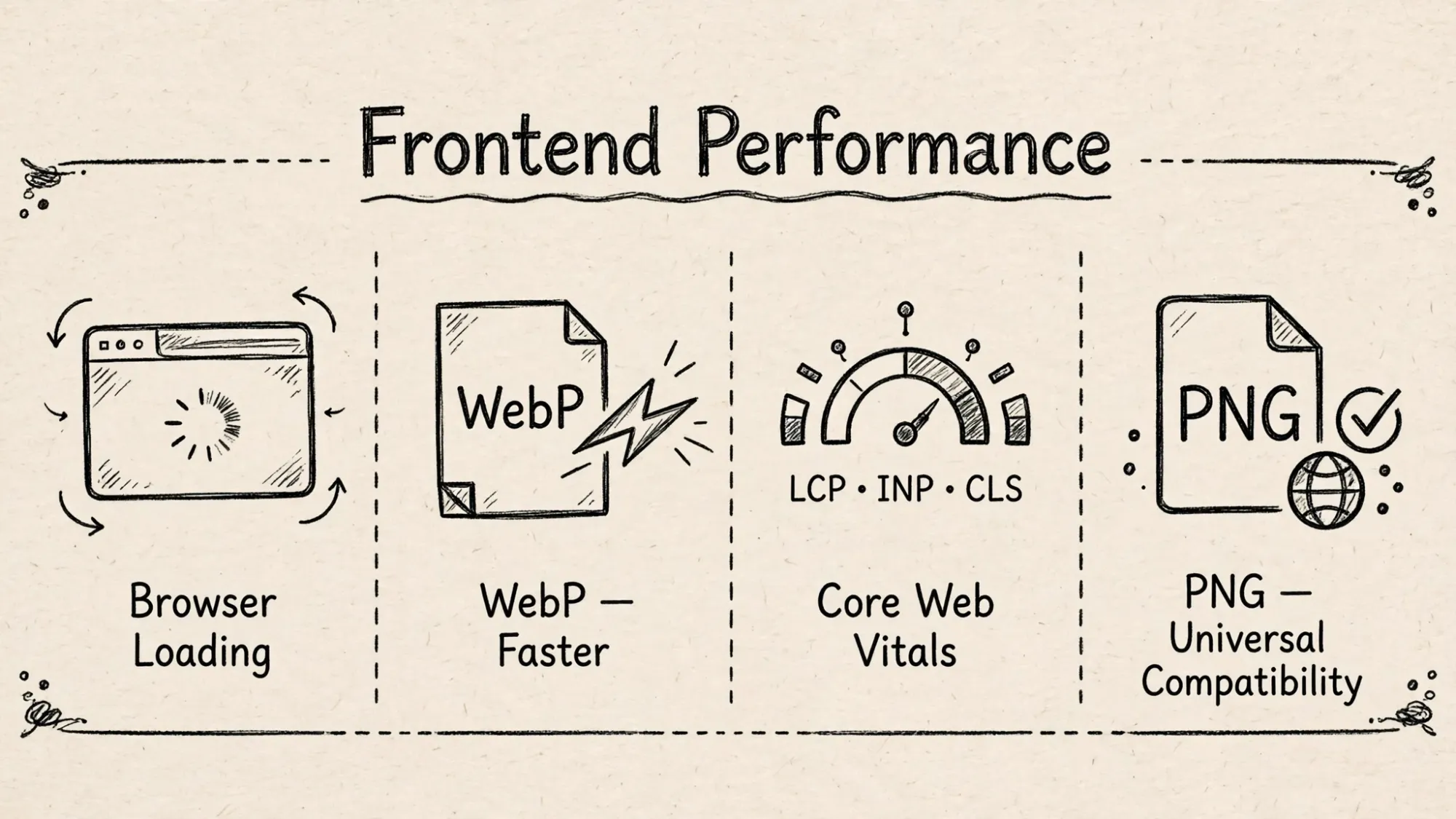
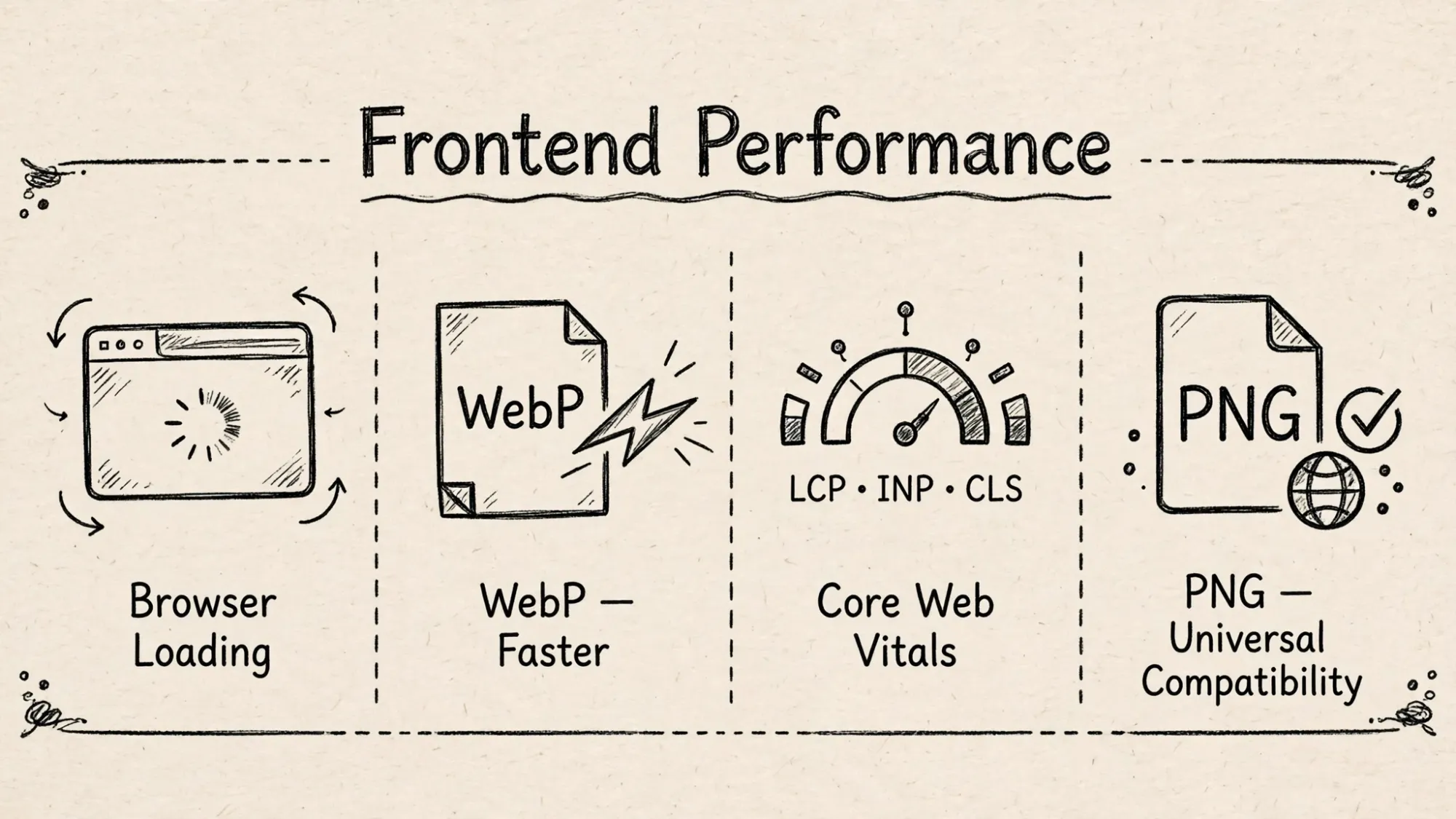
Frontend: Why WebP Wins For Users
Frontend cares about speed.
Image format based on VP8 video format that supports lossy and lossless compression, as well as animation and alpha transparency.7
WebP generally has better compression than JPEG, PNG and GIF and is designed to supersede them.7
Result is pretty obvious. Webp images are on average 27 percent lighter than PNG, it even reaches 70 percent for the lossy version.
For web delivery, that means faster first paint, lower LCP, better Core Web Vitals.
Google itself recommends WebP for search rankings.
Browsers that support WebP had 97 percent market share as of 2024.
For Meta AI on web, app, Instagram, Threads, Messenger, every millisecond matters.
WebP wins.
But PNG still has frontend uses.
Is it specifically email attachment, print pipeline, or CMS that rejects WebP? Keep as PNG or use lossless WebP.8
PNG remains default when you need repeatable edits or broadest compatibility. Alpha channel is lossless and retained across multiple saves.1
That is why Google keeps PNG.
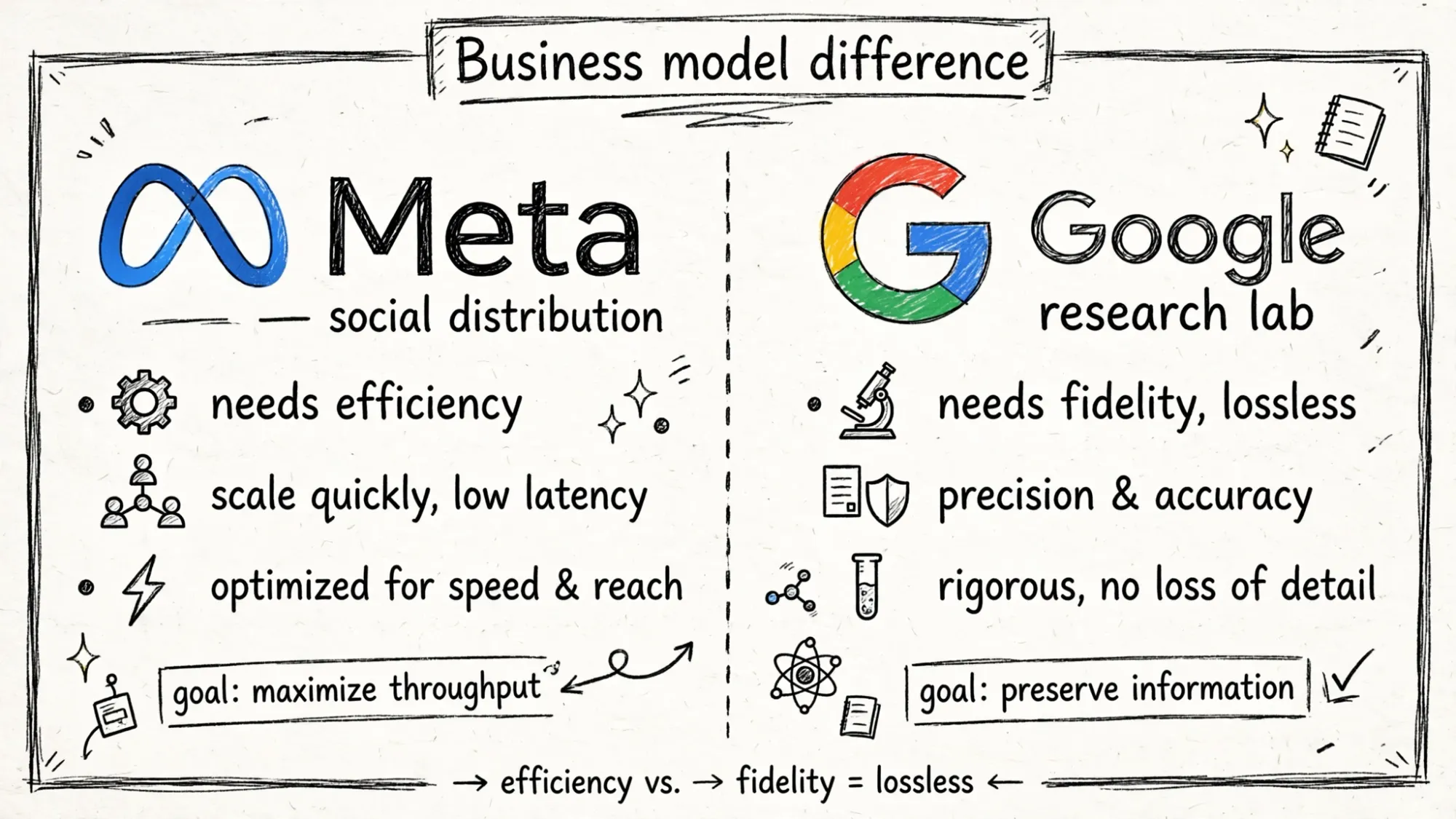
Why Google Chooses PNG
Google Imagen is a research lab product.
Goal is preserve information, not maximize throughput.
PNG's alpha channel is lossless and retained across multiple saves, making it safe choice for design pipelines.1
For transparent assets, WebP lossless assets clocking at 79.9 KB versus 110.7 KB for equivalent PNGs in real-world tests.1
But 30KB saving is not worth generation loss for research.
PNG guarantees pixel accurate output.
No VP8 block transforms, no quantization debate.
For evaluation, training data creation, model comparison, you want lossless source.
Also, PNG is universal. No decoder quirks.
When you benchmark Replicate Flux-dev vs Google Imagen-4, Format is WebP smaller vs PNG lossless.
That tells you positioning.
Meta wants you to share fast.
Google wants you to evaluate faithfully.
The Strategic Depth
Business models explain format.
- Meta monetizes attention. Faster image equals more images seen equals more engagement. WebP equals speed equals revenue.
- Google monetizes research credibility. Lossless image equals accurate eval equals trust. PNG equals fidelity equals credibility.
Macroeconomics explain cost.
Lower storage and bandwidth costs. Hosting many large images can get expensive. WebP files take up less space and use less bandwidth.
At Meta scale, 26 percent smaller equals hundreds of millions saved in CDN.
Consumer psychology explains perception.
Users do not see compression algorithm.
They see loading spinner vs instant image.
WebP feels faster. PNG feels heavier.
That perception drives retention on social.
Information asymmetry explains choice.
Most users assume PNG is better because lossless.
In reality, WebP at quality 80 looks same and is 38 percent smaller.
WebP is ideal for web use, especially for websites with many images, due to smaller file sizes and faster loading.
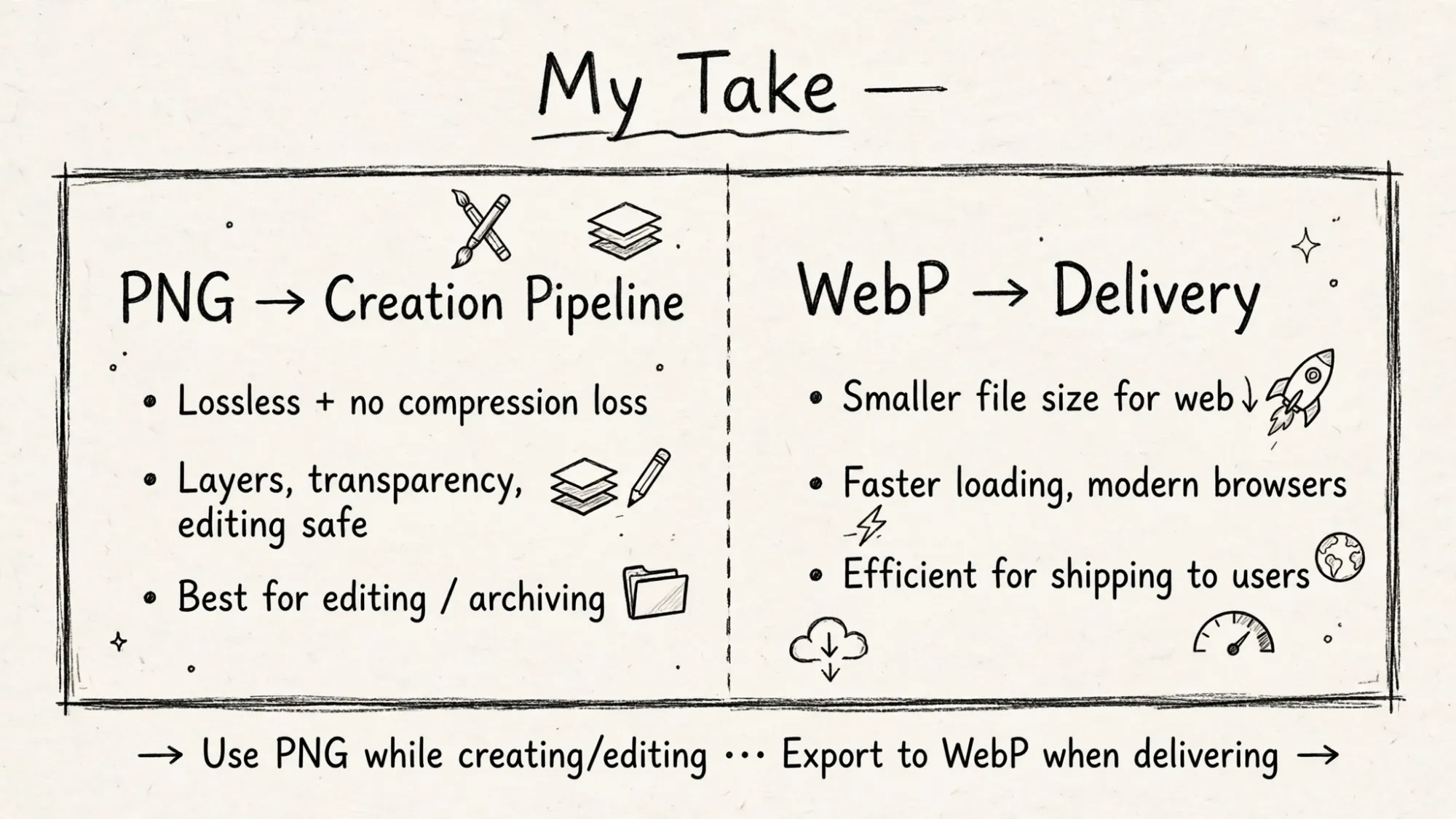
For delivery, WebP is better.
For creation, PNG is better.
My Take: Deliver in WebP, Archive in PNG
My non consensus take.
The best pipeline does both.
Generate in PNG lossless for archive.
Transcode to WebP for delivery.
Meta skips step one and goes direct to WebP because its backend already optimizes for delivery.
Google skips step two and stays in PNG because its frontend is research.
For builders, the answer is clear.
If you are building a social product like Meta AI, generate and serve WebP. 26 percent smaller, 3x smaller in lossy, 42 percent better than libpng.
If you are building a creative tool like Imagen, generate PNG, then offer WebP export option.
That is why Meta AI WebP is better for users and for backend.
Google PNG is better for labs and for edit pipelines.
Do not pick one format forever.
Pick one format per layer.
FAQ for Search
Why does Meta AI generate images in WebP?
Because WebP is smaller and faster. Lossless WebP is 26 percent smaller than PNG, lossy is 3x smaller, and 42 percent better than libpng. At billion scale, that saves storage and bandwidth.
Why does Google Imagen generate in PNG?
Because PNG is lossless and universal. Alpha channel retained across saves, no generation loss, safe for design pipelines and evaluation. Research needs fidelity over efficiency.
Which is better WebP or PNG?
For web delivery, WebP. Faster loading, smaller file, supports transparency and animation. For archiving and editing, PNG. Maximum fidelity, broadest compatibility.
- WebP vs PNG: Which Image Format is the Best? | Cloudinary — https://cloudinary.com/guides/image-formats/webp-vs-png ↩ ↩2 ↩3 ↩4
- What Is a WebP File? How WebP Compares To JPEG and PNG (2025) - Shopify Philippines — https://www.shopify.com/ph/blog/what-is-webp-file ↩
- WebP Format: Technology, Pros & Cons, and Alternatives — https://cloudinary.com/guides/front-end-development/webp-format-technology-pros-cons-and-alternatives ↩
- Why WebP Files Are the Optimal Image Format for the Web | by Joonsung Byun | Medium — https://medium.com/@gmmicky1026/why-webp-files-are-the-optimal-image-format-for-the-web-8531bff6406f ↩
- What Is WebP? Advantages Over JPEG & PNG Image Formats — https://jetpack.com/resources/what-is-webp/ ↩
- Images on the web — https://vercel.com/blog/images-on-the-web ↩ ↩2
- WebP image format | Can I use... Support tables for HTML5, CSS3, etc — https://caniuse.com/webp ↩ ↩2
- PNG to JPG vs WebP: Which One Should You Actually Use in 2026 — https://dev.to/samma1997/png-to-jpg-vs-webp-which-one-should-you-actually-use-in-2026-4o2m ↩