Do Countries With High Corruption Rate Prefer Pay To Win Games?
Turkish gamers readily drop $10,000 on Knight Online gear while Western players despise pay-to-win. With Turkey ranking 124th on the Corruption Perceptions Index, maybe navigating a real-life pay-to-win system just makes in-game pay-to-win feel normal.
The Observation
Inspiration is simple. Watching Turkish internet cafes: Knight Online dominates, free to play at first, but everyone knows the real game starts in cash shop.
Players willingly spend a lot. In North America or Europe, same mechanic triggers backlash, review bombing, calls for regulation.
Is this pattern global? Do countries with high corruption rate prefer pay to win?
Knight Online: Turkey's Pay To Win Laboratory
MMORPGs are one of the most popular genres of digital games in Turkey, especially free to play at the first instance games like Knight Online and Silkroad Online are.
Leveraging localization strategies, Knight Online became one of the most successful Free to Play MMOs of the last decade by evolving with the times and staying in tune with its player community.
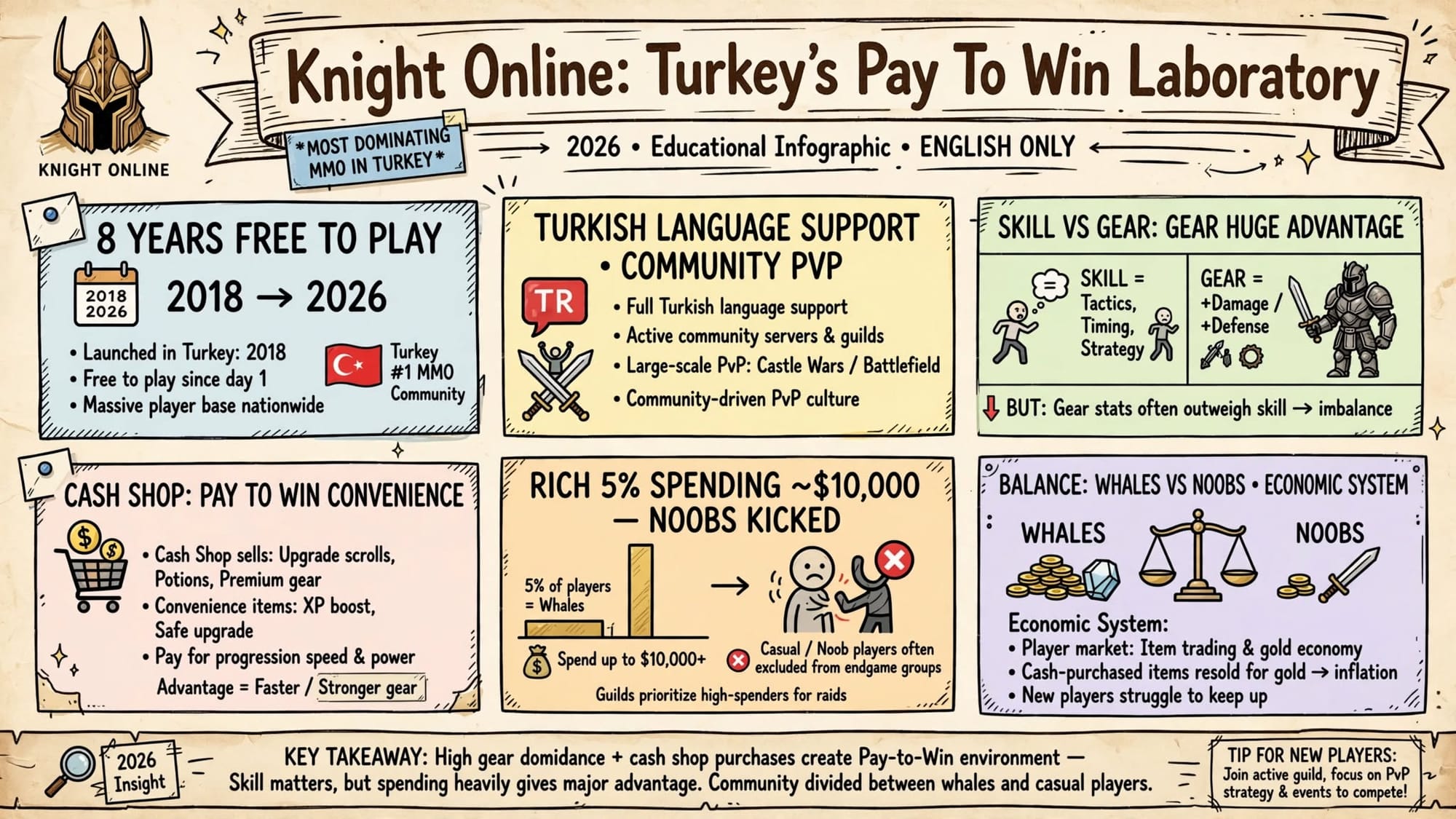
Knight Online, which debuted in the US in 2004, ended up being the most dominating MMO in Turkey for the last 8 years.
Why did it stick? The game's popularity in Turkey is also related to its compatibility with Turkish culture and Turkish language support.
Economic system. Players can collect equipment, weapons, and other items to sell to other players.
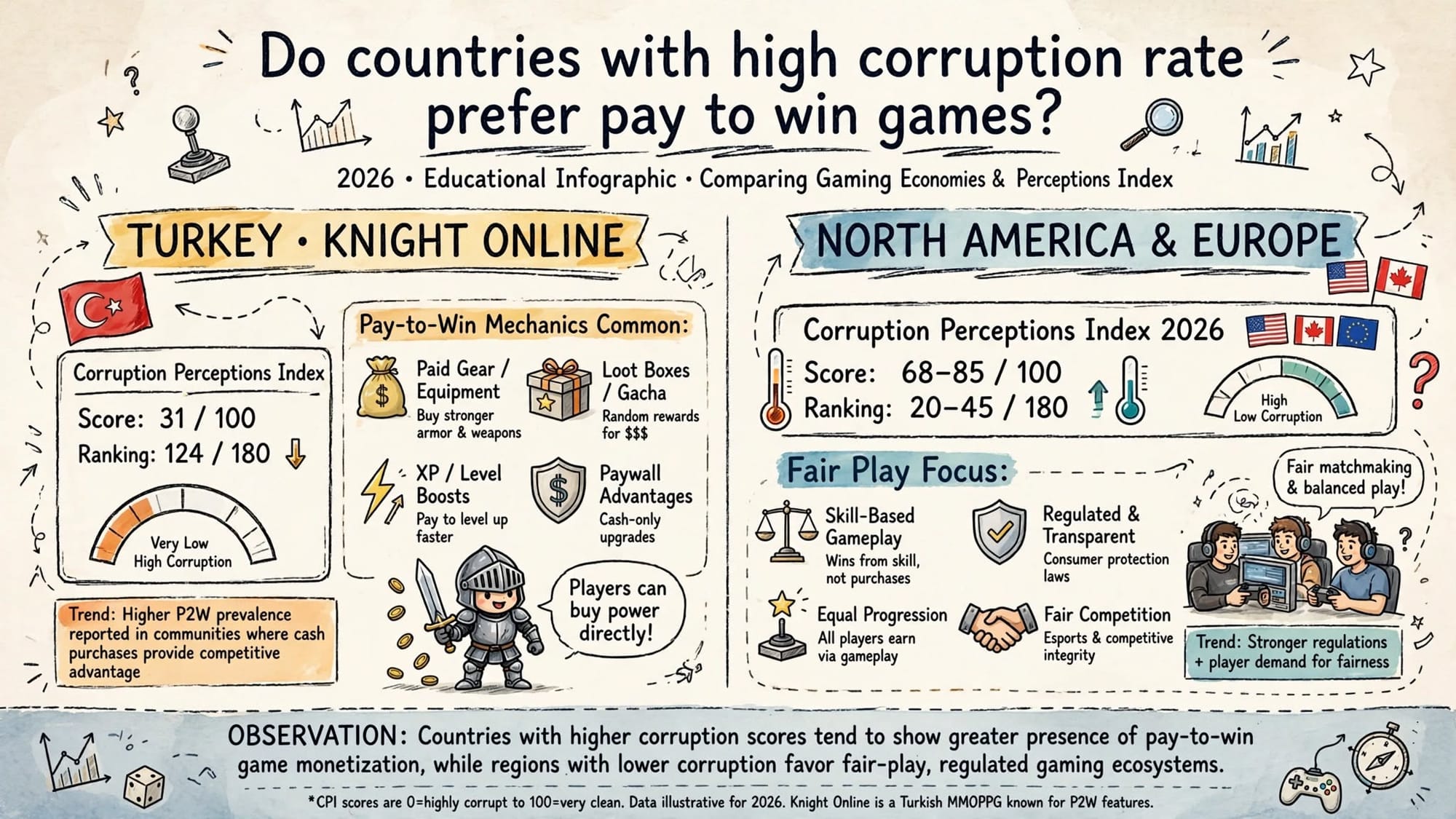
But the economy is pay to win. Skill plays an important role in PvP, but typically the player with better gear has a huge advantage in battle and unfortunately the cash shop in Knight Online makes the game a bit pay to win.
Cash shop sells combination of convenience and pay to win items.
Local forums explain it bluntly: Turkey have a lot of rich people where spending $10,000 in a game is nothing.
When you have that kind of players there will be a lot of other players around trying to get some parts of the cake.
But this 5 percent will only keep around if they have noobs to kick their ass, so they need to keep finding a balance, where those 5 percent keep spending money and noobs don't quit the game.
That model is common in Turkey: free entry, status grind, gear that directly buys power, and willingness to pay for it.
The Other Side: West Dislikes Pay To Win
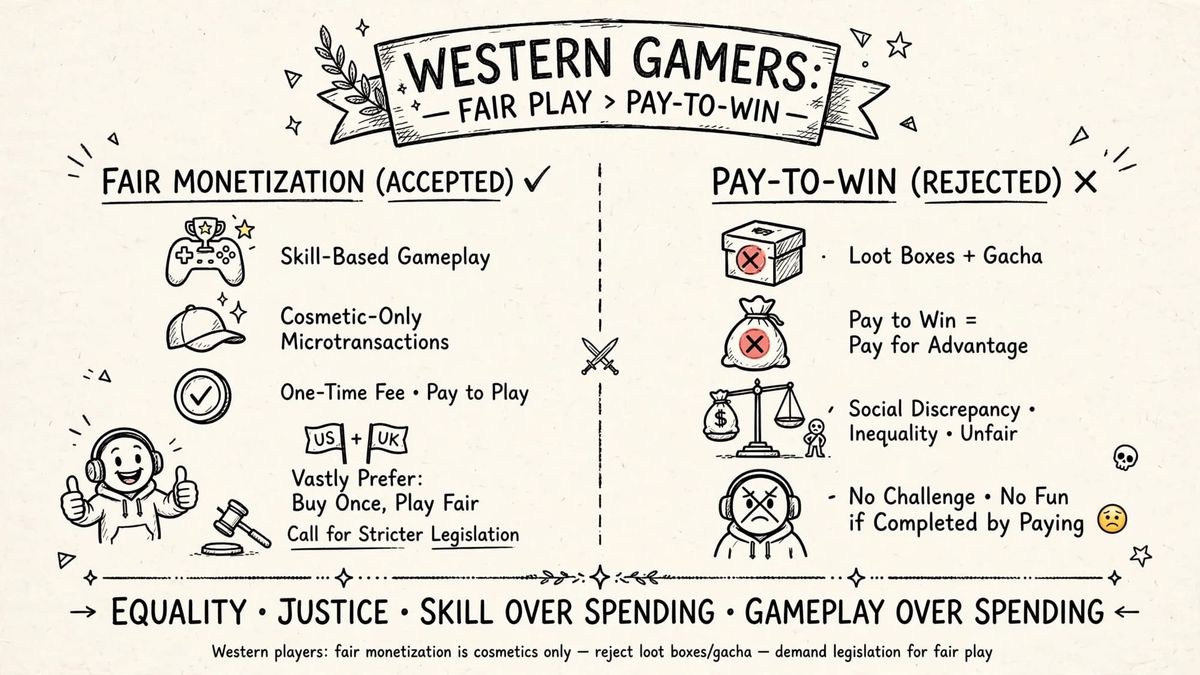
Western players tend to view fair monetization as methods that enable skill based gameplay and progression, such as cosmetic only microtransactions or premium purchases.
Because this demographic often sees digital goods as lacking tangible value, they largely reject P2W elements and randomized mechanics like loot boxes and gacha, and often call for stricter legislation to regulate these negatively perceived mechanics.
Pay to win, for example, may meet broader definitions of unfair practices as those which do not adhere to the principles of equality and justice.
Pay to win elements are seen negatively both because they create an unnecessary social discrepancy between those who can afford to pay and those who cannot, and also because they are believed by players to remove the core element of the gameplay experience: there is no challenge or fun in actually completing the game if it can be completed purely by paying.
Games would favour the rich players over the less fortunate.
Gamers in both the US and UK both vastly prefer the pay to play, one time fee, model to their games.
Finland study: majority of respondents had spent money on freetoplay games, yet they still dislike the basic freetoplay revenue model features, such as unbalance of paying and nonpaying gamers.
In China, contrast is striking: PC gaming is surging in China and Chinese gamers are fine with pay to win. But while the need to pay to gain an advantage is largely unpopular in the West, the Chinese...
Brazil pattern also: free to play business models in emerging markets.
In Brazil, the majority of spending is generated by PC formats and freemium games: 11 per cent on social networks, 15 per cent on casual game portals, and 16 per cent on MMOs.
Corruption Index: Turkey's Slide
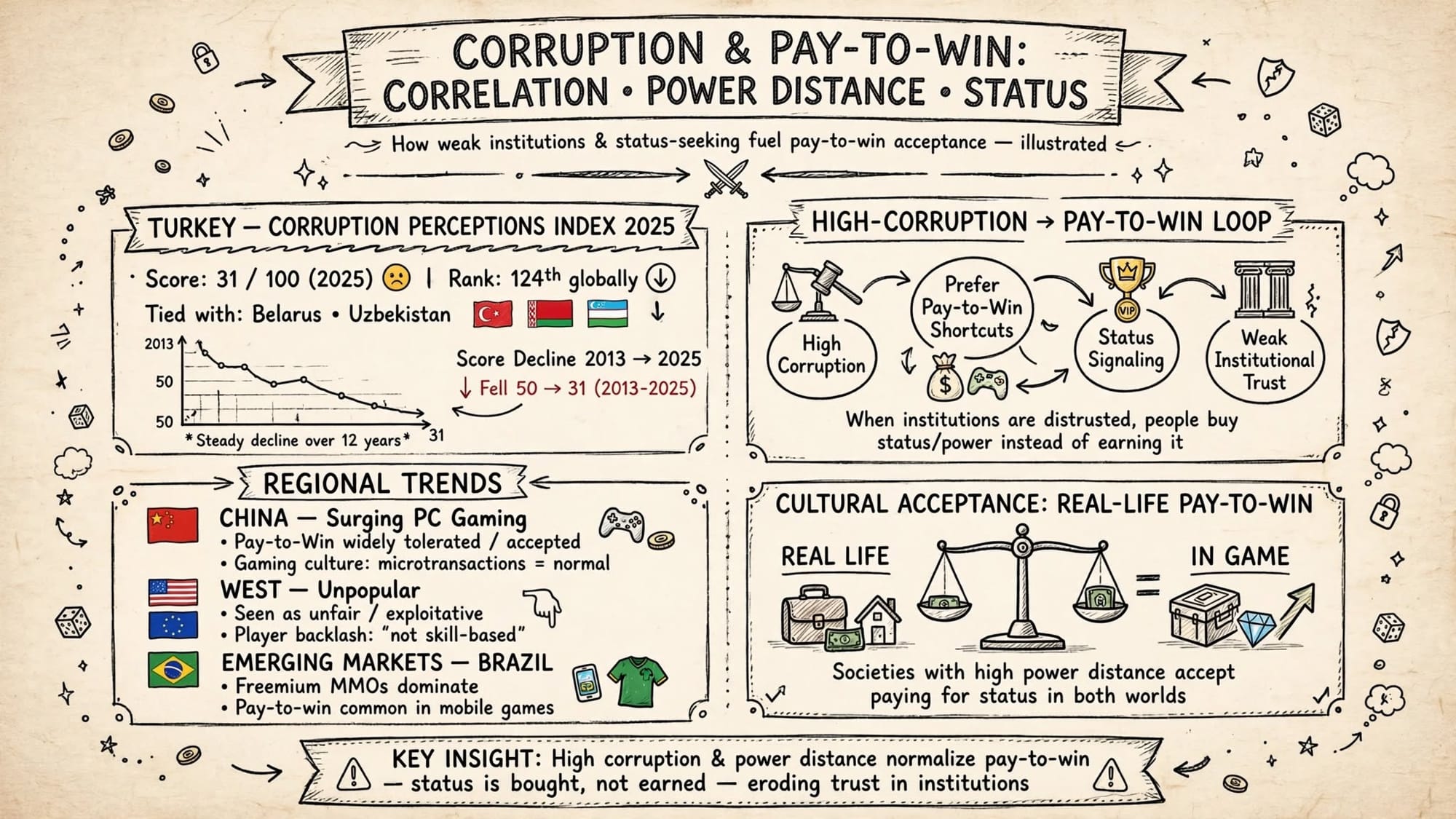
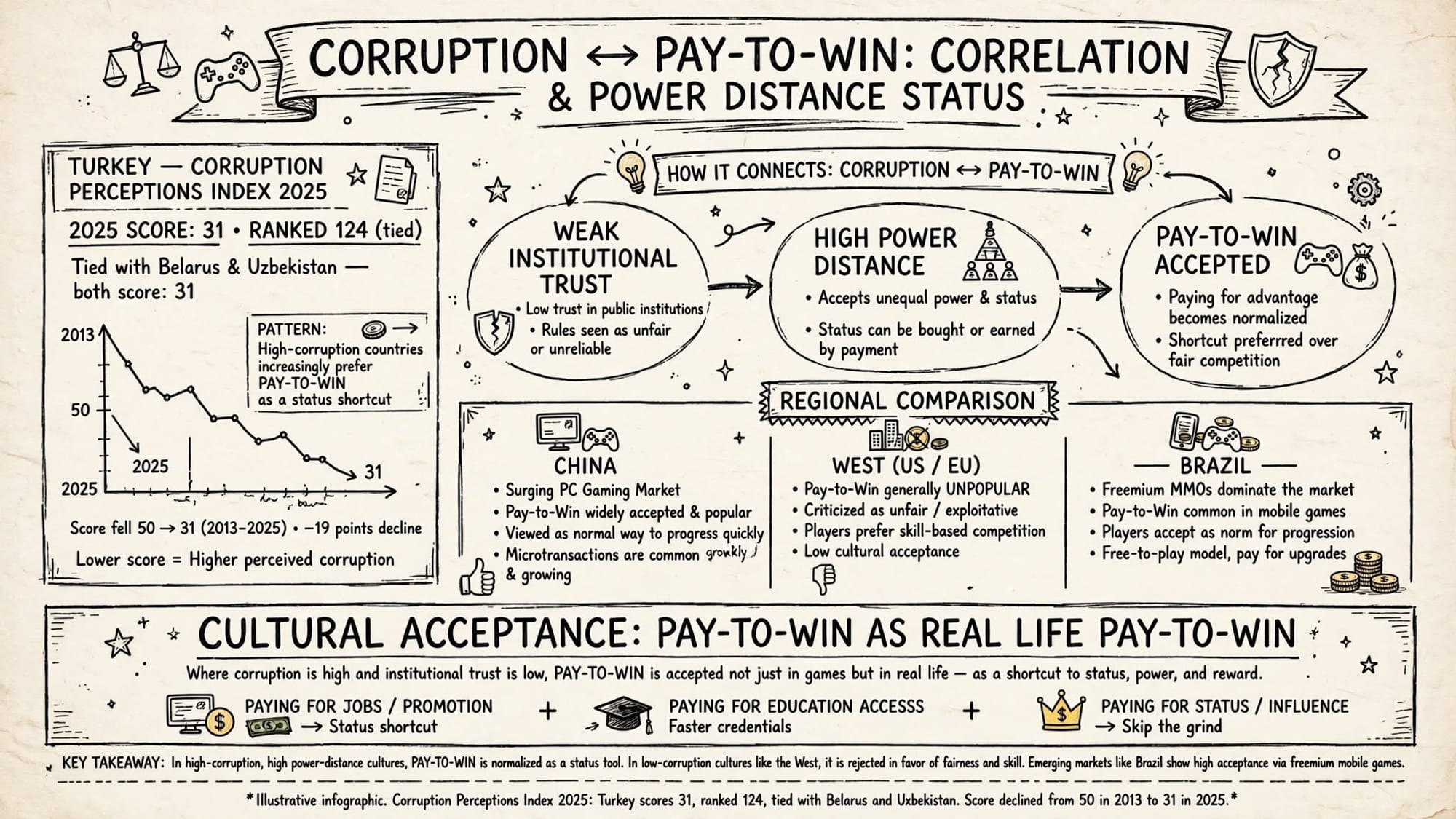
Turkey was ranked 124th out of 182 countries and territories in Transparency International's Corruption Perceptions Index 2025, scoring 31 points, below the Eastern Europe and Central Asia average of 34 and tied with Belarus, Uzbekistan, Djibouti, Mongolia and Niger.
In 2024, Turkey had scored 34 points and ranked 107th globally. Between 2013 and 2025 Turkey's score in the Corruption Perceptions Index fell from 50 to 31 out of 100, while its ranking dropped from 53rd to 124th.
Lower score means higher perceived corruption. 31 is high corruption.
Does high corruption correlate with pay to win preference?
Hypothesis has three sociological legs:
1. Power Distance and Status Signaling
Countries high on power distance accept hierarchy.
Pay to win is hierarchy you can buy. In Turkey, 10k dollar set is not just stats.
It is status, visible dominance in town square. Same in many high corruption environments where status must be displayed because institutions do not guarantee it.
2. Weak Institutional Trust Equals Real Life Pay To Win
When you experience that public services, university entry, or court outcomes can be accelerated with money or connections, paying to skip grind in a game does not feel unfair. It feels familiar.
Real life already has loot boxes.
Game just makes it explicit.
3. Fair Play as Institutional Luxury
In low corruption countries, Denmark 90, Finland 88, Singapore 84, etc, institutions promise equality of opportunity.
Players internalize that promise and demand it in games too. Pay to win violates equality and justice principle.
Hence demand for cosmetic only and regulated, transparent monetization, consumer protection laws.
Western players view fair monetization as skill based. That maps directly to low corruption expectation: skill, not money, should decide.
4. Free to Play as Market Entry Strategy
Emerging markets with lower disposable income but high mobile penetration adopted free to play because pay to play at $60 or $70 was not viable.
Knight Online being free at first instance lowered barrier, then pay to win monetized whales.
That business model spread faster where free to play was necessity, not choice.
So Do High Corruption Countries Prefer Pay To Win?
Correlation seems to exist, but causation is not simple.
High corruption countries often have:
- High power distance
- Lower trust in fair competition
- Strong status signaling culture
- Free to play dominant due to pricing
- Internet cafe culture where visible gear flex matters
All of those predict higher tolerance for pay to win.
Low corruption countries often have:
- High trust in institutions
- Low power distance
- Willingness to pay upfront for fair experience
- Regulatory pushback against pay to win and loot boxes
But there are exceptions. South Korea and Japan are low corruption and have high pay to win acceptance in gacha.
China is medium corruption and very high pay to win acceptance. So culture of gaming history matters more than corruption alone.
Knight Online case is revealing.
It became most dominating MMO in Turkey not because Turkish gamers love corruption, but because game localized to Turkish language, built community, and monetized in way that fit existing social norm: paying to get ahead is understandable, even admirable, if you can afford it.
In US or Europe, same behavior feels like cheating.
Maybe question should be reversed: Do pay to win games teach tolerance for corruption? When line between playing to win and paying to win is becoming increasingly thin in some Turkish games, and gacha systems where players spend real money for random virtual items raise concerns about creating unfair playing field, young players learn that money buys justice.
The loop is: High corruption normalizes pay to win shortcuts.
Pay to win games normalize paying for status.
Status seeking fuels weak institutional trust. When institutions are distrusted, people buy status and power instead of earning it.
Turkish gamers love Knight Online and willingly spend not because they are immoral, but because game mirrors real world incentive structure.
North American and European games dislike pay to win not because they are more moral, but because their real world institutions promised that skill wins.