
Discord Spatial Audio Will Pave the Way for FaceTime and WhatsApp Group Chats
Group audio calls are currently a chaotic mess of people accidentally interrupting each other. Discord is proving that spatial audio is the ultimate psychological fix that Apple and Meta will inevitably steal.
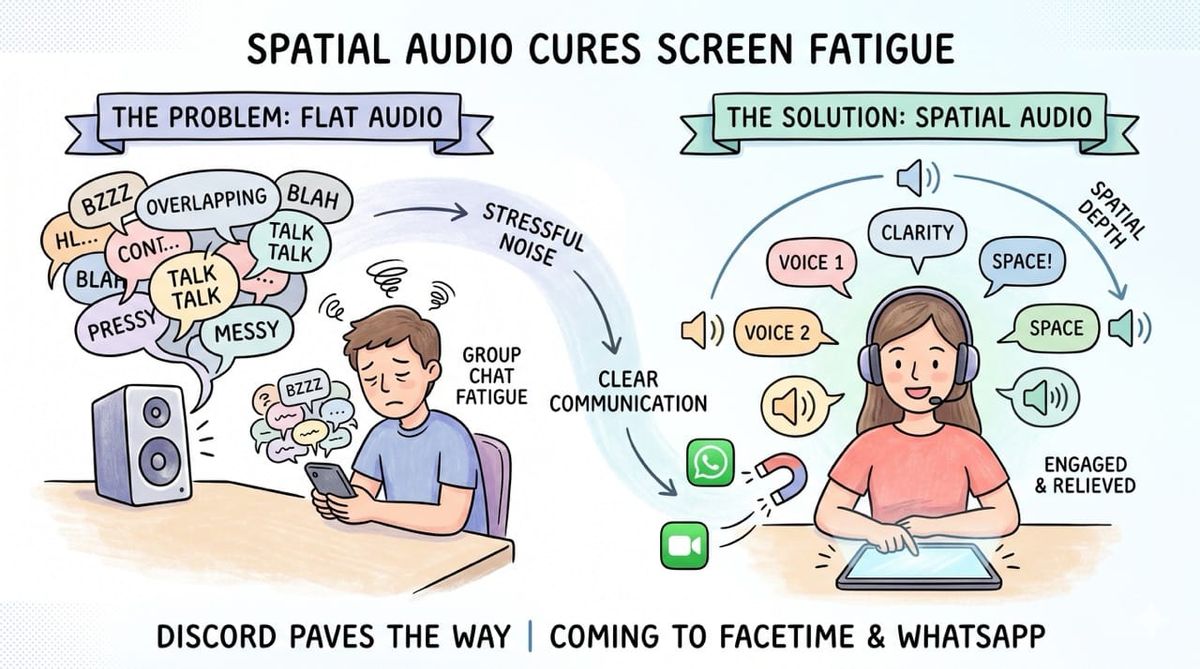
The human brain was never designed to process ten overlapping voices from a single flat speaker. The future of digital communication relies entirely on faking physical distance to cure screen fatigue.
Inspiration: Analyzing the biological reasons behind group chat exhaustion and observing how Discord utilizes spatial audio to solve it. Realizing that mainstream platforms like WhatsApp and FaceTime must adopt this exact architecture to keep their own users engaged.
The Flat Audio Problem
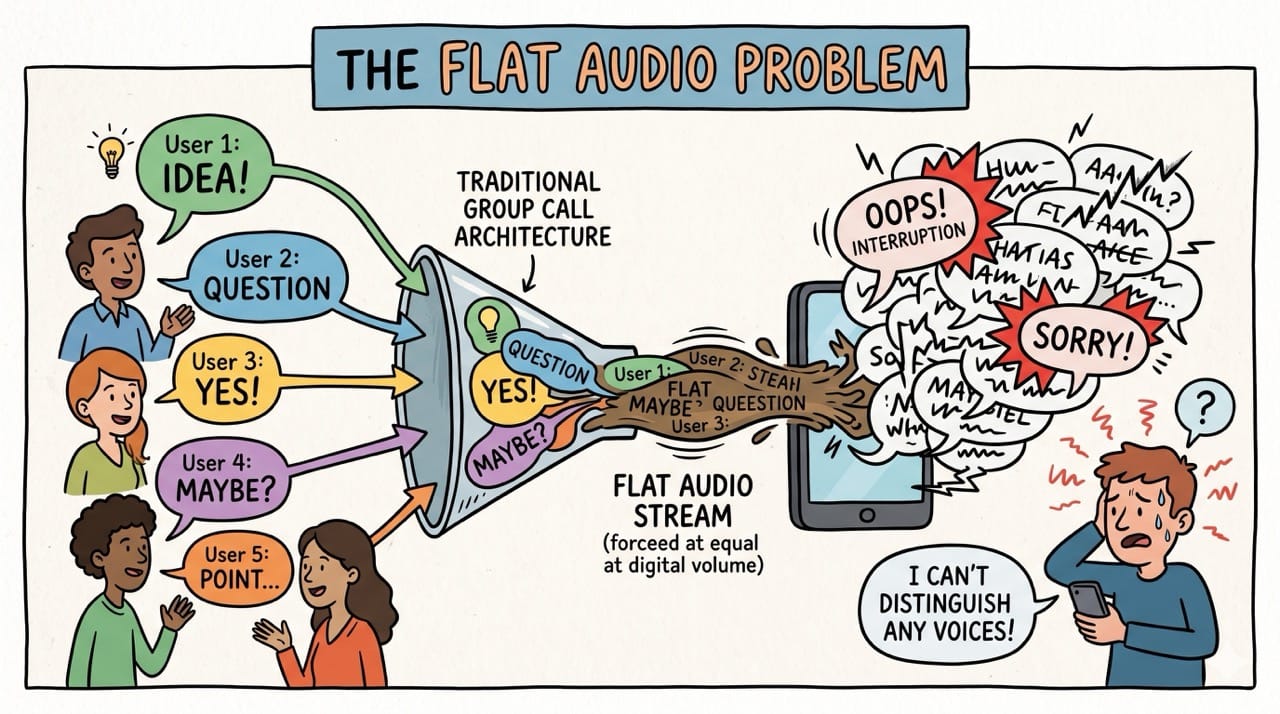
Traditional group calls collapse multiple distinct voices into a single flat audio stream.
This forces every single participant to speak at the exact same digital volume through the exact same channel.
This creates an incredibly stressful digital environment.
Users constantly interrupt one another by accident because they lack the natural physical cues required to navigate a crowded conversation.
The Biological Sorting Mechanism
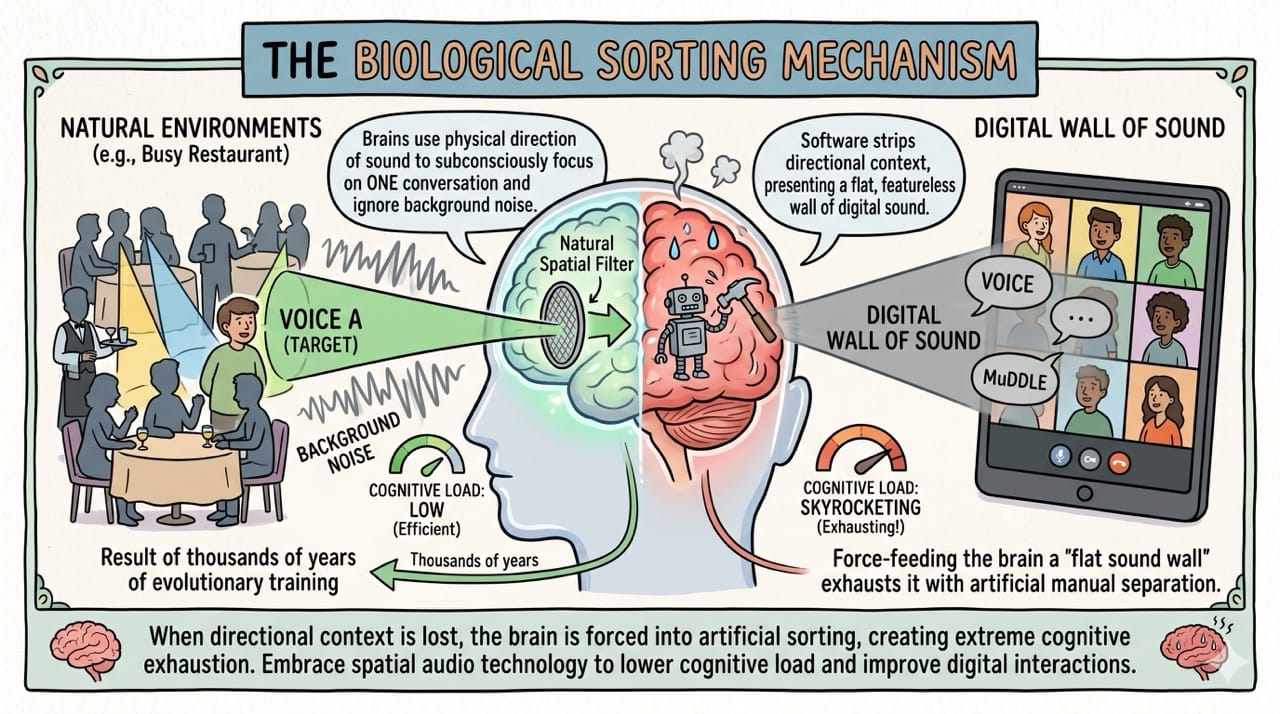
Our brains evolved over thousands of years to naturally filter overlapping conversations in busy environments like restaurants.
We subconsciously use the physical direction of a sound to isolate specific voices and ignore background noise.
When software strips away this directional context our cognitive load skyrockets.
We literally exhaust our brains trying to artificially separate a flat wall of digital sound.
The Discord Blueprint
Gaming communities have understood this psychological reality far longer than traditional corporate software companies.
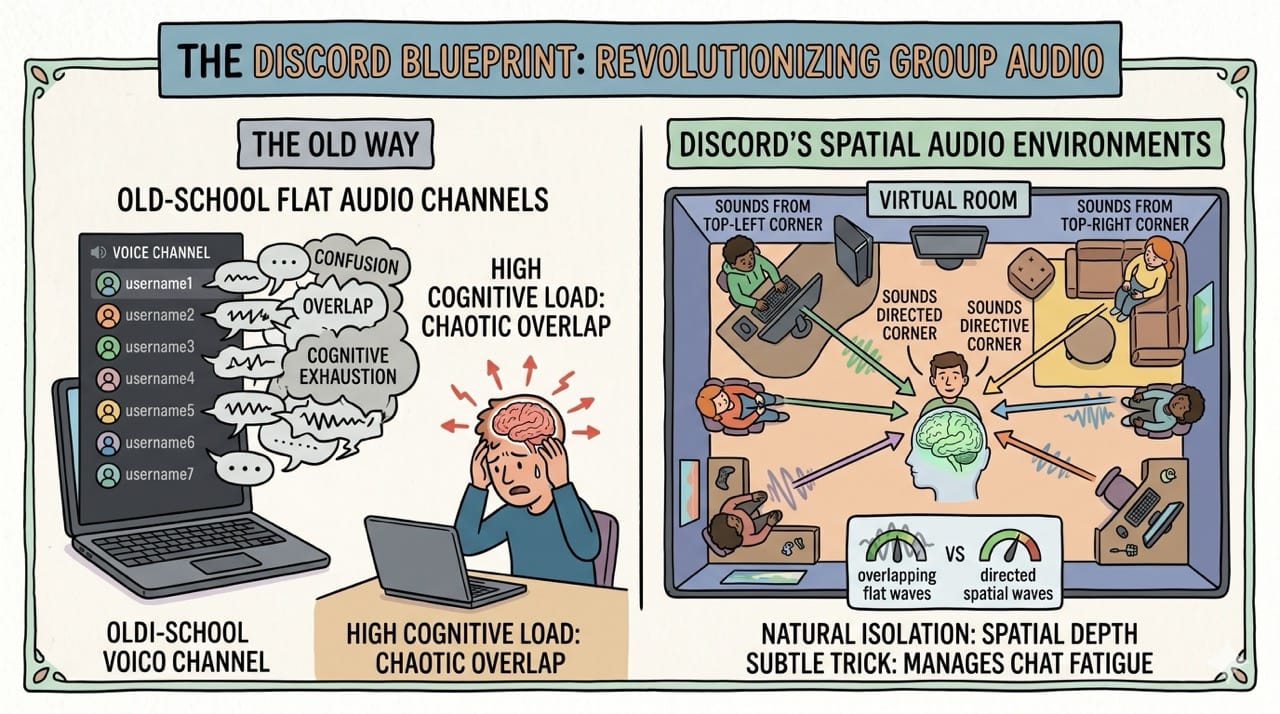
Discord is leading the charge by integrating spatial audio environments directly into their voice channels.
Different users actually sound like they are sitting in specific corners of a virtual room.
This subtle trick allows multiple people to talk simultaneously without the entire channel devolving into total chaos.
The Hardware Reality
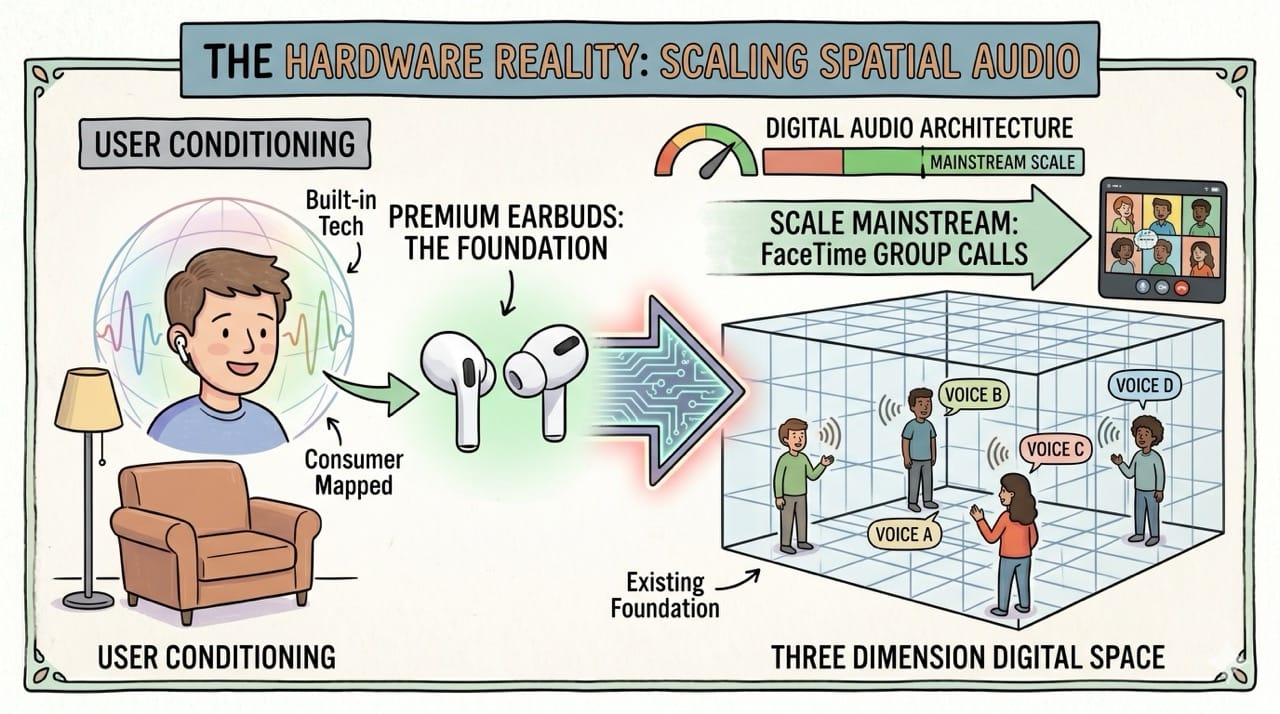
The physical technology required to scale this feature mainstream is already sitting in our pockets.
Apple has spent the last few years quietly conditioning consumers to embrace spatial audio through their premium earbuds.
They built the exact hardware foundation necessary to map human voices into a three dimensional digital space.
The logical next step is forcing this audio architecture across all group FaceTime interactions.
The Meta Counter Punch
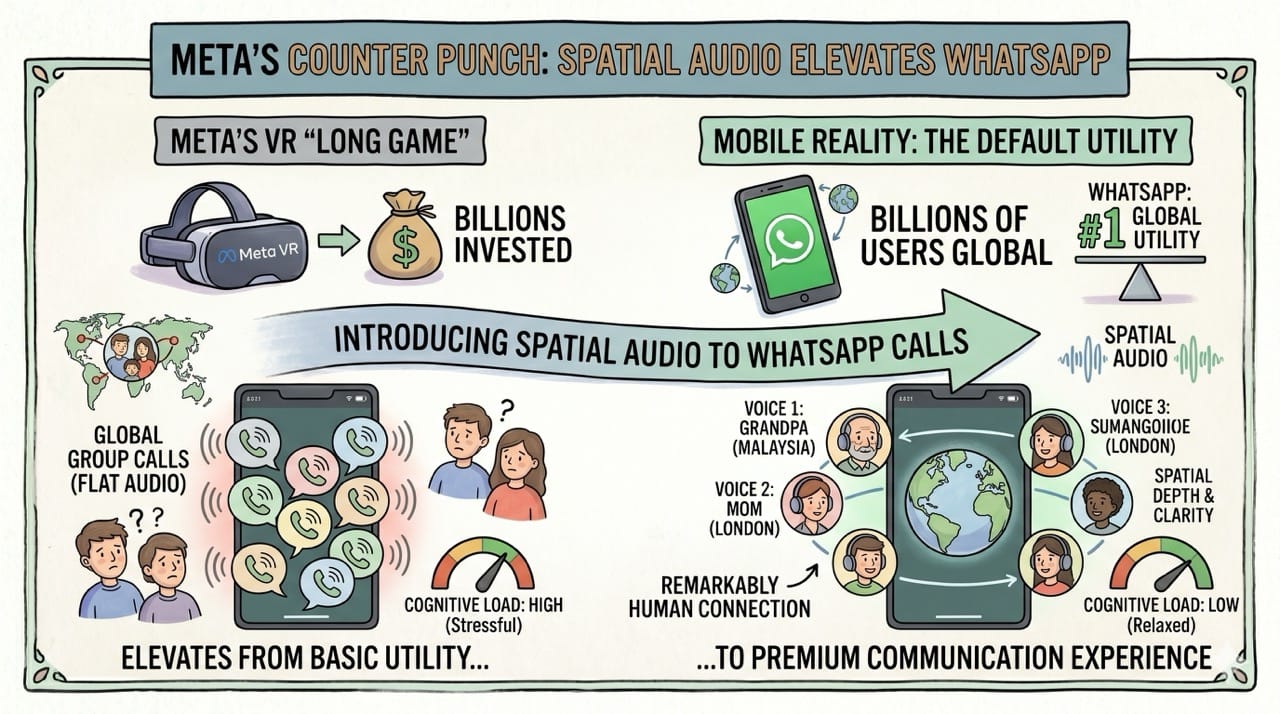
Meta is spending billions building virtual reality headsets but they cannot ignore their most valuable mobile assets.
WhatsApp group chats are the default communication utility for billions of international users.
Introducing spatial audio to a WhatsApp call would instantly elevate the platform from a basic utility to a premium communication experience.
It would make coordinating large family conversations across the globe feel remarkably human.
The Retention Metric
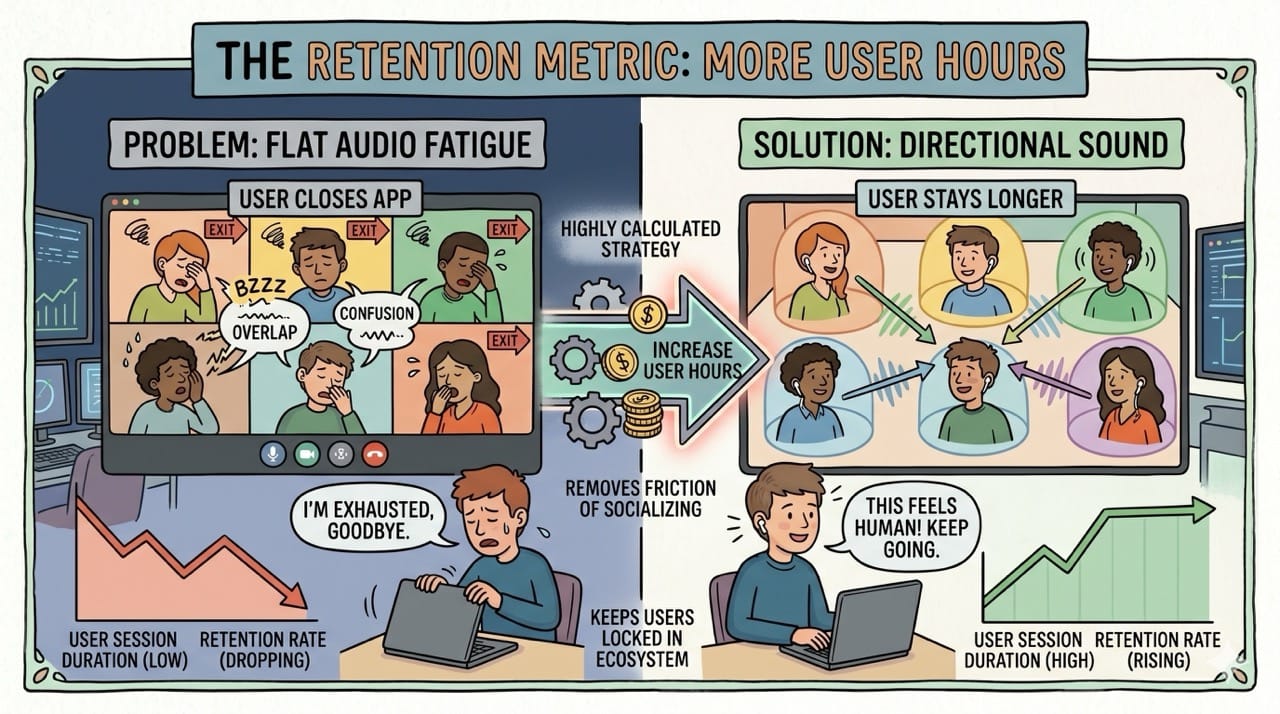
Solving audio fatigue is not just a fun product feature for these technology monopolies.
It is a highly calculated retention strategy designed to increase the duration of user sessions.
If people feel physically exhausted after a group call they will naturally close the application and avoid future meetings.
Directional sound removes the friction of socializing and keeps users locked inside the ecosystem longer.
Conclusion: The End of Flat Sound
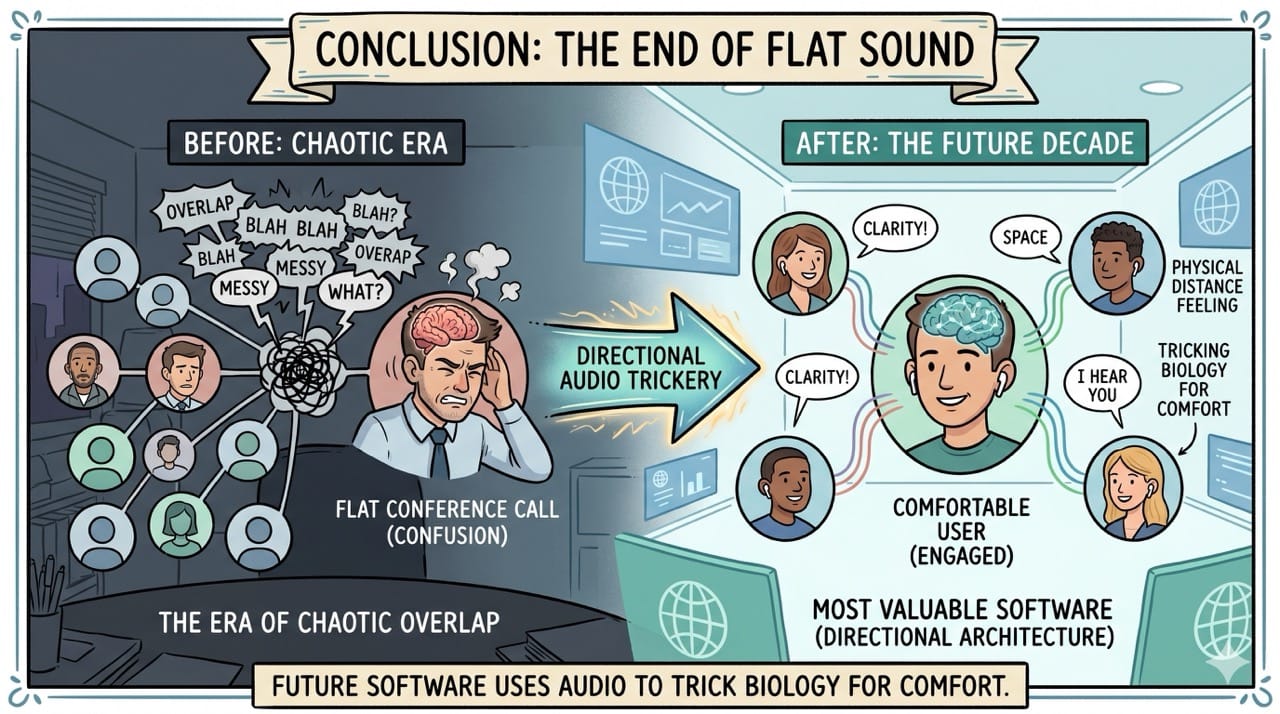
We are finally moving past the era of the chaotic telephone conference call.
The most valuable software companies of the next decade will simply use directional audio to trick our biology into feeling comfortable online.