Department of Defence Will Ditch Exoskeletons in Favour of Humanoid Robots
For 25 years, DoD tried to build Iron Man. It spent $80M+ on TALOS alone, 56 companies, 16 gov orgs, 13 colleges. The physics never worked. Now xTechHumanoid 2026, Phantom at $150k, and private markets doing R&D faster. Future infantry does not wear robots. It boards them.
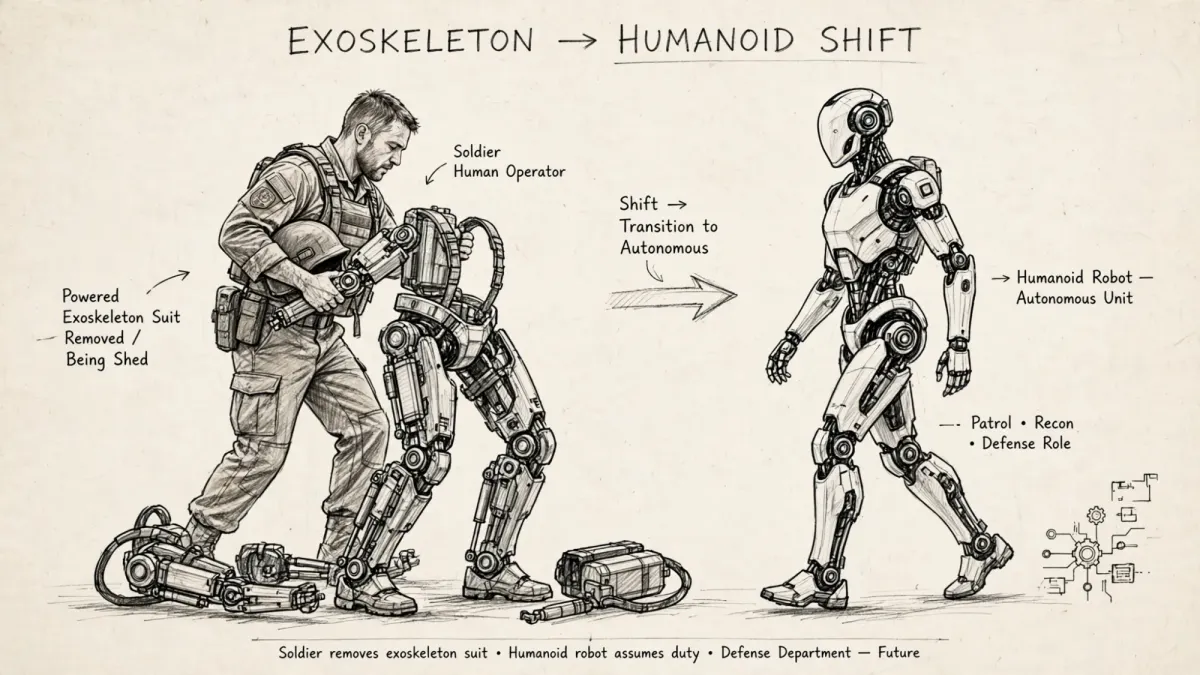
We assume the future soldier wears more gear.
In reality, the future soldier gets inside the gear.
Inspiration: Watching TALOS funeral in 2019 after a decade of hype, then seeing Army xTechHumanoid launch with $490k prizes and $1.25M follow-on awards. Realizing exoskeletons were about augmenting humans, humanoids are about replacing the human in the loop entirely.
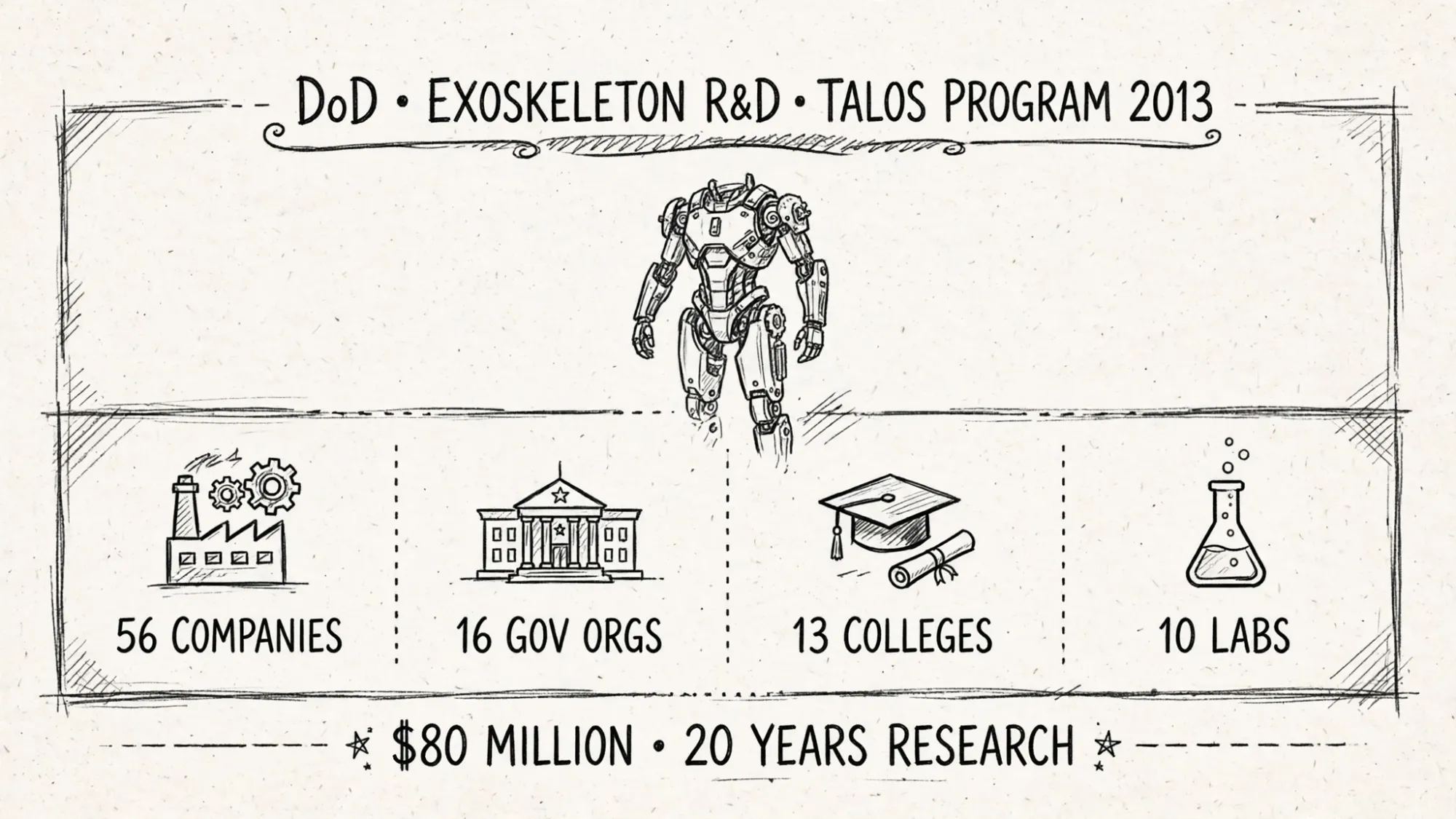
1. How Much Time and Money Did DoD Burn on Exoskeletons?
The Defense Advanced Research Projects Agency inaugurated a program addressing research and development for an Exoskeleton for Human Performance Augmentation in FY 2001.
Known as Exoskeletons for Human Performance Augmentation, the program is a $50 million initiative started by DARPA.
Then came TALOS.
Special Operations Command launched an ambitious endeavor in 2014 to develop the Tactical Assault Light Operator Suit, or TALOS, an Iron Man ensemble that would provide operators with full-body ballistics protection and increased physical performance.
TALOS exoskeleton development began in 2013 with USSOCOM creating a suit in collaboration with 56 private companies, 16 governmental organizations, 13 colleges, and 10 national laboratories.
SOCOM planned on funneling some $80 million into the research and development of TALOS. Defense industry officials believe hundreds of millions more dollars will inevitably be spent perfecting the technology before its put to use on a battlefield.
In 2019, the Pentagon buried one of the most ambitious projects in its history. TALOS had mobilized dozens of institutions, hundreds of researchers, and millions of dollars.
Why? The suit had complex subsystem interdependencies. Battery, armor, cooling, sensors never worked as one.
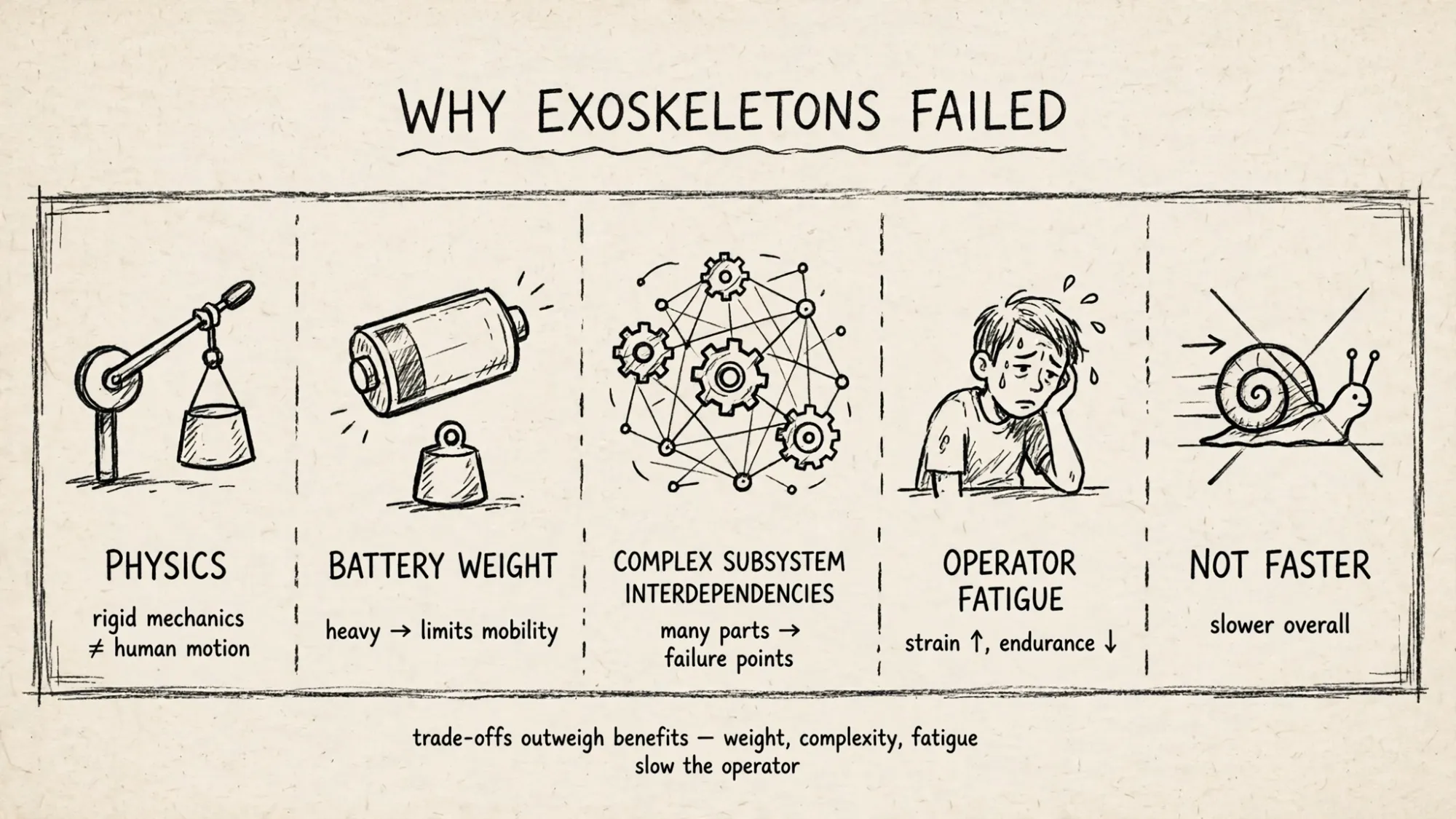
2. Why Exoskeletons Failed Physics
Exoskeletons are bolt-on economics.
You still pay for human: salary, training, injury, PTSD, food, sleep.
You add cost: battery weight, motors, maintenance, charging.
The soldier still carries 100+ pounds, still gets tired, still gets shot.
Passive exoskeletons have a future for logistics, but powered exoskeletons hit hard wall.
Energy density. Humanoid robot firms globally face technical obstacles, including the limited storage capacity of batteries that power the robots.
Same battery problem, but humanoid solves it differently: no human inside to keep alive.
You can swap battery, not medevac.
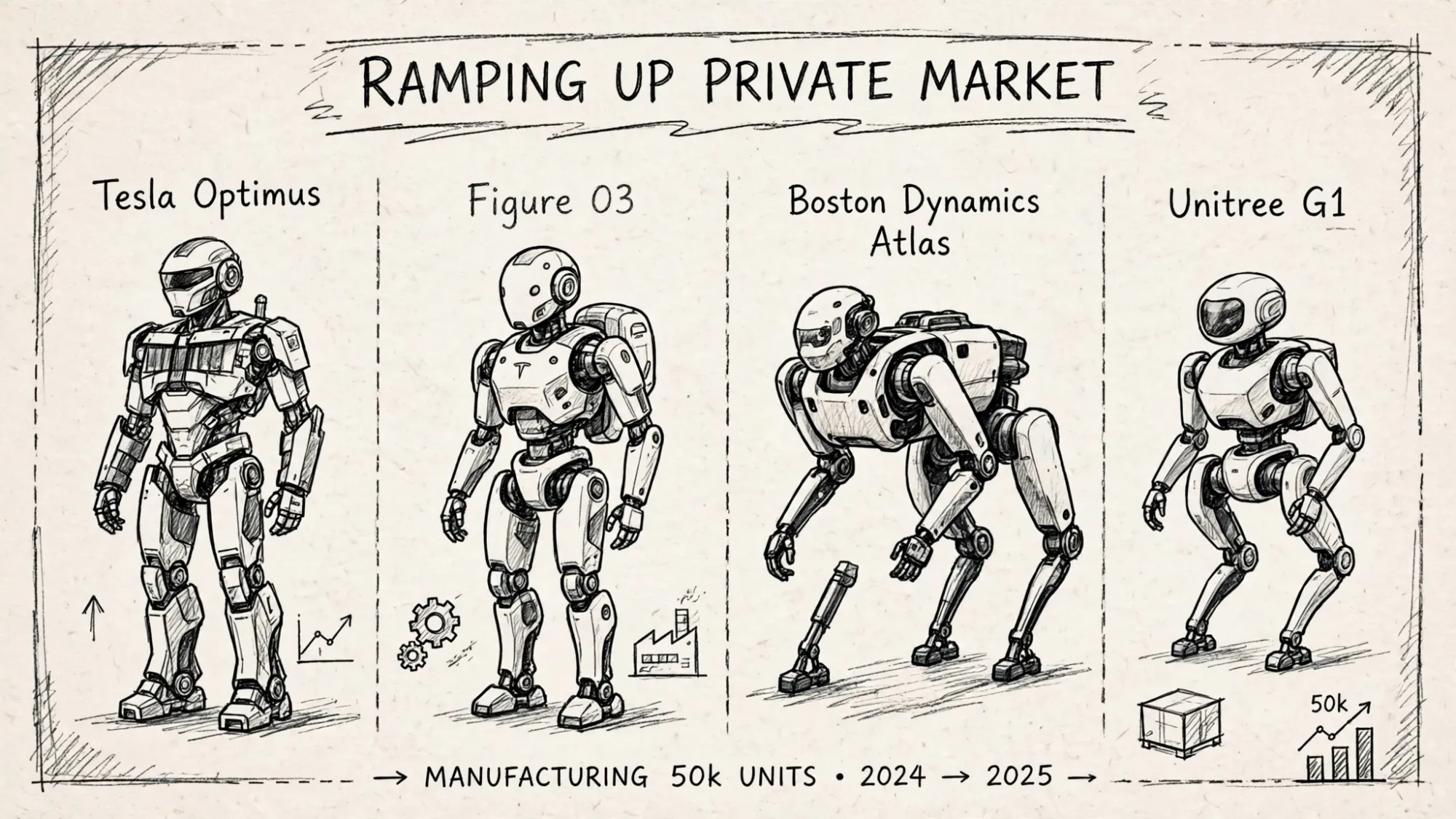
3. Humanoids Are Ramping Up — And Not in a Lab
In 2026, humanoids are not demos. They are on factory floors.
Top 4 Humanoid Robots of 2026 Ranked — Tesla, Boston Dynamics, Figure, Unitree. They are clocking real shifts on real factory floors.
US companies such as Tesla, Figure and Boston Dynamics greatly benefit from this news.
Foundation's Phantom MK1: The First Affordable Combat Humanoid.
A 5-foot-9, 176-pound humanoid robot priced at approximately $150,000 per unit.
By early 2026, Foundation had secured roughly $10 million in government contracts and announced plans to manufacture 50,000 Phantom units by the end of 2027.
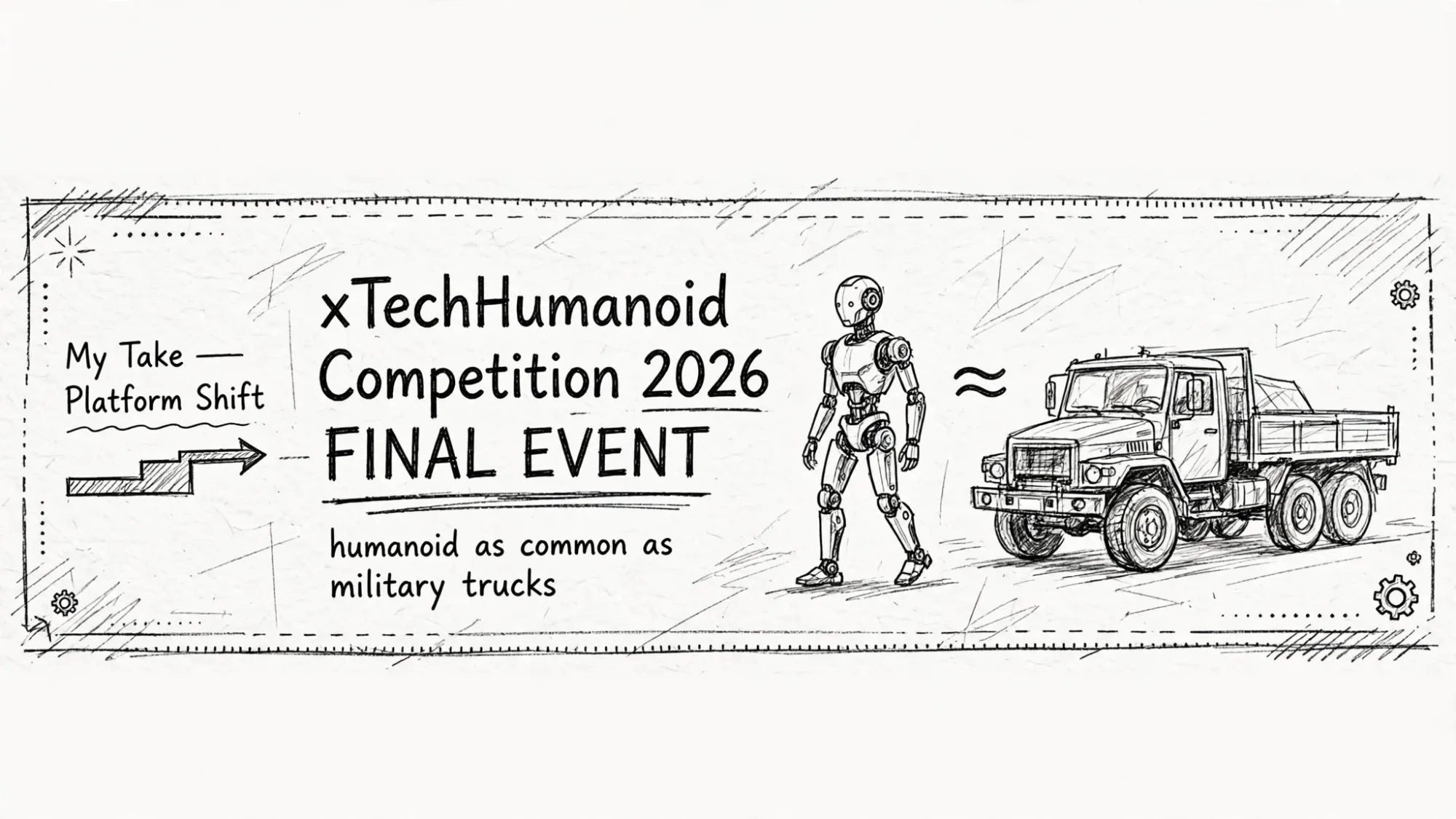
CEO Sankaet Pathak has publicly stated the company's goal: make humanoid robots as common as military trucks.
Market size: 2025 Market Size: USD 425.0 Million, 2032 Projected USD 4.75 Billion, CAGR over 41.2%.
That is private capital doing DoD's R&D.
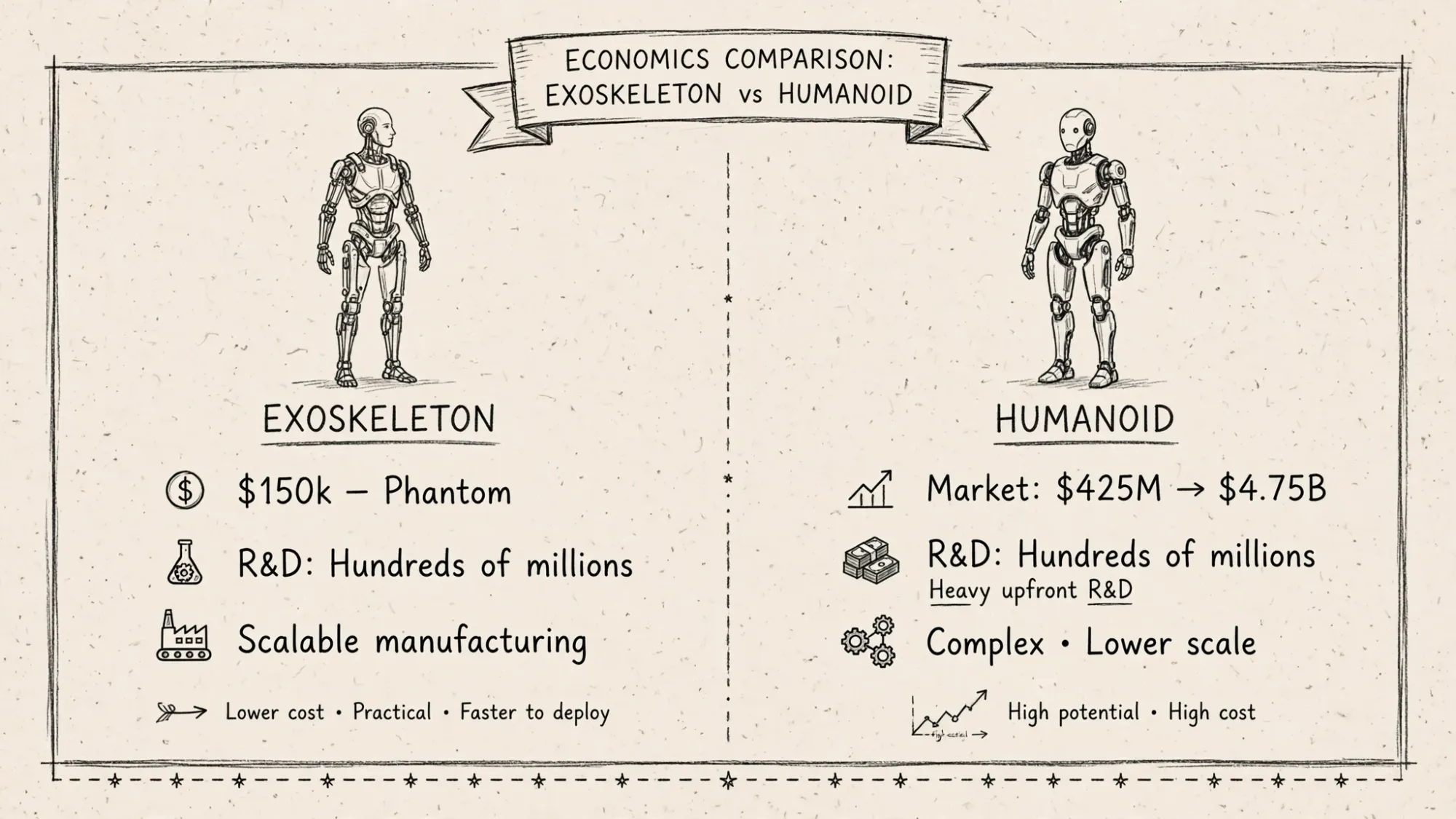
4. Economics: Why Humanoid Wins
Exoskeleton economics: 1 human = 1 suit. If human sleeps, suit sleeps. If human wounded, suit is scrap.
Humanoid economics: 1 human = 10 humanoids. Operates 24/7. Battery swap, not sleep.
TALOS cost hundreds of millions, produced 10 mature subsystems but no fielded suit.
Phantom costs $150k, goal $75k at scale, built on same supply chain as Tesla and Figure.
Exoskeletons are bespoke DoD procurement. Humanoids are COTS.
US Is Banning Foreign-Made Humanoid Robots And Power Inverters. FCC says advanced robotics devices pose a national security threat.
That ban is industrial policy. It forces Army to buy Tesla, Figure, Boston Dynamics, Apptronik, not Unitree.
Private market scales, DoD benefits. Same playbook as SpaceX and drones.
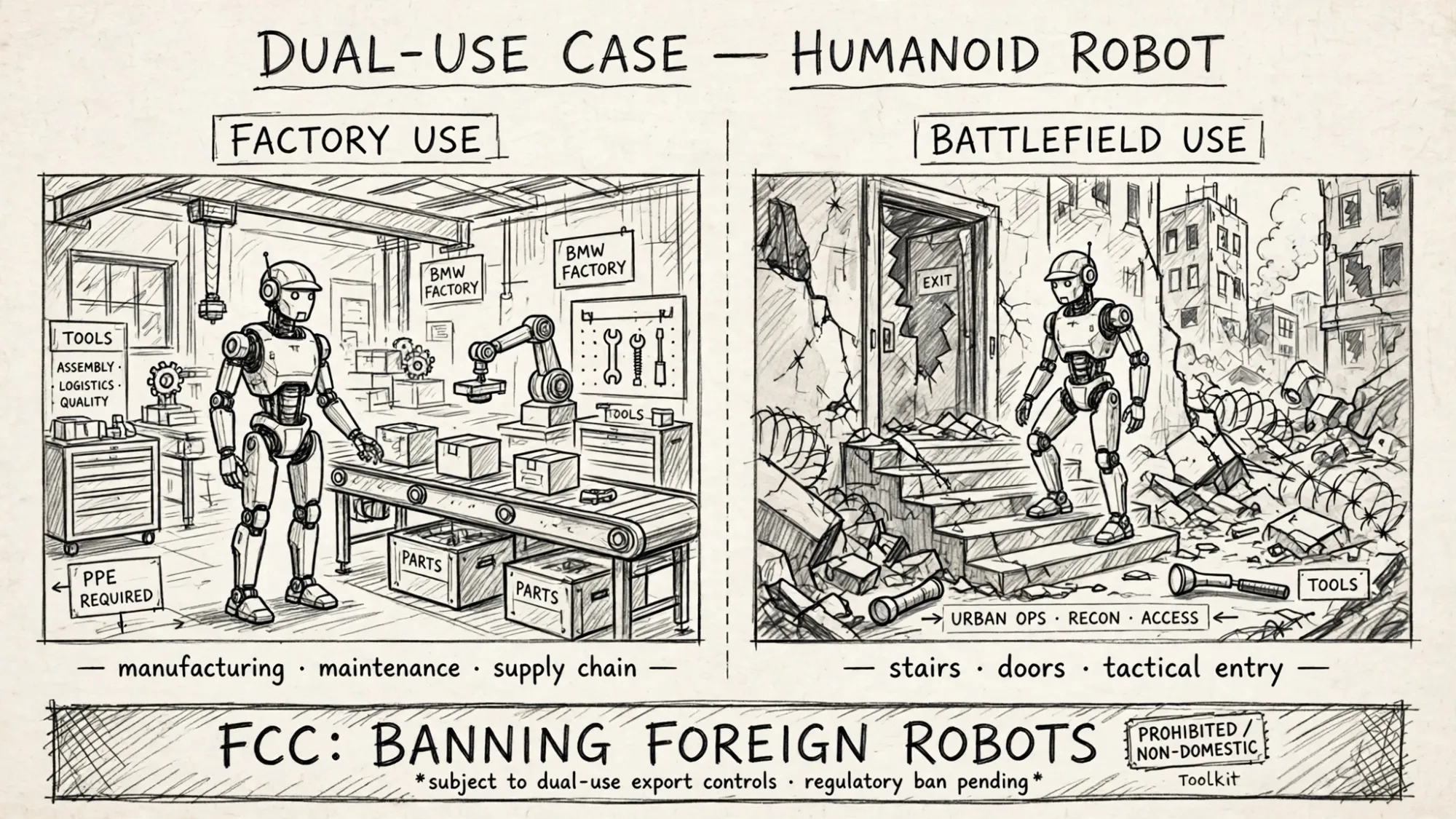
5. Dual-Use Is The Real Moat
Humanoid robot firms face same constraints in factory and battlefield.
Both need to climb stairs, open doors, use tools designed for human body.
Value of a humanoid design is specific rather than universal. Humanoid platforms become relevant where trenches, doors, stairs, tools and vehicles are designed around the human body.
That is why dual-use works.
BMW uses Figure 02 in Spartanburg.
Army uses same Figure 02 for logistics.
Same AI, same hands, same training data.
Exoskeletons have no dual-use.
No factory wants a powered suit that needs a human inside.
Everyone wants a humanoid that works while humans sleep.
xTechHumanoid competition militarizes humanoid technology for Soldiers. It seeks transformative humanoid technologies that enhance warfighter survivability, sustain combat power, and operate effectively in complex, high-risk environments.
Prize: Up to $490,000 in cash prizes and $1.25 million in potential follow-on awards. Up to two winners with baseline humanoid systems will receive $75k each.
That is tiny compared to TALOS. Because Army no longer funds R&D, it funds integration.
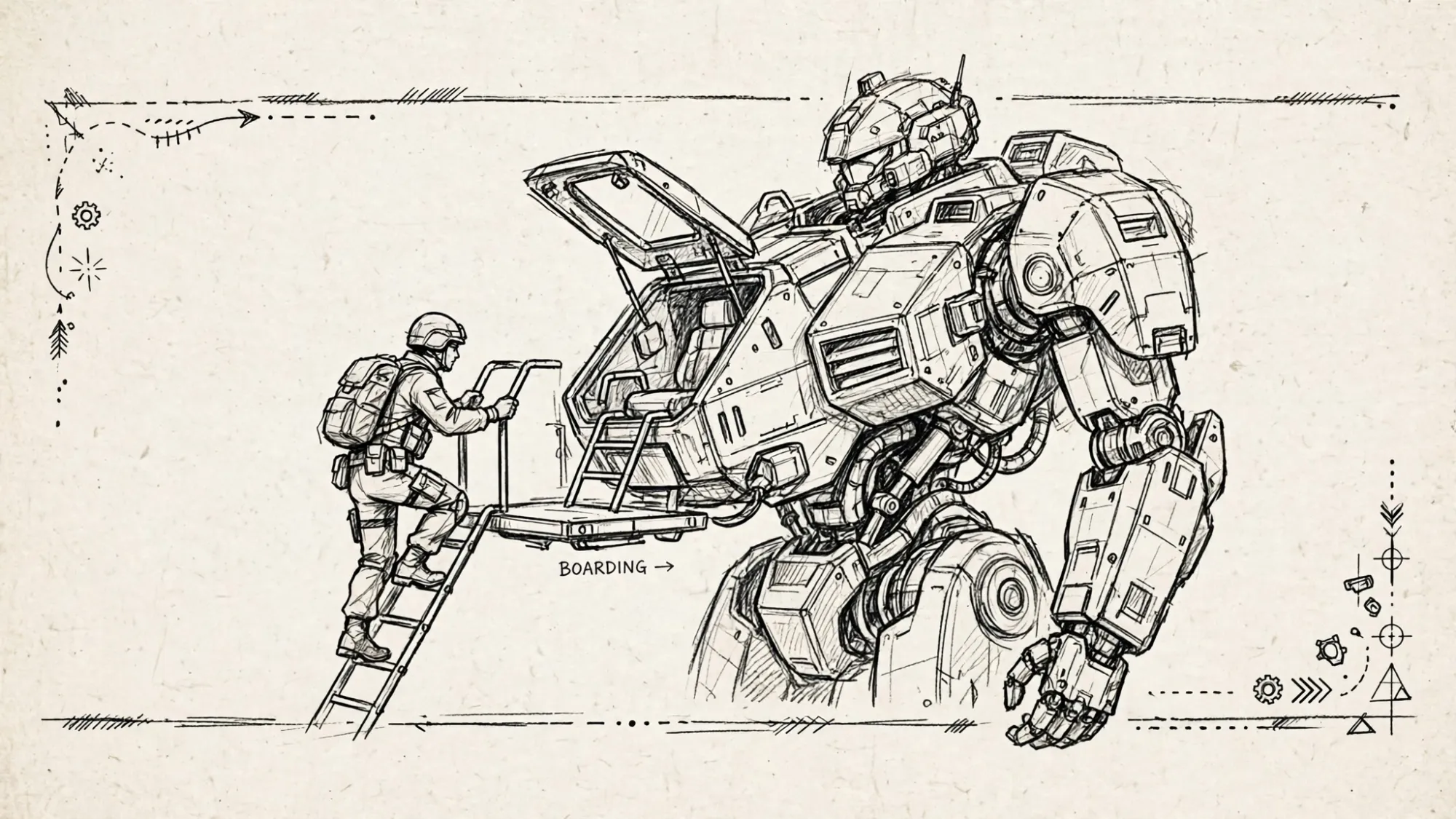
6. Space Marines, Literally: Infantry Gets Into The Robots
This is the chapter you hinted at, and you are right.
Future is not soldier wearing modular parts.
Future is soldier boarding robot, like piloting a mech.
Foundation Phantom is step 1: autonomous humanoid that takes bullet.
Step 2: optionally piloted humanoid. Soldier sits in rear, Phantom clears building, soldier sees what it sees, pulls trigger remotely.
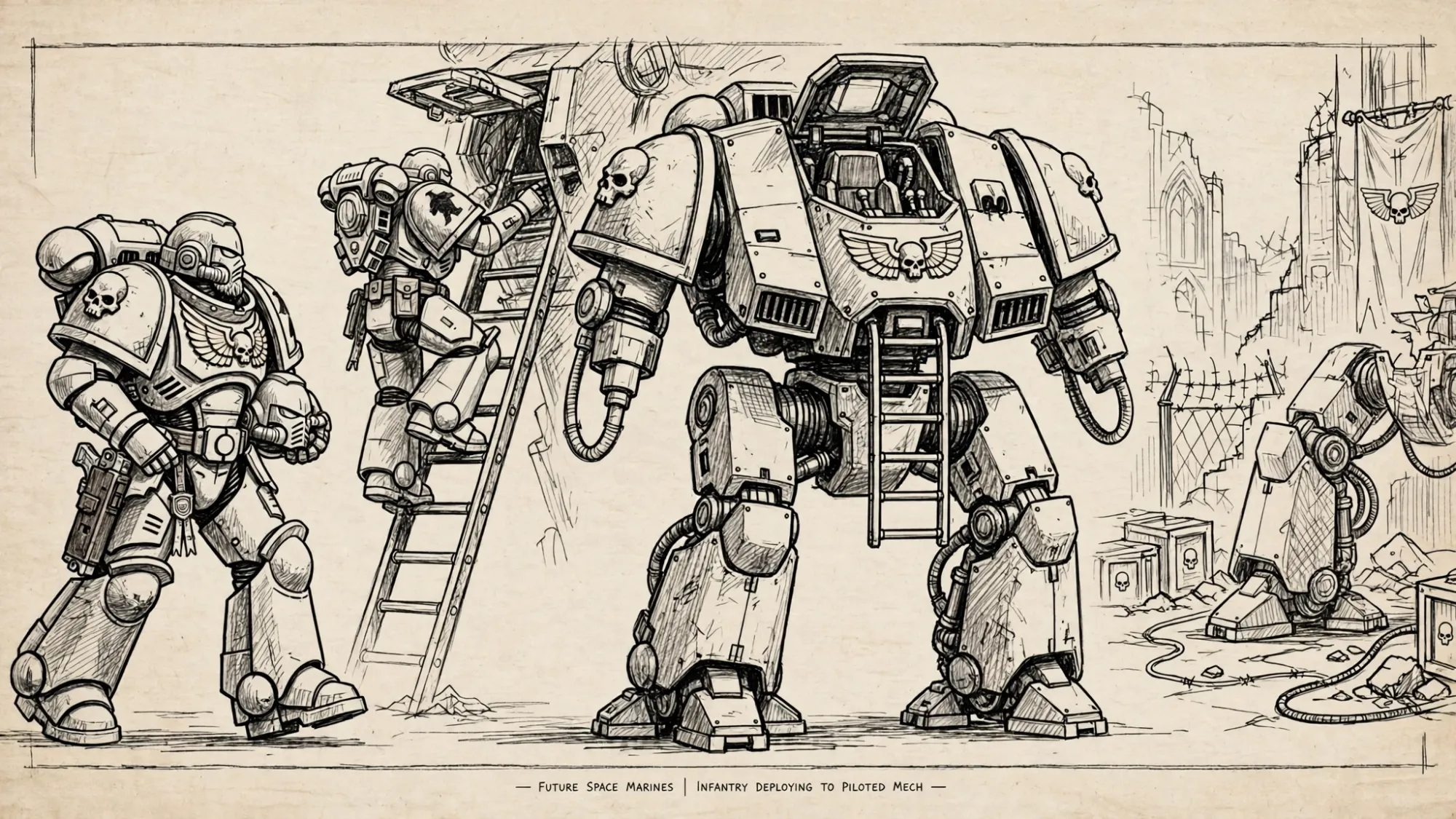
Step 3: soldier literally gets into a 9-foot humanoid exoskeleton that is a robot. Not a suit, a vehicle.
We already saw Hardiman in 1965: a massive hulking 30-joint exoskeletal system where man and machine can be combined into an intimate, symbiotic unit.
Hardiman failed because violent and uncontrollable motion.
AI solves that now.
Future squad: 2 humans, 8 humanoids. Humans are commanders, humanoids are infantry.
Humans do not carry armor. Armor carries humans.
Think Space Marines, not Iron Man.
7. My Take: The Platform Shift
Exoskeletons were about enhancing human performance.
Humanoids are about removing human fragility.
TALOS tried to make soldier survive door breach.
Humanoid makes soldier not need to breach door at all.
DoD learned from Ukraine: THeMIS tracked robot proved you can do casualty evacuation, resupply under fire without risking human.
Next lesson: if robot has two arms and two legs, it can use existing rifles, trucks, buildings. No need to redesign Army.
Economics and dual-use favor humanoid robots.
Private markets will help with R&D, DoD will help with contracts.
Exoskeletons go to warehouse, humanoids go to war.
Resources
- DARPA Exoskeleton Program Phase I Report — ORNL prime contractor FY 2001
https://www.osti.gov/biblio/978972 - Military.com — Special Operations Command launched TALOS in 2014, Iron Man ensemble, still faces many challenges
https://www.military.com/daily-news/2020/05/07/inside-story-behind-pentagons-ill-fated-quest-real-life-iron-man-suit.html - Military.com — TALOS development began 2013 with 56 private companies, 16 governmental organizations, 13 colleges, and 10 national laboratories
https://www.military.com - Digital Trends — SOCOM planned $80M into R&D of TALOS, hundreds of millions more to perfect
https://www.digitaltrends.com/cool-tech/us-military-readies-iron-man-style-suit-for-deployment/ - Army xTechHumanoid competition — seeks transformative humanoid tech, up to $490k prizes and $1.25M follow-on, final event Summer 2026
https://xtech.army.mil/announcement/xtechhumanoid-competition-militarizes-humanoid-technology-for-soldiers/ - RoboZaps — Foundation Phantom MK1 5'9 176lb $150k, $10M government contracts, 50k units by 2027, as common as military trucks
https://blog.robozaps.com/b/humanoid-robots-in-military-and-defense - CNN — China's humanoid robots market, US banning foreign humanoids, Tesla Figure Boston Dynamics benefit
https://www.cnn.com - GlobeNewswire — Humanoids market 2025 $425M to 2032 $4.75B CAGR over 41.2%
https://www.globenewswire.com - Engadget — US Is Banning Foreign-Made Humanoid Robots And Power Inverters over national security
https://www.engadget.com