
Cloud Gaming is Not Happening: The Speed of Light Problem
We assume cloud gaming will soon replace the expensive console sitting in our living room. The reality is that interactive streaming is completely bottlenecked by the fundamental laws of physics and server distance.
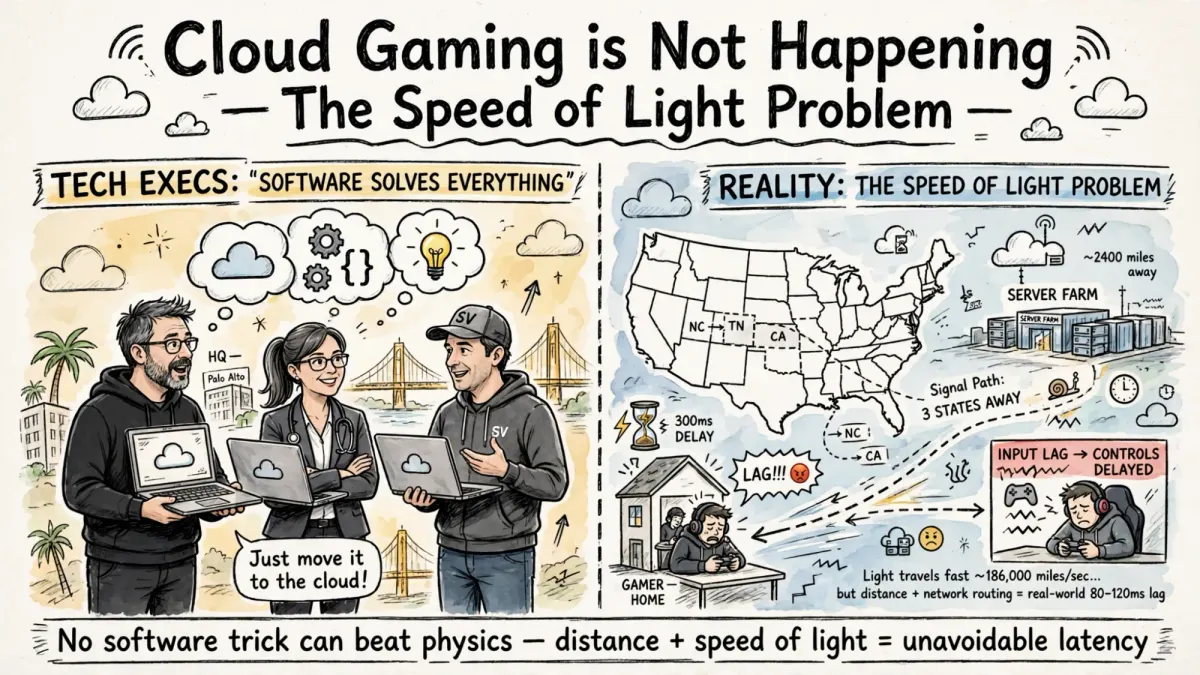
Silicon Valley thinks software can solve everything. They forgot that you cannot stream a video game flawlessly if the physical server is located three states away.
Inspiration: Analyzing the failed promises of platforms like Google Stadia and the current state of Xbox Cloud Gaming. Realizing that the barrier to entry is not software capability but the physical geographic distribution of data centers.
The Hardware Illusion
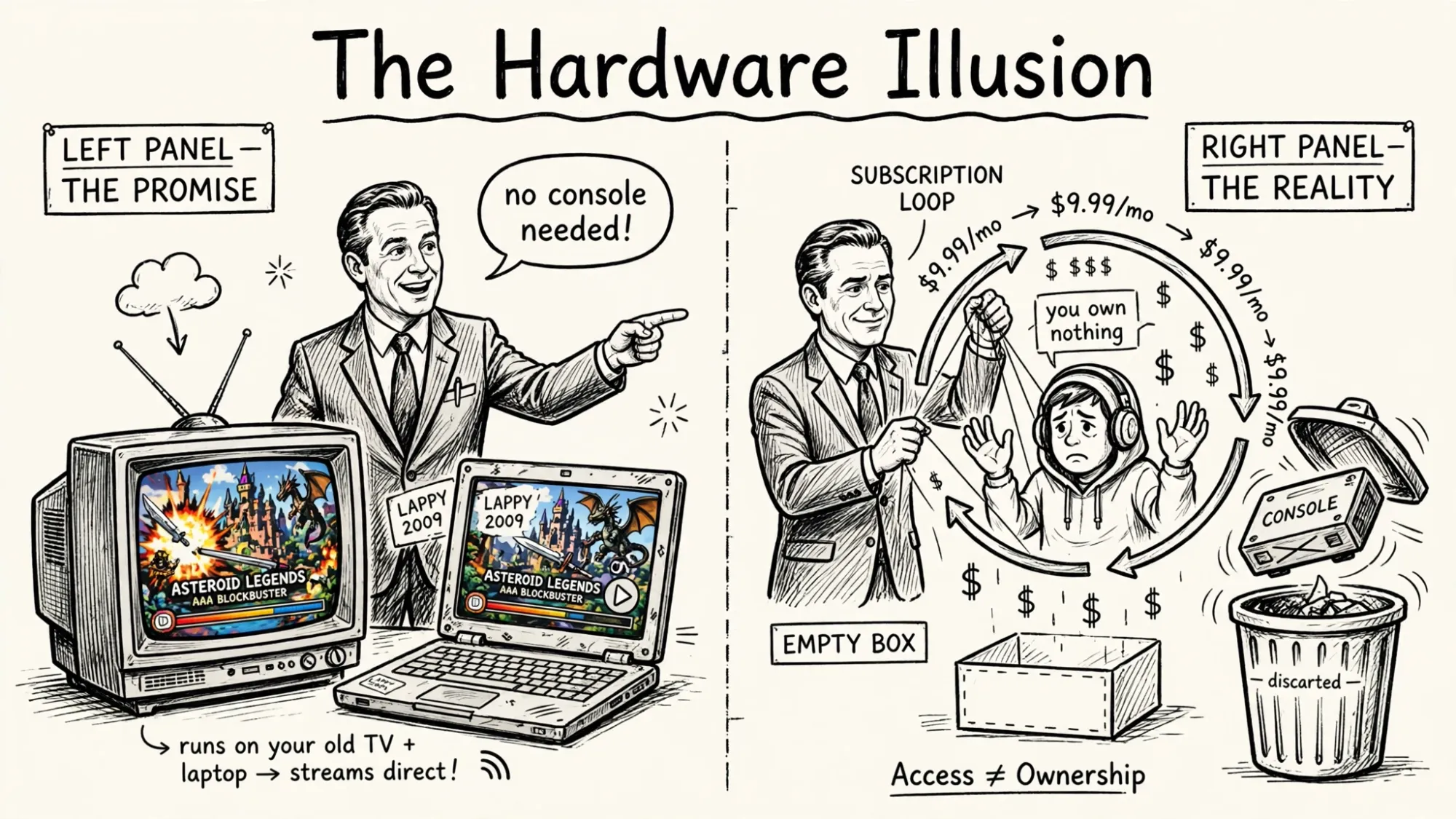
For the last five years technology executives promised us the death of the physical gaming console.
They pitched a utopian future where you could play a premium blockbuster game directly on a cheap television or an old laptop just by connecting to the internet.
The financial appeal for these companies is obvious.
If they can eliminate the expensive physical box they can trap consumers in a permanent monthly subscription loop where the player owns absolutely nothing.
The Buffering Blindspot
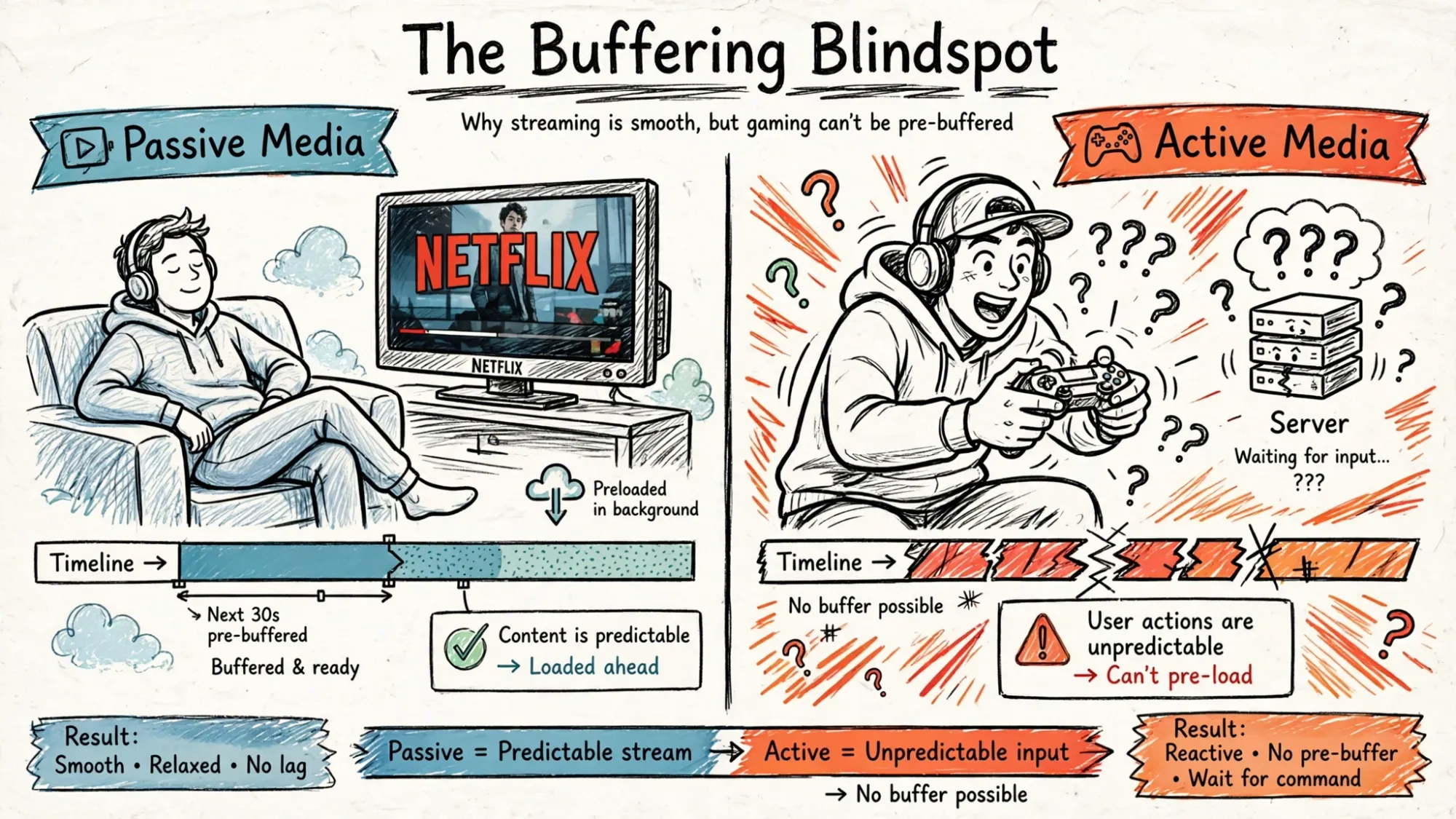
The executives who pitched this future fundamentally misunderstood the difference between passive and active media.
They assumed that because we can seamlessly stream movies in high resolution we should easily be able to stream a video game.
When you watch Netflix the application secretly downloads the next thirty seconds of the movie in the background.
This buffering creates a flawless viewing experience even if your internet connection temporarily dips.
You cannot buffer a video game because the server has no idea what button you are going to press next.
The Physics of Input
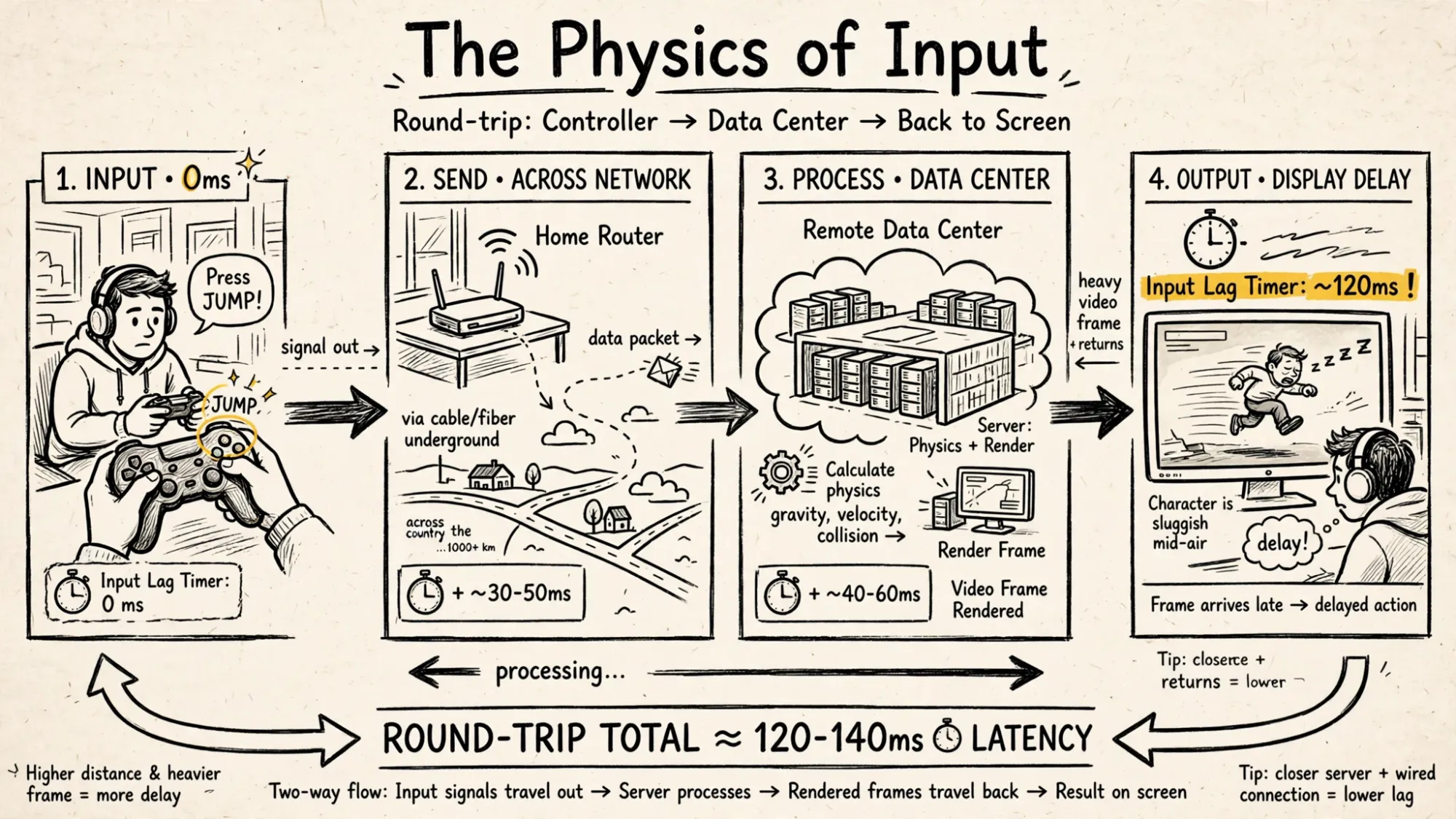
Interactive media requires a constant and immediate two way conversation between your controller and the corporate server.
When you press the jump button that physical signal has to travel through your local router down the street and across the country to a remote data center.
The server then calculates the physics of the jump, renders the new visual frame, and sends that heavy video file all the way back to your screen.
If this round trip takes more than a few milliseconds the human brain instantly registers a frustrating delay.
The character on screen feels incredibly sluggish and the entire gaming experience is ruined.
The Geography Limit
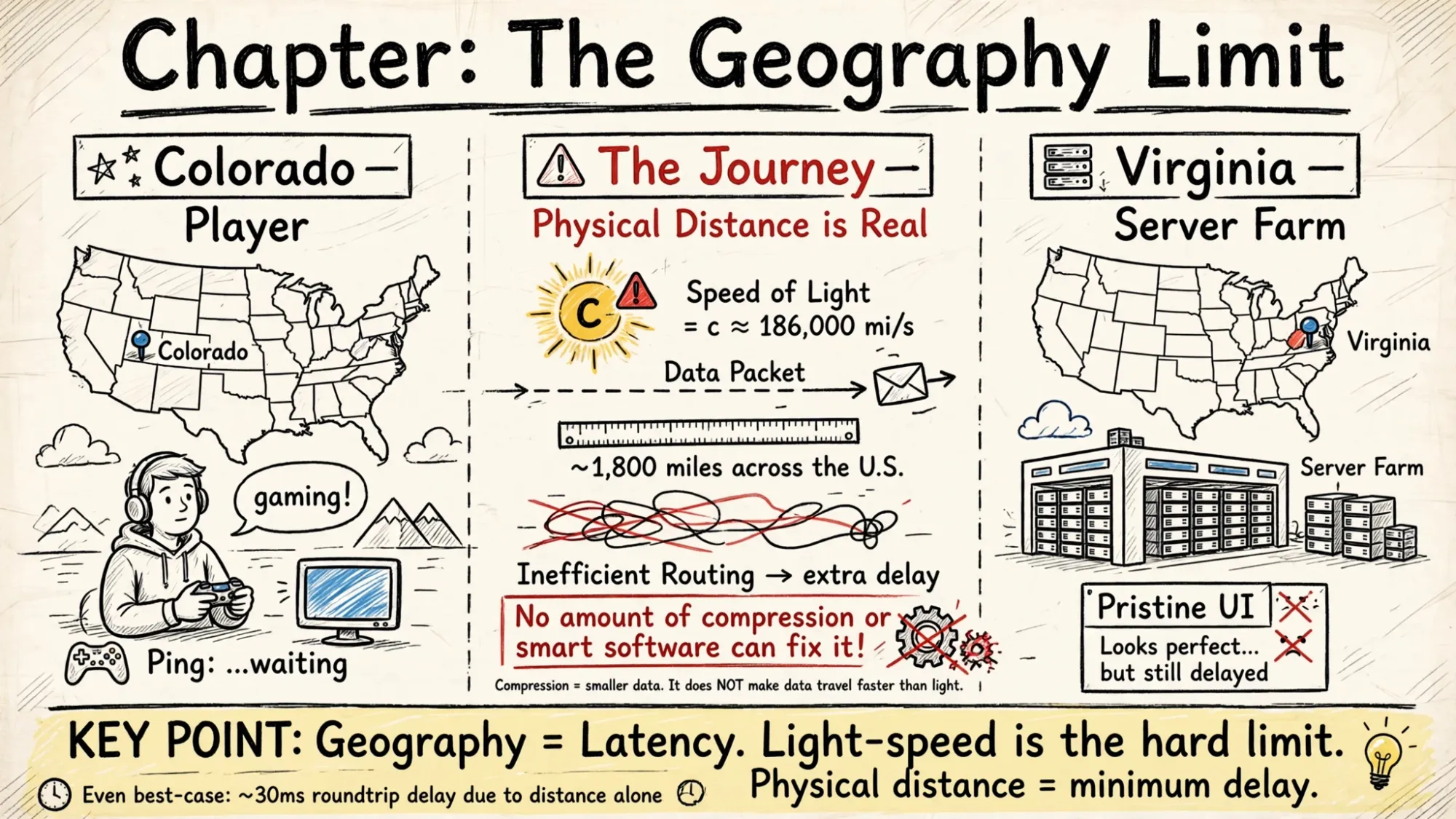
You cannot solve this input delay with better compression algorithms or smarter software.
You are literally fighting the speed of light.
If a player lives in Colorado and the closest server farm is located in Virginia the physical distance guarantees a noticeable delay.
The data simply has too much geographic ground to cover regardless of how fast your home internet connection claims to be.
A pristine software interface means nothing if the underlying network routing is physically inefficient.
The Edge Infrastructure
This means cloud gaming will remain a frustrating novelty until we fundamentally restructure the architecture of the internet.
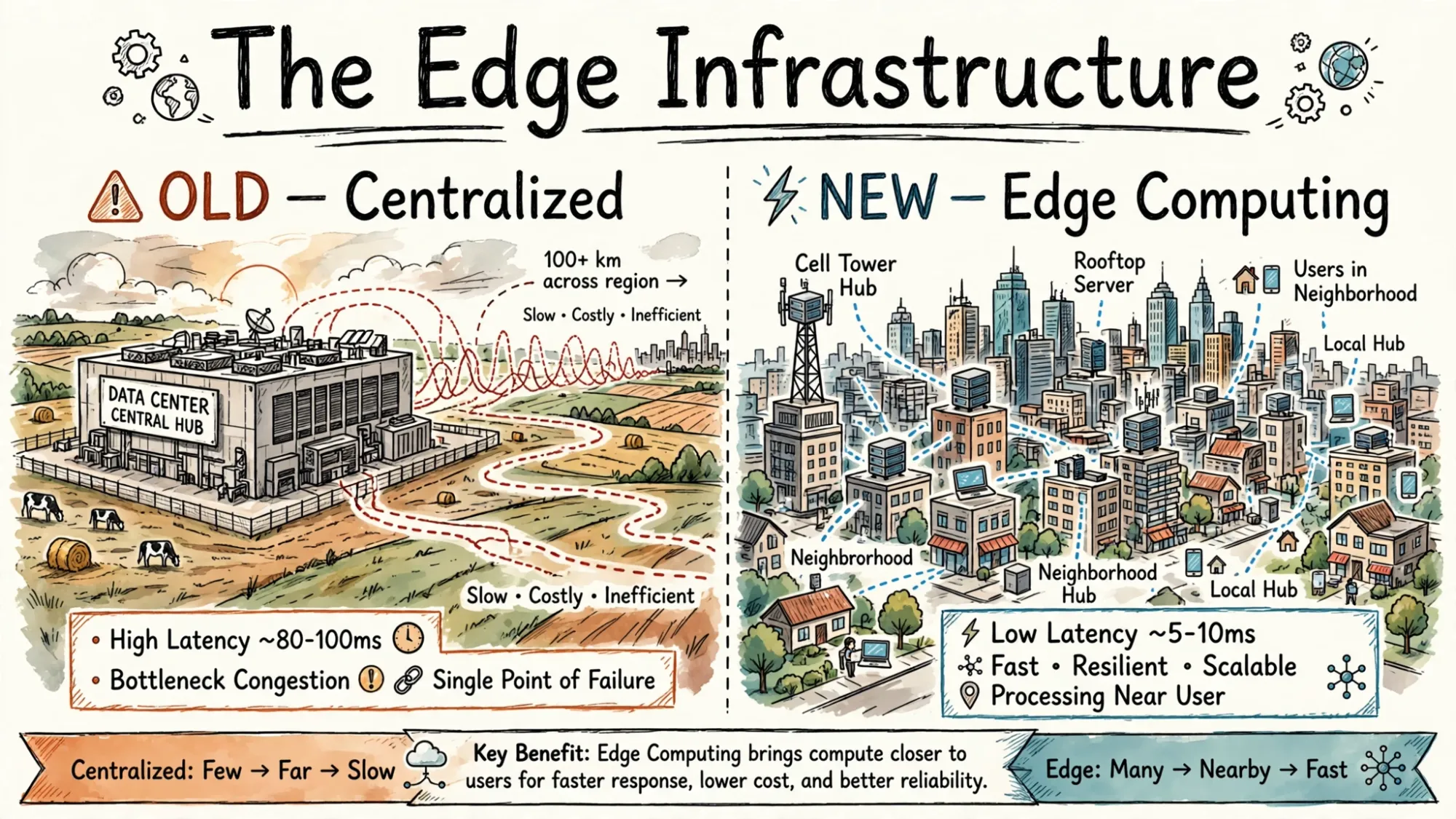
The current model relies on building giant centralized data centers in cheap rural locations to save money on power and real estate.
To make cloud gaming actually work the technology giants must pivot toward edge computing.
They need to build thousands of smaller localized server hubs and place them directly inside every single major metropolitan city.
The server running your game needs to be physically located in your own neighborhood to eliminate the geographic transit time.
The Interim Reality
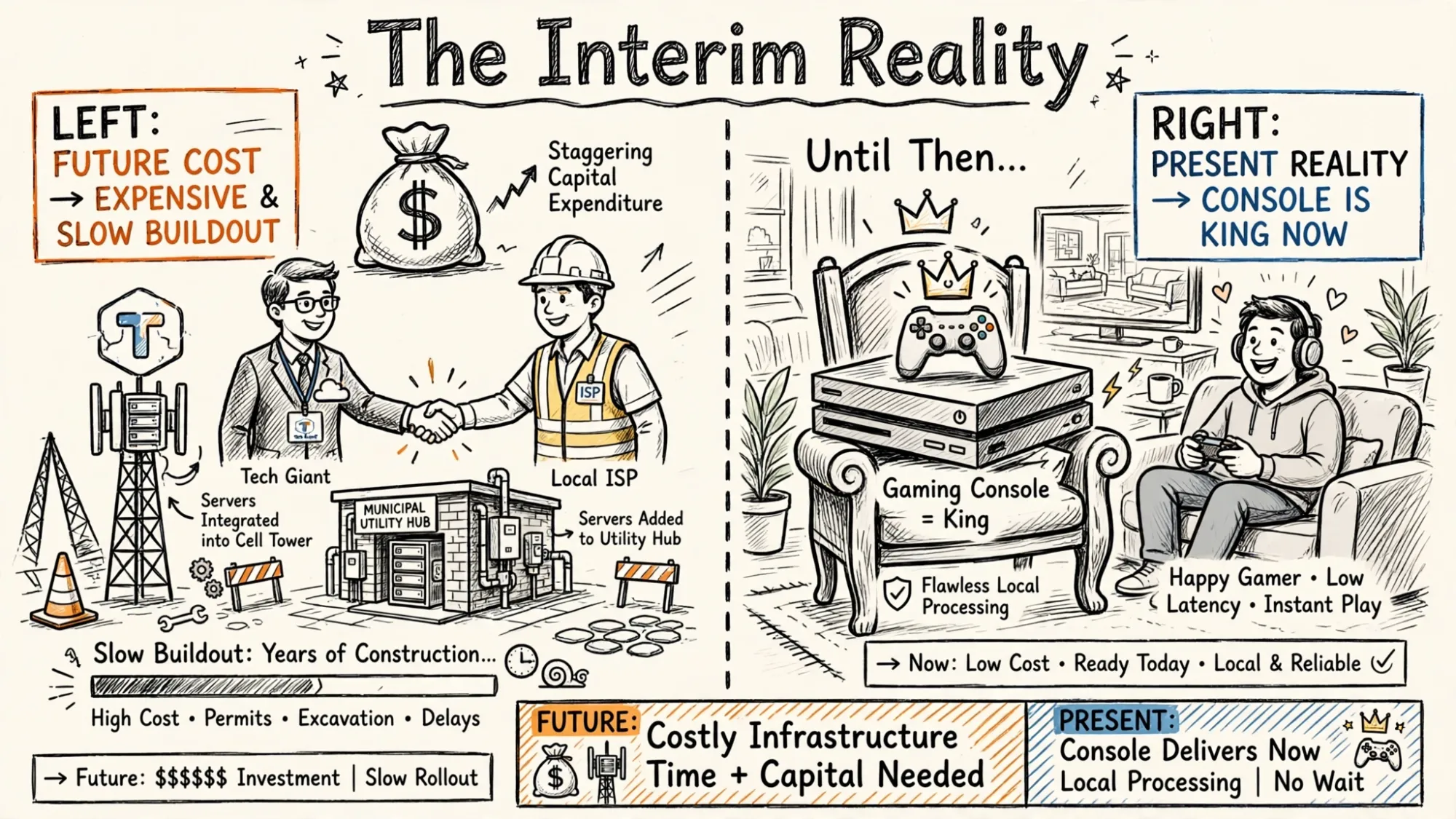
Building this localized infrastructure requires a staggering capital expenditure that no single company is currently willing to fund just for video games.
It requires deep partnerships with local internet service providers to integrate computing hardware directly into regional cell towers and municipal utility hubs.
Until this ubiquitous edge network is fully deployed across the entire country the physical console will remain the undisputed king of the living room.
Local processing is the only way to guarantee a flawless interactive experience for the consumer.
Conclusion: The Geography of Play
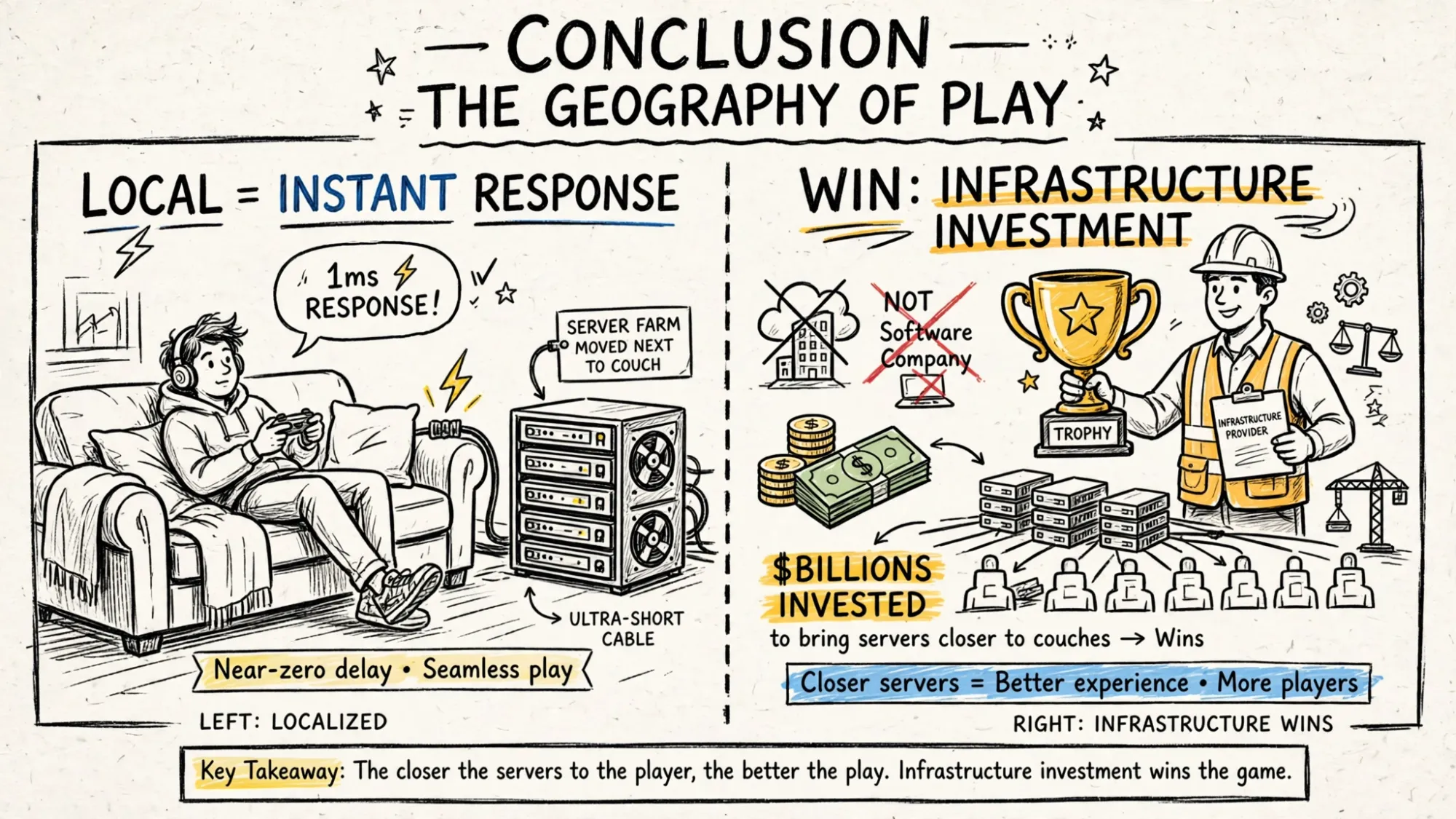
We spent years arguing about which software company will win the cloud gaming war.
The ultimate victor will simply be the infrastructure provider willing to spend billions bringing the physical servers closer to our couches.